
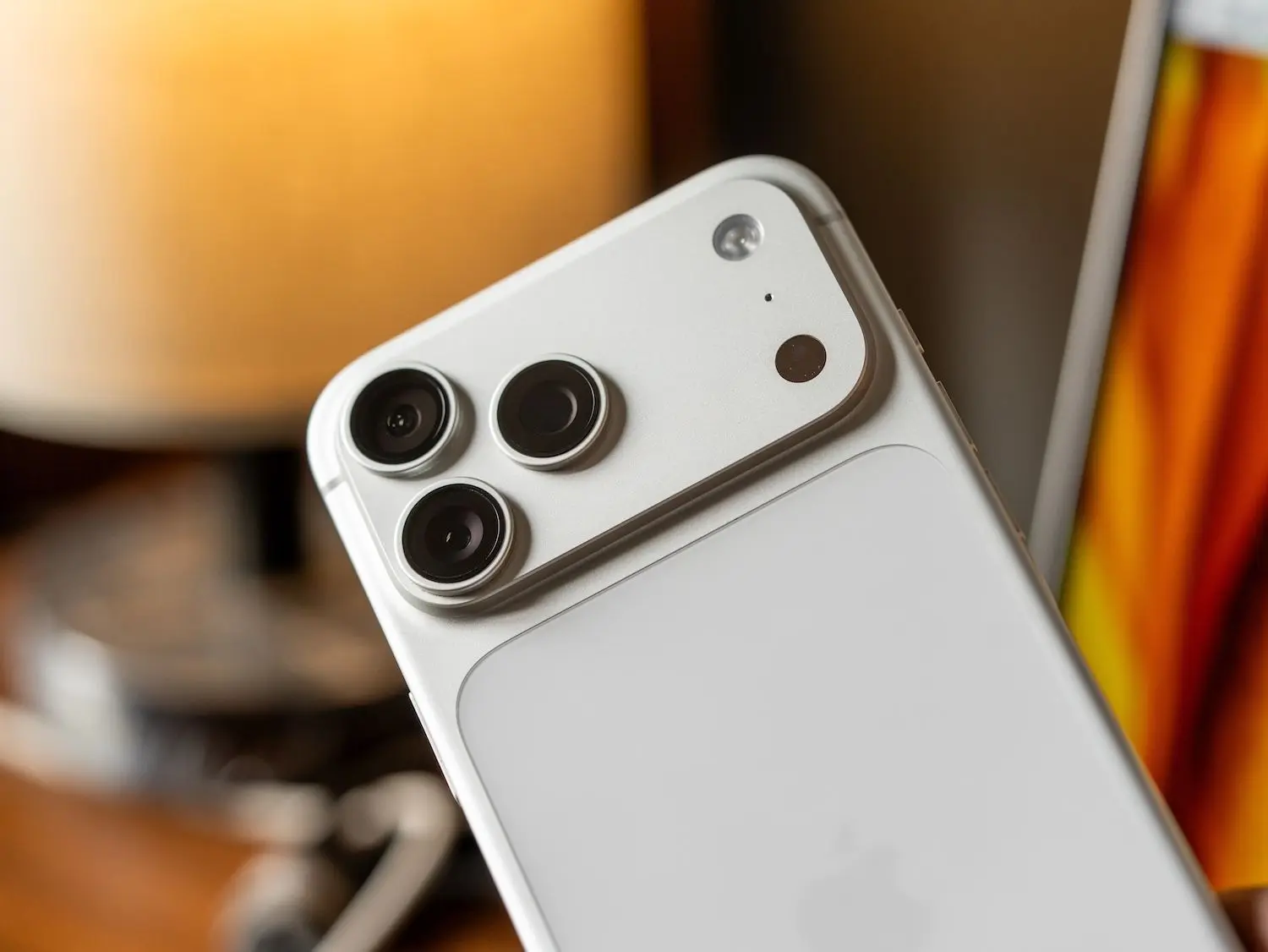
Apple's first foldable phone drew mockery from Samsung, lifted market forecasts from analysts and pulled rival launches forward, all within days of its Cupertino debut.
Key Points:
- Apple introduced its first foldable iPhone on Sept. 9, with prices running from $1,999 to $3,200.
- Samsung mocked the launch on social media hours after the Cupertino presentation.
- Analysts expect Apple to take about a quarter of the foldable market this year.
iPhone Duo Price Details
John Ternus, who took over as chief executive on Sept. 1, opened the device on stage in Cupertino, California, and Apple said its 7.6-inch inner display runs 50% larger than the screen on the iPhone 18 Pro Max.
Closed, the handset shows a 5.4-inch cover screen and brings back Touch ID through a button on the side. It weighs 254 grams, more than any iPhone before it.
Prices start at $1,999. The two-terabyte model reaches $3,200, and preorders open Oct. 16, with sales beginning Oct. 23 in more than 70 countries.
Also Read: XRP ETFs Hit $1.7B Record As 9-Week Inflow Streak Defies Price Weakness
Samsung Mocks Apple Launch
Samsung's U.S. mobile account mocked the arrival within hours, inviting Apple to check back once it had finished reheating somebody else's leftovers. Ben Wood, chief analyst at CCS Insight, framed the timing as deliberate, saying Apple tends to enter a category once the technology reaches a certain maturity.
Liz Lee, an associate director at Counterpoint Research, expects Apple to hold about 25% of the global foldable market this year, trailing Samsung at 38%. Huawei sits third at 22%. She called the sub-$2,000 price a bold move, because it lands only about $100 above the Galaxy Z Fold 8. Gene Munster of Deepwater Asset Management said Apple had not shipped a product this exciting in a decade.
TrendForce Forecasts Foldable Shipments
TrendForce projects Apple shipping about 5 million foldables in 2026, or 24.8% of the category, with Samsung ahead on roughly 7.1 million units.
The firm also sees Android foldable shipments falling more than 20% this year as component costs climb, while IDC puts the category below 3% of global smartphone sales.
Samsung has led the segment since the Galaxy Fold arrived in 2019, and Google and Motorola later added models of their own while Apple stayed out for seven years. Chinese rivals moved first this time. Xiaomi unveiled its 18 Fold and Huawei showed the trifold Mate XT2 one day before the Cupertino event.
Read Next: Sam Altman Rules Out A 2026 OpenAI IPO And Blames AI Safety Work
