




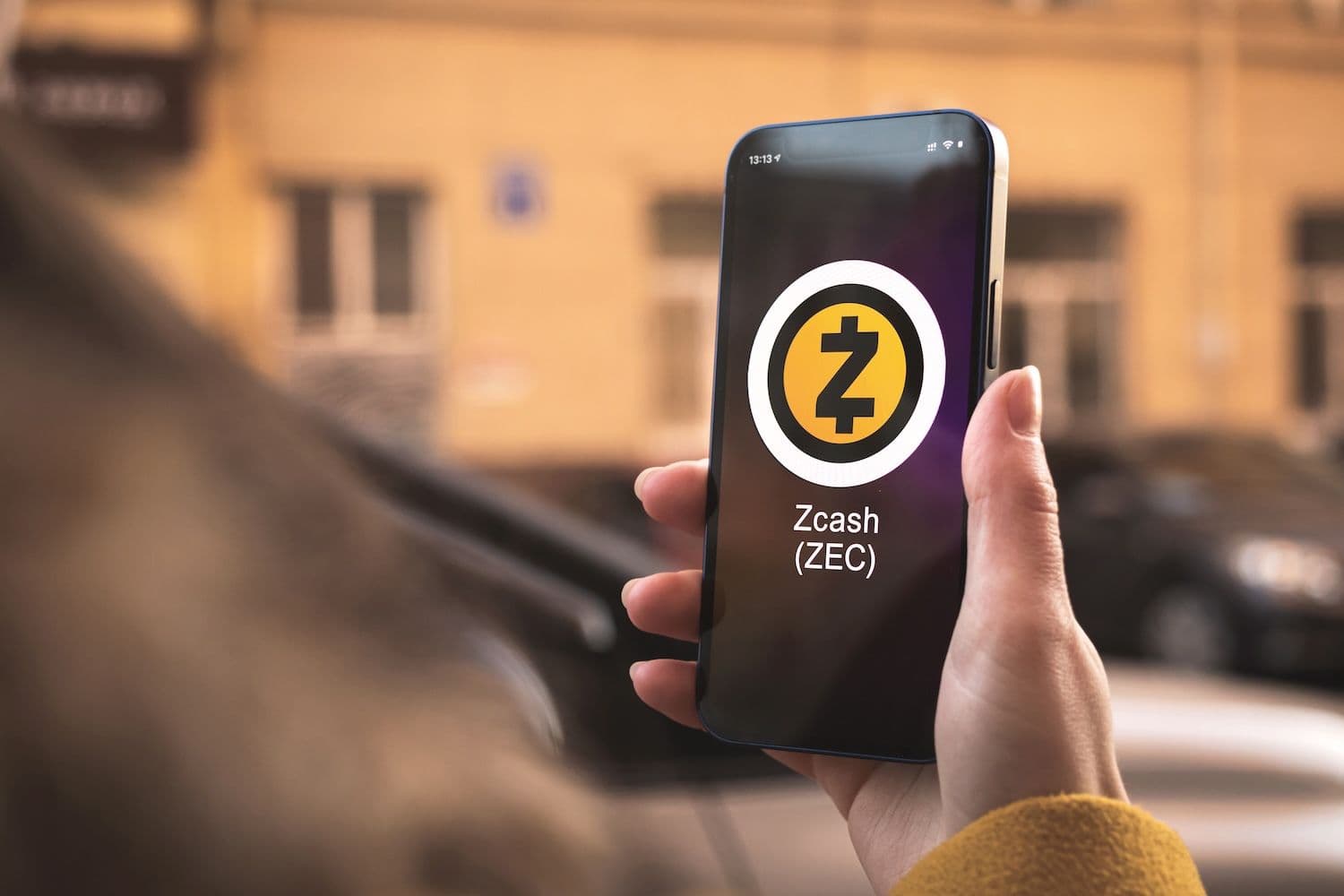
Balaji Srinivasan declared in a Feb. 18 video on X that the world faces a binary choice between Zcash (ZEC) and communism, arguing that artificial intelligence has turned mass surveillance into a commodity available to any government or individual capable of running a model.
What Happened: Srinivasan Backs Zcash
In the video and a series of posts, Srinivasan, the co-founder of Counsyl, the former chief technology officer (CTO) of Coinbase, warned that AI has made it possible to compile detailed dossiers on anyone using publicly available data. "Any scrap of information online can now be integrated, digested, and synthesized…by any state or stalker capable of running an AI model," he wrote.
He grounded his argument in a historical parallel, citing Vladimir Lenin's 1918 order to execute 100 kulaks during the Bolshevik Revolution — a directive that, as Srinivasan put it, "required a list." His point was that encryption can break the surveillance chain that makes such targeting possible.
"No full list, if we encrypt it," he said.
On the Never Say Podcast, Srinivasan extended the argument to Bitcoin (BTC) scaling, calling Lightning Network's decade of promised adoption a failure that has pushed users toward custodians resembling traditional banks. He positioned Zcash as a potential answer — combining "Solana-like scalability" with private transactions through zero-knowledge proofs — while suggesting it could coexist with Bitcoin rather than replace it. "It's what a lot of people wanted Bitcoin to be," he said. Arjun Khemani, a 19-year-old Zcash researcher on the episode, reinforced the privacy case: "You can't have freedom without privacy."
Also Read: Binance ETH Leverage Falls To Six-Month Low — A New Rally On The Horizon?
Why It Matters: Privacy Meets Scaling
Srinivasan's framing ties two long-running crypto debates — privacy and scalability — into a single thesis at a moment when AI capabilities are advancing rapidly.
His claim that "if you're under surveillance, you're not sovereign" reframes financial privacy not as a niche concern but as a precondition for any meaningful autonomy.
The argument also challenges the existing market hierarchy.
Srinivasan described crypto as having already segmented into layers: Bitcoin for immutability, Ethereum (ETH) for programmability, and Solana (SOL) for on-chain execution at scale. If Zcash can deliver both throughput and default privacy, it occupies a gap none of those chains currently fill.
"This could be Zcash's moment," he said.
Read Next: Goldman CEO Says He Owns 'Very Little' BTC: "Still Trying To Figure Out How Bitcoin Behaves"
