




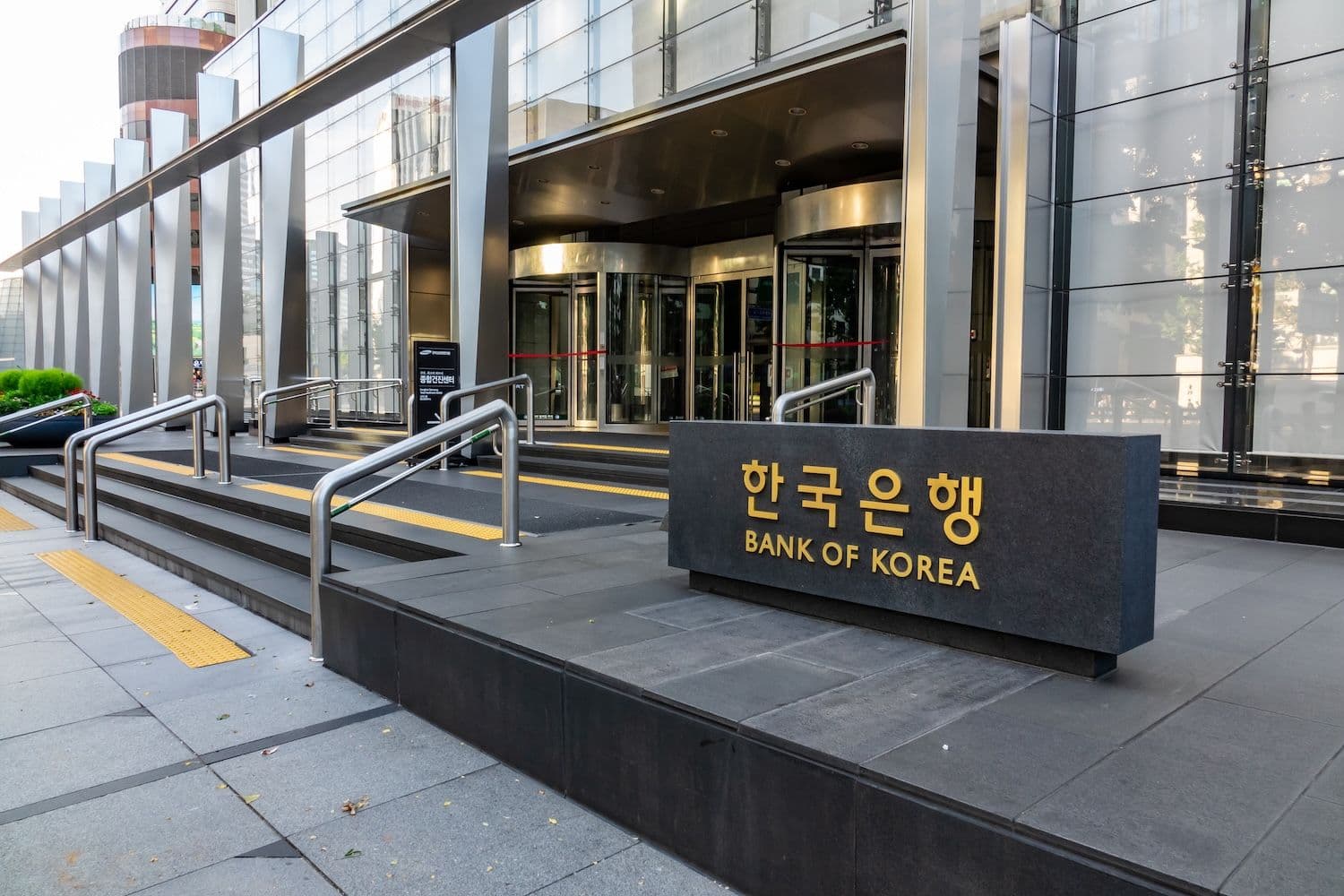
South Korea's Financial Services Commission is preparing guidelines that will end a near-nine-year ban on corporate cryptocurrency investment - but will exclude dollar-pegged stablecoins, including Tether's (USDT) and Circle's (USDC), from permitted holdings.
The decision was confirmed at a March 5 government meeting, according to local newspaper Herald Kyungjae, which cited an unnamed source close to the FSC taskforce: "The decision is final."
The guidelines are expected to roll out in the weeks ahead, allowing listed companies and professional investment firms to allocate up to 5% of their own capital into cryptocurrency - but only in the top 20 non-stablecoin assets by market capitalization.
Transactions must flow through regulated domestic exchanges such as Upbit and Bithumb.
Why Stablecoins Were Cut
The core obstacle is legal, not political. South Korea's Foreign Exchange Transactions Act - a 1998 law governing cross-border payment flows - does not recognize stablecoins as an approved external payment instrument.
Under that framework, international transactions must pass through designated foreign exchange banks, and regulators argue that permitting corporations to hold USDT or USDC would directly conflict with existing statute.
The FSC also cited concerns about "indiscriminate investments" during what it called the early stages of the corporate crypto market.
The regulator reportedly prefers to channel cross-border trade deals through conventional foreign exchange banking infrastructure rather than letting companies settle directly with overseas counterparties in dollar-pegged tokens.
Who Loses Ground
The exclusion lands hardest on listed companies with significant cross-border trade exposure, several of which had lobbied the FSC to include stablecoins for settlement and currency-hedging purposes.
In October 2025, lawmakers responded by drafting a bill that would formally recognize stablecoins as a means of payment - but that legislation remains at the committee stage in the National Assembly, stalled partly over disagreements between the Bank of Korea and the FSC about who can issue Korean won-pegged tokens.
Until that bill clears, companies wanting stablecoin exposure must continue using personal wallets or overseas OTC platforms - arrangements that operate outside the regulated domestic framework the FSC is now building. South Korean firms have watched Japanese and U.S.-based counterparts build multi-billion-dollar Bitcoin (BTC) treasury positions while domestic rules kept them sidelined for nearly a decade.
Read next: Alibaba's AI Agent Started Mining Crypto On Its Own - And No One Asked It To