




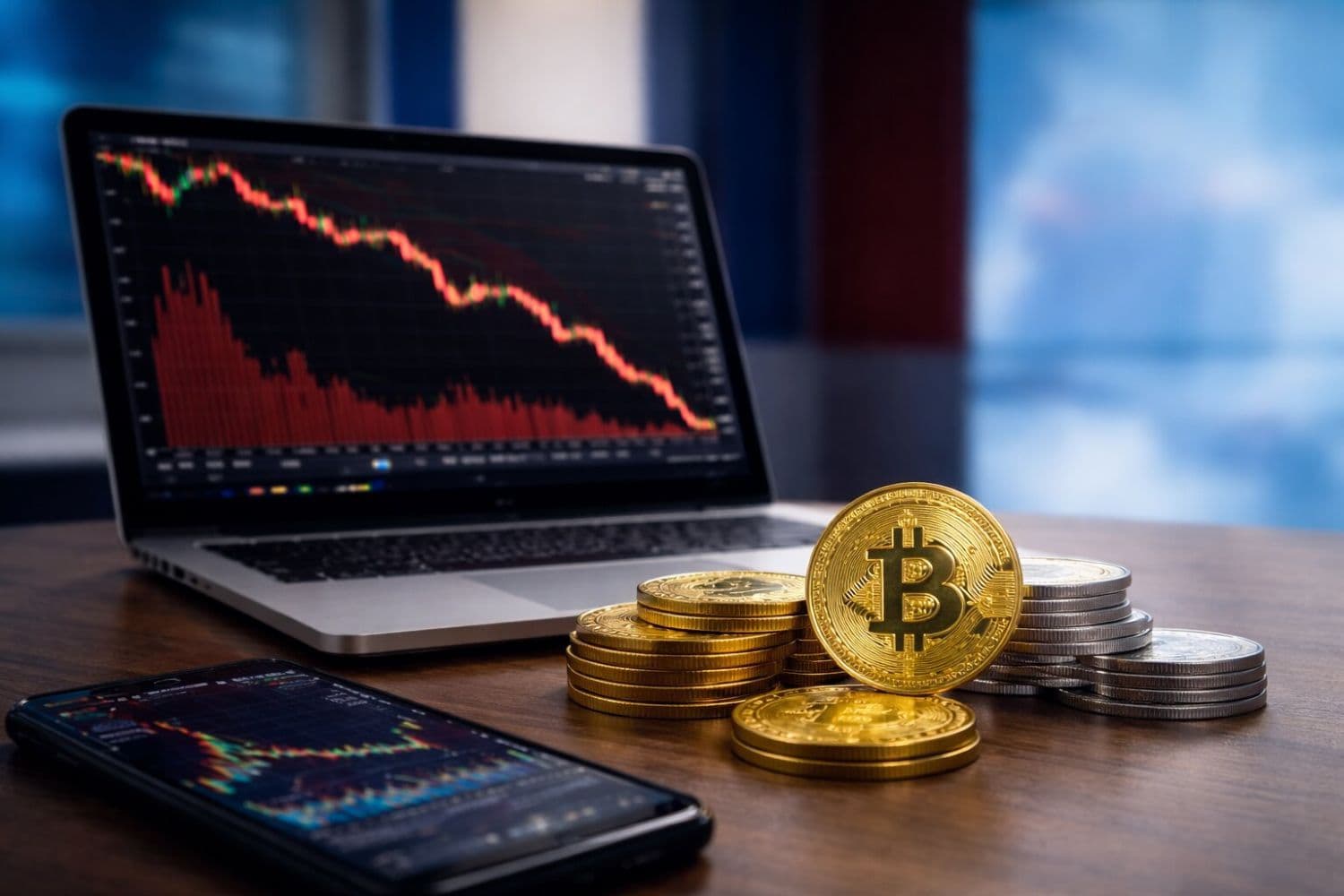
Bitcoin (BTC) has fallen 23% through the first 50 days of 2026 - its weakest start to a financial year on record, according to Checkonchain data.
The cryptocurrency dropped 10% in January and a further 13-15% in February, putting it on course for the first back-to-back losses in those two months in its trading history.
Bitcoin is also down approximately 50% from its all-time high of $126,000 reached in October 2025, trading below $66,000 as of Feb. 23.
What the Data Shows
Coinglass historical records confirm Bitcoin has never previously closed both January and February in the red.
In prior years with steep January selloffs - 2015, 2016, and 2018 - February recovered in each case.
If February closes lower, it would also extend the current losing run to five consecutive months - the longest since the 2018-2019 bear market, when prices fell for six straight months.
Checkonchain's cycle index currently reads 0.77 against a typical down-year average of 0.84 at the 50-day mark, indicating the drawdown is tracking below the baseline of prior corrective cycles.
Drivers of the Decline
The selloff has been broad-based rather than triggered by a single event, distinguishing it from past crashes like FTX's November 2022 collapse.
U.S. spot Bitcoin ETFs bled nearly $4 billion over five consecutive weeks, with Glassnode data showing ETF balances shed approximately 100,300 BTC since October - the largest drawdown of the current cycle.
Bitcoin futures open interest fell 20% in a single week during early February, according to flow analysis, reflecting forced deleveraging rather than coordinated liquidations.
Meanwhile, the S&P 500 rose roughly 0.4% and gold gained 17% year-to-date over the same period - a divergence that research analyst Danny Nelson of Bitwise described as consistent with a Crypto Winter: "You can tell by how investors react to good news. They don't."
The 2026 underperformance also follows a 17% decline in 2025 - itself an anomaly, as post-election years have historically outperformed election years for Bitcoin.
Read next: SBI Holdings Launches Japan's First Security Token Bond With Built-In XRP Rewards