




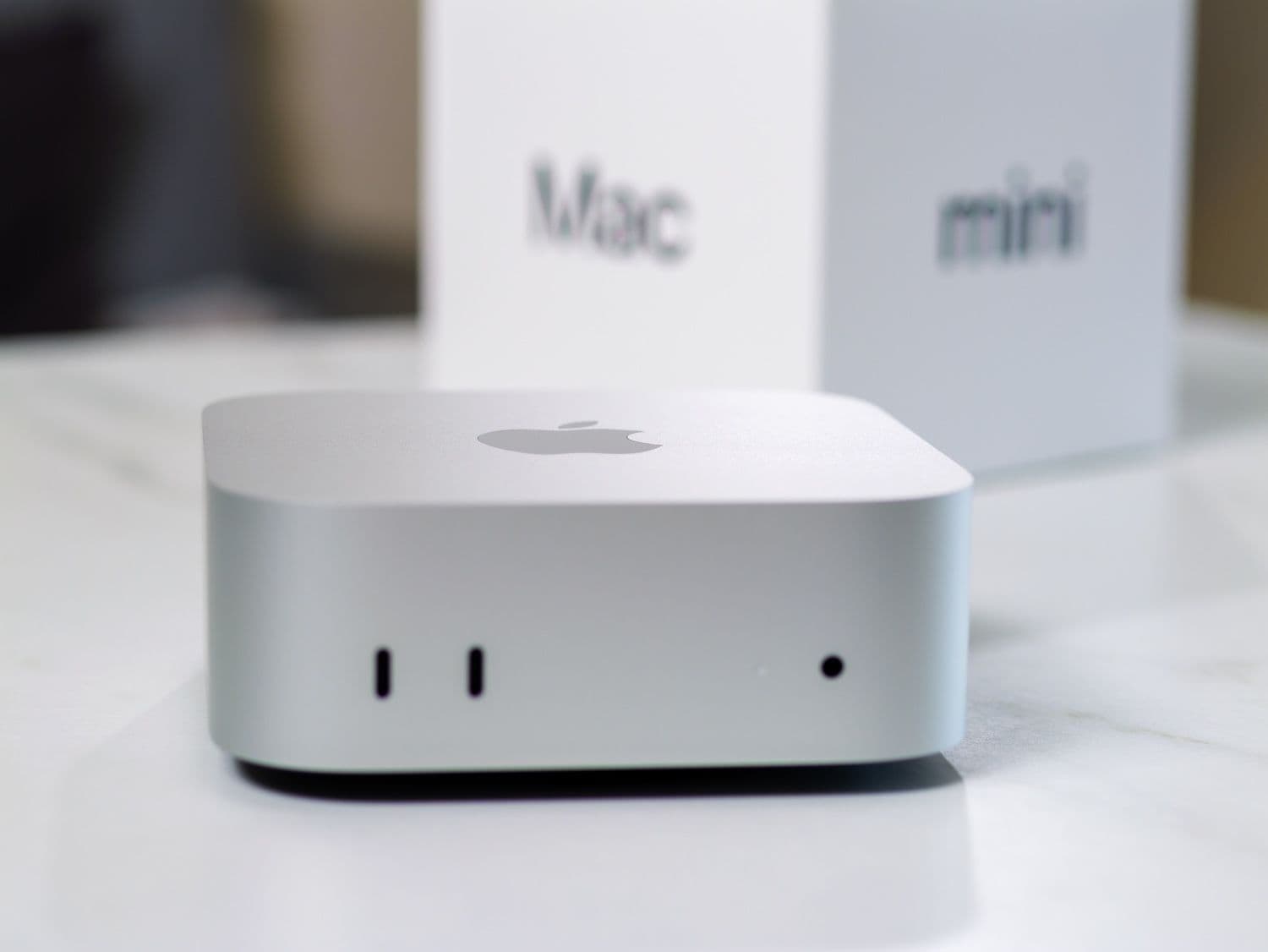
OpenAI reportedly bought tens of thousands of Macs for AI agent training, adding enterprise demand to Apple’s Mac business after revenue rose about 29% year over year.
Key Points:
- OpenAI reportedly bought tens of thousands of Mac minis and Mac Studios for reinforcement learning and computer-use agents.
- Apple silicon’s unified memory makes Macs useful for distributed agent workloads, but not substitutes for Nvidia GPU clusters.
- Mac revenue rose about 29%, while Apple refreshed the Mac mini and Mac Studio with AI-focused hardware.
OpenAI Mac Purchases
The Information reported that OpenAI purchased tens of thousands of Mac minis and Mac Studios in recent months for reinforcement learning and computer-use agents. The machines can run separate sessions in which agents operate software, manage files and receive feedback. That differs from frontier-model training, which relies heavily on tightly connected GPU clusters.
Apple silicon suits some agent workloads because its CPU, GPU and memory share a unified memory pool. Nvidia remains dominant in large-scale AI training, so Macs are complementary infrastructure rather than replacements for data-center GPUs.
Anthropic has also reportedly rented Apple silicon through Amazon Web Services for similar workloads. The pattern suggests AI labs are matching hardware to specific tasks instead of relying on one computing architecture.
Also Read: Claude Fable 5.1 Arrives With $0.25 Cache Reads And Anti-Copy Controls
Apple AI Infrastructure
Apple’s product strategy now points more directly toward AI use. On Aug. 25, it introduced an M6 Mac mini for “agentic AI workflows” and a Mac Studio with M5 Max and M5 Ultra chips, including configurations with up to 512GB of unified memory. Apple said Thunderbolt 5 can connect multiple Mac Studio systems for distributed AI inference.
Apple silicon engineering executive Sri Santhanam described the new chips as focused on performance and AI compute. OpenAI’s purchases suggest some infrastructure demand can move through desktop hardware without Apple building hyperscale data centers.
The opportunity still has limits. Large model pretraining continues to favor Nvidia-class GPU clusters, while Macs better fit workloads divided across many independent machines. Apple gains another enterprise use case without becoming a direct substitute for established AI accelerator suppliers.
The demand arrives as the Mac business is already expanding. Apple reported a June-quarter record for Mac revenue, while sales were roughly $10.4 billion, up about 29% from a year earlier. The Aug. 25 Mac mini and Mac Studio refresh gave those desktops a more explicit role in local and distributed AI work.
Read Next: Bitcoin ETFs Absorb $216.7M, Undoing A Single Session Of Outflows