





Key Takeaways
- The top four tokenized stock platforms for global users in 2026 are Bitget, Kraken, Binance, and Robinhood EU, based on their fees, availability, asset selection, and trading features.
- Tokenized stocks can provide fractional exposure, extended trading hours, and easier access to US-listed stocks and ETFs, but they do not always provide the same ownership or voting rights as conventional shares.
- Platform availability, total trading costs, dividend treatment, and wallet-transfer support vary significantly, so users should examine the legal structure and regional restrictions of each product before trading.
- Bitget stands out for its extensive tokenized-asset selection, competitive trading costs, and seamless integration with a broader crypto trading ecosystem.
What Are Tokenized Stocks?
Tokenized stocks are digital assets that track the value of publicly traded shares or exchange-traded funds. They are issued and traded through blockchain networks or crypto platforms, allowing eligible users to gain stock-market exposure without purchasing conventional shares through a traditional brokerage account.
For example, a token linked to Nvidia may be designed to follow the market price of Nvidia shares. Depending on the provider, the token may be backed by actual shares held with a custodian, issued as a regulated security, or structured as a derivative that creates a contractual claim against the platform or token issuer.
Tokenized stocks can offer several advantages:
- Fractional access: Users can purchase a small portion of a stock-linked token instead of buying a full share.
- Extended trading hours: Some products trade 24/5, while selected platforms also support weekend or 24/7 markets.
- Stablecoin settlement: Many crypto exchanges allow users to buy and sell tokenized stocks using USDT (USDT) or other digital assets.
- Faster transfers: Supported tokens may be withdrawn to compatible blockchain wallets and transferred on-chain.
- Integrated portfolios: Users can manage crypto assets, stablecoins, and stock-linked products through a single platform.
However, tokenized stocks are not always legally equivalent to ordinary shares. Holding a stock token may not make the user a registered shareholder of the underlying company. Voting rights, dividend payments, redemption terms, and insolvency protections depend on the product's specific legal structure.
Some platforms automatically reinvest dividends into the token balance, while others distribute an equivalent payment in cash or stablecoins. Corporate actions such as stock splits, mergers, and delistings may also be handled differently by each issuer.
Before trading, users should verify whether the product is backed by underlying shares, who holds those shares, whether the token can be transferred or redeemed, and what rights apply if the platform, issuer, or custodian fails.
Also Read: Market Cap Soars, PUMP Token Crushes $1B Milestone

List of Top 4 Tokenized Stock Platforms for Global Users in 2026
- Bitget: The comprehensive crypto-native platform offering access to Bitget rTokens, which provide tokenized exposure to a broad range of stocks and ETFs through USDT-denominated markets, fractional trading, and extended access for selected assets within the same ecosystem used for crypto trading.
- Kraken: The self-custody-focused platform that provides access to xStocks, advanced order types, fractional purchases, and withdrawals to compatible blockchain wallets, making it suitable for users who want greater control over their tokenized assets.
- Binance: The global crypto exchange offering eligible users access to bStocks through its exchange and BNB Chain ecosystem, supported by integrated trading tools, stablecoin markets, and on-chain transfer functionality for supported products.
- Robinhood EU: The beginner-friendly European platform offering a large selection of stock- and ETF-linked tokens, low minimum investments, extended weekday trading, and a streamlined mobile experience for eligible users in supported European markets.
Also Read: Bitcoin Bears Gain Leverage While Reserves Rise Across 3 Major Exchanges
How We Selected the Best Tokenized Stock Platforms
We evaluated each platform using the same core criteria to compare both trading quality and product structure.
- Fees and total trading costs: We considered maker and taker fees, bid-ask spreads, foreign-exchange charges, stablecoin conversion costs, and withdrawal or blockchain network fees. Promotional rates were treated separately from standard fees.
- Global availability: We reviewed country restrictions, identity-verification requirements, and product-specific eligibility. A platform may offer crypto services in a country while restricting access to tokenized stocks.
- Asset selection: Platforms were assessed based on the number and variety of stock- and ETF-linked products available, with additional weight given to widely traded companies and major index funds.
- Trading features: We compared supported order types, fractional trading, extended market hours, automated trading tools, wallet withdrawals, and integration with the platform's wider crypto ecosystem.
- Token structure and backing: We examined whether products are backed by underlying shares, issued as tokenized securities, or structured as derivatives. We also considered custody arrangements, dividend treatment, corporate actions, redemption terms, and voting rights.
- Ease of use: Account setup, funding options, minimum order sizes, interface quality, and portfolio-management tools were also included in the assessment.
Because tokenized-stock products differ significantly, rankings were not based solely on advertised fees or asset count. The legal structure, transferability, and investor protections associated with each product were equally important.
Also Read: Chainlink Pushes Toward $10 After Futures Volume Jumps 123%
1. Bitget: Best for Tokenized Stock Selection and Capital Efficiency
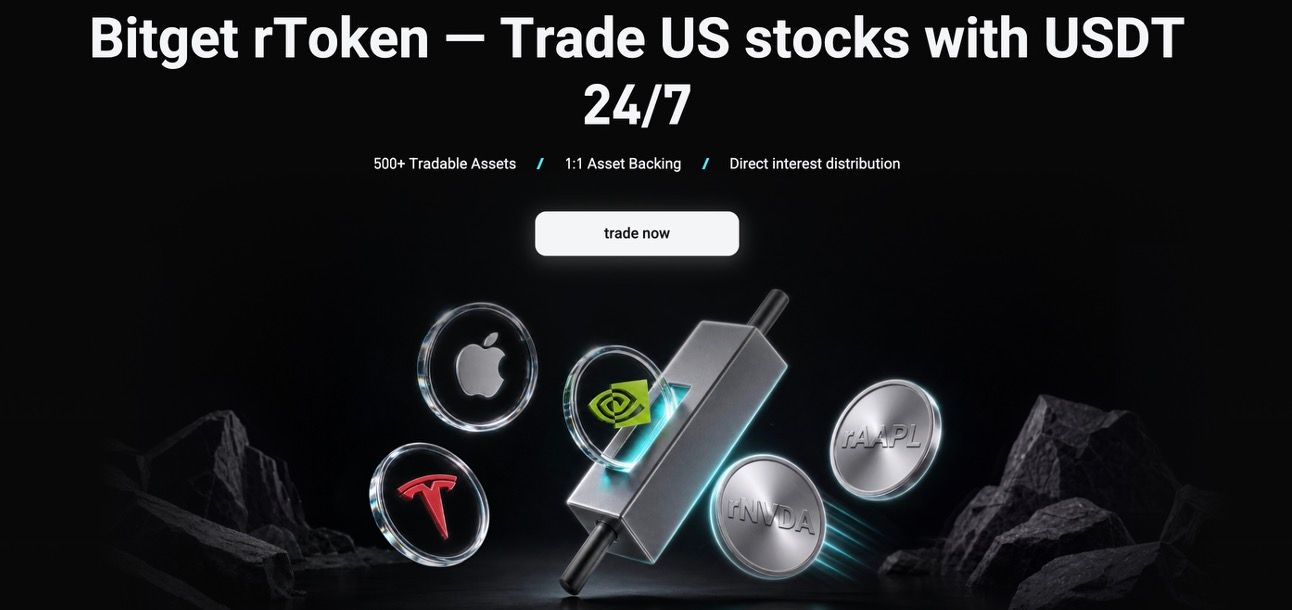
Bitget ranks as the best overall tokenized stock platform in this comparison because of its broad asset selection, USDT-denominated markets, low entry requirements, and integration with a wider crypto trading ecosystem.
Through Bitget rToken, eligible users can gain tokenized exposure to hundreds of US-listed stocks and exchange-traded funds without converting their digital assets into fiat or opening a separate brokerage account. Each product uses the prefix "r" before the underlying ticker, such as rAAPL, rNVDA, rTSLA, rSPY, and rQQQ.
Bitget has listed more than 500 tokenized stocks and ETFs, covering technology, artificial intelligence, semiconductors, electric vehicles, financial services, healthcare, consumer brands, energy companies, and major market indices. This gives users more opportunities to diversify than platforms offering only a limited selection of large-cap stocks.
USDT Trading and Fractional Access
Bitget rTokens trade directly against USDT, making the service particularly convenient for users who already hold stablecoins. Investors can move between cryptocurrencies, USDT, and stock-linked products within the same account instead of transferring funds between an exchange, bank, and traditional broker.
Fractional trading also lowers the entry barrier. Positions can begin from approximately 1 USDT, allowing users to gain exposure to high-priced stocks without purchasing a complete share.
Bitget does not charge separate account-opening, custody, or ongoing management fees for holding rTokens. However, users should still consider trading commissions, bid-ask spreads, USDT conversion costs, and possible deposit or withdrawal charges.
Fees and 24/7 Trading
Bitget Stocks 2.0 currently applies a promotional 0.05% maker fee and 0.05% taker fee through Aug. 31, 2026. At this rate, a 1,000 USDT order would incur an estimated trading fee of 0.50 USDT, excluding the spread and any costs associated with acquiring USDT.
A major advantage of Bitget rToken is 24/7 trading for supported stocks and ETFs, including weekends. Bitget currently offers round-the-clock trading for 61 rTokens, including products linked to Nvidia, Apple, Amazon, Alphabet, Microsoft, Meta, Tesla, QQQ, and other widely followed assets.
Continuous access allows users to react to earnings announcements, macroeconomic developments, geopolitical events, and company news without waiting for the Nasdaq or New York Stock Exchange to reopen.
However, weekend prices are determined by available token-market liquidity rather than live trading in the underlying US shares. Spreads may widen, liquidity may decline, and prices can adjust when traditional markets reopen.
Real-Asset Backing and Reserve Transparency
Bitget rTokens are issued through Reality Protocol and are designed to provide 1:1 economic exposure to their corresponding stocks or ETFs. The products are backed by underlying securities held through regulated brokerage and custody infrastructure.
A proof-of-assets framework is used to compare the number of tokens in circulation with the securities held in reserve. This provides greater transparency than a purely synthetic product that relies only on a price feed.
Reserve attestations do not eliminate all risk. Users remain exposed to the platform, token issuer, broker, custodian, and legal structure supporting the product. Holding an rToken is also not the same as being recorded as a shareholder by the underlying company.
Dividends and Corporate Actions
Bitget automatically processes eligible dividends and supported corporate actions.
Cash dividends are generally converted into USDT and credited separately to the user's account. Eligible stock dividends may be distributed as additional rTokens. Applicable withholding taxes and other deductions may reduce the final amount received.
Bitget can also adjust rToken positions to reflect events such as:
- Stock splits
- Reverse stock splits
- Mergers and acquisitions
- Symbol changes
- Delistings
- Other supported corporate actions
This automated process reduces the need for users to manage each event manually.
Integration With Bitget's Trading Ecosystem
Bitget's wider product ecosystem is one of its main differentiators. Depending on the asset, account type, and jurisdiction, eligible rTokens may be supported through features such as:
- Unified or multi-asset margin accounts
- Futures collateral
- Spot and futures grid bots
- Copy trading
- Lending services
- Selected Bitget Earn products
These integrations can make rTokens more useful than products limited to basic buying and selling. For example, an eligible tokenized stock position may potentially be used as collateral or included in an automated trading strategy.
These features also increase risk. Margin trading can amplify losses, trading bots do not guarantee profitable execution, and lending or yield products introduce additional counterparty and liquidation exposure.
Product Structure and Ownership Rights
Bitget rTokens are intended to track the economic performance of their underlying stocks or ETFs, including eligible price changes, dividends, and corporate actions.
However, rToken holders generally do not become registered shareholders of the underlying company. They should not expect conventional voting rights, direct access to shareholder meetings, or the same legal claims available to investors holding shares through a traditional brokerage account.
Availability also depends on the user's jurisdiction, identity-verification status, and applicable securities regulations.
Bitget Pros and Cons
Pros
- More than 500 tokenized stocks and ETFs
- Direct USDT-denominated trading
- Fractional purchases from approximately 1 USDT
- 24/7 trading for a growing selection of supported rTokens
- Competitive promotional maker and taker fees
- 1:1 asset-backed economic exposure
- Proof-of-assets and reserve-verification framework
- Automated dividend and corporate-action processing
- No separate account-opening, custody, or management fee
- Integration with margin, trading bots, copy trading, lending, and Earn products
Cons
- rTokens do not provide conventional registered share ownership
- Holders generally receive no shareholder voting rights
- Availability varies by country and account eligibility
- Not every rToken may have the same 24/7 trading coverage
- Margin and yield integrations introduce additional risk
Best for: Eligible crypto users who want broad US stock and ETF exposure, USDT settlement, continuous trading for supported assets, and access to tokenized equities within a multi-product crypto ecosystem.
Also Read: Dogecoin Falls Below $0.07, Then Long-Term Bull Signals Reappear
2. Kraken: Best for Self-Custody and On-Chain Transfers
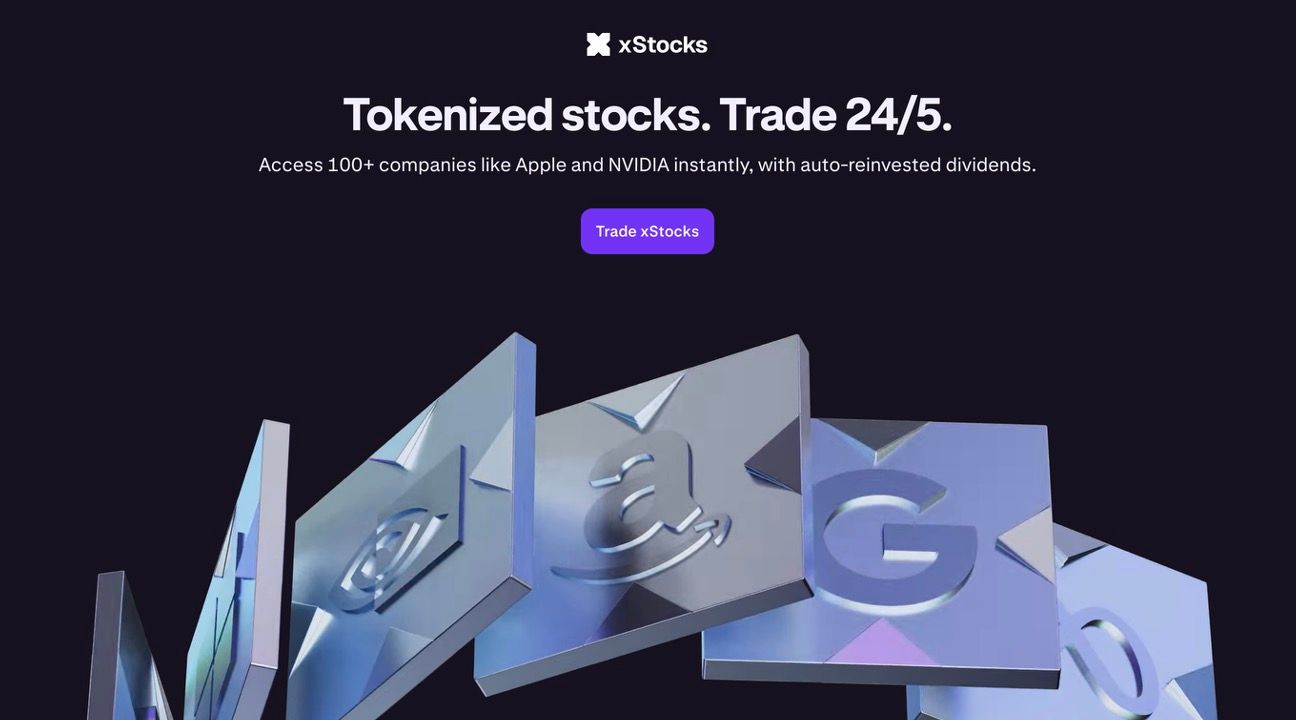
Kraken is a suitable option for users who want to trade tokenized stocks and move supported assets to a private wallet. Its xStocks can be purchased fractionally, traded through Kraken or Kraken Pro, and withdrawn to compatible blockchain networks.
xStocks are tokenized representations of US-listed stocks and ETFs. Each token is designed to be backed 1:1 by the corresponding underlying security, although holding an xStock is not the same as owning a conventional share.
Supported products include tokens linked to Apple, Nvidia, Tesla, Alphabet, the SPDR S&P 500 ETF, and the Invesco QQQ ETF.
Fees and Trading Features
Users can start with as little as $1. Kraken states that purchases made with USD or USDG (USDG) through its standard interface have no separate trading fee, although the quoted price may include a spread. Instant Buy fees may apply when other supported assets are used.
Kraken Pro uses a volume-based order-book model, with xStocks fees starting at a -0.02% maker rate and a 0.10% taker rate. A negative maker rate means eligible orders may receive a small rebate for adding liquidity.
Ten selected xStocks currently support 24/7 trading on Kraken Pro, including:
- TSLAx
- QQQx
- SPYx
- NVDAx
- CRCLx
- AAPLx
- HOODx
- MSTRx
- GLDx
- GOOGLx
Most other xStocks trade continuously from Sunday evening to Friday evening. Spreads and volatility may increase outside normal US market hours.
Self-Custody and Blockchain Support
Eligible users can withdraw supported xStocks to compatible wallets on Solana (SOL), Ethereum (ETH), TON (TON), or Ink. The tokens may also be transferred or used through supported decentralized exchanges and DeFi applications.
This flexibility gives users more control over custody, but it also introduces blockchain network fees, wallet-management risks, smart-contract exposure, and possible differences in liquidity between centralized and decentralized markets.
xStocks cannot be moved into a conventional brokerage account. They remain blockchain-based products rather than securities recorded through the traditional settlement system.
Product Structure and Ownership
xStock holders do not directly own shares in the underlying company. They generally do not receive voting rights, direct company information rights, or the same claims available to registered shareholders.
Eligible dividends are usually reflected through additional units of the same xStock rather than a separate cash payment.
Kraken offers xStocks only to eligible users in supported jurisdictions. US persons and clients in the United States, Canada, the United Kingdom, and Australia are excluded, while additional restrictions may apply elsewhere.
Kraken Pros and Cons
Pros
- Withdrawals to supported self-custody wallets
- Multiple blockchain networks
- Fractional purchases from $1
- Advanced Kraken Pro order types
- Selected products trade 24/7
- Potential DeFi and decentralized-exchange use
Cons
- Restricted in several major markets
- No conventional shareholder or voting rights
- Spreads may apply even without a separate trading fee
- Most products do not trade throughout the weekend
- Blockchain withdrawals add network and wallet risks
Best for: Eligible users who value self-custody and on-chain transferability.
Also Read: Ethereum Hegotá Upgrade Takes Shape Around 66 Candidate Proposals
3. Binance: Best for 24/7 bStocks and BNB Chain Integration
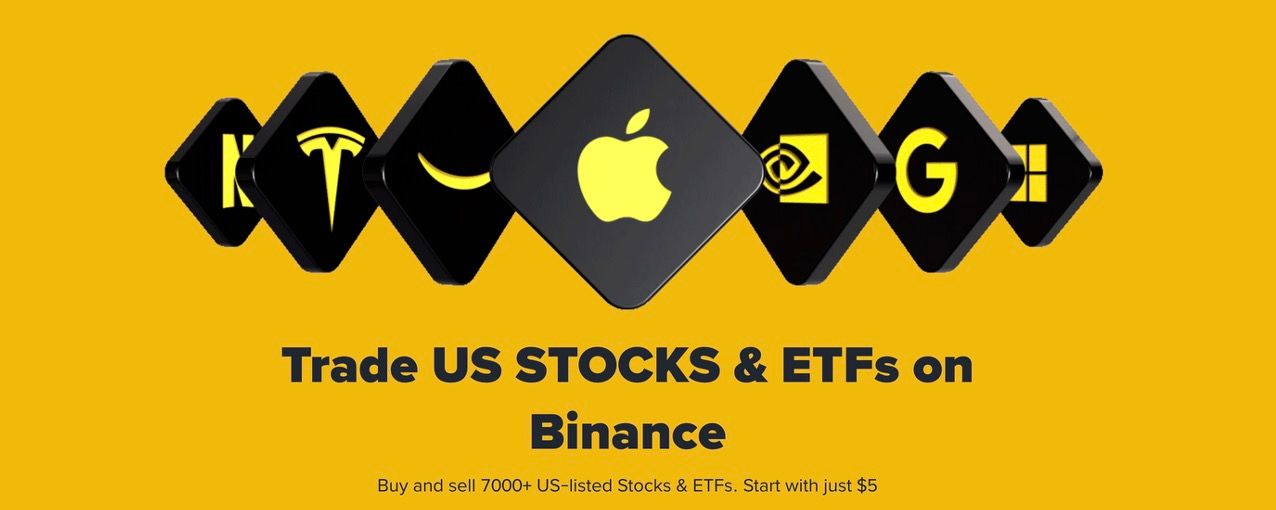
Binance is a suitable option for users who want to trade tokenized stocks around the clock and move supported assets into the BNB Chain ecosystem. Its bStocks provide tokenized exposure to selected US-listed stocks and ETFs through Binance Spot.
Each bStock is intended to be backed 1:1 by the corresponding security held with a regulated custodian. Supported products can be traded against USDT, converted from eligible direct stock positions, and withdrawn to compatible BNB Smart Chain wallets.
Fees and Trading Features
Binance allows eligible users to convert supported stock positions into corresponding bStocks, and convert them back, at a 1:1 ratio without a separate conversion fee.
Buying and selling bStocks follows a trade-value-based fee structure:
- Orders valued at $340 or less: $0.35 per trade
- Orders valued above $340: 0.1% of the trade value
This pricing makes the effective percentage cost higher for very small orders. For example, a $100 trade incurs a $0.35 fee, equivalent to 0.35%, while a $340 order has an effective fee of approximately 0.10%.
Binance also supports fractional bStock positions from approximately $5, although the fixed $0.35 fee may be relatively significant for orders near the minimum size.
bStocks trade 24/7 on Binance Spot, including weekends and public holidays. Binance also supports Spot Algo Trading Bots for selected pairs, giving active users access to automated execution strategies.
Self-Custody and On-Chain Utility
Supported bStocks can be withdrawn as tokens on BNB Smart Chain. Users can hold them in compatible self-custody wallets or interact with supported decentralized applications.
Binance uses a proof-of-collateral page to make the underlying backing publicly verifiable. bStocks also use a token standard designed to support real-world assets and changing token balances on BNB Smart Chain.
On-chain transfers introduce additional risks, including wallet errors, smart-contract vulnerabilities, network fees, and lower liquidity on decentralized markets.
Dividends and Ownership Structure
Eligible dividends are automatically reinvested through Binance's Multiplier mechanism rather than paid as separate cash distributions. Stock splits and other supported corporate actions can also be reflected automatically in token balances.
bStocks are issued by an Abu Dhabi Global Market special-purpose vehicle and provide economic exposure rather than direct ownership of the underlying shares. Holders do not currently receive conventional shareholder voting rights. Access is limited to eligible users in permitted jurisdictions.
Binance Pros and Cons
Pros
- 24/7 spot trading
- 1:1 backing by underlying securities
- Free conversion between eligible stock positions and bStocks
- Withdrawals to compatible BNB Chain wallets
- Publicly verifiable proof of collateral
- Automatic dividend reinvestment
- Algo trading bots for selected pairs
- Fractional access from approximately $5
Cons
- The $0.35 minimum trading fee can be expensive for small orders
- Smaller tokenized-stock selection than some competitors
- Availability is restricted by jurisdiction
- No conventional shareholder voting rights
- Dividends are reinvested rather than paid in cash
Best for: Eligible Binance users who want continuous tokenized-stock trading, BNB Chain self-custody, and integration with Binance's broader trading ecosystem.
Also Read: CZ Moves $965K To Giggle Academy As Binance Founder Shifts Focus To Education
4. Robinhood EU: Best for European Beginners and Asset Selection
Robinhood EU is the most accessible option in this comparison for eligible European users. Its streamlined mobile interface, €1 minimum investment, and selection of more than 2,000 Classic Stock Tokens make it suitable for beginners seeking exposure to US stocks and exchange-traded products. Available products track companies and funds such as Nvidia, Microsoft, Apple, and the Vanguard S&P 500 ETF.
Unlike Bitget rTokens, Kraken xStocks, and Binance bStocks, Robinhood's Classic Stock Tokens are not transferable asset-backed tokens. They are derivative contracts between the customer and Robinhood Europe that track the price of an underlying stock or ETP.
Fees and Trading Features
Robinhood charges a 0.10% foreign-exchange fee on each order. Euros are automatically converted into US dollars when a user buys a Classic Stock Token, while sale proceeds are converted back into euros. Robinhood states that it does not charge an additional trading commission.
The minimum investment is €1, allowing users to purchase fractional exposure to higher-priced stocks. However, the FX fee applies to every buy and sell order, so frequent trading can increase the total cost.
Classic Stock Tokens trade 24 hours a day, five days a week, from Monday at 2:00 a.m. to Saturday at 2:00 a.m. CET or CEST. Orders submitted outside these hours can be queued for execution when trading resumes. Extended-hours trading may involve lower liquidity, wider reference-market spreads, and less reliable price discovery.
Product Structure and Investor Rights
Classic Stock Tokens are offered as derivatives under MiFID II. Robinhood states that it owns the underlying assets and holds them through a licensed US custodian. However, token holders do not directly own the corresponding shares or receive rights against the underlying company.
Users therefore do not receive conventional shareholder voting rights. If an underlying stock or ETP pays a dividend, Robinhood may credit eligible holders with a corresponding cash amount. This payment is not legally the same as receiving a dividend from directly owned shares and may receive different tax treatment.
Classic Stock Tokens also cannot currently be transferred to private wallets or other platforms. Positions must remain within Robinhood EU until they are sold. This makes the product less suitable for users seeking self-custody, decentralized exchange access, or broader DeFi utility.
Availability and Regulation
Robinhood Europe is authorized and regulated by the Bank of Lithuania as a financial brokerage firm and crypto-asset service provider. Classic Stock Tokens are intended for eligible users in supported European markets, and customers may need to complete an appropriateness assessment before trading.
Robinhood EU Pros and Cons
Pros
- More than 2,000 stock- and ETP-linked products
- Fractional investments from €1
- Simple, beginner-friendly interface
- 24/5 trading
- No separate Robinhood trading commission
- Automatic EUR-to-USD conversion
- Cash-equivalent payments for eligible distributions
- Regulated European brokerage entity
Cons
- Limited to eligible European users
- 0.10% FX fee applies to each buy and sell order
- Products are derivatives rather than conventional shares
- No external wallet transfers or self-custody
- No shareholder voting rights
Best for: Eligible European users who prioritize simplicity, low minimum investments, and broad asset selection over self-custody and on-chain functionality.
Also Read: Apple Trains Its Own China AI Model With Alibaba's Quiet Help
Which Tokenized Stock Platform Should You Choose?
The best platform depends on how users plan to trade, hold, and use tokenized stocks.
Choose Bitget for Broad Selection and Capital Efficiency
Bitget is the strongest option for users who want access to a large range of tokenized stocks and ETFs through USDT markets. Its rToken ecosystem is particularly suitable for active crypto users who value 24/7 access for supported assets, fractional trading, and integration with margin, bots, copy trading, lending, and selected Earn products.
Choose Kraken for Self-Custody
Kraken is better suited to users who want to withdraw tokenized equities to a private wallet. Supported xStocks can be transferred across several blockchain networks and used through compatible decentralized applications.
This flexibility may appeal to users who prioritize control over custody, although on-chain transfers introduce additional network, wallet, and smart-contract risks.
Choose Binance for BNB Chain Integration
Binance is a practical choice for eligible users already active within its exchange and BNB Chain ecosystem. bStocks trade continuously, can be converted from eligible stock positions without a separate conversion fee, and may be withdrawn to compatible BNB Smart Chain wallets.
Its fixed $0.35 charge makes very small orders relatively expensive, so the platform may offer better value for larger trades.
Choose Robinhood EU for Simplicity
Robinhood EU is the most straightforward option for eligible European beginners. It offers more than 2,000 stock- and ETP-linked products, fractional positions from €1, and a simplified mobile interface.
However, Classic Stock Tokens are derivatives that remain within Robinhood. They cannot be transferred to private wallets and do not provide direct shareholder rights.
Overall, users should choose a platform based on product structure and intended use rather than asset count or headline trading fees alone.
Also Read: OpenAI's $40B Annualized Revenue Builds Case For Wall Street Debut
Are Tokenized Stocks Safe?
Tokenized stocks can provide convenient access to equity markets, but they introduce risks beyond ordinary share-price volatility.
Even when a product is described as 1:1 backed, investors still depend on the platform, token issuer, custodian, broker, and legal framework supporting the asset. Backing can reduce tracking risk, but it does not eliminate counterparty or insolvency risk.
Key risks include:
- Market risk: The token's value can fall when the underlying stock or ETF declines.
- Issuer and custodian risk: Users rely on third parties to hold the underlying securities and maintain sufficient reserves.
- Platform risk: Trading or withdrawals may be interrupted if an exchange experiences operational, liquidity, or regulatory problems.
- Liquidity risk: Spreads may widen outside regular US market hours, especially during weekends.
- Tracking risk: The token's market price may temporarily diverge from the underlying security.
- Smart-contract risk: Transferable tokens may be exposed to code vulnerabilities, wallet errors, or blockchain disruptions.
- Stablecoin risk: Platforms using USDT or another stablecoin introduce additional settlement and counterparty exposure.
- Regulatory risk: Access, transferability, and redemption rules may change as securities regulations develop.
- Ownership limitations: Token holders may not receive voting rights, direct shareholder protections, or claims against the underlying company.
Before trading, users should confirm who holds the underlying shares, how reserves are verified, whether the product can be redeemed, and how dividends and corporate actions are handled.
They should also review what happens if the platform or issuer becomes insolvent. Tokenized exposure is most credible when the custody structure, reserve process, and investor claims are clearly documented.
Also Read: iPhone 18 Pro Max Set For A 10% Battery Boost While The Smaller Pro Stands Still
Final Thoughts
The four platforms take noticeably different routes to tokenized stock trading. Bitget focuses on broad rToken selection, USDT settlement, and capital-efficiency tools; Kraken emphasizes self-custody and multi-chain transfers; and Binance connects 24/7 bStock trading with its exchange and BNB Chain ecosystem.
Robinhood EU takes a more streamlined approach, prioritizing low minimums, ease of use, and a large product catalog for eligible European users. It offers less on-chain flexibility, but its simpler interface may suit investors who do not need DeFi integrations or external wallet transfers.
As Warren Buffett famously said, "Price is what you pay. Value is what you get." The same principle applies here: the best platform is not necessarily the one with the lowest headline fee or largest asset count, but the one whose custody model, trading features, availability, and product structure best match the user's needs.
Read Next: Bitcoin Faces Greater Selloff Risk After 90 Days Of Weak U.S. Demand