





Not long ago, a trader who wanted to trade Bitcoin (BTC), NVIDIA, gold, and the S&P 500 had to jump between several platforms. Crypto stayed on an exchange, stock derivatives lived somewhere else, and forex or commodities often required a separate broker. Every move meant another account, another balance, and sometimes another currency conversion.
In 2026, that fragmented setup is starting to disappear. Crypto exchanges are expanding beyond digital assets, giving traders access to stock perpetual futures, gold, forex, indices, commodities, and crypto while keeping USDT (USDT) at the center of the trading workflow. Bitget, Bybit, and Gate are three of the clearest examples. This article compares them across CFD coverage, stock futures, crypto markets, USDT integration, fees, leverage, trading hours, and overall usability.
Key Takeaways
- The top three exchanges for trading CFDs, stock futures, and crypto assets with USDT in 2026 are Bitget, Bybit, and Gate, based on multi-asset coverage, fees, leverage, USDT integration, trading hours, and overall usability.
- USDT is becoming a bridge between crypto and traditional-market derivatives. Traders can use stablecoin-based capital to access crypto, stock-linked perpetuals, forex, gold, commodities, and indices without repeatedly converting funds back into fiat.
- CFDs and stock futures have different cost structures. CFDs typically involve spreads, commissions, and overnight swap fees, while stock perpetual futures generally use maker/taker fees and funding rates and can offer 24/7 trading.
- Bitget stands out as the strongest all-around option, combining CFDs across forex, metals, commodities, oil, and stock indices with 200+ stock perpetual futures, up to 500x CFD leverage, and up to 100x leverage on selected stock perps.
CFDs vs. Stock Futures vs. Crypto: What Are You Actually Trading?
CFDs, stock perpetual futures, and crypto markets can all be traded using USDT, but they are different financial products. They differ in what the trader owns, how prices are tracked, how fees are charged, and when the market is available.
What Are CFDs?
Source: Investopedia
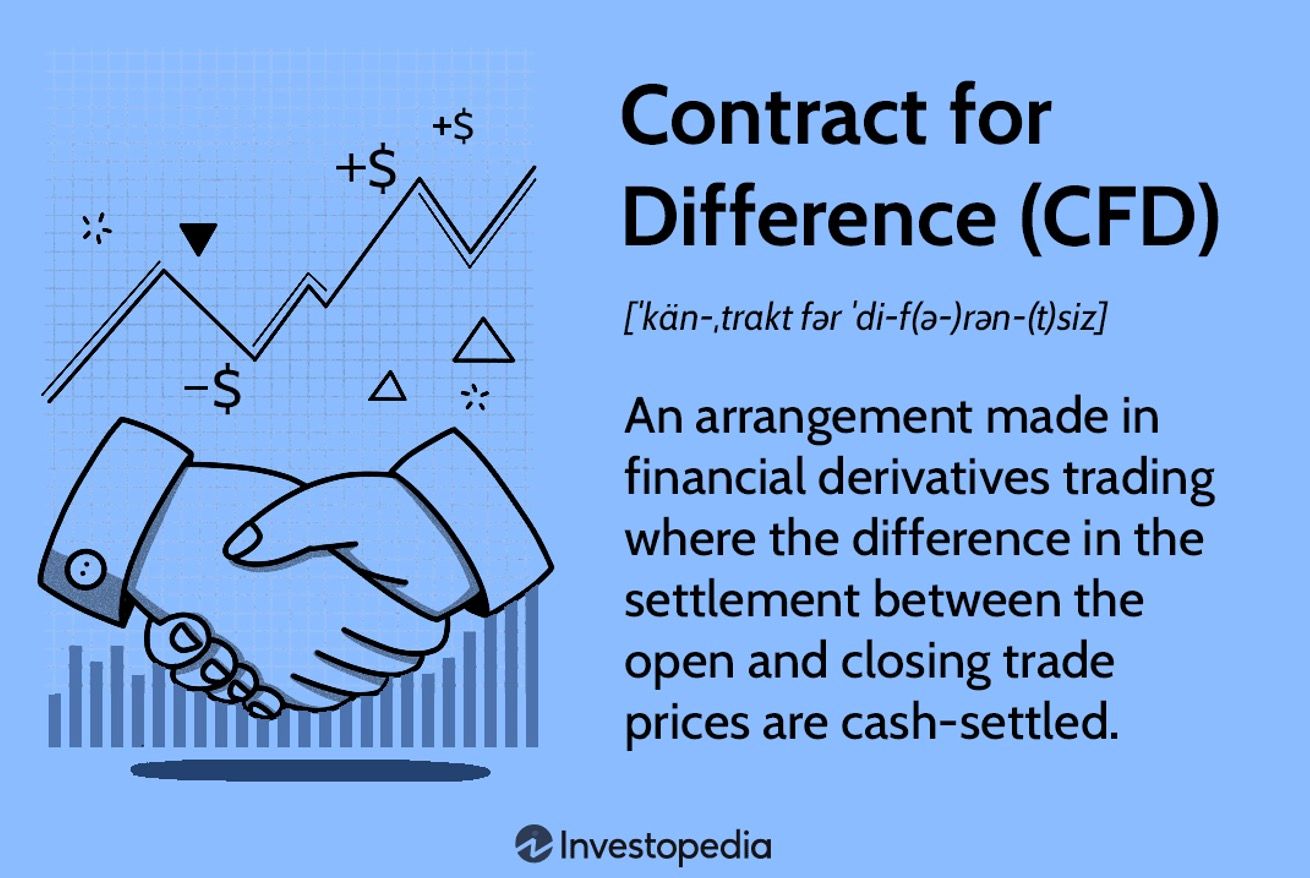
A contract for difference (CFD) is a derivative that allows traders to speculate on the price movement of an underlying asset without owning it. The trader and the provider exchange the difference between the asset's price when the position is opened and when it is closed.
CFDs can track markets such as forex, gold, oil, commodities, and stock indices. They are typically leveraged products, meaning traders only need to provide a portion of the total position value as margin. Costs can include the bid-ask spread, trading commissions, and overnight financing or swap fees. Trading hours generally follow those of the underlying market.
What Are Stock Perpetual Futures?
Source: Investopedia
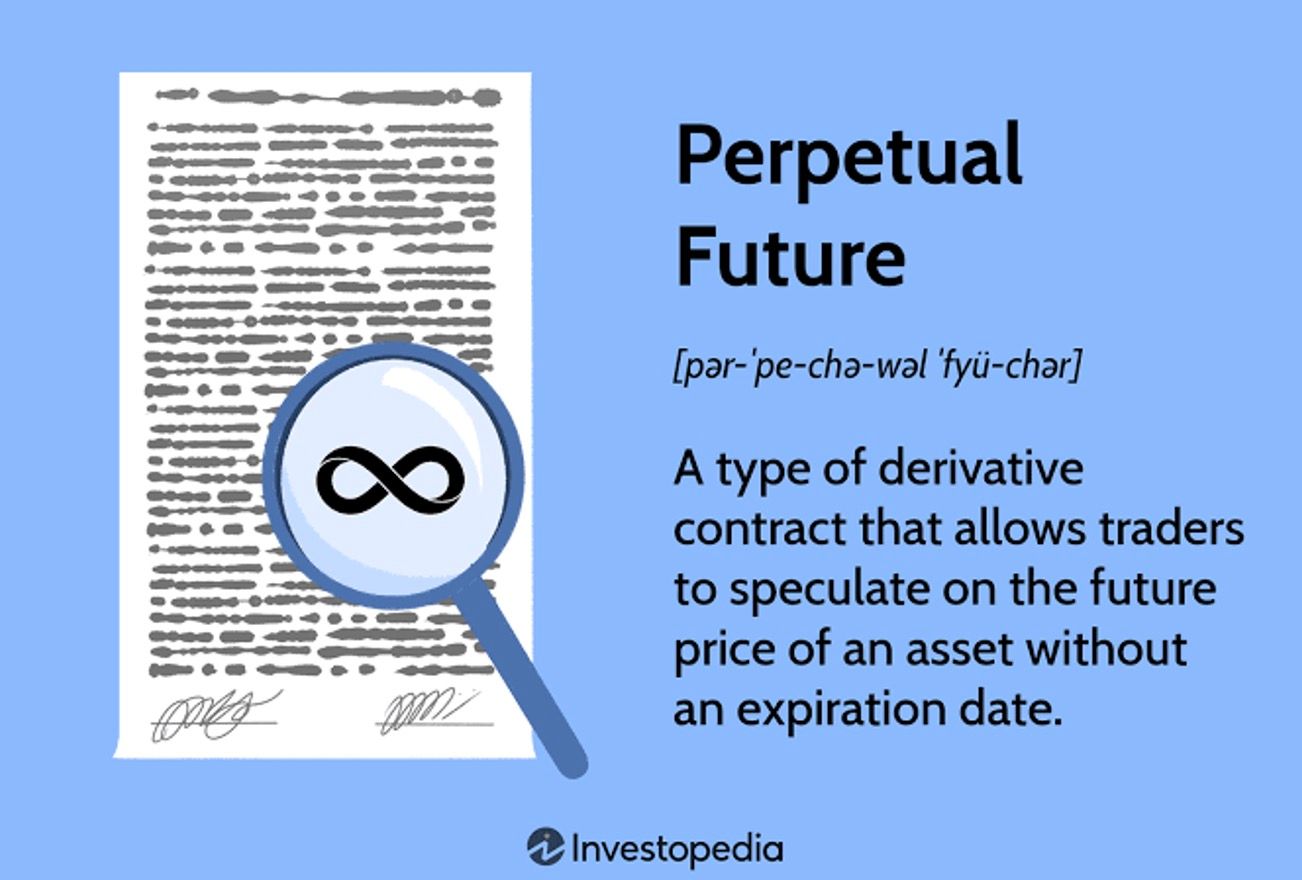
Stock perpetual futures are derivative contracts designed to track the price of a stock or ETF without requiring the trader to own the underlying shares. Examples can include contracts linked to NVIDIA, Tesla, Apple, Amazon, or major U.S. ETFs.
Unlike traditional futures, perpetual futures have no expiration date. Traders can take long or short positions and use leverage, while USDT commonly serves as the margin and settlement asset. Costs usually include maker/taker trading fees and periodic funding payments between long and short positions. Many crypto exchanges also allow supported stock perpetuals to trade 24/7.
What Is Crypto Spot and Futures Trading?
Crypto spot trading involves buying or selling cryptocurrencies such as Bitcoin or Ethereum (ETH) for immediate settlement. A trader who buys BTC on the spot market generally owns the cryptocurrency after the trade is completed.
Crypto futures, by contrast, are derivatives that provide exposure to cryptocurrency prices without requiring direct ownership of the underlying asset. USDT-margined perpetual futures are widely used because profits, losses, margin, and settlement can all be calculated in USDT.
Crypto markets generally operate 24 hours a day, seven days a week. Spot traders mainly pay maker/taker trading fees, while perpetual futures traders may also pay or receive funding.
In simple terms, CFDs provide derivative exposure to traditional markets, stock perpetuals provide leveraged exposure to equities, and crypto spot or futures provide direct or derivative exposure to digital assets. USDT acts as a common funding or settlement asset across these otherwise different markets.
Also Read: Kalshi Seeks Stock Index And Copper Perps After $1B Bitcoin Debut
How We Ranked the Top Exchanges
To qualify for this comparison, an exchange needed to support all three areas: CFDs, stock perpetual futures, and crypto trading with USDT. From there, the ranking looks at how complete and practical the overall multi-asset experience is, rather than judging an exchange on one product alone.
The main factors include:
- CFD coverage: The range of forex, metals, commodities, oil, and index markets available.
- Stock futures coverage: The number and variety of stock or ETF perpetual contracts.
- Crypto market access: Support for spot trading and USDT-margined crypto futures.
- USDT integration: How easily traders can use or transfer USDT across different products.
- Trading fees: Maker/taker fees for perpetuals, plus CFD spreads, commissions, and overnight costs.
- Leverage: Maximum leverage available across CFDs and stock futures.
- Trading hours: Whether stock and crypto derivatives can be traded 24/7.
- Account integration: How easily capital can move between crypto, stock futures, and CFD accounts.
- Trading infrastructure: Order types, risk controls, liquidity, API support, and trading tools.
- Regional availability: Whether each product is accessible in the trader's jurisdiction.
The goal is to identify which exchanges offer the strongest combination of market coverage, trading costs, leverage, and USDT-based capital efficiency across all three product categories.
Also Read: Crypto Leverage Falls To 2020 Levels As Market Sheds Debt Without 2022-Style Crisis
List of Top 3 Exchanges for CFDs, Stock Futures & Crypto With USDT
- Bitget - The World's First Universal Exchange (UEX): Combines crypto markets with CFDs across forex, metals, commodities, oil, and indices, plus USDT-margined stock perpetual futures with up to 100x leverage on selected contracts.
- Bybit - The Derivatives-Focused Multi-Asset Exchange: Offers 400+ TradFi instruments across CFDs and perpetuals, with 24/7 USDT-settled TradFi perpetuals.
- Gate - The Broad TradFi Market Exchange: Provides access to 500+ CFD markets and 130+ perpetual futures, alongside crypto, forex, metals, indices, commodities, and other traditional-market products.
Also Read: Bitcoin Wallet Moves 8.54 BTC After 15 Years, Showing A 461,981% Gain
1. Bitget
- Founded: 2018
- CFD trading pairs: 80+
- CFD markets: Forex, precious metals, oil, commodities, and indices
- Maximum CFD leverage: Up to 500x on selected instruments
- Stock perpetual futures: 200+
- Maximum stock-perp leverage: Up to 100x on selected contracts
- Stock-perp settlement: USDT
- Stock-perp trading: 24/7
- Standard stock-perp fee: 0.02% maker / 0.06% taker
- Crypto spot fee: 0.10% maker / 0.10% taker for VIP0 (20% discount when paying with BGB (BGB))
- CFD pricing: Zero-Fee Mode or ECN Mode
- Crypto markets: Spot and USDT-M futures
- Best for: Traders looking for broad multi-asset access centered around USDT
Bitget has taken one of the most ambitious approaches to bringing traditional markets into a crypto-native environment. Under its Universal Exchange (UEX) model, the platform goes beyond standard crypto spot and futures by adding multiple routes into traditional finance, including CFDs, stock perpetual futures, commodity and index derivatives, tokenized equities, and direct U.S. stock trading.
For traders who already hold USDT, the appeal is straightforward. The same broader platform can be used to trade BTC or ETH, open a leveraged position on NVIDIA through a stock perpetual, or move USDT into the CFD environment to trade gold, forex, oil, commodities, and major indices. The products use different trading infrastructure in some cases, but USDT remains the common bridge across the ecosystem.
Trading CFDs on Bitget
Bitget currently supports more than 80 CFD trading pairs, with the lineup continuing to expand. Coverage spans major traditional-market categories including forex, precious metals, energy, commodities, and global indices.
Supported markets include instruments such as EURUSD, XAUUSD, XAGUSD, USOUSD, UKOUSD, NAS100, US500, US30, US2000, HK50, and JP225. This gives crypto traders access to everything from the euro-dollar exchange rate and gold to crude oil and major U.S. stock indices without first moving funds to a traditional CFD broker.
Leverage reaches up to 500x on selected CFD instruments, although actual leverage depends on the market, position size, and margin tier. Bitget also uses tiered margin requirements, meaning larger positions may require additional margin as exposure increases.
Bitget gives traders two CFD pricing structures:
- Zero-Fee Mode: No separate transaction commission, with trading costs incorporated into the spread.
- ECN Mode: Tighter, market-linked spreads with an explicit commission based on the instrument and trading volume.
Under the published ECN structure, standard commissions include:
- Forex and precious metals: $6 per lot
- Commodities and oil: $3 per lot
- Many major indices: $3 per lot
- HK50: $1.50 per lot
- JP225: $0.10 per lot
Positions held overnight may also incur swap or financing charges. The choice between Zero-Fee and ECN modes gives traders more flexibility depending on whether they prefer simpler pricing or tighter spreads.
With 80+ CFD pairs, up to 500x leverage, and continued product expansion, Bitget is building a increasingly broad TradFi derivatives offering rather than treating CFDs as a small side product.
Trading Stock Perpetual Futures on Bitget
Stock perpetual futures are one of Bitget's strongest advantages in the multi-asset market. By 2026, the platform had expanded to more than 200 stock perpetual futures, covering U.S. stocks, international companies, ETFs, indices, and selected pre-market assets.
The lineup includes major names such as NVIDIA, Tesla, Apple, Microsoft, Meta, Amazon, and Coinbase. Rather than buying the underlying shares, traders use perpetual contracts that track the price of the relevant stock-linked index.
Bitget stock perps offer:
- 200+ stock perpetual futures
- USDT margin and settlement
- Long and short positions
- No expiry date
- 24/7 trading on supported contracts
- Up to 100x leverage on selected contracts
- Cross, isolated, and Unified Trading Account modes
- Periodic funding payments
The standard trading fee is 0.02% maker and 0.06% taker, giving traders a straightforward fee structure similar to Bitget's broader futures market.
The combination of 200+ contracts and leverage reaching 100x is particularly notable. It gives traders a much wider selection than simply offering a handful of Tesla, NVIDIA, or Apple contracts, while 24/7 access allows positions to be opened or managed even when the underlying U.S. stock market is closed.
For crypto-native traders, this creates a familiar way to trade equities: USDT margin, perpetual contracts, leverage, funding rates, and the ability to take both bullish and bearish positions.
Trading Crypto With USDT on Bitget
Crypto remains the foundation of Bitget's ecosystem. The exchange supports extensive spot trading and USDT-margined perpetual futures, allowing USDT to function as both a quote asset and a margin and settlement currency.
Standard USDT-M futures fees start at 0.02% maker and 0.06% taker, matching the standard fee structure used for stock perpetuals. This makes moving from a BTCUSDT position to a stock-linked USDT perpetual relatively familiar from both a trading and fee perspective.
Bitget's Unified Trading Account (UTA) further improves capital efficiency by allowing supported assets and positions to share account equity across eligible markets. This can reduce the need to maintain isolated balances for every crypto or perpetual position.
CFDs use a dedicated CFD trading environment, so users need to transfer USDT into that account before trading. The transfer remains internal to the Bitget ecosystem, allowing traders to move capital between crypto-native products and CFD markets without first withdrawing to a bank or external broker.
Why Bitget Stands Out
Bitget's biggest advantage is not one isolated product. It is how many markets the platform is bringing together around a USDT-centered Universal Exchange model.
A trader can access:
- Crypto spot and futures
- 200+ stock perpetual futures
- 80+ CFD trading pairs
- Forex and precious metals
- Oil and commodities
- Global stock indices
- Up to 100x leverage on selected stock perps
- Up to 500x leverage on selected CFDs
That combination gives Bitget one of the more complete multi-asset setups among major crypto exchanges in 2026. Its stock-perp catalog is already substantial, its CFD lineup has passed 80 trading pairs and continues to expand, and USDT provides a familiar bridge between digital assets and traditional-market derivatives.
The UEX strategy also gives Bitget a broader direction than simply adding TradFi contracts to an existing futures tab. Crypto, stock derivatives, CFDs, tokenized equities, and direct stocks increasingly sit within the same wider platform, giving traders multiple ways to access both digital and traditional markets.
Verdict: Bitget is the strongest all-around option in this comparison for traders looking to use USDT across crypto, stock perpetual futures, and CFDs. With 200+ stock perps, 80+ CFD pairs, up to 100x stock-perp leverage, and up to 500x CFD leverage, Bitget offers a particularly broad combination of market coverage and capital flexibility. Its main limitation is that CFD trading still uses a separate trading environment rather than the same margin pool as crypto-native futures.
Also Read: Bitcoin Could Retake $100K Before 2028 Halving, Scaramucci Says
2. Bybit
- TradFi instruments: 400+
- CFD markets: Forex, metals, commodities, energy, indices, and equities
- Maximum CFD leverage: Up to 500x on selected instruments
- TradFi perpetuals: Stocks, ETFs, and other traditional-market assets
- Stock-perp leverage: Up to 20x on many contracts
- TradFi-perp settlement: USDT
- TradFi-perp trading: 24/7
- TradFi-perp fee: 0% maker / 0.0275% taker for VIP0
- CFD pricing: Zero-Fee Mode or Tight-Spread Mode
- Crypto markets: Spot and USDT perpetual futures
- Best for: Active derivatives traders looking for broad TradFi and crypto access
Bybit has expanded beyond its crypto-focused roots into a broader multi-asset derivatives platform. Its TradFi offering combines CFDs and TradFi perpetual futures with the exchange's established crypto spot and futures markets.
The platform currently offers 400+ TradFi instruments, giving traders exposure to traditional markets without leaving the broader Bybit ecosystem. USDT plays a central role, although the account structure differs by product: TradFi perpetuals operate through Bybit's Unified Trading Account, while CFDs use a separate MT5-based trading environment.
Trading CFDs on Bybit
Bybit CFDs cover major traditional asset classes including forex, precious metals, commodities, energy, and global indices. Selected CFD markets support leverage of up to 500x, although actual limits depend on the instrument, position size, and applicable risk rules.
Bybit offers two main CFD pricing structures:
- Zero-Fee Mode: No separate trading commission, with the trading cost incorporated into the spread.
- Tight-Spread Mode: Narrower spreads combined with an explicit commission.
Under its published commission structure, common rates include:
- Forex and precious metals: $6 per lot
- Commodities and oil: Around $3 per lot
- Major indices: Fees vary by instrument
Positions held overnight may also incur swap charges, meaning the total cost of a CFD trade depends on both execution and how long the position remains open.
USDT transferred into the CFD account is represented internally as USDx at a 1:1 ratio for accounting purposes. This allows traders to move stablecoin capital into traditional-market derivatives without first withdrawing funds to a bank or external broker.
Trading Stock Perpetual Futures on Bybit
Bybit's TradFi Perpetuals provide leveraged exposure to stocks, ETFs, and other traditional-market assets. Like crypto perpetual futures, these contracts have no expiry date and allow traders to take long or short positions using USDT as the settlement asset.
Supported contracts cover individual companies and ETFs, with many current stock-linked products offering leverage of up to 20x, depending on the contract and risk tier.
TradFi perpetuals also trade 24/7, allowing traders to manage stock-linked positions outside normal U.S. equity-market hours.
For VIP0 users, Bybit's published TradFi perpetual fees are:
- Maker: 0%
- Taker: 0.0275%
Funding payments also apply periodically, so traders should consider both transaction fees and funding when calculating the cost of holding a leveraged position.
Trading Crypto With USDT on Bybit
Crypto remains one of Bybit's core markets. The exchange supports extensive spot trading and USDT-margined perpetual futures across Bitcoin, Ethereum, major altcoins, and other digital assets.
For standard non-VIP users, published trading fees are generally:
- Spot: 0.10% maker / 0.10% taker
- Crypto futures: 0.02% maker / 0.055% taker
USDT can serve as a quote, margin, and settlement asset across much of Bybit's crypto derivatives ecosystem.
TradFi perpetuals are also available through the Unified Trading Account, helping traders manage crypto and traditional-asset perpetual positions within the same broader derivatives environment. CFDs remain separate and require funds to be transferred into the dedicated CFD account.
Bybit's Derivatives Advantage
Bybit's main strength is the breadth of its derivatives infrastructure. The platform combines 400+ TradFi instruments, CFD leverage of up to 500x on selected markets, 24/7 TradFi perpetual trading, and a VIP0 perpetual fee of 0% maker and 0.0275% taker.
This makes Bybit particularly suitable for active derivatives traders who want to use USDT across crypto and traditional-market products while maintaining access to familiar perpetual-futures mechanics.
Verdict: Bybit is a strong multi-asset derivatives platform for traders looking for broad CFD coverage, 24/7 stock-linked perpetuals, and competitive USDT-based trading fees. Its main limitation is that CFD trading still operates through a separate account environment from its Unified Trading Account.
Also Read: Ethereum Whale Took $19.5M Off Kraken, And Analysts Are Split
3. Gate
- CFD markets: 500+
- TradFi perpetual futures: 130+
- CFD markets covered: Forex, metals, commodities, energy, indices, and other traditional assets
- Maximum CFD leverage: Up to 500x on selected instruments
- Stock-perp leverage: Up to 20x on many contracts
- TradFi-perp settlement: USDT
- TradFi-perp trading: 24/7
- Standard USDT-M futures fee: 0.02% maker / 0.05% taker for VIP0
- Crypto spot fee: 0.10% maker / 0.10% taker for VIP0
- CFD funding: USDT, represented as USDx
- Best for: Traders looking for broad TradFi market coverage alongside crypto
Gate has built one of the broader TradFi selections among major crypto exchanges. Its current TradFi ecosystem includes 500+ CFD markets and 130+ perpetual futures, alongside its established crypto spot and derivatives markets.
The main attraction is variety. A trader can use the broader Gate ecosystem to move between crypto, forex, gold, oil, stock indices, commodities, and stock-linked perpetual futures without relying on a separate traditional broker for every market.
Trading CFDs on Gate
Gate offers more than 500 CFD markets, covering major traditional asset classes including forex, precious metals, commodities, energy, and global indices. The platform has continued expanding this lineup throughout 2026, giving traders a relatively wide selection of macro and traditional-market instruments.
Selected CFD products support leverage of up to 500x, although actual limits depend on the instrument, position size, and margin requirements.
Gate's published CFD commission structure for standard users includes rates such as:
- Forex and precious metals: $6 per lot
- Commodities and oil: $3 per lot
- Many major indices: $3 per lot
- HK50: $1.50 per lot
- Nikkei 225: $0.10 per lot
CFD positions held overnight may also incur swap or financing charges, so the total cost depends on both trade execution and holding period.
For CFD trading, USDT is represented internally as USDx at a 1:1 ratio. USDx functions as the accounting balance inside Gate's TradFi environment, allowing users to fund CFD positions with stablecoin capital rather than first converting funds into fiat outside the platform.
Trading Stock Perpetual Futures on Gate
Gate's TradFi ecosystem includes 130+ perpetual futures, covering stock-linked contracts and other traditional-market assets.
Stock perpetuals are USDT-margined contracts that allow traders to take long or short positions without owning the underlying shares. Like crypto perpetual futures, they have no fixed expiration date and use periodic funding payments to help keep the contract price aligned with the underlying market.
Gate has expanded its stock-linked lineup throughout 2026, with contracts linked to companies and assets such as Uber, Home Depot, Berkshire Hathaway, ExxonMobil, Visa, Netflix, Samsung Electronics, SK Hynix, Toyota, and selected ETFs.
Many current stock perpetual contracts support leverage of up to 20x, although the exact limit varies by product.
For VIP0 users, Gate's standard USDT-M futures fees are:
- Maker: 0.02%
- Taker: 0.05%
The same general perpetual-futures mechanics familiar to crypto traders therefore extend into stock-linked markets, including USDT settlement, leverage, long and short positions, and funding rates.
Trading Crypto With USDT on Gate
Crypto remains a major part of Gate's platform. Users can trade a broad range of cryptocurrencies through spot markets and USDT-margined perpetual futures.
For VIP0 users, standard published fees include:
- Spot: 0.10% maker / 0.10% taker
- USDT-M futures: 0.02% maker / 0.05% taker
USDT therefore acts as an important link between Gate's crypto and TradFi derivatives markets. Traders can use it for crypto futures, stock-linked perpetuals, or transfer value into the CFD environment where it is represented as USDx.
Gate's TradFi Market Advantage
Gate's main strength is market breadth. With more than 500 CFD markets and 130+ TradFi perpetual futures, it gives traders a wide selection of traditional-market derivatives alongside its crypto products.
The platform covers everything from major forex pairs and precious metals to oil, commodities, indices, and stock-linked perpetuals. For traders whose priority is having a large number of markets available from one crypto-centered platform, Gate offers one of the broader choices in this comparison.
Verdict: Gate is a strong option for traders who prioritize CFD and TradFi market variety. Its 500+ CFD markets, 130+ perpetual futures, up to 500x CFD leverage, and USDT-centered funding model provide broad access across crypto and traditional-market derivatives.
Also Read: GOOG Stock Slides After Alphabet Raises AI Spending By $15B Despite Cloud Beat
Bitget vs. Bybit vs. Gate: CFDs, Stock Futures & Crypto With USDT
All three exchanges allow traders to move beyond crypto into traditional-market derivatives using USDT, but their strengths are different. Bitget offers the strongest stock-perpetual setup, Bybit emphasizes derivatives pricing and infrastructure, while Gate stands out for the number of CFD markets available.
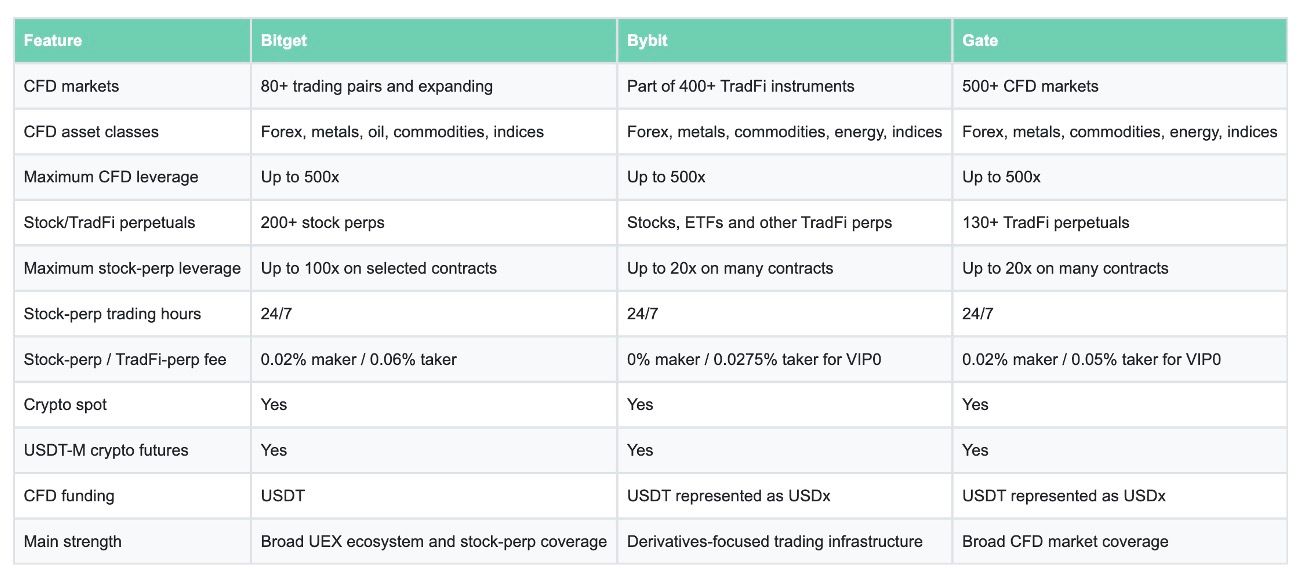
For traders who want to use USDT across several asset classes, the choice therefore depends on what matters most: stock-futures depth and leverage, derivatives pricing, or the breadth of available CFD markets.
Also Read: Musk Leaves A Tesla-SpaceX Merger Open, And Investor Odds Jump To 90%
Can You Trade CFDs, Stock Futures & Crypto With the Same USDT?
Yes, but there is an important distinction. On Bitget, Bybit, and Gate, USDT can serve as the bridge between crypto and traditional-market derivatives, but CFDs and perpetual futures do not always operate inside the same trading account.
On Bitget, USDT can be used directly for crypto and stock perpetual futures, including through supported Unified Trading Account scenarios. CFD trading uses a dedicated CFD environment, so users transfer USDT internally before trading forex, metals, commodities, oil, or indices. This keeps the funding process within the Bitget ecosystem even though the trading infrastructure is separate.
Bybit follows a similar structure. Crypto and TradFi perpetuals can operate through its Unified Trading Account, while CFDs use a dedicated MT5-based account. USDT transferred into the CFD environment is represented as USDx at a 1:1 ratio.
On Gate, USDT also connects crypto, stock-linked perpetuals, and CFDs. For CFD trading, USDT is represented internally as USDx at 1:1, while USDT-M perpetual futures use USDT directly for margin and settlement.
So, traders do not necessarily use one identical balance for every position. The main advantage is that USDT remains the common funding layer, reducing the need to withdraw to a bank, convert back into fiat, or fund a separate traditional broker each time they move between crypto and TradFi markets.
Also Read: Monad $60M Exit Claim Leaves No Trace In Public MON Records
How Do Fees Differ Between CFDs, Stock Futures & Crypto?
A trader can use USDT across all three markets, but the way trading costs are calculated is not the same. CFDs generally use broker-style pricing, while stock and crypto perpetual futures use the maker/taker and funding model familiar to derivatives traders.
CFD Trading Costs
CFD costs can come from several sources:
- Spread: The difference between the buy and sell price.
- Commission: Some account modes charge a fixed amount per lot.
- Overnight swap: A financing charge that may apply when a leveraged CFD position is held overnight.
For example, Bitget's ECN CFD mode charges standard commissions such as $6 per lot for forex and precious metals and $3 per lot for commodities, oil, and many major indices. Traders can also use its Zero-Fee Mode, where there is no separate transaction commission and the cost is incorporated into the spread.
Stock Perpetual Futures Costs
Stock perpetual futures usually charge maker and taker trading fees, plus periodic funding payments between long and short traders. They do not normally use the overnight swap structure found in CFDs.
Standard stock-perpetual fees on Bitget are 0.02% maker and 0.06% taker. Bybit charges VIP0 users 0% maker and 0.0275% taker on TradFi perpetuals, while Gate's VIP0 USDT-M futures rate is 0.02% maker and 0.05% taker.
Crypto Trading Costs
Crypto spot markets mainly charge maker/taker transaction fees, while crypto perpetual futures add funding rates to the equation. Standard spot fees on Bitget, Bybit, and Gate are generally around 0.10% maker and 0.10% taker for entry-level users, while their USDT futures fee schedules vary by platform.
The products use different contract sizes, financing structures, and holding costs. Traders should compare the total cost within each product category rather than judging all three markets by a single fee number.
Also Read: Bitcoin Miners Could Rethink AI Pivot If BTC Hits $126,000
Which Exchange Is Best for Different Types of Traders?
Not every trader is looking for the same thing. One may want the widest stock-perp selection, another may care more about CFD variety, while an active derivatives trader may focus on leverage and execution costs.
- Want the strongest all-around USDT setup? Bitget: Combines crypto markets, 200+ stock perpetuals, and 80+ CFD pairs, with leverage reaching 100x on selected stock perps and 500x on selected CFDs.
- Want more stock perpetual choices? Bitget: Its 200+ stock-perp lineup spans major U.S. and international equities, ETFs, indices, and other stock-linked markets.
- Want higher stock-perp leverage? Bitget: Selected contracts support up to 100x leverage, giving experienced derivatives traders more flexibility when sizing positions.
- Focused mainly on derivatives trading? Bybit: Offers 400+ TradFi instruments, 24/7 TradFi perpetuals, and a trading environment built heavily around derivatives.
- Want the widest CFD selection? Gate: Its TradFi platform lists 500+ CFD markets across forex, metals, commodities, energy, indices, and other traditional markets.
The choice comes down to what matters most in the trading workflow. Bitget offers the broadest balance across crypto, stock futures, CFDs, and USDT-based capital flexibility, while Bybit and Gate stand out more clearly for derivatives-focused trading and CFD market breadth, respectively.
Also Read: Intesa Sanpaolo Puts $966M Into SpaceX After 94% Bitcoin ETF Cut
Why Trade CFDs, Stock Futures & Crypto With USDT?
The biggest advantage is not simply having more markets to trade. It is being able to move between them without rebuilding the entire trading workflow each time. A trader who already holds USDT can shift from Bitcoin to gold, a stock perpetual, or an index CFD while keeping the same stablecoin at the center of their capital.
Key benefits include:
- Less dependence on fiat: Traders can access traditional-market derivatives without repeatedly withdrawing funds to a bank or converting USDT into fiat.
- Faster moves between markets: Capital can shift from crypto into stocks, forex, metals, commodities, or indices when opportunities change.
- One familiar unit of account: Using USDT makes it easier to track margin, profits, losses, and available trading capital across different products.
- Long and short access: CFDs and perpetual futures allow traders to position for both rising and falling markets.
- Broader diversification: A portfolio can include crypto alongside equities, gold, oil, forex, and major indices.
- Extended trading opportunities: Crypto markets run 24/7, while many stock perpetual futures can also be traded around the clock.
- More capital flexibility: Leverage and multi-asset account structures can allow traders to deploy capital across several markets without fully funding the underlying position.
For active traders, the appeal is simple: USDT becomes more than a crypto trading pair. It becomes a bridge between digital assets and a growing range of traditional markets.
Also Read: iPhone 18 Pro Chip Claim Misreads Where The Speed Gain Comes From
Risks of Trading CFDs, Stock Futures & Crypto With USDT
Trading several asset classes from one USDT-based ecosystem can be convenient, but convenience does not reduce the underlying risks. CFDs and perpetual futures are leveraged derivatives, and losses can accelerate quickly when markets move against a position.
Traders should consider:
- Leverage risk: Leverage of 20x, 100x, or even 500x can amplify both gains and losses. Higher leverage also leaves less room for adverse price movements.
- Liquidation risk: Futures positions can be automatically closed if account equity falls below the required maintenance margin.
- Funding costs: Stock and crypto perpetual futures may require periodic funding payments, which can increase the cost of holding a position.
- CFD overnight fees: CFD positions kept open overnight can incur swap or financing charges.
- Off-hours pricing: Stock perpetuals may trade 24/7 even when the underlying stock market is closed, which can lead to different liquidity and pricing conditions.
- Stablecoin risk: Using USDT as the common funding and settlement asset introduces exposure to the stablecoin itself.
- No underlying ownership: Trading a CFD or stock perpetual gives price exposure, not ownership of the underlying stock, commodity, or index.
- Regional restrictions: CFDs and other leveraged TradFi products may not be available in every jurisdiction.
The main takeaway is simple: more markets and higher leverage create more flexibility, but they also require tighter risk management.
Also Read: OpenAI IPO Slips To 2027 As Apple Lawsuit Piles On Legal Risk
Conclusion
USDT is no longer just a bridge between crypto assets. In 2026, it is increasingly becoming a gateway to a much wider trading universe, from Bitcoin and Ethereum to stock perpetuals, gold, oil, forex, and major indices. Bitget, Bybit, and Gate each reflect that shift in a different way, giving traders more freedom to move across markets without constantly returning to fiat or juggling multiple brokers.
Among them, Bitget presents the most complete multi-asset vision through its Universal Exchange model, combining 200+ stock perpetuals, 80+ CFD pairs, crypto spot and futures, up to 100x leverage on selected stock perps, and up to 500x on selected CFDs. But the best platform still depends on how a trader operates. Some may prioritize lower fees, others broader CFD coverage or higher leverage. What is clear is that the line between crypto and traditional markets is becoming much thinner, and USDT is increasingly sitting right in the middle of it.
Read Next: Nasdaq Targets 23-Hour Trading As Crypto Model Reaches Wall Street