
加密貨幣衍生品市場正經歷勢力根本轉移。多年來,中心化交易所一直主導永續合約交易——一種允許交易員以槓桿並無到期日地賭注加密貨幣價格的衍生產品。但到了2025年,去中心化平台已攫取超過五分之一市場,這一轉變三年前還鮮有人預見。
這場革命中心人物之一是 Hyperliquid,一個重新定義去中心化交易所潛力的平台。然而,其市場主導地位現正受到 來自Aster的史無前例挑戰,Aster由幣安共同創辦人趙長鵬(CZ)力撐,自推出數周內成交量已飆破每周數千億美元。兩者之爭不僅是行業市佔之戰,更象徵加密交易基建未來架構的角力。
永續合約(俗稱"perps")是衍生工具,讓交易員可以在無需持有資產的前提下,以槓桿押注加密貨幣價格。與傳統期貨合約有固定到期日不同,永續合約可無限持倉。其透過資金費率機制讓合約價格與現貨保持接軌——多數情況下,持倉較多一方(通常為多頭)需定時支付對手方。這種巧妙設計讓永續合約成為加密交易的主流,2025年佔總加密交易量約68至75%。
去中心化永續交易所的最大吸引力在於其核心價值:用戶能自主管理資產,避開如FTX等中心化平台倒閉帶來的對手風險。所有交易均在鏈上結算,具備高透明度,不存在中心化黑箱運作。唯一歷來弱點是效能——這些平台曾難以達到專業交易員所要求的速度、流動性及用戶體驗。
隨著 Hyperliquid 問世,這一切大幅改變。該平台證明去中心化基建亦可媲美甚至超越傳統中心化交易所,交易最終確認時間達亞秒,同時全鏈上透明。這引爆資本向去中心化平台流動,特別是在監管壓力加劇、交易者尋求自我託管方案的情況下。
市場演進:從小眾到主流
去中心化永續交易所的增長軌跡,堪稱加密市場結構最戲劇性的變革之一。2022年,去中心化合約交易平台僅佔中心化交易平台永續交易量2%以下;到2024年中已升至4.5%以上。至2025年9月,去中心化平台已佔永續合約總成交量逾20%,有數據甚至指比率達26%。
若以絕對值分析,2025年首季,十大中心化交易所的永續合約總量約 5.4 兆美元,僅幣安就達 2 兆。而同時期,去中心化平台也處理了數千億美元成交。到2025年第二季,去中心化永續合約總交易量錄得8980億美元。2025年9月,這些平台首次單月突破1兆美元成交,創歷史新高。
多項因素推動如此破格增長:多國監管機構對中心化交易所有所行動,促使交易者尋找更私隱和抗審查的新選擇;2022年11月FTX倒閉及其他中心化機構失敗,加速市場對非託管交易解決方案需求。區塊鏈基建技術持續進步——特別是延遲、吞吐量及 gas 費優化大幅改善——首次令高頻去中心化交易成為可能。
DeFi 流動性基建成熟亦功不可沒。早期平台因流動性分散、價差過寬及大單滑點嚴重而表現失色,但新一代平台已建立與中型中心化交易所相近流動性,並採用類似傳統金融的訂單簿架構,吸引不僅零售交易者,更有量化公司及機構尋找合規、透明市場。
中心化與去中心化平台的競爭格局正展現明確取捨:中心化交易所流動性極深,例如幣安的訂單簿單一交易數百萬美元,滑點不到0.3%。它們具一體化用戶體驗、高階圖表工具、手機App和客服支援,部分可提供高達125倍槓桿,並設有先進訂單類型及投資組合保證金制度。
去中心化平台則勝在非託管交易,消除對手風險,用戶能保有私鑰控制資產。絕大多數無需KYC,保障私隱,並開放特定限制地區用戶使用。所有交易、清算及資金費率等均鏈上透明,並創新設計代幣經濟,協議收益直接分配給代幣持有人,而非企業股東。
對交易員而言,選擇平台愈來愈講求優先事項:若追求極致流動性及最低延遲,大單成交仍傾向中心化平台。但愈來愈多相信自我託管、透明及抗審查價值,寧願接受價差略闊和生態尚未成熟。隨著去中心化平台月月精進,兩者體驗差距正不斷收窄。
Hyperliquid:當前霸主
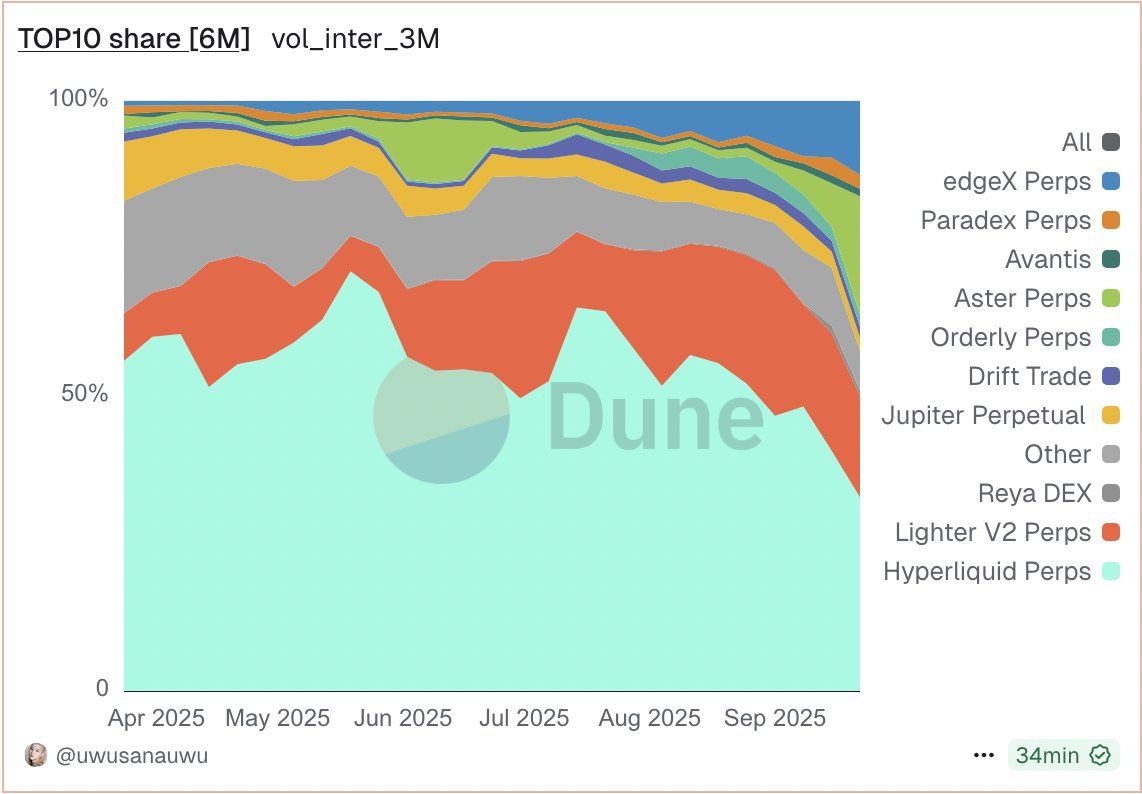
Hyperliquid 躍升為去中心化永續合約龍頭,堪稱市場契合度規模化範例。2023年開啟內測,至2024年全面運作,憑技術創新和社群獎勵結合成功吸引用戶。至2025年3月,Hyperliquid 永續合約累積成交超過1兆美元,佔去中心化永續市場約六成。2025年5月,其單月成交2480億美元,總鎖倉價值倍增至14.6億美元,營收逾7000萬美元。
該平台市佔於2025年中達高峰,當時控制去中心化永續合約市佔 75%~80%。2025年7月為巔峰單月,交易量3,200億美元,月增率47%,佔同期 block chain 協議總營收約35%。其日成交額常逾150億美元,為 dYdX、ApeX 和 Drift 等競爭對手加總的二十倍以上。
Hyperliquid 有別於過去去中心化衍生品平台的是其底層設計團隊選擇不依附現有區塊鏈(如以太坊)或通用L2方案,而是自建專為高頻交易而設的Layer-1區塊鏈。該自研網絡以 HyperBFT 共識機制為核心,確保亞秒級最終成交、每秒可處理超過20萬筆訂單,效能媲美甚至超越多數中心化交易所。
整體架構包含兩大組件。HyperCore 負責鏈上撮合引擎,統籌訂單下單、執行、保證金管理及清算,採中央限價訂單簿系統。不再用早期DeFi主流的自動造市機(AMM)模式,Hyperliquid 訂單簿提供專業交易員熟悉的體驗,實時展示買賣盤,價格執行嚴格依據委託價格,全鏈公開透明,杜絕部分對手採用的鏈下撮合。
HyperEVM 為 HyperCore 補充智能合約層,兼容以太坊虛擬機。開發者幾乎無需改動便可將現有以太坊應用部署到 Hyperliquid 生態,助生態擴容。至2025年9月,HyperEVM上部署協議超過100個,鎖倉總值約20億美元,日均應用營收約300萬美元。Pendle、Morpho、Phantom等主流DeFi項目與原生應用Kinetiq、Hyperlend均在此上線。
Hyperliquid 在用戶體驗上針對歷來困擾去中心化平台的痛點:永續合約交易零gas費,大幅減少高頻交易成本;同時提供高達0.02%掛單回饋及0.05%吃單費,與中心化交易所費率接軌。主流資產如比特幣、以太坊等最高可用至50倍槓桿,涵蓋主流及小型幣種超過150個交易對。
該平台無需KYC procedures - 用戶只需連接一個 Web3 錢包即可開始交易。這種無需許可的訪問方式吸引了來自設有限制性金融監管司法管轄區的用戶,但同樣也引起了監管機構對反洗黑錢合規問題的關注。Hyperliquid 的服務條款限制美國、加拿大安大略省及受制裁地區的用戶訪問,但執行上主要依靠用戶自我聲明,而非主動的地理屏蔽。
HYPE 代幣是 Hyperliquid 經濟模型的核心。該代幣於 2024 年 11 月透過社群空投方式推出,根據用戶的交易活躍度及平台參與度,分發了 3.1 億枚 HYPE(佔總供應量 10 億的 31%)給早期用戶。這次空投在高峰時的價值以數十億美元計,為積極的社群成員帶來可觀財富,同時建立起競爭對手難以複製的良好聲譽。
HYPE 於生態系統中有多重用途。代幣持有人可質押(stake)以參與網絡安全,並獲得獎勵。該代幣帶來治理權力,持有人可提出和投票決定協議升級及參數調整。最重要的是,Hyperliquid 採用了進取的手續費銷毀機制,約 97% 的協議手續費會用來回購並銷毀 HYPE 代幣,產生通縮壓力,理論上有利於長線持有人。
截至 2025 年 9 月底,HYPE 交易價格約為 44 至 49 美元,較 8 月創下的歷史高位 51 美元有所回落。該代幣的市值超過 126 億美元,令其成為市值第 19 大的加密貨幣。每日交易量經常超過 6 億美元,為長線投資者及活躍交易員提供充裕流動性。
然而,Hyperliquid 面臨結構性挑戰,令其前景更複雜。由 2025 年 11 月起,平台將展開大型代幣解鎖,於 24 個月內逐步向核心貢獻者釋放約 2.378 億枚 HYPE,佔總供應量 23.8%。換言之,平均每月將有約 990 萬枚代幣流入市場,以現價計值約 4.46 億美元。如此規模的解鎖會構成持續沽盤壓力,因受贈者將部分資產兌換為流動資金,即使協議運作良好,亦可能限制價格升值空間。
分析師就這種沽壓如何與 Hyperliquid 的費用銷毀機制互動爭議不休。樂觀者認為,協議強勁的收益能力——經常位列加密貨幣手續費收入前三甲——可提供強大回購力量,抵銷解鎖相關沽貨。平台即將提出的 HIP-3 提案亦值得關注,若獲通過,建設者需大量質押 HYPE 來開設新永續市場,這或會進一步吸納市場供應。惟批評者認為,在交易量下跌或競爭加劇時,每月解鎖逾 4 億美元的規模,即使回購計劃再進取,亦難以全面吸納。
Aster 的爆炸式崛起:幣安加持的挑戰者
如果說 Hyperliquid 創下的故事是憑科技實力逐步攻佔市場,那 Aster 的發展則是以爆炸性增長及高調加持顛覆業界規律。這平台由多資產流動性協議 Astherus 及去中心化永續協議 APX Finance 於 2024 年底合併而成。合併實體於 2025 年 3 月 31 日正式以 Aster 品牌推出,當時外界只預期其會慢慢被市場接受。
接下來的發展卻大大超出行業預期。2025 年 9 月 17 日舉行的 Aster 代幣發行活動在 24 小時內觸發超過 1,500% 的價格急升,短暫令市值高達 32 億美元、位列全球加密貨幣市值榜第 50。更重要的是,平台交易量自推出後數週內由近乎零增長至每周超過 2,700 億美元。至 2025 年 9 月底,Aster 已奪得去中心化永續合約市場的主導地位,30 日永續合約總交易量高達 2,900 億美元,部分短期指標更超越 Hyperliquid。
促成這次現象級採納的關鍵毫不含糊:趙長鵬的公開加持。幣安共同創辦人 CZ 於 2025 年 9 月在社交媒體公開表態支持 Aster,並明確將其與競爭對手作正面比較。以 CZ 作為加密界最具影響力人物,以及幣安作為最大交易所的地位,這個加持影響巨大。幾日內,Aster 總鎖倉價值短暫衝上 20 億美元,其後回落至約 6.55 億美元。而隨著散戶與大戶(包括 BitMEX 前聯合創辦人 Arthur Hayes)將資金由 Hyperliquid 轉至 Aster 試新平台,交易量急增。
Aster 的競爭策略強調多項差異化。與 Hyperliquid 自訂區塊鏈不同,Aster 原生支援多條網絡,包括 BNB Chain、Solana、Ethereum 及 Arbitrum。多鏈策略減低現有用戶的操作門檻,免除將資產跨鏈橋接到新網絡的不便。平台為部分交易對提供高達 1,001 倍槓桿,遠超 Hyperliquid 的 50 倍上限,甚至較幣安合資格用戶上的 125 倍更高。如此極端槓桿既吸睛亦帶來交易量,但同時放大風險,亦因此而被批評忽略散戶保障。
平台採用 "Trade & Earn" 模式,允許用戶以有收益的資產作為永續合約保證金,理論上可令資本「一雞二味」。這創新針對了用戶在借貸協議上賺穩定幣收益與參與槓桿交易間的資金分配兩難。Aster 亦重視隱私功能,最具代表性的「隱藏委託單」讓大戶可在不公開訂單量與價格情況下下盤,這正正回應了 CZ 於 2025 年 6 月倡議去中心化交易所實現「暗池」功能時點出的痛點。
Aster 受機構資本支持,遠不只 CZ 背書。項目獲得前稱 Binance Labs、現稱 YZi Labs 的投資,即幣安旗下的投資及孵化部門。雖然具體資金細節未有公開,但這背景不單提供資金來源,更帶來幣安廣泛的做市商、交易公司及機構網絡。平台與幣安的關係密切,導致其「去中心化」成色備受質疑——尤其是在其價格資訊依賴幣安預言機,並與 BNB Chain 生態緊密結合的情況下。
平台的代幣經濟與激勵設計亦極具爭議。Aster 採用進取積分制,按交易活躍度賦分,參與者可期待季度積分最終兌換代幣。批評者指此類計劃難免吸引「打金」資本——即透過自我成交或製造假交易量來刷分,待獎勵到手即沽貨離場。事實上,Aster 的交易量對未平倉量(open interest)比率明顯高於其他成熟平台,印證了部分擔憂。
未平倉合約總價值(open interest)比單純交易量更能反映平台的真正用戶承諾度和黏性。2025 年 9 月底,Aster 的交易量雖一度超越 Hyperliquid,但未平倉量則遠遠落後。這意味著 Aster 的大部分交易量來自短線炒作及刷積分,而非大量用戶長期投入資本建立持倉。
部分分析員認為 Aster 爆發性增長模式潛藏隱憂。其 30 天總鎖倉額波動劇烈,儘管平台已設市場操控防範措施,洗交易量等問題仍然存在。Aster 預計於 2025 年 10 月中進行代幣首次解鎖(釋放約 11% 供應),屆時市場將見證早期參與者是選擇繼續投入還是利用升值獲利離場。市場觀察者提醒,類似瘋狂增長專案常在激勵計劃邁入後期及早鳥用戶開始變現時面對劇烈調整。
然而,要指 Aster 只是一時爆紅的曇花現象則言之過早。該平台在隱藏委託及多鏈可達性等多方面確有實質創新。即使有爭議,其手續費收入仍具規模,若能保留則有望形成穩健的財務基礎。來自 CZ 及幣安生態的支援更是大多數競爭對手難以媲美的優勢。最重要的是,Aster 曝露了 Hyperliquid 對競爭的脆弱,證明去中心化的永續合約市場仍屬於競爭激烈而非贏者通吃的格局。
平台路線圖包括開發自家 Layer-1 區塊鏈,現正作內部測試,專為以零知識證明技術(zero-knowledge proof)實現永續合約的私隱交易而設。這條「Aster Chain」計劃向機構級客戶提供交易規模及盈虧匿名、同時可稽核的方案,針對大戶及資管基金對保密的需求。如若成功落地,Aster 有望在解決許多機構無法採用全公開鏈的合規障礙下,憑私隱特性與公開競品區隔。
競爭格局:超越雙雄争霸
Here is your translation following your formatting instructions (markdown links skipped):
雖然 Hyperliquid 和 Aster 經常佔據新聞頭條,但去中心化永續期貨生態圈其實包含咗大量平台,佢哋各自有唔同嘅發展策略。有啲平台直接同市場領頭羊競爭,有啲就專注服務未被滿足嘅市場細分,或者試驗新型機制。
Lighter 現時可以話係呢個市場上最有實力嘅第三勢力。獲得矚目風投支持,包括 Andreessen Horowitz (a16z)、Dragonfly Capital、Haun Ventures 同 Lightspeed Venture Partners,Lighter 係 2025 年一月推咗私人測試版,喺夏季尾進入公開主網。到 2025 年 9 月底,平台每星期成交額大約達到 90 億美元,佔據去中心化永續期貨市場大約 16.8% 市場份額。
Lighter 嘅核心創新係佢專有嘅零知識匯總(zero-knowledge rollup)架構,使平台可以用低於 5 毫秒嘅延遲,為中心限價訂單簿引擎執行嘅每一個運算做出證明,同時將結算最終性落實到以太坊。呢種方法理論上提供咗與中心化交易所相若嘅性能,以及以太坊結算嘅安全保證,呈現一種同 Hyperliquid 獨立 Layer-1 同 Aster 多鏈部署唔同嘅混合模式。平台以差異化收費結構針對機構交易員同高頻交易公司:零售用戶直接用前端唔使收費,而經 API 同演算法交易會收費,用嚟變現專業用戶。
自從主網公開後,Lighter 展現出強勁嘅增長指標。平台單日最高成交額超過 20 億美元,鎖倉總價值由三月初嘅 250 萬美元上升到 2025 年 7 月超過 3.4 億美元。私人測試期間吸引咗超過 56,000 名用戶,累積接近 188,000 個獨立帳戶,同 50,000 名日活躍用戶。平台嘅積分計劃(一如坊間預期係為將來發幣做準備,持續到 2025 年底)有效推動咗參與度。
然而,外界對 Lighter 增長能否持續存有疑問。佢嘅「成交量對未平倉合約比率」大約係 27,遠高於 Hyperliquid 嘅 0.76、Jupiter 嘅 2.44 同 dYdX 嘅 0.40。分析普遍認為 5 以下係健康水平,10 以上就顯示市場存在大量洗盤或由激勵推動嘅交易活動。有分析員指出,Lighter 嘅積分機制雖然有力吸引用戶,但亦可能「重度推高咗平台表現數字」。平台要證明開完積分活動、發完 Token 之後,用戶仲願意繼續活躍。
EdgeX 係另一個重要競爭對手,專為永續期貨交易而打造於以太坊之上的 Layer-2 區塊鏈。到 2025 年 9 月底,EdgeX 每星期成交額大約 61 億美元,成為區塊鏈上第四大衍生品交易平台。EdgeX 最大特色係公平同透明,設計機制防止「搶先交易」(front-running),確保所有市場參與者唔會因為網絡快慢或地理位置差異而有唔公平待遇。
Jupiter Perpetuals 則係 Solana 上最大去中心化交易聚合器嘅衍生品服務,利用現有龐大用戶基礎同 Solana 高速低成本嘅基礎設施,獲得顯著市場份額。平台喺 2025 年 9 月處理咗大約 215 億美元永續合約成交額,排名全去中心化永續期貨平台第五。Jupiter 主要加密貨幣最高可用 100 倍槓桿,又深度整合 Solana DeFi 生態圈,用戶可以無縫切換現貨交易、穩定收益同永續合約,而唔使過橋轉網。
其他平台,包括 DIME、ORDER、REYA、APEX、AVNT、RHO、Ostium、Hibachi 同 MKL,都吸引咗可觀成交量,合共每星期成交額達數十億美元。許多平台都積極實驗新形式:有啲採用混合自動化做市同訂單簿模式,有啲主攻現實資產代幣化,有啲平台服務特定地區或語言社群。
咁多不同方案顯示去中心化永續期貨市場仲處於實驗階段,速戰速決。「最佳」架構、用戶體驗同經濟模型仲未有定論。咁多平台競爭,對交易員嚟講好處係刺激創新同壓低收費。不過,流動性都被拆散咗,要落大單時可能要同時喺多個平台拆開搓合,導致滑點風險升高,而中心化交易所集中流動池就可以避免多重複雜操作。
成交量 vs 未平倉合約:細看重要指標
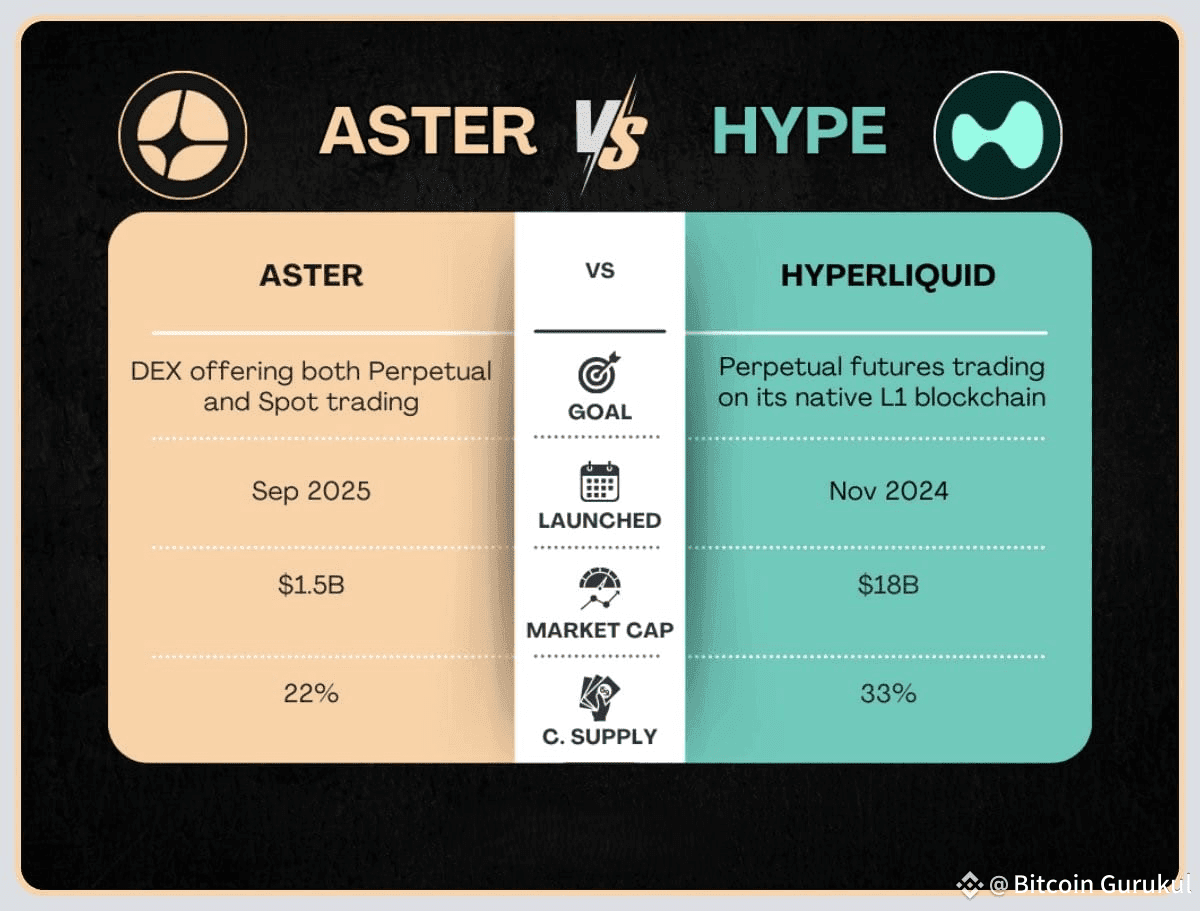
Hyperliquid 同 Aster 嘅競爭令市場再一次討論,衍生品平台到底邊個數據先最能反映實力。成交量同未平倉合約各有意義,不過實際上分別衡量咗唔同現象,影響平台健康與可持續發展。
成交量指特定時段內合約成交總名義價值,通常以日、週或月計。高成交量表示價格發現活躍、價差窄、流動性充足,方便交易員入市離場。專攻成交量增長嘅平台通常會提供做市回贈或者獎勵流動性提供者,鼓勵佢哋報出有競爭力價錢。成交量亦直接帶嚟收入,因為平台通常要收成交額百分比作費用,即成交多啲,協議收入就高啲。
未平倉合約則代表某刻市面所有仍未平倉結算嘅期貨合約總價值,反映資本承擔,即交易員揸住倉(有浮盈或浮虧),而唔係淨係不停高買低賣短炒。當有雙方都「開倉」時會加大未平倉合約,而有兩邊「平倉」就會減少。成交量可能同一筆資金不斷兜圈炒,但未平倉合約就反映市場真正參與深度。
DeFi 分析師 Patrick Scott 曾經解釋點解佢會覺得 Hyperliquid 比 Aster 更值得長線投資:「同成交量與收入只測活動唔同,未平倉合約係流動性指標,而且更有黏性。」2025 年 10 月初,Hyperliquid 佔去中心化永續期貨平台未平倉合約約 62%,遠高過其成交量市佔(按時段介乎 8% 至 38%)。
呢種差異反映重要動態。Aster 雖然成交量一度爆炸性增長(至 9 月底每週 2700 億美元),但未平倉合約份額追唔上,平台嘅「成交量對未平倉合約比」偏高,證明大部分交易都屬於短期炒賣、算法炒倉或者攞分行為,而唔係真正長線配置資本。交易員可能只係用 Aster 做特定交易或者攞激勵,核心倉位同保證金始終放返去 Hyperliquid 或已建立信譽平台。
高成交量但未平倉合約低,有幾個可能原因,有啲未必係壞事。活躍交易員頻繁開倉平倉,貢獻咗真實成交量但未必留住大額未平倉合約。做套戥(套利)嘅人會喺唔同平台間搵價差,做大成交量但唔持有大倉。做市商透過演算法報價貢獻流動性,會增加成交但唔會承擔方向風險。呢啲行為有助效率,令價差收窄。
但如果有平台透過洗盤(同一個人自己同自己、或唔同實驗錢包夾帶交易嚟抬高成交量)造假,市場就要小心。雖然去中心化平台嘅透明度理論上比中心化平台黑盒操作容易暴露洗盤,不過高手都可以用多重錢包同複雜交易模式掩飾活動。如果平台激勵方案只著重成交唔計可持續性,就易吸引「打工兵」資金,攞完著數就走人。
未平倉合約穩定性能更可信地反映平台黏性同用戶承諾。長時間維持槓桿倉位嘅用戶,其實好有信心平台嘅穩定、安全同公平成交。未平倉合約佔鎖倉總價值高,代表資金效率高,用戶資金都真正投咗落活躍倉位而唔係淨係擱咗喺度。深度未平倉合約讓平台可以更好應對市場波動,因為槓桿保證金會為價格波動時提供穩定性。
Hyperliquid 即使份額比人搶咗成交量,仲可以守住主導未平倉合約市佔,體現多方面優勢。佢過去幾個月安全穩定,冇大漏洞爆煲,建立到信心。專業交易員同做市商——呢班人通常倉位大、貢獻未平倉合約最深——會信 Hyperliquid 成熟嘅基建同深度流動性繼續揸核心頭寸,同時間中用新平台短炒或攞激勵。平台嘅全面功能...trading pairs and efficient liquidation mechanisms reduce the risk of cascading failures during volatility.
交易對及高效清算機制有助減低市場波動期間出現連環斷鏈風險。
Revenue generation, which combines aspects of both volume and open interest, provides another crucial metric. Platforms earn fees based on trading volume, meaning high-volume platforms can generate substantial income even with modest open interest. However, sustainable revenue typically requires a balance - pure volume without position commitment suggests reliance on incentive programs that drain treasury reserves, while high open interest with minimal trading indicates users are holding positions but not actively trading, limiting fee revenue.
收益產生方面,結合成交量及未平倉合約數量,構成另一個重要指標。交易平台主要按成交量收費,所以即使未平倉合約金額不大,但高交易量的平台仍可獲得可觀收益。不過,持續穩定的收入一般都要平衡兩者——純粹靠大量成交但無持倉承諾,代表平台過於依賴激勵計劃,消耗庫房資源;反之,若未平倉高但實際成交少,則代表用戶只持倉但沒頻繁交易,收費收入亦有限。
Analysts evaluating platform investments or assessing competitive positioning increasingly emphasize metrics beyond headline volume. Revenue per user, cost of capital acquisition through incentives, platform fee revenue relative to token market cap, and sustainability of fee-burning or distribution mechanisms all factor into sophisticated analysis. The tension between short-term growth metrics and long-term sustainability will likely determine which platforms emerge as lasting leaders versus which fade after initial momentum wanes.
分析師在評估平台投資價值或競爭地位時,愈來愈著重於成交量以外的指標,例如:每位用戶帶來的收益、透過獎勵獲取資本的成本、平台收費收入與代幣市值的比例,以及燒毀手續費或分發機制的可持續性等等。短期增長數據與長遠可持續發展之間的拉鋸,往往決定平台能否成為長青領袖,抑或只是曇花一現。
Hyperliquid's Expansion: Building an Ecosystem
Hyperliquid 的擴展:建立生態圈
Hyperliquid's leadership team has demonstrated awareness that relying solely on perpetual futures trading exposes the platform to competitive and market risks. The launch of HyperEVM in early 2025 represented the first major expansion beyond the platform's core perpetuals offering, transforming Hyperliquid from a single-product exchange into a Layer-1 blockchain supporting a broader DeFi ecosystem.
Hyperliquid 團隊已意識到,單靠永續合約產品,會令平台面對更大競爭及市場風險。2025年初推出的 HyperEVM,是平台第一次跳出永續合約主營業務的重大擴展,令 Hyperliquid 由單一產品交易所,蛻變為支援更廣泛 DeFi 生態的 Layer-1 公鏈。
HyperEVM's growth has exceeded expectations. By September 2025, the network hosted over 100 protocols with approximately $2 billion in total value locked - a substantial figure for a blockchain less than a year old. Native applications like Kinetiq, a derivatives optimization protocol, and Hyperlend, a lending platform, have gained traction alongside deployments from established projects including Pendle, Morpho, and Phantom. The ecosystem generates around $3 million in daily application revenue, contributing meaningfully to overall blockchain activity beyond perpetuals trading.
HyperEVM 發展超乎預期,截至 2025 年 9 月,網絡已有超過 100 個協議進駐,總鎖倉價值(TVL)接近 20 億美元 —— 對於運行不足一年的公鏈而言,數字相當可觀。原生應用如衍生品優化協議 Kinetiq 及借貸平台 Hyperlend 逐漸流行,同時還有 Pendle、Morpho、Phantom 等成熟項目落地。整個生態平均每日貢獻約 300 萬美元應用收入,令區塊鏈活動不再單靠永續合約交易。
This ecosystem expansion serves multiple strategic purposes. It creates network effects that make Hyperliquid stickier - users who deploy capital across multiple applications on the network face higher switching costs than those simply trading perpetuals. Revenue diversification reduces dependence on trading fees, which can fluctuate substantially with market conditions and competitive dynamics. Application developers building on HyperEVM become stakeholders invested in the network's success, forming a coalition that defends Hyperliquid's market position through continuous innovation.
這次生態擴展有多重策略意義:首先,網絡效應令 Hyperliquid 客戶黏性提升--同一條鏈上用戶跨多個應用部署資產後,離開的成本比單純交易永續合約更高;其次,收入來源多元化,不再高度依賴交易手續費,而後者經常受市場及競爭變化猛烈波動。開發者在 HyperEVM 建構應用後,亦會成為生態利益相關者,主動推動創新浪潮,合力鞏固 Hyperliquid 的市場領導位置。
The architectural decision to maintain Ethereum Virtual Machine compatibility was strategically critical. Developers familiar with Ethereum's dominant programming environment can deploy to Hyperliquid with minimal code modifications, dramatically lowering adoption barriers. Existing Ethereum tools, libraries, and infrastructure largely function on HyperEVM, allowing projects to leverage battle-tested components rather than building everything from scratch. This compatibility also enables cross-chain composability as DeFi matures, potentially positioning Hyperliquid as a liquidity hub that bridges multiple ecosystems.
維持與以太坊虛擬機(EVM)兼容,是極具策略性的架構選擇。習慣了以太坊主流開發環境的開發者,只需要作出極少修改就可以部署到 Hyperliquid,大幅降低採用門檻。以太坊既有開發工具、函式庫及基礎設施基本上都能直接於 HyperEVM 使用,項目方可快速利用已經歷過考驗的組件,不用全部重頭做起。這種兼容性亦有利於 DeFi 隨著行業發展逐步實現跨鏈組合,推動 Hyperliquid 成為連結多條鏈的流動性樞紐。
The September 2025 launch of USDH represents Hyperliquid's most ambitious ecosystem expansion yet. This native stablecoin, pegged to the US dollar and backed by a combination of cash and short-term US Treasury securities, directly challenges the dominance of Circle's USDC and Tether's USDT - stablecoins that collectively command over 90 percent of the market. For Hyperliquid, which holds approximately $5.6 to $6 billion in USDC deposits representing roughly 7.5 percent of all USDC in circulation, launching a native stablecoin addresses both economic and strategic imperatives.
2025 年 9 月發佈的 USDH 是 Hyperliquid 有史以來最大膽的一次生態擴展。這款原生穩定幣與美元掛鈎,由現金及短期美國國債共同作儲備,直接挑戰 Circle 的 USDC 和 Tether 的 USDT —— 兩者加起來壟斷超過 90% 穩定幣市場。對 Hyperliquid 而言,平台持有約 56 億至 60 億美元 USDC,佔所有流通 USDC 約 7.5%,發行自家穩定幣同時涵蓋經濟與策略層面的考慮。
The economic rationale is straightforward: USDC's reserves generate substantial interest income from Treasury yields, all of which flows to Circle rather than Hyperliquid or its users. Analyst estimates suggest that fully migrating Hyperliquid's USDC holdings to USDH could capture approximately $220 million in annual Treasury yield revenue, assuming a 4 percent return on reserves. Under the proposed model, half of this revenue would fund HYPE token buybacks, creating ongoing demand for the governance token, while the other half would support ecosystem growth initiatives, developer grants, and user incentives.
經濟理據非常清晰:USDC 儲備會從美國國債孳息產生大量利息收入,而這些收入全數流向 Circle ,與 Hyperliquid 及其用戶無緣。有分析估算,如 Hyperliquid 將所有 USDC 全部轉成 USDH,按 4% 孳息率計算,平台可每年多賺約 2.2 億美元利息收入。根據建議模式,當中一半用於回購 HYPE 治理代幣,為治理幣帶來源源不絕的需求;另一半則支持生態增長計劃、開發者基金及用戶獎勵。
The strategic benefits extend beyond revenue capture. A native stablecoin reduces systemic risk from dependence on external issuers. Circle has demonstrated willingness to freeze USDC in specific addresses when requested by law enforcement, raising concerns about censorship risk for decentralized platforms. Regulatory actions targeting Circle or changes to USDC's compliance policies could ripple through Hyperliquid if the platform remains overly dependent on the stablecoin. USDH provides optionality and resilience by diversifying stablecoin exposure.
策略好處不止於收入回流。原生穩定幣可減輕外部發行商帶來的系統性風險。Circle 曾經根據執法部門要求,直接凍結過某些地址的 USDC,引發去中心化平台用戶對審查風險的擔憂;一旦有針對 Circle 的監管行動、新合規政策變動,若平台過度依賴 USDC,震盪亦會傳遞至 Hyperliquid。USDH 令平台穩定幣組合更多元化,增強韌性與選擇權。
Native Markets, the startup selected to issue USDH after a competitive bidding process that saw proposals from Paxos, Ethena, Frax Finance, Agora, and others, secured victory with 97 percent validator support. The team brings relevant experience - co-founder Max previously worked at Liquity and Barnbridge focusing on stablecoins and fixed-rate instruments, while advisor Mary-Catherine Lader served as President and COO of Uniswap Labs and led BlackRock's digital asset initiatives. This expertise should prove valuable as USDH navigates complex regulatory requirements and operational challenges.
負責發行 USDH 的 Native Markets,是經過多輪投標(包括 Paxos、Ethena、Frax Finance、Agora 等對手)後成功獲選,獲得 97% 驗證者支持。團隊成員相關經驗豐富,聯合創辦人 Max 曾於 Liquity 及 Barnbridge 任職,專注穩定幣和固定收益產品,顧問 Mary-Catherine Lader 曾任 Uniswap Labs 總裁兼 COO ,並領導 BlackRock 數碼資產業務。這些專業背景將有助 USDH 應對複雜合規法規及營運挑戰。
USDH's reserve structure employs a dual approach: off-chain holdings managed by BlackRock combined with on-chain reserves handled by Superstate through Stripe's Bridge platform. This hybrid model balances security and transparency - institutional-grade custody for the majority of reserves with on-chain visibility that allows users to verify backing in real-time. The stablecoin complies with the GENIUS Act, comprehensive US stablecoin legislation signed into law in July 2025 that established regulatory standards for reserve composition, transparency, and redemption mechanisms.
USDH 儲備採雙軌制模式:線下部分由 BlackRock 托管,鏈上部分則由 Superstate 配合 Stripe 的 Bridge 平台管理。此混合方案兼顧安全與透明度,既採用機構級託管保障大部分資產,又令用戶可隨時在鏈上查閱儲備狀況。USDH 完全符合 2025 年 7 月美國生效、內容全面的穩定幣法《GENIUS Act》,涵蓋儲備組成、透明披露與贖回機制等監管標準。
Early adoption metrics show promise but also reveal challenges ahead. Within 24 hours of launch on September 24, 2025, Native Markets pre-minted over $15 million USDH with early trading generating more than $2 million in volume. The USDH/USDC pair maintained its dollar peg at 1.001 in initial sessions, demonstrating stability. By late September, total supply reached approximately 2.38 million tokens with a $2.37 million market cap - modest figures that underscore the difficulty of displacing entrenched stablecoins even with superior economics.
初步採用數據有亮點亦顯示未來挑戰。2025 年 9 月 24 日上線首 24 小時,Native Markets 預先鑄造逾 1500 萬美元 USDH,早段交易量超過 200 萬美元,USDH/USDC 匯價穩守 1.001,展現出良好穩定性。不過截至 9 月底,總發行量約 238 萬枚,市值僅 237 萬美元,反映即使經濟誘因強,若要動搖現有主流穩定幣地位也並不容易。
The platform's integration roadmap for USDH includes several critical milestones. Short-term plans involve making USDH available as a quote asset on spot markets, enabling direct minting on HyperCore, and potentially introducing USDH-margined perpetuals that would allow traders to post the stablecoin as collateral. Longer-term ambitions include expanding USDH adoption beyond Hyperliquid to other chains and DeFi protocols, transforming it from a platform-specific token into a widely-used stablecoin. Success would significantly enhance Hyperliquid's strategic position and revenue potential.
USDH 的整合路線圖包含多個重要里程碑:短期會先令 USDH 可在現貨市場作報價資產,開通 HyperCore 直接鑄幣功能,並考慮推出 USDH 保證金的永續合約,讓交易者可以其作抵押品;中長線則希望推廣 USDH 至 Hyperliquid 以外的區塊鏈和 DeFi 協議,將其塑造成廣泛流通的穩定幣。若能成事,將大大強化 Hyperliquid 的策略地位與收入潛力。
The upcoming HIP-3 proposal represents another major expansion initiative. This governance proposal would implement a permissionless market creation mechanism allowing builders to launch new perpetual markets by staking substantial amounts of HYPE tokens - initially proposed at 1 million HYPE, worth approximately $45 to $49 million at current prices. Market creators could earn up to 50 percent of fees generated by their markets, creating powerful incentives for identifying and launching trading pairs with genuine demand.
即將公佈的 HIP-3 提案會帶來另一個重磅擴展舉措。該治理建議將引入無需審批的市場創建機制,只要質押 100 萬枚 HYPE (現價約 4,500 萬至 4,900 萬美元),開發者就可自由開新永續合約市場。創建者最多可獲得該市場 50% 產生的手續費,激勵大家主動發掘、上架最有需求的交易對。
HIP-3 addresses several strategic objectives simultaneously. It creates substantial demand for HYPE tokens as prospective market creators must acquire and lock significant holdings, functioning as a "supply sink" that could offset selling pressure from token unlocks. It accelerates the addition of new trading pairs without requiring core team approval for each listing, enabling Hyperliquid to rapidly expand its asset coverage and capture emerging trends. It transforms Hyperliquid into infrastructure for other builders to create businesses, fostering ecosystem growth and innovation.
HIP-3 一舉達成多個策略目標:首先,質押需求帶來巨大 HYPE 代幣鎖倉效應,可吸收一部分解鎖流通壓力;其次,免去核心團隊逐一審批新市場,平台可加快上線新交易對,把握市場最新潮流;同時,變相令 Hyperliquid 成為賦能其他開發者的基建平台,推動生態圈壯大和創新。
The proposal also carries risks. Permissionless market creation could flood the platform with low-quality trading pairs that fragment liquidity without attracting meaningful volume. Scam projects might launch deceptive markets hoping to profit from unsophisticated traders, creating reputational risks for Hyperliquid. The high HYPE staking requirement could limit market creation to well-funded entities, preventing grassroots community-driven listings. Execution details - including mechanisms to remove failed markets, adjust staking requirements, and govern fee sharing - will determine whether HIP-3 achieves its ambitious goals or introduces new challenges.
不過,該建議亦存在風險。例如:無需審批的上新市場可能令平台湧現大量質素低劣、分散流動性但無實際成交的交易對;有心人士甚至可為騙局項目創建陷阱市場,誤導新手交易者,牽連到 Hyperliquid 名譽;而高額 HYPE 質押門檻,或會令基層社群難以參與上新,只限大資本玩家主導。執行細節如如何清退失敗市場、調整質押要求、手續費分配機制等,將決定 HIP-3 能否實現預期目標,還是製造新問題。
These expansion efforts collectively represent Hyperliquid's bet that sustainable competitive advantage requires more than excellence in a single product category. By building a comprehensive ecosystem encompassing perpetuals, spot trading, lending, stablecoins, and permissionless market creation, Hyperliquid aims to create a moat that pure-play competitors struggle to replicate. Whether this strategy succeeds depends on execution across multiple complex workstreams while maintaining the performance, security, and user experience that established the platform's reputation.
上述各種擴展,展現 Hyperliquid 的核心信念:長青優勢絕非單一爆款產品就能建立。平台正積極構建涵蓋永續、現貨、借貸、穩定幣及無需審批市場的全方位生態,加強自身護城河,令專注單品類的競爭對手難以模仿。這條路線能否成功,取決於團隊能否遊刃有餘處理多線並行的複雜工作,同時維持平台一貫的高效能、安全性及用戶體驗。
Compliance, Innovation, and Uncertainty
合規、創新與不確定性decentralized perpetual exchanges operates against a backdrop of evolving regulatory frameworks that could fundamentally reshape the market. Regulators globally are grappling with how to apply traditional derivatives oversight to novel decentralized structures, while the industry debates optimal approaches to compliance that preserve decentralization's core benefits.
去中心化永續合約交易所目前運作於一個不斷變化的監管框架下,而這些政策有可能徹底改變整個市場。全球各地的監管機構都在努力探索如何將傳統衍生工具監管適用於創新的去中心化結構,同時業界亦爭論怎樣的合規方式可以繼續保留去中心化的核心優勢。
In the United States, perpetual futures have historically existed in a regulatory gray area. Traditional futures contracts trade on Commodity Futures Trading Commission-regulated Designated Contract Markets with strict rules governing margin, clearing, and reporting. Perpetuals, with their lack of expiration dates and continuous funding rate settlements, didn't fit neatly into existing frameworks. This ambiguity drove most perpetual trading to offshore exchanges like Binance, OKX, and Bybit, which captured enormous volume from US traders willing to use VPNs to circumvent geographic restrictions.
在美國,永續期貨一直以來都存在於一個監管灰色地帶。傳統期貨合約會在商品期貨交易委員會(CFTC)監管的指定合約市場(DCMs)交易,這些平台對保證金、結算及報告有嚴格規定。而永續合約因為沒有到期日,以及持續的資金費結算,並未完美地納入現有監管框架。這種模糊性促使大多數永續合約交易轉移至如Binance、OKX及Bybit等海外交易所,這些平台積累了大量願意透過VPN繞過地理限制的美國用戶交易量。
The regulatory landscape shifted dramatically in 2025. In April, the CFTC issued requests for comment on both 24/7 derivatives trading and perpetual-style contracts, signaling openness to onshoring these products. By July, Coinbase Derivatives self-certified two perpetual futures contracts - BTC-PERP and ETH-PERP - that became effective for trading on July 21, 2025, after the CFTC's ten-day review window passed without objection. This represented the first time a CFTC-regulated US exchange offered perpetual futures, marking a watershed moment for domestic market structure.
2025年,監管環境發生了巨大變化。4月,CFTC就24/7全天候衍生品交易及永續合約型產品徵求公眾意見,顯示對此類產品在美國本土發展持開放態度。到7月,Coinbase Derivatives自行認證了兩款永續期貨合約——BTC-PERP及ETH-PERP,並於2025年7月21日開始生效交易,期間CFTC的十天審查期內未有提出異議。這是美國首度有CFTC監管的交易所提供永續期貨,標誌著本地市場結構的一個重要轉捩點。
The products differ from offshore perpetuals in important ways. They carry five-year expirations rather than truly perpetual durations, though this distinction becomes semantic given the extended timeframe. They offer up to 10x leverage rather than the 100x or higher common internationally, reflecting conservative regulatory positioning. Most significantly, they trade on a regulated venue with CFTC oversight, providing legal clarity and consumer protections that unregulated offshore platforms lack.
這些產品跟海外永續合約有重要分別:它們有五年期限,而非真正意義上的永續——只是時間長短的分別,而且長期來看差距有限。杠桿方面最高只提供10倍,遠低於海外動輒100倍或更高的常見水平,這反映了審慎的監管取態。最重要的是,這些合約於受CFTC監管的平台交易,提供法律明確性及消費者保障,這是無監管海外平台所欠缺的。
In September 2025, the Securities and Exchange Commission and CFTC held a joint roundtable on regulatory harmonization, addressing jurisdictional overlaps and conflicts between the two agencies. Both regulators expressed interest in facilitating decentralized finance innovation, with statements indicating willingness to consider "innovation exemptions" that would allow peer-to-peer trading of perpetual contracts over DeFi protocols. This collaborative approach marks a stark departure from the adversarial regulatory environment that characterized much of 2023 and 2024.
2025年9月,美國證券交易委員會(SEC)及CFTC聯合舉行了一個針對監管協調的圓桌會議,討論兩機構之間的職權重疊和矛盾。兩者都表示希望促進去中心化金融創新,並願意考慮「創新豁免」政策,讓DeFi協議上的點對點永續合約交易成為可能。這種協作做法與2023及2024年敵對的監管氛圍形成鮮明對比。
The passage of the GENIUS Act in July 2025 provided crucial clarity for stablecoin operations. This comprehensive legislation established regulatory standards for dollar-backed stablecoins including reserve composition, transparency requirements, and redemption guarantees. For platforms like Hyperliquid launching native stablecoins, compliance with GENIUS Act standards provides legal certainty and builds trust with institutional users. The law's existence also signals broader regulatory acceptance of crypto infrastructure as permanent financial market components rather than temporary phenomena.
2025年7月,《GENIUS法案》通過,為穩定幣運作帶來關鍵的法律清晰度。這套全面法規為美元支持的穩定幣定立監管標準,包括儲備組成、透明度要求及贖回保障。對於如Hyperliquid這些推出原生穩定幣的平台而言,遵從GENIUS法案代表其穩定幣具法律確定性,有助建立機構用戶的信心。這部法例的存在亦象徵監管層面廣泛接納加密基建成為永久金融市場的一部分,而非暫時性現象。
Europe has taken a more prescriptive approach through the Markets in Crypto-Assets Regulation, which established comprehensive rules for crypto service providers including derivatives offerings. Exchanges serving European users must obtain MiFID licenses to offer perpetual swaps and other leveraged products, subjecting them to traditional financial services oversight. This creates higher barriers to entry but provides clarity that enables institutional participation. Several platforms have pursued European licenses to access this market legally.
歐洲方面,透過《加密資產市場規例》(MiCA)採取了更具規範性的做法,對包括衍生工具在內的加密服務供應商訂立全面規定。服務歐洲用戶的交易所必須取得MiFID牌照,方可提供永續掉期及其他杠桿產品,須接受傳統金融服務監管。這無疑提高了行業的入場門檻,但提供了使機構參與的明確性,已有多家平台著手申請歐洲牌照,合法進軍該市場。
Asia presents a patchwork of regulatory environments. Hong Kong has embraced crypto innovation through clear licensing frameworks that enable regulated perpetual trading. Singapore maintains strict requirements but provides pathways for compliant operators. Mainland China continues its comprehensive ban on cryptocurrency trading. Japan requires registration and limits leverage offered to retail traders. The United Arab Emirates has positioned itself as crypto-friendly through low-friction licensing in free zones like Dubai's Virtual Assets Regulatory Authority jurisdiction.
亞洲地區的監管格局比較碎片化。香港以明確的發牌機制積極擁抱加密創新,容許受監管的永續合約平台營運。新加坡保持嚴格準則,但為合規經營者提供了操作空間。中國內地則繼續全面禁止加密貨幣交易。日本要求註冊,並限制零售用戶杠桿倍數。阿聯酋則以自由區如杜拜虛擬資產管理局(VARA)等較寬鬆的發牌,塑造自己為加密友善地區。
Decentralized platforms face unique regulatory challenges. The absence of a central operator complicates questions of jurisdiction, compliance, and enforcement. Who bears responsibility for regulatory violations - token holders who govern the protocol, liquidity providers who facilitate trading, or individual users executing transactions? How can platforms implement know-your-customer procedures without centralized identity verification? Can protocols offering leveraged products to retail users in multiple jurisdictions simultaneously comply with divergent national requirements?
去中心化平台面對獨有的監管難題。由於沒有中央營運者,司法管轄範圍、合規及執法都更為複雜。如監管違規,究竟是由治理協議的持幣者、提供流動性的參與者,還是執行交易的個別用戶負責?平台又如何在沒中央身份驗證下實行KYC(認識你的客戶)?一個協議如同時向多個司法地區的散戶提供杠桿產品,是否有能力分別遵守各地不同的國家規定?
Some platforms have addressed these challenges through aggressive geographic restrictions. Hyperliquid blocks US and Canadian Ontario users, eliminating the largest potential enforcement jurisdiction but also excluding substantial market opportunity. Others like dYdX have implemented optional KYC that unlocks additional features or higher leverage tiers, attempting to balance permissionless access with regulatory compliance. Some new platforms are exploring zero-knowledge proof systems that verify user compliance with requirements like sanctions screening without revealing underlying personal information.
部分平台選擇以嚴格的地域限制應對上述挑戰。例如Hyperliquid封鎖美國及加拿大安大略省用戶,雖然排除了潛在最大監管風險,但同時流失了不少市場機會。dYdX等其他平台則引入可選KYC制度,用戶如願意完成身份驗證便能解鎖額外功能或更高杠桿,嘗試在無許可存取及合規之間取得平衡。亦有新平台研究零知識證明技術,可以在不披露用戶個人資訊的情況下,證明其符合如制裁篩查等規定。
The tension between regulatory compliance and decentralization's core value propositions remains unresolved. Many traders embrace decentralized platforms specifically because they require no KYC, preserve privacy, and enable access regardless of jurisdiction. Introducing identity verification, geographic restrictions, or regulatory reporting fundamentally compromises these benefits. Yet operating without any compliance framework exposes platforms to enforcement actions, debanking of critical service providers, and exclusion from institutional adoption.
監管合規與去中心化核心價值之間的矛盾,依然未有明確答案。許多交易員正因為無需KYC、保障私隱、不受地區限制而喜歡用去中心化平台。引入身份驗證、地域限制甚至監管報告,等同從根本瓦解這些優勢。但若完全不設合規框架,又會令平台面對執法風險、服務供應者拒絕合作,以及無緣機構採用等問題。
Institutional participation represents a particular regulatory pressure point. Traditional financial institutions - hedge funds, family offices, and eventually perhaps banks and pension funds - require regulatory clarity before allocating significant capital to any derivatives venue. They need assurance that trading on a platform won't violate internal compliance policies, trigger regulatory sanctions, or create legal liabilities. This requirement inherently pushes toward more regulated, compliant platforms and away from truly permissionless alternatives.
機構參與又是一個特殊的監管壓力點。傳統金融機構——對沖基金、家族辦公室,甚至銀行和退休基金——在投入大量資本至任何衍生品平台前,都需要明確的監管指引。他們需要保證平台交易不會違反內部合規政策、引致監管制裁,或產生法律責任。這些要求本質上驅使資金流向更合規、更受監管的平台,而不是完全無許可的選擇。
The question of whether perpetual contracts constitute securities versus commodities carries major implications. Bitcoin and Ethereum have achieved informal regulatory acceptance as commodities, allowing perpetual futures based on these assets to trade on CFTC-regulated venues. But hundreds of other crypto assets remain in regulatory limbo, with the SEC maintaining that many constitute unregistered securities. If a token underlying a perpetual contract is a security, the derivative itself may need to be a "security future" tradable only on SEC-regulated exchanges or jointly SEC-CFTC-regulated venues - a requirement that would dramatically complicate multi-asset decentralized platforms.
永續合約是否屬於證券還是商品的界定,對行業有重大影響。比特幣及以太坊獲監管層非正式接受為商品,故依賴這些資產的永續合約可於CFTC監管場所交易。但數百種其他加密資產依然處於監管灰色地帶,SEC就堅稱其中很多屬於無註冊證券。如果一個永續合約的標的資產是證券,該衍生品很可能只可於SEC監管或SEC-CFTC共同監管的交易所買賣——這對多資產去中心化平台會構成極大難題。
Looking forward, regulatory evolution will likely occur through iterative steps rather than comprehensive legislation. Pilot programs, no-action letters, and exemptive relief for specific use cases may provide pathways for compliant innovation. Regulatory sandboxes that allow experimentation under supervision could help authorities understand decentralized protocols' actual risks versus theoretical concerns. International coordination through bodies like the Financial Stability Board might harmonize approaches across jurisdictions, reducing the compliance burden for global platforms.
展望未來,監管發展大概會循小步快跑,不會一蹴而就的通過全面立法。試點項目、不執法函或特定豁免都有機會推進合規創新。允許有監管機構參與的regulatory sandbox(監管沙盒),有助讓當局觀察去中心化協議的實際風險,分清理論與現實。透過如金融穩定理事會(FSB)等國際組織進行協調,亦有望在不同司法地區統一做法,減輕全球平台的合規負擔。
The regulatory uncertainty cuts both ways for decentralized versus centralized platforms. Centralized exchanges face clearer requirements but also direct enforcement mechanisms - regulators can sanction corporate entities, freeze assets, and compel operational changes. Decentralized platforms operate in greater legal ambiguity but lack clear enforcement targets, creating both opportunity and risk. As frameworks mature, platforms that successfully navigate compliance while preserving decentralization's benefits will likely capture the largest market share from traditional finance's eventual migration to crypto infrastructure.
相對於中心化平台,去中心化平台所面對的監管不確定性可以是機會,也可以是風險。中心化交易所雖然監管要求比較清晰,但亦容易直接被執法——監管機構可以制裁公司主體、凍結資產及強迫其改變經營方式。去中心化平台則法律地位更模糊,雖然較難成為直接執法目標,卻同時增加不確定性及風險。隨著監管框架成熟,能夠同時做到合規及保留去中心化優勢的平台,最有機會在傳統金融轉向加密基建的浪潮中奪得最大市佔率。
Token Economics and Competitive Dynamics
The intensifying competition between Hyperliquid, Aster, and emerging platforms reverberates through token markets and protocol economics, creating winners and losers beyond just the trading volumes each platform captures. Understanding these secondary effects illuminates the broader transformation underway in crypto market structure.
Hyperliquid、Aster及各新興平台之間的競爭日趨激烈,這不僅反映在各自捕獲的交易量,還深入影響整個協議的經濟及其代幣市場,塑造一批得益者與受害者。理解這些次級效應,有助洞察加密市場結構轉型的全貌。
Hyperliquid's HYPE token has experienced significant volatility as competitive dynamics shift. After reaching all-time highs near $51 in August 2025, the token declined over 20 percent through September as Aster's surge raised questions about Hyperliquid's sustainable dominance. The token stabilized in the $44 to $49 range by early October, down from peaks but substantially above its November 2024 airdrop levels around $3.81. This performance reflects investor uncertainty about whether Hyperliquid's fundamental strengths can overcome aggressive competition from well-funded challengers.
隨著競爭格局變化,Hyperliquid的HYPE代幣波幅明顯。2025年8月創下接近$51的歷史新高後,因Aster迅速崛起令市場開始質疑Hyperliquid的可持續領導地位,其價格於9月大跌超過兩成。至10月初才回穩於$44至$49區間,雖然較高位回落,但比2024年11月空投時的$3.81已高出不少。這種走勢反映了投資者對Hyperliquid基本面能否壓倒雄厚對手的持續不確定性。
The token's valuation relative to protocol revenue provides context for investment analysis. Hyperliquid generates strong fee revenue, regularly ranking among the top three crypto assets by this metric. At current market capitalization of approximately $12.6 billion and monthly fee revenue reaching tens of millions during peak periods, the protocol trades at a premium to some DeFi comparables but
其代幣估值對比協議收入的數據,對投資分析頗具參考價值。Hyperliquid的手續費收入相當穩健,按此指標經常排進加密資產前三位。市值現約$126億美元,手續費收入在旺季時每月可達數千萬美元,該協議與部分DeFi同類產品相比明顯有溢價,但at a discount to major centralized exchanges when normalized for volume. Bulls argue this valuation reflects Hyperliquid's growth potential and network effects, while bears point to competitive threats and upcoming token unlocks as headwinds.
以成交量標準化計算,相比主要的中心化交易所有折讓。多頭認為這個估值反映了Hyperliquid的增長潛力以及網絡效應;但空頭則指出競爭威脅及即將到來的代幣解鎖帶來壓力。
The November 2025 token unlock represents the critical overhang on HYPE's near-term outlook. Releasing approximately $446 million worth of tokens monthly for 24 months creates persistent selling pressure as core contributors monetize their holdings. Historical precedent from other projects suggests that token unlocks of this magnitude typically depress prices unless offset by exceptional growth or aggressive buyback programs. Hyperliquid's substantial fee-burning mechanism may provide some counterbalance, but whether buybacks can absorb unlock-related sales remains uncertain.
2025年11月的代幣解鎖對HYPE短期前景構成關鍵壓力。未來24個月每月釋放價值約4.46億美元的代幣,會為市場帶來持續拋售壓力,因為核心貢獻者套現持有量。其他項目的歷史經驗顯示,如此規模的解鎖通常會壓低幣價,除非有極其強勁的增長或積極的回購計劃抵消拋壓。Hyperliquid大規模的手續費銷毀機制可能會有一定緩衝作用,但回購能否吸收解鎖帶來的賣壓仍然成疑。
Aster's ASTER token experienced even more dramatic volatility. The token surged over 1,500 percent in the 24 hours following its September 17, 2025 token generation event, briefly pushing market capitalization toward $3.2 billion. This meteoric rise reflected a combination of genuine enthusiasm from CZ's endorsement, speculative mania, and potential airdrop farming by users anticipating future token distributions. By late September, ASTER had retreated substantially from its peak but remained well above TGE levels, trading around $1.57 with a market cap near $655 million to $1 billion depending on methodology.
Aster的ASTER代幣經歷了更為劇烈的波動。在2025年9月17日代幣生成事件後24小時內狂飆超過1500%,市值一度衝上32億美元。這種急升既有CZ背書帶來的真實熱情,也有投機狂熱,更可能有用戶為搏未來空投而參與耕作。到了九月底,ASTER大幅從高位回落,但依然遠高於TGE價位,報價約在$1.57美元,市值根據計算方式在六億五千五百萬至十億美元之間。
The token's sustainability faces significant questions. Its revenue generation, while impressive in absolute terms, remains disputed - critics argue that much derives from incentive-driven wash trading rather than organic activity. The October 2025 token unlock releasing 11 percent of supply will test whether early supporters remain committed or exit at the first opportunity. Without Aster's own equivalent to Hyperliquid's fee-burning mechanism, the token lacks clear value accrual beyond governance rights and speculative appreciation, potentially limiting long-term upside.
代幣的可持續性面臨重大疑問。雖然收入數字亮麗,但不少人質疑不少收入是來自激勵驅動的刷量,而非有機交易。2025年10月釋放11%供應量的解鎖將考驗早期支持者會否繼續持幣還是一有機會就離場。缺乏類似Hyperliquid的手續費銷毀機制,ASTER不具備明確的價值累積功能(除治理權和投機升值外),這可能限制長線升幅潛力。
The competition between HYPE and ASTER tokens embodies broader debates about optimal token economics. Hyperliquid's aggressive fee-burning creates clear value accrual for holders - as the protocol generates revenue, it removes tokens from circulation, theoretically increasing the value of remaining supply. This mechanism aligns protocol success directly with token performance, though it requires sustained revenue generation to offset selling pressure from unlocks and general trader selling.
HYPE與ASTER的競爭體現出更廣泛關於最優代幣經濟模型的辯論。Hyperliquid積極的手續費銷毀為持幣者提供明確的價值累積——收入越多,流通代幣越少,理論上持幣人的價值隨之提升。這種機制將協議成效與代幣表現直接掛鈎,但前提是必須有持續收入以抵銷解鎖及整體市場拋壓。
Aster has not yet implemented comparable token economics, though future governance proposals could introduce fee sharing, buybacks, or other mechanisms that direct protocol value to token holders. The platform's governance model remains under development, with community debates about optimal structures ongoing. Some argue that Aster should prioritize growth over immediate value accrual, using protocol revenue to fund liquidity mining, developer grants, and marketing that expand the user base. Others contend that without clear token utility, ASTER will struggle to maintain value as speculative fervor fades.
Aster暫時未有類似的代幣經濟設計,未來或有機會通過社區治理引入手續費分成、回購等向持幣者傳遞協議價值的新機制。該平台的治理架構尚未成熟,社區對最優方案仍在討論。有意見認為Aster應優先推動增長,把收入用於流動性挖礦、開發者獎勵及市場拓展,以擴大用戶群。亦有聲音認為,若代幣缺乏明確實用價值,隨投機熱潮消退,ASTER難以維持價值。
The broader implications extend beyond individual token performance to questions of sustainable business models for decentralized platforms. Traditional exchanges generate profits for shareholders through retained earnings, dividends, or buybacks funded by trading fees. Decentralized protocols must either distribute fees to token holders - creating investment returns that justify holding the token - or retain fees in treasuries for operational expenses and growth initiatives.
更深遠的意義已超越單一代幣表現,涉及去中心化平台如何建立可持續的商業模式。傳統交易所靠累積盈利、派息和用手續費資金回購股票為股東創造利潤。去中心化協議則必須決定要將費用分派予持幣者(提供投資回報,吸引人持幣),還是把費用集中到金庫作運營及再投資之用。
Heavy reliance on token incentives to attract users creates challenges. Mercenary capital - traders who chase subsidized fee rates and farm points only to exit once rewards diminish - generates impressive volume metrics but limited sustainable adoption. Platforms can burn through substantial treasury reserves funding these programs without building lasting competitive advantages. Yet some level of incentives appears necessary to bootstrap liquidity and overcome network effects that favor established platforms.
過度依賴代幣獎勵來吸引用戶帶來不少挑戰。所謂「僱傭資本」——只為賺取補貼及積分而來的用戶,當回報減少即離場——雖可造出亮眼成交數據,但難以帶來可持續用戶。平台在資助這些激勵時可能消耗大量金庫儲備,卻未必建立到長遠競爭優勢。不過,適度激勵似乎仍有其必要性,尤其是初期增強流動性、突破老牌平台網絡效應時。
The competition has also influenced the broader DeFi derivatives ecosystem. Alternative platforms have seen renewed interest and capital inflows as traders diversify beyond Hyperliquid and Aster. Jupiter, Lighter, and edgeX have all experienced volume surges in recent months as users explore options. This fragmentation benefits traders through competition-driven innovation but challenges platforms trying to achieve the liquidity depth required for institutional-scale trading.
這場競爭亦影響了整個DeFi衍生品生態。有不少資金與關注流向了Hyperliquid與Aster以外的平台,包括Jupiter、Lighter、edgeX等,最近幾個月成交急升。玩家多了選擇,亦刺激平台創新,對用戶屬好事。但生態分流,令單一平台難以快速積累足以吸引機構級交易者的深度流動性。
Liquidity mining programs - where platforms reward users with tokens for providing liquidity - remain controversial. Proponents note that these programs successfully attracted billions in liquidity to early DeFi protocols, catalyzing growth that eventually became self-sustaining. Critics argue that liquidity mining attracts unsustainable capital that departs when subsidies end, leaving platforms with depleted treasuries and reduced liquidity. The evidence suggests that liquidity mining works best when combined with strong product-market fit - users initially attracted by rewards stay because the underlying product delivers superior value.
流動性挖礦計劃,即平台用代幣獎勵用戶提供流動性的做法,至今仍有爭議。支持者指,早期香港DeFi協議正是靠這招吸引大量資金,帶動平台發展及規模效應,最後實現自我維持。但批評者認為這些流動性很多都是不可持續的激勵資本,資助一停即撤出,導致金庫損耗、流動性萎縮。現實上,流動性挖礦在產品本身有強大市場契合度時成效最佳——獎勵吸引用戶之後,產品效用讓他們留下。
Fee structures also reveal competitive positioning. Hyperliquid's zero gas fees and competitive maker rebates reduce trading costs to levels comparable with centralized exchanges. Aster's multi-chain approach leverages the low fees of networks like Solana and BNB Chain. Lighter offers zero fees for retail traders while charging institutional users, attempting to attract broad participation while monetizing professional activity. These different approaches reflect varying theories about optimal pricing: should platforms maximize fee revenue, subsidize usage to achieve scale, or implement tiered pricing that charges based on user sophistication?
手續費制度亦顯示出各平台不同的競爭定位。Hyperliquid提供零gas費及具吸引力的掛單回贈,務求壓低交易成本至與中心化交易所匹敵。Aster採多鏈方案,善用Solana、BNB Chain等低費用網絡。Lighter則對零售戶免手續費,對機構客戶收費,意圖同時吸納普羅用戶及從專業群體賺錢。不同策略體現了對定價手法的不同理解——應該追求手續費極大化,還是以補貼換規模?或者推分級收費,因應用戶層次而定?
The competition ultimately benefits traders and users through lower costs, improved execution, and accelerated innovation. Platforms racing to differentiate themselves introduce features that become industry standards, raising the baseline experience across all competitors. Fee compression transfers value from protocol operators to users, though it must be balanced against the need for sustainable protocol revenue that funds development, security, and infrastructure.
這場競爭最終對用戶與交易員而言屬利好——成本下降、執行改善、創新推陳出新。平台間不斷比拼令不少功能變成行業標準,提升了整體用戶體驗。手續費被壓低將價值由平台運營者轉移到用戶,但此舉必須平衡協議長遠發展、保安及基建等所需之可持續收入。
For investors, the competitive dynamics complicate valuation analysis. Market leaders command premium valuations due to network effects, proven execution, and sustainable competitive advantages - but face disruption risk from well-funded challengers. New entrants offer explosive growth potential with corresponding volatility and execution risk. Diversification across multiple platforms may provide optimal risk-adjusted exposure to the sector's growth, though concentrated bets on eventual winners would deliver superior returns if correctly timed.
對投資者而言,這種競爭態勢令估值變得更複雜。市場龍頭得益於網絡效應、落地能力及長遠競爭優勢,享有溢價估值,但亦面對資本雄厚新勢力的衝擊。新進平台帶來爆炸性增長潛力,但同時風險與波動極高。分散投資不同平台或許更能平衡風險與收益,而集中押注最後的勝利者,若時機拿捏得準,回報自然更佳。
Practical Implications and Opportunities
For active traders navigating this competitive landscape, the proliferation of decentralized perpetual platforms creates both opportunities and complexities. Understanding how to evaluate platforms, exploit inefficiencies, and manage risks has become increasingly sophisticated.
對於活躍交易員來說,現今眾多去中心化永續合約平台既帶來機遇、亦增加了運作複雜度。深入了解各平台特點、捕捉市場無效率,以及風險管理技巧都變得愈來愈專業化。
Liquidity distribution directly impacts execution quality. A trader placing a $100,000 order on a highly liquid market might experience 0.02 to 0.05 percent slippage - the difference between expected and actual execution price - whereas the same order on a fragmented or thin market could suffer 0.5 percent or greater slippage. This difference compounds across multiple trades, substantially affecting profitability for active traders. Platforms with deep order books and tight bid-ask spreads deliver better execution, making them preferable for larger trades despite potentially higher fees. 流動性分佈直接影響成交質素。若在流動性充裕的市場下單$100,000,滑點可能只有0.02-0.05%,即成交價與預期價的差距;但若在流動性分散或稀薄市場,同單會輕易遇上0.5%或更高滑點。多次交易下這差距會被放大,對活躍交易者之利潤有重大影響。有深厚買賣盤和窄價差的交易所,即使收費較高,往往在大額交易上有更佳執行表現。
Sophisticated traders increasingly employ cross-platform strategies to optimize execution. Rather than conducting all activity on a single exchange, they monitor prices across multiple venues and route orders to wherever offers the best combination of liquidity, fees, and speed. This "smart order routing" mirrors practices common in traditional equity markets but requires technical sophistication and often algorithmic execution to capture fleeting arbitrage opportunities. 成熟的交易員愈來愈多使用跨平台策略來提升執行效率。他們不會只集中於一個交易所,而是同時監察多間平台的報價,將指令發到流動性、費用和速度最佳的地方。這種「智能路由」跟傳統股票市場的做法相近,但所需技術層次高,經常要用程式執行,才能把握短暫的套利機會。
Arbitrage between decentralized platforms represents a significant trading strategy. Price discrepancies emerge regularly due to fragmented liquidity, varying funding rates, and temporary imbalances. A trader might simultaneously buy a perpetual contract on one platform while selling the equivalent position on another, capturing the price spread. As prices converge, they close both positions, profiting from the initial divergence. This activity provides valuable market function by enforcing price consistency across venues, though it requires capital, sophisticated execution infrastructure, and careful risk management. 平台間套利亦是重要的交易策略之一。由於流動性分散、資金費率差異以及暫時性失衡,不同平台經常出現價格差。交易員可同時在一平台開多單、另一平台開等額空單,捕捉中間價差。待價差收斂即同時平倉,便可賺取收益。這不僅令不同市場價格趨於一致,對市場有價值,但執行這策略需有資本、配合複雜基建與妥善的風險管理。
Funding rate arbitrage offers another opportunity. Funding rates - periodic payments between longs and shorts that keep perpetual prices aligned with spot markets - vary across platforms. A trader might hold long positions on platforms with negative funding rates (where shorts pay longs) while simultaneously holding short positions on platforms with positive funding rates (where longs pay shorts), collecting payments from both sides while maintaining a market-neutral hedged position. This strategy requires precise risk management and monitoring, as price movements between platforms can generate losses that exceed funding rate income. 資金費率套利也是另一門道。資金費率即用以維持永續合約和現貨市場價差的長短互付金額,各平台稅率不一。交易員可以在負資金費的平台開多(短倉付費給長倉),然後在正資金費的平台開空(長倉付費給短倉),兩邊同時收錢,又可維持市場中性。可惜這策略需精密風險管理和持續監察,因為兩平台價格波動足以令虧損超過資金費收益。
The proliferation of points programs and airdrops creates meta-trading opportunities where users optimize activity not just for trading profit but for expected token rewards. Sophisticated farmers analyze platform incentive structures to determine which activities generate maximum points per dollar of capital deployed. This might involve specific trading pairs, order sizes, or 積分計劃及空投的普及亦帶來了「元交易」空間——用戶不只是為賺交易利潤,還自動優化行為以博取預期代幣獎勵。熟練的農夫會鉅細無遺分析各平台激勵方案,找出每一元資本能賺取最多積分的方式,可能包括指定交易對、下單量......timing of transactions. While this activity inflates volume metrics, it also provides liquidity and early adoption that benefits platforms if converted to sustained usage.
交易時機。雖然這種行為會推高成交量數據,但若能轉化為持續使用,亦為平台帶來流動性及早期採用的好處。
Risk management becomes more complex in a multi-platform environment. Smart contract vulnerabilities represent the most severe risk - if a platform suffers an exploit, users could lose all deposited funds instantly with limited recourse. Decentralized platforms generally cannot reverse transactions or reimburse losses, unlike some centralized exchanges that maintain insurance funds for customer protection. Traders must evaluate each platform's security audit history, time in operation, and track record when deciding where to deploy capital.
在多平台環境下,風險管理變得更為複雜。智能合約漏洞屬於最嚴重的風險——一旦平台遭受攻擊,用戶隨時可能瞬間損失所有存入資金,而且追討無門。去中心化平台一般無法回滾交易或賠償損失,不同於部分中心化交易所會設立保險基金保障客戶。交易者決定資金部署時,必須審視各平台過往的安全審計紀錄、營運時間及聲譽。
Liquidation mechanics vary across platforms with meaningful implications. Some employ socialized loss systems where profitable traders share the cost of unrealized losses from bankrupt positions if insurance funds prove insufficient. Others use automatic deleveraging that closes positions from profitable traders to cover bankrupt accounts. Centralized exchanges sometimes step in with their own capital to prevent these scenarios. Understanding each platform's liquidation procedures helps traders assess tail risk - the probability of adverse outcomes during extreme volatility.
不同平台的清算機制各有差異,影響亦很重大。有些平台採用「損失社會化」制度,當保險金不足時,賺錢的交易員需分擔破產倉位未實現損失的成本。另一些則用自動減槓桿機制,將盈利交易者的倉位部分平掉以填補破產帳戶。中心化交易所有時更會動用自家資金避免這些情況出現。了解每个平台的清算程序,有助交易者評估尾部風險——即極端波動時出現嚴重損失的概率。
Regulatory risk affects traders differently based on jurisdiction. Users in countries with restrictive crypto policies face potential legal consequences for trading on certain platforms. While decentralized platforms' permissionless nature enables access regardless of location, traders must understand their local legal requirements. Some platforms implement soft restrictions asking users to attest they're not from prohibited jurisdictions, creating ambiguity about actual liability. VPN usage to circumvent geographic blocks violates most platforms' terms of service and risks account suspension if detected.
監管風險會按地區而異,對不同交易者產生不同影響。在加密貨幣政策收緊的國家,用戶不排除會因在某些平台交易而承擔法律後果。雖然去中心化平台屬無須許可,任何地點都可訪問,但交易者必須理解本地法規要求。有些平台設軟性限制,例如要求用戶聲明自己並非來自被禁止地區,這造成法律責任範圍的模糊。用VPN繞過地理封鎖,違反大多數平台服務條款,若被發現帳戶可能遭凍結。
Withdrawal times and bridging costs represent practical concerns. Platforms built on their own Layer-1 blockchains like Hyperliquid require bridging assets in and out, incurring time delays and fees. Multi-chain platforms like Aster operating on Solana or BNB Chain enable faster, cheaper deposits and withdrawals. For traders needing rapid capital rotation or frequent rebalancing across venues, these differences materially impact operational efficiency.
提現時間及跨鏈成本都是實際需要考慮的問題。像 Hyperliquid 這種基於自家 Layer-1 公鏈的平台,資產進出需要跨鏈橋,涉及時間延誤及手續費。而像 Aster 這類運行於 Solana 或 BNB Chain 的多鏈平台,則能以更快更便宜的方式進行存提款。對於需頻繁調配資金或多平台平衡倉位的交易者,這些分別將明顯影響操作效率。
User interface and tooling differences affect workflow efficiency. Professional traders typically rely on advanced charting, technical indicators, API access for algorithmic trading, and comprehensive order types like stop-losses, take-profits, trailing stops, and time-weighted average price orders. Platforms vary substantially in feature completeness - some match centralized exchange sophistication while others offer only basic functionality. Traders must balance feature sets against other considerations like fees and liquidity when selecting platforms.
用戶界面及工具差異也會影響操作效率。專業交易者通常依賴進階圖表、技術指標、API 自動交易及多元化訂單類型,如止蝕、止賺、追蹤止蝕及時間加權平均價訂單等。平台功能完善程度相當參差——部分媲美中心化交易所,部分僅提供基本功能。選擇平台時,交易者需在功能性、手續費、流動性之間作出取捨。
Mobile accessibility has become increasingly important as trading becomes more global and continuous. Platforms with well-designed mobile applications enable position monitoring and rapid execution from anywhere, while those offering only web interfaces limit flexibility. The quality of mobile implementation - speed, reliability, feature parity with desktop - significantly impacts user experience for traders needing constant market access.
隨着交易愈趨全球化和 24 小時不斷運作,流動裝置支援變得越來越重要。提供完善手機應用的交易平台,允許用戶隨時隨地監控持倉並迅速執行操作,而只提供網頁界面的平台則限制了這種靈活性。手機介面設計的質素——速度、穩定性、功能是否等同桌面版——對需要長時間緊貼市場的交易者體驗影響極大。
For retail traders, the considerations differ somewhat from institutional concerns. Lower capital levels make absolute fee costs less important than percentage impacts - saving ten basis points on fees matters more than marginal liquidity improvements. Ease of use and educational resources help newcomers navigate complexity. Security and platform stability become paramount since retail traders typically lack the resources to recover from losses due to exploits or failures.
對散戶而言,考慮重點與機構用家略有不同。資金量較少,使得費用的百分比比總額更受關注——節省十個基點的手續費比提升一點流動性更重要。簡易操作和教育資源,協助新手應付複雜情況。由於散戶積累的資金或能力有限,萬一遇上漏洞或平台事故難以自救,因此安全和平台穩定性尤其重要。
Institutional traders prioritize different factors. They require substantial liquidity to execute large orders without material slippage. Custodial arrangements, counterparty risk management, and regulatory compliance drive venue selection more than fee minimization. API access, co-location opportunities, and algorithmic execution capabilities enable the high-frequency strategies many institutions employ. Regulatory clarity and licensing often prove determinative - institutions may pay premium fees for compliant venues rather than use unregulated alternatives offering better economics.
機構交易者則另有優先考量。他們需龐大流動性應付大額交易且避免價格滑點。不僅看重費用,更重視託管方案、對手風險管理和合規情況。API存取、伺服器共置、算法交易等功能,令多數機構可部署高頻策略。監管明確和牌照有否,經常左右平台選擇——機構往往願支付高昂費用,亦不選用未受監管但條件更吸引的平台。
The practical reality for most serious traders involves maintaining accounts across multiple platforms. This diversification provides risk protection if any single platform suffers problems, enables cross-platform arbitrage and execution optimization, and ensures access to trading opportunities wherever they emerge. However, capital fragmentation reduces leverage efficiency, increases operational complexity, and exposes traders to multiple sets of smart contract risks. Finding the right balance between diversification and simplification represents an ongoing challenge.
對大多數認真的交易者而言,實際情況是需同時在多個平台持有帳戶。這種分散部署可在單一平台出現問題時保護自己,又有助於進行跨平台套利和交易優化,確保任何地方有機會都能參與。不過,資金分散亦會降低槓桿效率、增加操作複雜度,而且同時暴露於多套智能合約的風險之中。如何於分散與簡化之間取得平衡,是持續的挑戰。
Scenarios for Market Evolution
Projecting the future of decentralized perpetual futures trading requires considering multiple plausible scenarios shaped by competitive dynamics, regulatory developments, and technological evolution. The market's ultimate structure remains highly uncertain, with credible arguments supporting divergent outcomes.
預測去中心化永續合約交易的未來發展,須同時考慮市場競爭動態、監管政策變化和技術演進等多種可能情境。市場最終生態仍充滿不確定性,各種結果各自有其合理支持理由。
The "Hyperliquid Sustained Dominance" scenario envisions the incumbent maintaining market leadership through execution excellence and ecosystem expansion. In this outcome, Hyperliquid's fundamental advantages - proven reliability, deepest liquidity, mature tooling, and strong community - overcome competitive threats. Aster's initial surge fades as incentive programs mature and wash trading diminishes, revealing sustainable volume well below headline figures. Emerging competitors like Lighter and edgeX capture niches but fail to threaten Hyperliquid's core position.
「Hyperliquid 持續主導」情景,預視現有龍頭透過執行效率與生態系擴張鞏固領先地位。在此局勢下,Hyperliquid 的基本優勢——可靠度、公認市場最深流動性、成熟交易工具及強大社群——足以壓倒競爭威脅。Aster 在激勵計劃初期帶動的爆炸性增長,隨着獎勵到期及虛假成交退潮後,露出明顯較低且可持續的實際交易量。新興對手如 Lighter 和 edgeX 僅能鎖定特定細分市場,難以撼動 Hyperliquid 的核心地位。
Supporting factors for this scenario include Hyperliquid's substantial head start and network effects. Traders familiar with the platform, market makers with optimized systems, and protocols integrated into HyperEVM all face switching costs. The platform's aggressive fee-burning mechanism and expanding ecosystem create self-reinforcing advantages - more users generate more revenue enabling more buybacks while supporting more ecosystem growth attracting more users. HIP-3's permissionless market creation could accelerate asset coverage expansion, preventing competitors from differentiating through more trading pairs.
促成此情境的因素包括 Hyperliquid 擁有龐大先發優勢和網絡效應。熟悉平台的用戶、市場莊家已經優化系統,以及眾多接入 HyperEVM 的協議,都會產生轉移成本。平台高效燃燒手續費及不斷膨脹的生態帶來自我強化效果——用戶愈多,收入愈多,促成更多回購,資助更多生態發展,進一步吸引新用戶。HIP-3 的無許可市場創建,或令資產覆蓋急速擴展,使對手更難以憑多交易對突圍。
USDH's successful adoption would significantly strengthen this scenario. If Hyperliquid converts a substantial portion of its USDC base to the native stablecoin, the resulting revenue and economic benefits could fund continued platform development and aggressive growth initiatives. The strategic independence gained from stablecoin self-sufficiency would reduce vulnerability to external pressures. Token buybacks funded by USDH yield could offset selling pressure from upcoming unlocks, stabilizing or appreciating HYPE price and attracting additional investment.
若 USDH 成功普及,將會進一步鞏固此情景。假如 Hyperliquid 能將大量 USDC 流量轉至自家穩定幣,衍生的收益可支撐平台持續發展及大膽擴張。實現穩定幣自給自足,亦令平台能更獨立自主,更不易受外部壓力影響。利用 USDH 利息收入回購代幣,可對沖未來解鎖產生的拋售壓力,穩定或推高 HYPE 價格以吸引更多資金進駐。
The "Aster Ascendant" scenario sees the challenger leverage Binance backing to ultimately surpass Hyperliquid. In this outcome, CZ's continued support and YZi Labs' resources provide sustained competitive advantage. Aster successfully transitions from incentive-driven growth to sustainable organic adoption as traders appreciate multi-chain accessibility, privacy features, and extreme leverage options. The planned Aster Chain launch delivers on its privacy promises, attracting institutional capital requiring confidential execution. Token economics evolve to match or exceed Hyperliquid's value accrual mechanisms.
「Aster 崛起」情境則預期挑戰者借助幣安支持最終反超 Hyperliquid。於此情節中,CZ 持續的後盾與 YZi Labs 的充裕資源,構成長遠競爭優勢。Aster 成功由激勵帶動的爆發轉變為可持續的自然增長,交易員逐漸認同多鏈接入、私隱功能和極致槓桿選項。Aster Chain 未來如兌現私隱承諾,將吸引需保密操作的機構資本。其代幣經濟模型預計會不斷優化,有望與 Hyperliquid 媲美甚至超越其價值捕獲機制。
This scenario gains credibility from Binance's vast resources and ecosystem. The exchange commands the largest trading volumes globally and maintains relationships with virtually every significant market maker, trading firm, and institutional participant in crypto. If Binance strategically prioritizes Aster's success - through preferential listings, cross-promotion to Binance users, or technical integration - these advantages could prove overwhelming. CZ's personal brand and influence in crypto may attract users who trust his judgment over competing platforms.
此情境獲得可信性的原因,在於幣安無可匹敵的龐大資源及生態圈。作為全球成交量最大的交易所,幣安與幾乎所有大型做市商、交易公司及機構參與者均有密切合作。若幣安全力推動 Aster,例如優先上市、向現有幣安用戶重點宣傳或技術整合,這種優勢可能產生壓倒性效果。CZ 個人品牌與於加密圈的影響力,亦或吸引信任其判斷的用戶轉向 Aster。
Aster's multi-chain architecture could become increasingly valuable as crypto fragments across multiple layer-1 and layer-2 networks. Rather than requiring traders to bridge assets to a single chain, Aster's presence across Solana, Ethereum, BNB Chain, and eventually its own chain meets users wherever they hold capital. This flexibility might overcome Hyperliquid's liquidity advantages as total market activity distributes across ecosystems.
隨着加密資產分散於多條 L1、L2 鏈,Aster 的多鏈架構落地後價值將會顯著提升。用戶無需將資產跨橋至單一公鏈,因為 Aster 可直接於 Solana、Ethereum、BNB Chain 及日後自家主鏈運作,直接「到資金所在之處」。這種靈活性一旦主導,隨着市場活動跨鏈分散,有望彌補 Hyperliquid 在流動性上的領先。
The "Multi-Polar Market" scenario envisions no single dominant platform but rather several competitors capturing meaningful share across different use cases, user segments, and geographic markets. Hyperliquid maintains strong position among serious traders and DeFi natives prioritizing transparency and proven reliability. Aster succeeds with users seeking privacy, extreme leverage, and integration with Binance ecosystem. Lighter captures institutional clients through its Ethereum settlement and zero-knowledge architecture. Jupiter dominates among Solana users preferring an integrated experience with spot trading and DeFi.
「多極市場」情境,預視不會再有單一主導平台,而是多個平台按不同用途、客群及地區各自爭持份額。Hyperliquid 在重視透明度及可靠性的專業交易及 DeFi 用戶中仍保持高佔有率。Aster 則受重視私隱、極致槓桿及鏈接幣安生態的用戶歡迎。Lighter 利用其以太坊清算及零知識架構吸納部分機構資本。Jupiter 在偏好整合現貨和 DeFi 經驗的 Solana 用戶中具強勢。
In this outcome, market fragmentation persists as different platforms optimize for distinct value propositions. Some traders prioritize maximum leverage, others transparency, others institutional custody. Regulatory fragmentation reinforces this division - platforms compliant in some jurisdictions remain blocked in others, creating geographic market segmentation. Cross-platform infrastructure emerges to bridge these venues, potentially including aggregators that route orders across exchanges and protocols enabling shared liquidity.
在此情境下,市場分散持續,不同平台針對各自的價值主張優化。有交易者主攻極高槓桿,有些看重透明,有些追求機構級託管。監管分歧令此趨勢加劇——某些地區合規的平台,他地區卻或遭封鎖,形成地域性市場合分割。跨平台基礎建設應運而生,可能涵蓋多交易所聚合訂單路由及協議級流動性共享等橋樑設施。
This scenario benefits traders through competition-driven innovation and fee compression but challenges platforms achieving sufficient scale for sustainability. Liquidity fragmentation raises trading costs across all venues. Smaller platforms struggle funding development and security from limited revenue. Regulatory compliance becomes more challenging as platforms must navigate multiple jurisdictions' requirements. Market consolidation might eventually occur as weaker competitors fail or get acquired.
依賴競爭推動創新和壓縮費用,惟平台要達致可持續發展所需的規模卻面對挑戰。流動性分裂導致各交易場所的交易成本上升。規模較細的平台因收入有限,難以資助開發及保障安全。要符合監管規定亦愈來愈困難,因平台需應對多個司法管轄區的要求。隨著較弱競爭對手倒閉或被收購,市場最終或會出現整合。
The "Regulatory Reset" scenario sees governmental intervention fundamentally reshape decentralized derivatives markets. Major jurisdictions could implement strict requirements making current decentralized platform operations untenable. These might include mandatory KYC, leverage limits, geographic restrictions, capital requirements for protocol operators, or securities registration for governance tokens. Platforms failing to comply face enforcement actions, while compliant venues operate under costly regulatory oversight that erodes decentralization's benefits.
「監管重置」情景下,政府介入將會從根本上重塑去中心化衍生品市場。主要司法管轄區有可能實施嚴格規定,令現時的去中心化平台經營不可行。這些規管可能包括強制KYC、槓桿限制、地域限制、協議營運者的資本要求,或者治理代幣須作證券註冊。不合規的平台將面臨執法打擊,而合規的平台則需承受高昂監管成本,削弱去中心化的好處。
This scenario would dramatically favor centralized exchanges or regulatory-compliant hybrid models over truly decentralized alternatives. Coinbase's CFTC-regulated perpetuals and other compliant offerings would capture share from platforms operating in regulatory gray areas. Some current platforms might seek licensing and accept centralized elements to continue operating legally. Others might shut down or relocate to permissive jurisdictions while blocking users from strict regulatory regimes.
呢個情景下,中心化交易所或符合監管的混合模式會大幅有利於真正去中心化的方案。Coinbase獲CFTC監管的永續合約等合規產品,將會從處於監管灰色地帶的平台中搶佔市場份額。部分現有平台可能會申請牌照,接受中心化元素以合法經營。其他平台則可能直接關閉,或轉移到監管寬鬆的司法管轄區,並封鎖來自嚴謹監管地區的用戶。
Alternatively, positive regulatory developments could accelerate adoption. If the CFTC and SEC provide clear guidance enabling compliant decentralized perpetual trading, institutional capital might flood into the sector. Traditional finance firms could launch competing platforms or integrate decentralized protocols into their operations. This mainstreaming would dramatically expand the addressable market while potentially commoditizing current platforms as larger financial institutions leverage their advantages.
另一方面,正面的監管發展有機會加速普及。如果CFTC同SEC能夠提供明確指引,令去中心化永續合約交易得以守法進行,機構資金或會大量湧入相關市場。傳統金融公司有可能推出競爭平台,或將去中心化協議整合到其業務。呢個主流化過程會大幅拓展可以覆蓋的市場,同時亦可能令現有平台商品化,因為大型金融機構可以善用它們的優勢。
The "Technological Disruption" scenario imagines breakthrough innovations that obsolete current architectural approaches. New consensus mechanisms might achieve centralized-exchange performance with perfect decentralization. Zero-knowledge technology could enable private trading without trusted parties. Cross-chain protocols might unify liquidity across all platforms transparently. Artificial intelligence could optimize trade execution and risk management far beyond human capabilities.
「技術顛覆」情景設想有突破性創新出現,令現有架構失效。新型共識機制有機會令完全去中心化的設計達到中心化交易所的表現。零知識技術可以在無需可信方情況下進行私密交易。跨鏈協議有望透明地統一所有平台的流動性。人工智能更能在交易執行同風險管理方面大幅超越人類能力。
Under this scenario, current market leaders face disruption risk from technologies not yet widely deployed. The specific form disruption takes remains speculative but precedent suggests crypto markets frequently experience rapid power shifts as innovations emerge. Platforms must continuously invest in research and development to avoid technological obsolescence, though first-mover advantages and network effects may prove difficult to overcome even with superior technology.
在此情境下,現時市場領先者會受到尚未普及的新技術威脅,面臨被顛覆的風險。具體顛覆的形式雖未能預測,但以往經驗顯示加密貨幣市場在新創技術出現時權力格局轉變相當迅速。平台需要不斷投入研發,否則極易被技術淘汰,而即使技術上有優勢,要擊敗先行者的先佔優勢和網絡效應亦並不容易。
The most likely outcome probably incorporates elements of multiple scenarios. Hyperliquid likely maintains strong market position absent execution failures, given its substantial advantages and lead. Aster will probably capture meaningful sustained share though perhaps not majority dominance, particularly if it delivers on its privacy-focused blockchain. Several smaller competitors will carve out niches serving particular segments. Regulatory evolution will shape operations but likely through gradual clarification rather than sudden crackdowns, though jurisdiction-specific divergence will persist.
最有可能出現的結果,應該會融合多重情境的元素。如果沒有操作失誤,Hyperliquid憑著其巨大的優勢及領先地位,有望繼續佔據強勢市場地位。Aster則有機會在市場佔有一個持續且有意義的份額,雖然未必能達到主導地位,尤其如果其主打的私隱區塊鏈真的兌現承諾。另有若干小規模競爭者,會服務特定細分市場。監管演變將會影響業務運作,但較大可能是逐步釐清規則,而非突然嚴厲打壓,不過各地規定不一的情況仍然會持續。
The competition ultimately benefits the ecosystem by driving innovation, compressing fees, and expanding options for traders. Whether centralization or decentralization better serves derivatives trading remains an open question that market forces will answer through revealed preference. The timeframe for market structure stabilization extends years rather than months - expect continued experimentation, new entrants, business model evolution, and unpredictable developments that rewrite conventional wisdom.
最後,競爭會推動生態圈進一步創新、壓低費用,同時為交易者提供更多選擇。中心化還是去中心化更適合衍生品交易,這還有待市場的實際偏好來決定。市場結構要穩定下來,需時以年計而非數月,預料將持續有實驗、新進者、商業模式演變,以及一些徹底顛覆傳統看法的不可預測發展。
Final thoughts
The battle between Hyperliquid and Aster for decentralized perpetual futures dominance encapsulates broader tensions in crypto market evolution. These platforms represent competing visions for how derivatives trading should function: Hyperliquid's transparent, community-owned infrastructure built from first principles versus Aster's pragmatic multi-chain approach backed by crypto's most powerful incumbent.
Hyperliquid與Aster爭奪去中心化永續期貨主導地位,正好體現整個加密市場發展過程中的更廣泛矛盾和角力。這兩個平台代表了對衍生品交易應如何運作的不同願景:Hyperliquid自下而上建立、透明而由社群持有的基建,對壘Aster由加密巨頭加持、務實且多鏈兼容的路線。
Current metrics paint an ambiguous picture. Hyperliquid has seen its volume share decline from 45 to 80 percent down to 8 to 38 percent depending on timeframe, while Aster surged to process over $270 billion weekly. Yet Hyperliquid retains approximately 62 percent of open interest - the stickier, more meaningful indicator of true adoption. Revenue generation, ecosystem development, and token economics favor Hyperliquid's sustainability. Aster's explosive growth could represent either the early stages of a true challenger or unsustainable incentive-driven activity that fades as subsidies end.
現時各項數據反映形勢尚不明朗。Hyperliquid 的成交量市佔率,按時段計由最高 45 至 80 百分比滑落至 8 至 38 百分比;Aster 則急升至每周處理超過 2,700 億美元。不過 Hyperliquid 仍然佔有近 62% 的持倉量——這個更黏身且具代表性的採納指標。無論收入、整體生態發展、抑或代幣經濟學,都顯示 Hyperliquid 的可持續性更高。Aster 的爆炸性增長或許是剛冒起的新勁敵,亦有可能只是補貼結束後便會消退的、無法持續的誘因活動。
The broader market transformation from less than 2 percent of centralized exchange volume in 2022 to over 20 percent in 2025 demonstrates that decentralized alternatives have achieved product-market fit. Traders increasingly accept - and in many cases prefer - on-chain derivatives that offer transparency, self-custody, and censorship resistance even if execution occasionally lags centralized counterparts. This shift will likely accelerate as technology matures, regulatory frameworks clarify, and institutional participation expands.
更宏觀地來看,市場已由2022年去中心化交易量不足中心化交易所2%,到2025年超過20%,充分證明去中心化方案已經符合產品市場需求。不少交易者愈來愈接受,甚至在不少情況下傾向選擇鏈上衍生品,因為這類產品提供透明度、自我託管以及抗審查特性,即使執行效率偶然落後於中心化對手。隨著技術成熟、監管框架明朗以及機構參與增多,這種轉變很大機會會進一步加快。
For market observers, several questions warrant monitoring. Can Hyperliquid's ecosystem expansion and stablecoin initiative reduce its dependence on perpetuals trading sufficiently to sustain growth if competitive pressure intensifies? Will Aster's connection to Binance prove sustainable competitive advantage or liability if regulatory scrutiny increases? Can Lighter, edgeX, and other competitors develop sufficient differentiation to capture lasting market share beyond initial farming enthusiasm? How will upcoming token unlocks affect market sentiment and platform stickiness?
對於關心市場動態的人士,有幾個問題值得繼續留意:Hyperliquid透過發展生態圈和推動穩定幣,能否減少對永續合約交易的依賴,令其能在競爭壓力增大時持續增長?Aster與Binance的關係,到頭來會成為持續競爭優勢,還是在監管審查加大之下反成累贅?Lighter、edgeX等其他競爭對手,能否發展出足夠差異化,以擺脫單靠初期挖礦熱潮搶市,並取得持久的市場份額?即將解鎖的代幣,對市場氣氛和平台黏性又會有何影響?
Regulatory developments may prove most consequential. The CFTC and SEC's increasing engagement with perpetual futures suggests pathways for compliant operations that could unlock institutional capital. Conversely, aggressive enforcement against non-compliant platforms could dramatically reshape market structure. International regulatory coordination or fragmentation will determine whether global platforms can operate across jurisdictions or must fragment into regionally-specific offerings.
監管方面的發展可能會是最具決定性。CFTC及SEC日益關注永續合約,預示守法經營將打開機構資本進場之路,相反如果對違規平台展開嚴厲執法,有可能徹底改變市場格局。國際監管若協調一致,全球性平台就可跨區經營;否則監管若分裂,平台則可能必須因應地區條件分割經營。
Ultimately, the competition benefits crypto ecosystem maturation. Competition drives innovation in execution technology, user experience, token economics, and risk management. Fee compression transfers value to traders and users. Multiple viable platforms provide redundancy and choice. The transformation from centralized exchange dominance to a more distributed landscape better aligns with crypto's foundational ethos of decentralization, even as practical trade-offs between performance and purity persist.
到頭來,這場競爭會令整個加密生態更加成熟。競爭推動執行技術、用戶體驗、代幣經濟學與風險管理創新。費用壓縮則將價值回饋給交易者和用戶。多元平台代表更多選擇和備援。從中心化壟斷走向分散格局,更能體現加密世界追求去中心化的核心理念,即使表現與純粹性之間需要作出務實取捨。
The market remains early in its evolution. Perpetual futures have existed in crypto for years but only recently achieved decentralized implementations that match centralized performance. Current platforms will face continued competition from new entrants employing novel approaches and architectures. Some current leaders will prove lasting while others fade as market forces separate sustainable business models from temporary success built on unsustainable incentives.
目前市場仍屬早期階段。永續合約在加密市場已存在多年,但直到最近才有去中心化實現能媲美中心化交易所的表現。現時平台將會繼續面對新進者利用嶄新方式與架構競爭。有些現在的領先者能夠持久發展,另外一些則會隨市場淘汰,由可持續的商業模式和單靠補貼推動的短期成功分道揚鑣。
For traders, investors, and builders, the transformation creates opportunities across multiple vectors: protocol tokens offering exposure to platform success, market-making and liquidity provision, cross-platform arbitrage, and building complementary infrastructure. Risks abound from smart contract vulnerabilities, regulatory uncertainty, market volatility, and business model sustainability questions. Successful navigation requires sophisticated analysis, risk management, and continuous learning as the landscape evolves.
對交易者、投資者同開發者而言,這場變革帶來多維度機會:協議代幣可參與平台成長紅利、市場造市及流動性供應、跨平台套利,或者建設配套基礎設施。而風險亦處處可見——智能合約漏洞、監管不明朗、價格波動、市場模式是否可持續等等。要成功穩步前行,需仰賴精密分析、風險管理及持續學習以應變快速演化的環境。
The battle for decentralized perpetual futures dominance will likely define crypto market structure for the remainder of this decade. Whether Hyperliquid maintains its lead, Aster overtakes through aggressive growth, or new competitors emerge to challenge both remains uncertain. What appears clear is that decentralized derivatives represent not a temporary phenomenon but a lasting transformation in how crypto trading operates - one that will continue shaping markets, attracting capital, and evolving technologically for years to come.
爭奪去中心化永續合約主導地位這一戰,很可能會決定今個十年加密市場的格局。究竟Hyperliquid能否守住龍頭,還是Aster能以積極增長反超,抑或出現全新競爭對手挑戰兩者,這仍是未知數。不過可以確定,去中心化衍生品已非一時熱潮,而是加密市場營運方式持久性的轉變——未來多年都會繼續影響市場、吸引資金和推動技術進步。