

經過多年不斷構建愈來愈大嘅單一式區塊鏈,試圖用單一系統包辦所有功能,區塊鏈行業終於有個根本醒覺:專業化贏過通用化。
正如 Celestia聯合創辦人Mustafa Al-Bassam 所講,加密行業長期困於無窮迴圈,新一代單一式智能合約平台不斷出現,各自為咗低交易費犧牲去中心化同安全。Web3喺單一式架構下無法擴展。呢個認知催生咗模組化區塊鏈設計——核心功能會拆分去專門層,互相合作多於內部競爭。
呢個趨勢喺2023至2025年間急速加快。Celestia喺2023年10月推出主網,帶嚟第一個生產就緒嘅數據可用性層,用上數據可用性取樣技術。EigenDA喺2024年跟住登場,利用Ethereum嘅restaking基建,提供極大規模的數據服務。
Avail喺2024年7月由Polygon生態系統誕生,自稱係chain-agnostic嘅數據可用性方案。幾個項目都以唔同方式解決同一個問題:點樣為模組化區塊鏈生態提供基礎設施,唔需要每條新鏈都重頭建立共識、數據儲存同執行。
呢個改變不僅係技術架構上。模組化區塊鏈挑戰緊區塊鏈網絡基本經濟模型,改變安全假設,同時帶嚟創新機會,但同時也有新風險。要理解呢個轉變,唔只要明白模組化系統點運作,仲要知咩原因推動,解決咩問題,有咩取捨。
要明白轉變有幾大,首先要了解以往的情況。區塊鏈進化故事有明確嘅脈絡,由Bitcoin純粹注重價值轉移,到Ethereum嘅多用途計算,再到第二層方案映現單一式設計限制,最後到而家大規模部署嘅模組化架構。每階段都承傳之前嘅見解,逐步揭示單一式設計難以跨越的桎梏,模組化正係要衝破這啲限制。
單一式區塊鏈解構
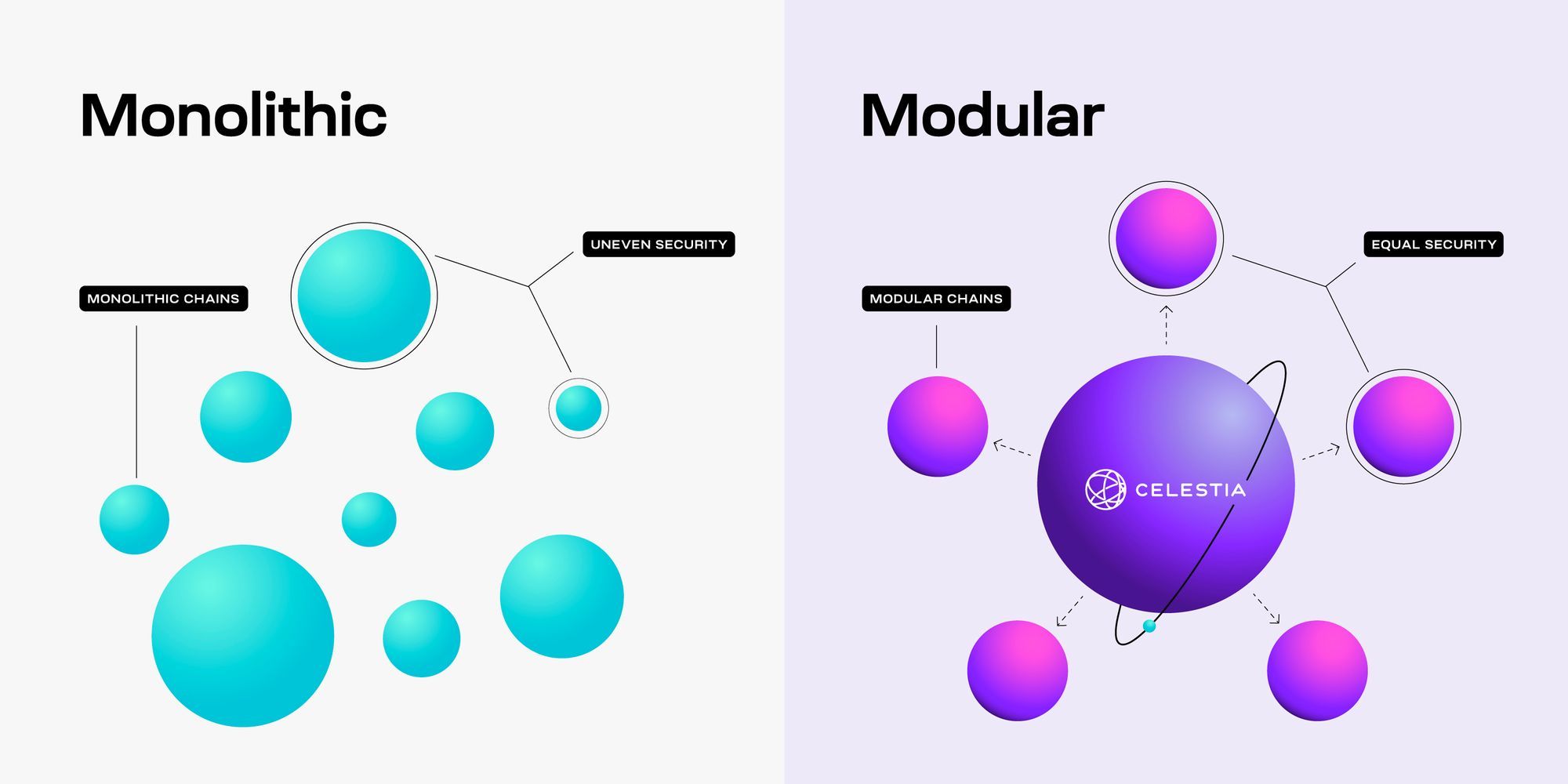
單一式區塊鏈會喺一個統一系統入面運行所有核心功能,包埋交易同智能合約執行、交易排序同有效性共識、數據可用性(確保所有資料可驗證)、同埋結算(最終確認及糾紛解決)。傳統區塊鏈如Bitcoin、舊有Ethereum同Solana都係例子。
單一式設計有其優點,簡單性最為突出。所有功能都喺同一系統下,開發者處理集成簡單,使用者理解都容易。安全亦得益於統一架構:同一組驗證者保護所有層,避免因用唔同安全機制而產生嘅信任問題。單一式下智能合約同應用都喺同一執行環境,原子互動唔使跨鏈橋或者消息協議,合成性達至最高。
Bitcoin係純正單一式設計,重心就係安全價值轉移,執行極為簡單。每個完整節點都要下載、驗證全部交易,安全同去中心化極致,但換嚟吞吐量低。Bitcoin每秒只處理大約七單交易,想提高產量影響整個系統,改變爭論激烈。
Ethereum喺走向模組化前係個更複雜嘅單一鏈。網絡處理智能合約、用PoS共識、所有交易數據可用性,也為L2提供結算。呢種完備打法催生dApp同DeFi爆炸,但同時出現大規模擴展瓶頸。需求旺時gas費升到每單幾百美元,唔少應用同用戶望而卻步。
Solana有唔同理念,強調高效能單一式。用創新共識同並行處理,理想情況下每秒可超過五萬宗交易。但呢種效能換嚟驗證者硬件要求高,過去亦有因過載而部分停擺。
單一式區塊鏈基本上限制於可擴展三難題——區塊鏈三大屬性(去中心化、安全、可擴展)只能優化兩個。當執行、共識、數據可用性合併於同一系統,資源上互相競爭。提高吞吐要加大區塊,令運行全節點成本升高、去中心化減弱。若要極端去中心化,就難以維持大區塊和高產量。確保安全要大量冗餘驗證,又會壓縮可擴展性。
隨著區塊鏈普及,呢啲掣肘愈來愈明顯。Ethereum 2022年9月改PoS令能源效率更高安全提升,但未能根本解決擴展問題。需求高峰時交易費仍然高企,吞吐無突破。第二層Rollup出現做離鏈處理再提交數據到Ethereum,但又受制於數據可用性成本。
單一式亦限制創新。開發者響單一鏈創新,要接受其語言、虛擬機、共識、費用架構等原有設計。要起專屬應用鏈就要重頭開新單一鏈、建立共識、搵驗證者、重新打安全基礎,入場門檻高、資金流動被分割。
去到2023年,單一式設計局限一覽無遺。數據可用性大概佔Rollup向Ethereum支出成本95%。這低效揭示咗解決方法:把原本一齊嘅部分拆開,令各自能專門優化,但又可以整合運作。
模組化區塊鏈:新設計哲學
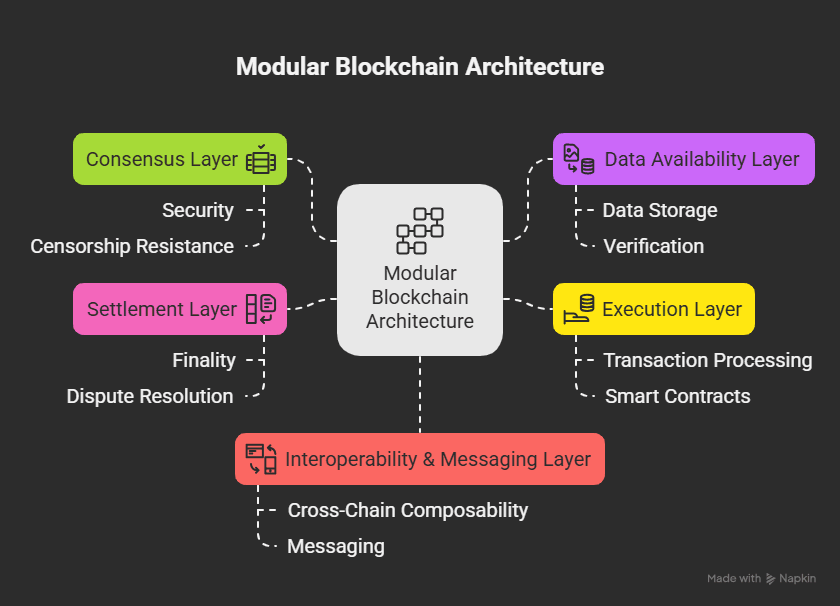
模組化區塊鏈會把傳統區塊鏈職能解構為專門層或元件。唔再係一條鏈搞掂執行、共識、結算同數據可用性,而係由唔同專項鏈或服務分擔。每個元件專注一項職能做至最好,再跟其他元件配合,完整支持區塊鏈功能。
呢個想法來自軟件工程同計算機科學的模組化設計原則。正如現代App將展現層、業務邏輯、數據存儲等拆分,模組化區塊鏈都將功能專項分層。每層可專注於本職,唔使夾硬妥協其他部分。
模組化架構下有四大核心功能,各自服務唔同目標。執行層處理交易同智能合約邏輯,根據用戶操作決定狀態轉換;共識層令全網用戶對交易排序同收錄達成一致,確保歷史同步;數據可用性層保證所有需要嘅交易數據公開可取,驗證得;結算層提供最終性同糾紛定奪,係Rollup或其他執行層的信任根據。
模組化設計唔一定將四層完全分拆。有啲設計會合併共識同數據可用性,有啲則結算同共識一齊。精髓在「專精」而唔係死分。每層要專注自己本身最叻的功能,對其他元件有清晰接口配合。
Celestia首創模組化數據可用性層,2023年10月主網推出,專解決Rollup同其他擴展方案發佈交易數據時既要平又可靠,但放咗去Ethereum咁嘅貴執行層反而成樽頸。Celestia重新構思區塊鏈,做到執行同共識分離,用數據可用性抽樣(scampling)技術。咁做,Celestia就可以大量擴展數據可用性,而唔會向上層項目加落執行或結算掣肘。
Celestia網絡以「極簡區塊鏈」自居,專注共識同數據可用性。 It does not execute smart contracts or provide a virtual machine. Instead, developers can deploy their own execution layers, whether rollups, application-specific chains, or entirely custom environments, and use Celestia purely for ordering transactions and ensuring their data remains available. Celestia's roadmap targets relentlessly scaling beyond 1 gigabyte per second data throughput, aiming to remove crypto's ultimate scaling bottleneck.
它本身並不執行智能合約或提供虛擬機。相反,開發者可以部署自己嘅執行層,包括 rollups、應用專用鏈甚至完全自訂化嘅執行環境,然後單純用 Celestia 去排序交易同確保數據維持可用。Celestia 嘅藍圖係要不斷擴展、突破每秒 1GB 嘅數據吞吐量,目標係徹底消除加密世界最大嘅擴展瓶頸。
The technical innovation enabling Celestia's scalability is data availability sampling. Traditional blockchains require every full node to download all transaction data to verify availability. This creates a direct tradeoff between block size and decentralization. Data availability sampling changes this dynamic by allowing light nodes to verify data availability by randomly sampling small portions of each block.
Celestia 得以達至可擴展性嘅技術創新,就係「數據可用性抽樣」(data availability sampling)。傳統區塊鏈會要求每個全節點下載晒所有交易數據,先可以驗證到數據係咪可用,導致區塊大小同去中心化之間有直接取捨。數據可用性抽樣打破咗呢條舊有路線,令輕節點可以隨機抽樣每個區塊嘅細部分,驗證數據係咪可以攞到。
If the samples are available, nodes can be confident with high probability that all data is available, without downloading everything. This enables Celestia to scale data availability as more light nodes join the network, inverting the traditional scaling curve.
如果抽到嘅數據都攞得到,節點就可以好有信心咁相信所有數據都係可用,而且唔洗下載所有嘢。咁樣,隨住愈來愈多輕節點加入網絡,Celestia 喺數據可用性方面就可以持續擴展,顛覆傳統嘅擴展曲線。
Celestia also introduced the concept of sovereign rollups, which are execution layers that use Celestia for data availability and consensus but make their own decisions about execution rules, governance, and upgrades.
Celestia 仲引入咗「主權 rollup」呢個概念,意思係啲 rollup 只會用 Celestia 提供數據可用性同共識,但就自己決定執行規則、治理方向同升級等。
Unlike Ethereum rollups, which typically inherit security and settlement from Ethereum, sovereign rollups on Celestia operate more independently. They post their data to Celestia to ensure availability, but they define their own validity conditions and do not rely on an external chain for final settlement.
同以太坊 rollup 唔同,Celestia 嘅主權 rollup 係操作得更獨立。佢哋會喺 Celestia 度發佈數據以確保數據可用,不過佢哋自己界定有效性條件,唔需要靠其他鏈做最終結算。
EigenDA emerged as a different approach to modular data availability, built on top of the EigenLayer restaking protocol. EigenDA utilizes an elegant architecture that maintains optimality or near-optimality across the dimensions of performance, security, and cost through Reed Solomon encoding that is cryptographically verified by KZG polynomial opening proofs. Rather than building an independent blockchain like Celestia, EigenDA operates as an actively validated service within the EigenLayer ecosystem, allowing Ethereum stakers to reuse their staked ETH to help secure the data availability layer.
EigenDA 提供咗另一種模組化數據可用性嘅解決方法,係建基於 EigenLayer restaking 協議之上。EigenDA 採用一套優雅架構,經由 Reed Solomon 編碼,配合 KZG 多項式驗證證明,喺效能、安全同成本各方面都做到最優或者接近最優。EigenDA 唔似 Celestia 另起新鏈,而係作為 EigenLayer 生態系內一項主動驗證嘅服務,讓以太坊持幣人可以用佢哋已經 restake 咗嘅 ETH,再幫手保障數據可用性層。
The EigenDA architecture separates roles among different participants. Dispersers encode data and distribute it to validator nodes. Validator nodes attest to data availability and store portions of each data blob. Retrieval nodes collect data shards from validators and reconstruct the original data when needed.
EigenDA 架構下,各參與者有唔同角色。Dispersers(分佈者)負責編碼數據,再派發比驗證節點。驗證節點確保數據可用,並存放部分 data blob。Retrieval node(檢索節點)會喺有需要時,向驗證節點收集碎片數據,拼返原本完整數據。
The network launched with an industry-leading 100 megabytes per second data availability throughput, with a roadmap to scale exponentially. This high throughput derives from EigenDA's design, which requires each operator to store only a fraction of the total data while maintaining the ability to reconstruct everything if needed.
EigenDA 推出時已經做到行業領先,每秒 100MB 嘅數據可用性吞吐量,將來仲有指標會「爆升」。咁高容量其實多得 EigenDA 嘅設計,每個運營者只需保存總數據其中一部分,萬一有需要都能還原成全部數據。
EigenDA's integration with Ethereum through EigenLayer creates unique security properties. The protocol leverages billions of dollars in restaked ETH as economic security, inheriting Ethereum's robust validator set while providing specialized data availability services.
EigenDA 經由 EigenLayer 同以太坊整合,做到獨特安全屬性。協議利用數十億美元值嘅 restake ETH 做經濟安全,亦繼承咗以太坊龐大嘅驗證者集合,專門提供數據可用性服務。
This shared security model reduces the capital cost of securing the data availability layer compared to bootstrapping an entirely independent blockchain. EigenDA also natively uses Ethereum as a settlement layer for operator set management, ensuring enhanced security for layer-two networks that settle to Ethereum.
呢種共享安全模式,比起完全新建條鏈嚟講,可以大大減低保障數據可用層嘅資本成本。EigenDA 天生用以太坊做結算層去管理運營參與組,確保所有要喺以太坊結算嘅 Layer 2 網絡安全性更高。
Avail represents a third major approach to modular data availability, emphasizing chain-agnostic infrastructure and cross-chain interoperability. The project's horizontally scalable, chain-agnostic and trust-minimized infrastructure aims to unify the fragmented blockchain ecosystem by providing unlimited blockspace, native interoperability, and modular security. Built using the Polkadot SDK, Avail operates as a specialized data availability blockchain that connects with multiple layer-one ecosystems including Ethereum, Solana, and BNB Chain.
Avail 就係第三種大型模組化數據可用性解決方法,強調鏈不可知嘅基建同跨鏈互通。佢哋用水平擴展、去信任最小化嘅架構,目標係透過無限區塊空間、原生互通性同模組化安全,統一咁分散嘅區塊鏈生態。Avail 用 Polkadot SDK 建構,作為專為數據可用性而設嘅區塊鏈,連接住多個 Layer 1 生態,包括以太坊、Solana 同 BNB Chain。
Avail's architecture consists of three components working together. The data availability layer stores transaction data using erasure coding and KZG polynomial commitments for efficient verification. The Nexus layer provides trust-minimized cross-chain interoperability, enabling seamless communication between rollups and sovereign chains built on different ecosystems. The Fusion layer offers multi-token economic security, allowing the network to be secured not just by Avail's native token but also by ETH, BTC, SOL, and other assets.
Avail 架構有三大部份互相配合:數據可用層用擦除編碼同 KZG 多項式承諾方式儲存交易數據,確保驗證效果高效。Nexus 層就負責信任最小化跨鏈互通,得以令唔同生態系下嘅 rollup 及主權鏈可以無縫交流。Fusion 層就帶嚟多代幣經濟安全,唔單止靠 Avail 原生幣,仲可以用 ETH、BTC、SOL 等多款資產保障全網絡安全。
Avail's data availability layer employs KZG polynomial commitments to cryptographically prove data availability without requiring full downloads, allowing chains like Polygon zkEVM Validium to reduce Ethereum costs by approximately 90 percent while maintaining security. The protocol's emphasis on light client verification enables users to run lightweight nodes on devices like phones or browsers, verifying data availability in seconds without the resource requirements of full nodes.
Avail 嘅數據可用層用 KZG 多項式承諾做密碼學證明,唔需要成個下載先驗證到數據可用,令類似 Polygon zkEVM Validium 項目可節省大約 90% 以太坊費用同時維持安全。協議重點喺輕客戶驗證,用戶可以喺手機、browser 等啲輕量裝置 run Node,幾秒鐘就驗證到數據可用,唔洗有齊全節點硬件資源。
Each of these projects represents a different philosophy about how modular blockchains should operate. Celestia prioritizes neutrality and sovereignty, allowing any execution environment to build on top without imposing specific settlement or security assumptions. EigenDA emphasizes deep integration with Ethereum's ecosystem, leveraging restaking to create cost-efficient data availability backed by Ethereum's security. Avail focuses on interoperability and unification, building bridges between different blockchain ecosystems through its Nexus layer.
以上每個計劃背後都反映出對模組化區塊鏈運作方式唔同哲學。Celestia 重視中立同主權,任何執行環境都可以用,唔會加任何結算或安全前設條件。EigenDA 強調同以太坊生態緊密結合,利用 restake 嚟建立高安全低成本數據可用性。Avail 就以互通同統一為目標,經 Nexus 層搭橋連住各大區塊鏈生態。
The modular approach has catalyzed rapid innovation in execution layers as well. Projects like Arbitrum Orbit, Optimism's OP Stack, and Polygon's Chain Development Kit enable developers to deploy custom rollups with minimal effort. These rollup-as-a-service platforms leverage modular data availability layers for publishing transaction data, allowing development teams to focus on application-specific execution environments rather than rebuilding consensus and data availability infrastructure from scratch.
模組化方案亦帶動咗執行層新一輪爆炸式創新。好似 Arbitrum Orbit、Optimism OP Stack、Polygon Chain Development Kit 等項目,令開發者可以幾乎零門檻發佈自家 rollup。呢啲「Rollup 即服務」平台都可以用模組化數據可用層發佈數據,等開發團隊專心搞應用層,唔使由頭搭 consensus 同 data availability。
Data Availability Layers - The New Backbone
數據可用性層 —— 新嘅基石
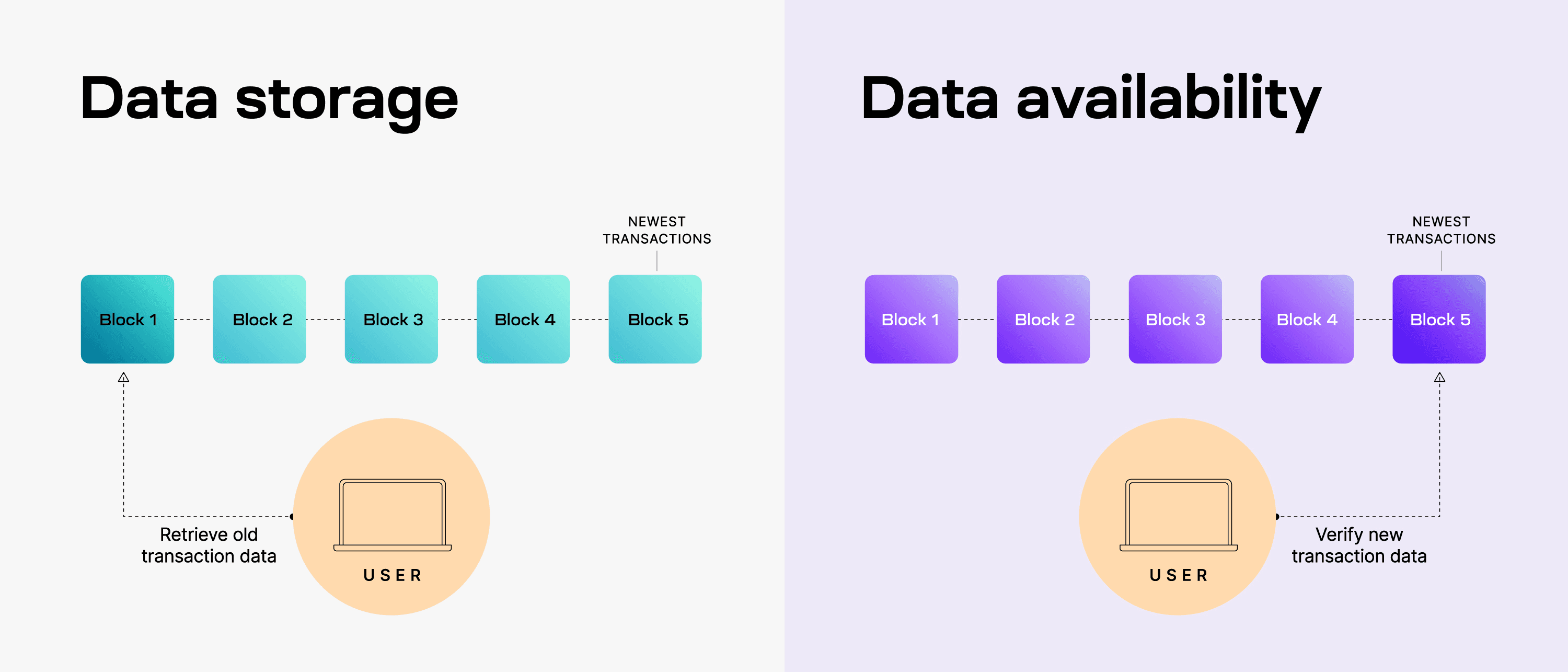
Data availability has emerged as the critical infrastructure bottleneck for blockchain scaling, and understanding why requires examining what data availability means and why it matters. When a blockchain produces new blocks containing transactions, the data availability problem asks: how can the network ensure that all the transaction data in those blocks is actually available to anyone who needs it for verification, without requiring every participant to download and store everything?
數據可用性已經成為區塊鏈擴容嘅關鍵基建瓶頸,要明白原因,首先要搞清楚數據可用性嘅定義同重要性。當區塊鏈產生新區塊並寫入交易時,數據可用性問題就係:點先可以唔使所有節點都下載存晒哂啲數據,但同時確保所有需要驗證嘅人,都攞到嗰區塊內全部交易數據?
In traditional monolithic blockchains, solving data availability is straightforward but expensive. Every full node downloads every block and stores all the data. If a node can download it, the data must be available. This approach provides maximum security but creates significant scaling limitations. As blocks get larger to accommodate more transactions, running a full node becomes more expensive, reducing decentralization. The cost of storing all this data on a high-security blockchain like Ethereum makes data availability the dominant expense for layer-two rollups.
傳統 monolithic(單體式)區塊鏈解決數據可用性好簡單,但代價高。每個全節點都要下載每個區塊、存曬全部數據。下載到代表數據可用。呢種方法安全至高,但擴展性極有限。隨住區塊變大、交易升多,成本同難度亦急升,去中心化力度自然減弱。好似以太坊咁高安全區塊鏈,存曬所有數據成本好高,令數據可用性佔晒 Layer 2 rollup 嘅最大開支來源。
The problem becomes more complex in modular architectures where execution happens in one place and data is stored in another. A rollup processes thousands of transactions off-chain, but it must publish the transaction data somewhere so that anyone can reconstruct the rollup's state and verify its correctness. If the rollup operator withholds data, users cannot detect invalid state transitions, creating a vulnerability.
去到模組化架構,執行同存數據分開,數據可用性問題就更複雜。Rollup 係鏈外處理數千單交易,但又一定要搵地方公開所有交易數據,咁其他人先可重建 rollup 狀態嚟驗證正確。萬一 rollup 運營商扣住啲數據唔放用戶,就無得查驗狀態有冇出錯,出現潛在漏洞。
Data availability layers exist to solve this problem: providing a place to publish transaction data with cryptographic guarantees that the data is available, at a lower cost than posting everything to an execution layer.
數據可用性層就係為咗解決呢個問題存在──提供一個地方用加密證明方式發佈交易數據,價錢遠平過所有上載就落執行層。
Celestia's approach to data availability centers on data availability sampling, a technique that fundamentally changes the relationship between block size and verification cost. In traditional blockchains, doubling the block size doubles the amount of data each full node must download. But with data availability sampling, light nodes can verify that data is available by sampling small random portions of each block. Through erasure coding and clever cryptographic techniques, Celestia enables nodes to gain confidence in data availability without downloading everything.
Celestia 解決數據可用性嘅主打技術,就係「數據可用性抽樣」。呢個方法徹底改變區塊大小同驗證成本之間嘅關係。傳統區塊鏈加大區塊 size,全節點負擔即時加倍。但數據可用性抽樣,輕節點只需要隨機抽查小部份區塊就夠。配合擦除編碼同密碼學手段,Celestia 令節點唔使下載所有數據都可以建立極高信心。
The process works through several steps. First, block producers take the transaction data and encode it using a two-dimensional Reed-Solomon encoding scheme. This encoding adds redundancy to the data, expanding it beyond its original size but enabling reconstruction even if significant portions are missing. The encoded data is organized into a matrix and committed to using KZG polynomial commitments, which provide succinct cryptographic proofs about the data's structure.
呢個過程分幾步嚟做。首先區塊產生者會用二維 Reed-Solomon 編碼去處理交易數據,呢種編碼會令數據有冗餘,即使唔見好多部份都可以還原返。編碼完會排成一個 matrix,再用 KZG 多項式承諾去承諾成塊數據,提供好精簡嘅密碼學證明。
Light nodes then randomly sample small portions of this extended data. Each sample includes a proof that the sampled data is part of the committed block. By collecting multiple random samples, light nodes can become confident with high probability that the entire data matrix is available.
之後輕節點就會隨機抽查延展咗數據當中一細部份,每個 sample 都會有證明,話抽到嘅數據真係屬於個 block。收集夠多題 sample,輕節點就可以極高機率確認晒所有數據都可用。
The mathematics ensures that if the block producer withholds any significant portion of the data, light nodes will likely detect this through failed samples. Importantly, the confidence level increases with more light nodes, as each performs independent random sampling. This creates a unique scaling property: Celestia becomes more secure as more participants join the network.
數學上證明,只要個 block producer 真係扣起部分數據,大量輕節點抽樣一定好易查到。越多人獨立參與抽樣,網絡整體信心越高,於是 Celestia 出現咗一種特別擴展性:愈多人用,個網絡愈安全。
Celestia's data availability layer costs approximately 64 percent less than Ethereum, with average costs of around $7.31 per megabyte compared to Ethereum's $20.56. The project's SuperBlobs feature further reduces fees to approximately $0.81 per megabyte, enabling cost-effective high-volume
Celestia 數據可用性層平均每 MB 成本大約平過以太坊 64%,即係 $7.31 vs $20.56,仲未計項目新推出嘅「SuperBlobs」功能,令每 MB 成本進一步跌到大約 $0.81,實現高效益嘅大批量數據發佈。Here is your translated content. I have kept all markdown links untouched as per your instructions.
數據處理 for rollups。這種經濟模型令 Celestia 對於需要發布大量數據的 rollups 和其他擴容方案變得具吸引力。
技術上,Celestia 採用了 namespaced Merkle trees,把數據組織到不同應用程式的獨立命名空間(namespace)內。這讓每個使用 Celestia 的 rollup 或區塊鏈可以將自己的數據發布到自己的命名空間,而 light client 只需要下載和驗證與其關心的鏈相關的數據。監察自身命名空間的 rollup 無需處理其他 rollup 共用同一 Celestia 區塊的數據,從而提升效率,同時維持共享安全。
EigenDA 採用截然不同的架構來處理數據可用性(data availability),重點是透過其 operator-based 模型實現極致可擴展性。該協議的設計可以橫向擴展,網絡上的運營者(operator)越多,整個網絡的吞吐量就越大。在一百個節點的私下測試中,EigenDA 展示出高達每秒 10 兆字節(megabyte)的吞吐量,並訂下擴展至每秒 1 千兆字節(gigabyte)的路線圖。
EigenDA 系統會通過消除編碼(erasure coding)將數據切割成多個 chunk,然後分配至大量運營者。每個運營者只需儲存全部數據中的一部份,而整個數據可以由任何足夠多的 chunk 組成的子集重構出來。這種分佈減低了單一運營者的儲存量和頻寬負擔,同時通過密碼學證明保持數據可用性。
KZG commitments 在 EigenDA 的驗證系統中發揮核心作用,正如在 Celestia 一樣。這些多項式承諾(polynomial commitments)令驗證人可以證明數據屬性的同時無需公開全部數據。當 disperser 編碼和分發數據 blob 時,它會產生 KZG commitment,讓驗證人可以驗證他們收到的 chunk 是否正確,而不必知道其他 chunk 的內容。這使得驗證既高效又保證高度安全。
EigenDA 背後的經濟模型利用了 EigenLayer 上的 restaking。已經在 Ethereum 上 stake 了 ETH 的驗證人,可以選擇執行額外軟件協助保護 EigenDA,從 rollups 以及其他使用 data availability layer 的用戶中收取獎勵。這種 restaking 有數個好處。
它可以減低安全網絡的資本成本,因為同一筆 stake 同時保障以太坊和 EigenDA。它繼承了 Ethereum 的去中心化驗證人集,而不用從零開始建立一套自己的驗證人系統。它直接在經濟上把 Ethereum 的安全性和 EigenDA 的可靠度連結起來。
節點運營者必須至少 stake 32 ETH 或 1 EIGEN token 才能成為 data availability network 的成員,儘管協議中的 slashing 條款仍在積極開發中,像 EigenDA 這類 actively validated service 需要遷移到 operator set 並明確設定 slashing 機制。這種懲罰機制的持續發展說明了 restaking 基礎安全模型的創新和演變。
Avail 又以不同方式處理數據可用性,強調不同區塊鏈生態之間的互通,同時維持高安全性。這個協議的數據可用層用上了與 Celestia 和 EigenDA 類似的 KZG commitment 及 erasure coding,並結合對跨鏈基礎設施的更廣泛願景。
Avail 網絡通過建基於 Polkadot SDK 的驗證人共識機制作到數據可用性。驗證人對包含多個 rollups 和鏈的交易數據區塊達成共識,然後將這些數據公開方便驗證。light client 亦可以通過採樣(sampling)驗證數據可用性,與 Celestia 的做法相近。Avail 的 light client 可讓用戶層面極速驗證交易,預先確認可令交易驗證時間達至約 250 毫秒——比傳統方法快 15 倍。
Avail 的獨特之處在於 multi-token staking model 及 Nexus 互通層。Avail 不只靠原生 token 作安全押注,更支援 ETH、BTC、SOL 等多種主流資產。這個多資產參與機制旨在吸納更多流動性及來自不同鏈社群的經濟安全性。Nexus 層則成為無信任協調樞紐,讓不同生態下的 rollup 與鏈在無需中央化橋樑情況下互通。
上述數據可用層的技術基礎共同之處在於多項創新。erasure coding 令數據冗餘,即使部份遺失亦可重組還原。KZG polynomial commitments 可以簡潔地證明數據屬性。數據可用性採樣(sampling)讓 light client 無需下載全部數據便能驗證可用性。這些技術合力令數據可用性既可伸縮又可信。
但具體實現方式有明顯差異。Celestia 注重中立和主權 rollup,允許任何執行環境無需考慮結算層而搭建。EigenDA 強調與以太坊集成及 restaking 經濟安全。Avail 則聚焦互通性和多生態支援。這種理念上的分歧亦影響到從經濟模型、治理架構到吸引的應用類型等方方面面。
數據可用性層已成為推動模組化區塊鏈擴容的關鍵基礎設施。這些協議通過提供豐富、可驗證和經濟實惠的數據可用性,令各執行層可在維護安全屬性的前提下大膽嘗試新設計。問題已不再是應否採用這種模組化數據可用性,而是哪一種方法最切合特定應用需要。
執行層與結算層
雖然數據可用性層為模組化區塊鏈奠定基礎,但決定交易如何處理及最終確認的,其實是執行層和結算層。理解這些組件之間的關係,有助全面掌握模組化系統的架構以及開發人員在搭建可擴展區塊鏈應用時必須面對的設計抉擇。
執行層負責交易處理及智能合約計算。在模組化架構下,執行可在專為特定場景優化的環境中進行,而不受單一大型鏈的限制。Rollup 就是這種做法的代表,把交易離鏈處理,設有獨立執行環境,然後把壓縮後的數據發送至數據可用層以供驗證。
Rollup 主要有兩個類別。Optimistic rollup(如 Arbitrum、Optimism)假設所有交易本身有效,只有在有人提交異議證據(fraud proof)時才檢查。這種做法令處理效率高,但會產生一個通常為七天的挑戰期,用戶需等候方可提現。Zero-knowledge rollup(如 StarkWare、zkSync)則生成密碼學證明,保證交易確實正確執行。這些證明用戶無需等候挑戰期,即時確認,但需要更複雜的密碼運算和計算資源。
兩種 rollup 都可以利用模組化數據可用性層降低成本。不用再將完整交易數據按每 MB 20 美元甚至更高價上傳至以太坊,rollup 可以以遠低成本發布至 Celestia 或 EigenDA。數據仍然可被驗證保障安全,但經濟上優勢大大提升。自以太坊 2024 年 3 月 Dencun 升級後(實施 EIP-4844),layer-two rollup Base 由於 blob 交易帶來的低數據費,交易量單月暴漲 224%。
執行層的設計彈性正是模組化區塊鏈的一大優點。開發者可以自定編程語言、虛擬機實現、手續費結構,以至治理機制,無需部署整條單一大鏈。
遊戲應用可能重視高吞吐量低延遲。去中心化金融協議則注重安全和形式化驗證。供應鏈方案可能關心數據隱私及符合法規。每個應用可自行搭建專屬執行環境,同時共用共識和數據可用基礎設施。
結算層則提供最終確認,為 rollups 及其他執行環境作為真相來源。以太坊已經成為模組化區塊鏈生態中,尤其是 rollup 為主的方案裡的主導結算層。當 rollup 處理一批交易後,會把壓縮後的數據送到數據可用性層,並同步提交狀態更新到以太坊。對於 optimistic rollup,這個狀態更新在挑戰期過後沒有人提出有效詐騙證明時就可成為最終確認;對於 ZK rollup,只要有效性證明經以太坊驗證後即可即時確認。
執行層和結算層的分離帶來關鍵取捨。一方面,rollup 可在自己獨立的執行層快速廉價處理大量交易;另一方面,結算在以太坊保證了強大的安全性和可與其他應用互通(composability)。但在 rollup 和以太坊之間跨鏈資產時,仍需等待結算層的最終確認,與純一條鏈上運作相比增加了摩擦。
有部分模組化架構甚至徹底避開外部結算層。例如 Celestia 的主權 rollup,...their own validity conditions and settlement mechanisms. They use Celestia purely for data availability and consensus, handling settlement internally. This approach maximizes sovereignty and flexibility but requires each rollup to establish its own security properties and bridge mechanisms for interacting with other chains.
它們有自己獨立的有效性條件同埋結算機制。佢哋利用Celestia只係做數據可用性同共識,由自己內部處理結算。呢個做法最大化咗自主權同彈性,但係每條rollup都要自己建立安全屬性,同設計同其他鏈互操作嘅橋樑機制。
The rise of rollups-as-a-service platforms has accelerated modular blockchain adoption by simplifying deployment. These platforms provide templates and tooling for launching custom execution environments without deep blockchain engineering expertise.
Rollups-as-a-service 平台興起,簡化咗部署過程,加快咗模組化區塊鏈嘅採用。呢啲平台提供模板同工具,等開發者唔使有深厚區塊鏈工程知識都可以launch自訂執行環境。
Arbitrum Orbit allows developers to deploy layer-three rollups that use Arbitrum for settlement and can choose between multiple data availability options including Celestia and EigenDA. The Optimism OP Stack provides a modular framework where developers can swap out components like the execution environment, data availability layer, and sequencing mechanism while maintaining compatibility with the broader Optimism ecosystem.
Arbitrum Orbit 讓開發者可以部署用 Arbitrum 作結算嘅第3層rollup,而且可以自由揀Celestia、EigenDA等多種數據可用性方案。Optimism OP Stack就提供咗一個模組化框架,開發者可以互換執行環境、數據可用性層、排序機制等組件,同時保持同整個Optimism生態系兼容。
Conduit and AltLayer offer rollup-as-a-service solutions enabling deployment of fully-managed, production-grade rollups in just a few clicks, with integration options for EigenDA data availability. These platforms abstract much of the complexity involved in operating blockchain infrastructure, allowing developers to focus on application logic and user experience.
Conduit同AltLayer都提供rollup-as-a-service方案,幾個click就可以部署到fully-managed、可投入生產環境嘅rollup,仲可以整合EigenDA數據可用性。呢啲平台將運營區塊鏈基礎設施嘅複雜度抽象化,令開發者專注喺應用邏輯同用戶體驗。
Polygon's Chain Development Kit represents another approach, enabling developers to build customizable layer-two chains that can connect to Ethereum or operate more independently. The modular architecture supports various execution environments, data availability providers, and bridge mechanisms. Projects like Immutable X use these tools to build application-specific chains optimized for NFT trading and blockchain gaming.
Polygon嘅Chain Development Kit係另一種做法,讓開發者建立可自定義嘅L2鏈,可以駁埋Ethereum又得,獨立運作都得。模組化架構支持多種執行環境、數據可用性供應商同橋樑機制。好似Immutable X咁嘅項目,就用呢啲工具打造針對NFT交易同區塊鏈遊戲嘅專用鏈。
The proliferation of execution layers enabled by modular architecture creates both opportunities and challenges. On the positive side, developers gain unprecedented flexibility to optimize for specific use cases. Gaming applications can achieve sub-second block times. Privacy-focused applications can integrate zero-knowledge proofs deeply into their execution. Enterprise solutions can incorporate permissioned elements where needed. Each execution environment can experiment with novel approaches without requiring consensus from the broader blockchain community.
模組化架構帶嚟多元執行層,既有機會亦有挑戰。好處係開發者有前所未有嘅彈性,可以針對用例最佳化 — 遊戲應用可以做到亞秒級區塊時間,重視私隱嘅應用可以深入整合零知識證明,企業解決方案亦可以靈活加入權限元素。每個執行環境都可以自由創新,而唔使區塊鏈社群共識。
However, this flexibility also introduces fragmentation. Liquidity becomes divided across numerous execution layers. Users must bridge assets between chains, introducing friction and security risks. Applications that want to compose across multiple execution environments face increased complexity. The unified composability of monolithic blockchains gives way to a more fragmented landscape where interoperability becomes paramount.
但係,咁大彈性又會造成分散化:資金分流去唔同執行層,用户要跨鏈橋接資產,過程帶嚟阻力同安全風險。想橫跨多個執行環境的應用,開發變得更複雜。單體區塊鏈嘅高可組合性,變成一個更加分割嘅情景,互通性變得極為重要。
Cross-chain communication protocols have emerged to address these challenges. The Inter-Blockchain Communication protocol, originally developed for Cosmos, enables different chains to exchange messages and transfer assets trustlessly. Hyperlane and LayerZero provide similar functionality with different security models and tradeoffs. These protocols aim to create a world where applications can span multiple execution environments, accessing liquidity and users across the modular blockchain ecosystem.
為咗應對呢啲挑戰,跨鏈通訊協議應運而生。Inter-Blockchain Communication(IBC)協議最初喺Cosmos發展,令唔同鏈可以無信任地交換信息同轉資產。Hyperlane同LayerZero都提供類似功能,但安全模型同取捨唔同。呢啲協議希望創造一個應用可跨多個執行環境,無障礙接觸流動性同用戶嘅模組化區塊鏈世界。
The relationship between execution and settlement layers also influences economic models. In monolithic chains, users pay fees directly to validators who secure the network. In modular systems, fees flow through multiple layers. A user executing a transaction on a rollup pays fees to the rollup's sequencer. The rollup pays fees to the data availability layer for posting data. The rollup also pays fees to the settlement layer for submitting state updates and storing commitments. This multi-layered fee structure creates complex economic dynamics and opportunities for optimization.
執行層同結算層嘅結構亦直接影響經濟模型。單體鏈度,用户直接比手續費畀保護網絡嘅驗證者。模組化系統度,費用會經多層流通:用户用rollup做交易時要比費用畀rollup嘅排序者,rollup又要比費畀數據可用性層用來post數據,仲要再比費用畀結算層用來提交狀態更新同存承諾。咁多層費用架構,帶出複雜經濟動態同好多優化空間。
Sequencers play a critical role in modular execution layers. These entities collect transactions from users, order them into blocks, and submit batches to data availability and settlement layers. Most rollups currently operate with centralized sequencers, introducing concerns about censorship resistance and single points of failure. The industry is actively developing decentralized sequencing mechanisms, including shared sequencing protocols that allow multiple rollups to coordinate block production and provide stronger ordering guarantees.
排序者(Sequencer)喺模組化執行層入面扮演住重要角色。佢哋負責收集用戶交易、整理成區塊,然後成批提交到數據可用性層同結算層。依家大部分rollup都係用中心化排序者,咁會有審查抵抗力低同單點故障嘅顧慮。業界正積極開發去中心化排序機制,例如共享排序協議,等多條rollup可以協調出區塊,保障更強嘅排序安全性。
The execution and settlement architecture continues evolving rapidly. Some projects experiment with asynchronous execution, where transactions process without immediately finalizing. Others explore parallel execution environments that can process non-conflicting transactions simultaneously. The separation of concerns in modular systems enables experimentation at the execution layer without requiring changes to underlying data availability or consensus mechanisms, accelerating the pace of innovation.
執行同結算架構發展得好快。有啲項目試緊異步執行,即交易未即時最終,但先行處理。亦有項目試平行執行環境,可以同時處理唔相衝突嘅交易。模組化系統分離唔同責任層,等執行層可以不斷試新嘢,而唔使改底層嘅數據可用性或共識,令創新更快。
Economic and Security Tradeoffs
經濟同安全取捨
Modular blockchain architectures introduce new economic models and security assumptions that differ fundamentally from monolithic chains. Understanding these tradeoffs is essential for evaluating the viability and risks of modular systems as they scale to support mainstream blockchain adoption.
模組化區塊鏈架構帶嚟完全唔同於單體鏈嘅經濟模型同安全假設。了解呢啲取捨係評估模組化系統可行性同風險(尤其係規模化以支持主流區塊鏈應用)嘅關鍵。
The security model for modular blockchains depends on how components interact and where trust assumptions lie. In a monolithic chain, a single validator set secures all functions. If the validators are honest, the entire system remains secure. In modular systems, different layers may have different security mechanisms, creating a stack of trust assumptions that must be carefully analyzed.
模組化區塊鏈嘅安全模型好睇組件之間點互動同信任假設擺喺邊。單體鏈得一組驗證者,保障所有功能。驗證者誠實就安全。模組化系統每層可能有唔同安全機制,組成一堆信任假設,要好小心逐個分析。
Consider a typical modular architecture: a rollup for execution, Celestia for data availability, and Ethereum for settlement. The security of this system depends on all three layers functioning correctly. If the rollup's sequencer acts maliciously, users must rely on fraud proofs or validity proofs submitted to the settlement layer. If Celestia withholds data, the rollup cannot prove what transactions occurred. If Ethereum's validator set gets corrupted, final settlement becomes unreliable.
攞一個典型模組化架構做例子:rollup執行、Celestia做數據可用性、Ethereum做結算。成個系統要三層都正常先有安全。rollup嘅排序者如果作惡,用戶要靠有冇做fraud proof或者validity proof交去settlement層。如果Celestia唔比數據,rollup就無法證明發生過咩交易。如果Ethereum驗證者set出事,最終結算就靠唔住。
Shared security models, like those implemented by EigenDA through restaking, aim to reduce these compounding trust assumptions. By allowing Ethereum validators to secure multiple services simultaneously, restaking creates stronger alignment between the settlement layer and other modular components. As of March 2025, EigenDA has 4.3 million ETH staked, representing billions of dollars of economic security backing the data availability layer. This substantial stake provides meaningful security guarantees, but it also introduces new risks around slashing conditions and the potential for cascading failures if vulnerabilities are discovered.
例如EigenDA透過Restaking實現嘅共享安全模型,就係想減少層層信任假設。以太坊驗證者可以一次性參與保護多個服務,令結算層同其他模組化元件嘅利益更一致。去到2025年3月,EigenDA已經有430萬粒ETH質押,相當於幾十億美金經濟安全性保障數據可用性層。呢個規模質押比到實質安全保證,但都帶嚟割罰設定問題同萬一爆現漏洞而引致連鎖效應嘅新風險。
The economic incentives in modular systems create interesting dynamics. Data availability layers compete on throughput and cost, with Celestia, EigenDA, and Avail each offering different price-performance tradeoffs. EigenDA cut its data availability service prices by 10 times and introduced a free tier in August 2024, while aiming to boost data availability on Ethereum by 1,000 times to enable use cases including fully onchain order books, real-time gaming, and decentralized artificial intelligence. This price competition benefits rollups and application developers but raises questions about the sustainability of data availability layer business models.
模組化系統入面啲經濟誘因產生好有趣嘅動力學。數據可用性層要比帶寬同價格競爭,好似Celestia、EigenDA、Avail各自有唔同價錢性能取捨。EigenDA喺2024年8月將服務價格減咗10倍,仲整咗免費層,目標係令以太坊數據可用性提升1,000倍,支持全鏈orderbook、實時遊戲、去中心化AI等用例。咁嘅價格戰有利rollup同應用開發者,但亦令人關注數據可用性層嘅商業模式可唔可以持續。
Revenue flows in modular systems differ significantly from monolithic chains. In Ethereum, users pay gas fees that go to validators and are partially burned, creating deflationary pressure on ETH. In a modular ecosystem, users pay fees to rollup sequencers, who pay fees to data availability layers and settlement layers. The distribution of value across these layers remains uncertain, and it is unclear which components will capture the most value long-term.
模組化系統嘅收入流向同單體鏈大有不同。例如以太坊,用户付gas費畀驗證者,部分仲會被銷毀,有助產生ETH通縮壓力。模組生態底,用户比rollup排序者收費,排序者又要支付數據可用性層同結算層。究竟價值長遠收歸邊個部分,暫時都未明朗。
The tokenomics of modular data availability layers reflect different approaches to value capture. Celestia's native TIA token is used to pay for data availability and to secure the network through staking. The token's value depends on demand for Celestia's data availability services and the security required to protect them.
模組化數據可用性層嘅代幣經濟反映唔同嘅價值捕捉方法。Celestia嘅原生TIA代幣用來支付數據可用性服務同質押確保網絡安全。呢粒token嘅價值受制於Celestia數據可用性服務嘅需求同保護佢所需安全性。
EigenDA operates within the EigenLayer ecosystem, where restakers earn rewards in various tokens for securing actively validated services. Avail's token model incorporates multi-asset staking, allowing participation with ETH, BTC, and other major cryptocurrencies alongside its native AVAIL token.
EigenDA喺EigenLayer生態運行,restaker可以透過協助保護服務而攞到各種代幣嘅回報。Avail嘅代幣模型則支援多資產質押,可以用ETH、BTC、AVAIL等主流幣一齊參與。
The cost efficiency of posting data to specialized data availability layers versus general-purpose execution layers represents one of modular blockchains' most compelling economic advantages. Ethereum's block space is expensive because it serves multiple purposes: executing smart contracts, securing the network, and storing data. Specialized data availability layers can optimize purely for data throughput and verification, achieving much higher throughput at lower cost.
將數據post去專門數據可用性層,比放去一般執行層成本效益高,呢點成為模組化區塊鏈最大經濟優勢之一。以太坊blockspace咁貴,因為又要做合約執行、又要保全網絡、又要存數據。專屬嘅數據可用性層只專注push極限帶寬同驗證,成本低效率高。
However, this cost advantage depends on maintaining sufficient demand for data availability services. If few rollups adopt modular data availability, the economies of scale that make these services cheap may not materialize. Network effects matter significantly in determining which data availability layers gain adoption and become economically viable.
但呢個成本優勢都好睇數據可用性服務有冇足夠需求。如果好少rollup用模組化數據可用性,經濟規模效益就未必發揮得出嚟。網絡效應話事邊個數據可用性層最終被採納同有經濟可續性。
The security of data availability layers themselves raises important considerations. Celestia relies on its own proof-of-stake validator set, which must be sufficiently decentralized and economically secured to resist attacks. An attacker who controls enough stake could potentially withhold data or censor specific transactions. The protocol mitigates this through data availability sampling and economic incentives, but the security ultimately depends on the cost of attacking
數據可用性層本身嘅安全都係一個重要議題。Celestia用自己嘅權益證明驗證者set,要夠分散、經濟安全先頂得住攻擊。有惡意者掌握足夠stake,可以選擇扣起數據或者審查交易。協議用數據可用性抽樣同經濟誘因去減低風險,但最終安全都取決於攻擊成本。the network exceeding the potential gain.
網絡超越潛在收益。
EigenDA 通過重質押繼承了以太坊驗證人集的安全性,但同時引入了新風險。如果 EigenDA 出現漏洞,導致重質押的 ETH 被懲罰(slashing),驗證人將會蒙受損失,而這些損失可能會在以太坊生態系統內產生連鎖效應。共享安全模型將多個系統的命運連繫在一起,可能會放大故障的影響。
雖然在 EigenLayer 協議層已經啟用了 slashing(懲罰)機制,但像 EigenDA 這類需要主動驗證的服務,必須經過遷移到營運人(operator)集合並自行設置 slashing 條件才會正式生效。目前,針對行為不當的 EigenDA 節點,尚未有實施中的 slashing 條件。這個 slashing 機制尚在持續發展,反映了重質押安全模式既有創新之處,同時也潛藏未解決的挑戰。
活躍性(Liveness)保證是另一項關鍵的安全考量。一個數據可用性層必須持續運作並保持回應,依賴它的 rollup 才能正常運作。如果 Celestia、EigenDA 或 Avail 出現長時間停機或審查問題,使用這些服務的 rollup 就無法上載新數據,實際上會被迫暫停業務。這造成單點故障,與一體式鏈(monolithic chain)分散依賴的結構不同,後者系統共識出現故障的機會較低。
執行層(execution layer)與結算層(settlement layer)之間的關係亦帶來額外的安全考量。以太坊結算的 rollup 會繼承以太坊某部分的安全性,特別是在最終性(finality)和爭議解決方面。自主 rollup(sovereign rollup)則避免外部結算,獲得更大自主權,但必須自行建立安全保證及跨鏈橋接機制。沒有哪一種方式絕對優越,選擇須依賴應用自身的需求與風險承受度。
碎片化(Fragmentation)為模組化區塊鏈帶來經濟及安全上的挑戰。當資金與用戶分散於多個 rollup 及執行環境時,每個系統都未必能夠享有集中的網絡效應與安全。連接這些碎片系統的跨鏈橋增加了潛在攻擊的風險,亦曾導致歷來最大的區塊鏈盜竊案,因為安全做得不好的橋合約被竊去數十億美元資產。
像 Avail 的 Nexus 層和 Inter-Blockchain Communication 規範等互操作方案,旨在提供最小信任下的跨鏈溝通,藉以降低碎片化風險。
Avail 的 Nexus 層是一個無需許可的協調中樞,可以無縫促進跨 rollup 及自主鏈的通訊,針對愈來愈多鏈的區塊鏈生態系統提出統一基礎設施的需求。不過,這些方案相對新穎,未經大規模驗證,其安全特性有待仔細分析。
模組化區塊鏈生態系統的經濟可持續性,有賴於獲得足夠的應用採用來支持其基礎設施成本。數據可用性層需要大量驗證人團隊或營運人網絡,以確保去中心化和冗餘。結算層則需要維持高安全性,才可作為可信賴的仲裁點。如果來自 rollup 及應用的收入不足以支撐上述基礎設施層的運作,模組化方法或未能實現規模擴展的潛力。
市場動態最終會決定模組化組件間的價值分配。如果數據可用性變得商品化,多個供應商提供近乎一致的服務、利潤空間極窄,即使這些層屬於關鍵基礎建設,其實也未必能捕捉到多少價值。相反,如果網絡效應推動「贏家通吃」,主導的數據可用性及結算層有望獲取大量價值,而執行層則可能變得大同小異。
模組化區塊鏈在安全與經濟上的權衡,需要隨著生態系統逐步成熟持續檢視。早期證據顯示,專門化有助提升效率並壓低成本,但極度模組化系統的長期可持續性及安全性仍是未解之謎。業界基本上是在進行一場分散式系統設計的大型實驗,涉資數十億美元,Web3 基礎架構的未來亦取決於此。
Impact on Existing Chains
對現有鏈的影響
模組化區塊鏈架構的崛起,為現有的一體式鏈帶來重大的策略挑戰。賴以自成一體的完整系統而建立價值主張的網絡,如今必須直面由專門化模組組成的競爭者,這些系統或許能更有效地執行各自的單一職能。各大區塊鏈平台對此的回應,亦反映它們對基礎設施發展路線的不同理念。
以太坊朝向模組化架構的轉型,也許是對模組化論點最有力的肯定。這個首創智能合約平台的網絡,已系統性地重構自身,轉型為為 rollup 生態系統提供結算及安全層,而非繼續在第一層直接處理所有運算。這場轉變並非必然,而是源於務實地認清:單層擴展執行能力,同時維持去中心化並不可行。
以太坊向模組化邁進的路徑,因幾次重點升級而大大加速。2022 年 9 月的合併(The Merge)改用權益證明機制,提高了能源效益及安全性,但未有直接解決擴容問題。真正的擴容升級出現在 2024 年 3 月的 Dencun 分叉,引入了 EIP-4844(俗稱 proto-danksharding)。EIP-4844 引入能承載數據 blob 的交易,容許 rollup 以遠低於永久 calldata 成本的價錢,將大型但臨時的數據片段上載到以太坊共識層。這次升級將第二層手續費大幅削減 10 至 100 倍,提升擴展性同時保留去中心化特質。
Proto-danksharding 是朝「完整 danksharding」過渡的過渡解決方案,最終會將每區塊的 blob 數量由六個擴展至六十四個,使整個 rollup 生態系統的吞吐能力接近每秒十萬宗交易。其技術方案參照了 Celestia 的設計,包括 KZG 承諾(commitment)及糾刪碼架構,支援數據可用性抽樣。以太坊並非與模組化數據可用性層競爭,而是自身也逐漸成為其中一員,提供針對自身 rollup 生態系統優化的原生數據可用性服務。
這個策略轉向反映了以太坊的價值不在於為每一筆交易提供運算,而是在於為多元化的執行環境生態系統,提供可信的結算與協調平台。現時,Arbitrum、Optimism、StarkNet、zkSync 等 rollup 已處理絕大部分交易,而以太坊第一層則作為真相來源及爭議仲裁者。此外,以太坊的代幣經濟體系也因應這個角色而進化,rollup 結算的手續費會促成 ETH 的銷毀及驗證人獎勵。
以太坊朝向模組化帶來機遇同時也有風險。一方面,網絡因為 rollup 生態帶來的活躍度增加,毋須再受單層運算負載限制。另一方面,隨著執行層轉移到 rollup、數據可用性層又可能轉往 Celestia、EigenDA 等選擇,問題亦隨之而來:以太坊 L1 最終可以捕捉多少價值?這些價值是否足夠維持網絡安全?
以 rollup 為中心的新以太坊崛起,引發外界討論究竟該網絡將成為純粹的結算層,還是仍然維持 Web3 運算主幹的角色。部分人認為,以太坊專注於自己最擅長的領域——為多元化的生態系統提供強而有力的安全及最終性——其價值主張只會增強;但也有人擔心,將太多業務卸到外部層,會削弱以太坊的核心地位及價值捕捉能力。
Solana 則走出一條截然不同的路,繼續堅持一體式高性能模式。該網絡著重在單一層內最大化吞吐量,利用共識機制優化、交易並行處理及硬件需求提升等手段。Solana 的理念是,模組化系統的繁複性及碎片化,會為用戶體驗和合成性帶來額外摩擦。
Solana 架構可達致極高吞吐量,常規能以亞秒級最終性處理每秒數千筆交易。其支持者認為,這種性能以及統一執行環境的簡潔性,比起模組化區塊鏈零碎的格局,更適合應用發展。尤其在遊戲、高頻交易等對延遲極為敏感的應用,這種高度整合、原子合成的生態更具優勢。
然而,Solana 這種方法也有明確的權衡。其驗證人的硬件要求明顯高於以太坊,有機會影響去中心化程度。網絡亦曾因交易量暴增出現多次故障,暴露出一體式擴容的實際極限。這些挑戰顯示,即使是高效能的一體式鏈,亦會遇到模組化架構有機會避開的瓶頸。
一體式與模組式兩者的角力,不單純是技術選擇,更涉及生態圈效應和開發者心態。以太坊轉型模組化後,帶動大量 rollup 部署及各類新型執行環境的實驗。這種鏈的蔓延帶來創新機會,但同時也會分散流動性及注意力。Solana 的統一環境則專注於……simplicity but less flexibility for customization.
簡單性但缺乏自訂的彈性。
Avalanche occupies a middle ground with its subnet architecture, which allows developers to deploy custom blockchains that benefit from the security and interoperability of the broader Avalanche ecosystem. Subnets can define their own virtual machines, fee structures, and validator sets while maintaining compatibility with other Avalanche chains. This approach incorporates modular principles within a cohesive ecosystem, attempting to balance flexibility with integration.
Avalanche 通過其子網絡(subnet)架構佔據中間地帶,讓開發者可以部署自訂區塊鏈,同時享有 Avalanche 生態系統的安全性及互通性優勢。每個子網絡可以自定義自己的虛擬機、費用結構及驗證者組成,同時與其他 Avalanche 鏈保持兼容。這種做法在一個統一的生態下融入模組化原則,嘗試在靈活性與整合度之間取得平衡。
The subnet model addresses some limitations of purely modular systems by maintaining strong coordination and shared security across chains while allowing customization where needed. However, subnets still require their own validator sets and security, distinguishing them from rollups that inherit security from a settlement layer. The approach represents a different point on the spectrum between full monolithic integration and complete modular decomposition.
子網絡模式可以解決一些純模組化系統的限制──一方面維持不同鏈之間有強協調及共享安全,但同時又容許在需要時進行自訂。然而,子網絡仍需維護自身的驗證者及保安機制,與直接繼承結算層安全性的 rollup 有所不同。這種方式在完全單體化整合與徹底模組化之間,走出自己的路線。
Cosmos pioneered the application-specific blockchain concept through its Inter-Blockchain Communication protocol and Tendermint consensus mechanism. The Cosmos ecosystem has long embraced modularity in the form of specialized chains that communicate through standardized protocols. Many Cosmos chains now use Celestia for data availability, demonstrating how established ecosystems can integrate modular components to improve efficiency.
Cosmos 透過其鏈間通訊協議(IBC)及 Tendermint 共識機制,率先提出應用專屬區塊鏈的概念。Cosmos 生態系統早已以專屬鏈及標準化協議進行鏈間通訊,長期採納模組化設計。現時不少 Cosmos 鏈亦採用 Celestia 作為數據可用性方案,體現傳統生態可如何結合模組化零件,提升效能。
The Cosmos approach emphasizes sovereignty and interoperability rather than shared security. Each chain maintains its own validator set and security model, but standardized communication protocols enable value transfer and message passing across chains. This philosophy differs from rollup-centric Ethereum, where execution layers inherit security from the settlement layer, but it shares the modular principle of specialization and coordination.
Cosmos 的方法著重主權及鏈間互通,而非共享安全。每條鏈有自己的驗證者及安全模型,但透過標準化協議實現跨鏈價值及資訊轉移。這和以 rollup 為中心、執行層直接繼承結算層安全的以太坊不同,但同樣追求模組化下的專業化及協作。
Near Protocol has entered the modular data availability space through its spin-off project Nuffle Labs, launched with $13 million in funding. Rather than compete head-to-head with its layer-one chain, Near is positioning itself to provide infrastructure for the broader modular ecosystem. This strategic shift reflects the recognition that established platforms can participate in the modular wave by providing specialized services rather than defending purely monolithic architectures.
Near Protocol 透過自家衍生項目 Nuffle Labs (獲 1,300 萬美元資助)進軍模組化數據可用性領域。Near 並非與自家一層鏈正面競爭,而是將自己定位為整個模組化生態的基礎建設供應者。這種策略上的轉變反映主流平台也意識到,與其死守一體化架構,不如提供專門服務參與模組化新浪潮。
The impact of modular architectures on existing chains extends to token economics and value capture. As execution and data availability move to specialized layers, the question of where value accrues becomes critical. In monolithic chains, users pay fees directly to validators, creating a clear value flow. In modular systems, fees are distributed across multiple layers, and it remains uncertain which components will capture the most value long-term.
模組化架構對現有區塊鏈的影響,連同代幣經濟及價值捕捉也一併擴展。隨著執行及數據可用性轉到專屬模組,價值會歸屬於哪一層變得很關鍵。在單一鏈中,用戶直接向驗證者支付手續費,價值流向清晰明確。但在模組化系統,收費會分佈到多個層級,長遠來說究竟哪一部分能夠捕捉最多價值,仍未有定案。
Settlement layers like Ethereum may benefit from strong network effects, as rollups prefer to settle where other rollups settle to enable composability. Data availability layers compete more directly on price and performance, potentially leading to commoditization. Execution layers may differentiate through application-specific optimizations but could also face intense competition as deployment becomes easier through rollup-as-a-service platforms.
以太坊等結算層或會因為網絡效應而受惠——rollup 為了可組合性會傾向選擇聚集的結算層。數據可用性層則主要在成本及效能上競爭,可能步向產品同質化。至於執行層,可以憑應用定制化進行差異化,但隨著 rollup 即服務(RaaS)平台興起,佈署將變得更容易,競爭亦會加劇。
The coexistence of monolithic and modular approaches seems likely for the foreseeable future. Different applications have different requirements, and no single architecture optimally serves all use cases. High-throughput gaming applications might prefer the low latency and simplicity of Solana. Complex decentralized finance protocols might value the security and decentralization of Ethereum-based rollups. Enterprise applications might prefer the customization possible with application-specific chains on modular infrastructure.
在可見將來,一體化及模組化方案似乎會同時並存。不同應用有不同需求,沒有一個架構能完美應對所有場景。高吞吐遊戲應用或會鍾情於 Solana 低延遲、簡單易用的特點;複雜去中心化金融協議可能重視以太坊 rollup 的安全與去中心化;企業級應用則或許傾向利用模組化基建上可訂製的專用鏈。
The competitive landscape will likely be determined not purely by technical superiority but by ecosystem effects, developer experience, liquidity concentration, and regulatory considerations. Blockchain infrastructure remains early enough that multiple architectural approaches can thrive, each finding product-market fit with specific applications and user communities.
未來競爭格局未必單靠技術優勢決勝,生態圈效應、開發者體驗、資金聚集度及監管因素同樣舉足輕重。區塊鏈基礎建設仍處於早期,各種架構方式均有空間發展,各自服務特定應用及社群,尋找產品市場契合點。
The Future of Blockchain Design
區塊鏈設計未來展望
The trajectory of blockchain architecture points toward increasingly sophisticated modular systems, but several open questions will shape how this evolution unfolds. The technical innovations enabling modular blockchains are well-established, but the economic models, governance structures, and social coordination required for a thriving modular ecosystem remain works in progress.
區塊鏈架構的發展方向,正逐步走向更複雜精細的模組化系統,但這進程中仍有多個重大問題有待解決。支撐模組化區塊鏈的技術革新已相對成熟,但要令模組化生態可持續發展所需的經濟模型、治理結構與社會協作模式,仍在摸索當中。
The vision of a composable, interconnected web of specialized blockchains has become clearer as projects implement the technical foundations. Developers can increasingly choose from a menu of components: execution environments ranging from EVM-compatible rollups to custom virtual machines, data availability layers offering different tradeoffs between cost and security, and settlement layers providing varying degrees of finality and composability. This flexibility enables experimentation and customization that was impossible in the monolithic era.
隨著各項目陸續落地技術基礎,可組合、互聯的專用區塊鏈世界願景愈趨明確。開發者如今可以靈活揀選不同部件:從相容 EVM 的 rollup 到自訂虛擬機的執行環境、不同比例成本與安全性的數據可用性層、以及提供不同級數結算結果和組合性的結算層。這種彈性為以往單一架構時代無法實現的實驗和自訂提供可能。
The concept of the modular stack extends beyond infrastructure to encompass entire application platforms. Projects are building frameworks where developers can launch application-specific chains in minutes, selecting data availability providers, consensus mechanisms, virtual machines, and bridge protocols from standardized options. This abstraction of complexity could accelerate blockchain adoption by lowering barriers to entry and enabling rapid iteration.
模組化棧這個概念已不只侷限於基建層,更多應用平台都開始採納。現時已有項目開發出框架,讓開發者能在短時間內推出應用專屬鏈,並由標準化選項中揀選數據可用性供應商、共識機制、虛擬機和橋協議等。抽象化複雜度,或能大大降低入門門檻,加快區塊鏈普及和創新迭代。
However, the modular future faces several significant challenges. Interoperability between execution layers remains imperfect despite progress on protocols like Inter-Blockchain Communication, Hyperlane, and LayerZero. These systems provide message passing and asset transfers across chains, but the user experience still involves friction that would be absent in a unified environment. Achieving seamless interoperability while maintaining security and decentralization represents an ongoing challenge.
不過,模組化的未來仍面臨不少重大挑戰。儘管 IBC、Hyperlane、LayerZero 等協議取得進展,執行層之間的互操作性仍未完善。這些系統可以跨鏈傳遞訊息及資產,但用戶體驗上仍有不少摩擦,難以媲美完整統一的環境。如何在保持安全及去中心化的同時實現無縫互通,始終是一大技術障礙。
Cross-chain communication introduces security risks that have already been exploited. Bridge contracts connecting different chains have been targets of some of the largest hacks in blockchain history. As the modular ecosystem proliferates with dozens or hundreds of execution layers, the attack surface for cross-chain exploits expands. Developing robust security standards and best practices for cross-chain infrastructure remains critical for realizing the modular vision.
跨鏈溝通亦帶來明顯安全風險,過去已有攻擊者利用相關漏洞。連接不同鏈的橋樑合約成為歷來最大型黑客案的目標之一。隨著模組生態中執行層愈來愈多,跨鏈攻擊的風險面也會擴大。制定完善的跨鏈安全標準和最佳實踐,對落實模組化願景極為關鍵。
The question of value capture across modular components will significantly influence how the ecosystem develops. If data availability becomes commoditized with minimal margins, the economic sustainability of these critical infrastructure layers could be threatened. If settlement layers capture disproportionate value through network effects, the benefits of modularization might accrue primarily to a few platforms rather than being distributed broadly. Finding the right economic balance to incentivize innovation while ensuring all necessary components remain well-supported is essential.
模組零件之間的價值獲取問題,將會大幅影響生態發展。如果數據可用性層被商品化,利潤極低,則其經濟可持續性將成疑;相反,若結算層靠網絡效應捉緊過多價值,模組化帶來的好處或只會集中在極少數平台身上,而非廣泛分佈。如何找到一個能激勵創新、又確保每個必要零件獲良好支持的經濟平衡點,是目前的關鍵挑戰。
Governance presents another complex challenge in modular ecosystems. In monolithic chains, governance is relatively straightforward: a single community decides on protocol upgrades through established mechanisms. In modular systems, changes to one component may affect others, requiring coordination across multiple governance processes. A data availability layer upgrading its consensus mechanism might impact all rollups using it. A settlement layer modifying its fee structure affects all chains settling there. Developing governance frameworks that enable innovation while maintaining stability across interconnected components remains an open problem.
治理方面,模組生態亦面對多重挑戰。單一鏈治理較為直接,由一個社群按既定機制決定升級。但模組化系統一個部分的升級,往往牽連其他部分,需多邊協調,極為複雜。譬如數據可用性層更新共識機制或會影響到所有採用其服務的 rollup;結算層調整收費結構則波及全部在此結算的鏈。要制定一種既能鼓勵創新又能確保不同模組穩定運作的治理框架,仍屬難題。
Regulatory considerations add another dimension of uncertainty to the modular blockchain future. Authorities around the world are developing frameworks for regulating digital assets and blockchain systems, but these frameworks generally assume monolithic chains where clear entities can be identified and regulated. The distributed nature of modular systems, where applications span multiple chains and infrastructure layers, complicates regulatory compliance. Questions about jurisdiction, responsibility for compliance, and liability in case of failures remain largely unresolved.
監管因素又為模組區塊鏈未來增添一層不確定性。全球各地監管機構正制定數碼資產及區塊鏈監管框架,但普遍以單一鏈及明確主體為前提來規範。模組化系統分散、多層,應用跨越多條鏈及多個基礎層,合規與執行責任更難厘清。司法轄區、合規責任、故障意外時的法律承擔等亦難以界定。
The scaling potential of modular blockchains appears substantial based on current trajectories. Celestia's roadmap targets scaling beyond 1 gigabyte per second data throughput. EigenDA projects similar scaling through horizontal growth as more operators join. Ethereum's full danksharding implementation aims to enable 100,000 transactions per second across its rollup ecosystem. These numbers suggest that data availability constraints, which have been the primary bottleneck, may be largely solved within a few years.
從現時發展路線來看,模組化區塊鏈具備極大擴展潛力。Celestia 規劃數據吞吐量超過每秒 1 GB;EigenDA 則透過營運者增至水平擴展數據;以太坊落實完整 danksharding 後,目標在 rollup 生態達致每秒 10 萬宗交易。這些數字說明,長久以來的數據可用性瓶頸,相信在數年內將大致解決。
But achieving raw throughput represents only one dimension of scaling. True mainstream adoption requires not just technical capacity but also seamless user experience, regulatory clarity, and integration with existing financial and social systems. Modular blockchains must demonstrate that their added complexity translates to real benefits that users and developers value, not just theoretical improvements in system architecture.
然而,單純提升吞吐量只是擴容的一個層面。真正大眾化普及,除了技術,還要用戶體驗流暢、監管清晰,以及能與現有金融和社會系統整合。模組化區塊鏈要證明其額外複雜性,能帶來用戶及開發者重視的實質好處,而不只是理論上架構的進步。
The possibility exists that modularization represents a transitional phase rather than the final state of blockchain design. Just as monolithic chains evolved into modular systems to address scaling constraints, future innovations might enable new architectural approaches that transcend current modular designs. Zero-knowledge proofs, novel consensus mechanisms, and advances in distributed systems could reshape what is possible.
其實模組化未必是區塊鏈設計的最終狀態,也可能只是過渡階段。正如單一鏈因規模限制而蛻變為模組系統,未來技術創新或再會催生超越現有模組設計的新架構。零知識證明、新共識機制、分佈式系統的進步等都有可能重塑未來可能性。
Some researchers are exploring radical ideas like fully homomorphic encryption, which would enable computation on encrypted data, potentially solving privacy and data
有些研究人員正在探索更激進的新點子,例如完全同態加密(fully homomorphic encryption),可在加密數據下進行計算,或有望解決私隱及數據……availability problems simultaneously. Others are investigating consensus mechanisms that achieve finality faster than current approaches, reducing the need for layered architectures. Quantum-resistant cryptography may eventually require redesigning core protocols. The pace of innovation in blockchain technology remains rapid enough that architectural paradigms could shift again in coming years.
同時遇到數據可用性(availability)問題。亦有人研究比現有方法更快達到最終確定性的共識機制,以減少對多層架構的需求。抗量子密碼學最終可能需要重新設計核心協議。區塊鏈技術的創新速度依然極快,可令架構範式於未來數年再次出現重大轉變。
The relationship between decentralization and performance continues to evolve in ways that challenge assumptions underlying both monolithic and modular designs. Data availability sampling demonstrates that some traditional tradeoffs can be circumvented through clever cryptography and protocol design. Future innovations might reveal other ways to achieve seemingly incompatible properties, potentially enabling new architectural patterns.
去中心化與效能的關係持續演變,挑戰著單體(monolithic)和模組化(modular)設計背後的既有假設。採用數據可用性抽樣證明,透過巧妙的密碼學及協議設計,可避開部分傳統取捨。未來或會有創新方法出現,成功同時達成一些看似不相容的特性,開啟全新架構模式的可能。
The vision of a modular blockchain internet - where diverse execution environments interoperate seamlessly over shared data availability and settlement infrastructure - represents a compelling possible future for Web3. Such an ecosystem would support tremendous diversity in application design while maintaining interoperability and shared security. Developers could build exactly the chain they need for their use case, users could move value and identity across chains without friction, and the ecosystem as a whole would benefit from specialization and optimization.
模組化區塊鏈網絡的願景——讓不同的執行環境在共享的數據可用性和結算基礎建設上無縫互通——是Web3一個非常吸引的未來構想。這種生態系統可以兼容各式應用設計,同時保持互通性和共享安全性。開發者可按需要打造最合適的鏈,用戶亦能無縫地在不同鏈之間轉移價值和身份,整個生態系統因此受益於專業化和優化。
Realizing this vision requires solving numerous technical, economic, and social challenges. But the progress in recent years suggests that the modular approach addresses real problems in ways that monolithic architectures cannot. The projects implementing modular infrastructure - Celestia, EigenDA, Avail, and others - have demonstrated technical viability and attracted significant adoption. The question shifts from whether modular blockchains can work to how they will be integrated into the broader blockchain landscape.
要實現這一願景,需要解決數不清的技術、經濟及社會挑戰。但近年進展顯示,模組化方法提出了許多單體架構解決不到的現實問題。推動模組化基礎設施設計的項目——如Celestia、EigenDA、Avail等——已證明其技術可行性,更吸引不少用戶採用。焦點已由「模組化區塊鏈能否運行」轉變為「它們點樣同更廣泛的區塊鏈領域融合」。
The future likely involves a heterogeneous ecosystem where multiple architectural approaches coexist. Monolithic chains will continue serving use cases where their properties provide advantages. Modular systems will enable experimentation and customization at scales impossible in unified chains. Hybrid approaches will combine elements of both paradigms. The diversity of approaches reflects the reality that blockchain technology is still early enough that no single architecture has proven optimal for all purposes.
未來很可能出現一個多元化的生態系統,多種架構方式共存。單體鏈(monolithic chain)仍會針對特定優勢場景服務。模組化系統將令前所未有的實驗與客製化得以大規模進行。混合模式則可結合雙方優點。這種百花齊放,反映區塊鏈技術仍處早期階段,沒一種架構可稱得上全方位最優。
Final thoughts
The emergence of modular blockchain architecture represents a fundamental reconceptualization of how decentralized systems should be built. After more than a decade of monolithic chains that bundle all functions into single systems, the industry has recognized that specialization and modularity unlock scaling potential impossible within unified architectures. The shift from monolithic to modular design is not merely a technical evolution but a philosophical transformation in how blockchain infrastructure is conceived.
模組化區塊鏈架構的興起,從根本上重新定義了去中心化系統的設計思維。經過十多年將所有功能綑綁於單一系統的單體鏈時期,業界終於認識到,只有專業化與模組化才能釋放單一結構無法掌握的擴展潛力。由單體邁向模組化,已經唔單止係技術進化,更係基礎設施設計思維的一種哲學性轉變。
Celestia, EigenDA, and Avail exemplify different approaches to modular data availability, each addressing the critical infrastructure bottleneck that has constrained blockchain scaling. By separating data availability from execution and settlement, these protocols enable rollups and application-specific chains to operate efficiently without bearing the full cost of running independent monolithic systems. The economics are compelling: data availability costs drop by orders of magnitude, throughput increases dramatically, and developers gain flexibility to customize execution environments for specific use cases.
Celestia、EigenDA、Avail等項目以不同方式詮釋模組化數據可用性,各自針對長久以來限制區塊鏈擴展的核心瓶頸。將數據可用性同執行、結算分離,令rollup同應用專用鏈無需承擔營運獨立單體系統的全部成本,依然運作高效。經濟效益十分明顯:數據可用性成本大幅降低,多個數量級,吞吐量大增,開發者亦更容易按需客製化執行環境。
The modular approach does not eliminate the scalability trilemma so much as it reframes the problem. Rather than forcing every blockchain to make identical tradeoffs between decentralization, security, and scalability, modular systems allow different layers to optimize for different properties. Data availability layers focus on throughput and verification efficiency. Settlement layers prioritize security and finality. Execution layers customize for specific application requirements. The combination achieves properties that no single layer could deliver alone.
模組化方法並非徹底消滅可擴展性三難問題,更像是重新規劃整個議題。它不再強迫每條鏈都要在去中心化、安全、可擴展三者之間作同樣取捨,而是允許不同層專注於最適合本身的特性。數據可用性層聚焦於吞吐量及驗證效率;結算層優先考慮安全和最終性;執行層則配合應用場景精細調整。各層疊加,實現單一層根本做唔到的效果。
But modularization introduces new challenges. The security model becomes more complex when multiple components must work correctly for the system to remain safe. Economic incentives must align across layers to ensure sustainable operation. Interoperability between execution environments remains imperfect despite progress on cross-chain communication protocols. Governance becomes more complicated when changes to one component affect many others. These challenges are not insurmountable, but they require careful attention as the ecosystem matures.
然而,模組化也引入新的挑戰。當安全必須倚借多個組件協同無誤時,整體安全模型更複雜;不同層之間的經濟誘因需要一致,保障整體運作持續;跨鏈通訊雖然進步,但不同執行環境之間的互通性仍未盡完美;同時,一個組件變動可能影響其他許多環節,使治理變得複雜得多。這些挑戰並非不可克服,但發展過程中須小心應對。
The question of whether modular blockchains represent the endgame for blockchain architecture or another transitional phase remains open. The technical innovations enabling modular systems - data availability sampling, zero-knowledge proofs, erasure coding, polynomial commitments - have proven powerful and robust. The economic models are still evolving, with uncertain value distribution across components and sustainability questions about commodity infrastructure layers.
到底模組化區塊鏈係咪最終形態,抑或會成為新過渡階段,今日仍未有定論。推動模組化發展的一系列技術創新——如數據可用性抽樣、零知識證明、糾刪碼、polynomial commitments等——非常有力而且穩健。但經濟模式仍在摸索中,組件之間的價值分配及基礎設施可持續性仍有不少問號。
What appears certain is that modular design has permanently expanded the design space for blockchain systems. The experiments enabled by modular infrastructure - sovereign rollups, application-specific chains, novel virtual machines, customized consensus mechanisms - would be impossible or impractical within monolithic constraints. This flourishing of innovation, even if some experiments fail, benefits the broader ecosystem by exploring possibilities that pure monolithic approaches cannot access.
可以肯定的是,模組化設計已經永久拓展了區塊鏈系統的設計空間。模組化基礎設施令主權rollup、應用專用鏈、新型虛擬機、客製化共識機制等一系列嘗試成為可能——若依單體模式,這些實驗根本沒法實現。大量創新湧現,就算部分失敗,亦推動整個生態走向單體技術無法到達的領域。
Established chains are adapting to the modular wave in different ways. Ethereum is restructuring itself as the settlement and security layer for a rollup ecosystem, implementing proto-danksharding to provide native data availability. Solana continues doubling down on monolithic performance, arguing that simplicity and composability outweigh modular flexibility. Cosmos and Avalanche incorporate modular principles within cohesive ecosystems, attempting to balance customization with integration. This diversity of approaches reflects genuine uncertainty about optimal architectures and suggests that multiple paradigms will coexist.
現有大型鏈都以不同方式回應模組化潮流。以太坊轉型為rollup生態的結算和安全層,並推行proto-danksharding提供原生數據可用性。Solana則繼續堅持單體結構,認為簡單性與可組合性比起彈性更重要。Cosmos、Avalanche就嘗試在一體化的生態中融合模組化理念,平衡客製與整合。這百家爭鳴反映業內仍未有絕對共識,大多數模式很可能長期共存。
The impact of modular blockchains extends beyond technical architecture to economic models, governance structures, and the fundamental question of how value accrues in Web3 infrastructure. If data availability commoditizes, will the economic incentives suffice to maintain robust infrastructure? If settlement layers capture disproportionate value through network effects, will execution layers remain viable? How will governance coordinate across interconnected but independent components? These questions will shape the modular ecosystem's evolution in coming years.
模組化區塊鏈的影響不僅僅在於技術架構,更牽涉到經濟模型、治理架構,以及Web3基建中價值歸屬這個根本問題。如果數據可用性變成商品化,經濟誘因足以維持穩健基建嗎?結算層如果憑網絡效應吸收絕大部分價值,執行層能否持續生存?治理又點樣協調彼此獨立但互相關聯的各個組件?這些問題都將形塑未來幾年模組化生態的發展方向。
The infrastructure being built today - data availability layers, settlement protocols, execution frameworks, interoperability solutions - forms the foundation for the next generation of blockchain applications. These modular components enable possibilities that were economically or technically infeasible in the monolithic era. Fully onchain gaming with complex state transitions. Decentralized social networks with high-throughput data posting. Sophisticated DeFi protocols spanning multiple execution environments. Real-time applications requiring sub-second finality. The technical capacity to support these use cases at scale is increasingly available.
今日建構中的基礎設施——包括數據可用性層、結算協議、執行框架、互操作解決方案等等——正鋪設下一代區塊鏈應用的根基。這些模組化組件,實現了單體時代引經濟或技術上都無法想像的可能性。例如:完全上鏈、具備複雜狀態轉移的遊戲;高吞吐量去中心化社交網絡;橫跨多個執行層的高端DeFi協議;以及要求亞秒級確定性的即時應用。這些用例所需的技術能力,正變得日益成熟、可規模化。
Whether modular blockchains fulfill their promise of enabling mainstream Web3 adoption depends on more than technical capacity. User experience must improve to the point where the underlying complexity becomes invisible. Regulatory frameworks must evolve to accommodate distributed modular systems. Economic incentives must align to sustain critical infrastructure. Security must be proven robust against sophisticated attacks. Social coordination must scale to manage governance across interconnected components.
模組化區塊鏈能否兌現推動Web3主流化的承諾,並不只靠技術實力。用戶體驗必須顯著提升,令底層複雜性徹底隱形。監管框架需跟隨演化,以容納分布式的模組化系統。經濟誘因要足以令關鍵基建可持續營運。安全性亦必須經得起高階攻擊考驗。最後,社會協作必須同步放大,方可應付組件間治理的日益複雜。
The projects pioneering modular infrastructure are conducting a large-scale experiment in distributed system design. The outcome will determine not just which specific protocols succeed but what architectural patterns define blockchain infrastructure for decades. The early evidence suggests that modular designs address real constraints in ways monolithic architectures cannot, but the full implications will only become clear as the ecosystem matures and faces challenges that cannot be anticipated today.
率先實踐模組化基建的項目, 正在進行一場分布式系統設計的大型實驗。這不僅決定個別協議的成敗,更將決定未來數十年區塊鏈基礎設施的架構典範。早期跡象表明,模組化設計能解決好多單體結構無法克服的限制,但最終意義只有待生態成熟及面對未能預計的未來挑戰時,才能完全展現。
Modular blockchains have moved from theoretical concept to production infrastructure supporting billions of dollars in value and millions of transactions daily. Celestia, EigenDA, Avail, and related projects provide the data availability backbone for an expanding ecosystem of execution layers. Ethereum's modular transformation validates the approach at the highest level of the industry. The question is no longer whether modular architectures are viable but how they will evolve and what role they will play in the broader blockchain landscape.
模組化區塊鏈已經由理論概念,成功發展為承載億萬資產、每日數百萬宗交易的生產級基礎設施。Celestia、EigenDA、Avail等項目,正為新一代多元執行層生態提供數據可用性的骨幹。以太坊的模組化轉型,進一步確立這一路線於業界最高層次的可行性。現在的問題不再是「模組化架構是否可行」,而在於「它將如何演化、又將在更寬廣區塊鏈世界中扮演甚麼角色」。
The transformation from monolithic to modular blockchains reflects maturation of the industry's understanding of distributed system design. Early blockchains necessarily bundled functions together, as the knowledge and tooling for modular architectures did not yet exist. As the technology advanced and scaling constraints became apparent, the possibility of separating concerns emerged. Now, with modular infrastructure deployed and operational, the industry can build the diverse, specialized, interconnected blockchain ecosystem that many have long envisioned.
由單體型走向模組化,標誌著業界對分佈式系統設計的認知日漸成熟。早期區塊鏈因欠缺相關技術與知識,諸多功能只能全部綑綁。隨著技術進步及擴展限制浮現,分層拆解的可能性開始出現。如今,模組化基建已經落地並穩定運作,行業終於可以構建多元專業又互聯互通,早在構思中的區塊鏈生態系統。
The future of blockchain design remains uncertain, but the direction is clear: toward greater specialization, more flexible architectures, and systems optimized for specific purposes rather than attempting to serve all functions equally. Modular blockchains embody this
區塊鏈設計的未來仍然充滿變數,但大方向已經明朗:朝更專業化、更靈活的架構邁進,尋求針對場景優化的系統,而並非強行以一體化模式兼顧所有功能。模組化區塊鏈正正體現呢種趨勢。evolution,其成功或失敗將會在未來多年內影響Web3基礎設施的發展。基礎已經建立,實驗亦已經展開。隨着生態圈的成長、面對挑戰,以及不斷創新,朝着真正可擴展、去中心化互聯網的願景邁進,其影響將會逐步顯現。
