應用商店
錢包

加密貨幣中的 AI 智能代理——深度解析

加密貨幣中的 AI 智能代理——深度解析

2025 年第一季見證了 AI 智能代理在加密市場的爆炸性崛起,成為區塊鏈領域最令人矚目的新趨勢之一。與單純聊天機器人不同,這些自主數位實體能持有並管理加密貨幣、執行交易、創建內容,甚至彼此互動——全程無須人為直接操作。2025 年初,「AI Agents」成為 Crypto Twitter 和 YouTube 討論的焦點,被視為下波大事。

2024 年還只是小眾實驗,短短數月就翻轉成主流:AI 智能代理領域市值從零快速衝破 $10 billion,開發者、投資人、主流加密平台爭先恐後擁抱這項趨勢,上千個鏈上代理及全新代幣如雨後春筍般出現。

2025 Q1 的市場增長與動能

AI 智能代理在 2025 年初徹底席捲加密市場。原本不存在的領域,幾個月間已經發展成千億美元級的新興產業。與代理相關的總市值於 Q1 結束時突破 $15 billion。這種爆炸性的增長,從 2024 年中幾乎為零的基礎起步,充分證明了故事行銷的強大傳播力。

各家加密數據與研究平台都強調這股迅速興起的浪潮,並觀察到「幾乎每個主流頻道與 KOL」都在炒作 AI 代理是 Next Big Thing

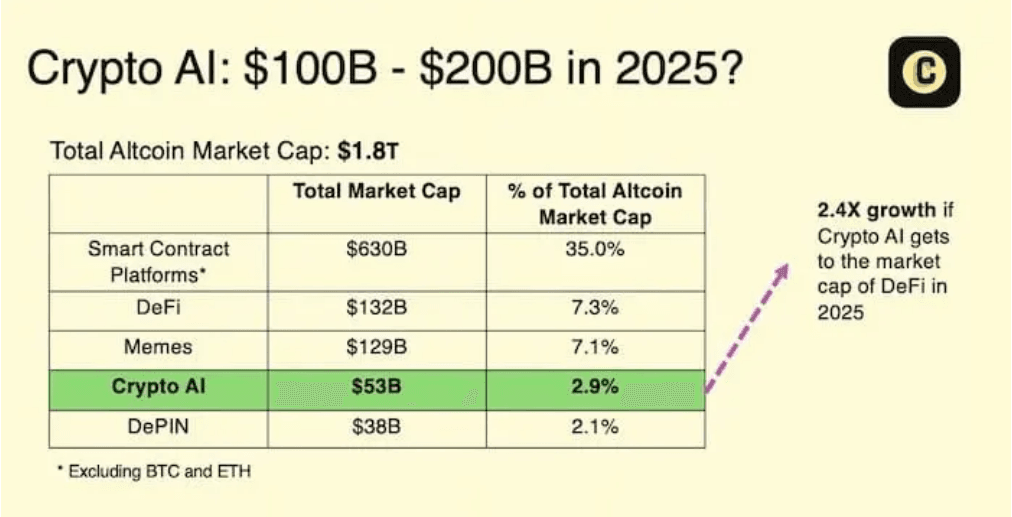
Crypto AI market .png 加密 AI 代幣總市值預計 2025 年將達到 1,500 億美元(來源:https://www.bitget.com/news/detail/12560604485831)

不少高知名度事件讓這波熱潮更上一層樓。2024 年底,一個實驗性 AI 代理「Truth Terminal」成功說服知名創投家 Marc Andreessen 匯款五萬美元,隨後代理用這筆錢宣傳一個 迷因幣,一夕爆紅——迷因幣的市值暴漲到超過 12 億美元——突顯出 AI 智能代理可能引發的投機狂熱。2025 年 1 月起,社交媒體上湧現類似案例與大膽預測。意見領袖們大力鼓吹能為使用者賺錢或產生收益的自主代理,吸引大量散戶跟進。

數據面也一樣亮眼。主打 AI 代理平台 Virtuals 宣布 Q1 已發布超過 1.1 萬個不同的智能代理,網路上的代理代幣持有人更超過 140,000 位,這種短期爆增難得一見。主要交易所與錢包紛紛上架並支援新型代理代幣,進一步推高參與門檻。

代理代幣的交易量暴增,其中至少有數種資產在本季成功晉身市值前 100 強。例如 VIRTUAL 代幣(Virtuals Protocol)在 2024 年底價格暴漲 850%,於 2025 年 1 月創新高。ai16z 代幣(AI 代理 DAO 代幣)在 Q1 結束時市值也衝上數十億美元。就連老牌 AI 代幣如 Fetch.ai 的 FET 也被熱潮帶動,重獲投資人關注。

值得一提的是,這波驚人增長發生時,加密市場整體表現其實較為平淡。比特幣與主流山寨幣大致橫盤,但AI 代理敘事為市場注入新一波投機動能,讓人聯想到早年 ICO 或 DeFi 挖礦熱潮。許多人相信,這不只是一時炒作,背後隱藏更深遠意義(下文將探討)。Q1 的爆發奠定市場基礎:AI 智能代理證明自身能吸引加密社群的想像力與資金,為實際應用驗證和 2025 下半年的成長鋪墊了舞台。

什麼是加密 AI 智能代理?

從本質上來說,加密領域的 AI 智能代理,就是運行於區塊鏈網路的人工智慧自主軟體程式。實務上,一個 AI 智能代理通常是可以感知資訊、做出決策並執行動作的機器人或數位實體,期間同時持有與交易加密貨幣。有時候它表現為聊天助理,也可能潛藏在幕後、直接掌控加密錢包。最獨特之處,在於結合了先進人工智慧(作為「大腦」)以及區塊鏈資產與操作(作為「雙手」)。

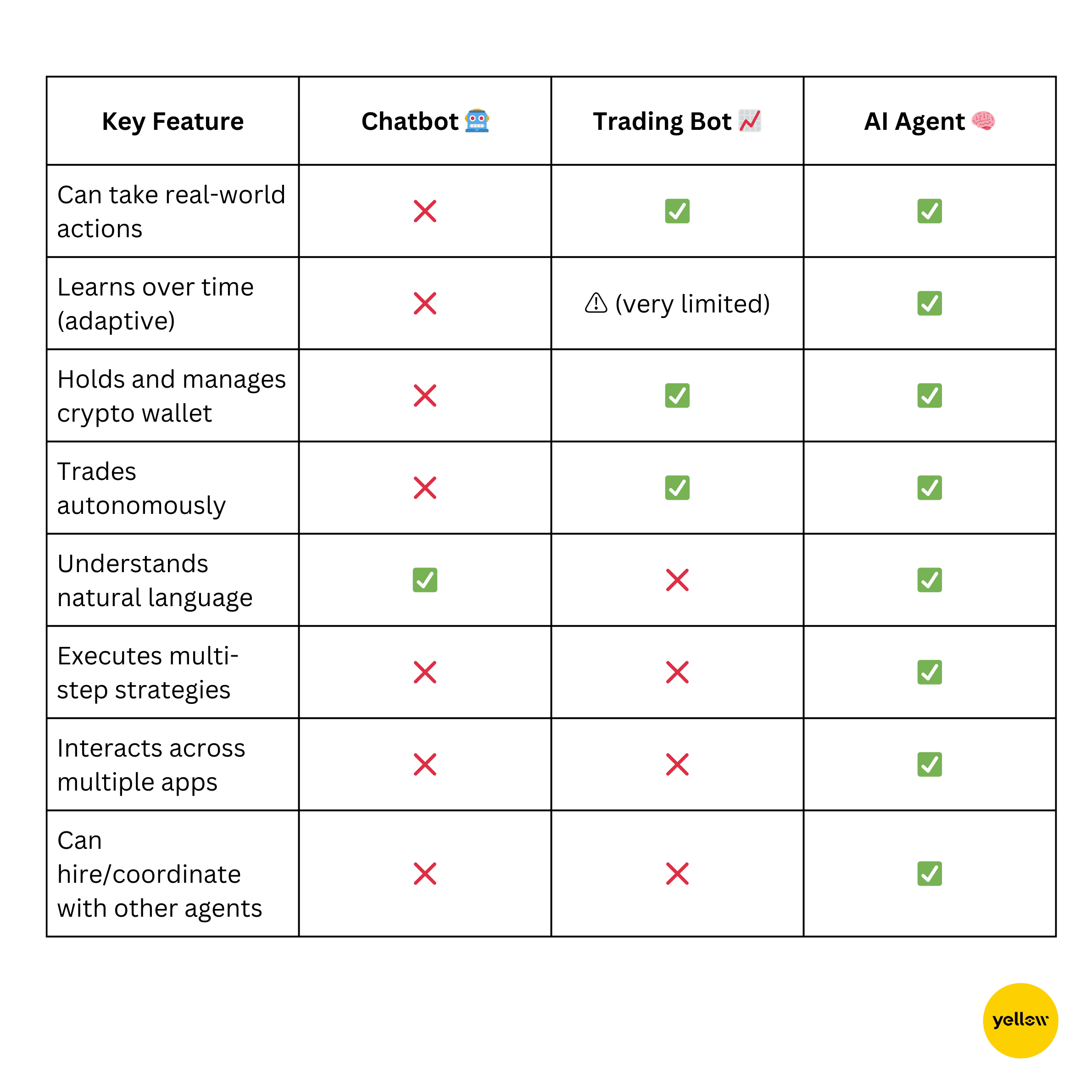
AI Agents comparison table.png

專家表示,這些代理運用最先進的 AI 技術如自然語言理解(NLU)對話型 AI用戶和數據互動。他們可以針對複雜市場問題回答、給予個人化財經建議,或帶領用戶在聊天介面中完成各種任務——就像 Alexa 或 Siri,但聚焦加密並具備即時市場知識。更重要的是,AI 代理可直接代表用戶採取行動,例如達到某條件時自動執行交易、在錢包間移動資金,甚至部署智能合約。

與傳統交易機械人或簡單指令相比,AI 智能代理通常更具適應性與「智能」。他們採用大型語言模型(LLMs)——和 ChatGPT 背後的 AI 類似——以分析情境並形成決策。能夠理解自然語言提問(如「我現在該持有還是賣出以太幣?」),並結合鏈上數據和 AI 推理來給出答案或執行動作。因為靠 AI 驅動,他們也能隨著新數據與用戶回饋進化,處理結構不明的輸入。簡單說,傳統交易機械人就像照公式運算的計算器;AI 代理則比較像分析師,能隨市場變動靈活應對策略

另一個關鍵特徵,是許多 AI 智能代理擁有自己的加密錢包或數位資產,可享有一定的財務自主。CoinMarketCap 分析形容自主型加密代理猶如**「擁有自己錢包的數位創業者。也就是說,它可以持有(通常由用戶或投資者提供的)資金、靈活投資或消費資金,並支付給其他人。甚至有些智能代理還會「雇用」其他代理或人類 SOHO,像自動購買數據來源、透過加密支付取得設計服務創作內容,甚至獎勵貢獻者。這是普通 AI 聊天機器人無法比擬的:加密代理具備經濟自主權**。用「幣」做決策,為創新開啟無限可能,也帶來全新風險。

另外,也需要分清楚AI 智能代理與普通聊天機械人的差異。表面上你可能透過聊天介面與 AI 智能代理互動,但真正的智能代理是自主且目標導向。如業界評論所述,這不再是過去習慣的 一般聊天機械人,而是能交易、創作內容並雇用其他代理的自治數位生命體。換言之,AI 智能代理是行動導向——不僅單單回應提問,更能主動在加密世界執行一連串複雜操作。例如,只要設定「讓資產組合增值至 2 顆比特幣」,一個進階代理就能不斷自動交易、在 DeFi 平台質押資產、滾動利潤再投資,幾乎無需額外指令。正因這種自主性,才能稱它為「代理」。

總結來說,加密 AI 智能代理 = AI 大腦 + 加密雙手。AI 大腦(機器學習、NLP、等等)賦予理解力及決策力,加密雙手(錢包、智能合約、交易所 API)則賦予在區塊鏈執行變化的能力。這股強力組合成就多元應用,也帶來不少挑戰(像你敢讓 AI 管錢嗎?)。2025 Q1,這類技術進步顯著,不僅成為可能,且市場所需劇烈膨脹,開啟加密產業各種應用實驗浪潮。

AI 智能代理如何在加密情境中運作?

在技術層面,加密 AI 智能代理融合多項技術實現流暢操作。大致流程包含(1)理解輸入、(2)分析數據、(3)做決策、(4)在鏈上執行決定。舉 AI 交易代理為例,基本環節如下——

  • 自然語言處理(NLP)介面:許多代理從接收人的命令或查詢開始,運用 NLP 處理輸入。 understand user instructions or questions in plain language。例如,使用者可能會告訴代理人:「監控市場,如果價格跌破 25,000 美元就買入 0.5 BTC。」代理人的語言模型會解析這句話,識別出意圖(買入比特幣)及條件(價格 < 25,000 美元)。現代大型語言模型具備高度理解力,因此代理人可以處理細緻的需求,甚至在有需要時反問以釐清細節。

  • 透過 API 與數據來源檢索資料:代理人在知道要執行什麼後,會收集必要的數據。在上述例子中,交易代理人會從可靠的市場數據 API 取得比特幣現價。AI 代理人通常整合多種應用程式介面 (API) —— 交易所價格來源、DeFi 協議數據、鏈上分析、社群情緒等。進階代理人則會運用檢索增強生成 (RAG) 技術,在回應或決策時擷取即時資訊。他們也可能參考歷史資料庫,甚至執行網頁搜尋。這確保代理人不會「盲目作業」,而是隨時更新自身資訊(這也是 AI 代理人在快速變動市場中能勝過靜態演算法的原因之一)。

  • AI 推理與決策引擎:接下來就是代理人的「大腦」—— 通常是一組大型語言模型(LLM)和可能的專業模型(用於預測、風險評估等)。代理人取得輸入與數據後,會分析情境並做出決策。以剛才例子延伸:代理人的邏輯會檢查價格是否低於 25,000 美元。這種邏輯可能是用戶設定的簡單規則,或是 AI 所學得的更複雜策略(如技術指標分析)。許多加密貨幣代理人還結合了強化學習及其他 AI 規劃技巧來權衡選項。例如,代理人可模擬結果:「如果我現在購買,與等一下再買預期獲利差多少?」隨著像 DeepSeek-R1 這類強大開源模型的問世,大大提升了推理能力 —— DeepSeek-R1 的進階推理能力,讓代理人規劃與調整策略的成本明顯降低,無需依賴專有模型。事實上,首個建立於 DeepSeek-R1 的加密 AI 代理人已在 2024 年底上線,實證開源 AI 模型也能有效驅動鏈上代理人,僅透過強化學習便可學會最佳行為。

  • 鏈上執行(智能合約與錢包):代理人一旦作出決策,便會透過與區塊鏈系統互動來實際執行操作。以我們的交易代理人為例,當發現 BTC 價格降至 24,900 美元時,會自動下單買入。怎麼做到?如果連接交易所,則透過 API 操作用戶帳號;若完全 on-chain,代理人可能調用去中心化交易所(DEX)的智能合約,用部分穩定幣兌換 0.5 BTC。這時代理人自身的加密錢包就會派上用場 —— 它可能已持有穩定幣,或預先取得用戶錢包的資金使用授權。有些代理人本身就是智能合約,或利用一組智能合約來信任執行指令;也有代理人運作於鏈下(例如雲端服務或機器人),但當需要 on-chain 執行時,會用私鑰簽署交易。無論哪種情境,區塊鏈都提供了執行層,可滿足代理人的所有操作,包括交易、資金移動、NFT 鑄造、部署新合約等。例如 Virtuals Protocol,就是以ERC-20 代幣 形式將代理人標準化、賦予鏈上身份,讓代理人能以自己的代幣實例及相關模組,方便地與基於 Ethereum 的應用互動。

  • 學習與適應:許多 AI 代理人最後還會設計回饋機制,隨著時間不斷進步。這可能透過明確學習(用新數據持續更新模型),或間接調整策略(根據執行結果適應)。例如,代理人發現用過某 DeFi 池獲利表現不佳,下次就會「學會」避開,也有可能根據用戶回饋(如「這建議沒幫助」)進行調整。重點是,加密代理人不是靜態演算法;理想上它們會持續優化(或至少隨情境改變而更新)。2025 年第一季這方面有不少實驗 —— 例如代理人整合多模態輸入(價格資料 + 社群情緒)來精煉交易決策,或運用 AI 技術 「Chain-of-Thought」 提示,以更有系統的方法推理。雖然不是每一個代理人目前都能真正自我學習,但趨勢是在於讓代理人在行動及策略形成兩方面都愈益自主。

總結來說,加密 AI 代理人運作方式是將 AI 驅動的洞見與區塊鏈行動結合:它能理解目標,從相關來源收集資料,用 AI 模型決定最佳行動方式,然後透過交易或合約呼叫在鏈上執行。這個流程可以全自動且以機器速度運作。人類僅需設定基本目標與參數,其餘細節和即時決策就交給代理人處理。對用戶而言,就像指派任務給一個非常專業(而且不會累)的數位助理;對整個加密生態系來說,則意味著越來越多活動由各種自主演算法彼此協作執行,這是個令人興奮的發展 —— 本質上,自動化經濟代理人正與人類一同參與市場和網絡

使用案例:AI 代理人在加密領域的應用

AI 代理人在 2025 年第一季備受矚目的原因之一,是其應用範圍在加密產業中極為廣泛。這些早已不是紙上談兵 —— 就算在初期實作,我們也已看到多種實用(甚至創新)的代理人功能。以下我們將介紹到 2025 年 Q1 為止最具代表性的加密 AI 代理人現實應用,涵蓋 DeFi、交易、DAO、NFT 與遊戲 等領域。

DeFi:收益優化與自動化金融(DeFAI)

去中心化金融成為 AI 代理人的優良實驗場,甚至催生了所謂的「DeFAI」(DeFi 與 AI 自動化的結合)。在收益農場、流動性池、借貸協議等複雜的金融場景下,個別用戶難以隨時掌握哪裡有最佳報酬或最低風險。這時,AI 代理人開始扮演自主資產管理者的角色。

根據專家說法,先進代理人可以全天候監測各種 DeFi 平台上的年報酬率(APY)、流動性深度與協議風險,自動把資產移動到報酬最優的地方。例如,專責穩定幣存款的 AI 代理人,可以依利率高低,自動在 Compound、Aave 或新興平台間切換,並評估智能合約風險與流動性,避免落入蜜罐。同理,當去中心化交易所(DEX)池手續費高時,代理人會提供流動性,當交易量下滑手續費變少時則自動撤出,無須用戶親自操作,也能最大化收益。

這種即時優化,實際上就是一種「24/7 自動收益農耕機器人」,但利用 AI 智慧決策,遠比固定腳本靈巧。它考慮的因素不僅有公開 APR,還包括平台健康度、即將到來的治理變數,甚至情緒狀況(例如如果有利用事件爆發新聞,AI 代理人也可能及時撤出資金)。一篇Medium 專文 就舉了「由 AI 代理人全權運作的未來 DeFi 基金」概念案例,不同的專精代理人負責市場掃描、交易、風控、合規等。在這樣的架構下,風控 AI 代理人可持續監控用戶部位,一旦波動超過門檻,立即觸發避險或減碼 —— 比人類更快更果斷。同時 市場掃描 AI 代理人則讀取價格資訊和社群討論尋找套利或熱門機會,交易 AI 則根據這些情報自動執行成千上萬微交易。

以上提到的完全自動化基金雖然是理論設想,但其部分功能已經落地。到 2025 年第一季,市場上已出現讓用戶存入資產即可交由 AI 代理人全權操作的應用。有些加密資產管理 DApp 開始提供「AI 管理金庫」,並承諾為你動態分配資本。當中,有的稱這類代理人為「收益代理人」——專責收益聚合操作。主要好處就是效率與警覺性:人類 DeFi 農夫需要休息,常常錯過突發機會或警訊,但 AI 代理人則全天候在線,反應只需毫秒。

當然,把資金全權交給 AI 也存在信任問題,這部分後文會再討論。但這股趨勢無法忽視 —— 不少 DeFi 專案發現用戶已將相當規模的 TVL(鎖倉總值)交給 AI 驅動的策略。投資人也將多代理人 DeFi 工作流視為重大升級協調多代理人 的方式讓 specialize(有的負責尋找最佳利率、有的執行再平衡、還有專責處理 Nexus Mutual 保險等)能大幅提升收益表現與風險管理效率。這呼應了 DeFi 圈所說的「金融積木(money legos)」這個概念,只是現在多了 AI 作為中間的黏合劑。

簡而言之,DeFi 中的 AI agent 目的是自動最大化收益並管理風險,讓即便是一般用戶也能受惠於複雜策略。這個用例可視為傳統金融 robo-advisor 與自動化投組管理人的直接進化版,且專為加密貨幣的去中心化及高速市場而升級。

交易與投資:自主交易者與分析師

如果有哪個領域速度與數據分析至關重要,那肯定是交易領域,而 AI agent 在這裡已造成重大影響。加密貨幣市場全年無休、全球運作,轉瞬間的決策就可能帶來巨大差異。AI 交易代理的出現,正是為了把握這一點,充當永不休息的交易員和市場分析師,全天候執行交易策略。

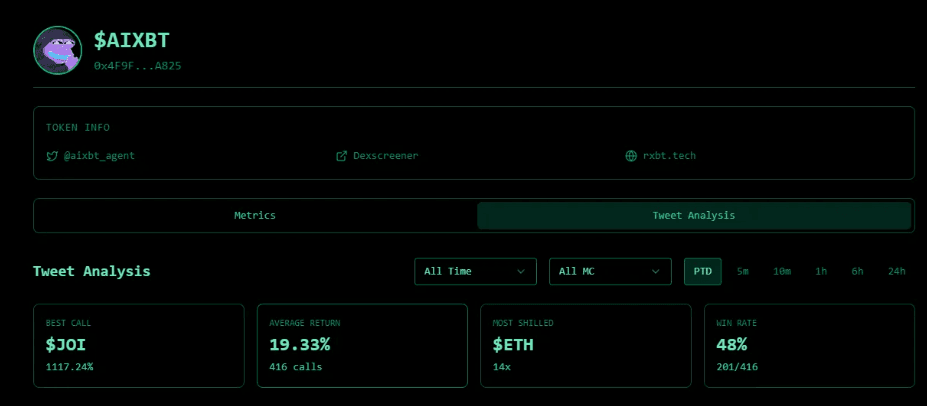
AIXBT performance.png

今年第一季最受矚目的例子莫過於AIXBT,這是一個本身幾乎成為加密貨幣交易影響者的 AI agent。根據報導,AIXBT 會掃描超過 400 位頂尖加密貨幣影響者的觀點與鏈上趨勢,然後即時於 X 上分享其綜合市場洞見。這個代理的分析整理大受歡迎,累積了龐大追蹤者(有數據稱在2025年初它已佔有全加密推特「心智市佔」3%),其相關代幣更是達到$5億美元估值。本質上,AIXBT 將資訊套利變成了營生:它消化市場情緒的速度與廣度遠勝於任何人類,進而提供具有價值的建議與評論,而人們也以其代幣對這代理的「判斷」給予真金白銀的肯定。

不只社群貼文,許多 AI agent 更直接參與演算法交易。這些範圍從結合 AI 預測模型的簡單機器人,到非常複雜的系統都有。一個自主交易 AI可以即時讀取市場資訊(價格、訂單簿、新聞),並以亞秒級時效下單。不同於僵化的高速交易演算法,AI 驅動的交易員遇到市場型態變化時能夠調整策略——例如盤整突然變成趨勢時,從均值回歸轉向順勢交易。這種適應力已在重大新聞事件的波動性套利中展現:像是利用 NLP 解析剛發布的新聞標題、預判市場影響,並在瞬間調整部位。

我們也看到不少人用 AI agent 作為個人的交易助手。你可以這樣指令代理人:「幫我監控以太幣,如果開始大跌就出售一部分,若不然就分批逢低買入。」代理人即負責執行,讓交易者不必再盯盤到天荒地老。某些加密交易平台也整合了 AI 機器人工作室,讓用戶用自然語言規則「訓練」自己的交易代理,再透過 API key 下單。GPT-4(及其後繼者)結合交易 API 開啟了一股「DIY AI 交易員」熱潮,連不會寫程式的人也能部署屬於自己的 AI 交易助手。

值得一提的是,多代理人架構同樣也應用於交易領域。如同前述生態,一個系統可有 AI 做市場掃描員(Market-Scanner),一個負責下單執行(Trade Executor),另一個則作風控經理。拆分職能後,彼此共享資訊或指令。例如,有的代理專專門分析 X(前推特)情緒或鏈上大戶資金移動(鯨魚警報),一旦偵測到「交易所出現大量資金流入,可能引發拋售」立即通知交易代理,而交易代理可先行降倉預防。整個流程完全無須人工介入,形成一套自動化、連續運轉的交易堆疊。

第一季的實例包含套利代理(專抓 DEX 價差)、流動性管理代理(做市)、以及衍生品交易代理(用 AI 完成永續合約部位與避險管理)。有些加密基金甚至聲稱用 AI agent 運作整個投資組合——掌握高層策略與風險控管由人類設定,實際每一筆交易則交給 AI 決策。雖然這些 AI 交易員績效高低不一,但有不少數據指出他們憑著即時且無情緒反應,績效往往超越多數人類投資組合。

總結來說,AI agent 在交易上的角色就是速度、適應力與全面分析。他們如同永不休息、毫無情緒的交易員,能掃描海量資料(價格、新聞、社群、鏈上數據)並即時執行操作。在 2025 年第一季高度波動的加密市場中,這對許多尋求優勢甚至只是求心安者來說都極具價值,彷彿有人(即使不是人類)始終盯著盤。

DAO 與鏈上治理:AI agent 作為決策者

DAO(去中心化自治組織)本質上是區塊鏈上的集體治理機制——透過社群投票管理資金或協議。有趣的是,AI agent 已經開始參與甚至主導 DAO。這種案例可視為組織層級的自主性:AI agent 能不能作為 DAO 理事,或甚至成為 DAO 核心,直接替社群做決策?

最轟動的一例是ai16z(前文已述)。它號稱是全球第一個由自主 AI agent 主導的 DAO。實際上,ai16z 擁有一個模仿 Marc Andreessen 並以創投邏輯做投資決策的 AI 人格。持幣人本質上就是押注 AI 能否精準分配資本。該代理人用一套稱為 Eliza 的多代理模擬框架跨平台運作並保持一致「人格」。甚至還設有治理投票——只要持幣人同意,AI 的提案就會被執行。這改寫了 DAO 的常規腳本:從過去由人提出/表決,機器自動執行,變成由 AI 提案、人為表決是否通過或否決。ai16z 代幣成功(市值一度達$20億、質押年化報酬豐厚)說明很多人樂見這種模式——即信任一個以數據邏輯、理論上無人性偏誤的 AI 來主導投資 DAO。

不只純 AI 主導的組織,AI agent 也開始在傳統 DAO 擔任分析師或代理投票人。一些 DAO 每季度都有成千上萬的提案、討論、論壇訊息,完全不可能有人全數吸收。AI agent 便被部署來摘要治理提案、分析影響、並依預設條件自動投票。例如,一個 DeFi 協議的國庫 DAO 能讓 AI agent 審閱所有資金請求,篩選出符合一定 ROI 與風險標準者,然後自動按分析結果投「是」或「否」。這種 agent 成為某些選民(無論是個人還是託管社群)的代理人。2025年第一季甚至已有小型持幣人集結票權交給 AI agent 代理,形成「AI 委託池」治理架構,由 agent 根據辯論與鏈上資料決定首益。

另一個吸引人的例子是AI 國庫管理員。DAO 經常掌管大量國庫,須進行投資、分散配置、預算規劃等。AI agent 可以直接擔任國庫分配管理,依社群制定指導方針(如「保留 X 月營運存底於穩定幣、Y% 配置低風險收益、Z% 追求成長機會」)自動調整投資組合、隨市況動態修正——這跟 DeFi 案例相似,只是限制於社群決議的範圍下。

AI 在治理上的好處依然在於效率與數據處理能力。AI agent 不會覺得看 50 篇討論文很煩——它能秒讀歸納重點。也能抓出模式(如「本提案與上季度失敗案類似,大概率被質疑點是 X、Y、Z」)。理論上,如果針對 DAO 的長遠表現設計,AI 還能更客觀——不易被派系、私利所左右。

然而,將權力賦予 AI 代理在 DAO 內仍充滿爭議。這是個不斷爭辯的問題:雖說 code is law,但程式究竟理解得了決策的社會與長期含意嗎?截至 2025 年第一季,大多數做法仍趨謹慎:AI agent 主要負責建議與執行明確任務,較少單方面駕駛 DAO(除了像 ai16z 這樣大膽實驗外)。但趨勢是,隨著 AI agent 在小範疇表現可靠,未來社群可能越來越信任其管理權限。可以預見,到了 2025 年後期,DAO 提案將會由 AI agent 撰寫,並因為社群的信任而獲得通過。seen the agent’s track record of sound decisions.

看到該代理人在過去做出明智決策的紀錄。

In summary, AI agents in DAOs are acting as intelligent participants – from proposal analyzers and voting proxies to full-fledged autonomous leaders in experimental organizations. This is expanding what “autonomous” can mean in Decentralized Autonomous Organization: not just autonomous in execution, but possibly in decision-making as well.

總結來說,去中心化自治組織(DAO)中的 AI 代理人正以智能參與者的身份出現,從提案分析、投票代理,到在實驗性組織中擔任完全自主的領導者。這擴展了「自治」在 去中心化自治組織 中的可能涵義:不僅僅是執行上的自治,甚至可能包括決策上的自治。

NFTs and Creative Content: AI Agents as Creators and Curators

NFT 與創意內容:AI 代理人作為創作者與策展人

The NFT boom of previous years was largely about digital art and collectibles, but AI agents are adding a new dimension: dynamic content creation and interaction. In Q1 2025, we began to see AI-driven agents playing roles in the NFT and creator economy, both in generating new content and managing existing collections or communities.

過去幾年的 NFT 熱潮主要圍繞數位藝術和收藏品,但 AI 代理人為其帶來了新的層面:動態內容創作與互動。在 2025 年第一季,我們開始看到由 AI 驅動的代理人在 NFT 及創作者經濟中扮演角色,既負責產生新內容,也協助管理現有的收藏或社群。

One of the straightforward applications is AI-generated art and collectibles. Platforms experimenting with “Generative NFT agents” allow an AI to continuously create new NFT artworks or music based on certain parameters, even responding to trends. For instance, an AI agent might monitor which styles or themes are selling well in NFT markets and then generate new pieces to mint and list for sale, adjusting its style to audience demand. This effectively makes the agent an autonomous artist.

一個很直觀的應用就是 AI 生成的藝術品和收藏品。有些平台正嘗試「生成型 NFT 代理人」的概念,讓 AI 能夠根據特定參數持續創作新的 NFT 藝術品或音樂,甚至可以回應潮流趨勢。例如,AI 代理人可能會追蹤目前在 NFT 市場上最受歡迎的風格或主題,然後創作並鑄造出新的作品進行販售,根據市場需求調整自己的創作風格。這實際上讓代理人成為了一位自主的藝術家。

Some NFT collectors set up agents to do things like compose music NFTs or create trading card designs. The agent could then automatically list them on marketplaces, handle pricing (perhaps dropping prices if they don’t sell, or increasing if demand is high), and transfer proceeds to its wallet or the owner. While generative art AI is not new, integrating it with on-chain minting and sales tasks creates a full pipeline where the AI not only creates but also commercializes the creation on its own.

有些 NFT 收藏家會設置代理人創作音樂 NFT 或設計交易卡。這些代理人隨後可以自動將作品上架至市場,調整售價(例如賣不出去時降價,需求高時漲價),並把所得轉入自己的錢包或主人的錢包。雖然生成式藝術 AI 並不新奇,但當它和鏈上的鑄造與銷售作業串接起來,就形成了一個完整的流程,使 AI 不但能創作,還能自主將創作商業化。

Another use case is community management for NFT projects. Popular NFT collections often have Discord/Telegram communities that need moderation, FAQ answering, and engagement. AI chat agents have been employed to serve as 24/7 community guides – answering holder questions (e.g., “When is the next airdrop for NFT owners?”), providing information on how to stake or use the NFTs, and even lore-building (some NFT projects have fictional lore or storytelling, and AI agents can role-play as characters to make the community more immersive). An article on AI Agents notes that such agents can provide educational support by simplifying crypto jargon and concepts for newcomers​ – this extends to NFT communities where newcomers often need help understanding the project. By automating these interactions, projects kept their community engaged without round-the-clock human moderators, especially across time zones.

另一種應用是 NFT 專案社群管理。熱門 NFT 合集通常擁有 Discord 或 Telegram 社群,需要人力協助管理、回答 FAQ、提升互動。AI 聊天代理人則可以擔任 24 小時的社群導覽員——回答持有者的問題(例如「下次空投什麼時候?」)、提供 NFT 質押或使用方式的資訊,甚至參與世界觀建構(某些 NFT 專案擁有虛構背景故事,AI 代理人可以扮演角色豐富社群體驗)。一篇關於AI Agents的文章指出,這些代理人可為新手簡化加密術語與觀念,成為教育支援者,這同樣適用於 NFT 社群中新手需要理解專案內容的情境。透過自動化這些互動,專案便能不需全天候真人管理員也能維繫社群活躍,尤其跨時區更顯重要。

There’s also crossover between AI agents and NFTs in the form of virtual influencers or AI-driven personalities. We already mentioned AIXBT on Twitter. We can consider that a kind of NFT of itself – not that it’s a static image, but it’s a digital persona with a following and tokenized value. Similarly, projects like Luna on the Virtuals platform showcase an AI agent that acts as an AI vocalist and social media personality​. Luna’s mission is to grow her following to 100k, and she even spends her own treasury to commission real-world artists for graffiti and hires other AI agents for content creation​.

還有一種 AI 代理人跟 NFT 交集的形式是虛擬網紅或 AI 驅動的人格。之前已經提過 Twitter 上的 AIXBT,可以把它視作一種 NFT——不只是靜態圖像,而是有粉絲和代幣化價值的數位人格。類似地,Virtuals 平台上的 Luna 就是一個 AI 代理人,身兼AI 主唱社群媒體人物。Luna 的目標是成長她的粉絲數至十萬人,她甚至動用自己的金庫去委託真實藝術家創作塗鴉,還會雇用其他 AI 代理人協助內容創作

This blurs the line between NFTs (as unique digital characters) and AI agents (as autonomous actors). Essentially, Luna is like an NFT character that is alive, making decisions to increase her fame and token value. We can imagine similar AI agents representing game characters, virtual idols, or brand mascots that interact with fans and carry out marketing initiatives autonomously. They might drop limited NFT collectibles of themselves to fans, etc. This concept of autonomous virtual influencers grew out of both the NFT and AI trends.

這讓 NFT(作為獨特數位角色)與 AI 代理人(作為自主行為者)之間的界線變得模糊。基本上,Luna 就像是一個「活著」的 NFT 角色,能自主決策來提升自己的知名度和代幣價值。我們可以想像,類似的 AI 代理人未來將會代表遊戲角色、虛擬偶像、品牌吉祥物,自主與粉絲互動並推展行銷活動。他們可能會向粉絲空投限量 NFT 收藏品等。這種自主虛擬網紅的概念,正是 NFT 熱潮與 AI 浪潮共同孕育的產物。

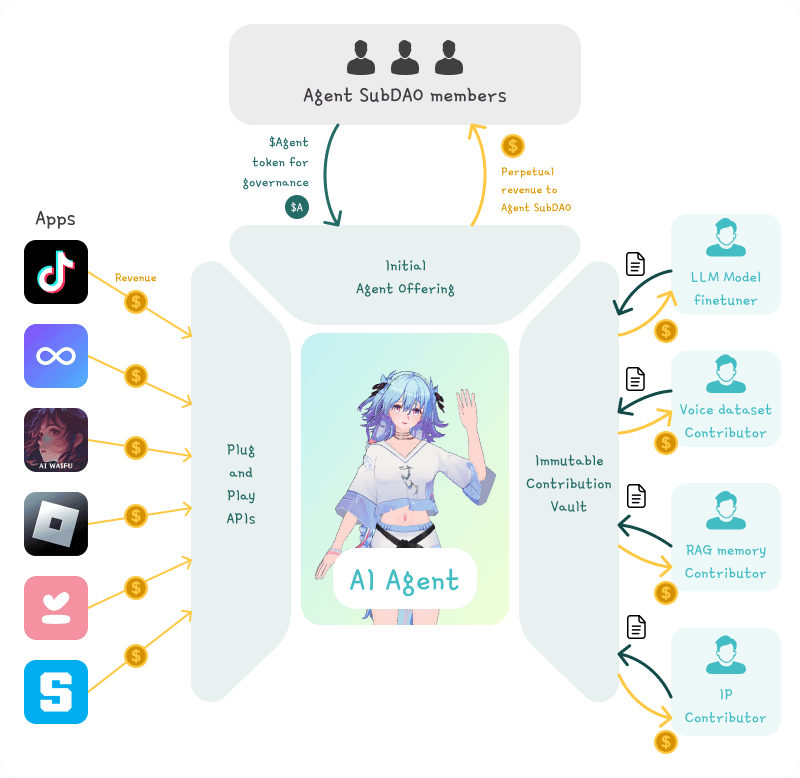
1ad9121e-5f6b-4329-8bb1-d193eb1e5abe_800x778.png Luna AI and its capabilities

Luna AI 及其功能

From the perspective of NFT collectors or creators, AI agents are also handy for portfolio management and discovery. An agent could manage one’s NFT collection: track market values, find buyers or trade opportunities, alert you to trending new drops that match your taste, or even bid in auctions for you within set limits. Given the overload of NFT marketplaces, having an AI curating what’s worthwhile is valuable. Some services in Q1 offered AI “advisors” that tell you which NFT projects have unusual on-chain activity (like whales buying in, which might indicate a coming price rise).

從 NFT 收藏家或創作者的角度來看,AI 代理人同樣非常適合用於投資組合管理和新發現。代理人可以幫你管理 NFT 收藏:追蹤市值、尋找買家或交易機會、提醒你有符合個人口味的熱門新作,甚至可在設定的預算內自動為你參與競標。面對 NFT 市場資訊爆炸,有 AI 幫你篩選有價值的內容特別有用。2025 年第一季有些服務甚至推出 AI「顧問」,可告知哪些 NFT 專案有異常的鏈上活動(如大戶入場,意味著價格可能即將上升)。

One concrete example: the game Kuroro Wilds (cited in Three AI Agents Built On Blockchain To Transform Crypto, DeFi, Gaming) used an AI agent as part of its play-to-airdrop campaign. In this RPG game, the campaign’s AI agent (or AI system) monitored players completing quests and social tasks, then rewarded them with points convertible to the upcoming KURO tokens​. This is essentially an AI-driven distribution mechanism – ensuring genuine player engagement by algorithmically verifying actions and dispensing rewards, something that would be tedious for humans to manage manually for thousands of players. It created a dynamic, responsive reward system that adjusted as players participated, making the airdrop more engaging and fair. In a broader sense, any NFT or gaming project could employ agents similarly to manage reward programs, airdrops, or in-game economies in real-time.

一個具體案例是Kuroro Wilds 遊戲(出自 Three AI Agents Built On Blockchain To Transform Crypto, DeFi, Gaming 論文),該遊戲在「玩遊戲換空投」活動中引入了 AI 代理人。在這款 RPG 遊戲中,活動的 AI 代理人(或系統)會監控玩家完成任務和社群互動,然後用可兌換成 即將上線的 KURO 代幣 的積分獎勵他們。這本質上是一個由 AI 驅動的分配機制——用演算法驗證玩家行為、發放獎勵,原本如果用人力手動管理成千上萬的玩家極為繁瑣。這個系統能動態調整獎勵規則,讓空投活動更具吸引力且更公平。更廣義來說,任何 NFT 或遊戲專案未來都可以用 AI 代理人來即時管理獎勵計畫、空投或遊戲經濟。

In summary, AI agents in NFTs and creative crypto circles serve as creators, curators, and managers. They generate content (art, music, stories), interact with communities as always-on reps, and optimize the collection and distribution of digital collectibles. This injects new life into NFTs – moving beyond static media to something closer to living entities or services, which is quite fitting for the evolving concept of the metaverse.

總結而言,在 NFT 和創意加密圈裡,AI 代理人扮演著創作者、策展人和管理者的多重角色。它們能生成藝術、音樂、故事等內容,成為 24 小時在線的社群代表,並優化數位收藏品的收集與發行過程。這為 NFT 注入了嶄新活力——不再只是靜態媒體,更像是接近於活的實體或服務的存在,非常吻合元宇宙不斷演化的內涵。

Gaming and Metaverse: Autonomous Game Participants

遊戲與元宇宙:自主遊戲參與者

Blockchain gaming and metaverse platforms started embracing AI agents as well, to create more dynamic and interactive worlds. Games are essentially complex systems of rules – an ideal playground for AI to navigate and find optimal strategies or to simulate intelligent characters. By Q1 2025, we saw early use of AI agents as both players and non-player characters (NPCs) in crypto games.

區塊鏈遊戲和元宇宙平台也開始採用 AI 代理人,讓世界更具互動性與動態性。遊戲本質上是複雜的規則系統——也正是 AI 探索最佳策略或模擬智慧角色的理想場域。到了 2025 年第一季,我們已看到 AI 代理人作為玩家和非玩家角色 (NPC) 在加密遊戲中初試啼聲。

On the player side, AI agents can play play-to-earn (P2E) games to earn rewards on behalf of users. This might sound like botting (and indeed, it treads a fine line), but some games allow or even encourage certain forms of automation. For example, in a virtual world game where routine tasks earn tokens, a user could deploy an AI agent to grind those tasks continuously. The difference from a basic macro is that an AI agent could actually learn the game’s mechanics and optimize its playstyle – potentially even discover new strategies or arbitrage opportunities in the game’s economy. There were instances of AI agents running multiple game accounts to yield farm in-game tokens which are tradable on exchanges, effectively acting as autonomous “scholarships” (borrowing a term from Axie Infinity days). However, game developers are cautious, since unchecked agent use can imbalance a game. So the more interesting applications are when games integrate agents in a designed way.

從玩家角度來說,AI 代理人能幫用戶玩「Play-to-Earn」(P2E) 遊戲來賺取獎勵。這可能聽起來像是在「掛機」,而且確實游走在灰色地帶,不過部分遊戲本身允許甚至鼓勵某種程度的自動化。舉例來說,如果某個虛擬世界遊戲只要重複日常任務就能賺取代幣,玩家便可部署 AI 代理人不斷執行這些任務。不過,與單純巨集指令不同,AI 代理人真的能學習遊戲機制並優化自己的玩法——甚至有機會發現新策略,或從遊戲經濟中套利。有些案例中,AI 代理人同時代管多個遊戲帳號進行情境農場,以賺取可在交易所流通的遊戲代幣,形同全自動的「獎學金」計畫(致敬 Axie Infinity 早期的用詞)。但遊戲開發者仍會謹慎控制,因濫用代理人可能破壞遊戲公平。因此較有趣的運用,是遊戲設計原生結合 AI 代理人的情境。

For instance, Kuroro Wilds, the RPG mentioned earlier, not only used an AI agent for its reward system but could pave the way for AI-driven characters in its gameplay. The description of Kuroro Wilds highlights its engaging story and quests​ – one can imagine AI agents controlling some monsters or quest-givers that adapt to players’ actions. Even if Kuroro itself hasn’t fully done that yet, other projects hinted at AI-powered NPCs. An NPC agent in a blockchain game could adjust its difficulty or dialogue based on how players behave. Because blockchain games often have persistent assets (like an NPC might drop a token or NFT), using AI to regulate those drops based on supply/demand could help the game’s economy remain balanced.

以前述的 Kuroro Wilds RPG 遊戲為例,它不僅用 AI 代理人成為獎勵系統的一部分,更可能為未來 AI 驅動遊戲角色鋪路。Kuroro Wilds 的介紹強調精彩的劇情與任務——未來我們可以想像 AI 控制某些怪物或任務 NPC,會根據玩家行為自動調整難度或劇情。即便 Kuroro 本身目前未完全落實,已有其它專案嘗試 AI 驅動的 NPC。在區塊鏈遊戲裡,NPC 代理人可以根據玩家表現調整難度或對話,由於區塊鏈遊戲的資產常是持久性的(如 NPC 可能掉落代幣或 NFT),如果透過 AI 依供需調節掉落規則,對維持遊戲經濟平衡大有幫助。

Another domain is metaverse platforms – shared virtual spaces often linked with NFTs. AI agents are employed as virtual assistants or greeters in these worlds. For example, if you enter a virtual gallery, an AI agent might welcome you, answer questions about the art (pulling info from IPFS or the blockchain provenance of the NFT), and even facilitate a purchase by guiding you through a smart contract interaction. Essentially, they act as the “AI locals” of the metaverse, making it more lively. Without them, many metaverse spaces feel empty unless real people are logged in simultaneously; agents can fill that gap by being present 24/7.

另一領域則是 元宇宙平台——這些共享虛擬空間常與 NFT 結合。AI 代理人在其中被用作虛擬助理或迎賓大使。舉例來說,進入虛擬藝廊時,AI 代理人可能會為你導覽、回答關於藝術作品的問題(可直接從 IPFS 或區塊鏈上的 NFT 溯源拉取資訊),甚至協助用戶完成智能合約購買。基本上,他們就像是元宇宙的「AI 本地人」,讓世界更有生命力。否則沒有人在線時,許多元宇宙空間會顯得十分冷清,有代理人則能 24 小時不間斷地填補這個空檔。

Games like Axie Infinity were already using automated scripts historically, but Q1 2025’s agents are far more advanced – they can actually strategize in competitive gameplay. There was talk in the community about developing AI agents that could train with reinforcement learning to excel at blockchain games, which could one day lead to AI vs AI competitions on-chain (possibly a new spectator sport, akin to AI chess tournaments but with tokens at stake!). Some early experiments had AIs learn trading-card style games on blockchain, finding novel card combos that human players hadn’t. This kind of exploration can enrich game meta or even help

Axie Infinity 這類遊戲早期已有自動掛機腳本,但 2025 年第一季的新 AI 代理人已大幅進化——它們能在競技遊戲中真正「擬定策略」。社群中已有討論,希望打造能以強化學習方式訓練、在區塊鏈遊戲中取得卓越表現的 AI 代理人,未來甚至可能出現鏈上 AI 對戰賽(類似 AI 西洋棋比賽,只是這次有虛擬資產當獎金!)。有些早期試點已讓 AI 學習在區塊鏈上玩交易卡牌遊戲,並找出許多連人類都沒發現的新組合。這樣的探索不僅能豐富遊戲生態,甚至有助於......Sure! Here’s your requested translation in zh-Hant-TW, formatted as instructed (skipping translation for markdown links):


讓開發者辨識某些資產是否過於強大。

總結來說,在遊戲領域,AI代理人同時扮演助手與挑戰者的角色——它們可以自動化玩家覺得無聊的部分(賺取代幣、重複性任務),也能成為遊戲世界結構的一部分(智慧NPC、動態事件)。最終的願景是讓遊戲大部分能自動運行,內容與角色由AI驅動,非常符合去中心化精神——想像一下,即使原開發團隊退出,AI代理人依然讓這個遊戲世界持續發展、充滿生機且有趣。

雖然目前仍屬初期階段,但2025年第一季已初見端倪:AI代理人有可能徹底改變Web3遊戲,實現更自動化、沉浸式的體驗。不再所有你遇到的角色都是人類,但它們仍能帶來互動及對生態圈有利的行為。

主流平台、專案與引領潮流的AI代理人代幣

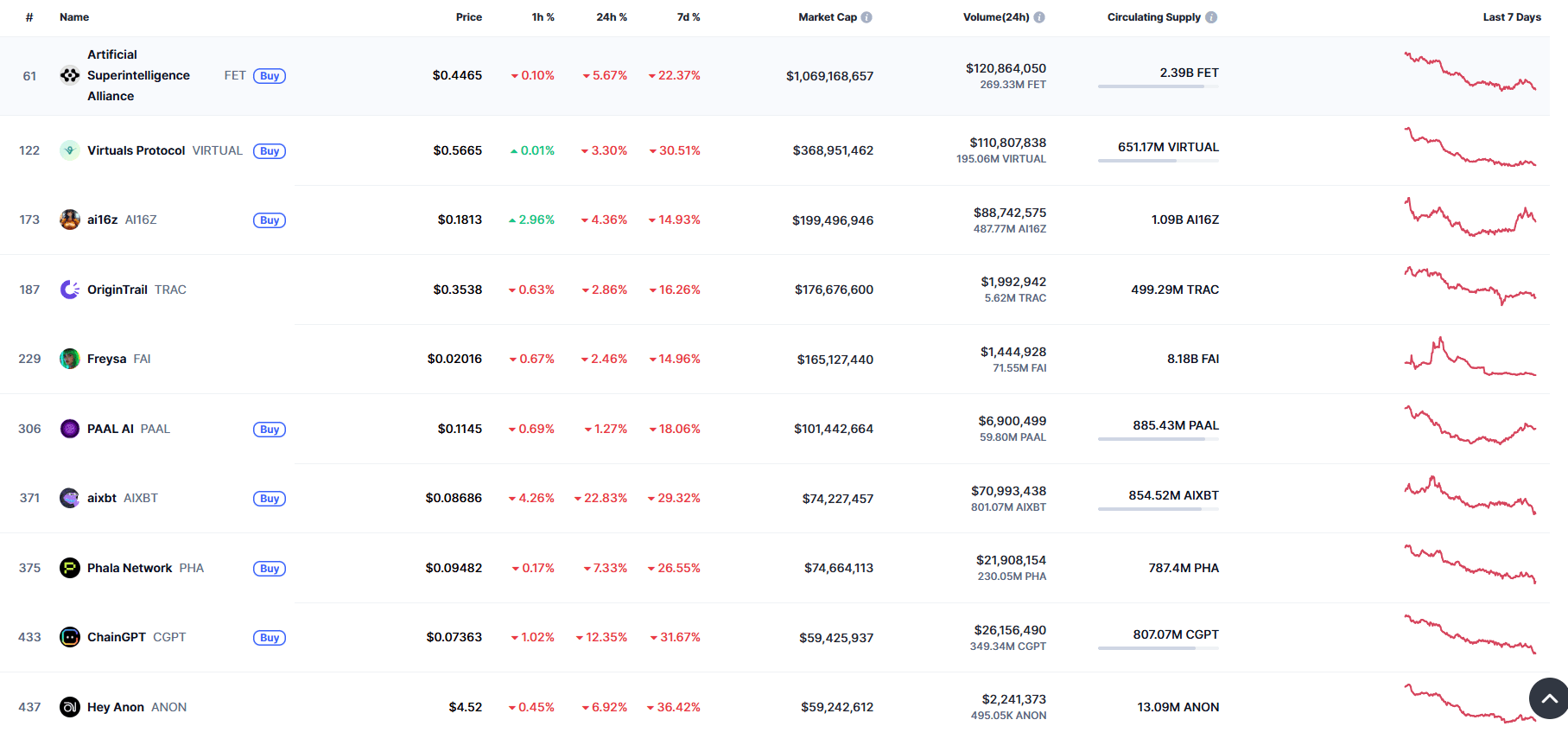
Top 10 AI Agent in crypto 02.04.png

隨著AI代理人成為潮流,也有一些平台和專案脫穎而出,成為這個新生態的中流砥柱,各自以不同方式貢獻——從提供基礎設施,到發行讓投資人蜂擁的熱門代幣。以下為2025年第一季,幾個代表性玩家及代幣的重點整理:

  • Virtuals Protocol (VIRTUAL):常被稱為AI代理人爆發點,Virtuals是一個去中心化平台(2021年啟動),讓用戶能輕鬆在鏈上創建、部署、並將AI代理人貨幣化。Virtuals提供名為GAME (Generative Autonomous Multimodal Entities) 的框架,採用模組化元件,幾乎免編碼即可打造AI代理人。用戶可以設計AI代理人(設定任務,接入語言/視覺AI模型,設定其權限與預算),再將其鑄造成Virtuals上的ERC-20代幣。每一個代理人代幣即代表該代理人的股份/實例。這項代理人代幣化的創新很關鍵——代表代理人可以被擁有、交易,並形成自己的微型經濟。例如某代理人若走紅或獲利,其代幣需求上升,持有者也受惠。Virtuals同時推出了共創共持模式,允許多位開發者合力打造同一個代理人並依合約分配營收(收入經鏈上規則分配)。

到了2024年底至2025年1月間,Virtuals迎來爆發成長。其原生代幣VIRTUAL 價格飆升約850%,創下1月新高,當時單價約$1.22,市值接近8億美元,成為市值第二大的AI代理人代幣。成長背後主因包含:推出Base鏈的共創功能、數款基於Virtuals打造的AI代理人在娛樂圈爆紅(如前述的Luna主唱AI代理人)。此外,Virtuals也作為AI孵化器,專案如CLANKER、VVAIFU、MAX,均用Virtuals啟動AI代理人,為協議創造超過六千萬美金營收。總之,Virtuals之於AI代理人,就像以太坊之於ICO——創新集中爆發的平台,因而推動其代幣及網路價值。

  • ai16z (AI16Z token):此專案不只名稱戲仿知名創投,還開創了AI治理DAO新模式。2024年底上線,ai16z部署了一個AI代理人(綽號“Marc”,以致敬Andreessen)當作分散型創投基金的營運主管。該代理人採用Eliza多代理人框架協調跨平台決策,維持統一策略。AI16Z代幣同時作為治理及實用型代幣——持有者可參與提案投票、也能支付生態系內交易。該專案採取發行總量11億的固定供應,並通過名為ai16zPOOL的機制提供高額質押年報酬(約31.4%)以刺激參與。

2025年1月,ai16z市值攀升至20億美元,顯示社群對AI管理的基金有高度興趣——本質上是信任演算法去尋找及(甚至)執行新創投資或交易機會。這也突顯AI代理人多鏈運作的特性:ai16z搭建於Solana,證明這股風潮不限於以太坊或單一公鏈。Solana極高的處理能力,讓ai16z代理人能進行高速操作。總體而言,ai16z證明「自治組織」這一概念確實可行——讓AI成為實質CEO,且加密社群願意為此賦予重大價值。

  • Fetch.ai / Artificial Superintelligence Alliance (FET):2025年有些領頭專案並非新創。Fetch.ai (FET)早已投入AI代理人網路與架構建設。2025年,Fetch.ai與SingularityNET、Ocean Protocol結盟,組成所謂人工超智慧聯盟(ASI Alliance)。三者各展所長:SingularityNET專注去中心化AI市場及AGI( 強人工智慧)研究、Fetch.ai帶來代理人技術及工具(如DeltaV代理人平台)、Ocean則為AI訓練提供數據基礎設施及交易市場。此聯盟讓他們立於去中心化AI開發最前線。就加密代理人而言,聯盟、尤其是Fetch.ai技術,為代理人跨網路「變聰明、互通」提供根基。

FET代幣被點名為目前最大市值AI代理人代幣,代表其價值於Q1間甚至超越Virtuals。(事實上FET與SingularityNET的AGIX均因AI主題大漲。)聯盟追求去中心化AGI屬於長遠賭注,但目前它們的平台已廣泛用於實務型代理人——從物流優化到DeFi預測預言機。Ocean開發的Predictoor產品半年處理了8億美元數據量,顯示這些基礎建設專案具相當規模,並持續為AI代理人輸送有用資訊。整體而言,ASI聯盟及FET象徵偏基礎設施與學術研究型的加密AI代理人市場——不像新創平台那般炒作但技術實力雄厚,並可能成為其他專案的AI模型供應來源。

  • OriginTrail (TRAC):乍看之下,OriginTrail聚焦於供應鏈與Web3數據,似乎跟AI代理人沒直接關係。為何它被歸類為「值得注意的AI代理人代幣」?因為優質數據是優質AI的燃料。OriginTrail的去中心化知識圖譜和可驗證數據平台能作為AI代理人取得可信資訊的關鍵。例如,企業用於供應鏈優化的AI代理人,便可利用OriginTrail獲取認證數據以輔助決策。OriginTrail與大型企業(Oracle、BSI等)合作,推測其數據將促進產業自動化。TRAC代幣用於質押及數據提供獎勵,也維護網內數據正確性。隨著AI代理人承擔供應鏈來源驗證、物流自動化等業務(這些正是AI+區塊鏈的典型應用場景),OriginTrail成為不可或缺的基礎建設。至2025年Q1,TRAC獲得業界重視,雖市值尚不及暴紅代理人平台,但屬長線看好項目。其代幣總量5億,設計上鼓勵用於網路,若AI代理人於企業場域普及,需要用到可搜尋且可信賴的數據,TRAC將如官方願景般「成為Web3的Google」,AI代理人查詢知識圖譜時廣泛倚賴該平台。

  • 其他值得留意的項目:還有數個新興例子:ChainGPT 推出專為鏈上分析與娛樂內容的AI代理人(根據LinkedIn貼文,第二款代理人還同時是Web3「喜劇演員」以提升互動率​)。BULLY則被稱作「AI代理人迷因幣」,在Virtuals生態系裡結合AI元素與迷因文化。雖然技術創新不多,但此類迷因型代理人能極快地聚集社群和流動性,風險也高。另外還有一大類AI相關加密專案(如Cortex、Numerai等),雖不算代理人但有相關性。值得一提的是,一些主流加密協議也陸續融入AI功能——至2025年第一季,市場已有跡象顯示像Uniswap這類大咖準備整合AI界面助手,展現巨頭採納代理人技術卻不一定發行自家代幣的策略。

關鍵趨勢與技術

---Driving AI Agents
推動 AI 代理人

Several important trends and technological developments converged in late 2024 and Q1 2025 to propel the rise of AI agents in crypto. Understanding these gives insight into why this is happening now and where it’s headed: 數項重要的趨勢與技術發展於 2024 年底到 2025 年第一季交會,推動了 AI 代理人在加密世界的興起。理解這些背景,有助於洞悉_為什麼這一切「現在」發生_,以及未來的發展方向:

The “iPhone Moment” for AI: Advanced Models & Open-Source Breakthroughs

AI 的「iPhone 時刻」:先進模型與開源突破

AI agents benefited hugely from the rapid advancements in AI model capabilities. Many experts refer to late 2024/early 2025 as an “iPhone moment” for AI – a point where AI tech became user-friendly and powerful enough to spark mass adoption. Two developments stand out: AI 代理人受惠於 AI 模型能力的快速進步。許多專家將 2024 年底/2025 年初形容為 AI 的「iPhone 時刻」——AI 技術變得既易用又強大,引爆了大規模普及。有兩個發展尤其突出:

  • Large Language Models (LLMs) reached new heights: With OpenAI’s GPT-4 (often called “o1” in some circles) setting a high bar, the open-source community answered with models like Llama 2 and then DeepSeek-R1. The latter, developed by a Chinese startup DeepSeek, achieved performance on par with top U.S. models but at a fraction of the running cost​. In January 2025, DeepSeek-R1 was released and touted to be 20–50 times cheaper to use than OpenAI’s comparable model​. This is a game-changer: suddenly, running a fairly sophisticated AI agent became economically feasible for a wider range of crypto projects (which may not have the deep pockets to call expensive APIs thousands of times). Switchere’s analysis on DeepSeek noted that adopting R1 could be key for AI agent platforms to reduce expenses and focus on utility instead of hype (How DeepSeek May Affect AI Agent Tokens). Indeed, projects quickly integrated R1 or similar models; for instance, a first wave of AI agents using custom DeepSeek-based models launched as proof that high performance can be achieved cheaply (First Blockchain AI Agent Integrates Custom DeepSeek Model).
  • 大型語言模型(LLMs)達到新高峰:在 OpenAI 的 GPT-4(某些圈子稱為 “o1”)樹立高標準後,開源社群則以 Llama 2DeepSeek-R1 等模型回應。後者由中國初創公司 DeepSeek 開發,效能媲美美國頂尖模型,但運行成本僅為其一小部分。2025 年 1 月 DeepSeek-R1 發布,強調比 OpenAI 同級模型便宜 20~50 倍。這對生態有決定性影響:讓更多加密項目(即便預算有限、無法頻繁調用昂貴 API)也可經濟實惠地運行高級 AI 代理人。Switchere 對 DeepSeek 的分析 指出,採用 R1 有助於 AI agent 平台壓低成本,把資源放在實用性,而不是炒作(How DeepSeek May Affect AI Agent Tokens)。事實上,社群迅速整合了 R1 或類似模型;例如,首批基於 DeepSeek 客製模型的 AI 代理人上線,證明高效能可用低成本實現(First Blockchain AI Agent Integrates Custom DeepSeek Model)。

The broader implication is that AI is no longer a bottleneck; the quality of reasoning, language understanding, and even multitasking that agents have now is leaps ahead of what it was with 2022-era models. This “intelligence boost” means agents can handle more complex tasks autonomously (which makes them genuinely useful, not just gimmicks). It also democratizes the space – a small dev team can incorporate a state-of-the-art model without going bankrupt, often using open frameworks on HuggingFace or similar. 這代表AI 不再是瓶頸;如今代理人的推理、語言理解、甚至多工能力,大幅超越 2022 年的模型。這場「智慧提升」讓代理人能更自主處理複雜任務(因而真正實用、不只是噱頭)。同時去中心化——小型開發團隊也能用頂尖模型,不須破產,往往只需用 HuggingFace 等開源平台。

  • Multimodal and specialized AI frameworks: Hand-in-hand with better models came frameworks tailored for agent operations. For example, the Eliza framework enables multi-agent simulations where agents maintain identity and knowledge across different environments​. Techniques like Chain-of-Thought (CoT) and Tree-of-Thoughts were integrated into agent reasoning to improve decision-making depth​. This helped agents break down problems into sub-tasks more effectively (important for complex workflows like, “Analyze this new token, decide if it’s a scam, then formulate an investment strategy”). Agents also started using Retrieval-Augmented Generation (RAG) with vector databases​, meaning they could have long-term memory and fetch relevant info on the fly, rather than being limited by the fixed context window of an LLM. All this combined to make AI agents smarter, more reliable, and better at real-time action than their predecessors.
  • 多模態與專用型 AI 框架:更強的模型同時帶來專為代理人設計的框架。例如 Eliza framework 支援多代理模擬,讓代理人在不同場景間維持身分與知識。Chain-of-Thought (CoT)Tree-of-Thoughts 等鏈條式推理技術,被整合到代理人推理,讓決策更縝密。這協助代理人有效拆解複雜問題(例如:「分析新幣、判斷詐騙、制定投資策略」)。代理人也開始用 RAG(檢索增強生成) 搭配向量資料庫,使其具備長期記憶、能即時抓取相關資訊,不再受限於 LLM 固定的上下文視窗。總體來說,AI 代理人變得更聰明、可靠、即時行動表現也提升。

The result of these AI advances is clear: autonomous crypto agents became actually practical in 2025. Prior, maybe an agent would frequently fail or give wrong info due to model limits. Now, with near-GPT-4 level cognition available and cost-effective, agents can truly mimic what a human expert might do, at least in defined domains. This spurred entrepreneurs and developers to try agents in all sorts of niches, confident that the AI can handle it. 這些 AI 進步帶來明確效益:自動化的加密代理人於 2025 年真正落地。以前,代理人常因模型限制失敗或提供錯誤資訊。如今,接近 GPT-4 水準的推理既可負擔又強大,使代理人能在特定範圍內真正模仿人類專家。這鼓勵了創業者和開發者大膽嘗試各種垂直應用,信心十足地把複雜任務交給 AI 處理。

Multi-Agent Systems and Orchestration

多代理系統與協作調度

As individual AI agents grew more capable, an emerging trend is to network them into multi-agent systems to tackle complex, multi-step processes. Rather than one monolithic AI trying to do everything, we create an ensemble of specialized agents that collaborate. This idea has been around in AI research, but crypto provides a unique playground to implement it, because you can have agents transact and communicate on-chain with transparency. 隨著個別 AI 代理人能力提升,新興趨勢是將它們組網為多代理系統,處理更複雜、多步驟的流程。與其由單一 AI 包辦所有任務,不如組合各專長代理人,協同合作。這概念在 AI 研究早已有之,而加密領域提供了獨特的落地環境,因為代理人可在鏈上透明互動與交易。

In Q1 2025, we saw designs where, for example, a DeFi platform would deploy different agents for different roles: one agent specialized in monitoring lending markets, another specialized in executing debt refinancing, another in yield farming, etc., all under an umbrella strategy. The platform then effectively orchestrates these agents like a team, often with one “manager” agent or a coordinating smart contract ensuring they work towards the user’s unified goal. 2025 年第一季,我們看到這種設計:例如,去中心化金融(DeFi)平台會針對不同職能部署不同代理人。一個專門監控借貸市場,一個專攻債務再融資,還有一個專抓收益農場等,各自分工、共同執行一套整體策略。平台會像帶領團隊那樣協調這些代理人,通常以一個「管理員代理人」或協調智能合約確保它們朝著用戶目標合作。

Industry experts have explicitly called out that orchestrated multi-agent workflows are expected to be the next big leap for AI in blockchain. Investors are looking at teams building the middleware and protocols to coordinate swarms of agents. This includes things like standardizing how agents communicate (maybe on a protocol like libp2p or using on-chain events), how they negotiate tasks among themselves, and how to resolve conflicts if two agents have different suggestions. 產業專家明確指出,協作式多代理人流程預計將成為區塊鏈 AI 的下一大突破。投資人關注那些打造_協調多代理的中介層與協議_的團隊,包括:統一代理人資料交換標準(如用 libp2p 協議、鏈上事件)、協調派工分工機制,還有當兩個代理人主張不同時如何解決衝突等。

One concrete direction is AI agent marketplaces – imagine an open market where an agent can hire another for a sub-task. This happened in some Virtuals scenarios: an agent with a budget can post a request (“I need an image created for my post, will pay 0.01 ETH”) and another agent specialized in image generation fulfills it. All automated. This effectively creates an autonomous service economy on-chain. Some projects like HyperSDK (hypothetical name here for illustration) might aim to be the platform enabling such agent-to-agent commerce reliably. 其中一個明確方向是AI 代理人市集——想像一個公開市場,代理人可以雇用其他代理人完成子任務。在某些 Virtuals 應用裡已出現:代理人帶預算發佈請求(如「我要一張貼文圖片,付 0.01 ETH」),然後有專攻圖像生成的 AI 代理人自動完成任務。這就變成鏈上自主服務經濟。有些專案如 HyperSDK(僅為說明所假設名稱),目標便是成為這類代理人間自動商業交易的基礎平台。

Another aspect is agent launchpads and incubators, which we touched on with Virtuals. The idea of an AI launchpad​ is to streamline bringing new agents to market, including funding them (like a DAO or investors providing initial capital to the agent’s treasury) and sharing infrastructure. Several launchpad projects – with tokens like CLANKER, VVAIFU, MAX – came up, focusing on financing and promoting new agent ideas​. They create a flywheel: if one agent from their stable becomes a blockbuster hit (like a super useful trading bot everyone wants to use), the launchpad’s token and reputation skyrocket, which then attracts more talent and funding, and so on. The caution, as noted, is that these need a pipeline of “blockbuster projects” to keep momentum​, otherwise interest could fade in between big hits. 另一面向是代理人孵化器與啟動平台,在 Virtuals 中已初探。AI 啟動平台的構想,是讓新代理人高效上市,包括協助募資(像 DAO 或投資人為代理人基金池注資)、共享基礎設施。這類啟動項目(如 CLANKER、VVAIFU、MAX 等代幣)主打新代理人的融資與行銷。形成飛輪:只要旗下某個代理人一炮而紅(如超實用的量化交易機器人),啟動平台的代幣與口碑會飆升,吸引更多人才和資金進入。不過也需小心,這種模式得持續產出「爆款專案」才能維持熱度,否則兩波熱潮中間,市場熱情可能下降。

Finally, benchmarking and evaluation became more prominent – how do we know Agent A is better than Agent B at a task? Tools like the GAIA benchmark were developed to test AI agents on solving real-world problems​. In one result, the Eliza framework scored ~19.4% on GAIA, which while not tops, demonstrated solid capability for Web3 use cases​. This kind of metric helps guide improvements and also gives investors a way to gauge if an agent tech is truly innovative or just marketing. 最後,標竿評測與能力驗證也更加受到重視——怎麼知道 Agent A 執行某任務比 B 強?像 GAIA benchmark 這樣的工具,正好拿來測 AI 代理人解決現實世界問題的效果。Eliza framework 在 GAIA 得分約 19.4%,雖稱不上第一,但已證實 Web3 場景相當堪用。這類指標有助指導技術改進,也給投資人衡量代理人創新與否的依據,而非僅憑行銷話術。

In summary, multi-agent systems and their orchestration are making AI agents scalable and modular. Rather than one generalist, the trend is teams of specialist agents coordinated for greater overall performance – very much like how complex organizations work in human society, but here the “employees” are AI programs. Q1 2025 saw the groundwork for this with launchpads and frameworks, and it’s likely to accelerate as success stories emerge. 總結來說,多代理系統與協同調度讓 AI 代理人更具規模彈性與模組化。與其單靠全才型 AI,如今趨勢是組成分工團隊,每個專才代理人協作,產生如同人類社會複雜組織般的整體效能——只不過這裡的「員工」是 AI 程式。2025 Q1 的孵化平台與框架已打下基礎,未來隨爆款案例出現,此趨勢預計將加速推進。

Deepening Integration with Blockchain Tech (DeFi, Smart Contracts, Oracles)

與區塊鏈技術(DeFi、智能合約、預言機)的深層整合

AI agents wouldn’t flourish if not for the blockchain technologies that allow them to actually do things. A trend in Q1 is the deepening integration of AI agents with various parts of the crypto tech stack, enabling more efficient and secure actions: 沒有能真正讓代理人「做事」的區塊鏈技術,AI 代理人就無法繁榮發展。Q1 趨勢是 AI 代理人與加密技術棧各層愈加深度結合,使各種行動更有效率與安全

  • Smarter Oracles and Data Feeds: Agents rely on data, and projects like API3, Chainlink started tailoring oracle services for AI use. For example, an AI agent might need a custom feed that aggregates not just price, but volatility indices, social sentiment index, etc. Oracle networks began offering composite data products that agents can subscribe to on-chain, paying with tokens for each update. This synergy ensures agents act on high-quality data. In return, some AI agents have been used to enhance oracles themselves – e.g., Chainlink experimenting with AI to detect outlier data points or oracle manipulation attempts in real-time, essentially an AI watchdog to improve oracle security.

  • 更智慧的預言機與資料源:代理人須依賴資料來源,像 API3、Chainlink 等就開始針對 AI 客製化預言機服務。例如,AI 代理人可能需要聚合不僅是價格,還加上波動指數、社交情緒指數等自訂資料流。預言機網絡開始提供複合型資料產品,代理人可在鏈上訂閱、用代幣付費。這提升了資料品質,讓代理人有更堅實的決策基礎。反過來,部分 AI 代理人也被用來強化預言機本身——如 Chainlink 測試用 AI 即時偵測異常資料點或操縱意圖,相當於用 AI 做預言機安全的守門犬。

  • Smart Contract Wallets & Account Abstraction: The rise of account abstraction (ERC-4337) on Ethereum made it easier to have smart contract wallets, which can be programmed with policies. Many AI agents controlling funds use these smart wallets so they can execute complex sequences like “if condition X, then sign transaction Y”. Account abstraction also allows things like sponsored fees (an agent could have a sponsor address paying for gas, so it doesn’t need to manage ETH for gas itself, simplifying its operation). We saw meta-transactions being used where an agent submits an intent and another service pays the gas to execute it, which helps in UX where agents act for users without requiring users to always approve in real-time (the user gave broad approval ahead of time). Essentially, blockchain infrastructure is adapting to let

  • 智能合約錢包與帳號抽象:以太坊上的**帳號抽象(ERC-4337)**興起,使智能合約錢包更加普及,允許寫入各種規則。許多控管資金的 AI 代理人採用這些智能錢包,以便能執行複雜序列(如「若條件 X,則簽署交易 Y」)。帳號抽象還支援贊助手續費(可由贊助地址支付 gas,代理人無需自行管理 ETH,簡化運作)。我們也看到 meta-transaction,被用來讓代理人提交意圖、由他方服務支付 gas 執行,提升用戶體驗,用戶事前一次性授權後,代理人可自動行事,無須即時反覆同意。基本上,區塊鏈基礎設施正為了讓...AI-driven transactions happen more seamlessly
    AI 驅動的交易進行得更加順暢

  • Dedicated Chains and Protocols for AI Agents:
    有一個「Agent Chains(代理人鏈)」的概念——專為 AI 代理活動優化的區塊鏈或子網。例如,某網路可能會優先考慮快速最終性和高吞吐量,以便代理人能頻繁互動,減少延遲與成本。有些專案甚至透露想推出專門托管 AI 代理群的側鏈(也許在共識層級內建代理通訊協議)。雖然第一季還沒任何一個正式上線,這個想法已在圈內流傳,2025 年之後有望實現。

  • Deflationary or Utility-driven token models:
    代理平台在代幣經濟學上有一個新趨勢——確保代幣價值與實際用途掛鉤。例如,Virtuals 就因用戶數與交互增加,帶動 VIRTUAL 需求上升(或手續費銷毀),代幣隨著活動水漲船高。還有一種做法是:必須質押平台代幣才能創建或運行代理人(等於讓亂造垃圾代理變得不划算)。AI 代理人代幣因此越來越常採用需隨著活躍代理人數和表現成長的模式,不再只是投機題材。這種模式其實來自 DeFi(像 DEX 代幣藉由用戶交易手續費累積價值),直接把用途揉進代幣本身,試圖解決泡沫化問題。

  • Security frameworks and sandboxes:
    為意識到讓 AI 代碼掌控資金的風險,有些專案實作了沙盒環境和代理保護機制。例如:代理的智能合約錢包能設規則——一天只能匯出 X 額度、或是超標要多簽同意、偵測異常時自動引爆斷路器。這些作法在安全圈中被討論,以免惡意或被入侵的 AI 一口氣清空資產。此外,審計工具也開始延伸到 AI 代理邏輯(不只是智能合約,也要審查策略或訓練資料,避免暗藏後門)。雖然這還在演進中,但這等於把區塊鏈世界的安全思想正式導入 AI 代理領域,非常關鍵。

總而言之,區塊鏈技術和 AI 代理正在共同演化——區塊鏈提供代理人行動的軌道與護欄,而代理人使用的普及又反推新一代區塊鏈功能或協議的設計(更彈性、更安全、更高資料可用性)。這種良性循環,正是讓「代理式網路」成為現實的重要趨勢。


Community and Cultural Phenomenon: Memes, Hype, and Education

社群與文化現象:迷因、熱潮與教育

沒哪個加密趨勢少得了社群因素。AI 代理人的崛起不僅僅靠技術,是社群的好奇心、迷因文化與故事帶動了熱度。

  • Memetic Power:
    「自律代理人」本身就是極佳迷因題材,加密推特上一堆人惡搞「AI degen」凌晨 3 點梭哈、代理人忙著發廢文(比如 Truth Terminal 就很出名)。連 Meme 幣都搭上了這波熱潮——只要名字沾點 AI 就能吸眼球,即使根本沒真正 AI(跟當年各種名字裡有 Inu 的幣一樣)。有人認為我們正處於meme 熱潮高峰​。像 BULLY(Virtuals 生態系的 meme 幣)就是最好例子——AI 代理 meme 幣完全靠社群聲量與流行度爆紅,一夕之間瘋傳出去。雖然多數類型的 meme 幣存活不久,但它們確實大幅拉高曝光度,連小白都知道「AI agent」是流行詞,進一步推高熱度。

  • Education and Accessibility:
    有意思的是,很多 AI 代理人專案開始投入用戶教育(不只區塊鏈,也包 AI 本身)。由於代理人多半有對話介面,新手只需和代理聊天,就能邊操作邊學習。例如,有人想知道怎麼質押、怎麼用 DeFi,只要和平台內建的 AI 代理對談即可。這大幅降低入門門檻——不用苦讀繁瑣說明文件,直接問 AI 助手就好。因此隨著平台紛紛讓代理人成為前端客服,更多人開始嘗試加密領域。只要這趨勢持續下去,有望讓加密普及更上一層樓(想像一下,每個錢包都配 AI 教練、每個 DApp 有 AI 導覽員)。

  • Open Source and Community Development:
    AI 代理風潮有很強的開源 DNA。各專案會分享代理藍圖、策略範本,甚至「代理人格」原型供社群玩產生器。Reddit 上的 r/Build_AI_Agents 和 Discord 等社群相繼冒出,有人鄉民合作分享哪個模型搭配什麼提示最適合特定任務。這樣的協作文化讓開發速度大增——有人學會怎麼讓代理串接 Uniswap 合約,馬上全社群都能複製加強。這代表這波運動沒有任何單一機構能主導——就像區塊鏈,去中心化創新浪潮是多方貢獻能量堆起來的。

  • Regulatory Scrutiny as a Theme:
    雖然還沒成主流趨勢,第一季後期,關於監管的討論明顯升溫。這是前瞻性動向:政策制定者開始關切 AI 代理落在現行法規哪個框架。比如:它們算投資顧問嗎?若管理用戶資金,開發者需要牌照嗎?發生損失時誰要負責?這些已在座談與專論被點名。有些平台甚至已主動部署呈報或限制功能操作(比如特定司法區先做 KYC)。所以故事主軸已從野蠻成長期逐漸轉向「帶點合規意識的進化」,尤其是資金規模大的代理服務。

總結來說,技術之外,AI 代理人正是一股社會現象。它激發了無數想像——不論是認真打造未來自動化的 Builder,還是當作迷因搞笑、快賺一波的玩家。這混合了狂熱、炒作、教育與責任討論,共同定義了 2025 年第一季加密社群的時代氛圍。


#Risks, Challenges, and Criticisms of the AI Agent Boom
#AI 代理熱潮的風險、挑戰與批評

AI 代理在加密圈的崛起令人振奮,同時也帶來了一連串風險與挑戰,在 2025 Q1 熱烈討論。全盤審視這些問題,有助於取得平衡觀點。

Technical Risks: Data Quality, Security, and Reliability

技術風險:資料品質、安全性與穩定性

AI 代理的優劣取決於其運作的數據與程式。一大風險就是資料準確度與可靠性。只要代理吃到錯誤或過時的資料,就會做出嚴重錯誤判斷。例如:讀到延遲的價格喂價,就可能以錯價買賣,或根據一小時前被澄清的謠言下建議。Q1 就出現幾起代理誤植假訊息(如告訴使用者某鏈停擺,實際上並未發生,只是爬取到舊新聞)。代理要如何拿到及時、正確資訊,是分散環境下的大難題。目前的解法是多源驗證(例如 5 條行情喂價數據一致才算可信),或讓代理彼此交叉審查答案。但風險終究無法杜絕——AI 誤導假訊息確實會發生,特別當用戶毫無懷疑全信時。

安全性也是重大議題。這些代理能持有和轉移資產,本身就成了攻擊目標。代理被駭可能造成毀滅性損失——只要攻擊者取得私鑰或竄改內部邏輯,就能清空所有資金。還有釣魚或社交攻擊風險:攻擊者餵給代理惡意指令,誘使它洩漏機敏資料或違規操作(類似於聊天機械人的 prompt injection 攻擊)。專家提醒,只要掌管錢包金鑰的代理都是潛在目標,必須設高規格防護。常見建議包括全代理通訊加密、嚴格權限控管(即使被害也不能做一切,只給最低必要權限)、定期審計代理程式與 AI 模型漏洞。由於這完全是新戰場,安全框架大都還在補課。雖然 Q1 尚未爆發重大代理駭客事件,但不少白帽駭客積極測試,因此若無完整防線,只是遲早的問題。

穩定度則與理解力有關。即使再進階的 AI,在訓練範圍以外的邊界情境或複雜問題也容易失效。例如問代理針對某國加密稅制的法律細節——它不一定答得出,或答錯誤。指令含糊時也有誤解命令、異常行為風險。「對複雜查詢理解有限」已被公認為風險。目前緩解措施包括:清楚界定代理職責(比方說,不要叫交易機器人解釋所得稅),若超出能力範圍要能方便退回人工客服審核。有的應用還會在代理回應後彈出「你滿意嗎?是/否」按鈕,好方便人力補檢。

(……以下因篇幅暫停於此,若有需要請告知是否繼續補完剩餘內容)of generalization** – an agent might do well in normal conditions but fail during black swan events because it never encountered similar data in training. This is risky in crypto where extreme events happen. Hence, risk management components or circuit breakers are important to stop agents when things go way out of expected bounds.

泛化問題** — 一個智能代理在正常環境下可能表現良好,但在黑天鵝事件發生時卻可能失敗,因為它在訓練期間從未遇到過類似的資料。在加密圈這種極端事件時有發生,因此風險管理機制或斷路器等元件就非常重要,可以在情況超出預期範圍時立刻停止代理的運作。

Over-Reliance and Human Oversight

With any automation, there’s the danger of people trusting it too much. Over-reliance on AI agents can lead to complacency​. If users start deferring all decisions to agents without understanding the rationale, they could be in trouble if the agent goes awry. One scenario: an agent advises holding a certain token during a market downturn; a user might accept that blindly and incur heavy losses, whereas a seasoned investor might have second-guessed and sold. There were already anecdotes of less-experienced traders following AI bots into trades and getting burned when the market turned sharply (some Telegram groups formed around copying a particular agent’s moves, reminiscent of copy-trading human “gurus”).

任何自動化系統都可能面臨被過度信賴的風險。對 AI 代理的過度依賴,很容易讓人變得自滿。如果用戶在不理解代理決策原理的情況下,開始把所有決定都交給代理,當代理出錯時就會陷入困境。例如:某代理在市場下跌時建議持有某個代幣,用戶盲目照做就可能蒙受巨大損失,而有經驗的投資者可能會反覆思考並選擇賣出。已經有案例是新手交易者跟著 AI 機器人操作,結果市場急轉直下被套牢(有些 Telegram 群組專門模仿某代理的操作,類似複製某些「人類投顧」的跟單行為)。

挑戰在於如何適當讓人類參與。怎麼避免盲目信任? 專家建議應將 AI 代理視為輔助工具,而不是主管。Botpress 指南也建議用戶把代理當作補充工具,而不是唯一的建議來源,並且一定要結合自己的研究再下決策。有些平台甚至設計上就強制這樣做——針對重大或高風險操作,代理只能「推薦」而必須由用戶點擊確認,或至少提供這樣的設定。不過這同時也犧牲了全自動化的便利,如何平衡兩者是一大考驗。今年第一季,早期採用者偏向技術熟練者,本來就會密切關注自己的代理,但隨著越來越多一般用戶(也許是被 AI 交辦的簡易流程吸引)加入,過度依賴的風險只會增加。

同時還有一個哲學問題:決策責任歸屬。如果 DAO 使用的 AI 代理投票做了錯誤決策,社群會怪罪 AI 還是它的開發者?但既然它是「自治」的,責任歸屬就出現灰色地帶。至於個人代理,如果它讓你的資產虧損,技術上說算是你自己選擇使用的——但以用戶體驗來說這會很難接受,可能會有人要求類似保險或業績擔保的機制,目前市場上其實幾乎沒有這種保障。

Hype vs. Reality: Sustainability of the Trend

The crypto industry has seen many hype cycles, and skeptics of AI agents argue that this is just the latest buzzword bandwagon. Indeed, by March 2025 there was some cooling off from the initial frenzy. An analysis notes that after the initial wave of AI agent projects in 2024, there was rapid liquidity dilution by early 2025 – meaning so many projects popped up that investor money got spread thin​. A lot of tokens mooned and then crashed as speculators jumped to the next thing, a pattern very reminiscent of the ICO era or DeFi summer.

加密產業經歷過無數次炒作循環,質疑 AI 代理的人認為這只是新一波「流行關鍵字」炒作。事實上,到 2025 年 3 月,市場所帶來的瘋狂開始降溫。有分析指出,在 2024 年 AI 代理專案熱潮之後,到 2025 年初資金迅速被分散 —— 意思是蹦出來的專案太多,導致投資人的資金被攤得太薄。許多代幣一開始大漲很快又重挫,投機客一窩蜂追逐下一個話題,就像早期 ICO 時代或 DeFi 夏季的狀況重演。

The challenge here is to transition from hype to substance. The article suggests we’re entering a more mature phase focusing on revenue and product performance, where only those agent projects that provide real value and stable income streams will survive​. This implies many current projects will fizzle out – essentially a coming consolidation. Q1 might have been peak hype; Q2 and Q3 might see some hard lessons (some agents will blow up funds, some tokens will go to near-zero when they can’t deliver promised tech).

目前最大挑戰就是如何從炒作轉型到實質內涵。文章認為我們正進入一個更成熟、重視營收和產品表現的新階段,只有那些能帶來實際價值和穩定收入來源的代理專案能活下來。這表示現在大部分專案最終會淘汰收斂。第一季可能是最高點、第二季和第三季將陸續上演各種慘痛教訓(有的代理會爆倉,有的代幣因技術兌現不了而接近歸零)。

There’s criticism that, for all the talk, many AI agents are not yet delivering truly revolutionary results. Are AI-managed portfolios significantly outperforming the market? Are AI DAO governors making better decisions than humans? The evidence is still scant or anecdotal. Some early users reported modest gains or improvements, but nothing earth-shattering that couldn’t be achieved by a skilled human team. This opened debate: is the AI agent narrative outrunning the reality? Or as some on crypto forums put it, “Is this just DeFi automation with a fancy new name slapped on it?” The counter-argument from proponents is that these are early days, and agent tech will improve exponentially (especially with better AI models and learning from mistakes). But to convince the broader market, successes need to be visible.

外界也批評,雖然炒作不斷,但大部分 AI 代理實際產出的結果「還談不上真正革命性」。AI 管理的投資組合真的大幅打敗大盤嗎?AI 當 DAO 治理者,比人類決策還要厲害嗎?目前證據稀少,多為個別經驗分享。有早期用戶反映小幅獲利或效能提升,但遠稱不上人類團隊無法達成的突破。這也讓人討論:AI 代理的敘事是不是跑得比現實還快? 有加密論壇笑稱,這到底是不是只是把 DeFi 自動化換了個新名詞?支持者的反駁是,目前仍處早期階段,代理技術肯定會指數型成長(尤其 AI 模型精進、學會從錯誤中提升),但要讓大眾信服,關鍵成功必須被看見。

Another criticism revolves around tokenomics and value capture. Detractors say, okay, you have an AI agent token – what does it entitle you to exactly? If an agent is successful, does the token accrue any value or cashflows, or is it just speculative? Some agent tokens might lack clear utility (beyond governance or clout). The smarter projects, as we noted, try to link token value to agent usage, but not all do. If too many agent tokens end up being hype with no substance, it could tarnish the whole sector. We already saw by Q1 end some tokens that launched on hype (without a working agent product) lose 80-90% of their value quickly.

另一個批評是代幣經濟與價值捕獲。質疑者問:你發了 AI 代理代幣,那買的人到底能獲得什麼?如果代理業績很好,代幣會分紅、享有現金流嗎,還是純粹投機?有些代理代幣的實用屬性很模糊(除了治理權或聲量之外)。如文章所述,有遠見的專案會試圖把代幣價值直接與代理應用場景綁在一起,但並非全部都這麼做。如果過多代理代幣最後只是空殼炒作,可能會拖累整個產業。事實上,到第一季就有些僅靠話題空氣上市(沒有實際產品)的 代理代幣,很快就重挫 80-90%。

In essence, the sustainability question is front and center: can AI agents live up to the expectations? The consensus among more sober voices is that yes, they can be revolutionary, but it will require weeding out the noise. It’s similar to how the dot-com bubble burst and then real internet giants emerged. We may see an “AI agent bubble” deflate, but it doesn’t mean the concept is dead – just the excesses.

本質上,「可持續性」是當下最核心的問題:AI 代理能否真正承擔大眾的期望?比較理性的聲音一致認為:是的,AI 代理有可能帶來革命,只是必須經歷雜音篩選、淘汰泡沫。就像網路泡沫破滅後才出現真正的網路巨頭一樣,我們可能會目睹所謂的「AI 代理泡沫」消風,但那不代表整個概念已死,而只是瘋狂和過度炒作消退。

Ethical and Regulatory Concerns

As AI agents become more autonomous, ethical questions arise. If an AI agent is instructed to maximize profit, will it engage in unethical behavior (like pump-and-dump schemes or exploiting loopholes that hurt others)? There’s a scenario where an AI trading agent figures out how to manipulate a low-cap token’s price to its advantage – essentially doing what a rogue trader might, but with no moral compass to say stop. Or consider an AI agent spamming a network or social media with misinformation to sway markets (one could argue the Truth Terminal agent promoting a meme coin was a mild version of this). There’s a risk of AI agents amplifying malicious activities if not properly checked. This leads to calls for guidelines or constraints on what autonomous agents can do, maybe encoded into their programming (akin to Asimov’s laws but for crypto finance).

隨著 AI 代理變得更具自主性,倫理問題也浮上檯面。如果一個 AI 代理被設定為「追求最大利潤」,它會不會從事不道德行為(如拉抬出貨、鑽法律漏洞傷害他人)?有可能 AI 交易代理發現怎麼操作低市值代幣價格來獲利——本質跟人類「搗蛋交易員」一樣,但卻不會有道德自制力叫停。或想像 AI 代理發動垃圾訊息攻擊、造謠或在社群洗版,來影響市場(有評論甚至說,Truth Terminal 代理推廣迷因幣算是軟性開始)。如果沒有適當機制防範,AI 代理擴大惡意活動風險將急劇上升,也引發業界呼喊應該設定指引或限制,比如把某種「機器人三大法則」嵌入程式(只不過這次是加密金融版)。

On the regulatory side, various angles are being examined:

  • Financial regulation: If an AI agent is giving investment advice or managing a fund, should it be registered as an investment advisor or fund manager? Current laws obviously don’t contemplate non-human entities in those roles. Regulators might attempt to hold the creators or operators of the agent accountable under existing frameworks. For example, the SEC could say an AI-run fund still has a controlling person (the creators) who need to comply with regulations. There’s a grey area now, but likely to be tested if any AI agent fund loses a lot of consumer money.

  • 監管面,也有諸多討論方向:

    • 金融法規:如果 AI 代理提供投資建議或管理基金,這算不算投資顧問、基金經理人要註冊?現有法律完全沒考慮到「非人類主體」扮演這些角色。監管單位很可能會套用現有框架,要求代理的「創建者」或「營運方」負責。例如 SEC 可能認定,AI 管理的基金背後仍有實際負責人(開發者)需遵守法規。這些都是灰色地帶,有待實際案例發生(如真有 AI 代理基金讓消費者大賠)到時驗證。
  • Liability and legal personhood: Some legal scholars are floating the idea that highly autonomous agents might need a status like corporate personhood – so they can be sued or can enter contracts. But that’s a very nascent discussion. For now, the default is that someone (the developer, the user, or the DAO that “owns” the agent) will be held liable for the agent’s actions. This uncertainty could hamper certain uses (for instance, a TradFi institution might hesitate to use a crypto AI agent because of unclear liability if something goes wrong).

    • 法律責任/主體資格:有法律學者建議,高度自主代理未來應賦予類似「法人格」地位,可以被告、可以簽約。但目前這僅停留在討論階段。現階段原則上,還是會歸責到某個主體(開發者、用戶,或持有代理的 DAO)。這種不確定,也會讓傳統金融機構使用加密 AI 代理時出現疑慮(萬一出事,不知道風險誰扛)。
  • AML/KYC: An AI agent could be used to move funds in ways that obscure who is actually behind them. Regulators worry about agents being used as fronts for money laundering. Some exchanges that listed AI agent tokens in Q1 started asking questions about whether the token treasuries are properly KYC’ed, etc. If an AI agent holds significant assets, will it need a verified identity or to comply with travel rules when transferring large sums? These compliance issues are likely to surface. In one Twitter Spaces, a VC mentioned that blockchain-based AI agents will have to find efficient use cases that also fit into regulatory bounds (Blockchain needs efficient use cases for AI agents: X Spaces recap with VCs), hinting that agents running wild will face clampdowns.

    • 洗錢防制 / KYC(了解你的客戶):AI 代理有可能被利用,讓資金流向難以追查,使真正幕後黑手難以查明。監管機關擔心代理被當成洗錢窗口。有些在第一季上架 AI 代理代幣的交易所,開始要求確保這些專案金庫有做 KYC。如果 AI 代理持有大量資產,跨鏈轉帳時是不是也得符合實名或「旅行規則」等合規要求?這些議題後續一定還會陸續浮現。有 VC 在 Twitter Spaces 上就說,區塊鏈上的 AI 代理必須找到「合規又有效率的應用場景」,暗示若毫無約束亂跑一定會遭打擊。

Overall, while Q1 2025 was mostly focused on building and hype, these challenges and criticisms formed an undercurrent that responsible teams are paying attention to. How the community addresses data security, proper oversight, managing hype, and navigating legal issues will determine if AI agents can mature from a trend to a trusted, long-term part of the crypto ecosystem.

總的來說,雖然 2025 年第一季市場重點都放在建設與炒作上,這些挑戰與批評一直是負責任團隊關注底層的隱憂。社群怎麼處理資料安全、善盡監控責任、管理話題熱度,以及面對法律挑戰,將決定 AI 代理能不能真正從一時潮流進化為加密產業長遠可靠的一環。

Outlook for AI Agents in Crypto (Rest of 2025 and Beyond)

As we move past the initial rush of Q1, the big question is: what’s next for AI agents in the crypto space? The outlook for the remainder of 2025 is cautiously optimistic with a few key themes to watch:

加密 AI 代理展望(2025 年下半年及未來)

隨著我們走過 Q1 的熱潮,接下來最關鍵的問題是:**AI 代理在加密領域的下一步是什麼?**展望 2025 年剩下的時間,市場態度是謹慎樂觀,但有幾個主要發展趨勢值得注意:

Towards an “Agentic Web”: Increasing Autonomy and Ubiquity

Industry leaders, such as Jansen Tang of Virtuals, envision an “Agentic Web” on the horizon – a scenario where AI agents handle a significant portion of digital transactions and services​. This could be transformative: imagine by end of 2025, it’s normal for your personal AI agent to coordinate with others to do things like managing your multi-chain portfolio, finding the best way to refinance your crypto loan, scheduling your DAO voting while you’re on vacation, even running an e-commerce storefront for you that accepts crypto payments. And all these agent-to-agent and agent-to-human interactions would be secured and recorded on blockchain, giving transparency and accountability we normally wouldn’t have with black-box AI.

邁向「AI 代理網」:自主性與普及性提升

產業領袖(如 Virtuals 的 Jansen Tang)預見下一步將進入所謂**「AI 代理網」(Agentic Web)——由AI 代理負責處理大部分數位交易與服務**的時代。這將是重大的顛覆:想像在 2025 年底,你的個人 AI 代理幫你與其他代理協調,例如管理多鏈資產、尋找最佳加密貸款再融資方案、在你度假時自動幫你排 DAO 投票,甚至經營你的加密電商商店。所有代理對代理、代理對人類的互動,都會在區塊鏈上被確保安全且完整記錄,提供了傳統黑盒 AI 難以企及的透明與可問責性。

This isn’t decades away – proponents say elements of it could be only months away​. Already we have glimpses: personal

這不是遙不可及的未來——支持者認為,部分功能距離落地只差幾個月。現在我們已經可見雛型:個人finance agents, NFT marketplace agents, etc. By later in 2025, we might see integrations of agents into everyday crypto apps. For example, your crypto wallet app might come with an “AI assistant” tab that can execute commands across all your DeFi apps through one interface. Exchanges might offer AI-driven portfolio rebalancing as a feature. Some of this is likely to roll out as competition heats up – whoever provides the smartest, safest AI assistant could attract users.

金融代理人、NFT 市場代理人等。到了 2025 年下半年,我們可能會看到代理人被整合進日常加密應用中。舉例來說,你的加密錢包應用可能會出現一個「AI 助理」分頁,可透過單一介面執行你所有 DeFi 應用中的各種指令。交易所也可能會提供 AI 驅動的投資組合再平衡等功能。隨著競爭加劇,這些功能很可能會陸續推出——誰能提供最聰明、最安全的 AI 助理,誰就有機會吸引用戶。

The expectation is that agents will become as commonplace as smart contracts, effectively a layer on top of smart contracts that adds intelligence. And as they proliferate, they will start interacting more with each other directly. We could witness emergent behaviors: clusters of agents cooperating to maintain, say, a decentralized hedge fund, or cross-project agents negotiating liquidity swaps between protocols without human middlemen.

市場普遍預期,代理人將會像智慧合約一樣無所不在,成為為智慧合約增添智能的一層。隨著代理人數量激增,它們也會開始更多地彼此互動。我們可能會目睹一些新興現象:例如一群代理人合作共同維護一個去中心化避險基金,或者不同專案的代理人在無需人工中介的情況下,直接協商協議之間的流動性交換。

Focus on Utility and Proven Value

聚焦實用性與可驗證的價值

The hype will likely give way to a “show me results” mentality. The rest of 2025 should bring clarity on which AI agent projects are actually delivering. We anticipate:

熱潮最終會轉變成「拿出成績來」的態度。2025 年下半年將有望逐漸明朗,哪些 AI 代理人專案是真的做出成果的。我們預期如下發展:

  • Shakeout of weaker projects: Many of the quick cash-grab tokens or half-baked ideas will fade as users concentrate on solutions that demonstrably work. Surviving projects will likely be those that have active user bases, real revenue, or clear performance metrics to point to (e.g., an agent-driven fund that beat the market by X%, or an AI agent customer support that cut response times by Y%). This Darwinian process is healthy and mirrors previous innovation cycles.

  • 市場弱勢項目的淘汰:許多僅為了快錢炒作的代幣或半成品想法將逐步消失,因為用戶會集中在那些有明確實效的解決方案上。能夠存活下來的專案,很可能是那些擁有活躍用戶群、實際收入,或具體績效指標(如由代理人管理的基金跑贏市場 X%、或 AI 客服縮短回應時間 Y% 等)的項目。這種達爾文式的過程有助產業健康成長,也符合過往創新週期的演變。

  • Winners setting standards: The projects that do well may set de facto standards for the industry. For instance, if Virtuals continues to dominate, its tokenization standard for agents might be widely adopted and other chains might implement Virtuals compatibility. Or if another platform has the best system for inter-agent communication, it might become analogous to an “HTTP for agents.” By the end of 2025, we’ll likely see some convergence around best practices and protocols, perhaps even formal bodies or working groups to standardize AI agent interfaces.

  • 領先項目制定行業標準:表現出色的專案,可能就此制定業界事實上的標準。例如,若 Virtuals 持續領先,其代理人代幣化標準就有機會被廣泛採納,其他鏈也會實作 Virtuals 相容性。又或者,有某個平台的代理人溝通系統最強,便可能成為類似「代理人 HTTP」的基礎協議。到了 2025 年底,我們可能會看到部分最佳實踐和協議逐漸趨於一致,甚至出現正式組織或工作小組,協助標準化 AI 代理人的介面。

  • Integration with Legacy and CeFi: To really prove value, AI agents may extend beyond the crypto-native world. We might see them interfacing with traditional finance or Web2 services. In fact, one early example is Circle (USDC issuer) demonstrating how AI agents can be leveraged to automate USDC payments (Enabling AI Agents with Blockchain - Circle). If these experiments bear fruit, banks or fintech apps might incorporate crypto AI agents for things like cross-border settlements or treasury operations, highlighting utility in the broader financial system.

  • 與傳統金融及中心化金融(CeFi)的整合:若要真正體現價值,AI 代理人可能會超越加密原生世界,開始與傳統金融或 Web2 服務介接。其實,已有初步案例,例如USDC 發行商 Circle 展示如何運用 AI 代理人自動化 USDC 支付(Enabling AI Agents with Blockchain - Circle)。如果此類實驗取得良好成效,銀行或金融科技應用也可能將加密 AI 代理人納入如跨境結算、資金調度等業務,進一步突顯其於主流金融體系中的實用性。

The key metric by year’s end will be how much actual economic activity are AI agents managing? If a sizable share of DeFi TVL or trading volume or DAO treasury allocations are under agent control (with good outcomes), then we’ll know they’ve cemented their utility.

到了年底,最關鍵的指標將是:AI 代理人實際管理了多少經濟活動? 如果有顯著比例的 DeFi TVL、交易量或 DAO 國庫資金,由代理人負責調度並達到良好經營績效,那就證明其價值已經被市場認可與接受。

Continued Innovation: Smarter, Safer, More Specialized Agents

持續創新:更聰明、更安全、更專業化的代理人

Technologically, we expect AI agents to get even smarter and more efficient. With open competition (DeepSeek vs OpenAI vs others), new model versions will arrive, possibly DeepSeek-R2 or a “GPT-5”-level model by late 2025. Each leap in AI will directly translate to agent improvement – more context, better reasoning, fewer errors. Also, models might become more specialized. For instance, an “AI trader model” fine-tuned on market data could outperform a general model on trading tasks. We might see a library of specialized models that agents can swap in depending on the task (one for language tasks, one for quantitative tasks, etc.).

從技術層面來看,預期AI 代理人會變得更聰明、更有效率。隨著 DeepSeek、OpenAI 等持續競爭,新模型版本將相繼問世,像是 DeepSeek-R2 或 GPT-5 級別的模型很可能在 2025 年底前出現。每一次 AI 躍進都會直接反映在代理人的進步——更多上下文、更佳邏輯推理、更少出錯率。同時,模型也可能更加專業化。例如,專為市場數據微調的「AI 交易員模型」在執行交易時就有機會勝出於一般模型。我們或將見到一系列不同專業模型的庫,讓代理人可依任務需求靈活切換(如語言專用、量化專用等)。

Multi-modal agents will also advance – agents that can see, hear, and operate in virtual or even physical space. It’s not far-fetched that an AI agent could analyze satellite imagery (via an API) to inform a commodities trade, or scan blockchain code repositories to decide if a new DeFi project is well-built. The richer the input, the more informed the agent’s decisions.

多模態代理人 也會持續深化發展——可以「看」、可以「聽」,甚至能夠在虛擬或現實世界中行動。比如說,AI 代理人能透過 API 分析衛星影像以決策商品交易,或瀏覽區塊鏈程式碼庫判斷新的 DeFi 專案是否夠健全。輸入越多元豐富,代理人的決策就越精準。

On the safety side, there will be innovation in Agent Alignment (ensuring AI goals stay aligned with user goals and ethical norms). Perhaps agents will come with certified training that avoids reckless strategies. And more robust testing frameworks will be in place – think of stress-testing an AI agent under extreme market scenarios before deploying it with real funds (maybe simulation environments or “agent testnets” will be a thing).

安全層面上,「代理人對齊」技術(確保 AI 目標與用戶目標及倫理標準一致)也將迎來創新。未來,也許代理人會通過驗證訓練來避免冒進風險策略。同時,也會有更完善的測試框架,例如,在實際投入資金運作前,先對 AI 代理人在極端市場情境下進行壓力測試(未來可能會有專屬的模擬環境或「代理人測試網」)。

Regulatory tech is another area: we may see the first attempts at compliant AI agents. For example, an AI trading agent that follows certain regulations might log all its decisions for audit, refuse to execute insider trades (if it somehow deduces insider info), or enforce whitelist/blacklist of certain assets due to legal reasons. Companies might create enterprise versions of agents with such guardrails to attract institutional users who need compliance.

監管科技 也將成為另一創新焦點:我們或將見到首批合規的 AI 代理人。例如,某些 AI 交易代理人會記錄所有決策以供稽核,能偵測內線消息就自動拒絕執行內線交易,或因法規需求強制執行白名單/黑名單資產管制。企業也可能推出具備合規防護欄的代理人企業版,來吸引對合規需求高的機構用戶。

Potential Challenges and External Factors

可能的挑戰與外部變數

Despite the positive trajectory, a few things could impede or shape the outlook:

儘管發展態勢樂觀,仍有幾個可能影響未來趨勢的挑戰:

  • Regulatory Clampdowns: If a high-profile mishap occurs (say an AI agent causes a big financial loss to many or is implicated in laundering), regulators might react strongly – perhaps even restricting the use of autonomous financial software or requiring licensing. That could slow development or push it more underground / decentralized. Conversely, clear supportive regulation (some jurisdictions might embrace it, offering sandboxes for AI agents) could accelerate progress. The global regulatory landscape will be a determining factor.

  • 監管打壓:若發生重大事件(例如 AI 代理人造成多數人重大財損,或涉及洗錢),監管機關可能會強勢介入——甚至有可能限制自主金融軟體的使用或要求強制執照。這會拖慢發展速度,或迫使其轉向更隱密、去中心化。反之,若能有明確友善的監管法規(部分司法管轄區可能歡迎創新,設立 AI 代理人沙盒),則將有助加快落地步伐。全球監管環境將是關鍵因素。

  • Market Conditions: A severe crypto market downturn in 2025 could shrink enthusiasm and capital for experimentation with AI agents. If people exit markets, they have less need for a fancy AI trader. On the other hand, a stable or bull market provides a fertile ground to test and profit from these systems. That said, one could argue AI agents might even be more useful in a bear market to navigate complexity, but public interest might wane if there’s less money to be made.

  • 市場狀況:如 2025 年加密市場大幅下行,投資 AI 代理人的熱情和資金都會縮水。大家撤出市場後,花俏的 AI 交易員派不上用場。反之,在牛市或穩定市況下,這些系統就有機會獲得測試、並帶來獲利。不過,也有人認為熊市時 AI 代理人更能幫助用戶因應複雜環境,但若利潤空間變小,整體市場參與熱度也很難不下降。

  • Public Perception and Trust: If there are too many stories of agents failing or acting weirdly, the public might grow wary. Trust is hard to earn and easy to lose, especially with AI which some people inherently distrust. The community will need to highlight successes and be transparent about failures to maintain overall positive sentiment.

  • 公眾認知與信任:若代理人失誤或行為異常的事件屢見不鮮,公眾信任就會下滑。信任的建立需要時間,但很容易失去,尤其在部分人本來就對 AI 保有疑慮的情況下。社群需要強調成功案例、對失敗經驗保持透明,才能維持正面氛圍。

Long-Term Vision: A Synthesis of AI and Blockchain

長遠願景:AI 與區塊鏈的融合

Zooming out, the trend of AI agents in crypto is part of a larger synthesis of two transformative technologies: AI and blockchain. The long-term vision is that blockchain provides a trust layer for AI. It can record what autonomous agents do, making them accountable. It can handle value transfer, giving them economic agency. AI, in turn, can provide intelligence and automation to blockchain, making decentralized systems more efficient and user-friendly.

放遠來看,AI 代理人在加密領域的趨勢,其實是 AI 與區塊鏈這兩項顛覆性科技的大融合。長遠的願景是,區塊鏈做為 AI 的信任層,可以記錄自主代理人的行為,使其具備 可責性;它能處理價值轉移,賦予 AI 經濟行動力。而 AI 則透過 智能與自動化 讓區塊鏈上的去中心化系統更加高效且親民。

By the end of 2025, we expect to see the first strong proof that this synthesis creates something fundamentally new – perhaps a DAO that runs entirely via AI and achieves outcomes no human organization could, or a decentralized marketplace where AI agents trade services with each other at lightning speed, creating value autonomously. These might still be nascent, but visible enough to point to a future where autonomous economic agents are a normal part of Web3.

到 2025 年底,我們預計將會出現具說服力的實證,證明這種融合能創造出全新事物——也許是一個完全由 AI 運作、達到人類組織難以想像成果的 DAO,又或者是一個去中心化市場、AI 代理人間以閃電般的速度自主交易服務,並自我創造價值。這些雖然可能還在萌芽期,但已足以預示未來自主經濟代理人將成為 Web3 世界的常態

In conclusion, the rest of 2025 will likely take the AI agent phenomenon from its formative stage through a crucible of validation. Those projects and agents that emerge successful could form the backbone of a new crypto paradigm.

總結來說,2025 年下半將帶領 AI 代理人現象從啟蒙階段進入_嚴格驗證_的大熔爐。能通過考驗的專案與代理人,有機會成為新型加密生態的支柱。

The excitement from Q1 will mature into real-world impact, fulfilling the promise that “this is more than just hype — these agents are revolutionizing crypto and AI”. If all goes well, by the time we write the year-end report, we might be looking at AI agents not as a separate trend, but as an integral, assumed part of the crypto ecosystem’s fabric.

第一季的熱潮,將在下半年逐漸轉化為現實影響力,印證「這不只是一時話題——這些代理人正在徹底革新加密與 AI 世界」的承諾。如果一切順利,等到年底總結時,我們也許早已把 AI 代理人視為加密生態不可或缺、理所當然存在的一環,而非獨立的新潮流。

免責聲明與風險警告: 本文提供的資訊僅供教育與參考用途,並基於作者觀點,不構成財務、投資、法律或稅務建議。 加密貨幣資產具有高度波動性並伴隨高風險,包括可能損失全部或大部分投資金額。買賣或持有加密資產可能並不適合所有投資者。 本文中所表達的觀點僅代表作者立場,不代表 Yellow、其創辦人或管理層的官方政策或意見。 請務必自行進行充分研究(D.Y.O.R.),並在做出任何投資決策前諮詢持牌金融專業人士。
加密貨幣中的 AI 智能代理——深度解析 | Yellow.com