

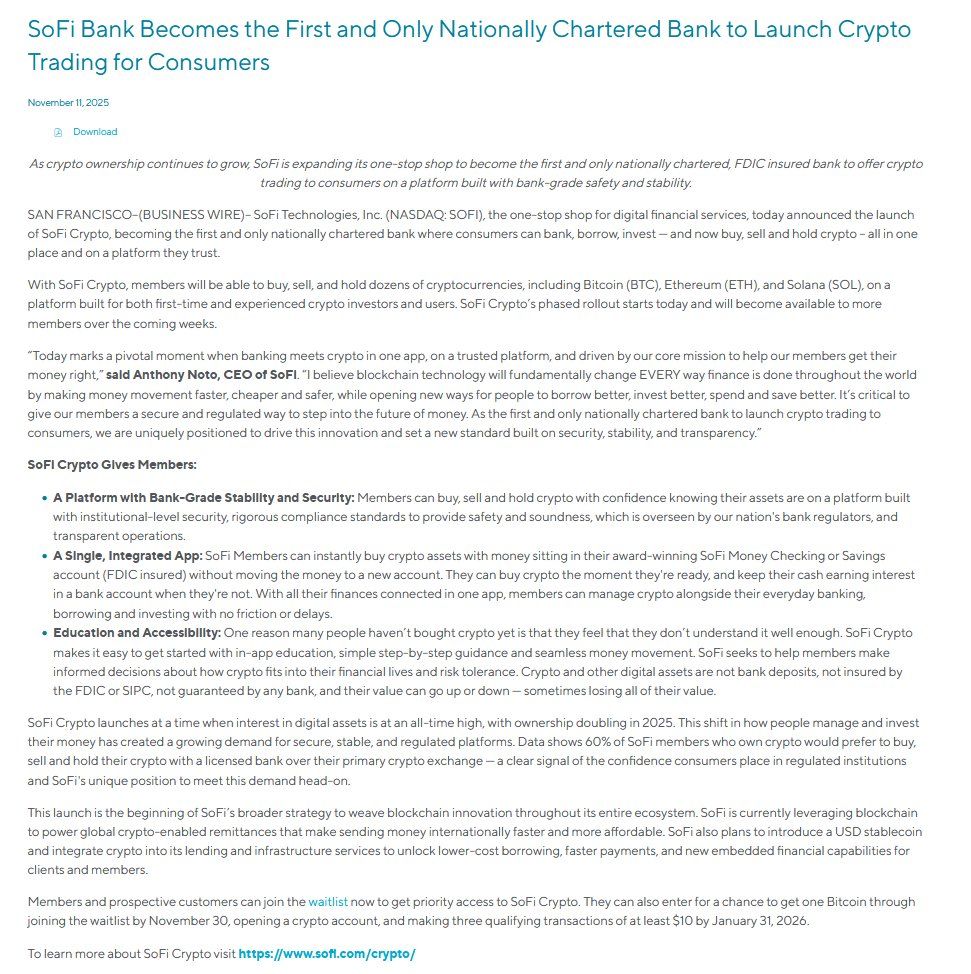
2025 年 11 月 11 日,SoFi Technologies 創下歷史,成為美國第一家全國特許銀行,讓零售客戶可在銀行應用程式內直接買賣加密貨幣。SoFi Crypto 的發布象徵著傳統銀行與數位資產匯流的重大里程碑,讓 1,260 萬會員 可與現有的支票帳戶、貸款、投資等金融產品並列持有比特幣、以太幣、Solana 及數十種加密貨幣。
這不是一般新創公司增加新功能,也非將加密交易所改名為銀行。SoFi 是名符其實的全方位國家銀行,受 FDIC保險涵蓋,以及貨幣監理署監督。雖然加密貨幣本身不受到 FDIC 保險保障,且具有高度風險,但其背後的銀行基礎設施、合規架構與監管防線,代表數位資產如何融入傳統金融體系的根本轉變。
此舉意義遠超過 SoFi 自身。它象徵長年因監管謹慎與機構懷疑而構築的銀行與加密間隔閡,正開始瓦解。銀行不再將數位資產視為應規避的高風險負債,而是日益受到消費者追捧,成為主流金融產品。
以下深入分析 SoFi 領先布局帶來的多方影響。我們探究此舉如何將加密貨幣當作銀行生態系另一資產類別,變革零售銀行營運模式,也梳理銀行在合規、託管、監理上提供該服務需面對的複雜框架,並討論傳統銀行、Fintech、虛擬銀行與原生加密平台的競合新局。
這是一場影響鉅大的賽事。隨著約 28% 美國成年人已擁有加密貨幣,持有人數在三年內幾乎倍增,問題已不再是銀行會否擁抱加密貨幣,而是它們會多快、全面地加入。SoFi 的舉措顯示,答案可能比大多數觀察者預期快上許多。
SoFi 的舉動:發生什麼事,為何意義重大
發布與背景
SoFi 在 11 月 11 日宣布推出 SoFi Crypto,並採階段式開放,數週內延展至所有符合資格會員。此平台允許用戶買賣、持有多種加密貨幣,包括比特幣、以太坊和 Solana。執行長 Anthony Noto 宣稱這是「一次銀行與加密融合於同一應用程式的關鍵時刻」,著重其銀行等級安全、機構級合規標準及聯邦銀行監管。
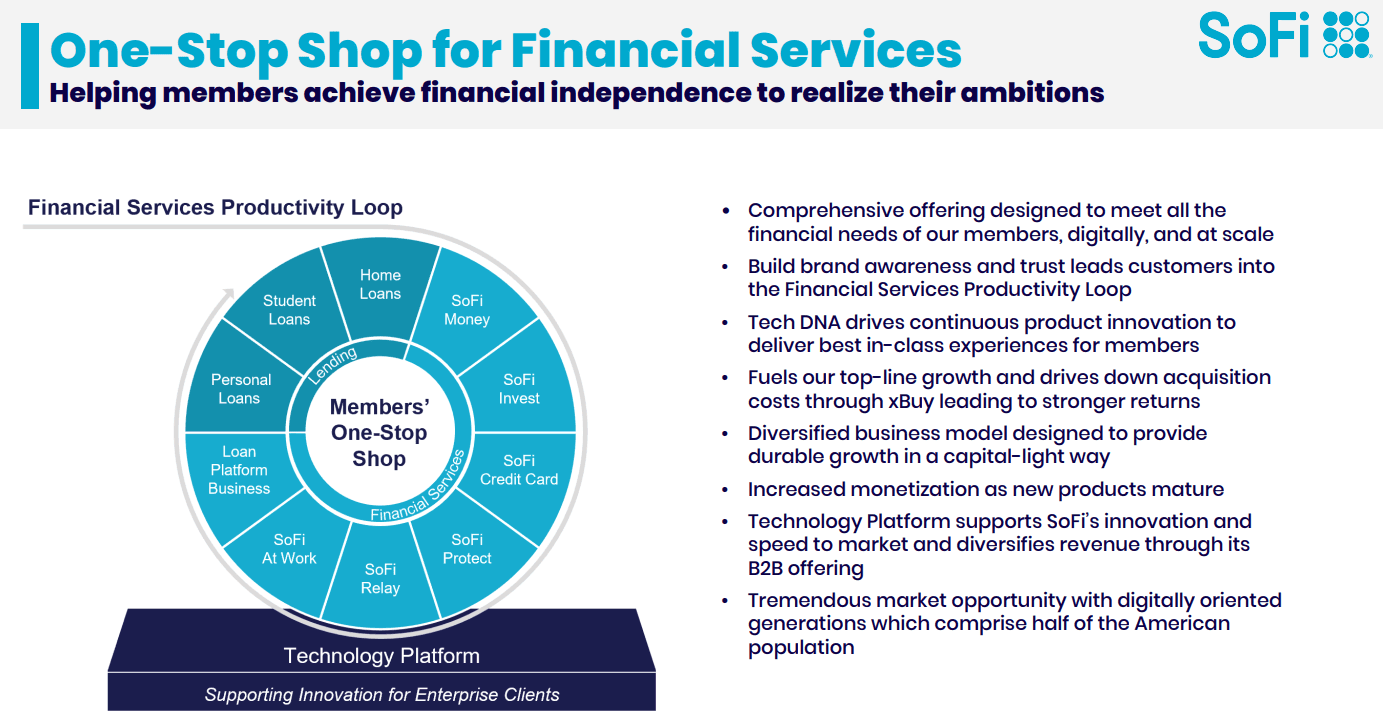
推出時機與規劃可見其謀略。SoFi 將服務定位於「一站式」金融服務模型,讓會員用單一介面管理支票、儲蓄、借貸、投資乃至加密資產。公司強調,其 60% 持有加密貨幣的會員偏好透過有執照銀行而非主力加密交易所交易,顯見消費者對受監管機構及銀行監督所帶來的信心有高度需求。
公告同時揭露 SoFi 的長期區塊鏈策略。除加密貨幣交易,公司亦計劃推出 USD 錨定穩定幣,並將加密貨幣整合於借貸及基礎設施服務,開發例如低成本借貸、更快支付與嵌入式金融新功能。SoFi 已運用區塊鏈進行全球加密匯款,加速國際轉帳並降低費用。
從暫停到重返的歷程
要了解本次上線的重要性,須回顧 SoFi 在數位資產領域的曲折歷程。原先 SoFi 於 2019 年與 Coinbase 合作推出 SoFi Invest 加密交易功能。但當 SoFi 於 2022 年 1 月取得 OCC 國家銀行執照時,核准條件頗為嚴格,必須獲得 OCC 「事先書面無監理反對意見」才能參與任何加密資產相關活動。
此項限制反映當時監管氛圍。在拜登政府下,聯邦銀行監管機關對加密持日趨謹慎態度,認為其可能威脅銀行安全與穩健。至 2023 年底,SoFi被迫全面暫停加密貨幣服務,僅剩數周讓客戶將資產遷移至 Blockchain.com 等第三方或平倉。對於強調創新與一站式服務的 SoFi 來說,無疑十分痛苦。
2025 年監管情勢急遽變化。OCC 於 2025 年 3 月發布解釋函第 1183 號,確認國家銀行可從事加密資產託管、穩定幣相關及分散式帳本網路活動,撤回原先必須監理機構事前同意才可經營的要求。代理主計官 Rodney Hood 強調,銀行必須對新型業務有如傳統業務般的強韌風險管理,但也公開聲明將「減輕銀行從事加密相關活動的負擔」。
2025 年 5 月,OCC 再以解釋函第 1184 號說明銀行可根據客戶指示買賣受託加密資產, 並可將加密資產的託管與執行委託第三方,但仍須適度風險控管。這些文件事實上逆轉了 2023 年迫使 SoFi 退出加密貨幣領域的監管態度,也為 2025 年 11 月的重返奠定法律基礎。
SoFi 執行長 Anthony Noto 在 接受 CNBC 專訪時解釋此監管變化: 「過去兩年我們有一項限制,就是不能在銀行身分下買賣、持有加密貨幣,但今年三月 OCC 發布解釋函,明確指出銀行如 SoFi 現可合法提供加密貨幣服務。」
第一個「吃螃蟹」的意義
SoFi 成為首家將加密貨幣交易納入的全國特許消費者銀行,意義非凡。銀行創新首發者的優勢巨大,因為轉戶成本與用戶習慣往往會將客戶固定在主銀行。率先生態整合,SoFi 可在競爭對手進入市場之前,吸引希望一次管理傳統銀行與加密業務的用戶。
「銀行級信心」定位在金融界變得更為重要。過去 FTX、Celsius、Voyager、Terra Luna 的崩盤 在 2022、2023 年讓數千億美元客戶價值一夕消失,也重創加密原生平台的信任。 許多散戶在這些事件中損失慘重,對再用另類交易所心存芥蒂,但對於由 FDIC 保戶的聯邦監管銀行卻更有信心重試加密投資。
這也向其他銀行釋出訊號:加密整合既可行亦有利可圖。Noto 認為 摩根大通、富國銀行、美銀等大型銀行短期不太可能跟進,原因是缺乏 SoFi 的全數位架構與成員導向基礎設施;但部分分析師指出,在監管障礙解除、SoFi 證明有市場需求後,區域銀行及其他數位原生金融機構可能會快速跟進。
更重要的是,SoFi 的佈局證明加密貨幣已是該被主流銀行納入的合法資產類別。多年來,加密產業猶如平行金融宇宙,僅偶爾觸及傳統金融,從未真正融合。過去銀行若想涉足加密,頂多只為財富管理客戶提供比特幣 ETF,或讓子公司協助機構交易,從未能直接內建加密買賣功能。SoFi 的直接整合,開創了 ... core consumer banking app represents a fundamentally different approach: treating digital assets as just another financial product that everyday retail customers should be able to access through their bank.
核心消費者銀行應用程式代表了一種本質上截然不同的方法:將數位資產視為日常散戶客戶應該能夠透過其銀行獲得的另一種金融產品。
Retail Banking Model Re-Engineered
零售銀行模式重新設計
The One-Stop-Shop Value Proposition
一站式金融服務的價值主張
SoFi built its business model around the concept of a financial "one-stop shop" where members can handle banking, borrowing, investing, insurance and other financial services in a single unified platform. Adding crypto trading extends this model in a way that potentially increases customer acquisition, engagement and retention simultaneously.
SoFi 的商業模式建立在「一站式金融服務」的概念上,讓會員能在單一平台處理銀行業務、借貸、投資、保險以及其他金融服務。加入加密貨幣交易進一步擴展了這一模式,有潛力同時提升客戶開發、參與度與留存率。
The customer acquisition benefit comes from attracting crypto-interested users who might not have otherwise considered SoFi. Survey data indicates 60% of SoFi members who own crypto would prefer to manage it through a licensed bank. This suggests substantial pent-up demand among people who want crypto exposure but feel uncomfortable with standalone exchanges. By offering a regulated on-ramp, SoFi can attract customers who might have been crypto-curious but exchange-hesitant.
吸引加密貨幣有興趣的使用者是其客戶開發的優勢,這些人原本可能不會考慮 SoFi。調查顯示,60% 擁有加密貨幣的 SoFi 會員 會更希望透過有牌照銀行來管理這些資產。這表示許多有意接觸加密貨幣的用戶,因不安於獨立交易所而產生大量被壓抑的需求。SoFi 提供合規進場管道,可吸引對加密貨幣抱有好奇但不願接觸交易所的潛在客戶。
Engagement benefits arise from the inherently dynamic nature of crypto markets. Unlike savings accounts that generate little activity or mortgages that require minimal ongoing interaction, crypto trading can drive frequent logins and transactions. The 24/7 nature of crypto markets means users might check their holdings multiple times per day, increasing their time spent in the SoFi app. This heightened engagement creates more opportunities to cross-sell other products and deepens the customer relationship.
加密貨幣市場天生動態化的特性也帶來高參與度優勢。不同於幾乎沒有活動的儲蓄帳戶或很少互動的房貸,加密交易能驅動用戶頻繁登入與交易。加密市場全年無休 意味著用戶每天可能多次查詢資產,增加在 SoFi 應用程式的停留時間。這種高黏著度創造更多交叉銷售機會,並深化與客戶的關係。
Retention improves because integrated platforms with multiple products create switching costs. A customer who holds only a checking account might easily move to a competitor offering a slightly higher interest rate. But a customer managing their checking, investments, crypto holdings and loans through SoFi faces substantially higher friction if considering a switch. They would need to migrate multiple accounts and potentially trigger taxable events on crypto sales. The comprehensive platform becomes stickier.
多元產品整合的平台也鞏固了客戶留存率,提升轉換成本。僅擁有支票帳戶的客戶,可能因競爭對手提供較高利率而輕易轉換。然而,若同時管理支票、投資、加密資產與貸款,轉移到其他銀行就涉及更多帳戶遷移,甚至可能在加密貨幣賣出時產生稅賦問題。這樣的全方位平台更具黏著力。
Impacts on Deposit Flows and Revenue Streams
對存款流動與收入來源的影響
The addition of crypto trading creates interesting dynamics around deposit flows and revenue generation. SoFi designed the service so customers can instantly purchase cryptocurrencies using funds from their FDIC-insured SoFi Money Checking or Savings accounts, eliminating the need to transfer money to separate exchanges. When users are not actively trading crypto, their cash sits in interest-bearing accounts with up to $2 million in FDIC coverage.
加入加密貨幣交易後,存款流動與收入結構產生了有趣變化。SoFi 的服務設計讓客戶能直接用 FDIC 保險的 SoFi Money 支票或儲蓄帳戶資金即時購買加密貨幣,無需額外轉帳到其他交易所。當用戶沒有懸掛加密貨幣時,現金則留在最高可享 200 萬美元 FDIC 保險的有息帳戶中。
This creates a potential flywheel effect for deposits. Crypto traders typically need to maintain cash positions to take advantage of market opportunities. Rather than leaving that cash idle on an exchange, SoFi encourages keeping it in bank accounts where it earns interest and contributes to the bank's deposit base. This could be particularly valuable during periods of rising interest rates when the spread between deposit rates and lending rates generates significant net interest margin.
這帶來潛在的存款飛輪效應。加密投資者需持有現金以掌握市場機會,與其將現金閒置於交易所,SoFi 鼓勵客戶將其保存在銀行賬戶中累積利息,有助於壯大銀行存款基礎。於利率升高期間,存款利率與放款利率差距拉大時,這點特別有價值,促成淨利息收入顯著提升。
Revenue opportunities extend beyond net interest income. Banks typically generate revenue from crypto trading through transaction fees, similar to brokerage commissions on stock trades. While SoFi has not publicly disclosed its fee structure for crypto trading, industry norms suggest fees ranging from 0.5% to 2% per transaction depending on the cryptocurrency and transaction size. With millions of potential users and crypto's volatile nature driving frequent trading activity, these fees could represent substantial income.
收入機會不限於淨利息收入。銀行通常藉由加密貨幣交易手續費創造收益,就像股票買賣的券商佣金一樣。SoFi 雖未公布其加密交易收費細則,但行規手續費一般介於 0.5% 至 2%,視幣種和交易金額而定。憑藉 數百萬潛在用戶 與高頻交易的特性,手續費有望成為可觀收入。
The planned USD stablecoin represents another potential revenue source. If SoFi issues a stablecoin backed by dollar reserves, it can earn the yield on those reserve assets while using the stablecoin to facilitate payments, remittances and other financial services. The recent passage of the GENIUS Act, which establishes a regulatory framework for payment stablecoins, provides legal clarity that makes this strategy more viable.
計畫中的美元穩定幣 也是潛在新收入來源。若 SoFi 推出由美元儲備支持的穩定幣,不僅能賺取儲備資產收益,還能利用穩定幣推動支付、匯款等其他金融服務。近期 GENIUS 法案 的通過,為支付型穩定幣建立法規框架,令此策略更具可行性。
Risk Management and Compliance Shifts
風險管理與合規調整
Offering crypto services requires banks to fundamentally rethink their risk management and compliance infrastructure. Traditional bank deposits are relatively stable and predictable. Crypto holdings can swing wildly in value, potentially affecting customer behavior and creating operational challenges.
銀行若提供加密貨幣服務,必須從根本上重新思考風險管理與合規架構。傳統銀行存款相對穩定可預期,而加密資產價值劇烈波動,將影響用戶行為並帶來營運風險。
Anti-money laundering and know-your-customer requirements become more complex with crypto. While SoFi already maintains robust AML/KYC programs as a regulated bank, crypto transactions require enhanced monitoring due to the pseudonymous nature of blockchain transactions and the possibility that customers might transfer crypto to or from addresses associated with sanctioned entities or illicit activities.
加密貨幣也讓防制洗錢與了解你的客戶 (AML/KYC) 規範變得更加複雜。儘管 SoFi 作為受監管銀行本就具備嚴謹的 AML/KYC 制度,但因區塊鏈交易具備假名特性,且客戶可能與受制裁或非法資金關聯的地址進行交易,因此需要更強化的監控措施。
The bank must implement controls to prevent commingling of customer crypto assets with bank assets and ensure proper segregation. The OCC has emphasized that banks engaging in crypto custody must conduct these activities "in a safe and sound manner and in compliance with applicable law." This means establishing clear procedures for how customer crypto is held, who has access to private keys, how transactions are authorized and how the bank would handle a security breach or technical failure.
銀行必須建立制度,防止客戶加密資產與銀行自身資產混同,並確保適當隔離。美國貨幣監理署(OCC)強調,銀行從事加密託管業務必須「以安全、健全且符合法律規範的方式進行」。這意味著要建立明確程序,例如如何保管客戶加密資產、誰能接觸到私鑰、如何授權交易,以及若發生資安漏洞或技術故障如何處理。
Operational risk management must address the unique challenges of 24/7 markets and irreversible transactions. Traditional bank errors often can be corrected through reversal processes or manual intervention. Crypto transactions sent to wrong addresses cannot be recalled. This requires heightened attention to user interface design, transaction verification processes and customer support capabilities.
營運風險管理必須因應全年無休市場以及交易不可逆等獨特挑戰。傳統銀行錯誤交易通常可透過沖銷或人工介入更正,但加密資產發錯地址便無法追回。這要求在使用者介面設計、交易確認流程與客服能力上投入更多注意力。
Consumer Experience Implications
用戶體驗的意義
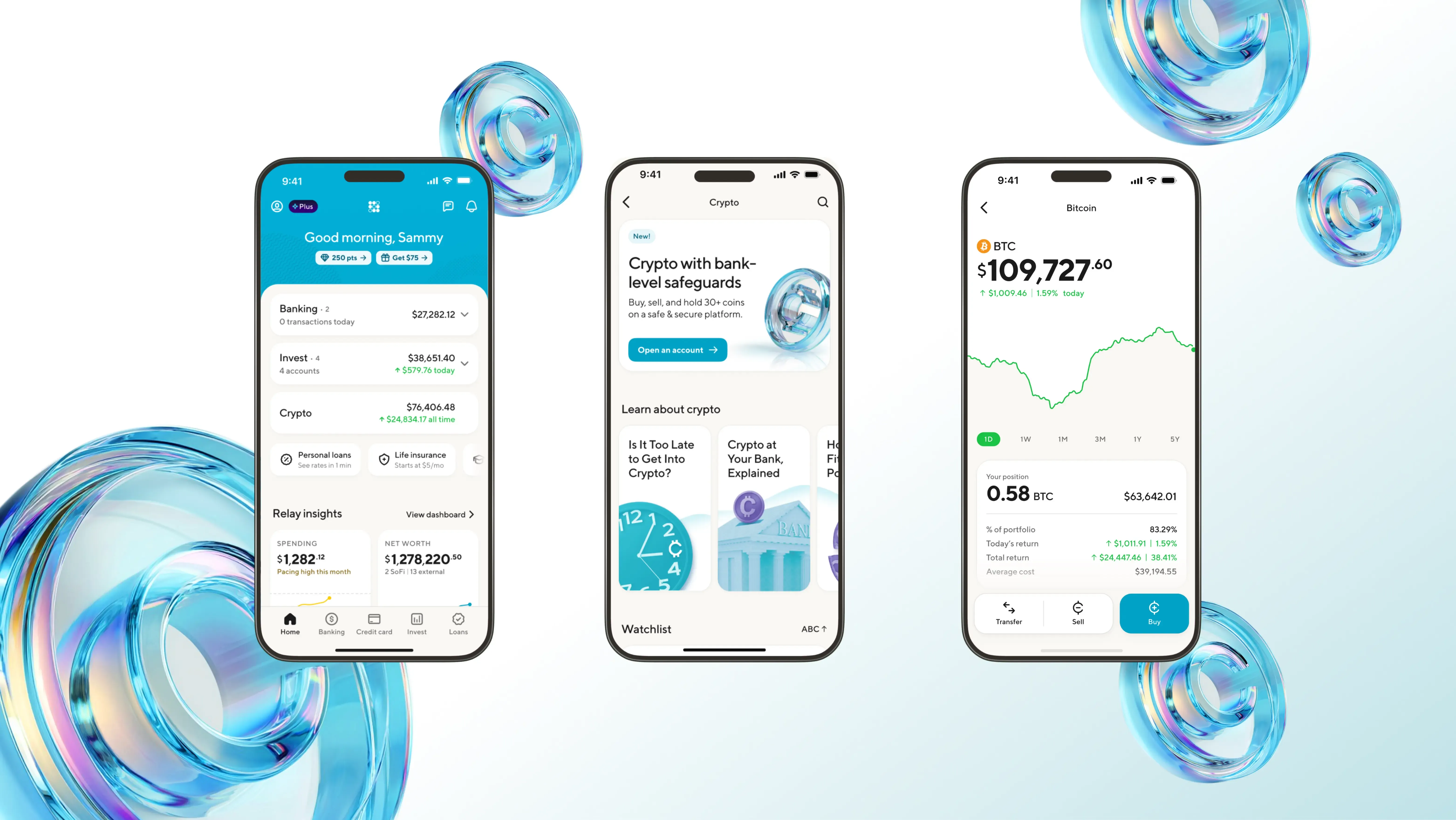
From the customer perspective, SoFi's integrated crypto offering dramatically simplifies the user experience compared to standalone exchanges. Users do not need to create separate accounts, complete duplicative identity verification, link external bank accounts for funding transfers or manage relationships with multiple financial service providers. Everything happens within the familiar SoFi environment.
從用戶角度來看,SoFi 的整合型加密貨幣服務大幅簡化體驗,遠比獨立交易所方便。用戶不再需要額外註冊帳號、重複進行身分認證、連結外部銀行帳戶或與多家金融機構互動,一切都在熟悉的 SoFi 環境內完成。
This simplification could prove particularly important for mainstream adoption. Research consistently shows that complexity and unfamiliarity represent major barriers to crypto adoption among non-technical users. Survey data indicates that 63% of Americans don't feel confident that current ways of investing in or using crypto are reliable or safe, with skepticism particularly high among older adults. A trusted bank offering crypto through a familiar interface addresses many of these concerns.
這種簡化對於推動主流普及意義重大。研究持續發現,複雜性與陌生感是非技術族群採用加密貨幣的最大障礙。調查數據顯示有 63% 美國人對現有投資或使用加密貨幣的方式缺乏信心,年長者的懷疑度尤其高。若由受信賴的銀行在熟悉介面下提供加密服務,能大幅化解這些疑慮。
SoFi also emphasizes educational content and step-by-step guidance for first-time buyers. This contrasts with many crypto exchanges that assume users already understand concepts like wallets, private keys, gas fees and blockchain confirmations. By meeting customers where they are and providing banking-style educational resources, SoFi can expand crypto access to demographics that might never have engaged with standalone exchanges.
SoFi 亦著重提供教育內容與新手教學,與許多交易所預設用戶已熟悉錢包、私鑰、手續費與區塊確認等專有名詞相反。透過銀行式教學資源,SoFi 能擴大接觸未曾踏入獨立交易所的客群。
However, challenges remain. Crypto volatility means banks must carefully manage customer expectations and ensure users understand risks. Unlike FDIC-insured deposits that are guaranteed up to $250,000, cryptocurrencies carry substantial risk of loss. SoFi's disclosures emphasize that "crypto and other digital assets are not bank deposits, not insured by the FDIC or SIPC, not guaranteed by any bank, and their value can go up or down — sometimes losing all of their value."
然而,仍存在挑戰。加密貨幣波動性極高,銀行須妥善管理用戶預期,確保其瞭解相關風險。與受 FDIC 保障的存款(最高 25 萬美元)不同,加密貨幣存在重大損失風險。SoFi 強調揭露「加密貨幣與其他數位資產並非銀行存款、並無 FDIC 或 SIPC 保險,不受任何銀行擔保,其價值可上升或下跌——有時甚至全部歸零。」
Banks offering crypto must also prepare for customer service challenges during market volatility. When Bitcoin drops 20% in a day or a major hack affects a popular token, customer inquiries surge. Banks need adequate staffing, training and support infrastructure to handle these situations without degrading service quality for traditional banking customers.
提供加密服務的銀行,亦須準備應對市場劇烈波動時的客服壓力。例如,比特幣一天跌 20%,或熱門代幣遭駭時,客戶詢問量大增。銀行須配備充足人力、教育訓練與客服基礎設施,避免因加密市場動盪而影響傳統銀行服務品質。
Custody, Banking Regulation and Crypto Integration
託管、銀行監管與加密整合
The Custody Challenge
託管的挑戰
Custody of digital assets presents fundamentally different challenges from custody of traditional securities or bank deposits. With stocks or bonds, custody typically involves entries in electronic book-entry systems maintained by central securities depositories like the Depository Trust Company. If something goes wrong, there are established processes for identifying ownership and reversing erroneous transactions.
數位資產的託管與傳統證券或銀行存款的託管截然不同。股票與債券的託管,是透過像美國存託信託公司(DTC)這樣的中心化證券託管機構運作,帳戶異常時有明確規程可追溯產權並修正錯誤交易。
Cryptocurrency custody requires managing cryptographic
加密貨幣託管需要管理加密憑證(私鑰)……private keys that provide access to assets on blockchain networks. Whoever controls the private keys effectively owns the crypto. If keys are lost, stolen or compromised, the assets can be permanently unrecoverable or transferred to thieves with no ability to reverse the transactions.
私鑰能夠存取區塊鏈網路上的資產。誰掌控私鑰,基本上就等同擁有加密貨幣。如果私鑰遺失、被竊或遭到洩露,這些資產可能會永久無法找回,或轉移給竊賊,且無法撤銷這些交易。
For banks offering crypto services, this creates enormous operational and liability concerns. SoFi must implement what it describes as "institutional-level security" and "rigorous compliance standards" to protect customer assets. This likely involves a combination of hot wallets for operational liquidity and cold storage for the bulk of customer holdings, multi-signature authorization requirements, hardware security modules, regular security audits and comprehensive insurance coverage.
對於提供加密貨幣服務的銀行來說,這帶來了巨大的營運和法律責任壓力。SoFi 必須落實其所謂的「機構級安全性」與「嚴格合規標準」來保護客戶資產。這通常會結合熱錢包以提供營運流動性,以及冷錢包來儲存大部分客戶資產、多重簽名授權要求、硬體安全模組、定期安全稽核和完整保險等措施。
Many banks are expected to partner with specialized enterprise custody providers like Anchorage Digital, BitGo or Fireblocks rather than building custody infrastructure in-house. These providers offer institutional-grade security specifically designed for digital assets, including features like multi-party computation for distributed key management, policy engines for transaction authorization and integration with banking compliance systems.
許多銀行預期將與專業的企業級加密資產託管服務商合作,例如 Anchorage Digital、BitGo 或 Fireblocks,而不是自行建立託管基礎設施。這些服務商專為數位資產設計,提供機構等級的安全性,包括多方計算分散私鑰管理、交易授權政策機制與銀行合規系統整合等功能。
The OCC's Interpretive Letter 1184 explicitly permits banks to outsource crypto-asset activities including custody to third parties, provided they maintain "appropriate third-party risk management practices." This means banks must conduct due diligence on custody providers, establish clear service level agreements, monitor ongoing performance and maintain business continuity plans in case a provider fails or is compromised.
OCC(美國貨幣監理署)的解釋函 1184 明確允許銀行將加密資產相關業務—including託管—外包給第三方,但前提是必須維持「適當的第三方風險管理措施」。這意味著,銀行需要對託管服務商進行盡職調查、建立明確的服務水準協議、持續監控表現,並準備業務持續計畫,以因應服務商失效或受損的風險。
Regulatory Oversight Framework
Banks offering crypto services must navigate a complex web of overlapping regulatory authorities. The OCC supervises national banks and federal savings associations, including their crypto activities. The Federal Reserve oversees bank holding companies. The FDIC provides deposit insurance and supervises state-chartered banks. The Financial Crimes Enforcement Network enforces Bank Secrecy Act compliance.
提供加密貨幣服務的銀行,必須面對多重監管權限交織的複雜監理結構。OCC 監管全國性銀行與聯邦儲蓄協會,涵蓋其加密貨幣業務。聯準會負責銀行控股公司的監管。FDIC 則負責提供存款保險並監管州特許銀行。金融犯罪執法網則執行銀行保密法的合規規範。
Beyond banking regulators, crypto activities may also trigger oversight from the Securities and Exchange Commission if assets are deemed securities, the Commodity Futures Trading Commission for derivatives, and state regulators depending on the specific activities and jurisdictions involved.
除了銀行監理機構外,加密資產運用還可能涉及證券交易委員會(若資產被認定為證券)、商品期貨交易委員會(若涉及衍生商品),以及依不同性質和司法轄區所屬的州監管機構。
The GENIUS Act, signed into law on July 18, 2025, provides the first comprehensive federal framework for payment stablecoins. The legislation establishes a dual federal-state regulatory system where stablecoin issuers can be supervised by the OCC as federal-qualified nonbank issuers, regulated under state frameworks, or issued by insured depository institutions. The Act requires payment stablecoins to maintain one-to-one backing with liquid reserves and subjects issuers to strict capital, liquidity and transparency requirements.
2025年7月18日通過的GENIUS法案,是美國首部針對支付型穩定幣的完整聯邦法律架構。該法建立聯邦與州雙軌監管體系,允許穩定幣發行方選擇由OCC作為聯邦合格非銀行發行機構進行監督、遵循州規章,或經由受保存款機構發行。該法案要求,支付型穩定幣必須以流動儲備一對一完全支撐,且發行方需符合嚴格的資本、流動性與透明度規範。
This regulatory clarity matters enormously for banks considering crypto integration. For years, the primary regulatory risk was uncertainty about whether activities would be deemed permissible and what standards would apply. The combination of OCC interpretive letters and the GENIUS Act provides much clearer parameters, even though many implementation details remain to be worked out through subsequent rulemaking.
這項監管明確性對考慮整合加密貨幣服務的銀行而言至關重要。過去多年,最大的監管風險來自於不確定這些活動是否合法及將適用哪些規範。OCC 的解釋信和 GENIUS 法案的結合大大釐清了這方面的界線,雖然相關執行細則仍有待後續規則訂定進一步細化。
However, the regulatory framework for cryptocurrencies other than payment stablecoins remains less settled. Bitcoin and Ethereum are generally not considered securities, but the classification of many other tokens continues to be debated. Banks must carefully evaluate the regulatory status of any crypto asset they plan to offer and implement risk management frameworks appropriate to the level of uncertainty.
然而,除了支付型穩定幣外的其他加密貨幣,其監管架構仍不明朗。比特幣與以太幣多半不被視為證券,但許多其他代幣的屬性爭議不休。銀行須審慎評估所規劃服務的加密資產的監管地位,制定合乎不確定性程度的風險管理架構。
Bank-Grade Claims and What They Mean
SoFi repeatedly emphasizes its "bank-grade security" and "institutional-level" compliance as key differentiators. These claims reflect meaningful differences in how regulated banks approach crypto compared to standalone exchanges.
SoFi 多次強調自家「銀行級安全」與「機構等級合規」作為主要區隔優勢。這些主張反映出合規銀行與獨立加密貨幣交易所處理加密資產時的本質差異。
Banks are subject to regular examinations by federal regulators who assess capital adequacy, asset quality, management capabilities, earnings performance and liquidity. These examinations are comprehensive and intrusive, with examiners reviewing lending files, testing compliance programs, evaluating internal controls and assessing management decisions. Banks that fail to meet standards face enforcement actions ranging from written agreements to civil money penalties to removal of management.
銀行必須定期接受聯邦監理機構全面稽查,包括資本充足率、資產品質、管理能力、獲利表現及流動性等各面向。這些稽查十分全面且深入,稽核員會檢視放貸檔案、測試合規程序、評估內部控管及高層決策。如果銀行未達標準,將面臨從書面協議、民事罰金到撤換管理層等懲處。
This supervisory infrastructure does not exist for most crypto exchanges, which may be registered as money service businesses but face far less intensive ongoing oversight. The contrast became starkly apparent during the 2022-2023 crypto crisis, when exchanges like FTX collapsed due to misuse of customer funds, inadequate internal controls and fraudulent activities that would likely have been detected quickly through bank examination processes.
而多數加密貨幣交易所,僅登記為金流服務業者,缺乏同等強度的連續監理。在2022-2023 年的加密貨幣危機期間,FTX 等交易所因挪用客戶資金、內部控管不全與詐欺等原因崩潰,這些問題若在銀行業會透過監管稽查較早發現。
Bank-grade security also means maintaining capital ratios that provide cushion against losses, liquidity buffers to meet withdrawal demands, and risk management frameworks tested across multiple market cycles. While crypto exchanges might fail overnight when withdrawals surge or a hack depletes reserves, banks are specifically designed to weather financial stress through prudential regulation requirements.
銀行級安全亦涵蓋維持足夠資本比率來吸收潛在虧損、設供應急流動緩衝以應對大量提款、以及經歷多次市場循環考驗的風險管理制度。加密貨幣交易所在大量提款或遭駭損失儲備時可能瞬間倒閉,而銀行則經過審慎監管要求,專門設計來承受金融壓力。
For customers, this translates to tangible differences in how their assets are protected. While the cryptocurrencies themselves remain uninsured, the banking infrastructure supporting custody and trading operates under regulatory standards specifically designed to prevent loss of customer assets. SoFi's deposit accounts that fund crypto purchases carry FDIC insurance, meaning customers never risk their bank deposits even if something goes wrong with crypto operations.
對客戶而言,這帶來了有感的資產保護差異。目前加密貨幣本身尚無保險機制,但相關託管與交易的銀行基礎設施,係依防止客戶資產損失的專屬監管標準營運。透過 SoFi 資金購買加密貨幣的銀行存款帳戶享有 FDIC 保險,即使加密貨幣業務出狀況,客戶的銀行存款也毋須擔心損失。
Self-Custody Versus Bank Custody Implications
SoFi's model, where the bank provides custody of customer crypto assets, represents a fundamentally different approach from the "self-custody" ethos that underlies much of crypto culture. Bitcoin and many other cryptocurrencies were designed to enable individuals to hold and transfer value without intermediaries. The rallying cry "not your keys, not your coins" reflects the belief that true ownership requires controlling your own private keys rather than trusting a third party.
SoFi的模式—由銀行為客戶持有加密貨幣資產—與大多數加密圈重視的「自我託管」理念本質上大異其趣。比特幣和許多其他加密貨幣的設計初衷,是讓個人可在無中介情況下自行擁有、轉移價值。「Not your keys, not your coins(不是你的私鑰,就不是你的幣)」這句口號,正是強調唯有控制自己的私鑰,才是真正擁有資產,而非信賴第三方。
Bank custody of crypto assets inverts this philosophy. SoFi customers do not control the private keys to their holdings. Instead, they trust SoFi to maintain custody, similar to how securities investors trust brokers to custody stock holdings. This brings both benefits and tradeoffs.
由銀行托管加密資產,則顛覆了這一理念。SoFi 的客戶無法掌控其資產的私鑰,而是選擇信任 SoFi 維護託管,就像證券投資人相信券商為其保管股票一樣。這種模式帶來了優勢,也有取捨。
The primary benefit is convenience and risk mitigation. Most retail investors lack the technical sophistication to securely manage private keys, operate hardware wallets or protect against phishing attacks. The prevalence of user error leading to lost crypto suggests that for many people, bank custody may actually be safer than self-custody.
其主要優勢在於便利與風險降低。多數散戶欠缺自行安全管理私鑰、操作硬體錢包或防範釣魚攻擊的技術。許多事故皆因使用者操作失誤導致資產遺失,可見對許多人而言,銀行託管可能實際上比自我託管更安全。
Bank custody also enables account recovery mechanisms. If customers forget passwords or lose devices, banks can verify their identity through existing authentication processes and restore access to accounts. With self-custody, forgetting a seed phrase or losing a hardware wallet means permanent loss of assets with no recourse.
銀行託管還能提供帳戶恢復機制。客戶若忘記密碼或遺失裝置,銀行可依現有身份驗證流程協助重設並恢復存取權限。然而自我託管下,一旦遺忘助記詞或丟失硬體錢包即意謂永久失去資產,毫無挽回餘地。
However, bank custody means customers must trust the institution and accept that their holdings could be frozen by court order, targeted by government seizure or affected by the bank's own financial difficulties. This runs counter to the original vision of cryptocurrency as censorship-resistant money that governments and institutions cannot control.
但選擇銀行託管也代表客戶須信賴機構,同時接受其資產有可能因法院命令遭凍結、政府查扣,或受銀行本身財務困難影響。這與加密貨幣強調抗審查、不受政府及機構控制的初衷背道而馳。
The emergence of bank custody as a major model for crypto holdings has important implications for consumer behavior and the overall crypto ecosystem. If most retail investors access crypto through banks rather than self-custody wallets, it may slow adoption of features that require direct blockchain interaction, like decentralized finance protocols or NFT marketplaces. Conversely, it may accelerate mainstream adoption by reducing barriers to entry and providing familiar banking interfaces.
銀行託管作為主流加密貨幣持有模式的新興,對消費者行為及整體生態系產生深遠影響。如果大多數散戶主要透過銀行而非自我錢包進入加密市場,可能減緩需要直接鏈上互動的應用拓展,如去中心化金融協議或 NFT 市場。但反過來,這也可能透過降低進入門檻和提供熟悉的銀行介面,加速主流採用。
Regulatory Implications and Competitive Landscape
Regulatory Dimension: Increased Scrutiny and Frameworks
SoFi's move into crypto will inevitably attract intensified regulatory attention to the intersection of banking and digital assets. The OCC has stated that it expects banks to maintain strong risk management controls for crypto activities, but specific supervisory guidance continues to evolve. As more banks offer crypto services, regulators will gather data on how these activities affect bank safety and soundness, consumer protection and financial stability.
SoFi 跨足加密貨幣市場,勢必加強監理單位對銀行與數位資產業務交匯的關注。OCC 也已明確表示,其期望銀行對加密貨幣活動建立扎實的風險管理控管,但具體監管指引仍不斷演進。隨著越來越多銀行投入,加密服務對銀行安全穩健、消費者保障與金融穩定的影響,將成為監理單位蒐集數據並發展政策的重要依據。
Several regulatory concerns will likely drive ongoing policy development. Consumer protection remains paramount, given crypto's complexity and (以下原文已截斷)volatility. Regulators must balance supporting innovation with ensuring banks adequately disclose risks, prevent unsuitable investments and handle customer complaints appropriately. The OCC and other banking agencies may issue specific guidance on how banks should market crypto services, what disclosures are required and what customer screening processes are appropriate.
波動性。監管機構必須在支持創新與確保銀行適當揭露風險、防止不適當投資及妥善處理客戶申訴之間取得平衡。OCC 及其他銀行監管機構可能會發布具體指引,說明銀行應如何行銷加密貨幣服務、需要做哪些揭露,以及應採用哪些客戶篩選流程。
Systemic risk considerations also matter. If crypto holdings become a significant portion of bank assets or if banks develop substantial interdependencies with crypto markets, this could create channels for financial contagion. A severe crypto market crash could affect bank earnings, capital ratios or liquidity if not properly managed. Regulators may impose limits on concentration risk or require additional capital for crypto exposures.
系統性風險的考量同樣重要。如果加密貨幣持倉成為銀行資產的重要組成部分,或銀行與加密市場之間產生高度依存關係,這可能會形成金融傳染的管道。若未妥善管理,加密市場的嚴重崩盤可能會影響銀行收益、資本比率或流動性。監管機構可能會對集中風險設置上限,或要求對加密曝險增加額外資本。
The question of deposit insurance intersects with crypto in complex ways. While cryptocurrencies themselves are explicitly not FDIC-insured, the deposit accounts that fund crypto purchases do carry insurance. This creates potential for customer confusion and requires careful communication. Additionally, as banks potentially issue stablecoins backed by deposit reserves, questions arise about whether the economic substance of stablecoins resembles deposits and whether similar protections should apply.
存款保險問題與加密貨幣交織出複雜的情境。雖然加密貨幣本身明確不受 FDIC 保險保障,但用於購買加密貨幣的存款帳戶則享有保險保障。這可能引發客戶混淆,因此必須謹慎溝通。此外,隨著銀行可能發行以存款準備金為後盾的穩定幣,也出現穩定幣的經濟本質是否類似存款,以及是否應給予類似保護的問題。
The interplay between banking regulation and other regulatory frameworks adds complexity. The SEC continues to assert jurisdiction over many crypto assets as securities, while the CFTC claims authority over crypto derivatives as commodities. Banking agencies must coordinate with these other regulators to ensure consistent treatment and avoid creating regulatory arbitrage opportunities where entities structure activities to fall under the most permissive regulator.
銀行業監管與其他監管體系之間的互動增加更多複雜性。SEC 持續主張許多加密資產屬於證券,擁有監管權;而 CFTC 則聲稱其對加密衍生品作為商品的權限。銀行業監管必須與這些機構協調,以確保一致待遇,並避免讓企業藉由設計業務模式歸屬於最寬鬆監管者而出現監管套利的情形。
Competitive Dynamics Among Financial Institutions
SoFi's announcement immediately reshaped competitive dynamics in financial services. While CEO Anthony Noto expressed skepticism that major banks would quickly follow, arguing they lack the digital architecture and member-centric focus needed to integrate crypto seamlessly, other institutions are clearly taking notice.
金融機構間的競爭動態
SoFi 的宣布立即重塑了金融服務業的競爭態勢。雖然執行長 Anthony Noto 質疑大型銀行是否會快速跟進,認為他們缺乏數位架構及以會員為中心的思維,難以無縫整合加密貨幣,但其他機構顯然已經開始關注這一動向。
Several major banks have been exploring crypto strategies in parallel. JPMorgan, Bank of America, Citigroup and Wells Fargo are reportedly in early discussions about launching a jointly operated stablecoin through entities co-owned by these institutions, including Early Warning Services (which operates Zelle) and The Clearing House. While still preliminary, this initiative signals that Wall Street's largest banks view crypto integration as inevitable and are working to maintain relevance as digital assets gain mainstream traction.
幾家大型銀行同步展開加密貨幣策略的探索。摩根大通、美國銀行、花旗及富國銀行據傳正在初步討論共同營運穩定幣的方案,這些由多家銀行共同持股的實體包括 Early Warning Services(Zelle 的營運商)與 The Clearing House。雖然此舉仍在起步階段,但明顯顯示華爾街最大銀行已將加密整合視為無可避免,並正努力在數位資產進入主流之際維持自身的重要性。
JPMorgan already operates JPM Coin for internal settlement, and Wells Fargo has piloted Wells Fargo Digital Cash for cross-border payments within its network. Bank of America CEO Brian Moynihan has stated the bank could issue a fully dollar-backed stablecoin if regulatory frameworks support it. These existing initiatives suggest major banks have been preparing for crypto integration even if they have not yet launched consumer-facing trading services.
摩根大通已運營用於內部結算的 JPM Coin,富國銀行也試驗推出 Wells Fargo Digital Cash,用於跨境支付。美國銀行執行長 Brian Moynihan 表示,若有適當的監管架構,該行可以發行全額以美元為擔保的穩定幣。這些現有舉措顯示,大型銀行早已為加密貨幣整合做準備,即使尚未推出面向消費者的交易服務。
Regional banks and other digital-first financial institutions may move more quickly. Unlike legacy banks with decades of physical branch infrastructure and systems integration challenges, digitally native banks can more easily add crypto functionality to their platforms. We may see a wave of banks following SoFi's lead as they recognize that offering crypto could be essential to competing for younger customers who expect digital asset access as a standard banking feature.
地區銀行及其他數位原生金融機構行動可能更迅速。與擁有數十年實體分行基礎建設、系統整合困難的傳統銀行不同,數位原生銀行更容易為平台新增加密功能。隨著銀行意識到,提供加密貨幣服務成為吸引年輕客群、滿足其將加密視為標準銀行功能的基礎期望,我們可望見到一波跟進 SoFi 的潮流。
Traditional brokerages also face competitive pressure. Firms like Charles Schwab, Fidelity and TD Ameritrade have offered Bitcoin exposure through spot ETFs but not direct crypto trading. As banks integrate crypto, brokerages may need to follow suit to remain competitive for investment accounts. Indeed, reports suggest Charles Schwab and PNC are preparing similar rollouts.
傳統券商同樣面臨競爭壓力。像 Charles Schwab、Fidelity 及 TD Ameritrade 等已經透過現貨 ETF 提供比特幣敞口,但尚未經營直接加密貨幣交易。隨著銀行導入加密服務,券商也可能必須跟進,才能維持投資帳戶的競爭力。事實上,有報導指出 Charles Schwab 和 PNC 也計劃推出類似服務。
Crypto-native exchanges face perhaps the most disruptive competitive threat. Companies like Coinbase, Kraken and Gemini built their businesses by providing access to digital assets when banks refused to do so. As banks enter the market, they bring enormous advantages in brand trust, existing customer relationships, integrated financial services and regulatory credibility. Exchanges will need to differentiate through superior products, broader asset selection or services that banks cannot easily replicate.
加密原生交易所可能面臨最大、最具顛覆性的競爭。當初銀行拒絕涉足時,Coinbase、Kraken、Gemini 等公司因提供數位資產管道而崛起。如今,銀行入市將帶來品牌信任、既有客群、整合金融服務及監管可信度等巨大優勢。交易所必須藉由卓越產品、更廣資產選擇,或銀行難以複製的服務進行差異化。
Institutional Finance Transformation
Beyond retail banking, SoFi's move reflects and accelerates transformation in institutional finance. Standard Chartered became the first global systemically important bank to offer spot Bitcoin and Ethereum trading to institutional clients in July 2025, integrating crypto trading with its existing foreign exchange platforms. This allows corporate treasurers, asset managers and institutional investors to trade digital assets through familiar banking interfaces with regulated settlement options.
機構金融的轉型
除零售銀行外,SoFi 的舉措也映射並加速了機構金融的轉型。渣打銀行於 2025 年 7 月成為全球首家系統重要銀行,向機構客戶提供比特幣及以太幣現貨交易,並與現有外匯平台整合。這讓企業財務主管、資產管理人及機構投資人能經由熟悉的銀行介面,並搭配受監管的結算選項進行數位資產交易。
The institutional adoption pattern differs from retail in important ways. Large corporations and institutional investors need crypto access for specific use cases like treasury management, hedging strategies or client services, rather than speculation. They require sophisticated custody solutions, tax optimization, regulatory compliance support and integration with enterprise risk management systems. Banks that can provide these capabilities have opportunities to generate substantial fee income from institutional crypto services.
機構採用模式與零售市場存在重大差異。大型企業與機構投資人需要加密管道,以用於資金管理、避險策略或客戶服務等特定用途,而非純粹投機。他們需要先進的託管方案、稅務優化、合規支持,並能整合進企業風險管理系統。能夠提供這些能力的銀行,將有機會從機構加密服務中獲得可觀費用收入。
Asset tokenization represents another frontier where banks are positioning themselves. The tokenization of assets like U.S. Treasuries, real estate and private equity is increasingly changing how institutions create, trade and invest in them. Banks with expertise in both traditional securities and blockchain technology are well-positioned to facilitate this transformation.
資產代幣化是銀行積極布局的另一前線項目。資產的代幣化(如美國國債、不動產及私募股權)正日益徹底改變機構製造、交易與投資這些資產的方式。同時具備傳統證券與區塊鏈專業的銀行,將在這波轉型中占據有利地位。
Central bank digital currencies (CBDCs) also loom as a potential game-changer. While the United States has not committed to issuing a CBDC, many other countries are actively developing them. Banks will likely play central roles in CBDC distribution and integration, giving them further reason to develop digital asset capabilities now.
央行數位貨幣(CBDC)同樣是潛在的變革力量。雖然美國尚未承諾發行 CBDC,但其他多國正積極開發。銀行在 CBDC 的發放及整合中預期將扮演重要角色,這也讓他們更有理由現在就著手發展數位資產能力。
Implications for Regulators
From the regulatory perspective, banks offering crypto services represents both an opportunity and a challenge. The opportunity is bringing digital assets inside the regulatory perimeter where they can be monitored and controlled more effectively than in the largely unregulated crypto-native ecosystem. Banks are examined regularly, maintain detailed records, report suspicious activities and operate under consumer protection standards that simply do not exist for most crypto exchanges.
對監管者的啟示
從監管角度來看,銀行提供加密服務既是一個機會,也是挑戰。機會在於將數位資產納入監管範疇,相較於大多未受監管的加密原生生態圈,更能有效監督與掌控。銀行接受定期檢查、維持詳細紀錄、主動通報可疑活動,並遵循消費者保護標準——這些是多數加密交易所根本沒有的規範。
However, the integration of crypto and banking also creates new supervisory challenges. Bank examiners need training on blockchain technology, crypto markets and digital asset risk management. Examination manuals require updating to address crypto-specific considerations. Regulatory capital frameworks may need adjustment to appropriately risk-weight crypto exposures.
然而,加密與銀行的融合也帶來全新監理挑戰。銀行考核員須學習區塊鏈技術、加密市場及數位資產風險管理。考核手冊也需更新,以涵蓋加密相關的專屬考量。監管資本制度可能需要調整,合理反映加密曝險的風險權數。
The question of how to handle bank failures becomes more complex when banks hold customer crypto. Traditional bank resolution processes are well-established, with the FDIC stepping in to protect depositors and orchestrate orderly wind-downs or acquisitions. But what happens to customer crypto holdings if a bank fails? The GENIUS Act addresses this for stablecoins, giving stablecoin holders priority claims in bankruptcy, but the treatment of other crypto assets held in custody remains less certain.
銀行持有客戶加密資產後,銀行倒閉時的處理問題也變得更為複雜。傳統銀行處置程序已非常成熟,由 FDIC 介入保護存戶,安排有序結清或併購。但若銀行倒閉,客戶的加密資產將如何處理?GENIUS 法案對穩定幣的處理有明確規範,讓穩定幣持有人在破產時享有優先權,但對於託管的其他加密資產,處理方式尚不明朗。
Regulators must also consider how bank crypto activities affect financial stability. During the 2022-2023 crypto crisis, the collapse of Terra Luna, Celsius, Voyager and FTX occurred largely outside the traditional banking system with limited contagion to banks. As crypto and banking become more intertwined, the potential for spillovers increases. Stress testing and scenario analysis need to account for crypto market shocks and their potential impacts on bank capital and liquidity.
監管機構還必須評估銀行加密業務對金融穩定的影響。在2022-2023 年加密危機期間,Terra Luna、Celsius、Voyager、FTX 的倒閉主要發生於傳統銀行體系之外,對銀行的傳染有限。但隨著加密與銀行愈發交織,溢出效應的風險也會提高。壓力測試與情境分析需將加密市場的劇烈波動及其對銀行資本、流動性的潛在影響納入考量。
The Vast Bank Lesson
The cautionary tale of Vast Bank illustrates the perils of banks entering crypto without adequate preparation. The Tulsa, Oklahoma-based bank launched crypto banking services in August 2021, allowing customers to store and exchange digital assets. CEO Brad Scrivner boasted that the offering grew the retail customer base by 50% of what it took 40 years to build, accomplishing this in just eight weeks.
Vast Bank 的啟示
Vast Bank 的案例說明,銀行在缺乏充足準備下貿然進軍加密領域的風險。這家位於奧克拉荷馬 Tulsa 的銀行於 2021 年 8 月推出加密銀行業務,讓客戶能儲存和兌換數位資產。執行長 Brad Scrivner 曾自豪表示,這項服務在短短八週內,讓零售客群成長幅度相當於過去 40 年累積成長的 50%。
However, the rapid growth masked fundamental problems. In October 2023, the OCC issued a consent order against Vast Bank for "unsafe or unsound
然而,這樣的快速成長掩蓋了根本問題。2023 年 10 月,OCC 對 Vast Bank 發出同意令,指稱該行「經營不安全或不健全……Below is your requested translation, following your specified format (markdown links are skipped, translation is zh-Hant-TW):
涉及資本、策略規劃、專案管理、帳簿與紀錄、託管帳戶控管以及新產品風險管理的「作業」。命令要求 Vast 維持更高的資本比率、制定全面性的策略計劃、並建立適當的託管控管措施。
到了 2024 年 1 月,Vast 已宣布將停用並下架其加密貨幣行動應用程式,清算客戶數位資產並關閉加密帳戶。執行長 Tom Biolchini 告訴當地媒體,聯邦監管機構對該銀行為客戶持有加密資產表示關切,而加密業務僅佔總資產不到 1%,但卻帶來不成比例的監管風險。
Vast Bank 的事件展示了提供加密服務遠不只需技術上能買賣那麼簡單。銀行需要健全的風險管理架構、充足的資本緩衝、適當的託管基礎設施,以及能回應加密貨幣特殊挑戰的全面性策略規劃。監管審查極為嚴格,若有不足之處,可能導致高額的執法行動與被迫退出市場。
SoFi 的做法看起來更有系統。他們並非急於進場獲利,而是等到監管明朗化後才透過 OCC 的解釋性函件並建構機構級基礎設施,之後才正式上線。這種耐心,可能成為 SoFi 長期成功而 Vast 失敗的重要原因。
更廣泛的加密金融融合意涵
市場結構的轉變
SoFi 將加密貨幣納入主流銀行,代表加密市場結構的根本變革。多年來,散戶投資人主要是透過 Coinbase、Kraken、Binance 等獨立加密交易所進入數位資產領域。這些平台存在於一個平行的金融宇宙,需要獨立帳戶、獨立資金機制,與傳統銀行或券商體驗完全不同。
銀行整合加密交易的出現打破了這種區隔。隨著越來越多銀行跟進 SoFi 的腳步,散戶資金流可能會越來越多地透過銀行平台,而非獨立交易所進入市場。這有助於降低門檻、加速主流採用,但也讓加密貨幣的存取權更加集中於受監管的金融機構,和加密貨幣原本去中心化理念有衝突。
隨著銀行導入加密交易,市場流動性型態可能會改變。銀行提供加密服務時,通常會與流動性供應商合作並連接到交易所網絡,而不是自己運作獨立的委託簿。這表示 SoFi 上的交易仍將與更廣泛的加密市場互動,但用戶體驗則將被從直接參與交易所中抽象化。
隨著機構和散戶資金更多透過銀行平台流動,價格發現機制也可能演變。傳統金融多採較集中化的價格形成(由監管交易所和系統性做市商主導)。過去加密市場價格發現分布於眾多中心化、去中心化交易所及點對點平台。銀行若大舉加入,或會推動更標準化、類似證券市場的價格形成機制。
對代幣市場與流動性的影響
零售資金透過銀行渠道的注入,對加密市場不同區塊的影響將不盡相同。比特幣和以太幣作為最成熟且流動性最好的數位資產,將最可能受惠於銀行整合,因其有足夠的監管明確性、機構接受度與市場基礎設施。
其他較新或小型的代幣前景則更加不確定。銀行必須格外審慎評估任何加密資產的監管地位、安全性和市場流動性。許多僅於原生加密交易所流通的山寨幣,因監管疑慮、流動性不足或安全存疑,可能永遠無法經由銀行平台取得。
這可能導致市場的二分化:「銀行認可」的代幣得到機構背書及主流金融服務零售存取權,其他代幣則僅限於原生加密平台。如此一來,流動性可能會集中到少數資產,較小型代幣的資本流動則進一步萎縮。
穩定幣市場將特別受惠於銀行整合。GENIUS 法案的監管架構為銀行發行穩定幣及跨金融服務整合提供明確規則。SoFi 計畫發行美元穩定幣僅為一例。若大型銀行都開始發行穩定幣,這些代幣有可能成為主流支付工具,實現可編程貨幣流,同時保持美元儲備及監管。
嵌入式加密產品與服務
銀行整合意義不僅止於單純交易,還能催生區塊鏈與傳統金融結合的嵌入式加密產品。SoFi 已經利用區塊鏈,進行全球加密貨幣轉帳,讓國際匯款更迅速且低成本。這僅是應用的起點。
穩定幣啟用的可編程貨幣,將改變銀行支付流程。不像傳統銀行的批次清算和時滯,穩定幣支付可以即時處理並立即結算。這將促成像即時薪資、即時發票支付、或當條件達成即自動執行的程式化履約托管等新產品。
以加密資產質押借貸是另一發展前線。往後,銀行可直接以數位資產作為擔保品提供貸款,無需客戶賣出持有資產即可換取流動性,讓用戶維持加密敞口。但這在加密波動劇烈、市價變動快的情況下,也帶來新的風險管理挑戰。
資產與證券的代幣化或許是變革最大應用。設想:持有的股票以區塊鏈代幣形式存在,可以 24/7 移轉、跨平台自由質押,甚至碎片化以供散戶小額持有。既懂證券又懂區塊鏈技術的銀行擁有領導這一波現代化基礎建設改革的條件,也能開創全新營收機會。
忠誠獎勵計畫也可整合加密代幣。有些銀行將推出加密回饋金、質押投資報酬,或是可交易、跨生態系使用的加密點數。這些特色尤其吸引追求數位原生體驗的年輕族群。
數位資產經濟加速
加密貨幣納入銀行基礎設施,或將催生涵蓋更廣的數位資產經濟,讓區塊鏈資產成為日常金融活動常態。這一轉型已不限於加密貨幣本身,也包含 NFT、實體資產的代幣化、去中心化金融協議、Web3 應用等各種新型態數位資產。
但銀行參與的發展路徑,大概率會導向較受監管、更中心化的模式,而非加密純粹主義者期待的去中心化工具。我們可能看到混合架構:區塊鏈做底層,但銀行作為合規把關人與服務業者。
這也引出一個疑問:加密貨幣最初的願景,有多少能經主流金融渠道而存續?比特幣本為免中介審批、可自由傳輸價值而設計。銀行整合,則重新引入中介與許可結構。DeFi 協議強調消滅傳統金融把關者,而銀行作入口將延續這些角色,即使能帶來區塊鏈效率。
最終結果很可能是平行生態系:一個受監管、銀行中介的加密經濟,服務於習慣主流機構的民眾;另一個保有加密原生精神,專為願意承擔更多複雜性及風險、偏好去中心化的用戶。這兩種生態系會互相影響,但各自服務高度不同的族群與需求。
過度炒作的風險
在各方對銀行加密整合熱烈期待的同時,對其挑戰與限制保持清醒認識仍極為必要。加密貨幣的高度波動意味許多用戶終將虧損,這不僅減損對數位資產的信心,也可能衝擊提供服務的銀行。比特幣一天內下跌 20%、山寨幣一週內暴跌 50% 的劇烈波動,並非例外,而是常態。
銀行如欲提供加密商品,必須審慎管理客戶預期,並提供充分風險揭露。用戶必需要明白:加密投資可能血本無歸,市場高度波動難以預測,即便被認為「穩定」的穩定幣也出現過脫錨事件。that caused significant losses. The more seamlessly banks integrate crypto into their platforms, the greater the risk that users might treat digital assets like traditional banking products without fully appreciating the differences.
造成了重大損失。銀行越是無縫地將加密貨幣整合至其平台,使用者就越有可能把數位資產當作傳統銀行產品來對待,而未能充分認識兩者之間的差異。
Security vulnerabilities persist despite bank-grade custody. While banks implement robust security measures, determined attackers continue targeting crypto systems. High-profile hacks have stolen billions from exchanges, wallets and DeFi protocols. Banks offering crypto become attractive targets and must maintain vigilance against evolving threat vectors.
即便有銀行級的託管,安全漏洞依然存在。雖然銀行採取了強健的安全措施,但有心的攻擊者仍不斷針對加密系統發動攻擊。多起高知名度的駭客事件已經從交易所、錢包和DeFi協議中竊取了數十億美元。提供加密貨幣服務的銀行因此成為誘人的目標,必須隨時警惕新興威脅的攻擊手法。
Regulatory uncertainty remains despite recent clarity. The OCC interpretive letters and GENIUS Act provide important frameworks, but many questions remain unresolved. Future administrations might take different regulatory approaches. International regulatory divergence creates complexity for global banks. Banks must maintain flexibility to adapt as the regulatory landscape evolves.
儘管近來有一些明確規範,監管的不確定性仍然存在。OCC 闡釋函以及GENIUS法案都提供了重要的監管框架,但仍有許多問題未獲解決。未來的政府可能會採取不同的監管路線。國際監管上的分歧,使得全球銀行的情勢更加複雜。銀行必須保持彈性,以利隨著監管趨勢調整策略。
Consumer education challenges should not be underestimated. Despite growing awareness, many Americans lack basic understanding of how cryptocurrency works, what blockchain technology does, or why digital assets might be valuable. Banks offering crypto must invest heavily in education, customer support and user experience design that makes complex technology accessible without oversimplifying risks.
消費者教育的挑戰不容低估。儘管大眾意識正在提升,許多美國人對加密貨幣的運作、區塊鏈技術的作用、數位資產的價值仍缺乏基本認知。提供加密貨幣服務的銀行必須大力投資於教育、客戶支援及用戶體驗設計,協助客戶理解複雜的科技,同時避免過度簡化所帶來的風險。
Case Studies and Comparative Banking Moves
個案研究與銀行策略比較
Standard Chartered's Institutional Approach
渣打銀行的機構級策略
While SoFi focuses on retail consumers, Standard Chartered took a different path by becoming the first global systemically important bank to offer spot Bitcoin and Ethereum trading to institutional clients. The London-based bank launched its service in July 2025 through its UK branch, integrating crypto trading with existing foreign exchange platforms.
SoFi專注零售客群,而渣打銀行則走出不同路線,成為首家向機構客戶提供比特幣及以太幣現貨交易的全球系統性重要銀行。這家設於倫敦的銀行於2025年7月透過其英國分行推出服務,將加密貨幣交易與現有外匯平台整合。
Standard Chartered's approach targets corporates, asset managers and institutional investors who need crypto access for treasury management, hedging strategies or client services. By operating through familiar FX interfaces, the bank reduces friction for sophisticated users who are comfortable with institutional trading platforms but may be hesitant to engage with crypto-native exchanges.
渣打銀行的做法鎖定企業、資產管理人及需要加密資產作財資管理、避險或客戶服務的機構投資人。透過熟悉的外匯操作介面,銀行降低了對懂得機構平台卻對原生加密貨幣交易所有所猶豫的專業用戶的使用門檻。
The institutional focus allows Standard Chartered to emphasize different value propositions than SoFi. Rather than simplicity and education for retail users, the bank highlights sophisticated risk controls, balance sheet strength and integration with global treasury operations. Institutional clients can settle trades to their chosen custodian, including Standard Chartered's own digital asset custody service, providing flexibility while maintaining security.
這種以機構為中心的策略,讓渣打可以強調不同於SoFi的價值主張。它不強調零售用戶所需要的簡便與教育,而是聚焦先進的風控、資產負債表實力及與全球財資操作的整合。機構客戶可選擇結算至指定託管機構,包括渣打自有的數位資產託管服務,兼顧彈性與安全。
CEO Bill Winters declared that "digital assets are a foundational element of the evolution in financial services" and emphasized the bank's readiness to help clients manage digital asset risk safely within regulatory requirements. The bank plans to introduce non-deliverable forwards trading for Bitcoin and Ethereum, expanding beyond spot trading to provide hedging instruments institutional clients need.
執行長 Bill Winters 表示,「數位資產是金融服務進化的基礎要素」,強調銀行準備好協助客戶在符合法規的前提下安全管理數位資產風險。渣打也計畫引進比特幣與以太幣的無本金交割遠期交易,從現貨交易拓展至機構客戶所需的避險工具。
Standard Chartered's institutional-first strategy complements rather than competes with SoFi's retail approach. Together, these moves signal that bank crypto integration is occurring simultaneously across retail and institutional segments, with different value propositions and product features appropriate to each market.
渣打銀行的機構為先策略,與SoFi的零售導向形成互補而非競爭。這些動向共同顯示銀行加密貨幣整合正於零售及機構市場同步展開,並針對不同市場提供專屬的價值主張與產品設計。
Global Banking Crypto Initiatives
全球銀行加密貨幣倡議
Beyond the United States, banks worldwide are exploring crypto integration in ways that reflect different regulatory environments and market conditions. European banks benefit from the Markets in Crypto-Assets (MiCA) framework, which provides comprehensive regulation for crypto-asset service providers across the European Union. This regulatory clarity has enabled more proactive bank strategies.
美國以外,全球銀行正以符合當地法規與市場條件的方式探索加密貨幣整合。歐洲銀行受惠於其加密資產市場(MiCA)監管架構,該架構為歐盟境內的加密服務業者提供完整規範。這項監管明確性使得銀行能更積極推展策略。
Société Générale launched EURCV, a euro-denominated stablecoin, in 2023 through its crypto arm SG Forge and is reportedly exploring a U.S. dollar stablecoin as well. This demonstrates how banks can become not just distributors of crypto but issuers of blockchain-based financial instruments that serve institutional treasury management and payment needs.
法國興業銀行2023年由其加密部門SG Forge發行了歐元計價的穩定幣EURCV,並傳出正評估發行美元穩定幣。這顯示銀行能不只作為加密貨幣的分銷者,更能成為區塊鏈金融工具的發行人,滿足機構財資管理與支付需求。
Asian banks have pursued different strategies reflecting their regional markets. Singapore's Monetary Authority has been proactively encouraging digital asset innovation, issuing multiple licenses to crypto service providers. Standard Chartered chose Singapore for a stablecoin pilot through partnership with DCS Card Centre, launching DeCard, a credit card allowing users to spend stablecoins for everyday purchases.
亞洲銀行則依據所處市場展開不同策略。新加坡金融管理局積極推動數位資產創新,核發多張加密業者執照。渣打選擇新加坡作為穩定幣試點市場,並攜手DCS Card Centre發行DeCard信用卡,讓用戶可使用穩定幣進行日常消費。
Latin American banks face unique pressures driving crypto adoption. In countries experiencing high inflation or currency instability, stablecoins provide attractive alternatives to volatile local currencies. Banks in these regions increasingly offer crypto services to remain competitive and prevent deposit flight to crypto-native platforms. Brazil's Nubank, for example, has explored Bitcoin Lightning Network integration for payments.
拉美銀行則受特殊壓力帶動加密貨幣採用。在高通膨或幣值波動劇烈的國家,穩定幣成為吸引人的替代方案。為了維持競爭力、避免存款流向原生加密平台,這些地區的銀行紛紛推動加密服務。例如巴西Nubank就曾嘗試將比特幣閃電網路整合進支付應用。
Hong Kong's stablecoin legislation, passed in May 2025, requires issuers of stablecoins backed by the Hong Kong dollar to obtain licenses from the Hong Kong Monetary Authority, with backing by high-quality liquid reserve assets. This creates a framework for banks to issue regulated stablecoins while maintaining oversight similar to e-money regulations.
香港於2025年5月通過的穩定幣法例,規定以港元為擔保的穩定幣發行人需取得金管局許可,並以高流動性優質資產作背書。此框架讓銀行能以類似電子貨幣監管方式發行受規管的穩定幣,並維持嚴格監督。
What SoFi's Model Could Expand Into
SoFi模式的潛在擴展
SoFi's current crypto trading service represents just the beginning of a potentially much broader blockchain integration strategy. The company has outlined plans that extend significantly beyond basic buy/sell functionality, suggesting a comprehensive reimagining of banking through blockchain technology.
SoFi目前的加密貨幣交易服務僅是其潛在廣泛區塊鏈整合策略的起點。該公司規劃的藍圖遠超過基本的買賣功能,意味著有意徹底以區塊鏈技術重新想像銀行業務形貌。
The planned USD stablecoin could become central to SoFi's payment infrastructure. Rather than just offering another investment vehicle, a SoFi-issued stablecoin could facilitate instant peer-to-peer payments, international remittances, merchant payments and programmable money applications. The GENIUS Act framework provides regulatory clarity for banks to issue stablecoins with proper reserves and oversight, making this strategy viable.
規劃中的美元穩定幣可能成為SoFi支付基礎建設的核心。這不只是提供一種投資工具,SoFi發行的穩定幣還能促進即時P2P支付、國際匯款、商戶交易及可程式化支付應用。GENIUS法案架構為持有充足儲備與監管的銀行發行穩定幣帶來合規明確性,使此策略成為可能。
Lending against crypto collateral would extend SoFi's borrowing products into the digital asset space. Customers with substantial crypto holdings could access liquidity without selling, using their Bitcoin or Ethereum as collateral for loans. This maintains crypto exposure while providing capital for other needs, though it requires sophisticated risk management to handle collateral volatility.
以加密貨幣作為質押品的借貸,能將SoFi的信貸產品擴展至數位資產。持有大量加密貨幣的客戶,無需出售資產即可提取流動資金,將比特幣或以太幣作抵押借貸。這樣可讓用戶持續保有加密貨幣曝險,同時取得其他資本,但對於處理質押物波動需要更精細的風控能力。
Yield-generating products could offer staking services where customers earn rewards for participating in proof-of-stake blockchain networks. Rather than customers needing to understand the technical complexity of staking, SoFi could manage this process and pass through rewards, creating a crypto equivalent of interest-bearing accounts.
收益型產品可透過Staking服務,讓客戶參與權益證明(PoS)區塊鏈網路以賺取獎勵。不須讓用戶自行理解Staking的技術複雜性,SoFi可全程代勞並分配獎勵,類似於加密版的有息帳戶。
Tokenized asset offerings might enable fractional ownership of real estate, private equity or other alternative investments. By tokenizing these assets on blockchain networks and offering them through the SoFi platform, the bank could democratize access to investment opportunities typically available only to accredited investors while using blockchain technology to enable efficient trading and settlement.
資產代幣化產品可實現房地產、私募股權或其他另類投資的分割式持有。通過將這些資產代幣化並以SoFi平台發售,銀行能大幅降低進入門檻,讓過去僅合格投資人可參與的資產普及化,並善用區塊鏈技術提升交易及結算效率。
International expansion of crypto services could tap into remittance markets where SoFi is already using blockchain for crypto-enabled remittances. Crypto rails offer advantages over traditional remittance services in speed, cost and accessibility, particularly for corridors where traditional banking infrastructure is limited.
加密服務的國際拓展還可切入匯款市場,SoFi已運用區塊鏈辦理加密貨幣匯款。加密鐵路(crypto rails)相對傳統匯款服務在速度、成本與覆蓋廣度都具優勢,尤其是在傳統銀行基礎設施薄弱的地區。
Early Adoption Metrics and Rollout
早期採用指標與推廣狀況
While comprehensive user data has not yet been publicly disclosed, some early indicators suggest strong initial interest in SoFi Crypto. The company is conducting a phased rollout that began November 11, 2025, with access expanding to more members over the following weeks. The rollout includes a promotional opportunity for customers to enter for a chance to win one Bitcoin by joining the waitlist by November 30, opening a crypto account and making three qualifying transactions of at least $10 by January 31, 2026.
雖然官方尚未公開完整用戶數據,但部分早期指標顯示SoFi Crypto獲得強烈市場關注。公司自2025年11月11日開始分階段推廣服務,之後幾周開放更多會員參與。推廣活動包含用戶於11月30日前加入候補名單,開設加密帳戶並在2026年1月31日前完成至少三筆10美元以上合格交易,即可參加抽獎贏取一枚比特幣。
This promotional strategy signals SoFi's commitment to driving rapid adoption. By offering a high-value prize and creating urgency through deadlines, the bank
這項促銷策略反映出SoFi致力於推動快速用戶增長。透過高額獎金與時限設計營造參與誘因,該銀行incentivizes early trial while gathering data on customer interest and usage patterns.
鼓勵用戶早期試用,同時蒐集有關客戶興趣與使用模式的數據。
CEO Anthony Noto's statement that 3% of his personal portfolio is allocated to crypto provides a signal about how the bank thinks about appropriate exposure levels. This measured approach contrasts with the all-in enthusiasm sometimes seen in crypto circles, instead positioning digital assets as one component of a diversified portfolio.
執行長 Anthony Noto 表示,他個人投資組合中有 3% 配置於加密貨幣,這釋放了銀行對於適當曝險比例的態度。這種審慎的方式與加密貨幣圈內時而出現的盲目熱情形成對比,而是將數位資產定位為多元化投資組合中的一個元素。
The company's emphasis on 60% of members preferring crypto trading through a licensed bank suggests that demand for bank-intermediated crypto access could be substantial. If even a significant minority of SoFi's 12.6 million members adopt crypto trading, this would represent a material shift in how retail investors access digital assets.
公司強調有60% 會員偏好透過持牌銀行進行加密貨幣交易,顯示透過銀行中介進入加密市場的需求可能相當可觀。即使 SoFi 1,260 萬名會員中只有一部分選擇加密交易,也代表著散戶投資人大規模轉向新型數位資產接觸方式的轉變。
Risks, Challenges and What to Watch
風險、挑戰與觀察重點
Operational and Security Risks
營運與安全風險
Despite bank-grade infrastructure, crypto operations face operational risks that differ meaningfully from traditional banking. The 24/7 nature of crypto markets means systems must maintain availability around the clock, including weekends and holidays when traditional banking systems often undergo maintenance. Any downtime during volatile market conditions could prevent customers from managing positions, potentially resulting in losses and reputational damage.
即便具備銀行等級的基礎設施,加密貨幣業務在營運方面面臨與傳統銀行顯著不同的風險。加密市場全年無休,系統必須隨時保持運作,包括傳統銀行通常會進行維護的周末和假日。在波動劇烈期間若發生系統中斷,客戶將無法及時管理部位,可能導致損失與聲譽危機。
Custody security remains paramount. While SoFi emphasizes institutional-level security, crypto custody has proven challenging even for sophisticated institutions. Major hacks and security breaches continue affecting the crypto industry, with 2025 thefts reaching $2.6 billion, up 18% year-over-year. While banks implement multiple security layers, they also become high-value targets that attract determined adversaries.
資產託管的安全仍是重中之重。雖然 SoFi 強調擁有機構等級防護,即使是資深機構,加密貨幣託管依然困難重重。根據資料,2025 年加密貨幣竊盜案高達 26 億美元,年增 18%,可見重大駭客與資安事件對產業影響深遠。銀行雖設多重安全防線,但也成為高價值攻擊目標,吸引心懷不軌者。
The irreversibility of blockchain transactions creates unique operational challenges. Traditional bank transfers can often be reversed if errors are detected quickly. Crypto transactions sent to wrong addresses or with incorrect amounts typically cannot be recovered. This requires exceptional attention to user interface design, transaction verification processes and customer support protocols to prevent costly mistakes.
區塊鏈交易不可逆,帶來獨特的營運挑戰。傳統銀行轉帳若及時發現錯誤,多能撤銷;但加密貨幣一旦發錯地址或金額,多數情況無法追回。這對用戶介面設計、交易驗證機制及客服支援流程,都要求極高水準,以防範昂貴錯誤的發生。
Smart contract risks affect banks that integrate with decentralized finance protocols or use blockchain technology for automated processes. Bugs in smart contract code have resulted in hundreds of millions in losses across the crypto ecosystem. Banks must thoroughly audit any smart contracts they deploy or interact with and maintain contingency plans for potential failures.
智能合約帶來風險,特別是與去中心化金融協議整合或自動區塊鏈流程的銀行。漏洞屢見不鮮,已造成數億美元損失。銀行部署或連結任何智能合約前,必須徹底審查程式碼,並預備風險應變計畫。
Crypto Market Volatility and Bank Risk Profile
加密市場波動與銀行風險輪廓
Cryptocurrency volatility poses challenges for banks offering crypto services. While the cryptocurrencies themselves sit off the bank's balance sheet as customer holdings rather than bank assets, crypto market volatility still affects the bank's business in several ways.
加密貨幣波動性為提供相關服務的銀行帶來挑戰。雖然加密資產屬於客戶持有且不計於銀行資產負債表上,市場波動仍以多種方式影響銀行經營。
Revenue volatility from crypto-related fees will fluctuate with trading activity. During bull markets when crypto prices are rising and trading volumes surge, fee income could be substantial. But during bear markets or crypto winters when trading activity declines, this revenue stream could dry up quickly. Banks need to avoid becoming dependent on crypto-related revenue that may prove unsustainable.
由加密交易手續費帶來的收入波動,將隨交易熱度而大幅起伏。牛市中價格上漲及交易量激增,手續費收入可觀;進入熊市或長期低迷時,此收入可能迅速枯竭。銀行必須避免對加密相關收入產生依賴,以免經營風險上升。
Reputation risk intensifies during market crashes. When crypto prices plummet, customers who lost money may blame the bank for offering the service, even if the bank provided appropriate disclosures. During the 2022-2023 crypto crisis, exchanges and crypto platforms faced severe backlash from users who lost funds. Banks offering crypto must prepare for similar customer frustration and potential litigation during inevitable downturns.
市場崩盤時聲譽風險急遽升高。幣價下跌時,儘管銀行已適當揭露風險,損失資金的客戶仍可能將怒氣怪罪於銀行。回顧2022-2023 年的幣圈危機,多家交易所因用戶損失而遭嚴重指責。銀行須事先預備面對類似客訴及潛在訴訟風險。
Concentration risk emerges if particular customer segments or geographic regions embrace crypto disproportionately. A bank with concentrated crypto adoption among certain demographics might face clustered losses or reputation damage if those segments are particularly affected by market downturns or security incidents.
若某些客戶或區域特別熱衷加密貨幣,將產生集中風險。銀行若過度集中於特定族群,當該族群遭遇下跌或安全事件時,可能發生群聚損失或聲譽損害。
Credit risk considerations arise if banks eventually offer crypto-collateralized lending. Loans secured by volatile crypto assets create potential for rapid collateral devaluation, requiring frequent marking to market and potentially forced liquidations during crashes. Banks must maintain conservative loan-to-value ratios and robust risk monitoring to avoid losses.
未來若銀行提供加密資產質押貸款,信貸風險亦需審慎評估。由於抵押品價格劇烈波動,需常態化市價調整,碰到暴跌還可能強制平倉。銀行應維持保守的貸款成數與嚴格控管,才能降低損失風險。
Regulatory and Compliance Challenges
法規與合規挑戰
Even with recent regulatory clarity, banks offering crypto services face ongoing compliance challenges. The OCC's interpretive letters and GENIUS Act provide frameworks, but implementation details continue evolving through rulemaking and supervisory guidance.
即使近期法規逐漸明朗,銀行開辦加密服務仍面臨持續性的合規難題。美國貨幣監管局(OCC)的解釋函與 GENIUS Act 等建立初步架構,但實際細節隨規則制定與監理方針不斷演變。
Anti-money laundering compliance becomes more complex with crypto. While traditional banking transactions flow through established payment networks with clear counterparty identification, crypto transactions can involve pseudonymous addresses, cross-border transfers and interactions with mixing services or privacy-focused protocols. Banks must implement sophisticated blockchain analytics to monitor for suspicious activities and maintain compliance with Bank Secrecy Act requirements.
加密貨幣使反洗錢合規更為複雜。傳統銀行轉帳通常伴隨明確的交易對象及支付網路,但加密貨幣則可能涉及匿名或假名地址、跨境搬移和隱私協議。銀行需導入先進的區塊鏈分析系統,識別可疑活動,以符合法定銀行保密法規定。
Sanctions compliance poses particular challenges. The Treasury Department's Office of Foreign Assets Control designates certain crypto addresses associated with sanctioned entities or individuals. Banks must screen transactions to prevent customers from interacting with these addresses, but the pseudonymous and permissionless nature of blockchains makes this technically challenging.
制裁合規極具挑戰性。美國財政部外國資產控制辦公室常指定某些與受制裁實體或個人相關的加密地址。銀行必須在技術上篩檢及阻擋這些交易,但區塊鏈的假名制及無需許可特性,增加了落實難度。
Tax reporting requirements create administrative burdens. Crypto trading generates taxable events that must be reported to the IRS. Banks offering crypto services need systems to track cost basis, calculate gains and losses, generate appropriate tax documentation and report to regulators. The complexity intensifies when customers transfer crypto between platforms or engage in sophisticated trading strategies.
加密交易的稅務申報亦造成行政負擔。每筆加密買賣都觸發應稅事件,須向美國國稅局(IRS)申報。銀行需建立系統,自動計算成本、損益、產出報表並申報監管機構。客戶在各平台間轉移或進行複雜交易時,此一流程更形繁瑣。
Evolving regulatory interpretations mean banks must maintain flexibility. Future administrations may take different approaches to crypto regulation. New types of digital assets may emerge that require classification decisions. International regulatory divergence creates complexity for global banks. Successful banks will maintain adaptable compliance frameworks that can evolve as the regulatory landscape shifts.
監理解釋不斷變動,銀行必須保留彈性。未來政府的加密態度可能改變,新型態數位資產出現時也須重新分類,國際監管差異更增加跨國銀行的複雜度。成功的銀行要設置可隨隨時應變的合規架構,迎合監管環境變化。
What to Watch: Key Indicators
觀察指標:哪些重點值得關注
Several metrics and developments will indicate whether SoFi's crypto integration succeeds and whether other banks follow:
若要觀察 SoFi 整合加密業務是否成功、以及其他銀行是否跟進,以下指標值得關注:
User adoption rates will be critical. How many of SoFi's 12.6 million members actually adopt crypto trading? What percentage maintain active usage versus trying it once and abandoning it? How does adoption correlate with demographics, account types and existing product usage?
用戶採用率極為關鍵。SoFi 1,260 萬名會員中,有多少實際啟用加密交易?多少比例持續活躍、多少只是淺嚐即止?採用情形與年齡層、帳戶類型及原有產品間的關聯又如何?
Competitive responses matter enormously. Do major banks like JPMorgan, Bank of America and Wells Fargo accelerate their own crypto initiatives? Do regional banks and credit unions begin offering similar services? How quickly does crypto become a standard banking feature versus remaining a niche offering?
競爭者反應也很重要。摩根大通、美國銀行、富國銀行等大型銀行會否加速推出加密服務?地區銀行和信用合作社是否也跟進?加密貨幣能否迅速成為銀行標配,還是只限於小眾市場?
Regulatory actions or guidance will shape the industry's trajectory. Does the OCC or other banking agencies issue additional guidance on crypto activities? Do enforcement actions target banks for crypto-related deficiencies? How do regulators respond to any incidents or failures?
監理新規定將影響產業方向。OCC 或其他主管機關是否推出針對加密的新指引?有無對相關缺失的執法行動?一旦事件或弊案發生,官方態度又如何?
Deposit flow patterns could reveal whether crypto integration affects bank funding. Do customers maintain larger balances to facilitate crypto trading? Does crypto adoption correlate with increased engagement across other banking products? Or do customers primarily use crypto services while maintaining relationships primarily with other institutions?
存款流動趨勢顯示加密與銀行資金來源的關聯。客戶會否因加密交易而保有更多存款?加密的普及是否帶動其他銀行產品的業務成長?還是僅用銀行作加密入口,資產依然放在別處?
Crypto event shocks will test how well banks manage crisis scenarios. The next major crypto crash, exchange failure, stablecoin depeg or security breach will reveal whether banks have successfully insulated themselves from contagion or whether their crypto exposure creates meaningful risks.
面對加密貨幣突發事件,銀行的危機應變能力將受考驗。下次大規模下跌、交易所倒閉、穩定幣脫鉤或資安事故發生時,會凸顯這些風險銀行是否妥善隔離、抑或加深潛在風險。
Market capitalization and trading volumes in "bank-approved" tokens versus those available only on crypto-native platforms could indicate whether bifurcation is occurring. If liquidity increasingly concentrates in assets available through banking platforms, this would validate the bank integration thesis while potentially disadvantaging smaller tokens.
「銀行認可」代幣與純加密平台代幣的市值與交易量走勢,將揭示市場是否出現分流。如果流動性日益集中在銀行提供的資產上,這不僅驗證了銀行整合的優勢,也可能使小型代幣邊緣化。
Innovation in embedded crypto products will signal how ambitiously banks approach blockchain integration. Are they simply offering basic trading, or are they developing novel applications like programmable money, tokenized assets and blockchain-based financial services that meaningfully improve on traditional offerings?
銀行在「內嵌式」加密產品的創新程度,也能看出其區塊鏈整合的企圖。是僅做簡單買賣,還是進一步發展可編程貨幣、資產代幣化等新型金融服務,真正超越傳統服務?
Outlook: What This Means for Mainstream Financial Adoption
展望:這對主流金融採用意味著什麼
Three to Five Year Projection
三到五年展望
Looking ahead three to five years, bank integration of crypto services will likely accelerate significantly, transforming how mainstream consumers access and use digital assets. The current moment may mark an inflection point similar to the mid-2010s when mobile banking apps transitioned from novelty to standard expectation.
未來三至五年內,銀行整合加密貨幣服務的速度可能顯著加快,徹底改寫主流消費者接觸和運用數位資產的方式。目前可能正處於如 2010 年代中期行動銀行 APP 從新奇變成標配的轉捩點。
By 2028-2030, crypto trading could
到了 2028-2030 年,加密貨幣交易可能會......(後略)become a standard feature offered by most major banks, rather than a differentiator for early movers like SoFi. The technology infrastructure, regulatory frameworks and operational practices will have matured to the point where offering basic crypto services requires limited incremental investment beyond initial setup. Banks that resist integration may face competitive disadvantages, particularly in attracting younger customers who expect digital asset access.
成為多數大型銀行提供的標準功能,而不再只是一如SoFi等早期行動者的差異化服務。技術基礎設施、監管框架與營運實務將發展成熟,讓提供基礎加密貨幣服務僅需初期設置外的有限增量投資。抗拒整合的銀行,特別是在吸引期望數位資產存取權的年輕客戶方面,恐面臨競爭劣勢。
Stablecoin usage will likely expand dramatically as banks issue and integrate dollar-backed tokens into payment infrastructure. Rather than exotic crypto products, stablecoins may become the dominant rails for instant payments, international remittances and programmable money applications. The GENIUS Act framework provides the regulatory foundation, while bank involvement brings trust and liquidity.
隨著銀行發行並整合美元掛鉤的穩定幣於支付基礎設施,穩定幣的應用極可能大幅擴張。穩定幣將不再是獨特的加密產品,而是成為即時支付、國際匯款與可編程貨幣應用的主流通道。GENIUS法案框架提供了監管基礎,而銀行的參與則帶來信任與流動性。
Asset tokenization could reach meaningful scale, with billions or potentially trillions in traditional assets represented on blockchain networks. Banks facilitating this transition will generate new revenue opportunities from issuance, custody, trading and servicing of tokenized assets while modernizing financial infrastructure in ways that reduce costs and increase efficiency.
資產代幣化可能達到顯著規模,數十億甚至數兆美元的傳統資產可透過區塊鏈網路來表現。協助推動此轉型的銀行,能從代幣化資產的發行、託管、交易與服務中創造新營收機會,同時以現代化金融基礎設施帶來降本增效。
However, challenges and setbacks are inevitable. Some banks will experience crypto-related losses, security incidents or operational failures that create temporary setbacks. Regulatory frameworks will evolve in ways that sometimes constrain innovation. Market crashes will test consumer trust and institutional commitment. The path forward will be neither straight nor smooth.
然而,挑戰與挫折在所難免。有些銀行將遭遇與加密貨幣相關的損失、安全事件或營運失誤而產生暫時性倒退。監管框架亦將以某些限制創新的方式演變。市場崩跌將考驗消費者信任與機構承諾。前行之路絕非平坦直順。
Potential Scale of Mainstream Adoption
主流採用的潛在規模
Current crypto adoption sits at approximately 21-28% of U.S. adults owning cryptocurrency. Bank integration could substantially expand this percentage by addressing the main barriers that have prevented broader adoption: complexity, lack of trust in crypto-native platforms and integration friction.
目前約有21-28%的美國成年人持有加密貨幣。銀行的整合,可大幅提升這一比例,因其有助於解決阻礙廣泛採用的主要障礙:操作複雜性、對加密原生平台缺乏信任,以及整合產生的摩擦。
If bank-integrated crypto becomes as commonplace as stock trading through banking apps, adoption could potentially reach 40-50% of adults over the next decade. This would represent roughly 100-125 million Americans with crypto exposure through their banking relationships, compared to roughly 65 million today. However, this assumes continued positive regulatory development, absence of catastrophic market failures and successful customer education efforts.
若銀行整合以後,交易加密貨幣如同銀行App交易股票一般尋常,則未來十年內,其採用比例有望達40-50%的成年人,相當於1億至1.25億美國人透過其銀行與加密貨幣接軌,今日則約為6500萬。當然,這也假設監管持續正向發展、市場未發生災難性崩盤,以及顧客教育推動成功。
The depth of adoption matters as much as breadth. Will customers simply allocate small speculative amounts to crypto while maintaining primary focus on traditional assets? Or will digital assets become meaningful components of diversified portfolios? Current data suggests the former is more likely, with CEO Noto's 3% personal allocation potentially representing a reasonable benchmark for informed investors.
採用的深度與廣度同等重要。顧客會只配置一小部分資金做加密貨幣投機,主力仍放在傳統資產嗎?抑或數位資產會成為多元投資組合的有效組成?現有數據顯示前者較可能,甚至執行長Noto的3%個人配置可視為知情投資人的合理參考標準。
Global adoption patterns may differ significantly from U.S. trends. Countries with unstable currencies, capital controls or limited banking infrastructure may see faster crypto adoption as digital assets address real economic needs rather than serving primarily as speculative investments. Banks in these markets may approach crypto integration with greater urgency than their U.S. counterparts.
全球採用態勢或與美國大相逕庭。貨幣不穩、資本管制或銀行基礎設施有限的國家,由於數位資產能解決實際經濟需求,反而可能更快採納加密貨幣,而非僅視其為投機工具。這些市場的銀行,比起美國,更可能帶著更高急迫感推動整合。
Transformation of Banking Business Models
銀行商業模式的轉變
The integration of crypto and blockchain technology could fundamentally transform how banks operate and generate revenue, though the timeline and extent of disruption remain uncertain.
加密貨幣與區塊鏈技術的整合,有可能根本性改變銀行的營運模式與獲利方式,儘管衝擊的時程與範圍仍不明朗。
Fee income diversification becomes possible as banks generate revenue from crypto trading, stablecoin issuance, tokenized asset services and blockchain-based financial products. This matters particularly in low interest rate environments where net interest margin compression squeezes traditional profitability. Crypto-related fees could provide growth when traditional banking revenue stagnates.
銀行能藉由加密貨幣交易、穩定幣發行、資產代幣化服務及區塊鏈金融產品而實現收入多元化。這點在低利率、淨利差壓縮傳統獲利空間時尤為重要,與加密相關的費用收益,將可能帶動銀行在傳統業務成長停滯時的增長動能。
Deposit acquisition and retention dynamics may shift as crypto-interested customers prioritize banks offering digital asset services. Younger demographics increasingly expect seamless digital experiences and integrated financial services. Banks offering crypto alongside traditional products present more compelling value propositions for these segments than institutions that remain crypto-free.
隨著對加密有興趣的顧客優先選擇提供數位資產服務的銀行,銀行吸收與留存存款的動態也將改變。年輕客群越來越期待無縫數位體驗與整合化金融服務,提供加密貨幣與傳統商品的銀行,對這些族群的價值訴求將遠勝持續迴避加密服務的機構。
Risk models and asset allocation frameworks will need updating to incorporate crypto. Whether regulators ultimately require banks to hold capital against crypto-related activities and at what rates will significantly affect economics. Banks may need to develop entirely new risk management frameworks that account for crypto's unique characteristics.
風險模型與資產配置框架勢必須更新以納入加密貨幣。不論監管單位最終會否要求銀行為加密相關活動提列資本,以及要求的比例,對銀行財務影響都很重大。銀行或需建立全新風險管理制度,以因應加密貨幣的獨特屬性。
Payment infrastructure transformation could be the most significant long-term impact. If stablecoins and blockchain-based payments become dominant rails for instant value transfer, this could reshape how banks handle deposits, payments and settlement. Rather than batch processing through legacy systems, real-time programmable money flows could dramatically improve efficiency while reducing costs.
支付基礎設施的變革,可能會是最長遠且顯著的影響。若穩定幣與區塊鏈支付成為即時價值轉移的主流通道,則銀行對存款、支付與結算的處理方式將被重塑。屆時,不再是用傳統系統分批處理,而是以即時且可編程的資金流,顯著提升效率並降低成本。
Implications for Retail Investors
對散戶投資人的意義
From the retail investor perspective, bank integration of crypto services offers important benefits alongside continuing risks. The primary advantage is simplified access to digital assets through trusted institutions with familiar interfaces, regulatory oversight and customer support infrastructure.
從散戶投資人角度出發,銀行整合加密貨幣服務帶來關鍵好處,也有持續存在的風險。主要優勢在於可透過受信賴的機構,以熟悉介面、監管保障與支援網絡,輕鬆取得數位資產。
Investment diversification becomes easier as crypto sits alongside stocks, bonds and other assets in integrated platforms. Rather than managing relationships with multiple providers and juggling between platforms, investors can view their complete financial picture in one place and make holistic allocation decisions.
由於加密貨幣能與股票、債券等資產於同一平台管理,投資多元化變得更容易。投資人無需同時管理多家服務商和多個平台,便能在單一界面檢視完整財務狀況,並做出整合分配決策。
Security concerns diminish compared to self-custody or crypto-native exchanges. While crypto holdings remain uninsured, bank custody infrastructure implements institutional-grade security specifically designed to protect customer assets. The risk of losing funds to user error, phishing attacks or exchange failures likely decreases substantially.
與自行保管或使用加密原生交易所相比,保安疑慮顯著降低。雖然加密資產仍不受保險保障,但銀行託管系統採用機構級安全措施以保護客戶資產。由於用戶失誤、網路釣魚或交易所倒閉導致資金損失的風險,將大幅下降。
Educational resources and customer support improve as banks invest in helping customers understand crypto. Rather than crypto exchanges that assume technical knowledge, banks can provide banking-style educational content, customer service representatives trained on crypto topics and user interfaces designed for mainstream audiences rather than crypto natives.
隨著銀行投入協助客戶理解加密貨幣,教育資源與客戶支援均會提升。不像多數加密交易所預設用戶已有技術知識,銀行能提供銀行化的教育內容、受過加密訓練的客服,以及適合一般大眾而非只為原生加密社群設計的介面。
However, investors should maintain realistic expectations. Cryptocurrencies remain highly volatile assets that can lose significant value quickly. Bank offering does not reduce market risk or guarantee investment success. Appropriate position sizing remains essential, with most financial advisors suggesting crypto allocations of 5% or less for investors comfortable with high volatility.
不過,投資人仍應保有務實預期。加密貨幣依然極端波動,短時間內可能劇烈貶值。由銀行提供服務,不代表能降低市場風險或保證獲利。妥善資產配置依然必要,多數財務顧問建議,就算能承受高波動性,投資人配置於加密的資金也應低於5%。
The loss of certain crypto-native features represents a tradeoff. Bank-custodied crypto cannot easily interact with decentralized finance protocols, cannot be used in many Web3 applications and gives up the censorship resistance and self-sovereignty that motivated Bitcoin's creation. For some users, these limitations outweigh the convenience and security benefits of bank integration.
部份加密原生特性的流失,是一種權衡。銀行託管的加密貨幣,難以方便地連接去中心化金融協議、無法用於多數Web3應用,也喪失了比特幣創始時強調的抗審查性與主權自主。對某些用戶來說,這些局限遠大於銀行整合帶來的便利與安全。
Key Open Questions
主要未解的問題
As banking and crypto converge, several fundamental questions remain unresolved:
隨著銀行與加密世界融合,仍有若干根本問題待解:
Will banks become crypto hubs or maintain cautious limited offerings? The enthusiasm or restraint with which banks embrace crypto integration will largely determine how quickly and comprehensively digital assets enter mainstream finance. If major banks aggressively expand crypto services, adoption accelerates dramatically. If they proceed cautiously with minimal offerings, the transformation occurs more gradually.
銀行會成為加密中心,還是僅限於小心翼翼地提供有限服務?銀行對加密整合的熱情抑或保守態度,將左右數位資產進入主流金融體系的速度與深度。若大型銀行積極擴大加密服務,普及化必會加速;若僅維持邊緣服務,轉型步伐會較為緩慢。
How will regulatory frameworks evolve as bank crypto activities scale? The current regulatory clarity represents progress but leaves many questions unanswered. How will regulators respond if crypto becomes a significant portion of bank assets? What happens when the next crypto crisis occurs and banks are directly affected? Will consumer protection frameworks require strengthening?
隨著銀行加密業務擴大,監管架構將如何演變?當前的監管明朗化雖然是進展,但仍有許多問題懸而未決。若加密貨幣成為銀行資產的重要組成,監管者會如何回應?下一次加密危機影響銀行時會發生什麼?消費者保護框架是否會因此需要加強?
Can banks successfully manage the cultural tensions between traditional banking conservatism and crypto innovation? Banks are designed to be risk-averse institutions focused on safety, soundness and regulatory compliance. Crypto emerged from a cypherpunk ethos emphasizing decentralization, permissionless innovation and disruption of traditional finance. Reconciling these fundamentally different cultures within banking organizations may prove challenging.
銀行能否妥善處理傳統銀行保守主義與加密創新之間的文化張力?傳統銀行體系設計本以安全、健全及符合法規為重心,風險趨避;加密則來自賽博龐克精神,強調去中心化、開放式創新及對傳統金融的顛覆。如何在銀行組織內調和這兩大文化,恐將是一大挑戰。
What tipping point will drive mainstream banks to move aggressively into crypto? Currently, institutions like JPMorgan and Bank of America are exploring crypto cautiously while not yet offering consumer services. What would trigger them to accelerate? Competitive pressure from SoFi and other digital banks? Customer demand reaching critical mass? Regulatory requirements? Or will they remain perpetually cautious?
什麼臨界點會驅使主流銀行大舉進軍加密領域?目前摩根大通、美國銀行等機構只是謹慎觀望,尚未針對消費者提出服務。是SoFi等數位銀行帶來的競爭壓力,還是顧客需求達致臨界規模?或許監管要求?抑或他們會一直維持謹慎態度?
How will international regulatory divergence affect global banks? The U.S. has the GENIUS Act, Europe has MiCA, and Asia has fragmented frameworks. Banks operating globally must navigate these different regimes while providing consistent customer experiences. How this complexity gets managed will significantly affect global crypto adoption.
國際監管分歧對跨國銀行會造成什麼影響?美國有GENIUS法案,歐洲有MiCA,亞洲則架構分裂。全球營運的銀行必須在這些不同體制間穿梭,還要顧及服務體驗的一致性。這種複雜性如何管理,將大幅影響全球加密普及。
Final thoughts
結語
SoFi Technologies's
SoFi Technologies 的 November 11, 2025 launch of crypto trading services marks a pivotal moment in the convergence of traditional banking and digital assets. As the first nationally chartered U.S. bank to integrate cryptocurrency buying, selling and holding directly into its consumer banking platform, SoFi has broken down the wall that long separated mainstream finance from crypto markets.
2025年11月11日,推出加密貨幣交易服務,標誌著傳統銀行業與數位資產融合的重要時刻。作為美國首家全國特許並將加密貨幣買賣與持有功能直接整合進消費者銀行平台的銀行,SoFi打破了長期以來主流金融與加密市場之間的隔閡。
The significance extends far beyond a single bank's product announcement. SoFi's move signals that the regulatory, technological and market conditions have aligned to enable banks to embrace digital assets as legitimate financial products worthy of integration into their core offerings. The OCC's interpretive letters providing regulatory clarity, the GENIUS Act establishing stablecoin frameworks and the demonstrated consumer demand for bank-intermediated crypto access have created a window for mainstream financial institutions to finally engage with blockchain technology in meaningful ways.
這一舉措的意義遠超單一銀行的產品發表。SoFi的行動透露出監管、技術及市場條件已經達到一致,使銀行能夠擁抱數位資產,並將其作為值得整合進核心服務的合法金融產品。[美國貨幣監理署(OCC)的解釋性函件]提供了監管明確性,[GENIUS法案]建立了穩定幣的法規架構,加上消費者對銀行介接加密貨幣服務的明顯需求,這些條件共同開啟了主流金融機構真正以嶄新方式參與區塊鏈技術的窗口期。
However, the ultimate success of this convergence depends on execution, continued regulatory support, consumer education and the ability to navigate inevitable challenges. The Vast Bank experience demonstrates that entering crypto without adequate preparation and infrastructure can result in costly regulatory enforcement and forced market exits. SoFi's more methodical approach, waiting for regulatory clarity and building institutional-grade systems before launch, may prove more sustainable.
然而,這場融合最終能否成功,仍取決於執行力、持續的監管支持、消費者教育,以及如何應對無可避免的挑戰。[Vast Bank的經驗]顯示,若缺乏充分準備和基礎建設便涉足加密市場,可能導致高昂的監管處分及被迫退出市場。SoFi採取更謹慎的策略,在監管明朗及建置機構等級系統後才推出服務,或許能帶來更持久的發展。
The broader transformation this heralds could fundamentally reshape both banking and crypto. Traditional banks gain new revenue streams, enhanced customer engagement and opportunities to modernize aging infrastructure through blockchain technology. Cryptocurrency gains mainstream legitimacy, simpler access for everyday users and integration with the trusted financial services that hundreds of millions of people already use.
這一更廣泛的變革,預示著銀行和加密領域都將被根本重塑。傳統銀行將透過區塊鏈技術獲得新收入來源、提升客戶互動,並有機會現代化老舊基礎設施;加密貨幣則將得到主流合法性,讓一般用戶更容易接觸,並與全球億萬人信賴的金融服務接軌。
Yet questions remain about how much of crypto's original vision survives this institutionalization. Bank custody, regulatory oversight and integration with traditional finance represent departures from the decentralization and censorship resistance that motivated Bitcoin's creation. The outcome may be a bifurcated ecosystem where bank-intermediated crypto serves mainstream users while crypto-native platforms maintain the original ethos for users prioritizing sovereignty over convenience.
然而,原本加密貨幣的願景在這種制度化過程中究竟能保留多少,仍是個未知數。銀行託管、監管介入以及與傳統金融的整合,與比特幣初衷中的去中心化與抗審查精神有所偏離。最終可能形成一個兩分的生態系統:一邊是銀行介接的加密服務,服務主流用戶;另一邊則是加密原生平台,繼續為重視自主權高於便利的用戶維護原有理念。
For retail investors and everyday banking customers, the integration of crypto into mainstream financial services represents both opportunity and responsibility. Easier access to digital assets through trusted banking relationships could accelerate portfolio diversification and participation in blockchain-based financial innovation. But crypto remains highly volatile, and bank offering does not eliminate market risk or guarantee investment success.
對散戶投資人和日常銀行客戶來說,加密貨幣納入主流金融服務,既是機會,也是責任。透過信賴的銀行關係更容易接觸數位資產,有助於加快資產組合多元化與參與基於區塊鏈的金融創新。但[加密貨幣依然高度波動],銀行提供相關服務無法消除市場風險或保證投資成功。
As we look ahead, the phase that SoFi's announcement inaugurates will define how banking and crypto evolve together over the coming years. Other banks will watch closely to gauge consumer response, regulatory reactions and operational success or failure. If SoFi demonstrates that bank-integrated crypto services can be offered safely, profitably and in ways that genuinely benefit customers, expect a cascade of competitive offerings from institutions eager to avoid being left behind. If challenges or failures emerge, the transformation may proceed more cautiously.
展望未來,SoFi這項宣佈所開啟的新階段,將決定未來數年銀行業和加密產業如何共融共生。其他銀行也會密切觀察消費者反應、監管動向,以及業務成敗。若SoFi能證明銀行整合加密服務可兼顧安全、獲利並真正讓客戶受惠,勢必會引發更多競爭產品推出,金融機構搶進以免落後。若過程中出現挑戰或失敗,這場轉型則可能會變得更加謹慎。
The integration of banking and crypto services may finally make digital assets accessible to mass-market consumers in ways that a decade of standalone exchanges never achieved. But this phase will determine whether that accessibility comes with adequate safeguards, appropriate education and sustainable business models, or whether it creates new categories of risk that regulators and institutions are unprepared to manage. The stakes are substantial for financial services, digital assets and the millions of consumers who will navigate this evolving landscape.
銀行與加密服務的整合,有望終於讓大量消費者得以觸及數位資產,這是過去十年獨立交易所未能達成的目標。但這個新階段也將決定,這種普及化是否隨之帶來足夠的保障、適當的教育以及可持續的商業模式,或是反而產生監管機構和產業尚未準備好處理的新型風險。金融服務、數位資產,以及將面對這片新興市場的數百萬消費者,其利害關係都極為重大。
SoFi has opened the door. How quickly and how wisely the rest of the banking industry walks through it will shape finance for decades to come.
SoFi已經敲開大門。其他銀行產業跟進的速度與智慧,將決定未來數十年金融業的樣貌。
