
Bitcoin 生態正處於關鍵轉捩點。過去十多年,比特幣一直被視為「數碼黃金」——全球最安全的 PoW 儲值資產。
然而,隨著先進的第二層方案出現,特別是突破性的 BRC2.0 協議及其 EVM 集成,此舊有觀點正受到挑戰。社群最核心的問題在於:這些 Layer 2 方案,能否在保留比特幣原有安全與去中心化的基礎上,令比特幣真正成為一個可編程平台?
最新發展顯示新範式即將來臨。根據 Galaxy Digital 預測,到 2030 年或有 470 億美元比特幣流入 Layer 2 網絡,這將標誌比特幣角色劇變。比特幣第二層生態由 2021 年僅 10 個項目,增長至 2024 年 75 個活躍項目,期間吸引 4.47 億美元創投資本。但在技術可行性、安全權衡,以及能否追趕以太坊成熟 Layer 2 生態等方面,仍存不少疑問。
本文將深入分析比特幣 Layer 2 是否可實現「全面功能」:包括圖靈完備智能合約、高交易吞吐量、可編程組合能力、成熟開發者生態,以及全方位 DeFi 功能。我們將以 BRC2.0 的創新 EVM 集成作為重點案例,探索其變革潛力及根本侷限。
區塊鏈生態的全面功能定義
判斷比特幣第二層是否可「全功能」運作,需首先明確何謂完整區塊鏈生態。從成熟公鏈平台和行業標準綜合分析,一個「全功能」生態大致涵蓋四個關鍵面向。
首要是核心技術能力:包括圖靈完備智能合約,能支援複雜自動化協議及任意計算;高吞吐量,達每秒逾 1,000 筆交易並能迅速完成結算;可編程組合性,讓智能合約間可無縫交互與功能疊加;以及原生資產標準,支援同質、非同質等各類通證。
第二柱為開發者基礎建設:包括成熟開發工具(IDE、除錯、測試框架、部署工具),詳盡文檔、API 與教學資源,成千上萬活躍貢獻者,以及標準化虛擬機確保兼容性,這些都是長遠可持續發展的基石。
第三是金融生態,包括去中心化交易所、借貸協議、合成資產、衍生品等 DeFi 元素。需要具備數十億美元的 TVL、完善報價發現、機構合規與託管工具,以及由保險協議至結構性產品的多樣金融創新。
第四相當重要的是用戶體驗及採用數據,包括直觀錢包介面、無縫上手流程、大眾支付整合,以及在現實世界場景中的實際應用。
目前看來,以太坊 Layer 2 約能達 85-90% 上述全面功能指標,Arbitrum 和 Optimism 等生態每日至少處理數十億美元智能合約交互。問題是:比特幣 Layer 2 能否達至相近水準?
比特幣 Layer 2 現狀評析
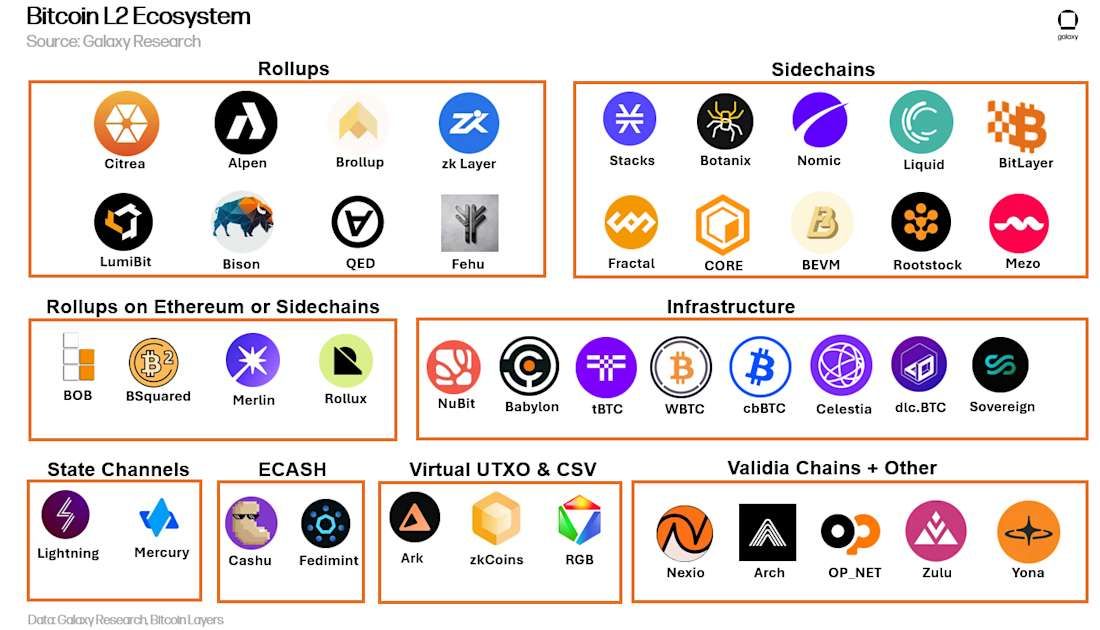
比特幣第二層生態已發展成多元擴容體系,各自採用不同技術策略與權衡。了解這一生態分佈,對評估比特幣邁向「全面功能」路徑極其重要。
閃電網絡:支付層基石
閃電網絡作為比特幣最成熟的 Layer 2,通過雙向支付通道及多簽交易運作,每條通道形成本地雙方共識,並可隨時落實到主網。
閃電網絡技術架構相當精密。HTLC(雜湊時間鎖合約)令多跳支付經洋蔥路由安全進行,時間鎖及懲罰機制防範雙重花費。自 2021 年 8 月至 2023 年 8 月,網絡 TPS 從 0.2 提升至 2.5,增幅高達 1,212%。
理論吞吐量超過 4,250 萬 TPS,在超過 85,000 條通道上運行,但現實表現有差距。現時網絡容量約 5,630 BTC,每筆交易平均 44,700 sat(約 11.84 美元)。Lightning 已整合進超過三億用戶的主流交易所,麥當勞、Walmart、OKX、幣安等亦實施 Lightning 支付以降低成本。
然而,Lightning 仍以支付為主,無法支援完善的可編程合約。通道流動性會影響支付路徑,使用者需積極管理。據學術研究,若攻擊者控制 2% 節點,即可威脅交易隱私,另外如重放循環攻擊及時延風險也需審慎應對。
Liquid Network:聯邦模式新路徑
Liquid Network 採用「強聯邦」模式,棄用比特幣 PoW,改以分布於全球的功能服務器集體作業。15 台專用伺服器同時擔任區塊簽署者和監督員,區塊需 2/3 以上簽署才視為有效。
此設計令 Liquid 網絡可實現每分鐘穩定產塊並確保兩個區塊即確認,即約 2-3 分鐘交易最終性。該網絡默認支援機密交易、原生資產發行(如法幣及證券通證化),也可作原子交換。
聯邦模式明顯帶來中心化風險。系統賴以 2/3 節點誠信運作,一旦 1/3 節點失效則整體區塊生產暫停。雖然地理分布與硬件保安模組有助減低風險,但 Liquid 依然犧牲了比特幣的零信任特性,以追求高效能和用戶體驗。
Liquid 支援資產發行和原子交換,但整體編程能力遠遜一般智能合約平台。聯邦架構使監管和審查風險高於比特幣主網,即使備有緊急應變及時間鎖機制,依然難以完全避免。
Stacks:Proof-of-Transfer 推動智能合約
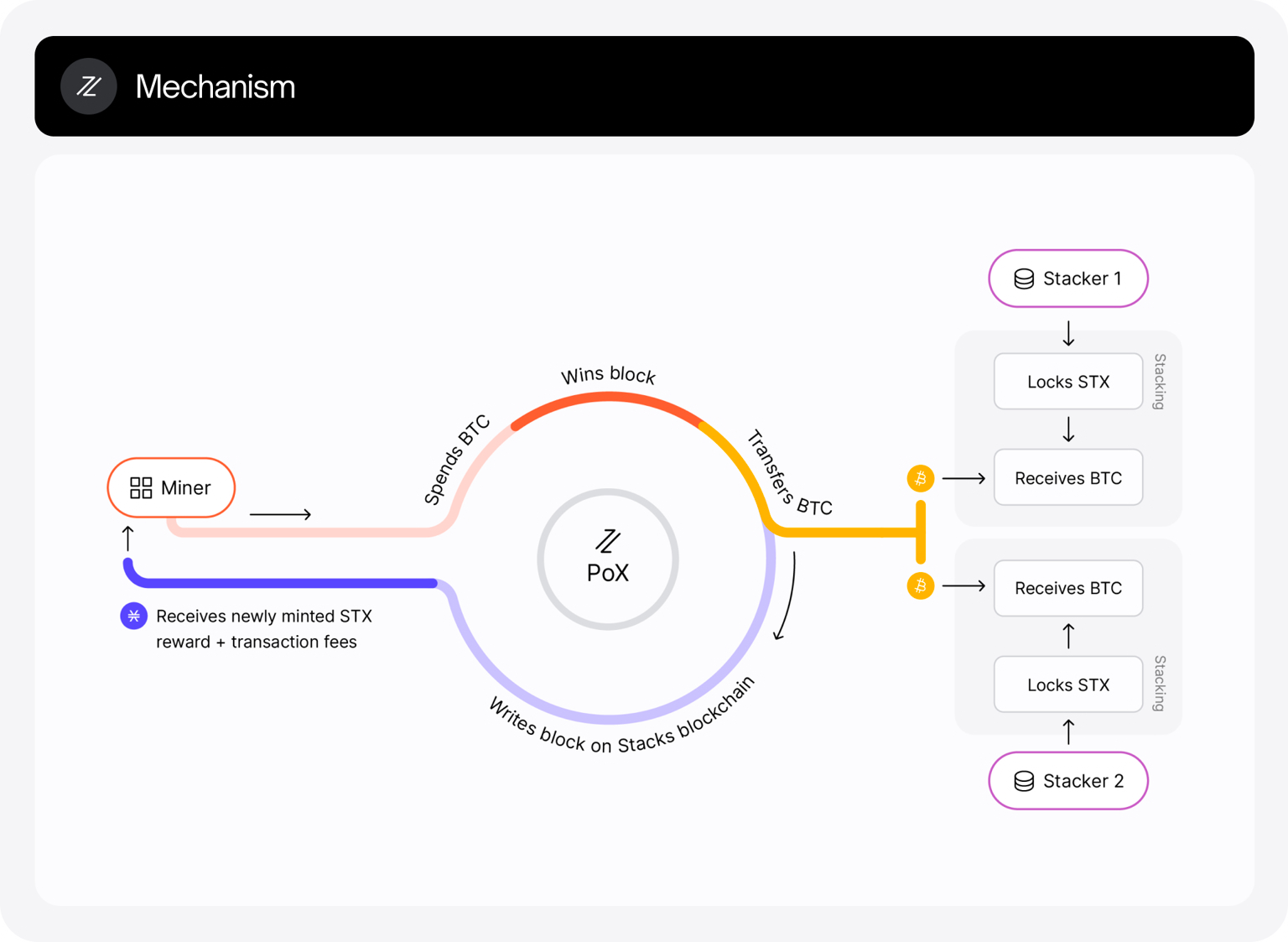
Stacks 區塊鏈或稱最具雄心的比特幣 Layer 2 合約方案,以創新的 Proof-of-Transfer (PoX) 共識設計,透過銷燬 BTC 來挖掘 STX,實現經濟對齊並將 Stacks 區塊與比特幣主鏈錨定。
其技術核心 Clarity 編程語言並非法定圖靈完備,屬於可定義、非圖靈語言,帶來完全靜態分析及可預測執行成本。與一般編譯字節碼不同,Clarity 原始碼公開於鏈上,內建溢位保護、防重入攻擊及強制處理回應。
架構設計保證 Stacks 約 150 個比特幣確認(約 25 小時)後,歷史資料享有主網級安全;同時提供 5 秒高速產塊,以更快清算新交易。這種雙層安全設計結合 STX 質押確保新區塊安全,最終交易則交由比特幣全哈希率確保。
Stacks 擁有原生通證支援、基於 traits 的合約組件、能直接訪問比特幣鏈上狀態,以及完善的 DeFi 原語。生態現已涵蓋借貸、DEX、合成資產等應用,TVL 由 700 萬美元升至 5,000 萬以上。
不過,Stacks 存在因鏈上依賴比特幣而產生的性能瓶頸。對習慣 Solidity 的開發者需克服學習障礙,執行效能亦遜於 EVM 生態。預計 Nakamoto Release 將透過更快出塊和新清算機制加強表現,而 Clarity WASM 編譯亦有望大幅提升性能。
新興協議:RGB 及 Taproot Assets
兩套新世代協議正以潛在革命方式嘗試擴容比特幣:RGB 及 Taproot Assets(前稱 Taro)。二者皆採用客戶端驗證模式,把合約數據離線存放,主鏈僅存承諾數據。
RGB 協議結構精細,所有合約資料皆留存於用戶端,僅以比特幣用作承諾層。單次用印封條(single-use seals)機制利用 UTXO 遏止雙重花費,而智能合約則採 DAG 狀態轉換並由自定 schema 規範進化。
RGB 特色在於擁有「無限」線下交易潛力並保留比特幣安全標準,同時帶來完全... client-side validation、複雜嘅代幣化場景(包括穩定幣同NFT)、同埋原生支援 Lightning Network。最近發佈嘅 RGB v0.10 帶嚟咗重大架構改進,雖然實際部署仲係比較有限。
Taproot Assets 透過 Bitcoin 嘅 Taproot 升級追求相似目標,採用 Sparse-Merkle Trees 同 Merkle-Sum Trees 來實現有效驗證。每個代幣都由一個帶有嵌入元數據嘅 Bitcoin UTXO 作支持,可以一站式處理多項資產打包鑄造及轉移,全部喺單個 Bitcoin 交易入面完成。
兩個協議都有共同優勢——極低鏈上負擔、可以繼承 Bitcoin 安全性而無需更改主協議,兼且支援 Lightning Network 的多資產通道。但仍然面對唔少障礙:開發階段仍屬 alpha 早期、需要專用錢包、仲要依賴 Bitcoin 生態圈內 Taproot 更廣泛的普及。
BRC2.0 革命:EVM 兼容里程碑突破
2025年9月,BRC2.0 喺 Bitcoin Block 912,690 上線,被認為係 Bitcoin Layer 2 演化歷史上最重要嘅一步。由 Best in Slot、BRC20 創始人 "domo" 及 Layer 1 Foundation 聯合開發,BRC2.0 令 Bitcoin 由單純儲存價值工具升級成一個可編程平台,支援以太坊智能合約兼容。
技術架構與實現
BRC2.0 採用顛覆式新方案,透過升級 indexer,將自家 EVM 引擎直接嵌入 Bitcoin Layer 1。系統運用基於 Rust 嘅 EVM 實現 revm,將傳統「計算器式」 indexer 轉變為圖靈完備嘅合約運行環境,可以直接執行複雜智能合約。
細看架構會發現設計相當巧妙。智能合約直接喺 Bitcoin L1 運行,唔需要跨鏈橋或中間層,完全繼承 Bitcoin 的安全性同時又可以編程。系統支援標準 Ethereum JSON-RPC 方法(eth_* functions),開發人員可 100% 用 Solidity 工具鏈。
Gas 機制根據銘文字節長度決定上限,每字節 12,000 gas,價格會根據 Bitcoin 現有手續費市場浮動。合約部署以銘文機制為核心,bytecode 存入 witness data,而非 OP_RETURN,提高效率。
BRC2.0 亦有針對 Bitcoin 集成嘅預編譯合約:BRC20_Balance 可查詢非模組類 BRC20 餘額、BIP322_Verifier 核實 Bitcoin 簽名、BTC_Transaction 取回 Bitcoin 交易詳情、BTC_LastSatLoc 追蹤 Ordinals satoshi 位置、BTC_LockedPkScript 計算 timelock 腳本。
能力範圍及實際應用
BRC2.0 功能範圍極廣。完全兼容 Solidity,令現有以太坊項目(如 Base、Polygon、主網 ETH)方便遷移。先進功能包括代理合約、模組化架構、而現有 BRC20 代幣(ORDI、SATS)亦可即時升級成為可編程代幣。
最早應用場景已經好豐富:DeFi 協議如 AMM、自動借貸、收益農場;NFT 市場支援自定交易邏輯及質押;Token Launchpad 支援 ICO 式高靈活度經濟設計;SocialFi 令社交代幣同社群獎勵變得可能;Ordinal Locker 支援 1小時到1年 NFT 上鎖質押。
生態支援快速成形。UniSat Wallet 已於 1.7.3 版本加入 BRC2.0,Taproot/SegWit/Legacy 地址全通。開發工具原生兼容 Web3.js、Ethers.js、Hardhat 等 Ethereum 工具,幾乎零上手門檻。
分階段啟動展示審慎策略。第一階段於 Block 909,969 推出6位編程 ticker,第二階段於 Block 914,888 正式全兼容 BRC20。Signet 測試網於 2025年3月31日開始部署,主網上線前已可長時間實測。
局限與技術挑戰
雖然功能革命,但 BRC2.0 本質受制於 Bitcoin 區塊層:10分鐘區塊時間對即時應用係極大掣肘,而總 TPS 亦受 Bitcoin 7 TPS 硬限。由於資料都需鏈上銘文,存儲成本亦高於 ETH 方案。
對 indexer 依賴帶來中心化隱憂。雖然合約運行喺 L1,但狀態讀寫仍靠鏈下 indexer 提供用戶可用查閱,導致潛在單點故障風險,亦令長遠去中心化情況存疑。
擴容/吞吐樽頸已逐漸反映。自 meta-protocol 流行後,BTC 平均區塊由 1.5-2MB 增至 3-3.5MB,接近容量極限。當大量寫入時,交易費一度衝破 $30,美小額行為失去經濟可行性。
安全方面需考慮長達 10 區塊重組兼 witness data 存儲壓力。雖然唔需要橋,避過傳統階層2風險,但 BRC2.0 一樣需依賴 indexer 做部分安全關鍵操作。
比較分析:Bitcoin vs Ethereum Layer 2 生態圈
理解 Bitcoin Layer 2 真正潛力,必須直接同現時區塊鏈擴容與功能金標準——以太坊 Layer 2 發展狀況作對比。
智能合約能力對比
Ethereum L2 幾乎全平台都支援完整智能合約。Arbitrum、Optimism、Polygon、Base、StarkNet 全部圖靈完備,隨時搬運合約,功能涵蓋代理、組合、DeFi 項目、multi-sig wallet 等,每日處理十億級合約交易,有龐大成功實例。
Bitcoin Layer 2 智能合約能力就相形見絀。大多數項目比 ETH 受更高程式限制。雖然有 Rootstock/BRC2.0 呢類 EVM 兼容方案,但對由以太坊轉過嚟嘅開發者來講,底層技術障礙仍然高。Bitcoin 本身 UTXO 模型同簡化指令集,所有 native 合約複雜度都有限。
Stacks 則靠 Proof-of-Transfer 共識同 Clarity 語言創新,但功能仍遜色於 ETH。Lightning Network 只集中支付幾乎冇可編程性,而 RGB、Taproot Assets 等則屬實驗中。
量化來睇, Bitcoin Layer 2 智能合約功能大概只達 ETH L2 嘅 30-40%,主因係底層結構與生態成熟度限制。
開發者體驗同生態成熟程度
兩大生態開發者體驗差距明顯。以太坊 L2 擁有齊全專業工具組,如 Hardhat、Truffle、Remix、亦有 L2 專用開發框架。文檔優秀,教學、多元 API、社區資源豐富,每月超過 4,000 名活躍開發者提供豐厚知識共享。
Bitcoin Layer 2 生態則面對工具不夠成熟、文檔 未完善;現存框架明顯落後於以太坊同類,社區支持亦有限。所有 BTC L2 活躍開發人員估算為 200-500 人,大約為 ETH L2 嘅 8-10 分之一。
雖然如此,BTC 開發圈有正面趨勢。Bitcoin Dev Kit (BDK)、Hiro System 每月 3.5 億 API 請求,NBitcoin/libbitcoin 等基礎庫都陸續出現。Stack Primer、LearnWeb3、開發賽事等教學項目亦反映生態積極投入。
不過 BTC L2 入門難度依然高,開發者要掌握新共識、Clarity 等新語言,還有一系列 Bitcoin 本身特殊規則。BRC2.0 提供 Solidity 兼容降低左入門門檻,但整體開發體驗依然顯著落後 ETH 水準。
性能同可擴展數據
ETH L2 各平台現實效能已相當成熟:Arbitrum 實測 ~40 TPS,極限 4,000;Optimism 實測 ~25 TPS,極限 2,000;Polygon 日常 ~2,000 TPS,極限 7,000+;Base ~150TPS(極限2,000),StarkNet ~200 TPS,理論極限百萬。
BTC L2 則隨方案大幅變化。Lightning Network 理論百萬 TPS,但實際只限支付通道,處理效能係 2.5 TPS。Rootstock 實測 ~20 TPS(極限 300+);Stacks 為 ~5-10 TPS(極限 ~1,000)。
交易最終性速度亦各異。ETH L2 由 13 分鐘至 1 小時不等;BTC L2 由 Lightning 即時到 Stacks 需 25 小時或以上,才達至 BTC 主網級安全。
手續費方面,以太坊 L2 自 EIP-4844 推出後平均節省 90-95%,每筆 $0.001~$0.10。BTC L2 收費則視乎方案:Lightning Networknear-zero fees (~$0.00003),但其他方案如 Rootstock/Stacks 因共識運算和橋樑成本而維持較高的交易費用(約 $0.10-$1.00)。
DeFi 生態系統發展比較
DeFi 功能上的差異可謂兩個生態圈最明顯的分野。以太坊 Layer 2 合共維持 $450 億以上的總鎖倉價值(TVL),跨越 500 多個 DeFi 協議,支援各種高端產品,包括合成資產、算法穩定幣、複雜衍生工具,以及如 Aave($138.9 億 TVL)、Uniswap($49.6 億成交量)等機構級協議。
比特幣 Layer 2 DeFi 則仍處於初步階段,所有方案合共約有 $20-30 億 TVL,及大約 50-100 個 DeFi 應用。大部分協議僅提供基本 DEX 功能和簡單的借貸服務,缺乏以太坊 DeFi 常見的金融衍生產品。機構級基建和企業合規工具不足,限制了生態圈擴展。
但新興機遇展現出急速擴張的潛力。Galaxy Digital 預計至 2030 年,將有 $470 億比特幣流動性湧向 L2,潛藏巨大增長空間。BRC2.0 的 EVM 兼容性可直接遷移以太坊驗證過的 DeFi 協議,而比特幣優越的安全模型亦有機會吸引尋求低風險收益的機構資金。
機構採用的差距尤為明顯。以太坊 DeFi 協議經常處理十億美元級別的機構流量,有成熟的託管方案、合規架構及清晰監管指引。比特幣 L2 DeFi 尚未有可比擬的機構基建,雖然如 Stacks 提供符合 SEC 規範的 STX 代幣和受監管託管服務,顯示生態正在進步。
安全模型及權衡分析
安全性是評估比特幣 Layer 2 可行性的核心,因為比特幣的主要價值主張正是其無可匹敵的安全架構。不同 L2 做法如何保留、改變,或者損害這些安全保障,是判斷其長遠潛力的關鍵。
Lightning Network 的安全架構
Lightning Network 的安全模型直接來自比特幣的工作量證明保障,並透過通道架構實現。哈希時間鎖合約(HTLCs)為支付原子性提供密碼保證,而時限鎖加懲罰機制則藉經濟誘因防止雙重支付。
Watchtower 機制則解決了線上監控的核心難題。第三方監控服務可在主節點離線時防範欺詐,但同時引入了額外信任假設。洋蔥式路由則利用多重跳轉及加密雜湊,保護支付隱私,但學術研究已揭示部分弱點。
已識別安全漏洞值得留意。Antoine Riard 於 2023 年發現的替代循環攻擊,能透過交易轉播干擾影響 HTLC 的安全。Wormhole attack 顯示,攻擊者只需控制 2% 節點已可掌握敏感支付資料,損害隱私保障。時間延遲攻擊則針對時間鎖漏洞,需要妥善管理通道。
儘管有漏洞,Lightning 依然展現彈性。分析逾 30 萬宗交易,支付成功率達 99.7%。實際表現由 2021 年 8 月的 0.2 TPS,穩步提升至 2023 年 8 月的 2.5 TPS,顯示支付應用層面已具實用安全水平。
聯邦聯盟(Federation & Consortium)模型
Liquid Network 聯邦模式犧牲了比特幣完全無信任的特性,換來更高表現及集體治理。十五個遍佈全球的節點負責區塊簽名及交易驗證,需要三分之二以上同意以達到共識。此架構能實現 60 秒區塊時間及 2 個區塊內確認。
安全權衡體現在中心化風險上。若節點合謀,仍有機會發動惡意攻擊,審查風險亦較主網明顯。1/3 或以上節點離線即會令區塊生產全面停頓,成為潛在單點失效問題。
風險緩解措施包括使用硬件安全模組(HSM)保障私匙、節點地理及地緣政治分佈提高韌性、設有緊急恢復及時間鎖機制,以及為期三天的 PAK(Peg-out Authorization Key)更新窗口以便偵測攻擊。
經濟安全仰賴聯盟成員本身的誘因,而非密碼貨幣經濟保障。約 65 個成員組織雖帶來治理多元化,但最終安全仍以機構信任取代數學證明,這是與比特幣根本理念的最大分歧。
Stacks Proof-of-Transfer 共識
Stacks 採用嶄新 Proof-of-Transfer 共識機制,挖礦者須用 BTC 競投來挖出 STX 代幣,實現兩網絡的經濟綁定。所有 Stacks 區塊錨定在比特幣鏈上,帶來分層式安全保障。
雙層安全模式令歷史數據在獲得大約 150 個比特幣確認(約 25 小時)後,可享有比特幣級安全性,而 STX 質押保障最新區塊。此模式把 STX 本金和比特幣算力合併,賦予最終交易強大安全預算。
Stackers 以 STX 抵押管理 sBTC 錨定機制,既可開放所有人參與,但對失誠行為設有懲罰(slashing)風險。即將推出 sBTC 集成,有望降低聯邦模式的對手風險,惟需要質押帶來資本效率挑戰。
安全架構在表現上取決於比特幣結算區塊時間,但鏈上兩次結算之間有 5 秒快速區塊大幅改善用戶體驗。整體共識機制仍屬新穎,與比特幣歷戰驗證的工作量證明相比,長遠穩定性未知。
客戶端驗證模式
RGB 和 Taproot Assets 走完全不同的安全路線,以客戶端驗證為本,所有合約執行於鏈下,比特幣僅作承諾層。此架構理論上可做到無限擴容,同時繼承比特幣級別安全。
安全優點包括完整交易隱私(第三方無法追蹤資產歷史)、鏈外交易容量無上限(無主鏈壅塞)、以及利用 UTXO 單次封印防止雙重花費。
但客戶端驗證亦帶來新難題。用戶需完整保留資產歷史以供驗證,增大存儲及寬頻需求。驗證軟件實現過於複雜也可能成漏洞來源,而要有專門錢包支持則影響普及。
開發狀態目前仍以實驗性為主。RGB v0.10 已達裡程碑,Taproot Assets 得到 Lightning Labs 七千萬美元融資,惟仍未大規模商用,實際安全效能暫難全面評估。
BRC2.0 安全考量
BRC2.0 結合比特幣 Layer 1 安全,以及 EVM 執行環境,透過索引器實現。智能合約直接在比特幣執行,無橋樑或中介,杜絕傳統 Layer 2 常見的跨鏈橋安全風險。
繼承安全包括比特幣工作量證明共識排序、見證數據存儲確保合約代碼防篡改,及最大 10 區塊重組處理,確保鏈重組期間交易一致性。
但新的安全疑慮來自對索引器的依賴作狀態管理及合約執行。雖然智能合約於比特幣 L1 執行,但實際可用性仍需鏈下索引器支援,可能成為中心化風險。若索引器軟件實現有漏洞,即使比特幣底層安全,合約依然有可能出事。
減低風險包括開源索引器方便社群審核、競爭性多個索引服務提供冗餘、統一 JSON-RPC 介面便於一鍵切換索引器。但索引基建長期能否徹底去中心化仍有未知之數。
擴容性與表現深度分析
擴容問題或許是決定比特幣 Layer 2 能否真正發揮全部功能的關鍵。比特幣主鏈每秒只能處理約 4.4 筆交易,10 分鐘一個區塊,基層瓶頸明顯,Layer 2 必須解決這些限制,方能大規模普及。
理論與實際表現
Lightning Network 是最明顯的理論與實際表現落差例子。理論容量超過 4250 萬 TPS、覆蓋逾 85,000 條通道,實際上僅能處理 2.5 TPS。主要原因來自流動性分配困難、路由複雜及通道管理等問題。
雖然表現有限,但網絡增長依然顯著。由 2021 年 8 月至 2023 年 8 月,Lightning 交易處理量飆升 1212%,網絡容量提升至 5,630 BTC。通道數量穩定維持於 85,000 左右,顯示基建成熟多於炒作。
支付成功率是重要指標。IEEE 研究分析逾 30 萬宗交易,...transactions reveals 99.7% payment success rates, indicating reliable functionality for payment use cases. Average transaction values of 44.7k satoshis ($11.84) suggest adoption for micro-payments and routine transactions rather than large value transfers.
交易數據顯示支付成功率高達99.7%,反映出用於支付場合時的可靠性。平均每筆交易金額為44,700聰(約11.84美元),說明主要用於小額支付及日常交易,而非大額資金轉移。
Routing efficiency represents a critical bottleneck. Multi-hop payments require adequate liquidity across routing paths, creating network effects where connectivity and liquidity distribution directly impact performance. Current data shows 1:8 ratio of non-custodial to custodial wallets, indicating most users rely on managed Lightning services rather than self-sovereign channels.
路由效率是一個重要瓶頸。多跳支付需要整條路徑有足夠流動性,鏈路連接與流動性分布會直接影響效能。現時數據顯示非託管錢包與託管錢包的比例為1:8,反映大部分用戶依賴由第三方管理的Lightning服務,而非自行掌管的通道。
Network congestion and fee dynamics
Bitcoin's base layer congestion directly impacts all Layer 2 solutions requiring on-chain settlement. The emergence of Ordinals and BRC-20 tokens drove average transaction fees from $1.5 in 2022 to $9.5 in 2024, with peak fees exceeding $30 during high inscription activity periods.
比特幣主鏈擁塞情況會直接影響所有需上鏈結算的第二層解決方案。Ordinals和BRC-20代幣熱潮令平均交易費由2022年的1.5美元升至2024年的9.5美元,高峰期甚至超過30美元。
Block space utilization has increased dramatically following meta-protocol adoption. Average block sizes grew from 1.5-2MB to 3-3.5MB, approaching Bitcoin's 4MB capacity limits. This scarcity creates economic pressure favoring Layer 2 adoption but also increases costs for Layer 2 operations requiring on-chain transactions.
隨着元協議被廣泛採用,區塊空間利用率大幅增加。平均區塊大小由1.5-2MB升至3-3.5MB,已接近比特幣4MB的容量上限。這種稀缺導致經濟壓力促使人們採用Layer 2方案,同時亦令需要上鏈操作的Layer 2成本增加。
Lightning Network benefits from reduced on-chain footprint after initial channel establishment. Opening and closing channels require base layer transactions, but unlimited off-chain payments occur without additional Bitcoin network load. However, liquidity rebalancing and watchtower operations still require periodic on-chain activity.
Lightning Network好處是開設通道後,可減少對主鏈的負擔。開關通道需要主鏈交易,但通道內外無限次支付都不會增加比特幣網絡負荷。不過,通道流動性再平衡及watchtower運作仍需定期上鏈。
Liquid Network experiences minimal congestion impact due to its federated model with 1-minute block times. The Strong Federation approach enables consistent performance regardless of Bitcoin mainnet congestion, though at the cost of decentralization and trustless operation.
Liquid Network因採用聯邦模式及1分鐘出塊,基本上不受擠塞影響。強聯邦設計無論比特幣主網多擠塞都能保持表現穩定,但犧牲了去中心化及無信任特性。
Data availability challenges
Bitcoin's limited block space creates data availability bottlenecks for sophisticated Layer 2 solutions. Galaxy Research estimates that Bitcoin rollups require $459K-$2.3M monthly revenue to achieve economic sustainability, primarily due to data availability costs on Bitcoin's constrained base layer.
比特幣區塊空間有限,高階Layer 2方案在數據可用性方面出現瓶頸。Galaxy Research估算,比特幣rollups每月需有45.9萬至230萬美元收入,才能達致經濟可持續,主因是要付出較高的主鏈數據可用性成本。
Current utilization patterns reveal growing demand for block space. Ordinals and meta-protocols represent significant portions of Bitcoin transactions, with BRC-20 tokens accounting for substantial network activity. This competition for block space drives up costs for all Layer 2 solutions requiring data availability.
目前用量模式顯示區塊空間需求持續上升。Ordinals及元協議交易已佔比特幣交易相當大比例,BRC-20代幣活動更加劇網絡壓力。區塊空間競爭推高所有Layer 2需用上鏈數據方案的成本。
Alternative approaches attempt to address data availability challenges. RGB and Taproot Assets use client-side validation to minimize on-chain footprint, storing only commitments rather than full contract data. However, this approach creates complexity in wallet implementations and user experience challenges.
另一些方案(如RGB及Taproot Assets)嘗試利用客戶端驗證來淡化對主鏈空間的需求,只將承諾資料存上鏈而不是完整合約數據。不過,這種方法令錢包實現更加複雜,用戶體驗亦成新挑戰。
BRC2.0's approach stores contract data in witness data rather than OP_RETURN, providing more efficient space utilization. However, complex smart contracts still require significant witness data, creating scalability constraints during network congestion periods.
BRC2.0將合約資料存於witness data,而非OP_RETURN,提升空間效率。但複雜智能合約依然要消耗大量witness data,網絡擠塞時規模受限。
Layer 2 interoperability and composability
Cross-Layer 2 communication remains limited in Bitcoin's ecosystem compared to Ethereum's mature interoperability solutions. Ethereum Layer 2s benefit from protocols like LayerZero enabling seamless asset transfers, standardized ERC token compatibility, and cross-L2 arbitrage opportunities.
相比以太坊成熟的互通協議,比特幣Layer 2間跨鏈溝通仍然非常有限。以太坊Layer 2利用LayerZero等方案,資產傳送無縫,兼容標準ERC代幣,還有跨Layer 2套利機會。
Bitcoin Layer 2 isolation creates liquidity fragmentation and limits composability potential. Assets locked in Lightning channels cannot easily interact with Stacks smart contracts or Liquid Network assets. This siloed approach reduces the network effects crucial for DeFi ecosystem development.
比特幣Layer 2之間的孤立狀態令流動性被分割,組合性受限。例如Lightning通道內資產難以同Stacks智能合約或Liquid資產互動。這種局限削弱建立DeFi生態所需的網絡效果。
Emerging solutions attempt to address interoperability challenges. RGB and Taproot Assets promise Lightning Network integration for multi-asset channels, while BRC2.0's EVM compatibility could enable standardized asset protocols across Bitcoin Layer 2s. However, practical implementations remain early-stage with limited production deployment.
新興方案如RGB、Taproot Assets致力支援Lightning多資產通道互通,BRC2.0引入EVM相容性,有機會促進比特幣Layer 2統一資產協議。但現在落地應用處於早期階段,規模有限。
Atomic operations across Bitcoin Layer 2s face technical challenges due to different consensus mechanisms and security models. While Lightning enables atomic swaps with other blockchains, complex multi-layer operations requiring coordination between Lightning, Stacks, and Liquid networks lack mature infrastructure.
比特幣Layer 2跨平台原子操作受限於共識及安全設計分歧。Lightning雖然可與其他鏈做原子交換,但跨Lightning、Stacks、Liquid等多層協調的複雜操作尚未有成熟基礎設施支援。
Ordinals and meta-protocols: The unexpected revolution
The emergence of Ordinals protocol in January 2023 fundamentally transformed Bitcoin's utility and sparked intense debate about appropriate block space usage. This unexpected development provides crucial insights into Bitcoin's potential for programmability and the demand for Bitcoin-native applications.
Ordinals協議於2023年1月出現,徹底改變比特幣的用途,並掀起如何使用區塊空間的激烈討論。這場意外革命讓外界重新認識比特幣編程潛力及原生應用的真實需求。
Ordinals technical architecture
Ordinal theory establishes a foundation for tracking individual satoshis through sequential numbering based on mining order. The inscription mechanism enables arbitrary data attachment up to 4MB using Taproot and SegWit witness data, creating completely on-chain digital artifacts with superior immutability compared to off-chain storage solutions.
Ordinal理論以挖礦順序為依據,為每個聰編排唯一序號,建立追蹤基礎。銘文機制利用Taproot及SegWit witness data,最多可綁定4MB任意數據,把完全上鏈的數碼藏品構建成不比外部存儲方案更具不可篡改。
The commit-reveal process utilizes two-phase inscription through Taproot scripts, supporting diverse data formats including images, audio, video, text, and executable code. Ownership models tie inscription ownership to satoshi ownership, creating straightforward transfer mechanisms through standard Bitcoin transactions.
commit-reveal過程採用兩段式Taproot腳本,支援包括圖片、音訊、視頻、文字、執行代碼在內的多種數據格式。銘文擁有權直接連繫到聰的產權,可用比特幣標準交易一鍵轉移。
Recursive inscriptions enable self-referential content and complex interactive applications, while parent-child provenance systems support hierarchical relationships for inscription collections. This architecture creates Bitcoin-native NFTs with guaranteed permanence and censorship resistance.
遞歸銘文令自參照內容及複雜互動應用成為可能,父子來源系統支援藏品的層級管理。這種架構下,比特幣原生NFT既長存又防審查。
BRC-20 token evolution
The original BRC-20 standard emerged in March 2023 as an experimental fungible token system built on Ordinals. Created by developer "domo," BRC-20 operates through JSON data inscribed onto individual satoshis with three core operations: Deploy, Mint, and Transfer.
最初的BRC-20標準於2023年3月誕生,是基於Ordinals的實驗性同質代幣系統,由開發者“domo”創立,透過將JSON數據銘刻到單位聰,完成Deploy、Mint、Transfer三項核心操作。
Market adoption exceeded expectations with over $3 billion in asset value traded since launch. BRC-20 tokens generated 5,636 BTC ($633 million) in on-chain volume over six months in 2025, with volume double that of Runes and five times traditional Ordinals activity. The first token, ORDI, became a flagship asset demonstrating market demand.
市場反應超預期,推出至今成交資產總值超過30億美元。2025年半年間,BRC-20代幣鏈上成交達5,636 BTC(約6.33億美元),是Runes的兩倍、傳統Ordinals的五倍。首隻代幣ORDI成為市場代表,顯示需求存在。
Critical limitations of original BRC-20 included restriction to basic token operations, network congestion during peak activity, dependence on off-chain indexers for balance tracking, and lack of programmability preventing DeFi applications. These constraints drove development of more sophisticated successors.
原版BRC-20局限不少,只支援基本代幣操作,高峰期網絡擠塞,餘額需要鏈外indexer追蹤,沒有可編程性阻礙發展DeFi。這些短板推動更多進階標準誕生。
Network impact and controversy
Ordinals and BRC-20 activity significantly impacted Bitcoin network dynamics. Transaction fees spiked to over $30 during peak inscription periods in May 2023, causing controversy among Bitcoin traditionalists preferring the network's role as a settlement layer for large value transfers.
Ordinals及BRC-20的活躍大幅影響比特幣網絡動態。2023年5月高峰期,手續費衝上30美元,令視比特幣為大額結算層的傳統派質疑用途。
Block space competition intensified as Ordinals transactions competed with traditional Bitcoin payments. Average block sizes increased substantially, approaching capacity limits and driving fee market development. This created economic incentives for miners through increased fee revenue while challenging small value Bitcoin transactions.
頻繁的Ordinals交易加劇區塊空間競爭,令平均區塊大幅增大接近容量頂點,推動手續費市場發展。礦工因費用提升獲得誘因,小額比特幣交易則遇上壓力。
Cultural resistance emerged from Bitcoin maximalists arguing that block space should preserve for monetary transactions rather than "arbitrary data." However, technical legitimacy of Ordinals inscriptions using standard Bitcoin protocols made blocking them difficult without protocol changes.
部分比特幣極端主義人士認為區塊空間應只用於貨幣交易,而非「隨意數據」。但Ordinals技術屬標準協議使用範圍,除非修改協議難以禁止。
Innovation acceleration resulted from Ordinals demonstrating previously untapped demand for Bitcoin-native applications. The success sparked development of competing protocols like Runes for more efficient token implementation and exploration of Bitcoin's programmability potential.
Ordinals證明比特幣原生應用蘊藏潛在需求,帶動創新加速。隨之而來出現如Runes等更高效代幣協議,加深探索比特幣的可編程性。
Meta-protocol ecosystem development
The broader meta-protocol ecosystem has expanded beyond Ordinals to include various application-layer protocols built on Bitcoin. Alkanes represents 1/3 of meta-protocol transactions in Q3 2024, offering WASM-based alternatives to Ethereum-style smart contracts.
元協議生態已由Ordinals走向多樣化,涵蓋多類比特幣應用層協議。2024年第三季,Alkanes已佔據元協議交易總量的三分之一,並提供WASM機制作為以太坊智能合約替代方案。
Indexing infrastructure has matured with multiple competing services providing transaction history tracking, balance management, and application interfaces. Companies like Best in Slot, Hiro Systems, and OKLink provide comprehensive API services supporting meta-protocol applications.
索引基礎建設日益完善,多家服務商競爭,提供交易歷史查詢、賬戶管理及應用介面。例如Best in Slot、Hiro Systems、OKLink等為元協議生態提供完整API服務。
Wallet integration has improved significantly from early command-line tools to user-friendly interfaces. UniSat Wallet leads consumer adoption with millions of users, while Xverse, Leather, and OKX Wallet provide additional options for mainstream users.
錢包整合早已擺脫命令列,轉型成用戶友好介面。UniSat Wallet率先成功普及,吸引過百萬用戶,Xverse、Leather與OKX Wallet亦為主流市場提供多元選擇。
Developer tools continue expanding with Ordinals API services, inscription tools, and marketplace infrastructure enabling easier application development. The ecosystem demonstrates growing sophistication in both technical capabilities and user experience.
開發工具持續增加,涵蓋Ordinals API、銘文工具及交易平台,令應用開發更便捷。整個生態在技術能力及用戶體驗方面日益成熟。
Smart contract capabilities on Bitcoin Layer 2s
The question of smart contract functionality represents a crucial component in determining whether Bitcoin Layer 2 can achieve full functionality. Unlike Ethereum's native smart contract platform, Bitcoin's limited Script language creates fundamental challenges that different Layer 2 approaches attempt to overcome through various technical strategies.
智能合約功能是否能於比特幣Layer 2實現,是判斷平台能否完善運作的關鍵之一。比特幣本身的Script語言有限,不似以太坊原生支援智能合約,各類Layer 2正嘗試以不同技術突破這些結構性障礙。
Current state assessment
Ethereum compatibility has emerged as a key strategy for Bitcoin Layer 2 solutions seeking to tap into existing developer ecosystems and proven contract implementations. Rootstock (RSK) provides full EVM compatibility through merged mining with Bitcoin, supporting 40+ protocols and over 70,000 active accounts. However,
以太坊兼容性已成為不少比特幣Layer 2方案搶佔開發生態和現有合約池的策略。Rootstock(RSK)透過與比特幣合併挖礦,實現完整EVM兼容,支援超過40個協議及7萬個活躍帳戶。然而,developer adoption remains limited compared to Ethereum Layer 2s due to network effects and liquidity constraints.
相比以太坊 Layer 2,開發者採用率依然有限,主要受網絡效應及流動性約束所影響。
BRC2.0's breakthrough in September 2025 represents the most significant advancement in Bitcoin smart contract capabilities. By integrating EVM functionality directly into Bitcoin Layer 1 through indexer upgrades, BRC2.0 enables 100% Solidity compatibility while maintaining Bitcoin's security model. Early applications include DeFi protocols, NFT marketplaces, token launchpads, and social finance applications.
BRC2.0 於 2025 年 9 月的突破被視為比特幣智能合約功能上最重要的進展。透過索引器升級,BRC2.0 把 EVM 功能直接整合到比特幣 Layer 1,實現 100% 支援 Solidity,同時保持比特幣一貫的安全模型。早期應用包括 DeFi 協議、NFT 市場、代幣發布平台以及社交金融應用。
Stacks blockchain offers an alternative approach through its purpose-built Clarity language. As a decidable, non-Turing complete language, Clarity enables complete static analysis and predictable execution costs while providing native Bitcoin state access and composition-based architecture. The ecosystem supports comprehensive DeFi primitives including lending protocols, DEXs, and synthetic assets.
Stacks 區塊鏈則透過其專為智能合約設計的 Clarity 語言帶來另一種方案。Clarity 屬可判定、非圖靈完備語言,能完全進行靜態分析並預測執行成本,同時支援原生比特幣狀態訪問及基於組合架構。相關生態系統涵蓋全方位 DeFi 基礎建設,包括借貸協議、去中心化交易所(DEX)及合成資產。
Lightning Network remains primarily payment-focused with limited programmability. While supporting basic conditional payments through HTLCs and time-locks, Lightning lacks general-purpose smart contract capabilities. Recent developments in Lightning Service Authentication Tokens (L402) enable API monetization, but complex application logic remains outside Lightning's scope.
閃電網絡(Lightning Network)依然以支付為主,程式擴展性有限。雖然支援透過 HTLC 及時間鎖進行基本條件式付款,但 Lightning 欠缺通用型智能合約功能。近期 Lightning 服務身份認證代幣(L402)允許 API 商業化,但複雜應用邏輯仍未能在 Lightning 實現。
Programming paradigms and limitations
程式設計範式與限制
Account-based vs UTXO models create fundamental architectural differences affecting smart contract design. Ethereum's account-based model naturally supports stateful contracts with persistent storage, while Bitcoin's UTXO model requires different approaches for state management and contract interaction patterns.
帳戶制(Account-based)同 UTXO 模式構成本質架構差異,影響智能合約設計。以太坊採用帳戶制,原生支援有狀態合約與永久儲存;比特幣的 UTXO 模式則要求以其他方式處理狀態管理及合約互動模式。
Bitcoin Script limitations constrain native smart contract development through restricted opcodes, lack of loops and complex control structures, limited arithmetic operations, and absence of external data access. These constraints necessitate Layer 2 solutions for sophisticated programmability, though they also contribute to Bitcoin's security and auditability.
比特幣 Script 原生限制包括受限指令碼、不支援迴圈和複雜流程控制、算術操作受限、無法取用外部資料等,大大制約本地智能合約開發。這些限制雖然逼使成熟的可編程性需靠 Layer 2 實現,但同時提升比特幣的安全性和可審計性。
State management challenges affect all Bitcoin Layer 2 solutions. RGB and Taproot Assets use client-side validation requiring users to maintain complete contract histories, creating scalability and user experience challenges. Stacks maintains global state through its blockchain while anchoring to Bitcoin for security, while BRC2.0 relies on indexer implementations for state tracking.
所有比特幣 Layer 2 方案都面臨狀態管理困難。RGB 及 Taproot Assets 透過用戶端驗證,要求用戶維持完整合約歷史紀錄,導致擴展性及用戶體驗問題。Stacks 則於自身區塊鏈記錄全球狀態並以比特幣作掛鉤保障安全,BRC2.0 則依賴索引器實現狀態追蹤。
Composability limitations restrict the "DeFi Legos" paradigm common in Ethereum ecosystems. Bitcoin Layer 2 solutions often operate in isolated environments with limited cross-layer interaction capabilities. While BRC2.0's EVM compatibility could enable composability within its ecosystem, broader Bitcoin Layer 2 interoperability remains challenging.
組合性受限亦限制如以太坊生態常見的「DeFi 積木」模式。比特幣 Layer 2 方案通常運作於封閉環境,跨層互操作有限。BRC2.0 雖然具 EVM 相容性可提升生態內組合能力,但比特幣 Layer 2 整體互通性仍屬難題。
Development ecosystem maturity
開發生態成熟度
Developer tooling for Bitcoin smart contracts lags significantly behind Ethereum alternatives. While BRC2.0 provides full Ethereum toolchain compatibility including Web3.js, Ethers.js, and Hardhat, other Bitcoin Layer 2 solutions require specialized development environments with steeper learning curves.
比特幣智能合約開發工具遠落後於以太坊。BRC2.0 支援全套以太坊開發工具鏈,包括 Web3.js、Ethers.js 及 Hardhat,但其他比特幣 Layer 2 則需專門開發環境、上手難度較高。
Documentation quality varies across platforms. Stacks provides comprehensive resources including Clarinet development environment, educational courses, and active developer communities. However, emerging solutions like RGB and Taproot Assets have limited documentation and fewer educational resources, creating barriers for developer adoption.
各平台文件質素參差。Stacks 提供全面資源,包括 Clarinet 開發環境、教學課程及活躍開發社群。反觀 RGB 及 Taproot Assets 等新興方案說明文件極少,教育資源匱乏,為進一步推廣設下障礙。
Community size represents a significant constraint. Estimated 200-500 active developers across all Bitcoin Layer 2s pale compared to Ethereum's thousands of monthly active developers. This smaller ecosystem limits knowledge sharing, reduces tool development, and slows innovation cycles.
社群規模亦是一大限制。預計整個比特幣 Layer 2 僅有約 200-500 名活躍開發者,遠少於以太坊每月數千名活躍開發者。生態規模偏小亦限制知識傳遞、工具開發及創新步伐。
Funding and incentives show positive trends with Code for STX competitions, Rootstock's $2.5 million grant program, and increasing venture capital interest in Bitcoin Layer 2 development. However, total ecosystem funding remains substantially below Ethereum Layer 2 investment levels.
資金及激勵機制方面則有改善趨勢,例如 Code for STX 比賽、Rootstock 的 250 萬美元補助計劃,以及風險投資對比特幣 Layer 2 發展的興趣上升。但整體資金規模仍大幅落後於以太坊 Layer 2。
Future potential and scalability
未來潛力及可擴展性
Technical innovations continue expanding Bitcoin smart contract possibilities. BitVM enables zero-knowledge proofs on Bitcoin without soft forks, potentially enabling more sophisticated off-chain computation with on-chain settlement. Citrea's ZK-rollup implementation specifically for Bitcoin launched in February 2024, demonstrating alternative scaling approaches.
技術創新持續擴闊比特幣智能合約可能性。BitVM 允許於比特幣上運行零知識證明而毋須軟分叉,開啟更複雜鏈下運算與鏈上結算新方向。Citrea 推出的 ZK-rollup 方案(2024 年 2 月)亦為比特幣帶來另類擴展新路徑。
Cross-chain compatibility improvements could dramatically expand Bitcoin smart contract utility. Atomic swaps, cross-chain bridges, and interoperability protocols might enable Bitcoin Layer 2s to interact with broader DeFi ecosystems while maintaining Bitcoin security benefits.
跨鏈兼容性的提升有望極大擴闊比特幣智能合約應用。原子交換、跨鏈橋及互操作協議有望令比特幣 Layer 2 能與更廣泛 DeFi 生態互動,同時維持比特幣的安全優勢。
Performance improvements through planned upgrades could address current limitations. Stacks' Nakamoto Release promises faster block times and improved Bitcoin settlement, while Clarity WASM compilation could provide significant execution speed improvements. RGB and Taproot Assets development continues with enhanced wallet integrations and user experience improvements.
各方案預計升級亦有望處理現有限制。Stacks 即將推出的 Nakamoto 版本承諾加快出塊及優化比特幣結算,而 Clarity 編譯至 WASM 預期將大幅提升執行速度。RGB 及 Taproot Assets 的開發則集中提升錢包整合與使用體驗。
Market potential suggests significant room for growth. With only 0.13% of Bitcoin's $1.4 trillion market cap currently locked in Layer 2 applications compared to 10% for Ethereum, substantial capital could flow into Bitcoin smart contract platforms given appropriate infrastructure and user experience improvements.
市場潛力仍待釋放。目前僅 0.13% 的比特幣(市值 1.4 兆美元)被鎖倉於 Layer 2 應用,相比以太坊的 10%,意味著只要基礎建設及用戶體驗改善,就有巨額資本流入比特幣智能合約平台的空間。
Regulatory landscape and decentralization concerns
監管環境與去中心化疑慮
The regulatory environment surrounding Bitcoin Layer 2 solutions presents both opportunities and challenges that could significantly impact their path toward full functionality. Understanding these dynamics proves crucial for assessing long-term viability and mainstream adoption potential.
比特幣 Layer 2 相關監管環境同時帶來機遇與挑戰,對其能否發展至全面功能將有舉足輕重的影響。掌握相關動態,對評估其長遠可持續性及主流採用潛力尤為重要。
Current regulatory framework
現行監管架構
Federal oversight in the United States involves multiple agencies with sometimes overlapping jurisdictions. The SEC treats certain digital assets as securities, requiring compliance with securities laws and potentially affecting token-based Layer 2 solutions. The CFTC classifies Bitcoin as a commodity, providing clearer regulatory treatment for Bitcoin-based derivatives and Layer 2 applications.
美國聯邦層面由多個監管部門共同監督,權責或會重疊。SEC(證券交易委員會)將部份數碼資產視為證券,需遵循證券法,對基於代幣的 Layer 2 方案或會構成影響。CFTC(商品期貨交易委員會)則將比特幣視為商品,使以比特幣為基礎的衍生產品與 Layer 2 應用的監管更清晰。
State-level regulations create a complex patchwork of requirements. New York's BitLicense demands comprehensive KYC procedures, capital requirements, and operational compliance for Bitcoin-related businesses. Wyoming's crypto-friendly legislation and Texas's supportive stance demonstrate varying state approaches that could influence Layer 2 development and deployment strategies.
各州法規亦各異,形成複雜局面。紐約州的 BitLicense 要求相關業務全面執行 KYC、資本及營運合規;懷俄明州及德州則採取親加密政策,展現出不同州份對 Layer 2 發展落地策略的影響。
International frameworks add additional complexity for globally accessible Layer 2 solutions. EU's MiCA regulation establishes comprehensive cryptocurrency rules affecting European operations, while emerging frameworks in jurisdictions like the UK and Singapore could impact global Layer 2 adoption patterns.
國際監管令全球可用的 Layer 2 解決方案面臨更多挑戰。歐盟 MiCA 規範為歐洲相關業務設立全面監管框架;英國、新加坡等地的新法規亦或影響全球 Layer 2 應用整體部署和採納格局。
Compliance challenges vary by Layer 2 architecture. Lightning Network's payment focus aligns well with existing money transmission regulations, though privacy features create potential conflicts with KYC requirements. Smart contract platforms like Stacks and BRC2.0 face greater regulatory uncertainty due to their programmability and potential for complex financial products.
合規挑戰因 Layer 2 架構而有別。Lightning Network 主打支付場景,與現有匯款監管字段較相近,但其私隱特色或會衍生 KYC 合規矛盾。Stacks 與 BRC2.0 等智能合約平台因具備更高編程能力及衍生複雜金融產品的可能,面臨更多監管不確定性。
Decentralization vs compliance tensions
去中心化與合規矛盾
Lightning Network demonstrates relatively strong decentralization through permissionless participation and distributed node operations. However, major routing nodes and custodial Lightning services introduce centralization points that could become regulatory targets. The 1:8 ratio of non-custodial to custodial wallets suggests most users rely on managed services, potentially creating compliance choke points.
Lightning Network 展現一定程度去中心化,任何人可隨時參與及運作節點;但主要路由節點及託管式服務構成潛在中心化風險點,有可能成為監管重點。非託管與託管錢包比例約 1:8,顯示大部份用戶依賴受管理服務,亦為合規設立潛在瓶頸。
Liquid Network's federation model creates clear regulatory interfaces through its consortium of 65+ member organizations. While this facilitates compliance with traditional financial regulations, it also creates centralization risks and potential censorship capabilities that conflict with Bitcoin's censorship-resistant ethos.
Liquid Network 採取聯盟模式,由 65+ 成員組織組成,令其監管接口明確,有助遵循傳統金融規則。然而,這種模式同時帶來中心化及審查潛在風險,與比特幣強調抗審查的精神勢成衝突。
Stacks blockchain presents interesting regulatory dynamics through its SEC-compliant STX token and regulated Proof-of-Transfer mechanism. This compliance-first approach could facilitate institutional adoption while potentially constraining innovation and global accessibility.
Stacks 區塊鏈以 STX 代幣獲 SEC 批准,並採用受規管的 Proof-of-Transfer,展現獨特監管考量。這種「合規先行」策略有助於機構參與,但或會限制創新及全球擴展。
BRC2.0's approach as a meta-protocol operating on Bitcoin Layer 1 creates regulatory ambiguity. While avoiding some Layer 2-specific compliance issues, the EVM compatibility and DeFi capabilities could trigger securities regulations for applications built on the platform.
BRC2.0 屬於運作於比特幣 Layer 1 的元協議,監管狀態較模糊,避開部分 Layer 2 專屬合規問題。然而,因其支援 EVM 及 DeFi 應用,平台上推出相關金融產品仍有可能觸及證券監管規定。
Institutional considerations
機構參與考慮
Custody requirements for Bitcoin Layer 2 assets create significant compliance challenges. Lightning Network requires active channel management and online key storage, complicating institutional custody solutions. Qualified custodians must develop specialized infrastructure to support institutional Lightning adoption while meeting regulatory requirements.
比特幣 Layer 2 資產託管要求亦構成合規障礙。Lightning Network 需用戶主動管理通道並保存私鑰在線,令機構託管更複雜。合資格託管人需特別建設基礎設施,以支援 Lightning 機構部署並符合監管要求。
Risk management frameworks must evolve to address Layer 2-specific risks. Smart contract risk in platforms like Stacks and BRC2.0, federation risk in Liquid Network, and channel management risk in Lightning Network require new risk assessment methodologies and insurance products.
風險管理架構需針對 Layer 2 特有風險重新設計。Stacks 及 BRC2.0 的智能合約風險、Liquid Network 的聯盟模式風險,以及 Lightning 的通道管理風險,均需發展嶄新評估和保險機制。
Institutional investment shows growing interest despite regulatory uncertainty. BlackRock and Fidelity Bitcoin ETF approvals signal mainstream acceptance, while venture capital investment of $447 million in Bitcoin Layer 2 projects demonstrates institutional confidence in long-term regulatory clarity.
儘管監管不明朗,機構投資熱情持續上升。BlackRock 及 Fidelity 推出的比特幣 ETF 獲批為主流肯定,並有 4.47 億美元風險資本流入比特幣 Layer 2 項目,反映機構對長遠監管明朗持正面態度。
Compliance infrastructure development includes SOC 2 Type 2 attestations, segregated custody solutions with $250M+ insurance coverage, and automated compliance systems for transaction monitoring and reporting. These developments facilitate institutional adoption while potentially creating centralization pressures.
合規基礎建設已逐步完善,包括 SOC 2 Type 2 認證、分離式託管及超過 2.5 億美元保險、配套自動化監控及報告系統。上述進展有利機構入場,但或會提升系統中心化風險。
Long-term regulatory outlook
長遠監管展望
Regulatory clarity appears to be improving gradually. Strategic
監管明朗度似乎正在逐步提升。戰略Bitcoin儲備在美國的討論,以及各地創新沙盒計劃,顯示政府對Bitcoin基礎設施價值的認知逐漸提升。不過,Layer 2方案當中以私隱為主的功能,可能會受到越來越多的關注和審查。
全球就加密貨幣監管的協調,有可能影響Bitcoin Layer 2的發展。FATF《旅行規則》對跨境交易的規定,可能會影響Lightning Network私隱功能;而各國央行協力開發CBDC(央行數碼貨幣),亦可能為Bitcoin Layer 2的廣泛採用帶來競爭壓力。
創新與監管合規之間的平衡仍然關鍵。如果監管要求偏向中央集權方案而非去中心化選擇,出現「監管攫取」(regulatory capture)風險,或者有機會削弱比特幣的核心價值主張。
行業自律措施亦有機會影響監管結果。針對Bitcoin Layer 2安全標準的制定、託管及合規最佳實踐指引,以及行業協會的成立,都有潛力引領監管取向,同時為開發者和用戶減少不明朗因素。
專家意見及市場分析
行業專家同研究機構為Bitcoin Layer 2的潛力提供了重要分析,平衡技術可能性、市場現實同監管約束的不同觀點。
技術專家分析
Botanix Labs行政總裁Willem Schroé強調Bitcoin持有者參與新生態的潛力:「比特幣的『Hodler』可以無須賣出BTC就獲得被動收益,L2具備可編程性,令Bitcoin持有者可以參與如DeFi的新金融生態,同時資產依然安全地留在Bitcoin主鏈。」這個觀點突顯,Layer 2方案可以釋放比特幣閒置資本,同時維持原有的安全優勢。
Trust Machines營運總監Rena Shah則談到觀念上的轉變:「Bitcoin L2領域讓人們明白,比特幣不應只被視作一項被動儲存的資產。多年來,比特幣主要被當作價值儲存,但L2為比特幣帶來可編程性和金融效用,又不損安全性。」這個看法反映,業界愈來愈共識比特幣潛能不止於儲值。
不過,專家們亦認同技術上的局限,例如Lightning Network在通道管理複雜、流動性分配及用戶體驗上仍有待改善,成為主流採用的障礙。另有學術研究指出2%的節點控制權已足以損害網絡私隱,說明安全性仍需持續增強。
像BitVM等新技術獲得技術專家審慎樂觀評價。BitVM無需軟分叉便可於比特幣實現零知識證明,但限於雙方參與及需大量預先簽名限制了實際應用,主要適合信任最小化BTC橋接等特定場景。
投資機構分析及預測
Galaxy Digital綜合研究預料,到2030年將有470億美元比特幣流動性湧向Layer 2網絡,代表巨大市場機會。該機構估算,若比特幣價格達到10萬美元,而且生態持續發展,到2030年總BTC供應的2.3%有機會鎖定於L2。
風投趨勢反映機構信心強勁。自2018年以來,Bitcoin Layer 2總融資額達4.47億美元,單是2024年已佔39%(1.74億美元),投資興趣明顯加速。2024年第二季,Bitcoin L2吸引了所有加密貨幣Layer 2風投投資的44%。
Trammell Venture Partners的Christopher Calicott 表示:「現在嚴肅的人都不再懷疑15或20年後比特幣會否存在。比特幣初創領域連續四年增長,這已成為長線創投類別的可持續趨勢。」這觀點展現機構對比特幣可持續性及增長潛力的信心。
但經濟可持續性分析亦揭示挑戰。Galaxy Research估計比特幣rollups每月需產生45.9萬至230萬美元收入,主要因比特幣主鏈數據成本高昂,成果是門檻高,但真正成功者潛在回報更大。
市場動態及競爭格局
行業增長數據十分亮麗。比特幣Layer 2項目由2021年的10個,增至2024年的75個,而比特幣原生交易量僅2024年已增加50%。反映開發者和市場對比特幣擴容方案需求殷切。
以太坊競爭既有壓力亦有機遇。以太坊Layer 2的資產鎖倉量超過450億美元,比特幣Layer 2只有20-30億美元,功能落差明顯。不過比特幣擁有更高的安全標準及1.4萬億美元市值,對重視安全的資本更具吸引力。
比特幣社群內的文化障礙仍在。HODLer心態和偏好純粹儲值用途,令複雜的DeFi應用遇到阻力。但隨著機構參與及收益機會出現,比特幣用法或逐步由被動向高效轉變。
各類Layer 2在監管定位方面有差異。Lightning Network主攻支付,與現行監管較為契合;智能合約平台監管不確定性較大。Stacks採取SEC合規模式,雖然合乎監管但可能犧牲一部分創新空間。
未來時間表及機會評估
短期(1至2年)會集中在基建發展及提升用戶體驗。BRC2.0兼容EVM可令現有以太坊應用迅速搬到比特幣生態;Lightning Network亦會持續拓展商戶採納與交易所整合。錢包用戶體驗與開發工具的提升預期可以降低入門門檻。
中期(3至5年)大致是生態成熟期。比特幣不同Layer 2的互操作方案、機構級託管基礎設施與監管明朗化,有望帶動普及採納。若相關技術與監管進展理想,TVL(鎖倉量)升至100-200億美元亦有可能。
長期(5至10年)能見到比特幣Layer 2覆蓋到以太坊Layer 2諸多功能。Galaxy Digital的470億美元TVL為遠大市場目標,而BitVM等創新rollup或可帶來新一輪擴容方案。
不過,風險因素包括針對私隱功能而來的監管收緊、要達到以太坊功能而同時維持比特幣安全的技術困難、比特幣社群的文化抗拒,以及以太坊Layer 2及其他區塊鏈平台持續改進帶來競爭。
專家共識認為,比特幣Layer 2將取得可觀功能進展,但更可能維持為專門型解決方案而非全功能平台。Lightning Network主打支付、Stacks等合規平台主攻機構DeFi,而BRC2.0等原生協議則聚焦比特幣原生應用,這些是最有機會成功的路線。
結論:通往全面功能之路
整體來看,從技術架構、安全模型、效能指標同市場動態多方面審視比特幣Layer 2生態,對「Layer 2可否於比特幣實現全面功能」這個核心問題,現階段有較為細緻的新見解。
現狀評估
比特幣Layer 2現在大約能實現傳統區塊鏈如以太坊Layer 2全面功能的25-35%。此評估針對重要功能維度作數據對比:智能合約能力為以太坊L2的30-40%;開發者生態資源少8-10倍;DeFi功能(TVL)少15-20倍;基建完善程度(工具/體驗)亦有明顯差距。
但創新步伐明顯加快。BRC2.0將於2025年9月推出,或成分水嶺,讓比特幣Layer 1直接兼容完整EVM,同時保持安全。Lightning Network處理交易量增長達1,212%,生態獲4.47億美元投資,單2024年佔39%。
技術限制依然存在。比特幣10分鐘出塊時間令即時應用有延遲,4MB區塊上限亦導致數據瓶頸。Galaxy Research估算,Bitcoin rollup要可持續營運每月需45.9萬-230萬美元收入,市場機遇大,但准入門檻更高。
BRC2.0:改變格局的催化劑
BRC2.0是自Lightning Network以來,比特幣可編程性的最大突破。透過indexer升級,EVM功能直接引入到比特幣主鏈,完全消除「橋」的風險,並做到百分百Solidity兼容。早期應用已顯示可全面支持DeFi協議、NFT市場及複雜智能合約。
由「數碼黃金」過渡到「可編程貨幣」的轉型已啟動。UniSat Wallet迅速支援BRC2.0、以太坊項目積極移植、開發者參與度高,顯示市場認同。不過有幾個限制依然存在:10分鐘出塊的根本瓶頸、對indexer的依賴,以及儲存成本等約束。create ongoing challenges for achieving full Ethereum-level functionality.
為實現以太坊級別的全面功能,不斷帶來持續的挑戰。
Market response validates BRC2.0's potential while highlighting constraints. Early DeFi applications achieve basic functionality but lack the sophistication of mature Ethereum protocols. Transaction costs during network congestion exceed $30, making small-value interactions economically unfeasible. Long-term success depends on addressing scalability bottlenecks and improving user experience.
市場反應證實BRC2.0的潛力,同時亦突顯其限制。早期DeFi應用僅實現了基本功能,但尚未達到成熟以太坊協議的複雜度。當網絡擠塞時,交易費用超過30美元,令小額交易變得經濟上不可行。長遠來看,成敗取決於能否解決擴容瓶頸並提升用戶體驗。
Security trade-offs and implications
安全權衡及其影響
Different Layer 2 approaches involve distinct security compromises. Lightning Network maintains Bitcoin's trustless model but requires active channel management and online monitoring. Liquid Network trades decentralization for performance through its federation model. Stacks provides Bitcoin-anchored security but introduces staking risks through STX collateral requirements.
不同Layer 2方案涉及不同類型的安全權衡。Lightning Network維持比特幣的無信任模型,但需要主動通道管理和線上監控。Liquid Network透過聯邦制架構犧牲去中心化,以換取效能。Stacks則以比特幣為安全依據,但透過STX抵押要求帶來質押風險。
BRC2.0's security model eliminates bridge risks while introducing indexer dependencies for practical functionality. This represents a reasonable compromise - contracts execute on Bitcoin L1 with full security guarantees, but state management requires off-chain infrastructure creating potential centralization points.
BRC2.0的安全模型消除了跨鏈橋風險,但實際運作上需依賴索引器,帶來新的依賴點。這是一個合理的妥協——智能合約在比特幣主鏈上執行,享有完整的安全保障,但狀態管理需要鏈下基建,可能形成潛在的中心化風險。
Academic research reveals ongoing vulnerabilities across solutions. Lightning Network faces replacement cycling attacks and wormhole vulnerabilities, while federation-based solutions like Liquid create censorship risks and single points of failure. However, 99.7% payment success rates and consistent growth demonstrate practical security sufficiency for many use cases.
學術研究指出各方案仍存在持續的漏洞。Lightning Network面臨replacement cycling攻擊及wormhole漏洞;而如Liquid般的聯邦架構方案則可能出現審查風險及單點故障。然而,99.7%的支付成功率和持續增長證明其對於多數實際應用場景而言已具備充分的安全性。
Market dynamics and adoption potential
市場動態及採用潛力
Galaxy Digital's projection of $47 billion in Bitcoin liquidity flowing to Layer 2s by 2030 represents massive market opportunity. Currently, only 0.13% of Bitcoin's $1.4 trillion market cap operates in Layer 2 applications compared to 10% for Ethereum, suggesting enormous untapped potential.
Galaxy Digital預測,到2030年將有470億美元比特幣流動性轉移到Layer 2,反映巨大的市場機會。目前比特幣1.4萬億美元市值中,僅0.13%在Layer 2應用中運作,而以太坊相應佔比為10%,顯示仍有大量潛在空間未被釋放。
Institutional interest continues growing with $174 million in 2024 funding representing 39% of all-time Bitcoin Layer 2 investment. Traditional crypto VCs previously skeptical of Bitcoin applications now actively deploying capital, while Bitcoin ETF approvals signal mainstream institutional acceptance.
機構投資興趣持續上升,2024年Bitcoin Layer 2相關融資達1.74億美元,佔歷史總額的39%。傳統加密風投過往對比特幣應用保持觀望,如今亦開始主動投入資本;而比特幣ETF的獲批,進一步顯示主流機構的接受程度正在提升。
Cultural barriers within Bitcoin communities remain significant. HODLer mentality and preference for store of value applications create resistance to complex DeFi participation. However, yield generation opportunities and security benefits of Bitcoin-anchored applications could drive gradual cultural shifts.
比特幣社群內的文化障礙依然顯著。「HODL」心態和偏好儲存價值型應用,令複雜DeFi參與受到阻力。然而,以比特幣為基礎的應用在產生收益及安全性上的優勢,有望逐步推動文化上的改變。
Regulatory outlook and compliance considerations
監管前景及合規考慮
Regulatory clarity shows gradual improvement with innovation sandbox programs and strategic Bitcoin Reserve discussions indicating government recognition of Bitcoin infrastructure value. However, privacy-focused features and DeFi capabilities face potential scrutiny as adoption grows.
監管明朗度正逐步提升,例如創新沙盒計劃與比特幣儲備策略討論,反映政府開始認同比特幣基建的價值。然而,著重私隱的功能及DeFi能力,隨著應用普及,或將面對新的審查壓力。
Compliance infrastructure development includes institutional-grade custody solutions, automated monitoring systems, and standardized security frameworks. Stacks' SEC-compliant approach demonstrates one path for regulatory alignment, while Lightning Network's payment focus aligns well with existing money transmission frameworks.
合規基建發展涵蓋機構級託管方案、自動化監控系統及標準化安全框架。Stacks以符合SEC規定的模式運作,提供了一條與監管接軌的路徑;而Lightning Network專注於支付,則與現行金錢傳輸監管框架較為契合。
Global coordination on cryptocurrency regulation could significantly impact Bitcoin Layer 2 development trajectories. FATF Travel Rule requirements might affect Lightning privacy features, while CBDC competition could create market pressures requiring enhanced functionality to maintain competitiveness.
全球加密貨幣監管協調,可能對比特幣Layer 2的發展路線產生重大影響。例如FATF「旅行規則」可能影響Lightning私隱功能,而央行數碼貨幣(CBDC)的競爭則或促使Layer 2必須提升功能,以維持競爭力。
Timeline to full functionality
達至全面功能的時間表
Based on current development trajectories, Bitcoin Layer 2s may achieve 70-80% of Ethereum Layer 2 functionality within 3-5 years, contingent on several critical developments:
根據現時發展趨勢,Bitcoin Layer 2於3至5年內有望實現以太坊Layer 2七至八成的功能,惟需關鍵要素配合:
Technical breakthroughs including successful BitVM implementation, zero-knowledge proof integration, and improved interoperability protocols could dramatically enhance capabilities. Ecosystem development requiring 10x growth in developer adoption and tooling maturity appears achievable given current investment levels and growth rates.
包括BitVM成功落地、零知識證明集成和互操作協議改進等技術突破,將大幅提升功能潛力。生態系統方面,開發者採用度和工具成熟度若能提升十倍,考慮到現階段投資額和增長速度,目標亦屬可實現。
Market adoption depends on cultural shifts toward productive Bitcoin usage and institutional infrastructure development. Infrastructure scaling through data availability solutions and economic sustainability improvements remains crucial for long-term viability.
市場普及需倚賴比特幣用戶文化轉向生產性用途,以及機構級基建完善。透過數據可用性和經濟可持續性改善來實現基建擴展,對長遠發展至關重要。
Regulatory clarity and competitive positioning against improving Ethereum Layer 2 solutions will significantly influence adoption timelines and ultimate success probabilities.
監管明朗度及與不斷提升的以太坊Layer 2競爭力,將深遠影響比特幣Layer 2的採用時間與最終成功機率。
Final thoughts
總結
Bitcoin Layer 2 solutions can become substantially functional, achieving 70-80% of comprehensive blockchain platform capabilities within 3-5 years. However, true parity with Ethereum Layer 2s remains unlikely due to fundamental Bitcoin base layer constraints and ecosystem maturity gaps.
比特幣Layer 2方案可於3至5年內達到區塊鏈平台功能的七至八成,功能大幅增強。然而,受限於比特幣底層架構和生態成熟度,與以太坊Layer 2完全看齊的可能性仍然不高。
BRC2.0's EVM integration represents a breakthrough enabling sophisticated applications while maintaining Bitcoin security benefits. Combined with Lightning Network's proven payment scaling, institutional-grade solutions like Liquid Network, and innovative approaches like RGB and Taproot Assets, Bitcoin Layer 2s offer compelling alternatives for specific use cases.
BRC2.0整合EVM帶來突破,使複雜應用得以落地,同時保留比特幣自身的安全優勢。配合Lightning Network的支付擴容成效、Liquid Network等機構級方案,以及RGB和Taproot Assets等創新方法,Bitcoin Layer 2在特定場景下提供極具吸引力的選擇。
Success will be selective rather than universal. Expert consensus suggests only 3-5 dominant platforms will emerge from the current field of 75+ projects. Lightning Network for payments, BRC2.0 for EVM-compatible applications, Stacks for Bitcoin-native smart contracts, and institutional solutions for compliance-focused use cases represent the most probable winners.
發展成果將有選擇性而非常態性。業界共識認為,現時逾75個項目中,最終只有3至5個主導平台會脫穎而出。Lightning Network專攻支付,BRC2.0主打EVM兼容應用,Stacks專註比特幣原生智能合約,以及專為合規場景設計的機構級方案,皆是最有機會突圍的贏家。
The question is not whether Bitcoin Layer 2 can be fully functional, but rather how much functionality is sufficient to unlock Bitcoin's massive dormant capital for productive use cases. Current evidence suggests Bitcoin Layer 2s will achieve substantial functionality while maintaining unique security and decentralization properties that provide competitive advantages in specific market segments.
真正問題不是比特幣Layer 2能否全面功能齊備,而是「夠唔夠」釋放潛藏資本於更具生產力的應用場景。現時證據顯示,比特幣Layer 2可實現大部分關鍵功能,同時維持安全和去中心化的獨有優勢,於特定市場分段帶來競爭力。
Bitcoin's transformation from purely "digital gold" to "programmable money" appears inevitable. The combination of massive untapped capital, superior security guarantees, growing institutional interest, and rapid technical innovation creates compelling conditions for Bitcoin Layer 2 success. However, achieving true parity with Ethereum's comprehensive functionality remains a multi-year endeavor requiring continued innovation across technical, economic, and adoption fronts.
比特幣由「純數碼黃金」蛻變為「可編程貨幣」已成必然。龐大潛在資本、卓越安全保障、機構參與上升及技術創新共冶一爐,為比特幣Layer 2的成功鋪路。然而,若要與以太坊Layer 2的全面功能看齊,仍須數年持續於技術、經濟及用戶普及等方面不斷創新。
The Bitcoin Layer 2 revolution has begun. While full functionality may remain elusive, substantial functionality appears within reach, potentially unlocking trillions of dollars in dormant value while preserving Bitcoin's foundational properties of security, decentralization, and censorship resistance.
比特幣Layer 2革命已經啟動。雖然「全面功能」暫難達成,但「高度實用」指日可待,有望釋放數萬億美元沉睡價值,同時保住比特幣的安全、去中心化以及抗審查等基礎特性。