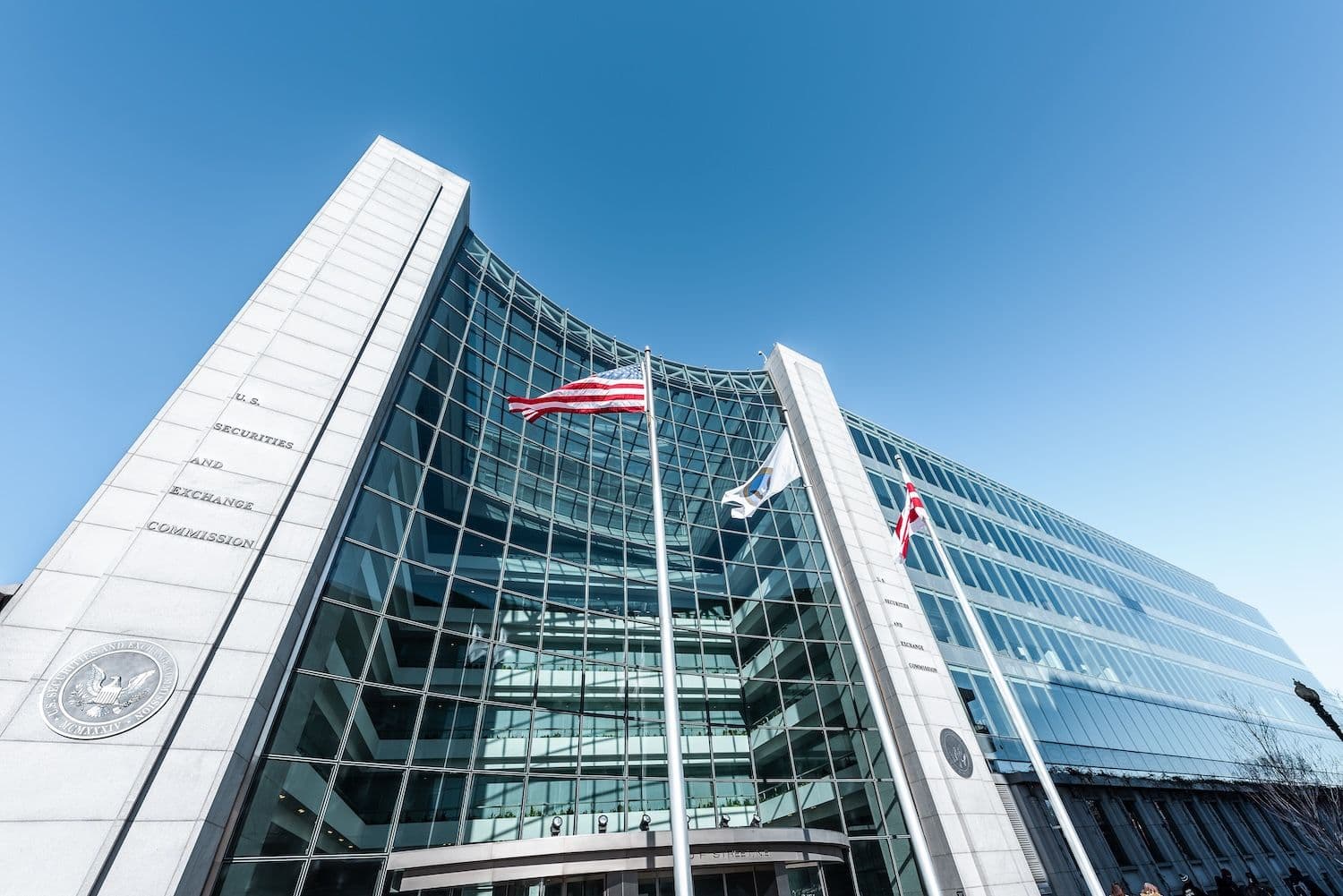
The U.S. Securities and Exchange Commission said Wednesday that placing a stock or bond on a blockchain does not change its legal classification, reaffirming that tokenized versions of traditional financial instruments remain subject to federal securities laws regardless of the technology used.
What Happened: Regulatory Guidance
Staff from the SEC's Division of Corporation Finance, Division of Investment Management, and Division of Trading and Markets issued a joint statement aimed at clarifying compliance expectations as tokenization moves beyond pilot programs.
The statement defines tokenized securities as instruments already covered by the legal definition of a security, presented as a crypto asset, with ownership recorded wholly or partly through crypto networks.
Regulators split the landscape into two categories: issuer-sponsored tokenization and third-party tokenization. In issuer-led models, on-chain transfers connect to official shareholder records while legal obligations around offering, selling, and reporting remain unchanged.
Third-party tokenization, where firms unaffiliated with the original issuer create crypto assets tied to someone else's security, presents additional complications.
The SEC staff said these arrangements can expose holders to the third party's financial health, including bankruptcy risk that direct holders of the underlying security would not face.
The agency identified two common third-party approaches: custodial tokenization, where the underlying security sits in custody and the token represents an indirect interest, and synthetic tokenization, where the token represents the third party's own instrument tracking an underlying security, such as a security-based swap.
Also Read: PUMP Token Soars 60% As Solana Memecoins Heat Up
Why It Matters: Compliance Framework
The guidance arrives as major financial players test tokenized securities within regulated systems. Last week, F/m Investments filed with the SEC seeking approval to record ownership of tokenized shares of its Treasury bill ETF on a permissioned blockchain, reflecting broader industry interest in faster settlement and round-the-clock functionality.
SEC staff framed the statement as a compliance road map rather than approval for any particular structure. The agency encouraged firms to engage directly as they prepare registrations, proposals, or requests for action.
Read Next: Coinbase And Glassnode Report Shows BTC Dominance At 59% As Options Overtake Futures