
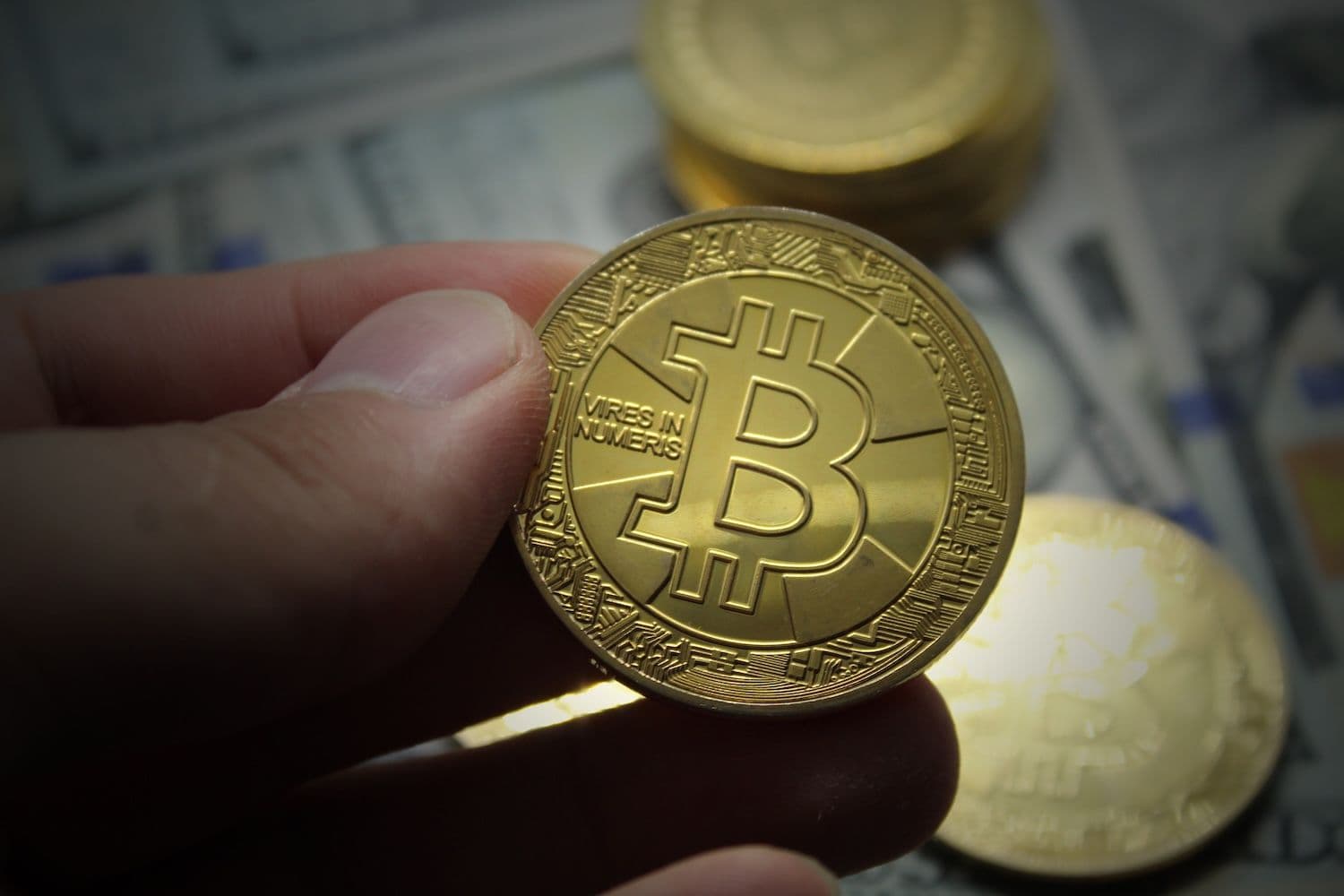
Bitcoin (BTC) was supposed to be boring.
The network marketed itself as the most conservative major blockchain, a settlement layer for digital money and little else.
Then a protocol called Ordinals let anyone etch images, text, and token tickers onto individual satoshis, and the chain started to look like a gallery wall. Traders are still watching ORDI for breakout signals three years after launch, which suggests the experiment never really ended.
This is a story about whether Bitcoin really expanded, or whether it just exposed a fight its community never resolved.
TL;DR
- Ordinals launched on Jan. 21, 2023, and crossed 107 million inscriptions by early 2026.
- Inscription activity contributed roughly 5,000 BTC in fees to miners during 2023 alone.
- The protocol uses SegWit and Taproot, not smart contracts, which makes Ordinals structurally different from Ethereum NFTs.
What Ordinals actually are
Ordinals is a numbering and inscription scheme built on top of Bitcoin.
Casey Rodarmor, a former Bitcoin Core contributor, released the protocol on Jan. 21, 2023, after a 36-day mainnet test that began with Inscription #0 on Dec. 14, 2022. It assigns a serial number to every satoshi, which is the smallest unit of Bitcoin, worth one hundred-millionth of a coin.
Each sat gets its number based on mining order.
The first sat of the genesis block is zero, the next is one, and the sequence continues through the roughly 2.1 quadrillion sats that will ever exist. Transfers follow a first-in-first-out rule, so ownership can be tracked through any normal Bitcoin transaction.
An inscription attaches arbitrary content, images, text, video, or code, to a specific sat through witness data. Ownership equals whichever unspent output currently holds that sat.
No smart contract is involved.
Visit Ethereum (ETH) and the picture flips. An NFT there lives inside a contract, usually pointing to media stored off-chain on IPFS or a private server. Ordinals embed the media directly into Bitcoin blocks, which means the artwork lives on the chain for as long as the chain does, up to the roughly 4-megabyte block-weight ceiling.
Rodarmor prefers the term "digital artifacts." The label pushes back against the idea that Bitcoin was simply copying OpenSea.
Also Read: Bitcoin At $74,900, Is This The Floor Before The Next Rally Or A Ledge Before A Drop?
Why this was even possible on Bitcoin
Ordinals did not require a fork or a new opcode. It exploited two prior upgrades that were meant for completely different purposes.
Enacted at block 481,824 on Aug. 24, 2017, SegWit separated signature data from the main transaction body. It granted that separated witness data a 75% fee discount and lifted the practical block ceiling closer to 4 megabytes. Taproot followed on Nov. 14, 2021, at block 709,632, adding Schnorr signatures, merged spending paths, and, critically, a Tapscript update that removed the old 80-byte limit on what could sit inside a script.
Combined, those changes made it cheap and legal to embed roughly 4 megabytes of arbitrary data in a single transaction. Rodarmor slotted in an envelope. Inscriptions sit inside an OP_FALSE OP_IF script branch that never executes but still commits to the chain.
The result is an NFT-like system built out of parts the upgrade authors never asked for.
Also Read: BitMEX Wants A Bounty, Not A Freeze, To Handle Bitcoin's Quantum Risk
Why Ordinals became controversial almost overnight
Bitcoiners fought about Ordinals within days of launch. The dispute sounded technical. It was mostly about purpose.
Labeled spam by critics, inscriptions drew a hard line from Luke Dashjr, a long-time Bitcoin Core developer and CTO of the mining pool OCEAN.
He called Ordinals an attack on Bitcoin and shipped a Bitcoin Knots release in Dec. 2023 that rejected most inscription traffic. His argument was that Bitcoin is electronic cash, and that the chain should not be clogged with pictures.
Supporters pointed to the obvious. Every inscription paid market-rate fees, so blocks went to the highest bidder, which is how Bitcoin has always worked. Udi Wertheimer, co-founder of Taproot Wizards, wrote that Dashjr had been rage-tweeting about inscriptions since February and had been unable to stop them.
Rodarmor's own framing was simpler: "MAKE BITCOIN FUN AGAIN."
Galaxy Digital's research team called the technical objections weak, noting that witness data can be pruned and ignored during initial block download. The fight was cultural, not cryptographic.
Two camps hardened. One treated block space as a commons that should serve monetary use. The other treated it as a market.
Also Read: Bitcoin Miners Ditch Crypto Roots As AI Is Set To Drive 70% Of Their Revenue
Inscriptions, NFTs, and a new culture layer
Culture came fast. Within weeks of launch, collectors were spending real bitcoin on pixelated artifacts they could not even render in most wallets.
Styled after CryptoPunks, the 100-piece Ordinal Punks collection included a sale at 9.5 BTC, around $214,000 at the time, on Feb. 8, 2023. Taproot Wizards inscribed the first full 3.94-MB transaction in Feb.
2023 and later raised a $30 million Series A led by Standard Crypto in Feb. 2025.
NodeMonkes produced the first million-dollar Bitcoin NFT sale on Mar. 4, 2024, when item #2769 traded for 17 BTC.
Galaxy Digital recorded 1.14 million image-based inscriptions in the first 200 days of the protocol. That number beat Ethereum, Solana, and Polygon combined over their first 200 days of NFT history.
Collections that mattered included a short, recognizable list:
- Ordinal Punks, Bitcoin Punks, and Bitcoin Frogs from the Feb.–Mar. 2023 wave.
- Taproot Wizards and Quantum Cats, both promoting OP_CAT reactivation.
- NodeMonkes, Bitcoin Puppets, and Runestones during the 2023–2024 peak.
Rodarmor's insistence on "digital artifacts" was not only branding. It was a claim that something stored on Bitcoin should differ from something hosted on a startup's S3 bucket.
Also Read: Ethereum Outflows From Binance Reach 2024 Lows, Is A Rally On The Horizon?
BRC-20 and the speculative spillover
Then came the tokens. In Mar. 2023, a pseudonymous developer known as Domo published a standard called BRC-20 that used Ordinals inscriptions to deploy, mint, and transfer fungible tokens.
Domo called it a "fun experimental standard." The market called it a gold rush.
ORDI, the first BRC-20 token, started trading in May 2023, landed on Binance in Nov. 2023, and hit an all-time high of $95.52 on Mar. 5, 2024.
SATS and RATS each briefly cleared around $600 million in market capitalization during the late-2023 mania.
BRC-20 has an awkward design. It leans on off-chain indexers to track balances, because Bitcoin itself has no idea the tokens exist. Traders did not care.
Inscribers paid 247 BTC in fees on May 8, 2023 alone, the bulk of it for BRC-20 mints, and miners earned more from fees than from the block subsidy on several blocks that week.
Launched at the Apr. 20, 2024 halving, Runes was Rodarmor's follow-up, a cleaner UTXO-based standard meant to retire BRC-20. Runes generated more than $135 million in fees during its first week, then lost 99% of daily etching volume by mid-May.
Speculation came and went. The design questions did not.
Also Read: AI Is Making Crypto Hacks Cheaper Than Ever And Kelp DAO Just Proved It
The real economic story, fees, miners, and the security budget
The numbers changed the stakes. Galaxy Digital's annual mining report recorded 23,445 BTC in transaction fees during 2023, more than four times the 5,375 BTC paid in 2022. Roughly 5,000 BTC of that came from inscription-related activity.
Users felt it. Average transaction costs climbed from $0.64 in Aug. 2023 to about $7 in early Nov. 2023 and roughly $30 by mid-Dec.
The halving block on Apr. 20, 2024, cleared 37.6 BTC in fees, about $2.4 million, and average fees that day set an all-time high of $127.97.
Miners loved it.
Block subsidies halve every four years, so fees are supposed to eventually carry Bitcoin's security budget. Inscriptions offered a preview of that world. Galaxy estimated that inscriptions alone could boost annual miner fee revenue by roughly 330 BTC even in a modest scenario, a 6.1% bump on top of 2022.
The rally did not last. Transaction fees had fallen by 2025 to roughly $300,000 a day, less than 1% of miner income, while the block subsidy dominated again.
Inscriptions proved the security-budget theory worked. They also proved that demand for block space was erratic.
Also Read: Santiment Spots Contrarian Signal As Bitcoin Breaks $77K Ceiling
What Ordinals revealed about Bitcoin governance
Bitcoin has no chief executive. It lacks a foundation that can issue binding decisions. Governance runs through a mesh of node operators, miners, developers, and users who influence each other through social signals and code.
Ordinals tested that mesh in public.
Dashjr pushed Bitcoin Knots, a filtered node client that drops most inscription transactions, and registered the behavior as CVE-2023-50428. Bitcoin Core did not follow his lead, and the share of nodes running Knots stayed in the low hundreds out of thousands. OCEAN, Dashjr's mining pool, commanded only about 0.1% of total hashrate.
The market had spoken, and it had not spoken in Dashjr's language.
Here is the subtle point. Nothing stopped the critics from running their own software, and nothing forced inscribers to stop either. Both sides kept their rights, and Bitcoin's rules did not change.
Also Read: XRP Negative Funding Mirrors Setup That Sparked 127% Rally
Are Ordinals a lasting use case or a passing phase?
That depends on which number gets the weight. Cumulative inscriptions crossed 100 million in Oct. 2025 and kept rising even as Bitcoin slid. Monthly Ordinals secondary sales came in at $53 million in Jan. 2026, $33.6 million in Feb. 2026, and $46.8 million in Mar. 2026.
Those are small numbers by the standards of 2023. They are not zero.
Announced in Feb. 2025, Magic Eden completed its sunset of Bitcoin and EVM marketplaces on Mar. 9, 2026, with the Bitcoin API going dark on Mar. 27, 2026.
The company said 80% of its operating costs were tied to products generating only 20% of its revenue. Rivals absorbed the flow, including Gamma, UniSat, Satflow, and the Taproot Wizards venue, though trading ran thinner across the board.
Development continued in the background. Rodarmor handed maintenance of the ord software to pseudonymous developer raphjaph in May 2023, and the project has shipped steady updates since.
Two readings both hold up on the data:
- Daily inscription counts and trading volume are a fraction of the 2023 peak.
- Inscription totals, unique buyer counts, and fee contributions are well above zero and still move markets at key moments.
Hype faded. Protocol traffic did not.
Also Read: RaveDAO Loses 91% In 24 Hours, What Exactly Happened To RAVE?
What Ordinals changed, even if the hype fades
Ordinals did three durable things to Bitcoin, regardless of where prices go next.
Demonstrated first, Bitcoin block space has non-monetary buyers. KuCoin's 2026 review tracked fresh projects and big sales long after the original hype wave crested, and miners learned what a fee-driven future could look like in practice.
Once inscribers showed up willing to pay thirty dollars or more per transaction for pictures, the "Bitcoin is only for payments" frame stopped matching reality.
It also rewrote the politics of upgrades.
Taproot was pitched as a privacy and efficiency improvement, and within 14 months it became the rail for a JPEG market.
Future soft forks will face a more skeptical audience and sharper questions about second-order effects.
Finally, it made Bitcoin's culture porous. Ethereum-native collectors, builders, and memecoin traders arrived on Bitcoin and did not fully leave.
Even with Magic Eden gone, the residual footprint shows up in development funding, conference agendas, and a steady layer of daily inscribers.
Also Read: The Meme Coin That Shot Into Orbit, Asteroid Shiba's 600% Mystery Explained
Conclusion
Ordinals were never only about JPEGs. They were a stress test for Bitcoin itself, the question of whether the most conservative chain could remain single-purpose after a decade of upgrade work made multi-purpose use trivially cheap.
The answer that emerged is messy. Bitcoin absorbed inscriptions, absorbed the criticism, absorbed the fee spikes, and kept running. No faction won outright, and no consensus rule changed.
What shifted was expectations. Anyone building on Bitcoin after 2023 has to reckon with a community that has watched its block space get used for art, tokens, and memes, and that has decided, for now, to let the market sort it out.
Read Next: Fake AI Platform Drains $982K From Hong Kong Investor
--
Frequently Asked Questions
What are Bitcoin Ordinals in simple terms?
Ordinals is a system that assigns a unique number to every satoshi, the smallest unit of Bitcoin, and lets users attach content like images, text, or code to a specific sat. Launched by Casey Rodarmor on Jan. 21, 2023, the protocol works without smart contracts. It uses SegWit and Taproot to embed data directly into Bitcoin blocks.
How are Ordinals different from Ethereum NFTs?
Ethereum NFTs live inside smart contracts and usually point to images hosted off-chain on IPFS or private servers. Ordinals store the actual content on the Bitcoin blockchain itself, inside witness data, so the artwork lives on-chain for as long as Bitcoin does. No external link can break.
Who created the Ordinals protocol?
Casey Rodarmor, a former Bitcoin Core contributor, designed and released Ordinals. He launched the mainnet version on Jan. 21, 2023, after a test phase that began with Inscription #0 on Dec. 14, 2022. He later handed maintenance of the ord software to pseudonymous developer raphjaph in May 2023.
What is a BRC-20 token?
BRC-20 is a token standard that a pseudonymous developer known as Domo published in Mar. 2023. It uses Ordinals inscriptions to deploy, mint, and transfer fungible tokens on Bitcoin. ORDI was the first BRC-20 token, and it hit an all-time high of $95.52 on Mar. 5, 2024.
How did Ordinals affect Bitcoin transaction fees?
Bitcoin transaction fees totaled 23,445 BTC in 2023, more than four times the 5,375 BTC paid in 2022. Roughly 5,000 BTC of that came from inscription activity. Average transaction costs climbed from $0.64 in Aug. 2023 to about $127.97 on the Apr. 20, 2024 halving block.
Why are Ordinals controversial within the Bitcoin community?
Critics like Bitcoin Core developer Luke Dashjr argue that Ordinals are spam and distort Bitcoin's purpose as electronic cash. Supporters point out that every inscription pays market-rate fees, so blocks go to the highest bidder. The dispute is cultural rather than technical, since no consensus rule blocks inscriptions.
Are Ordinals still active in 2026?
Yes, though at lower volumes than the 2023 peak. Cumulative inscriptions crossed 107 million by early 2026, and monthly secondary sales came in at $46.8 million in Mar. 2026. Magic Eden shut its Bitcoin marketplace on Mar. 9, 2026, but rivals like Gamma, UniSat, and Satflow absorbed the flow.
What enabled Ordinals to work on Bitcoin?
Two prior upgrades made inscriptions possible. SegWit, activated on Aug. 24, 2017, separated signature data and gave it a 75% fee discount. Taproot, activated on Nov. 14, 2021, removed the old 80-byte script limit through Tapscript. Together they allowed roughly 4 megabytes of arbitrary data per transaction.
What are Runes and how do they differ from BRC-20?
Runes is a UTXO-based token standard that Rodarmor launched at the Apr. 20, 2024 halving. It was designed to retire BRC-20 by using a cleaner, more efficient design that does not rely on off-chain indexers. Runes generated more than $135 million in fees during its first week.
Do Ordinals matter for Bitcoin's long-term security?
Possibly. Block subsidies halve every four years, so fees eventually need to fund miner security. Inscriptions offered a preview of that world by briefly making fees rival the block reward. By 2025, however, fees had fallen to roughly $300,000 a day, less than 1% of miner income.
