
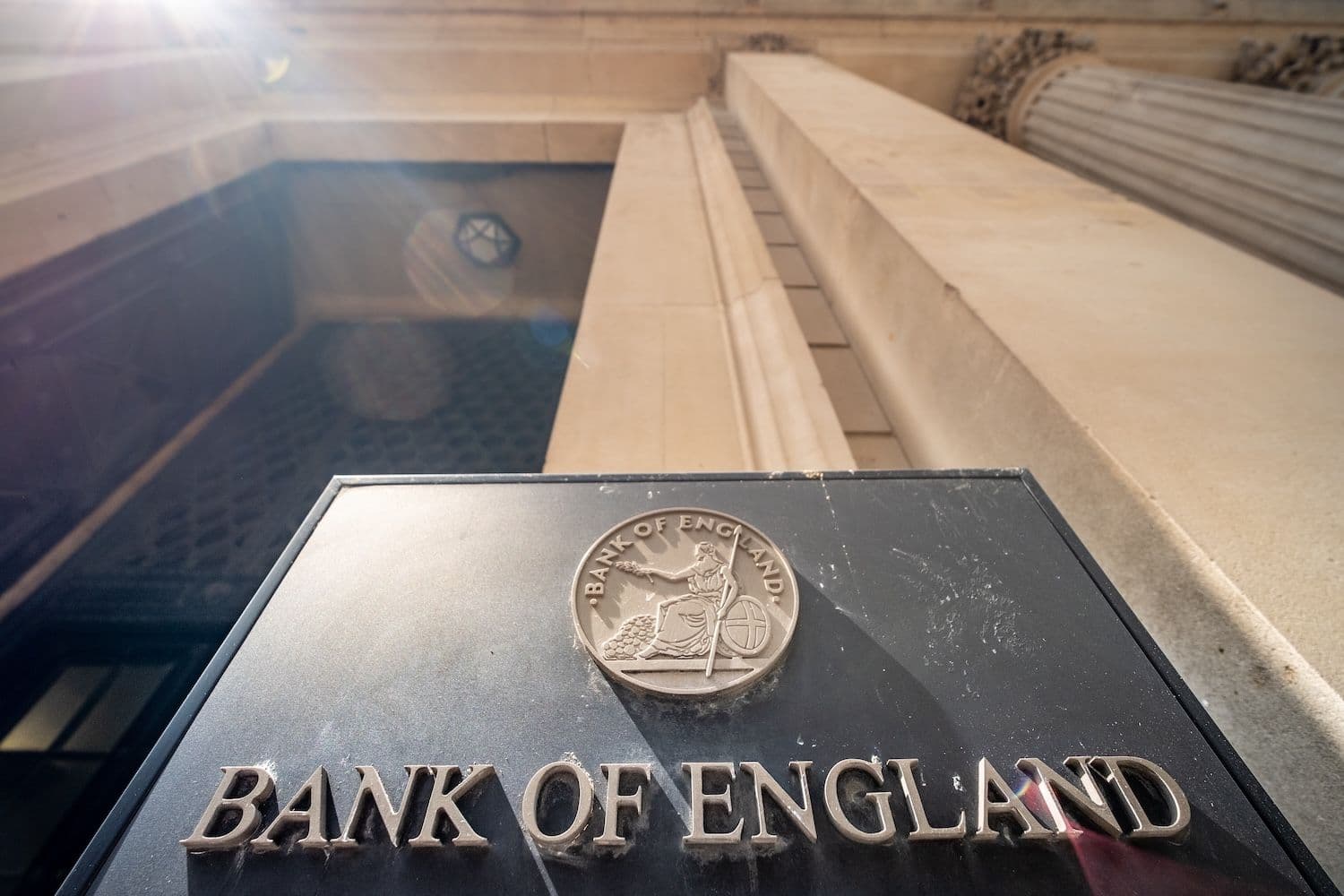
The Bank of England unveiled plans Thursday to finalize regulatory frameworks for systemic stablecoins, tokenized collateral, and a Digital Securities Sandbox by the end of 2026, with Sasha Mills, the bank's executive director for financial market infrastructure, telling attendees at the Tokenisation Summit in London that financial authorities have "the opportunity to build truly holistic digital financial markets in the UK, bringing real benefits to the real economy."
What Happened: UK Central Bank Sets Three Innovation Priorities
Mills detailed the BoE's approach during her speech, outlining how stablecoins "have the potential to modernise retail and wholesale payments, enabling faster, cheaper and more efficient transactions." She added they "could offer a valuable choice for individuals and businesses making payments in the UK."
The Bank is working alongside the Financial Conduct Authority to test tokens in the Digital Securities Sandbox and clarify treatment of tokenized collateral under UK European Market Infrastructure Regulation rules. Mills noted that systemic stablecoins "need to meet the same standards as existing forms of money used in the UK real economy."
The BoE has moved forward with a proposal to cap individual stablecoin holdings at £10,000 to £20,000 and business holdings at £10 million.
Also Read: Why Central Banks Are Stockpiling Gold Instead Of U.S. Debt For First Time Since 1996
Why It Matters: Clarity Sought For Market Confidence
Mills emphasized that tokenized collateral will face standards similar to those applied to traditional collateral and payment stablecoins.
She stated the Bank "aims to avoid mandating or prohibiting specific technologies" while acknowledging that clarity on operations under UK EMIR rules remains critical.
"To provide greater certainty, we will set out further policy later this year on how tokenised collateral can operate under the existing regulatory framework," Mills said. "Ensuring smoother movement of cross-border collateral requires a consistent international approach."
On the sandbox, she acknowledged the assessment framework for regulated stablecoins "may not map exactly to future standards for what may be permitted in wholesale markets" but said it "will both ensure some degree of resilience for market participants, and aid transition to a future permanent regime."
