
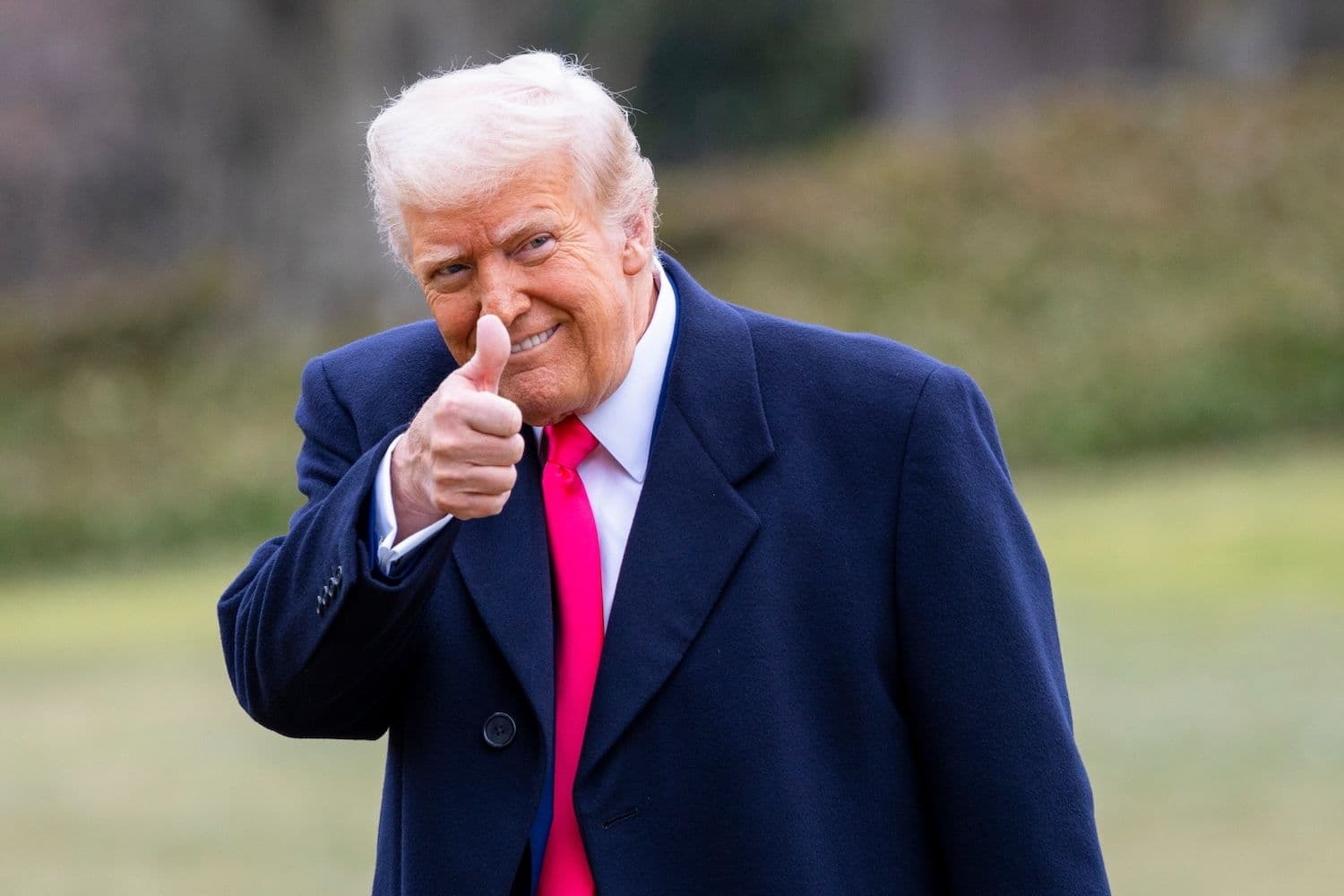
President Donald Trump said the U.S. will begin calling artificial intelligence “super intelligence” in official documents, arguing that “artificial” makes the technology sound fake.
Key Points:
- U.S. government documents will use “super intelligence,” or “SI,” instead of artificial intelligence.
- The term already has a technical meaning for hypothetical AI systems that exceed human intellectual capabilities.
- The announcement comes as the U.S. and U.N. pursue different approaches to AI growth, safety and international governance.
Trump AI Rename
Trump announced the terminology change during his Sept. 22 address to the United Nations General Assembly in New York, where he also rejected international efforts to impose broader AI controls. Reuters reported that he said U.S. documents would use “super intelligence,” or “SI,” going forward.
Trump said the technology is “actually amazing.” He argued that the new name is more accurate because “artificial” can suggest something fake, while describing the systems as powerful and increasingly important. He said the U.S. should encourage development while relying on the Department of Justice and other law enforcement bodies if intervention becomes necessary.
Trump also put AI leadership in strategic terms, saying, “Whoever wins super intelligence wins.”
He said the U.S. is ahead of China and should preserve that position, adding that the technology could become more consequential than the Industrial Revolution or the internet.
Also Read: ECB Moves To Free Stablecoin Reserves From MiCA's 60% Deposit Rule Read On Yellow.com
Superintelligence Meaning
The terminology matters because “superintelligence” already has a narrower technical meaning. IBM defines artificial superintelligence as a hypothetical AI system whose intellectual capabilities exceed those of humans, rather than as a general replacement term for AI.
AI safety researcher William MacAskill of Forethought Research told Reuters this month that models could potentially reach capabilities “considerably” beyond humans across most tasks before the end of the decade. That remains a forecast, not an established timeline. The distinction could create confusion if “super intelligence” becomes a broad government label for systems that researchers do not consider superintelligent.
The announcement also lands during an active international debate over AI governance. U.N. General Assembly President Khalilur Rahman said Sept. 10 that governments should seek common approaches on safety, accountability, human oversight and access, while the U.N. Global Dialogue on AI Governance prepares for its next session in May 2027.
Trump had already been moving toward the “super intelligence” language before his U.N. speech. On Sept. 19, he said he would create an “AI Force” and appoint an AI czar, and on Sept. 21 he again wrote that he would encourage “AI or SI” while using existing law enforcement if needed.
Read Next: Bitcoin Climbs 6% While Iran Floats 7-Day Hormuz Reopening Read On Yellow.com
