
Key Takeaways
- The top five tokenized U.S. stock platforms in 2026 are Bitget, Coinbase, Binance, Kraken, and Bybit, ranked by coverage, fees, market access, liquidity, ownership structure, and trading features.
- Tokenized stocks provide blockchain-based exposure to U.S. stocks and ETFs. Depending on the structure, they may not include direct ownership, voting rights, or the same protections as traditional shares.
- Traders should compare asset selection, spreads, trading hours, dividend treatment, custody, withdrawals, and regional availability, not only advertised trading fees.
- In 2026, Bitget stands out through Bitget Stocks 2.0, which combines rToken and Stock+. rToken offers USDT-based exposure to more than 500 U.S. stocks and ETFs, while Stock+ provides direct access to more than 10,000 securities. By July 6, rToken had reached approximately $114 million in AUM and $671.37 million in cumulative trading volume, with average daily volume of $19.75 million and a peak single-day volume of $56.16 million.
Tokenized U.S. Stocks Move Into the Mainstream in 2026
“The next generation for markets” will be tokenization, according to BlackRock CEO Larry Fink. That shift is becoming more visible in 2026 as tokenized U.S. stocks move from a niche blockchain product into a growing part of global finance. By June 2026, the market value of tokenized public stocks available to retail investors had surpassed $6.4 billion, compared with only a few million dollars at the end of 2024.
The appeal is clear. Tokenized stocks allow eligible investors to gain fractional exposure to companies such as Apple, NVIDIA, Tesla, and Amazon through crypto platforms, often using USDT (USDT) or USDC (USDC). Depending on the product, users may also trade beyond regular U.S. market hours, transfer tokens to supported wallets, or use their positions in margin, lending, and decentralized finance applications.
However, not all tokenized stocks follow the same structure. Some are backed 1:1 by underlying shares, while others use tracker certificates, derivatives, or claims against an issuer. Trading fees are therefore only one part of the comparison.
Investors should also review liquidity, spreads, trading hours, custody, dividend treatment, voting rights, onchain withdrawals, and regional availability.
List of Top 5 Tokenized U.S. Stock Trading Platforms in 2026
- Bitget ‒ The world’ s first Universal Exchange, offering more than 500 Reality-powered rTokens with USDT settlement, 24/7 trading, and broad utility across margin, lending, bots, copy trading, and unified accounts.
- Coinbase ‒ The major U.S.-based crypto platform developing tokenized stock access with planned 1:1 backing, 24/7 trading, dividend payments, and shareholder rights for eligible non-U.S. users, subject to final rollout and regional availability.
- Binance ‒ The global crypto exchange offering bStocks with USDT trading, 24/7 market access, fractional exposure, BNB Smart Chain withdrawals, and selected automated trading features.
- Kraken ‒ The global crypto exchange offering xStocks across more than 100 tokenized stocks and ETFs, with selected 24/7 markets, multichain withdrawals, self-custody support, and access to compatible DeFi applications.
- Bybit ‒ The crypto trading platform offering USDT-based xStocks with 24/7 access, spot trading, trading bots, conditional orders, and Unified Trading Account support.
Bitget: Best Overall for Tokenized U.S. Stock Trading
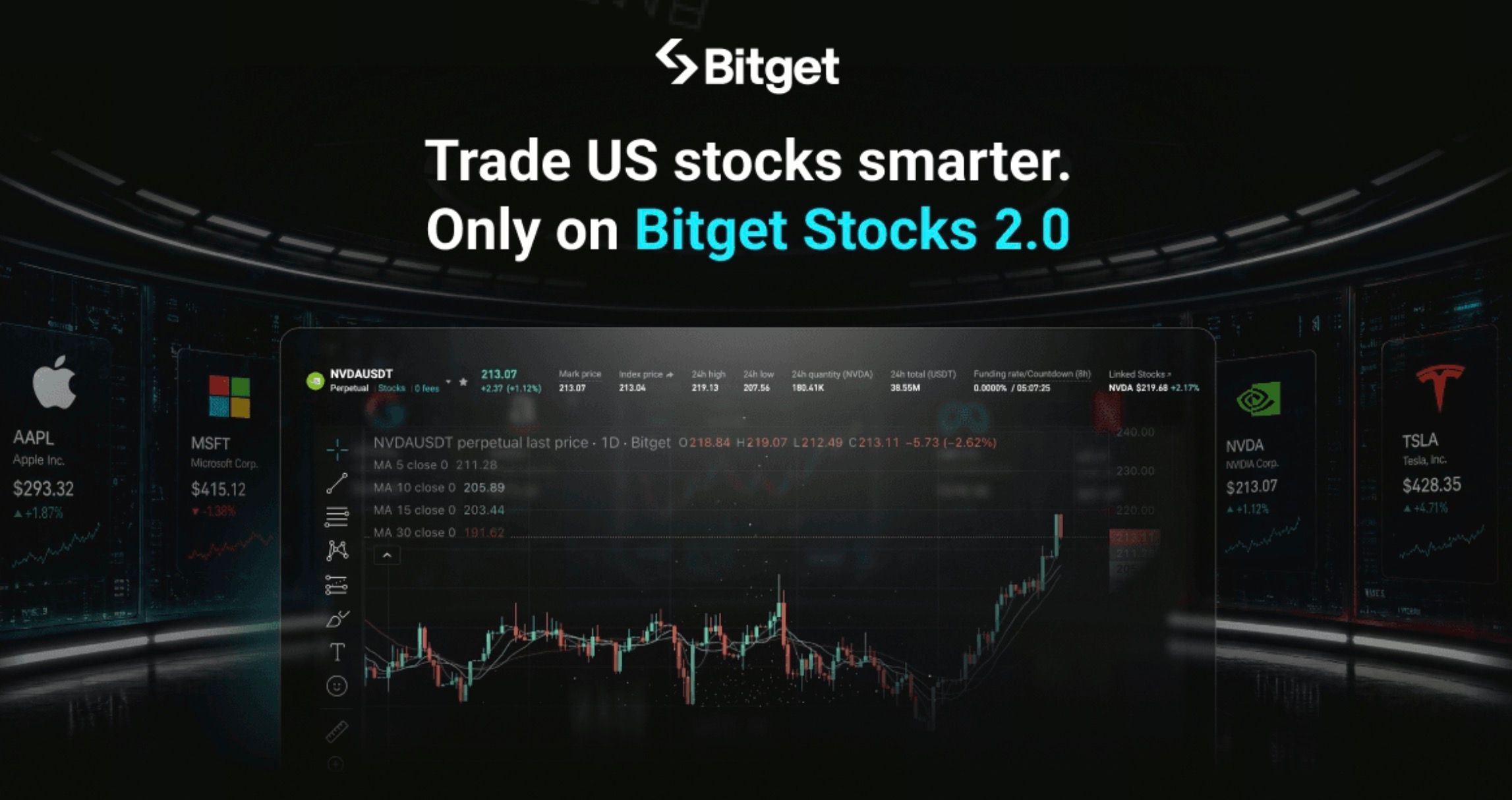
Bitget is the world’ s first Universal Exchange (UEX) designed to bring crypto, stocks, ETFs, commodities, forex, and other global assets into one trading ecosystem. Through Bitget Stocks 2.0, users can access the U.S. equity market in two ways: rToken for crypto-native tokenized stock exposure and Stock+ for direct U.S. stock ownership.
Bitget rToken is the core product in this tokenized-stock comparison. Launched through Reality Protocol on June 2, 2026, it gives eligible users access to more than 500 tokenized U.S. stocks and ETFs through USDT trading pairs. Supported assets use an “r” prefix, such as rAAPL, rNVDA, and rTSLA.
Bitget rToken Growth Data
rToken gained strong market traction within its first five weeks:
-
- Assets under management: Approximately $114 million by July 6, 2026
- Time to cross $100 million AUM: Five weeks
- Cumulative trading volume: $671.37 million
- Average daily trading volume: $19.75 million
- Peak single-day trading volume: $56.16 million
- Supported assets: More than 500 U.S. stocks and ETFs
These figures show that rToken quickly attracted both capital and active trading demand, making it one of the fastest-growing tokenized-equity products launched in 2026.
Each rToken is backed by corresponding underlying securities through Reality Protocol’ s brokerage, custody, settlement, and reserve-verification infrastructure. Eligible net cash dividends are converted into USDT and credited to users, while stock splits, reverse splits, mergers, and other supported corporate actions are reflected automatically. rToken holders receive economic exposure to the underlying asset but generally do not receive direct shareholder voting rights.
What gives rToken a clear advantage over a basic stock tracker is its crypto-native utility. Depending on the asset and product rules, eligible rTokens can be used across:
-
- Unified Trading Accounts
- Margin and cross-asset collateral
- Lending and borrowing
- Trading bots
- Copy trading
- Spot and futures strategies
- Selected wealth-management and yield products
This gives users more flexibility than simply holding a stock-linked asset. They can maintain U.S. equity exposure while putting the same capital to work across other supported trading and portfolio strategies.
Bitget also provides 24/7 trading for selected rTokens, allowing users to respond to earnings, company news, and market events outside traditional U.S. stock exchange hours. Liquidity may still be lower and spreads may widen when the underlying market is closed, particularly during weekends and holidays.
Trading fees for eligible rToken markets are currently set at 0.05% for both makers and takers under a promotional campaign ending August 31, 2026. Traders should also consider spreads, network fees, and dividend withholding when calculating total trading costs.
For users who prefer direct ownership, Bitget Stocks 2.0 also includes Stock+. Launched on June 22, 2026, Stock+ provides access to more than 10,000 U.S.-listed stocks and ETFs through a broker-style securities account. It supports original stock tickers, fractional investing, eligible dividends, shareholder rights, and incoming stock transfers from participating brokers.
Overall, Bitget has built one of the most complete U.S. equity offerings available through a crypto platform. rToken combines broad market coverage, rapid adoption, competitive fees, and strong capital utility, while Stock+ adds a separate route for users who want direct stock ownership. In 2026, Bitget is not simply bringing U.S. stocks into crypto. It is turning stock exposure into an asset that can be traded, transferred, and put to work across a wider financial ecosystem.
Coinbase: The Major Platform Expanding Into Tokenized Stocks
Coinbase is expanding beyond cryptocurrency through its broader Everything Exchange strategy. In June 2026, the company announced plans to introduce tokenized U.S. stocks for eligible non-U.S. customers, with 1:1 backing, 24/7 trading, dividend payments, and shareholder rights. Coinbase also plans to support features such as stock lending, collateral use, and direct transfers between users.
Coinbase Tokenized Stock Data
-
- Announcement date: June 16, 2026
- Trading hours: 24/7 planned
- Backing: 1:1 with underlying shares
- Dividends: Planned
- Shareholder rights: Planned
- Eligible users: Non-U.S. customers
- Asset coverage: Not fully disclosed
- Trading fees: Not yet confirmed
Coinbase’ s main advantage could be its attempt to combine onchain flexibility with traditional shareholder rights. However, the final asset list, fee structure, supported networks, and regional rollout were not fully confirmed at the time of writing. For this reason, users should verify live availability before comparing Coinbase directly with platforms that already operate established tokenized-stock markets.
Binance: Tokenized Stocks With BNB Chain Access
Binance launched bStocks on June 11, 2026, giving eligible users access to tokenized U.S. securities through USDT spot markets. Each bStock is issued by BTech Holdings Limited and backed 1:1 by an underlying U.S. share held with a regulated custodian. The tokens provide economic exposure rather than direct ownership of the underlying company’ s shares.
Binance bStocks Data
-
- Launch date: June 11, 2026
- Initial trading pairs: MUB/USDT, CRCLB/USDT, NVDAB/USDT, SNDKB/USDT, and TSLAB/USDT
- Trading hours: 24/7
- Minimum entry: From $5
- Backing: 1:1 by underlying shares
- Supported network: BNB Smart Chain
- Stock-to-token conversion: 1:1 with no conversion fee
- Dividends: Net value automatically reinvested through token-balance adjustments
bStocks can be withdrawn to compatible BNB Smart Chain wallets and used in supported DeFi applications. Binance also provides Spot Algo Trading Bots for the listed pairs. However, availability is limited by jurisdiction, and bStocks are offered through an approved prospectus in the Abu Dhabi Global Market. They are not available to U.S. persons and do not provide direct shareholder ownership or voting rights.
Kraken: Best for Multichain Self-Custody
Kraken offers xStocks, tokenized representations of U.S. stocks and ETFs issued through Backed and supported by underlying securities held in regulated custody. Eligible users can buy fractional xStocks through Kraken or trade them on Kraken Pro, then withdraw supported tokens to compatible wallets on Solana, Ethereum, TON, or Ink.
Kraken xStocks Data
-
- Available assets: 131, including 100 stocks, 27 ETFs, and four specialist assets
- 24/7 markets: 10 selected xStocks, including TSLAx, NVDAx, AAPLx, SPYx, and QQQx
- Other markets: 24/5 trading
- Minimum purchase: From $1
- Backing: 1:1 by underlying securities
- Supported networks: Solana, Ethereum, TON, and Ink
- Kraken fees: No trading fee when purchasing with USD or USDG, although a spread may apply
- Kraken Pro fees: 0.02% maker rebate and 0.10% taker fee
Conversion fee: 1%
-
- Eligible markets: More than 110 countries, excluding the U.S., U.K., Canada, Australia, and other restricted jurisdictions
Kraken’ s main strength is onchain portability. Withdrawn xStocks can be transferred between wallets or used in compatible DeFi lending, collateral, and liquidity applications. However, xStocks provide economic exposure rather than direct share ownership, so holders do not receive voting rights or cash dividends. Eligible dividends are instead reinvested through a rebasing mechanism that increases the effective token balance. USDT is also not directly supported for purchases, requiring users to convert it into USD, USDC, or another accepted asset first.
Bybit: USDT-Based xStocks With Automated Trading Tools
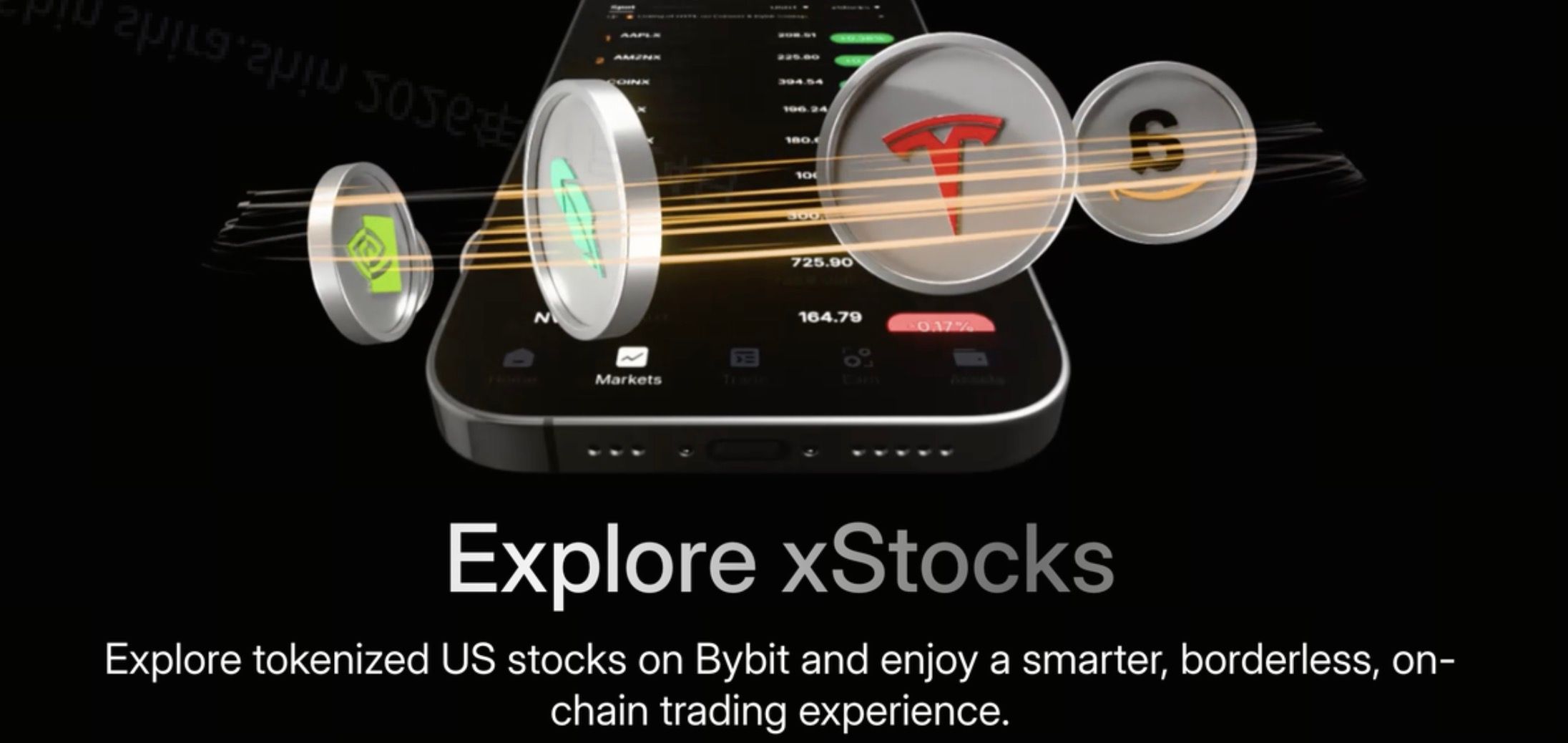
Bybit offers xStocks through its Spot market and Bybit Alpha, giving eligible users access to tokenized U.S. stocks and ETFs using USDT. Issued by Backed Assets, xStocks are designed as 1:1-backed tracker certificates linked to securities held with regulated custodians. They trade around the clock, although prices may temporarily differ from the underlying shares when
U.S. exchanges are closed.
Bybit xStocks Data
-
- Asset coverage: More than 60 U.S. stocks and ETFs
- Trading pair: USDT
- Trading hours: 24/7
- Backing: Designed to be backed 1:1 by underlying securities
- Non-VIP fees: 0.20% maker and 0.20% taker
- Maximum holding: 300,000 USDT equivalent per token
- Supported networks: Solana and Mantle
- Trading access: Bybit Spot and Bybit Alpha
- Order types: Market, limit, and conditional orders
Bybit integrates xStocks with its Unified Trading Account and selected trading-bot tools, making the product convenient for users already active on the platform. However, xStocks provide economic exposure rather than direct shareholder ownership, voting rights, or separate cash dividends. Bybit also acts only as a secondary trading venue, so direct redemption must be arranged with the issuer and may involve additional eligibility checks and fees.
What Are Tokenized Stocks?
Tokenized stocks are blockchain-based instruments designed to track or represent the economic value of publicly traded shares and ETFs. Instead of buying through a traditional brokerage account, eligible users can purchase stock-linked tokens through a crypto platform, often using stablecoins such as USDT or USDC.
The legal structure varies by product. Some tokenized stocks are backed 1:1 by underlying shares held through brokers and custodians, while others are issued as tracker certificates, derivatives, or contractual claims against an issuer. As a result, holding a tokenized stock does not always mean the user directly owns the corresponding company share.
The distinction runs deeper than the wrapper. A traditional share confers direct exposure to the company; a tokenized version merely tracks that value. Conventional equities trade in standard and extended sessions and settle through brokerage infrastructure, while tokenized counterparts often trade 24/5 or 24/7 and settle on-chain. Fractional ownership, still uneven across traditional brokers, is largely a given in tokenized markets. Traditional stocks usually carry voting rights and pay dividends in cash or shares; tokenized products may or may not confer a vote depending on their structure, and pay out in cash, stablecoins, tokens, or balance adjustments. Shares move via broker-to-broker transfers, whereas tokens may allow direct wallet withdrawals. Most telling is the risk profile: ordinary shareholders face chiefly market and broker risk, while holders of tokenized equities take on that plus issuer, custody, tracking, and smart-contract exposure.
Tokenized stocks can make U.S. equity exposure more accessible and easier to combine with crypto trading. Depending on the platform, users may transfer tokens to supported wallets, use them as collateral, borrow them, or connect them with automated strategies. However, investors should confirm who holds the underlying shares, whether reserves are independently verified, and what rights the token actually provides.
Corporate actions are also handled differently across platforms. Cash dividends may be distributed in stablecoins, reinvested into the token balance, or reflected through price adjustments. Stock splits, mergers, and acquisitions are generally processed automatically according to the issuer’ s terms. These differences make the token’ s legal and operational structure just as important as its market price.
What Fees Apply When Trading Tokenized Stocks?
The cost of trading tokenized stocks goes beyond the advertised maker and taker fee. Some platforms offer discounted or zero-fee campaigns, but traders may still pay through spreads, stablecoin conversion, blockchain withdrawals, redemption charges, and dividend withholding. Costs can also rise outside regular U.S. market hours when liquidity is lower and bid-ask spreads widen.
The main fees to compare include:
-
- Trading fees: Maker and taker charges applied when an order is executed.
- Bid-ask spreads: The difference between the buying and selling price, which may widen during weekends or overnight sessions.
- Conversion fees: Costs for converting fiat, crypto, or one stablecoin into the platform’ s supported trading currency.
- Network fees: Blockchain charges for withdrawing tokenized stocks to an external wallet.
- Redemption fees: Charges for converting tokens through the issuer or redeeming them for cash or underlying securities.
- Dividend withholding: Tax deducted before eligible dividend payments are credited to the holder.
- Custody or account fees: Additional charges that may apply under certain brokerage or token structures.
For example, Bitget currently offers a promotional 0.05% maker and taker fee for eligible Bitget rToken markets, while Kraken Pro charges a 0.10% taker fee and offers a 0.02% maker rebate. Bybit’ s standard non-VIP xStocks rate is 0.20% for both makers and takers. Promotions and fee tiers can change, so traders should review the live product page and calculate the total cost of entering, holding, transferring, and exiting a position.
How to Choose the Right Tokenized Stock Platform
The best tokenized stock platform depends on how the user plans to trade, hold, or use the asset. A platform with the lowest advertised fee may not be the best choice if it has limited coverage, weak liquidity, no wallet withdrawals, or unclear ownership rights.
Before choosing a platform, compare the following factors:
-
- Asset coverage: Check whether the platform offers the stocks and ETFs you want, not only a few large technology companies.
- Trading costs: Review maker and taker fees, spreads, conversion charges, withdrawal costs, and redemption fees.
- Trading hours: Confirm whether the asset trades 24/5, 24/7, or only during supported U.S. market sessions.
- Liquidity: Deeper order books can reduce slippage and improve execution, especially for larger orders.
- Ownership structure: Determine whether the token provides direct ownership, beneficial exposure, a tracker certificate, or a contractual claim against the issuer.
- Backing and custody: Review who issues the token, where the underlying shares are held, and whether reserves are independently verified.
- Dividends and voting rights: Check how dividends are distributed and whether holders receive shareholder voting rights.
- Onchain withdrawals: Confirm whether the token can be transferred to an external wallet and which blockchain networks are supported.
- Trading features: Active traders may value margin, lending, bots, copy trading, collateral support, and advanced order types.
- Regional availability: Tokenized stocks are restricted in many jurisdictions, so users should confirm eligibility before depositing funds.
Long-term investors may prefer products with clearer ownership rights, dividend treatment, and custody arrangements. Active crypto traders may prioritize USDT settlement, 24/7 access, liquidity, and the ability to use tokenized stocks across margin or automated strategies. In all cases, users should read the issuer terms and understand what they legally hold before opening a position.
Conclusion
The five best tokenized U.S. stock trading platforms in 2026 are Bitget, Coinbase, Binance, Kraken, and Bybit. Each brings a different strength to the market, from shareholder rights and multichain withdrawals to USDT trading, automated strategies, and DeFi access. The competition is no longer just about listing tokenized stocks. It is about who can make them cheaper to trade, easier to access, and more useful once they enter a user’ s portfolio.
Bitget currently offers the most complete all-around experience. Its rToken market covers more than 500 U.S. stocks and ETFs, supports 24/7 trading, and connects stock-linked assets with margin, lending, bots, copy trading, and unified accounts. Reaching approximately $114 million in AUM and $671.37 million in cumulative volume within five weeks shows that the product is gaining real momentum. With Stock+ adding a separate route to direct U.S. stock ownership, Bitget is doing more than bringing Wall Street onchain. It is turning U.S. equity exposure into capital that can move, trade, and work across a broader digital market.