
Not long ago, crypto exchanges had a simple job: help users buy and sell digital assets. Today, that line is starting to blur. The same platforms once built around Bitcoin (BTC) and stablecoins are gradually opening the door to traditional markets, giving users access to the U.S. stocks and ETFs without leaving the crypto ecosystem. For investors already holding assets on major exchanges, the appeal is obvious: fewer platforms, fewer transfers, and one place to manage both crypto and equities.
But there is a catch. Seeing Apple, Tesla, or Nvidia inside a crypto app does not always mean you are buying the actual shares. Some products are tokenized stocks, CFDs, or derivatives that only track market prices. This list focuses on platforms that offer access to real U.S. stocks through brokerage or custody infrastructure. We compare Bitget, Coinbase, Kraken, Binance, and Crypto.com to see how their stock offerings differ in ownership, market access, fractional trading, crypto integration, and regional availability.
Key Takeaways
- The top five crypto exchanges offering access to real U.S. stocks in 2026 are Bitget, Coinbase, Kraken, Binance, and Crypto.com.
- Real stock trading is different from tokenized equities, CFDs, and stock derivatives. Investors should check whether they are buying the underlying security or simply gaining exposure to its price.
- Stock selection, fractional investing, trading hours, crypto funding options, and country eligibility vary considerably between platforms, so the best exchange depends on where an investor lives and how they want to trade.
- Bitget stands out through Stock+, which gives eligible users access to more than 10,000 U.S. stocks and ETFs, fractional investing, USD Coin (USDC)-based funding, and shareholder rights through its brokerage-backed structure.
Can You Trade Real U.S. Stocks on Crypto Exchanges in 2026?
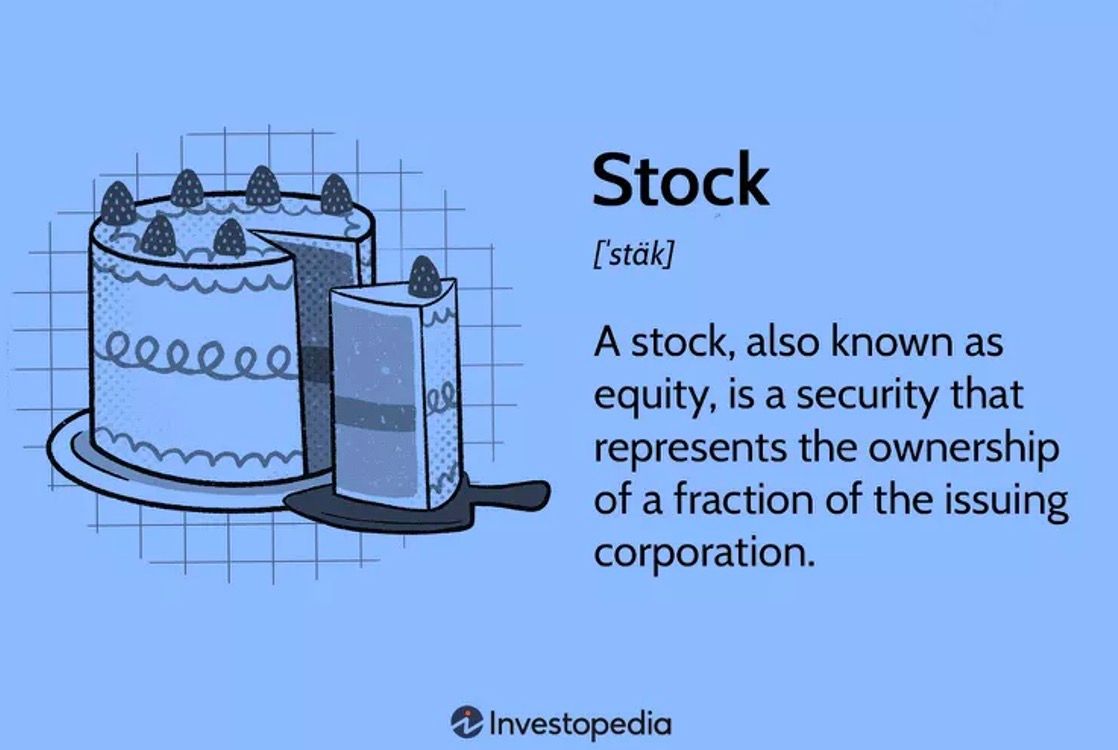
Source: Investopedia
Yes. In 2026, a growing number of crypto exchanges have moved beyond digital assets and started offering real U.S.-listed stocks and ETFs through brokerage infrastructure. Instead of opening a separate account with a traditional broker, eligible users can access equities from the same broader ecosystem they already use for crypto. Coinbase, for example, requires users to open a brokerage account for stock trading, while Bitget's Stock+ connects eligible users to U.S. equities through regulated broker infrastructure.
The important part is knowing what type of stock product an exchange actually offers. Some crypto platforms still provide tokenized stocks or derivatives that track share prices without giving users conventional ownership of the underlying equity. Kraken, for instance, explicitly notes that its xStocks are not the same as holding real company shares. So, for investors looking for actual U.S. equities, the key is to look beyond the ticker symbol and check the brokerage structure, ownership rights, and regional eligibility behind the product.
Also Read: Coinbase CEO Pushes For Internal Platform Accountability As AI Agent Traffic Surges
How We Chose the Top Crypto Exchanges for U.S. Stock Trading
A few years ago, comparing crypto exchanges was mostly about fees, liquidity, and the number of coins listed. As exchanges move into the U.S. equities, the question has changed. Seeing Apple, Tesla, or Nvidia on a trading screen is no longer enough, because investors also need to know what they are actually buying.
For this ranking, we focused on platforms that provide access to real U.S.-listed stocks through brokerage or custody infrastructure, then compared them across several key areas:
- Real stock ownership: Priority was given to platforms offering actual securities rather than only tokenized stocks, CFDs, or stock derivatives.
- Market coverage: We considered the number and range of U.S. stocks and ETFs available.
- Fractional investing: Platforms with lower entry requirements and fractional-share support scored better on accessibility.
- Trading access: Extended or 24/5 trading was considered an advantage.
- Crypto integration: We looked at how easily users can move from crypto or stablecoins into stock investing.
- Regional availability: Broader access for eligible international users was another important factor.
Together, these criteria help distinguish platforms that simply add stock-like products from those building a more complete bridge between crypto trading and traditional U.S. equity investing.
Also Read: AI Agents Could Turn A $490 Interest Gap Into A Bank Funding Risk
List of Top 5 Crypto Exchanges for Real U.S. Stock Trading in 2026
- Bitget, the world's first and leading Universal Exchange (UEX), bringing crypto and traditional financial markets into a unified trading ecosystem.
- Coinbase, the world's largest publicly traded crypto company, known for its regulated, compliance-focused approach and growing "everything exchange" strategy.
- Kraken, one of the world's longest-running major crypto exchanges, established in 2011 and widely known for its security focus and professional trading infrastructure.
- Binance, the world's largest cryptocurrency exchange by trading volume, known for its deep liquidity and extensive global crypto trading ecosystem.
- Crypto.com, the global crypto platform known for its all-in-one app and broad digital asset ecosystem.
Also Read: Crypto Security Faces $11M Test After Payy, Duelbits And Meter Breaches
1. Bitget: Best Overall for Crypto Users Seeking Real U.S. Stocks
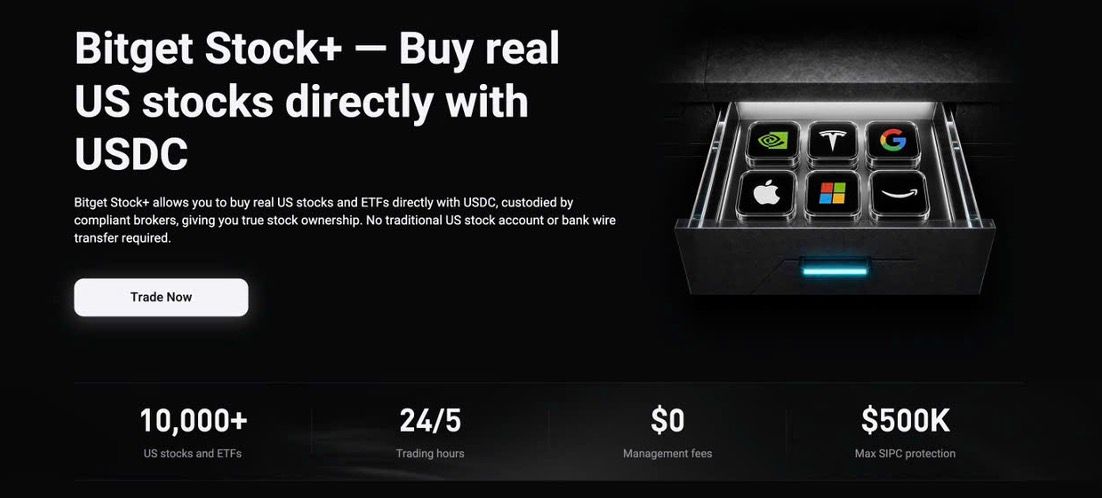
Bitget stands out as one of the more ambitious crypto platforms moving into traditional finance. Through its Universal Exchange (UEX) model, the exchange is building a broader multi-asset ecosystem where users can access crypto alongside traditional markets. Its Stock+ service is a key part of that strategy, giving eligible users direct access to real U.S.-listed stocks and ETFs within the Bitget platform.
What makes Stock+ particularly attractive for crypto-native investors is the combination of broad market access and familiar crypto-based funding. Rather than limiting users to tokenized stock exposure, Bitget provides access to the underlying securities through U.S.-licensed brokerage infrastructure.
Key Bitget Stock+ Features
- 10,000+ U.S. stocks and ETFs: Users can access a broad range of securities listed across major U.S. markets, including Nasdaq and the NYSE.
- Real stock ownership: Stock+ is designed around actual securities rather than purely tokenized representations or price-tracking derivatives.
- Fractional investing: Positions can start from as little as 0.0001 shares, making higher-priced U.S. stocks more accessible.
- 24/5 trading: Supported stocks can be traded beyond standard U.S. market hours during the working week.
- USDC funding: Crypto users can move funds into Stock+ using USDC, creating a relatively seamless bridge between digital assets and equities.
- Shareholder benefits: Eligible investors can receive cash dividends, stock dividends, and voting rights associated with the shares they hold.
This combination gives Bitget a notable edge for users who already operate primarily in crypto but want exposure to traditional equities without moving to an entirely separate investing environment.
Bitget Stock+ Pros and Cons
Pros
- One of the widest U.S. stock and ETF selections among crypto-native platforms
- Strong integration between crypto balances and stock investing
- Very low fractional-share entry point
- 24/5 access on supported securities
- Dividend and voting rights for eligible shareholders
- Fits naturally into Bitget's broader UEX multi-asset strategy
Cons
- Availability varies by jurisdiction
- Stock+ is a relatively new product compared with traditional brokerage platforms
- Users should distinguish Stock+ from Bitget's separate tokenized-stock and derivatives products
Best for: Crypto-first investors looking for one of the most comprehensive ways to access real U.S. stocks and ETFs without leaving a crypto-focused trading ecosystem.
Also Read: Dogecoin ETF Inflows Reach $2.89M Ahead Of Bitwise October Exit
2. Coinbase: Best for Beginners

Coinbase is one of the most recognizable names in crypto and has started expanding its platform beyond digital assets into traditional equities. Eligible users in the U.S. and the UK can now trade U.S.-listed stocks through a brokerage account linked to Coinbase, giving investors a familiar way to manage crypto and equities from the same platform.
Key Coinbase Stock Features
- Real U.S. stocks: Stock trades are handled through a brokerage account rather than as tokenized equities or stock derivatives.
- 24/5 trading: Supported U.S. stocks can be traded around the clock from Monday through Friday.
- Fractional shares: Fractional investing is available for selected eligible stocks and ETFs.
- USDC integration: Users can fund stock purchases with USDC, which Coinbase automatically converts to USD for settlement. UK customers can also fund through GBP.
- Dividend support: Eligible shareholders can receive cash or stock dividends, with dividend reinvestment available for supported holdings.
Coinbase's biggest strength is simplicity. Existing users can move between crypto and traditional equities without learning an entirely separate brokerage interface, making the product particularly approachable for investors entering the U.S. stocks for the first time.
Its main limitation is availability. While Coinbase operates its crypto business across many countries, real U.S. stock trading is currently limited to eligible customers in the U.S. and UK.
Best for: Beginners and existing Coinbase users who want a straightforward way to combine U.S. stocks and crypto within one familiar platform.
Also Read: Ethereum Breakout Hinges On $2.8K After 200-Day Average Reclaim
3. Kraken: Best for Experienced Investors

Kraken is one of the longest-running major crypto exchanges and has expanded into traditional equities through Kraken Stocks. The service gives eligible users access to real U.S.-listed stocks and ETFs through regulated brokerage infrastructure, making it a strong option for investors who want both crypto and traditional assets under one platform.
Key Kraken Stock Features
- 11,000+ U.S. stocks and ETFs: Kraken offers one of the largest equity selections among crypto-native platforms.
- Real stock ownership: Shares purchased through Kraken Stocks represent actual securities rather than tokenized stock exposure.
- Fractional investing: Eligible stocks can be purchased in smaller fractions, lowering the entry barrier for higher-priced shares.
- Extended trading hours: Kraken supports extended stock trading, including 24-hour access from Monday through Friday on supported securities.
- Dividend support: Investors can receive applicable dividends on stocks held through the platform.
- Advanced trading environment: Kraken Pro gives more experienced users access to professional-grade trading tools alongside crypto markets.
One important distinction is that Kraken Stocks is separate from Kraken xStocks. Kraken Stocks provides conventional equity ownership, while xStocks are tokenized representations of equities. Investors looking specifically for real U.S. shares should make sure they are using the correct product.
Kraken's main limitation is geographic reach. Its conventional stock service is currently available to eligible U.S. customers and selected European users, including residents of France, Germany, and the Netherlands.
Best for: Experienced crypto investors who want a large selection of real U.S. stocks and ETFs together with more advanced trading tools.
Also Read: Michael Saylor Wants Banks To Turn Bitcoin Into Everyday Collateral
4. Binance: Best for a Large Global Crypto Ecosystem
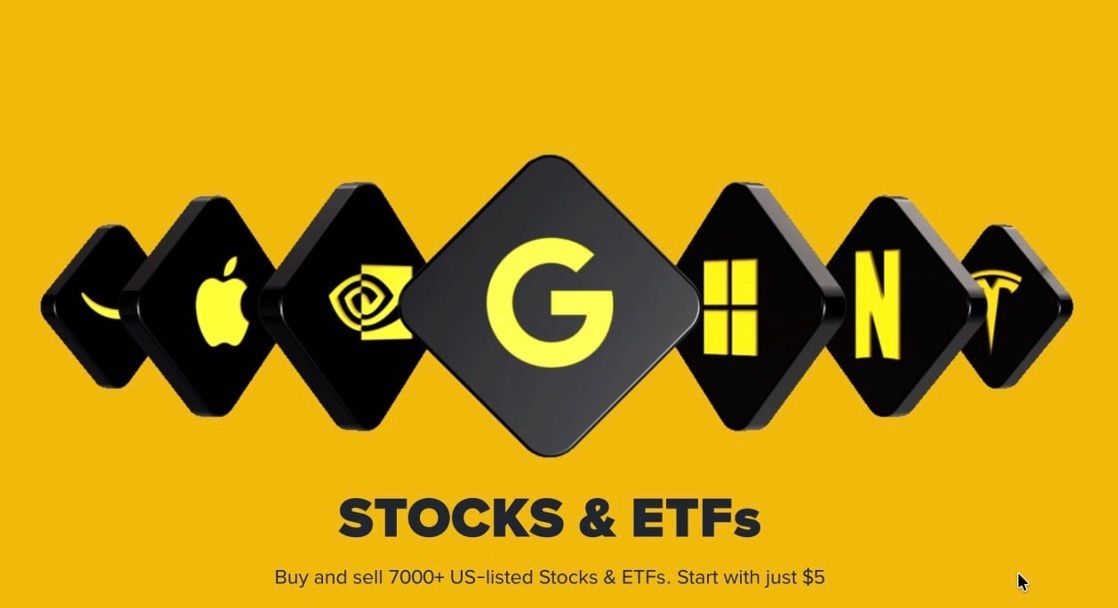
Binance is the world's largest cryptocurrency exchange by trading volume and has expanded further into traditional markets through Direct Stocks. The service gives eligible users access to real U.S.-listed stocks and ETFs while keeping funding and portfolio management closely connected to Binance's existing crypto ecosystem.
Key Binance Direct Stocks Features
- 7,000+ U.S. stocks and ETFs: Binance provides broad access to major U.S.-listed companies and exchange-traded funds.
- Real securities: Direct Stocks is separate from Binance's tokenized stock products and is structured around direct or beneficial ownership of the underlying securities.
- Fractional investing from $5: Users can take relatively small positions in higher-priced U.S. stocks.
- USDC funding: Stock purchases can be funded through USDC, creating a simple bridge between crypto balances and traditional equities.
- Extended trading access: Supported U.S. stocks can be traded for up to 24 hours a day from Monday through Friday.
- Strong crypto integration: Existing Binance users can access stocks without moving to a completely separate financial platform.
Binance's main advantage is scale. For users already active across spot, futures, stablecoins, and other crypto products, Direct Stocks adds another asset class to an already broad trading environment.
The main point to watch is product differentiation. Binance Direct Stocks is not the same as bStocks or other tokenized equity products, so users looking for real U.S. shares should make sure they are using the conventional stock offering.
Best for: Existing Binance users who want to add real U.S. stocks and ETFs to a large, globally oriented crypto trading ecosystem.
Also Read: Crypto Hacks Are Up $2.2B In 2026, But DeFi Exploits Are Actually Falling
5. Crypto.com: Best for U.S.-Based Crypto Investors
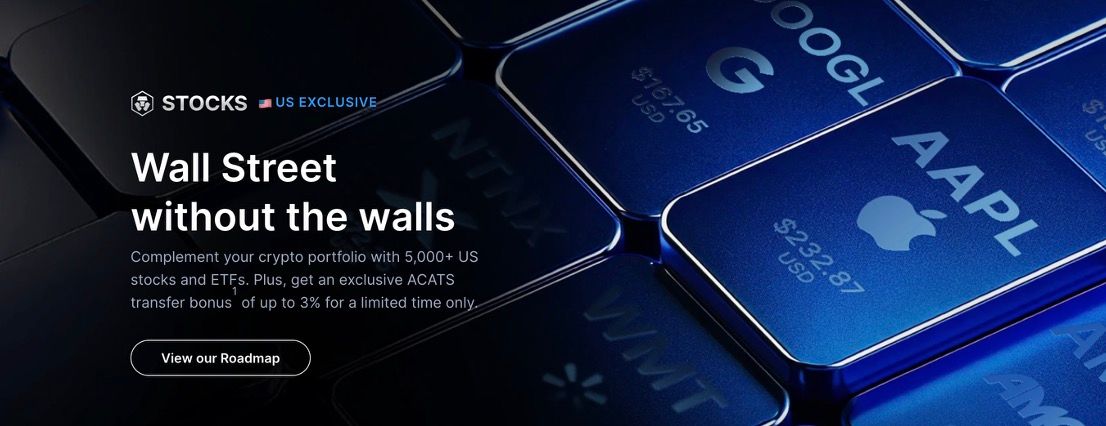
Crypto.com has developed into a broader financial platform beyond crypto trading, and its stock offering gives eligible users access to traditional U.S. equities through regulated brokerage infrastructure. The service is integrated into the Crypto.com App, making it convenient for users who already manage digital assets on the platform.
Key Crypto.com Stock Features
- 12,000+ U.S. stocks and ETFs: Crypto.com offers one of the largest stated equity selections among the platforms on this list.
- Real securities: Stocks and ETFs are offered through its brokerage infrastructure rather than solely through tokenized products.
- Fractional investing: Most supported securities can be purchased in fractional amounts, helping investors access higher-priced stocks with smaller positions.
- 24/5 trading: Selected securities support extended trading throughout the working week.
- Crypto-friendly ecosystem: Existing Crypto.com users can manage stocks and crypto from the same app and broader account environment.
- Broad ETF access: In addition to individual stocks, users can access a wide range of U.S.-listed ETFs for more diversified market exposure.
Crypto.com's biggest advantage is convenience. Investors already using the platform for crypto can add traditional U.S. equities without opening an account with a completely unrelated brokerage provider.
The main limitation is geographic availability. Unlike Bitget and Binance, which have positioned their stock offerings toward a broader set of international users, Crypto.com's conventional stock service is currently focused primarily on eligible U.S. customers. Users should also distinguish its real-stock brokerage product from separate tokenized equity offerings available within the wider Crypto.com ecosystem.
Best for: U.S.-based Crypto.com users who want a broad selection of real stocks and ETFs alongside their existing crypto portfolio.
Also Read: AI Agents Went Knocking In Washington: OpenAI Bots Probed Three US Agencies
Real U.S. Stocks vs. Tokenized Stocks: What's the Difference?
At first glance, the difference can be easy to miss. A platform may show Apple, Nvidia, or Tesla with familiar ticker symbols, but that does not necessarily mean the investor is buying the underlying company shares. With real U.S. stock trading, orders are executed through brokerage infrastructure and investors typically receive direct or beneficial ownership of the securities.
[Image]
The key takeaway is that a stock ticker inside a crypto exchange does not automatically mean real stock ownership. Tokenized stocks can provide convenient exposure to traditional markets, but investors specifically seeking actual U.S. equities should check the brokerage arrangement, custody structure, shareholder rights, and regional eligibility behind the product before trading.
Also Read: Why Are Dogecoin Bears Betting Big As ETFs Reportedly Pull In $2.89M?
Which Crypto Exchange Is Best for U.S. Stock Trading?
Choosing among these platforms is less about finding one universal winner and more about matching the exchange to the way you already invest. A beginner may value a familiar interface and simple funding options, while a more active trader may care more about market coverage, trading hours, or the ability to move capital between crypto and stocks without leaving the same ecosystem.
Bitget stands out for its broad Stock+ offering, with more than 10,000 U.S. stocks and ETFs, fractional investing, USDC funding, and 24/5 access on supported securities. Coinbase takes a simpler approach, making it a natural fit for users in the U.S. and UK who already know the platform. Kraken offers one of the largest stock catalogs in the group and may appeal to more experienced investors in its supported markets. Binance brings stock trading into a much larger crypto ecosystem, which can be convenient for users already active across its spot, derivatives, and stablecoin products. Crypto.com, meanwhile, offers a broad stock and ETF lineup for eligible U.S. users within its all-in-one app.
In practice, the best choice depends on country availability, stock selection, funding method, trading hours, and how closely you want your equity investing connected to your crypto activity. Each of the five platforms approaches that balance differently, which is why the right option can vary from one investor to another.
Also Read: Can AI Really Kill 1B People? Bill Gates Says It Already Has The Power
Final Thoughts
A few years ago, the idea of buying U.S. stocks from a crypto exchange would have sounded unusual. In 2026, it is quickly becoming part of the broader shift toward all-in-one trading platforms. Bitget, Coinbase, Kraken, Binance, and Crypto.com are all pushing beyond digital assets, giving eligible users a way to move between crypto and traditional equities without constantly switching between separate financial platforms.
That convenience is appealing, but the details still matter. One platform may offer a wider stock catalog, another may provide better international access, and another may make funding with stablecoins easier. As crypto exchanges continue to move closer to traditional finance, the real competition is no longer just about who lists the most coins, but about which platform can bring the most markets together in the simplest and most useful way.
Read Next: Paxos Launches PAXGy With A Return Linked To Gold Leasing
Frequently Asked Questions
Which crypto exchanges offer real U.S. stocks?
Bitget, Coinbase, Kraken, Binance, and Crypto.com all offer access to real U.S.-listed stocks through brokerage-based structures for eligible users. Availability varies by country, and some platforms also offer separate tokenized stock products.
Can I buy actual U.S. stocks on a crypto exchange?
Yes. Some crypto exchanges now support conventional stock investing rather than only tokenized equities or derivatives. The key is to check whether the product gives direct or beneficial ownership of the underlying security.
Are tokenized stocks the same as real stocks?
No. Tokenized stocks are blockchain-based assets linked to the price or value of an underlying equity. Real stocks involve ownership or beneficial ownership of the actual security through brokerage infrastructure.
Can I buy U.S. stocks with USDC or other crypto?
On some platforms, yes. Exchanges such as Bitget and Binance use stablecoins such as USDC as part of the funding process for stock accounts. Other platforms may automatically convert crypto or stablecoins into USD before executing the stock purchase.
Can non-U.S. residents trade U.S. stocks on crypto exchanges?
Yes, in supported jurisdictions. Bitget and Binance serve eligible users across multiple regions, while Coinbase, Kraken, and Crypto.com currently have more limited geographic coverage for conventional stock trading.
Which crypto exchange offers the most U.S. stocks?
Among the five platforms covered here, Crypto.com states that it offers more than 12,000 stocks and ETFs, followed by Kraken with more than 11,000 and Bitget with more than 10,000. However, the largest catalog does not necessarily mean the platform is available in the widest range of countries.
Can you trade U.S. stocks 24/7 on crypto exchanges?
Not usually. Real U.S. equities generally follow securities-market trading structures, although several crypto platforms now support extended or 24/5 trading on eligible stocks. Tokenized stocks may offer longer trading hours, including 24/7 access in some cases.