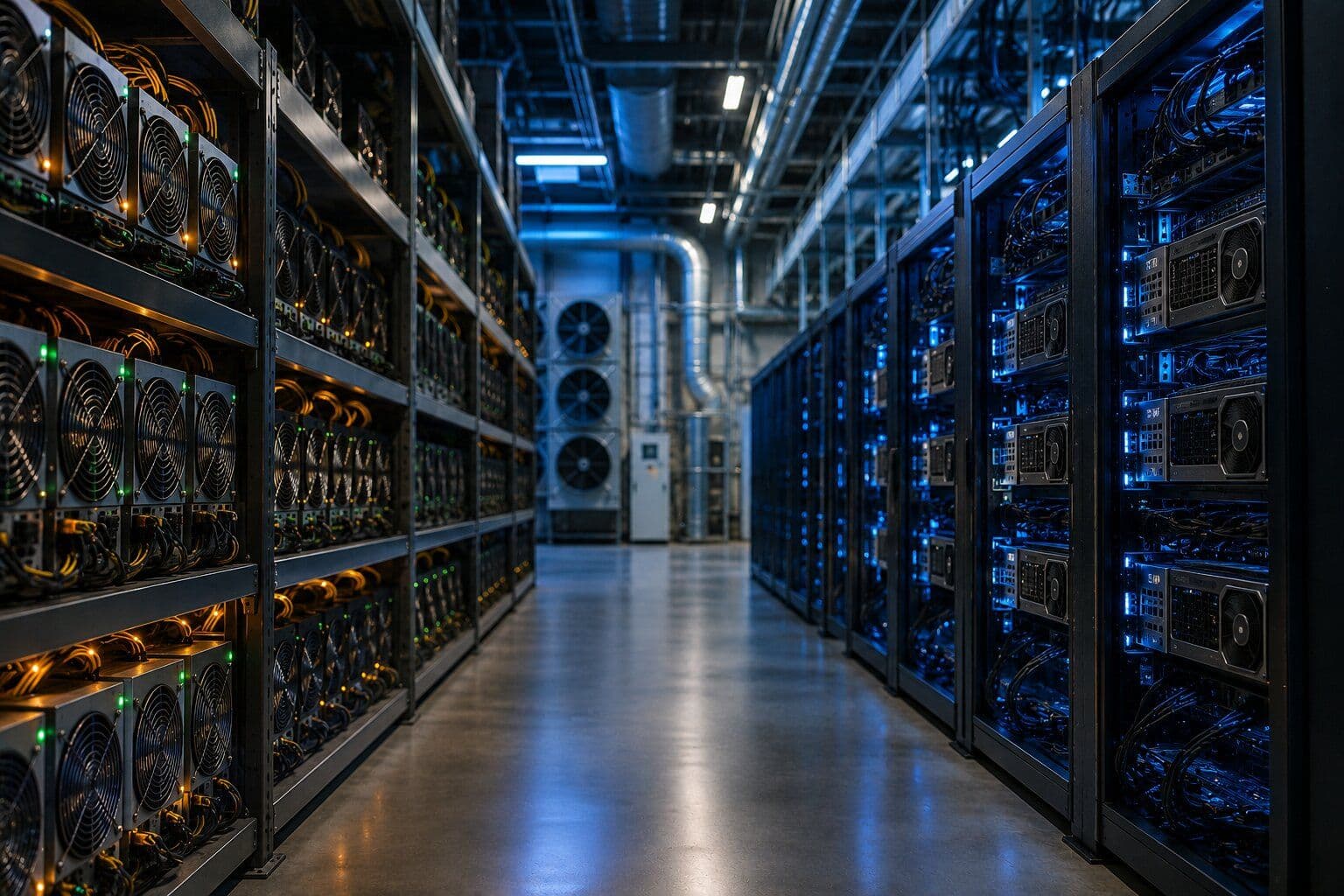
Bitcoin (BTC) mining companies are converting a growing share of their physical infrastructure to AI data center operations.
The transition, once described as experimental, has become a recognized revenue line for several publicly traded miners in 2026.
Why Miners Are Making The Move
Bitcoin miners own large-scale power infrastructure, physical data center space, and cooling systems. Those assets are the same ones AI companies need to run GPU clusters. The incremental cost of repurposing existing mining facilities is substantially lower than building new data centers from the ground up. Mining margins have compressed as difficulty has risen following the April 2024 halving.
AI hosting contracts offer more predictable revenue than BTC block rewards, which fluctuate with both price and difficulty. Several miners have signed multi-year hosting agreements with AI and machine learning companies, locking in dollar-denominated revenue that does not depend on BTC price movements.
Also Read: Viktor AI Raises $75M To Deploy A Virtual Coworker Inside Slack And Microsoft Teams
Companies Leading The Shift
Hut 8 is among the most visible examples of this transition. Hut 8's stock has risen 112% in 2026, trading near $97 as of May 20, according to data from MarketBeat. The company has been explicit about its AI hosting ambitions in public filings and investor communications.
Core Scientific signed a major AI data center contract with CoreWeave in 2024, a deal that has become a reference point for the broader sector. CleanSpark, Cipher Mining, and Riot Platforms have all disclosed varying levels of AI hosting evaluation or active deployment in recent quarters. The common thread is that miners with newer, higher-density power connections are better positioned to run modern GPU clusters than those with older, lower-density sites.
Also Read: Google Drops 3 Agentic AI Bombs At I/O 2026, Spark Steals Show
Background
The idea of miners diversifying into AI hosting first gained widespread attention in late 2023, when Core Scientific's CoreWeave deal gave the concept a concrete financial model. Prior to that, most miners had treated their infrastructure as a single-use Bitcoin production asset.
The 2024 halving, which cut the block reward from 6.25 BTC to 3.125 BTC, accelerated the urgency of finding alternative revenue. At the same time, the rapid growth of AI model training and inference created a GPU shortage that made any owner of available power and cooling space a potential partner for AI companies.
Also Read: Zcash Walks Through The $560 Door It Couldn't Open For Months
The Economics Of Dual-Use Infrastructure
A mining facility running BTC earns revenue in BTC, which is then converted to dollars at market rates. A facility running GPU clusters for an AI customer earns a fixed dollar rate per GPU-hour under a hosting agreement. The dollar-denominated model is less volatile but also less potentially lucrative during BTC bull markets. Miners are generally not abandoning Bitcoin mining entirely.
Instead, they are allocating incremental capacity additions to AI rather than to more ASICs. A miner building a new 100-megawatt facility in 2026 is more likely to split it 50/50 between BTC mining and AI hosting than to dedicate it entirely to either use case. This hedging strategy smooths revenue but also means miners are no longer pure-play Bitcoin exposure for equity investors.
Also Read: XRP Builds $270M ETF Lead Over Solana, CLARITY Act May Push It Wider
Risks And Limitations
The AI hosting pivot is not without complications. GPU hardware is expensive and depreciates quickly as newer chip generations arrive. Miners who invest in current-generation H100 or H200 clusters may find those assets partially obsolete within 24 months if Nvidia's next generation ships on schedule. Long-term hosting contracts provide revenue certainty but can lock miners into hardware commitments that age badly.
There is also a skill gap to manage. Running an AI data center requires a different operational profile than running an ASIC mining farm. Several miners have addressed this by hiring data center engineers from the cloud industry rather than promoting from within their mining teams.
How well those teams integrate will determine whether the AI pivot becomes a durable business line or an expensive experiment.
Read Next: Bitget Opens Gold Fast Or Go Home Contest To Crypto Traders