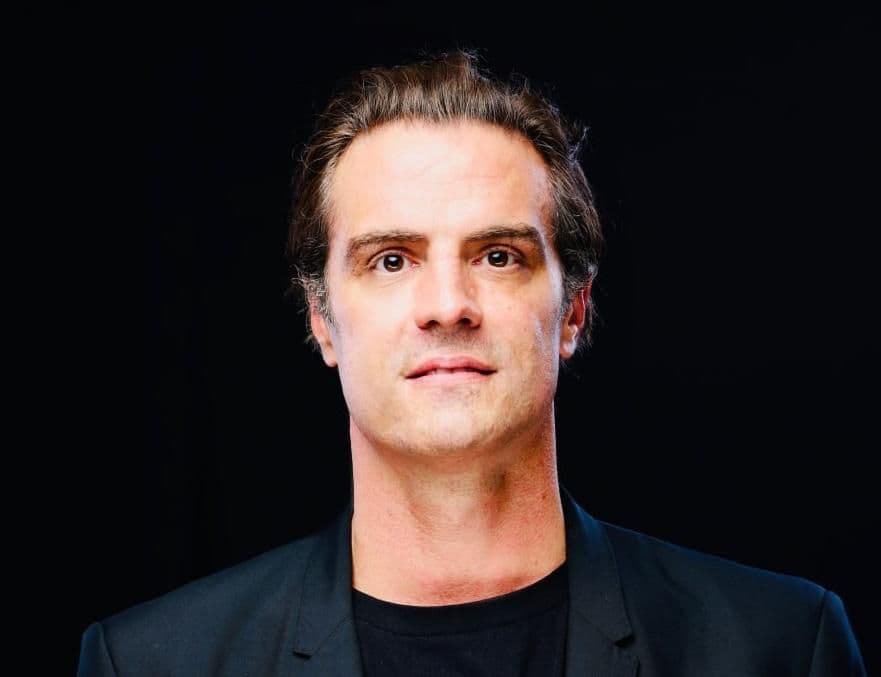
Standard Chartered’s venture arm is moving closer to assembling a full institutional on-chain finance stack, with SC Ventures Operating Member Harald Eltvedt saying the group is “very, very close” to building a bank-grade ecosystem spanning custody, tokenization, liquidity, financing and settlement.
The comments mark one of the clearest indications yet that SC Ventures’ recent digital asset investments are part of a broader market-structure strategy, rather than isolated bets across crypto infrastructure.
In an interview with Yellow.com, Eltvedt said SC Ventures’ investments across companies such as GSR, Keyrock, Libeara, TruYields and Project 37C are designed to build an end-to-end institutional digital asset stack. The strategy comes as banks, asset managers and market makers increasingly focus on tokenized real-world assets, stablecoin settlement and secondary liquidity for on-chain financial products.
SC Ventures Builds The Institutional Stack
Asked whether SC Ventures was close to launching a fully integrated bank-grade ecosystem where institutional clients can issue, stake and swap assets without relying entirely on legacy rails, Eltvedt said the firm was already nearing that direction.
“I would say very, very close. You got it. I think you understand our strategy, which is exactly that,” he said.
Eltvedt said the firm’s portfolio moves were “very far from being random” and part of an “end-to-end strategy” around the institutional digital asset stack.
That stack increasingly appears to cover the major components needed for regulated on-chain finance. Zodia Custody gives Standard Chartered exposure to digital asset custody. Zodia Solutions is being positioned as a technology infrastructure platform. Libeara focuses on tokenization.
GSR and Keyrock bring market-making capabilities. TrueFin adds an on-chain institutional yield component, while 37xC brings prime brokerage and financing infrastructure.
The strategy suggests SC Ventures is not merely trying to participate in tokenized markets, but to help define how those markets operate for institutions.
Custody Risk Moves Closer To The Bank
A key part of the strategy is the restructuring of Zodia Custody. Standard Chartered has made a non-binding offer to acquire Zodia Custody’s regulated activities into its core Financing and Securities Services division, while Zodia Solutions is being developed as a separate infrastructure platform under SC Ventures.
Eltvedt said the move reflects how much the institutional environment has changed since Zodia Custody was created in 2019 and 2020, when many banks were still reluctant to touch crypto.
Also Read: Wall Street May Be Missing The Biggest Winner Of The $4 Trillion Tokenization Boom, SC Says
“The reason why we’re doing that is because banks are much better equipped nowadays in 2026 than they were six years ago,” he said. “And as a matter of fact, they are the rightful owners of custody solutions that can do it at scale.”
The distinction is important. Custody risk is moving closer to the regulated bank balance sheet, while software infrastructure remains in a venture-style structure that can continue integrating new technology.
That model could become more common as banks separate regulated financial activities from the technology platforms that support them.
Liquidity Becomes The Missing RWA Layer
SC Ventures’ investments in GSR and Keyrock also point to a more specific bet: tokenized real-world assets will need deeper secondary-market liquidity before they can scale.
Eltvedt said market makers are key infrastructure participants and natural enablers of the real-world asset market. He said Keyrock and GSR were selected because they had built long-standing relationships, venue access and institutional capabilities that would be difficult for SC Ventures to replicate directly.
The same logic applies to Libeara, SC Ventures’ tokenization platform, which has tokenized more than $1 billion in regulated assets. Eltvedt acknowledged that tokenized assets have seen more traction in primary issuance than in secondary trading.
“We’ve seen a lot of traction in issuing, you know, a primary market for these tokens and we don’t see a lot of activity in the secondary market,” he said.
He added that bringing in GSR was not about forcing secondary trading, but “enabling a secondary market.”
That could be critical for tokenized treasuries, money market funds and other regulated assets. Without active market makers, tokenization risks becoming a more efficient issuance wrapper rather than a genuinely liquid market structure.
Stablecoins And Settlement Complete The Picture
Eltvedt also linked the growth of tokenized assets to stablecoin adoption and 24/7 settlement. He said SC Ventures recently announced Anchorpoint in Hong Kong and has relationships with U.S. dollar stablecoin providers.
For institutional tokenization, that settlement layer may be as important as the asset itself. Tokenized securities can only deliver their full benefits if cash settlement also moves on-chain, enabling around-the-clock transfers and more efficient markets.
Eltvedt framed compliance and risk controls as central to this model, not as afterthoughts. He said ventures must integrate regulatory requirements from the beginning because early shortcuts can create later failures.
“There is certain things that you absolutely need to integrate day zero, as a matter of fact, not day one, because otherwise they will bite you back,” he said.
The result is a vision of on-chain finance that looks different from crypto-native DeFi. It is more segmented, more regulated and more closely tied to banks, custodians and licensed market participants.
For SC Ventures, that may be the point. If tokenized real-world assets scale, the winners may not be the firms that move fastest, but those that can combine compliance, custody, liquidity, financing and settlement into one institutional-grade framework.
Eltvedt’s comments suggest Standard Chartered’s venture arm is positioning itself for exactly that role.
Read Next: Bitcoin’s Road To $500K Gets Longer, Standard Chartered Explains Why