
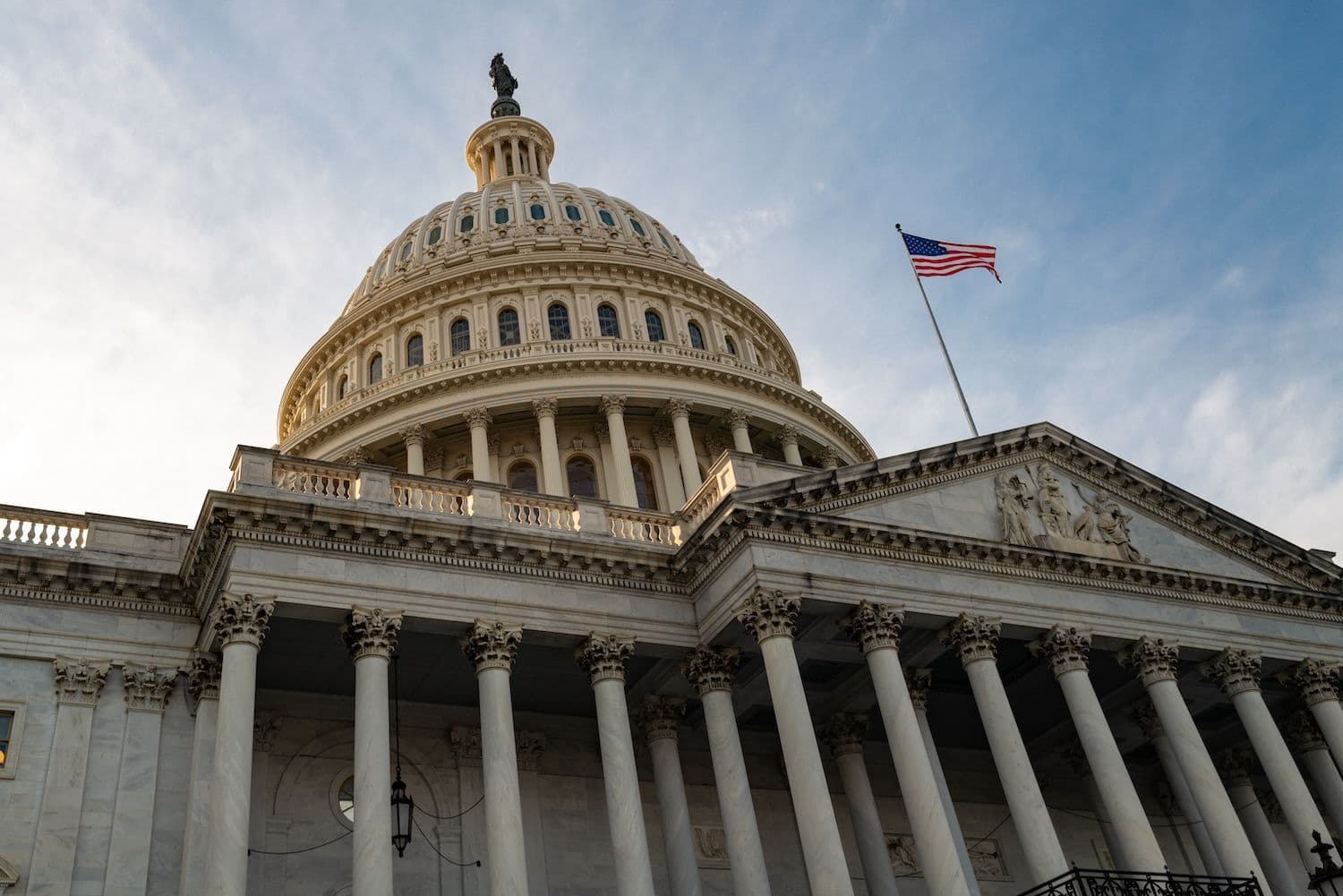
The House Financial Services Committee will convene on March 25 to hold a hearing titled "Tokenization and the Future of Securities: Modernizing Our Capital Markets," the most direct congressional examination to date of how blockchain infrastructure should be integrated into the existing architecture of U.S. equity, bond, and fund markets.
The hearing arrives four days after the SEC approved Nasdaq's rule change allowing tokenized securities to trade alongside traditional shares on the same order book.
It arrives six weeks before the Senate Banking Committee is expected to begin markup of the CLARITY Act, the comprehensive market structure legislation that would, for the first time, draw statutory boundaries between digital commodities and digital securities.
The convergence of these three events within a single legislative quarter has no precedent in the history of digital asset regulation.
The stakes extend well beyond the cryptocurrency industry.
SEC Chairman Paul Atkins told the House Financial Services Committee on Feb. 11 that America's capital markets total $124.3 trillion in value and are "the deepest and most liquid in the world." In the same testimony, Atkins stated that "distributed ledger technology and the tokenization of financial assets, including securities, have the potential to transform our capital markets."
He announced that the SEC and the CFTC, under Chairman Mike Selig, would jointly operate "Project Crypto," a token taxonomy initiative designed to offer investors and innovators a clear understanding of their regulatory obligations while Congress completes its legislative work.
The total value of tokenized real-world assets on public blockchains has already surpassed $12 billion as of March 2026, more than doubling from $5 billion at the start of 2025. Tokenized U.S. Treasuries alone have reached a record $11 billion.
These figures remain a rounding error against the $124.3 trillion that Atkins cited. The question before Congress is whether the legal infrastructure exists to allow that gap to close, and if not, what needs to change.
What the March 25 Hearing Is Actually About
The hearing title is precise: "Tokenization and the Future of Securities." It is not about Bitcoin (BTC) price action, stablecoin regulation, or decentralized finance protocols.
The subject is the mechanical integration of blockchain-based recordkeeping into the issuance, trading, and settlement of regulated securities, the stocks, bonds, and funds that constitute the core of America's capital markets.
The hearing follows a prior House Financial Services session in June 2024 titled "Next Generation Infrastructure: How Tokenization of Real-World Assets Will Facilitate Efficient Markets," where witnesses including Nadine Chakar, then Global Head of Digital Assets at the Depository Trust and Clearing Corporation, and Carlos Domingo, CEO of Securitize, testified on the operational mechanics of bringing traditional financial instruments onto blockchain rails.
Chakar emphasized the potential for automated margin calculation and collateral movement.
Domingo urged Congress to prioritize legislation that would enable compliant tokenization rather than risk falling behind European markets where regulatory frameworks for tokenized securities are already operational.
The March 25 session builds directly on that foundation. Committee Chairman French Hill has appeared on Bloomberg and Fox Business in recent weeks discussing the intersection of digital assets and capital markets.
The committee's agenda for the same week includes a separate Digital Assets Subcommittee hearing titled "Innovation at the Speed of Markets: How Regulators Keep Pace with Technology," as listed by Crowdfund Insider.
The paired hearings suggest Congress is approaching tokenization not as a cryptocurrency curiosity but as a capital markets infrastructure question with implications for settlement speed, investor protection, and U.S. competitiveness.
The SEC's Transformation: From Adversary to Collaborator
The contrast between the SEC's current posture and its stance under former Chairman Gary Gensler is difficult to overstate.
Under Gensler's leadership from 2021 through 2024, the SEC pursued what the industry widely described as "regulation by enforcement." The agency filed dozens of high-profile cases against token issuers, exchanges, and service providers while declining to issue new rules or formal guidance tailored to digital assets.
Gensler's consistent position was that existing securities laws were "sufficiently clear" and that the vast majority of digital assets were already securities under the Supreme Court's 1946 Howey test.
The Atkins SEC has reversed this approach in both rhetoric and action. In his Feb. 11 testimony, Atkins announced that he and CFTC Chairman Selig would jointly develop a "token taxonomy" through Project Crypto and consider "exemptions that would allow market participants to move and transact on-chain."
He described an "innovation exemption" for certain cryptocurrency-related activities that the SEC was developing. Commissioner Hester Peirce, who leads the agency's cryptocurrency task force, has called the DTC's tokenization pilot "a promising step along the tokenization journey" and confirmed the SEC staff is working on a limited innovation exemption for certain tokenized securities.
The most concrete evidence of this shift is the Nasdaq approval itself. On March 18, the SEC approved a rule change allowing Nasdaq to trade Russell 1000 stocks and major index ETFs in tokenized form, with tokenized shares carrying the same ticker, CUSIP number, and shareholder rights as their traditional counterparts.
Three months earlier, in December 2025, the SEC's Division of Trading and Markets issued a no-action letter authorizing the Depository Trust Company to operate a three-year tokenization pilot for securities held in its custody.
The SEC's Investor Advisory Committee then held a March 12 meeting that included discussion of a potential recommendation regarding the tokenization of equity securities. These are not theoretical discussions.
They are operational approvals and active policy development.
Read also: [Why Solana's Lily Liu Killed Blockchain Gaming](Why Solana's Lily Liu Killed Blockchain Gaming)
The CLARITY Act: From Agency Guidance to Codified Law
The regulatory shift at the SEC, while substantial, operates on agency discretion. A future SEC chairman could reverse the current posture as quickly as Atkins reversed Gensler's.
The institutional capital that the tokenization thesis requires, the pension funds, sovereign wealth funds, and insurance company allocations measured in hundreds of billions, requires something more durable than a favorable agency head. It requires statute.
The Digital Asset Market Clarity Act of 2025, known as the CLARITY Act (H.R. 3633), was passed by the House and is now the subject of parallel Senate committee markups.
The bill does six things that matter for institutional capital deployment. First, it classifies digital assets into three categories: securities (under SEC jurisdiction), digital commodities (under CFTC jurisdiction), and permitted payment stablecoins (under shared oversight).
Second, it establishes registration and disclosure requirements for cryptocurrency trading platforms and token issuers. Third, it creates a structured framework for when a digital asset transitions from a security in primary issuance to a commodity in secondary trading.
Fourth, it resolves the jurisdictional ambiguity that has paralyzed institutional compliance departments for years.
Fifth, it includes anti-money laundering provisions that the Senate Banking Committee has described as "the strongest illicit finance framework Congress has ever considered for digital assets." Sixth, it establishes a joint SEC-CFTC Advisory Committee to harmonize requirements.
Senator Cynthia Lummis (R-WY) stated on March 18 that the Republican side of the Senate Banking Committee is planning to initiate markup in late April, after the Easter recess.
Lummis declared the bill "must be completed by the end of the year." The thorniest unresolved issue has been stablecoin yield: an earlier draft prohibited stablecoin issuers from paying interest solely for holding a balance, a provision that drew opposition from Coinbase and cryptocurrency industry advocates.
Lummis indicated that a compromise on the yield question has been "largely reached," and that disputes over decentralized finance provisions have been "properly addressed." Polymarket pricing shows a 62% probability that the CLARITY Act will be signed into law in 2026.
The Stablecoin Foundation: Why GENIUS Came First
The CLARITY Act does not exist in a legislative vacuum. It builds on the GENIUS Act, signed into law on July 18, 2025, which created the first federal regulatory framework for payment stablecoins.
The GENIUS Act requires stablecoin reserves to be limited to high-quality liquid assets like cash, Treasury bills, and short-term government bonds. It established the regulatory plumbing that tokenized settlement depends on: if tokenized stocks and bonds are to settle on-chain, the cash side of the transaction requires a regulated on-chain dollar.
The stablecoin market has responded accordingly.
Tether (USDT) and Circle (USDC) collectively dominate the market, with stablecoin capitalization exceeding $267 billion as of late 2025 according to CoinDesk data.
Circle's USYC token, a tokenized U.S. Treasury product, overtook BlackRock's BUIDL fund in March 2026 to become the largest tokenized Treasury product at approximately $2.2 billion in assets, driven partly by Binance introducing the token as off-exchange collateral for institutional derivatives trading.
BlackRock's BUIDL holds roughly $2.85 billion and listed on Uniswap in February 2026, the first time a major institutional tokenized fund could be accessed through decentralized finance infrastructure.
The connection between the GENIUS Act and the CLARITY Act is structural.
The former provides the regulated payment rail. The latter provides the regulated asset classification.
Together, they create the complete framework needed for tokenized securities to settle against tokenized dollars under clear statutory authority.
Read also: The $8M AI Streaming Scam That Fooled Major Platforms For 7 Years
The RWA Market: Where the Capital Already Sits
The tokenized real-world asset market has grown with or without legislative clarity, but the pace and composition of that growth reveals the constraints that legislation would remove.
Total tokenized RWAs on public blockchains surpassed $12 billion by March 2026, with tokenized U.S. Treasuries accounting for $5.8 billion according to that analysis.
A separate CoinDesk report places the tokenized Treasury market at $11 billion, reflecting different measurement methodologies and inclusion criteria.
Ethereum (ETH) hosts over 60% of all tokenized RWAs by value, with Stellar, Polygon, and Avalanche capturing smaller but growing shares.
The composition is telling. Treasuries and money market funds dominate because they are the lowest-risk, most standardized assets available, the easiest to tokenize and the least likely to generate regulatory friction.
Private credit tokenization grew 180% year-over-year, with Centrifuge, Maple Finance, and Goldfinch originating over $3.2 billion in on-chain loans.
MakerDAO (now Sky) holds over $2 billion in RWA collateral backing DAI.
But equities, corporate bonds, real estate, and private equity, the asset classes that collectively constitute the bulk of the $124.3 trillion U.S. capital market, remain barely represented on-chain.
The gap exists not because the technology cannot support these assets, as the Nasdaq approval has now demonstrated, but because the legal framework has not provided the certainty institutional allocators require.
A pension fund manager cannot allocate beneficiaries' capital to a tokenized bond product if the classification of that product could change through an enforcement action rather than a legislative process. The CLARITY Act is designed to close that gap.
What the Opposition Says
The narrative of inevitable tokenization adoption requires scrutiny. The CLARITY Act faces substantial opposition, and its passage is not assured.
The North American Securities Administrators Association (NASAA), representing state securities regulators, has stated it "is unable to support the CLARITY Act in its current form," warning that Title I provisions would "weaken existing state authority to combat investor harm stemming from cases of fraud and abuse in digital assets transactions."
NASAA identified contradictions in the bill's definitional framework, particularly the treatment of "ancillary assets" that derive value from entrepreneurial efforts yet are classified as non-securities.
The American Bankers Association has lobbied consistently against the stablecoin yield provisions, arguing that yield-bearing stablecoins on unregulated platforms create regulatory arbitrage disadvantaging traditional banks.
In the prior congressional hearing on tokenization, Professor Hilary Allen of American University Washington College of Law testified that "public permissionless blockchains suffer from inescapable inefficiencies and operational fragilities, making them unsuitable for real-world financial assets."
She urged lawmakers not to "pin your hopes on tokenization as a means of improving financial inclusion."
The Senate reconciliation process also presents procedural obstacles. The Senate Banking Committee and the Senate Agriculture Committee are marking up separate portions of the bill, covering SEC-related and CFTC-related provisions respectively.
These must be combined, reconciled with each other, and then reconciled with the House-passed version.
FinTech Weekly reported that every observer covering the legislation cites the November 2026 midterm elections as the de facto deadline, since midterms historically disadvantage the sitting president's party and could shift legislative priorities entirely.
Read also: Bitcoin Mining Difficulty Falls 7.76%
The Timeline and What It Means for Capital Flows
If the CLARITY Act passes and the regulatory risk premium evaporates as proponents expect, the immediate market effects are identifiable if not precisely quantifiable.
BCG and Ripple project the tokenized asset market could reach $18.9 trillion by 2033, while McKinsey estimates the market may reach $2 trillion by 2030.
Standard Chartered CEO Bill Winters told a conference in late 2025 that "we'll eventually see the majority of transactions being settled on the blockchain." JPMorgan analysts have described CLARITY Act passage by midyear as a positive catalyst for digital assets, citing regulatory clarity, institutional scaling, and tokenization growth as key drivers.
The infrastructure competition is already accelerating. Nasdaq has partnered with Kraken's parent company Payward to distribute tokenized stocks globally.
Intercontinental Exchange, parent of the New York Stock Exchange, announced plans for its own tokenized securities platform. The DTCC has partnered with Digital Asset to tokenize Treasury securities on the Canton Network. J.P. Morgan's Kinexys platform is processing billions in tokenized collateral for repo trades.
Franklin Templeton moved its U.S. Government Money Market Fund onto the Solana (SOL) blockchain. These are not pilot programs. They are production deployments by the largest financial institutions in the world.
The risk is that these projections confuse possibility with inevitability. The CLARITY Act may not pass this session.
The stablecoin yield compromise may unravel. State regulators may challenge federal preemption.
The operational risks of on-chain settlement, including smart contract vulnerabilities, blockchain outages, and cross-chain interoperability failures, have not been stress-tested at the scale of U.S. capital markets.
The tokenized asset market has grown impressively from a low base, but $12 billion against a $124.3 trillion market is a penetration rate of less than 0.01%.
What the Data Supports
The observable facts as of March 21, 2026 are as follows. The SEC has shifted from adversarial enforcement to active collaboration on tokenized securities, as demonstrated by the Nasdaq approval, the DTC no-action letter, and Chair Atkins's public statements.
The House is holding a dedicated hearing on tokenization of securities on March 25. The CLARITY Act, which would codify the jurisdictional boundaries between the SEC and CFTC for digital assets, is expected to enter Senate markup in late April.
The tokenized RWA market has grown from $5 billion to over $12 billion in fifteen months, with institutional participants including BlackRock, J.P. Morgan, Circle, and Franklin Templeton deploying production-grade products.
What the data does not support is a timeline certainty. The CLARITY Act's passage probability, per Polymarket, is 62%, not 100%. The Senate reconciliation process between two committees has not begun.
The opposition from state regulators and the banking lobby is substantive, not performative.
The infrastructure for tokenized settlement still operates in a hybrid model where trades clear conventionally on T+1 before being tokenized post-settlement, meaning the T+0 instant settlement promise remains aspirational for exchange-traded securities.
The direction of travel is clear. The pace is not.
The March 25 hearing, the April markup, and the operational rollout of Nasdaq's tokenized trading in the third quarter of 2026 will collectively determine whether the regulatory risk premium drops fast enough to unlock institutional capital at scale, or whether the industry spends another cycle waiting for the legal framework that its infrastructure has already outgrown.
Read next: Gold's Worst Week Since 1983
