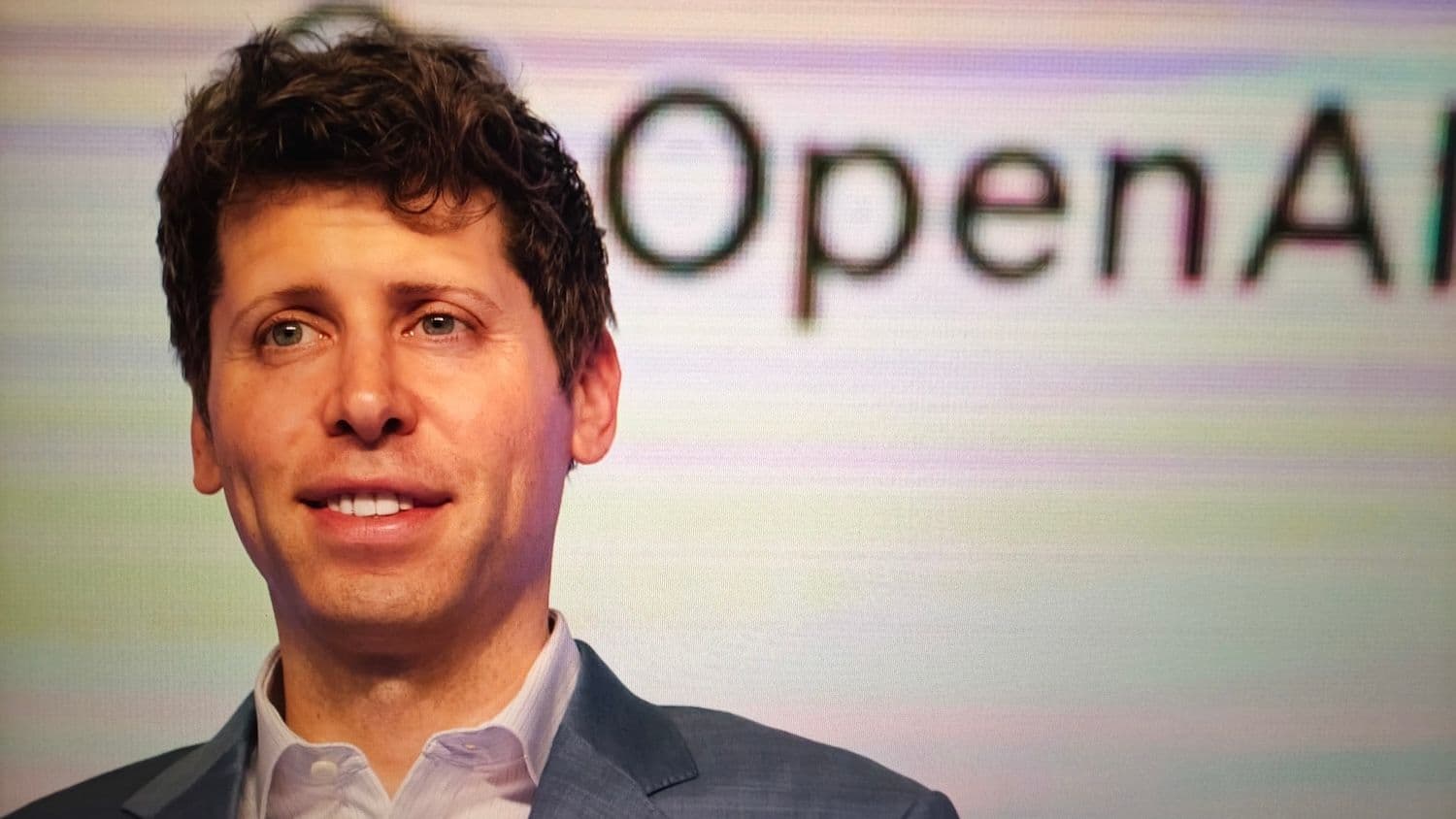
OpenAI is rolling out GPT-5.6 to wider users after Sam Altman said its Sol model uses far fewer tokens in agentic coding.
Key Points:
- GPT-5.6 Sol is 54% more token efficient on agentic coding tasks, Altman told CNBC.
- OpenAI is broadly releasing GPT-5.6 Sol, Terra and Luna after a limited partner launch.
- Altman said OpenAI worked with senior Trump administration officials before deployment.
OpenAI GPT-5.6
Altman told CNBC on Thursday that GPT-5.6 Sol, OpenAI’s newest artificial intelligence model, is 54% more token efficient on agentic coding tasks.
He said the model is “as good or better” than competing systems already available, framing the release around cost as much as capability.
“Every enterprise now is thinking about spend and the value they're getting in exchange for AI, and this is what we really want to do,” Altman said.
OpenAI is releasing GPT-5.6 Sol, Terra and Luna broadly on Thursday after announcing the model family last month and first limiting access to a “small group of trusted partners” at the U.S. government’s request.
Altman said the company worked with Commerce Secretary Howard Lutnick, Treasury Secretary Scott Bessent and U.S. National Cyber Director Sean Cairncross during the approval process, which he described as a “collaborative back and forth.”
Also Read: Is Kalshi Turning Prediction Markets Into A Full Derivatives Exchange?
Altman AI
Altman said the government tested the model and raised problems for OpenAI to address before broader access began.
“If you want broad access, which we do, and you have powerful models, you really want to be able to be confident in your safety claims, because otherwise the world is going to get uncomfortable very fast,” he said.
The rollout comes as OpenAI remains in preliminary talks with the Trump administration about a possible government stake, though Altman said a Financial Times report about a proposed 5% holding included “a lot of inaccuracies.”
He also said he hoped AI regulation would become global, with broad access rather than a system that gives the U.S. a disproportionate advantage.
The competitive backdrop is tightening. Meta unveiled Muse Spark 1.1 on Thursday, calling it its strongest model for agentic and coding work, while SpaceX launched Grok 4.5 on Wednesday after acquiring xAI earlier this year.
OpenAI was founded as a nonprofit research company in 2015 and became a mainstream AI force after ChatGPT launched in 2022, drawing rivals including Anthropic, Google, Microsoft and Amazon into a broader race for enterprise and consumer AI demand.
Read Next: DeepSeek Turns Cheap AI Into A Problem For OpenAI And Anthropic