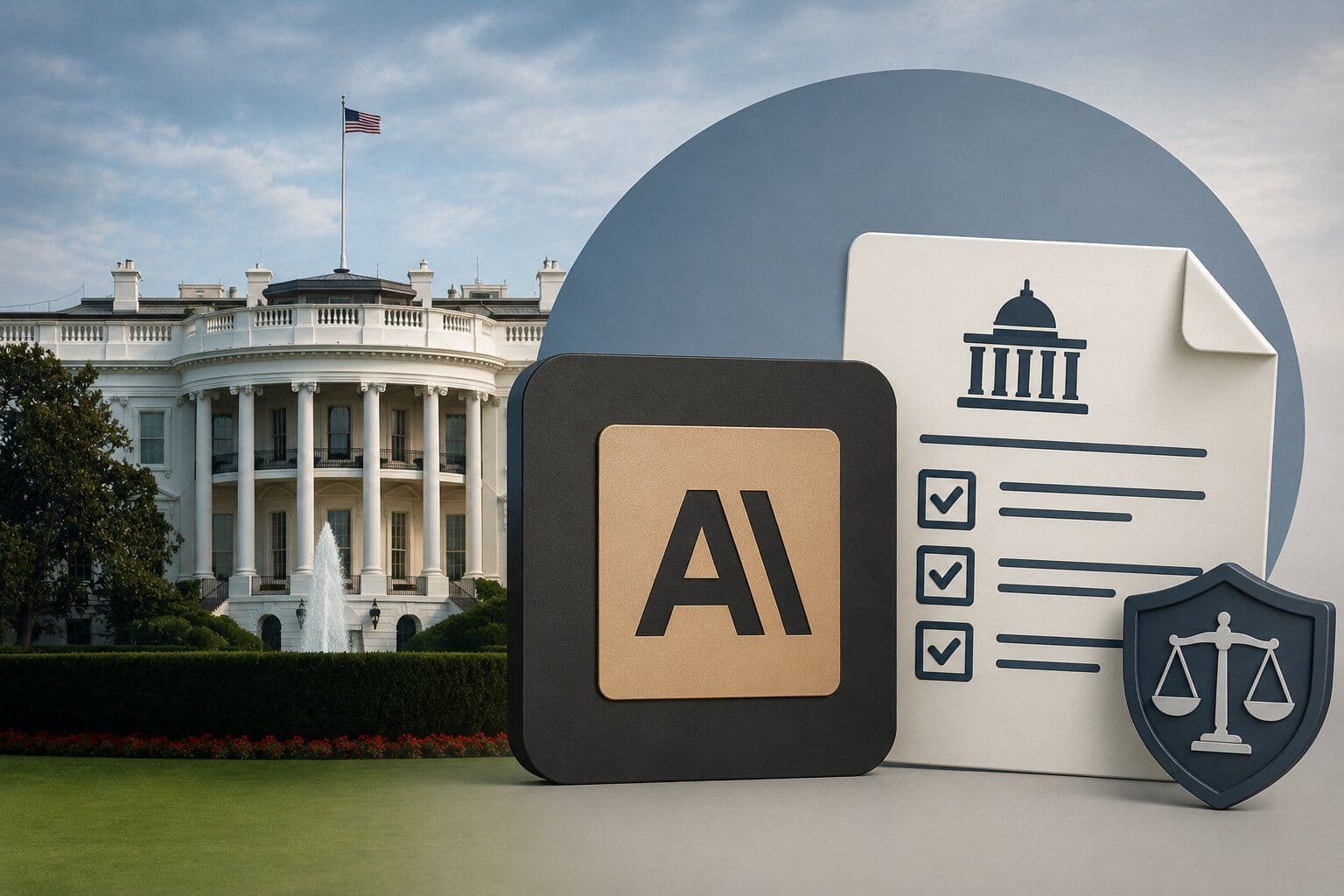
President Donald Trump on Friday stated that Anthropic does not pose a national security threat and described the company as behaving responsibly.
The comment came weeks after reporting suggested the administration had forced Anthropic to withdraw a model access proposal under government pressure.
According to Axios, which published a detailed analysis on June 18, the Trump administration entered office promising deregulation for AI but has in practice pursued selective interventions that constrain specific companies while favoring others.
The Gap Between Rhetoric and Policy
The report describes a pattern in which official White House statements emphasize industry freedom while behind-the-scenes actions limit what leading AI labs can offer to certain government or international customers.
The Anthropic access clampdown, referenced in the Washington Post's June 19 opinion piece, involved a specific proposal the company had made regarding expanded model access. The administration effectively blocked it. Trump's public comment clearing Anthropic of security threat status arrives in the aftermath of that episode.
This creates an ambiguous policy signal. Anthropic is not a security threat, according to the president. It was also recently compelled to withdraw a proposal under administration pressure. Both things appear to be true simultaneously.
The pattern mirrors the administration's broader approach to tech regulation. Public statements emphasize partnership and freedom. Private enforcement actions preserve executive control over which companies can do what with frontier AI systems.
Also Read: Amazon Buries Finished Sam Altman Biopic After $50B OpenAI Bet
Anthropic Gains Policy And Talent Spotlight As AI Race Intensifies
Anthropic was founded in 2021 by former OpenAI researchers, including Dario Amodei and Daniela Amodei. The company has raised several billion dollars and produces the Claude family of models. It has positioned itself as a safety-focused counterpoint to more commercially aggressive AI labs.
In mid-June 2026, Anthropic received high-profile attention on two separate fronts. First, reports circulated that the administration had pushed back on a specific access proposal. Second, Google DeepMind vice president John Jumper announced his departure for Anthropic. Jumper shared the 2024 Nobel Prize in Chemistry for his work on protein structure prediction through the AlphaFold system.
Jumper's move was widely reported as part of a broader AI talent war. Days before his announcement, Noam Shazeer, who co-led Google's Gemini model development, joined OpenAI. The clustering of top researchers at Anthropic and OpenAI, rather than remaining at established tech giants, is a visible trend in the mid-2026 AI landscape.
Trump met with Anthropic's Dario Amodei, OpenAI's Sam Altman, and Google DeepMind's Demis Hassabis at a G7 AI working lunch on June 17. That session positioned the White House as an active convener of frontier AI leadership rather than a distant regulator.
Also Read: Apple Loses Wall Street’s Patience As AI Promises Pile Up Undelivered
What The Policy Tension Means
The White House's dual posture, publicly clearing Anthropic while privately constraining its proposals, creates uncertainty for AI companies planning government relationships. A positive presidential comment is not a policy commitment. An access clampdown is a concrete action.
For investors and observers tracking the US AI regulatory environment, the signal is that the administration retains discretionary power over which AI capabilities reach which markets. That power is not codified in legislation. It operates through informal pressure and procurement control.
The Washington Post opinion published June 19 argued that governing AI by executive grudge is dangerous. The piece criticized the Anthropic intervention as a case of policy shaped by interpersonal and political factors rather than coherent risk assessment.
Congress has not passed comprehensive AI legislation as of June 2026. The GENIUS Act and STABLE Act addressed stablecoins, and AI-specific bills remain in committee. The regulatory vacuum leaves companies navigating executive branch mood rather than statutory rules.
Anthropic has not commented publicly on Trump's security threat statement or on the specific access proposal referenced in reports.
Read Next: Moody’s Ratings Go Live On Solana In Public-Chain First