
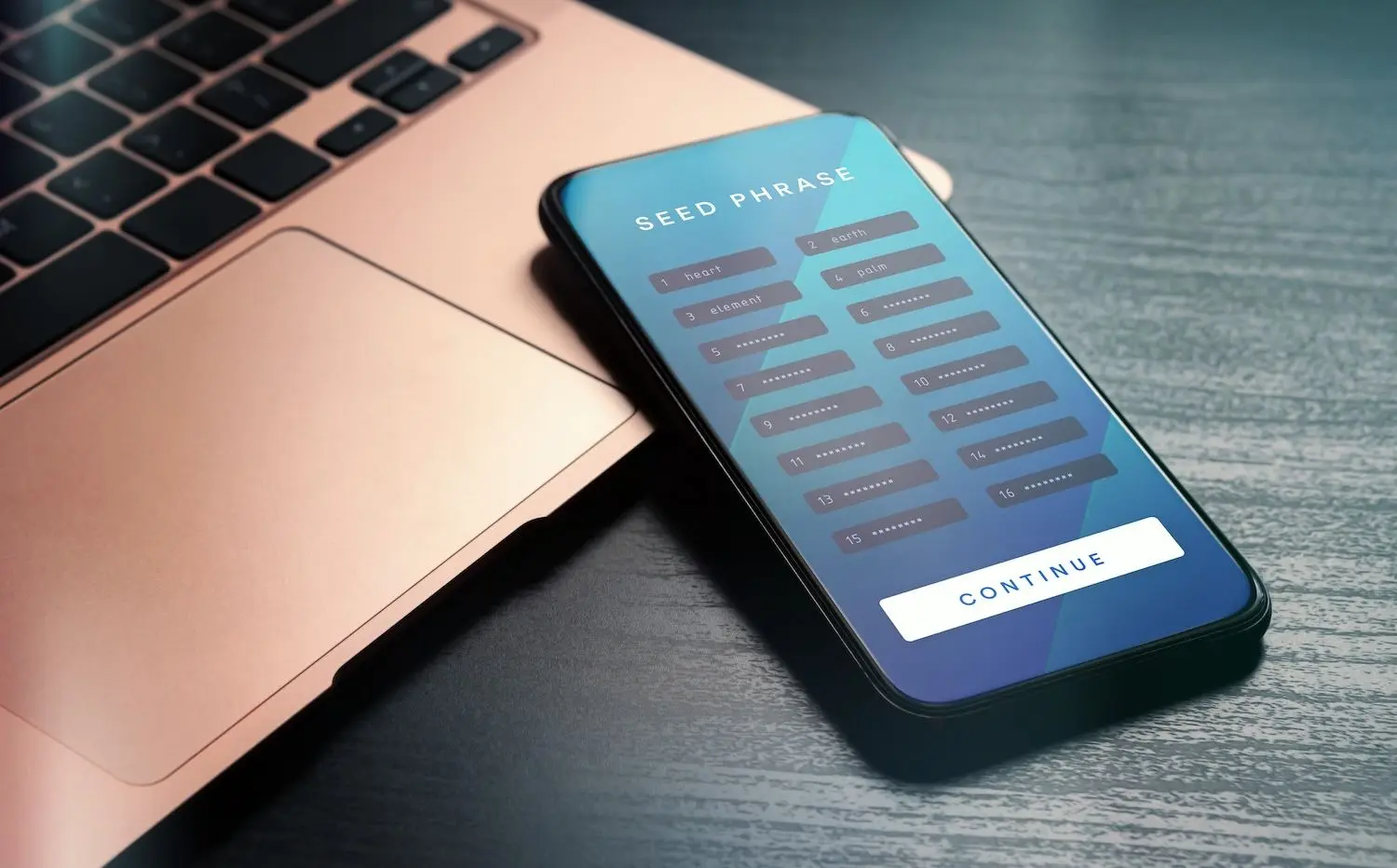
The way a hardware wallet connects to the outside world generates fierce debate among crypto holders, yet no attacker has ever stolen funds by intercepting a USB or Bluetooth signal. Every documented exploit has targeted firmware, physical chips, or surrounding infrastructure. The real question is not which cable to cut but which threat model to prepare for.
TL;DR
- Air-gapped wallets eliminate certain remote attack vectors but introduce new ones through QR parsing and microSD microcontrollers, and they cannot support anti-klepto signing protocols.
- USB wallets with certified secure elements have never been compromised via their data connection; the anti-klepto protocol available only through persistent channels represents a genuine security advance.
- Bluetooth has never been exploited on any hardware wallet despite years of community anxiety; secure element isolation renders BLE interception functionally useless to attackers.
Not All Hardware Wallets Are Built the Same
Hardware wallets share one core principle: private keys stay on the device while transaction signing happens in isolation from the host computer. Beyond that shared foundation, the devices diverge sharply. Connectivity method, chip architecture, firmware transparency, and physical design all vary across manufacturers and models.
The market splits into three connectivity camps. USB-only devices like Trezor Safe 3 and BitBox02 plug directly into a computer. Bluetooth-enabled wallets like the Ledger Nano X and Ledger Stax pair wirelessly with phones. Air-gapped signers like Coldcard, Foundation Passport, Keystone 3 Pro, NGRAVE ZERO, and Ellipal Titan never connect to any network at all.
Each approach makes tradeoffs.
USB provides low-latency bidirectional communication but creates a physical data channel.
Bluetooth adds mobile convenience but opens a wireless interface. Air-gapping eliminates electronic data channels entirely but limits the security protocols the device can support.
Price and philosophy vary widely too. A Trezor Safe 3 or Ledger Nano S Plus costs around $79. Coldcard Mk4 runs $148 and Foundation Passport $199. NGRAVE ZERO sits at $398. The free option is AirGap Vault, which turns any spare smartphone into an offline signer.
Also Read: Ethereum Eyed For Euro Stablecoin Settlement Layer
What "Air-Gapped" Actually Means
NIST defines an air gap as a physical separation between systems that prevents unauthorized data transfer. In hardware wallets, this means no USB data, no Wi-Fi, no Bluetooth, no NFC, no cellular. The only bridge between the device and the outside world is light or a removable storage medium.
Air-gapped wallets follow a consistent workflow. A companion app on a phone or computer constructs an unsigned transaction, typically formatted as a PSBT (Partially Signed Bitcoin (BTC) Transaction per BIP-174).
It encodes that transaction as a QR code or saves it to a microSD card. The air-gapped device scans the QR or reads the file, displays transaction details on its trusted screen, signs with the private key stored in its secure element, and outputs a signed QR code or file.
QR-based signing relies on animated QR sequences for larger transactions. Standards like Blockchain Commons' Uniform Resource specification with fountain codes, or Coinkite's BBQr protocol, break data across dozens of frames. A single QR frame maxes out at roughly 3 to 5 KB before it becomes unreadable, so complex multisig or CoinJoin transactions require patience.
MicroSD-based signing avoids that size constraint entirely. Coldcard uses this as its primary method. But microSD cards contain embedded microcontrollers with hackable firmware, as researcher Bunnie Huang has documented. Whether a mini-computer plugged into your wallet truly preserves the "air gap" is worth debating.
The landscape of air-gapped devices includes several distinct approaches:
- Coldcard Mk4 ($148) runs Bitcoin-only with dual secure elements from different vendors, fully open-source and reproducible firmware, and features like trick PINs that can brick the device under duress
- NGRAVE ZERO ($398) claims EAL7 certification for its ProvenCore trusted execution environment specifically, not the entire device, and its firmware remains largely closed-source
- Foundation Passport ($199) combines Coldcard-style security architecture with consumer-friendly design and fully open-source hardware and software
- Keystone 3 Pro ($149 to $169) runs on customized Android 8.1 with triple secure element chips and was the first wallet to open-source its secure element firmware
- Ellipal Titan 2.0 ($169) uses a fully metal-sealed body with anti-tamper self-destruct
Also Read: Bitcoin Hits $72.7K High On Iran Peace Optimism
USB and Bluetooth Wallets Rely on Secure Elements, Not Isolation
USB-connected wallets communicate via USB HID protocol with proprietary application layers on top. Ledger uses APDU, the smart card standard. Trezor uses protobuf over HID with Trezor Bridge as a daemon. BitBox02 uses encrypted protobuf messages over the Noise Protocol Framework, establishing an end-to-end encrypted channel verified by an out-of-band pairing code. That encryption is unique among USB wallets. Even a fully compromised host computer cannot read or manipulate the data in transit.
The security backbone of these wallets is the secure element, a tamper-resistant chip certified to resist physical probing, voltage glitching, and side-channel analysis. Ledger's newer devices use ST33K1M5 chips rated EAL6+, where its custom operating system BOLOS runs directly on the SE, driving the screen and buttons from within the secure boundary.
Trezor took a different path for years.
Its earlier models lacked a secure element entirely. The Safe 3 and Safe 5 added Infineon OPTIGA Trust M chips rated EAL6+ for PIN enforcement and device attestation. But cryptographic signing still occurs on the general-purpose microcontroller, not the SE. The forthcoming Trezor Safe 7 introduces TROPIC01, the first fully auditable, open-source secure element, developed by Tropic Square, a SatoshiLabs subsidiary.
Bluetooth-enabled wallets use Bluetooth Low Energy purely as a transport layer. Ledger's implementation treats the BLE connection as compromised by default. The STM32WB55 MCU with its BLE radio acts as a relay. The secure element independently controls the screen and buttons. Private keys never leave the SE boundary.
The key security features of BLE implementation on Ledger devices include:
- Pairing uses Numeric Comparison, the strongest standard BLE method, with AES-CMAC authentication to prevent man-in-the-middle attacks
- Only public data (unsigned transactions, signed transactions) passes over the wireless channel, never seeds or private keys
- Users can disable Bluetooth entirely and fall back to USB at any time
- The SE validates and displays transaction details independently of the BLE stack
That Trezor added Bluetooth to the Safe 7 after years of avoiding wireless connectivity signals an industry consensus. BLE is acceptable when proper secure element isolation exists.
Also Read: Why Central Banks May Struggle To Control Inflation This Time
Every Real Attack Has Targeted Firmware and Physics, Never the Cable
The most telling fact in hardware wallet security is this: across every documented exploit since the industry began, not a single successful attack relied on intercepting or manipulating the data transport channel. Not USB. Not Bluetooth. Not QR codes.
Douglas Bakkum, co-founder of Shift Crypto (BitBox), systematically catalogued every known vulnerability and concluded that air-gapped communication offers little added security while degrading the user experience.
Kraken Security Labs demonstrated in January 2020 that seeds could be extracted from both Trezor One and Trezor Model T in approximately 15 minutes using roughly $75 of equipment. The attack used voltage glitching to downgrade the STM32 microcontroller's read protection from RDP2 to RDP1, then extracted the encrypted seed via ARM SWD debugging and brute-forced the PIN.
This vulnerability is inherent to the STM32 chip family and cannot be patched by firmware updates. Trezor's mitigation advice was to use a BIP39 passphrase, which is not stored on the device.
The Ledger database breach of June 2020 caused more real-world harm than all hardware vulnerabilities combined. A misconfigured API key exposed 1.1 million email addresses and roughly 272,000 full customer records including names, home addresses, and phone numbers.
The aftermath was devastating. Fake Ledger wallets with tampered firmware were mailed to victims. Extortion emails demanded $700 to $1,000 in Bitcoin. A pattern of physical attacks on crypto holders followed that continues today. In January 2025, Ledger co-founder David Balland was kidnapped in France and had a finger severed.
The Ledger Recover controversy of May 2023 shattered a core assumption many users held. Ledger's optional $9.99 per month service encrypts the user's seed phrase, splits it into three fragments, and distributes them to Ledger, Coincover, and a third custodian, requiring KYC identity verification.
The community's outrage centered on a fundamental revelation: Ledger's firmware had always possessed the technical capability to extract seed phrases from the secure element. CTO Charles Guillemet explained that this is inherent to any hardware wallet architecture. Co-founder Éric Larchevêque confirmed on Reddit that using Recover means assets could be frozen by a government.
Also Read: Cardano Whale Wallets Reach 4-Month Peak Amid 42% Drop
The Anti-Klepto Problem Gives USB a Genuine Security Edge
Dark Skippy, disclosed in August 2024 by Frostsnap co-founders Lloyd Fournier and Nick Farrow alongside BitVM developer Robin Linus, showed that malicious firmware could exfiltrate a user's entire seed phrase through just two transaction signatures.
The attack embeds seed data into signature nonces. An attacker monitoring the public blockchain could reconstruct the seed using Pollard's Kangaroo algorithm. This affects every hardware wallet regardless of connectivity.
The defense against Dark Skippy is the anti-klepto protocol. In standard ECDSA signing, the hardware wallet generates a random nonce internally.
If the firmware is malicious, it can choose nonces that encode private key material. The user has no way to detect this.
Anti-klepto signing, first implemented by BitBox02 in early 2021, requires the host software to contribute an additional random nonce. The hardware wallet must incorporate that external nonce into its signing process. If the wallet does not properly incorporate it, signature verification fails. This makes covert key exfiltration detectable.
The protocol requires a persistent, low-latency, bidirectional channel. That is exactly what USB and Bluetooth provide. QR-code scanning makes it impractical because each additional round of anti-klepto verification would require another cycle of scanning animated QR sequences. Currently only BitBox02 and Blockstream Jade implement anti-klepto signing. Air-gapped wallets cannot practically support this protocol.
This does not mean air-gapping is theater. It eliminates several real vectors:
- BadUSB attacks where a tampered device presents as a keyboard to the host
- USB device enumeration fingerprinting that leaks information about the connected system
- The OLED power-consumption side-channel attack discovered by Christian Reitter in 2019, where USB power measurements could partially recover displayed PIN or seed information
- JTAG debugging attacks on non-secure MCUs, like the one Kraken Security Labs found on the Ledger Nano X, where pre-app-installation firmware modification was possible
These are real vectors that air-gapping eliminates. They are also vectors that proper secure element architecture, encrypted USB protocols, and verified boot largely mitigate.
Also Read: Billions Vanished In Crypto Fraud Last Year, Here's What The FBI Found
Bluetooth Has Never Been Exploited on a Hardware Wallet
Despite widespread community anxiety about Bluetooth, the empirical record is clear. No cryptocurrency hardware wallet has ever been compromised via its Bluetooth connection. This includes testing against every major BLE vulnerability class.
BlueBorne, a set of eight CVEs disclosed in 2017, enabled remote code execution without pairing on over 5 billion Bluetooth devices.
But it exploited implementation flaws in operating system Bluetooth stacks, not BLE hardware.
KNOB (CVE-2019-9506) forced encryption key entropy down to 1 byte during Bluetooth Classic pairing but does not affect BLE, which is what hardware wallets use.
BIAS (CVE-2020-10135) enabled impersonation of paired devices but again targeted Bluetooth Classic only. BrakTooth, a set of 16 vulnerabilities affecting over 1,400 products in 2021, hit Bluetooth Classic stacks, not BLE. SweynTooth in 2020 did target BLE specifically, causing crashes and security bypasses, but has never been demonstrated against a hardware wallet.
The architectural reason is straightforward. Even if an attacker fully compromised the BLE connection, they would gain access to unsigned and signed transaction data, the same data that gets publicly broadcast to the blockchain anyway.
They cannot extract private keys, which are isolated in the secure element. They cannot forge transaction approvals, which require a physical button press. They cannot modify transactions undetected because the trusted display shows details from the SE, not the BLE channel.
One Bluetooth-adjacent concern is worth noting. In 2025, researchers found vulnerabilities in the ESP32 chip by Espressif, used in wallets like Blockstream Jade. The flaw could theoretically enable malicious firmware injection through the chip's wireless interfaces. This is a chip-specific implementation issue rather than a Bluetooth protocol vulnerability.
Also Read: Main Quantum Risk For Bitcoin Is Consensus, Not Code, Grayscale Warns
Who Actually Needs What Level of Isolation
The hardware wallet market reached an estimated $350 million to $680 million in 2025, with wide variance reflecting differing research methodologies, and is growing at 20 to 30 percent annually. Ledger dominates with over 6 million cumulative units sold. SatoshiLabs shipped 2.4 million Trezor units in 2024 alone. USB connectivity still commands roughly 47 percent of the market but is declining as Bluetooth grows.
For retail investors holding under $50,000 in Ethereum (ETH), Solana (SOL), or Bitcoin, a USB wallet with a certified secure element provides more than sufficient security.
The primary threats at this level are phishing, social engineering, and poor seed storage. No connectivity method addresses any of those. Usability itself is a security feature because complex air-gapped workflows increase the risk of user error.
For significant holders and long-term cold storage, air-gapped wallets provide meaningful benefits. Not primarily from eliminating the USB attack surface, but from the operational security model they enforce. An air-gapped wallet stored in a secure location is physically separated from daily-use devices. That reduces exposure to supply chain attacks, malware, and physical theft.
For active DeFi users and mobile-first traders, Bluetooth is a practical necessity, not a security compromise. Ledger Nano X with Ledger Live, or the forthcoming Trezor Safe 7, enables mobile transaction signing with the same secure element protections as USB.
Keystone 3 Pro's QR-code integration with MetaMask offers an air-gapped alternative for EVM chains, though with significantly more friction per transaction.
For institutional custody, the calculus differs entirely. The enterprise segment accounts for roughly 69 percent of hardware wallet revenue despite fewer units. Multi-signature setups across multiple air-gapped devices, potentially from different manufacturers, provide defense-in-depth that no single device's connectivity method can match.
Also Read: Can AI Really Run DeFi? New Findings Expose Major Risks
Conclusion
The air-gapped vs. USB vs. Bluetooth debate generates more heat than light. The data transport channel is the least exploited component in the entire hardware wallet attack surface. Every confirmed theft involving hardware wallets has traced back to physical extraction, supply chain tampering, social engineering, or compromised surrounding infrastructure. Not one traced back to intercepted USB or Bluetooth communications.
Air-gapping provides genuine value as an operational security discipline rather than a cryptographic defense.
A device that stays in a vault and communicates only through QR codes is harder to attack because it is harder to reach, not because QR codes are safer than USB.
Meanwhile, USB's bidirectional channel enables anti-klepto protocols that represent the most significant advancement in hardware wallet signing security in recent years, a defense air-gapped wallets structurally cannot adopt. The three facts that should guide any decision: secure element quality matters more than connectivity method, open-source firmware enables community audit regardless of transport layer, and multisig across devices from different manufacturers provides stronger protection than any single wallet's air gap.
Read Next: Schwab Warns Even 1% Bitcoin Allocation Reshapes Portfolio Dynamics
