
Choosing a hardware wallet is less about finding a universal winner and more about matching a device to your own security needs, portfolio composition, and technical comfort.
After comparing 13 major devices across security architecture, coin support, usability, and track record, the clearest takeaway is that no single wallet excels at everything, which means the 10 factors below should guide the decision far more than any brand name.
TL;DR:
- Hardware wallets range from $55 NFC cards to $500 air-gapped devices, with the best value sitting in the $79–$169 range where open-source firmware, secure elements, and on-device verification converge.
- Open-source transparency, secure element certification, and anti-exfiltration signing protocols matter more than headline coin counts or screen size.
- Expert consensus increasingly favors multisig setups using devices from different manufacturers over reliance on any single wallet, regardless of brand.
Coin Support Can Be Misleading
The headline figures for supported cryptocurrencies vary enormously across manufacturers. Tangem leads with more than 16,000 assets across 85-plus blockchain networks. Ledger devices follow at roughly 15,000-plus, and Trezor covers more than 8,000. The Keystone 3 Pro handles about 5,500 across 200-plus blockchains, while the BitBox02 Multi edition reaches approximately 1,500 but notably lacks Solana (SOL) and XRP (XRP) support.
At the opposite end, the Coldcard Mk4 and Q models support Bitcoin (BTC) only.
That is by design, meant to minimize the attack surface. The BitBox02 Bitcoin-only edition takes the same approach with identical hardware but restricted firmware. Trezor Safe 3 and Keystone 3 Pro both offer switchable Bitcoin-only firmware modes for users who want altcoin support now but may decide to restrict their device later.
The NGRAVE ZERO presents an unusual case. Despite a price tag near $398, it supports only about 15 native cryptocurrencies — BTC, Ether (ETH), SOL, Litecoin (LTC), XRP, and a handful of others — plus ERC-20 tokens. There is no native Cardano (ADA), Polkadot (DOT), or Cosmos (ATOM) support. The GridPlus Lattice1 focuses primarily on Ethereum and EVM chains, with Bitcoin support but a clear DeFi-centric orientation.
For multi-chain portfolios, Ledger and Tangem offer the broadest coverage. For Bitcoin-focused security, Coldcard and BitBox02 Bitcoin-only are purpose-built. A wallet that supports more coins is not inherently better. Every additional blockchain integration is additional code that could contain vulnerabilities.
Also Read: Ethereum Clears $2,145 Bearish Trend Line
Backup and Recovery Shape Your Safety Net
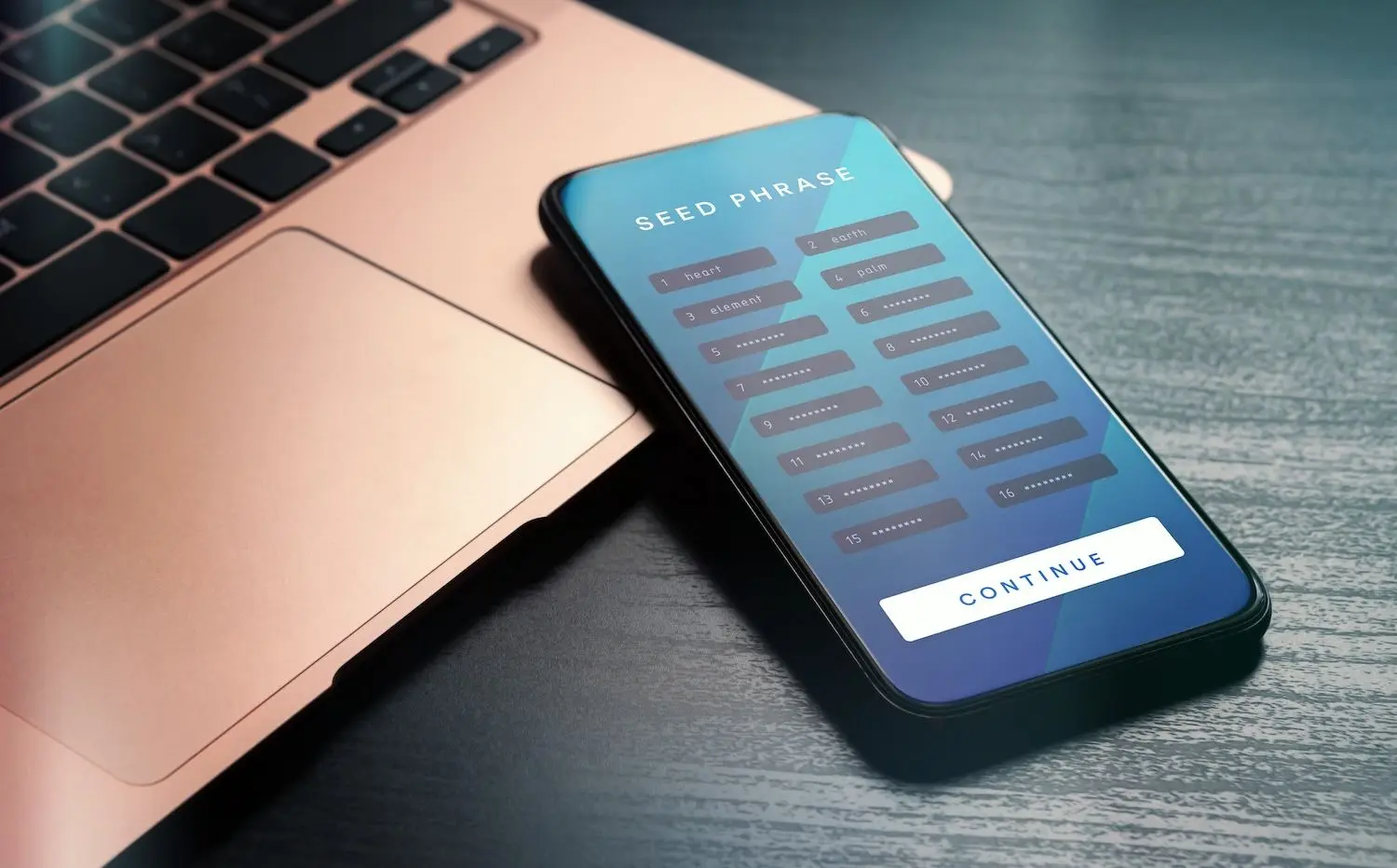
Nearly every hardware wallet generates a BIP-39 mnemonic seed phrase during setup. Ledger, Coldcard, BitBox02, and GridPlus default to 24 words. Trezor defaults to 12 but supports 12, 20, or 24.
This seed phrase is the master key — anyone who holds it controls the funds, and if it is lost, those funds are permanently gone.
Shamir Backup, formally known as SLIP-39, splits the seed into multiple shares that require a threshold number to reconstruct the wallet. A 3-of-5 setup, for instance, means any three of the five shares can recover the wallet while any two alone cannot.
Trezor pioneered this standard, and all current models — Safe 3, Safe 5, Safe 7 — support it natively. The Keystone 3 Pro does as well.
Shamir backup eliminates the single point of failure inherent in a standard seed phrase. However, SLIP-39 shares use a different word list than BIP-39, so they are not directly compatible with standard wallets during recovery.
Coldcard takes a different route with Seed XOR, which splits a 24-word seed into two to four parts that each appear to be valid BIP-39 seeds. Each part can even hold decoy funds. Coldcard also supports BIP-85 for deriving child seeds, as does BitBox02. The BitBox02 itself offers automatic encrypted backup to a microSD card during setup, requiring no handwriting at all.
Tangem breaks the mold entirely. In its default seedless mode, the private key is generated inside the card's Samsung secure chip and never displayed to the user. Backup happens by cloning the key to one or two additional cards via encrypted NFC during setup.
The tradeoff is stark: if all cards are lost or destroyed, funds are permanently gone. Tangem has since added optional BIP-39 seed phrase generation as an exit hatch, but the seedless approach remains its defining feature.
NGRAVE uses a proprietary 64-character hexadecimal key backed up onto its GRAPHENE stainless steel plates. It is a two-plate system where neither plate alone reveals the key. The upper plate contains a unique random character arrangement, and the lower plate has punched holes. Only when overlaid do they decode the key.
Passphrase support — sometimes called the 25th word — adds another layer. Even if someone obtains the seed phrase, they cannot access funds without the passphrase.
Every major wallet supports this except Tangem and GridPlus Lattice1, which uses SafeCards instead. For Trezor users specifically, passphrases are the primary defense against the voltage-glitching attacks demonstrated by Kraken Security Labs.
Metal seed phrase backups remain essential for protecting against fire, flood, and corrosion. Options such as the Cryptotag Zeus, Cryptosteel Capsule, and Billfodl withstand extreme temperatures and physical stress.
Also Read: 21Shares Bets On Active Management
Open Source Transparency Creates Trust Categories
The open-versus-closed debate is not academic. It determines whether independent researchers can verify that a wallet's code does exactly what the manufacturer claims and nothing else.
Trezor is the gold standard here. Firmware, hardware schematics, and the Trezor Suite companion app are all fully open source on GitHub.
The Trezor Safe 7 goes further by incorporating the TROPIC01, the first open-source secure element chip in a mass-market hardware wallet. It was developed by Tropic Square, a SatoshiLabs spinoff. Community members can build firmware from source and verify it matches the binary on their device.
BitBox02 matches Trezor's transparency. Firmware, hardware schematics, and the BitBoxApp are all open source with reproducible builds verified by WalletScrutiny.
The firmware has been independently audited by Census Labs. Coldcard publishes its firmware source code with reproducible Docker builds, though full hardware schematics are not released. Since 2022, Coldcard's license includes a common clause restricting commercial use of its code.
Ledger takes the opposite approach. Its BOLOS operating system — the code that actually runs on the secure element and handles key generation, storage, and signing — is closed source.
Ledger argues that the secure element vendor's NDA prevents disclosure and that CC EAL5-plus and EAL6-plus certification by independent labs provides sufficient assurance. Ledger Live, the companion app, is open source. Ledger also operates the Donjon, an internal white-hat security lab that actively researches competitor vulnerabilities.
Tangem's firmware is closed source and, uniquely, non-updatable — monolithic code burned at the factory. The companion mobile app is open source. NGRAVE describes its firmware as source-available, meaning viewable but not meeting strict open-source criteria.
GridPlus announced plans to open-source its firmware in mid-2023 following the Ledger Recover backlash, and its SDK is already open source.
Why does this matter in practice? After the Dark Skippy disclosure in Aug. 2024 demonstrated that malicious firmware could extract a complete seed phrase from just two signed transactions, the ability to audit firmware code became critical rather than optional.
Also Read: Robinhood Drops 39% In 2026
The Screen Is a Security Feature, Not a Luxury
A hardware wallet's screen is its most important security feature after the secure element. Without a trusted display, there is no way to verify what a transaction actually contains. This problem is known as blind signing, and in 2024 alone, wallet-drainer attacks exploiting blind-signed approvals cost users nearly half a billion dollars.
Screen quality varies dramatically. The GridPlus Lattice1 features a 5.0-inch color TFT touchscreen that shows entire transactions including ABI-decoded smart contract data in human-readable form.
The Keystone 3 Pro and NGRAVE ZERO both carry 4.0-inch color LCD touchscreens with fingerprint sensors.
The Ledger Stax has a 3.7-inch curved E-Ink touchscreen driven directly by the secure element, meaning malware on a connected device cannot alter what is displayed.
The Coldcard Q upgraded to a 3.2-inch color LCD with a QWERTY keyboard, vastly improved over the Mk4's tiny screen.
The Trezor Safe 5 carries a 1.54-inch color touchscreen with Gorilla Glass 3 and haptic feedback. The Ledger Nano X, Nano S Plus, Trezor Safe 3, Coldcard Mk4, and BitBox02 all use small monochrome OLED screens between 0.80 and 1.38 inches, navigated by buttons or touch sensors.
Tangem has no screen at all. All verification depends on the smartphone app, creating a fundamental trust dependency on the phone.
The principle of What You See Is What You Sign requires the display to be driven by the secure signing chip, not the connected computer. Air-gapped wallets like Keystone and NGRAVE sidestep the issue entirely by communicating exclusively through QR codes.
The user scans an unsigned transaction, reviews it on the device's screen, confirms, and then the device displays a signed QR code to scan back.
Also Read: Tether Picks A Big Four Firm
Mobile Compatibility Depends on the Connection Method
How a hardware wallet connects to devices determines where and how it can be used. The landscape breaks into several categories, and the differences are practical rather than cosmetic.
Bluetooth wallets offer the smoothest mobile experience.
The Ledger Nano X, Stax, and Flex all connect wirelessly to the Ledger Live app on both iOS and Android.
The newest Trezor Safe 7, released in late 2025, is the first Trezor with Bluetooth and finally provides full iOS compatibility. Bluetooth adds convenience but also adds wireless attack surface, though all current implementations use encrypted pairing.
NFC-based wallets center on Tangem, which requires an NFC-enabled smartphone to function at all. It is the most mobile-centric hardware wallet, with no desktop support. Ledger Stax and Flex also include NFC, but use it for authentication and recovery workflows rather than daily transaction signing. Coldcard Mk4 and Q support NFC-V for tapping partially signed Bitcoin transactions to phones, though NFC is off by default and can be permanently disabled by cutting PCB traces.
QR-code wallets achieve mobile compatibility without any electronic connection.
The Keystone 3 Pro is notable as the only hardware wallet with full MetaMask Mobile compatibility, scanning QR codes between the phone camera and the device's built-in camera. NGRAVE ZERO works exclusively through its LIQUID app via QR codes. Coldcard Q adds a dedicated QR scanner with LED illumination.
USB-only wallets have limited mobile use. Trezor Safe 3 and Safe 5 work fully on Android via USB-C but offer only view-only mode on iOS. Ledger Nano S Plus connects to Android via USB-C OTG but has no iOS support. BitBox02 works via USB-C on Android, and the newer BitBox02 Nova adds Apple MFi compatibility for iOS.
The GridPlus Lattice1 stands apart. It is an always-on desktop device connected via WiFi or Ethernet, managed through a web interface. It has no mobile app and is not portable.
Also Read: Binance Now Lets You Trade Meta, NVIDIA, And Google Stocks 24/7
Secure Elements Guard Against Physical Extraction
A secure element is a tamper-resistant chip designed to store cryptographic secrets and resist physical attacks including voltage glitching, laser probing, and decapsulation.
These are the same chips used in credit cards and passports, certified under the Common Criteria EAL scale.
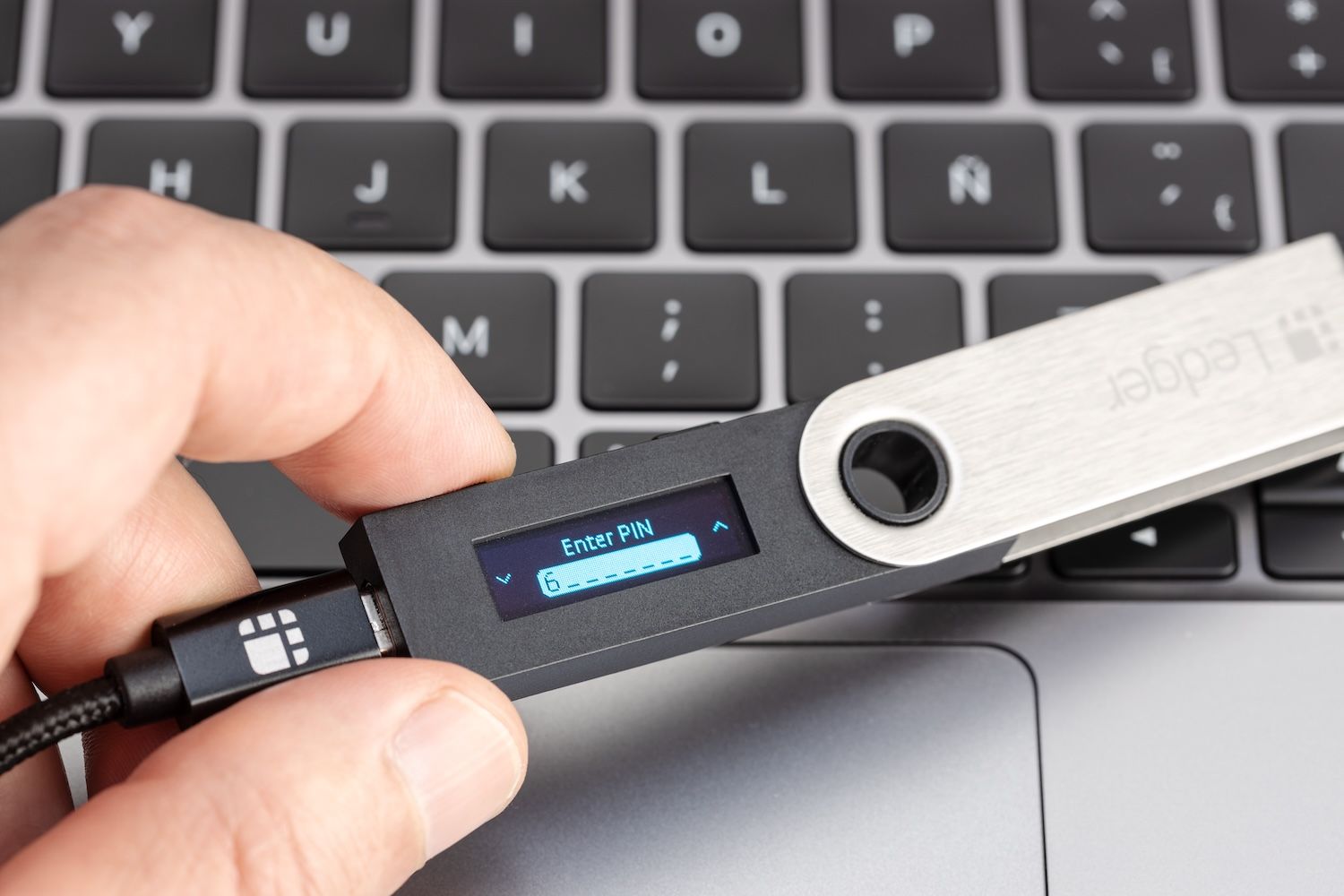
Ledger runs its entire BOLOS operating system directly on the secure element. The Nano X uses an ST33J2M0 chip rated EAL5-plus, while the Nano S Plus, Stax, and Flex all use the newer ST33K1M5 at EAL6-plus. All key generation, storage, and transaction signing happens inside the chip. This is Ledger's core architectural advantage.
Trezor Safe 3 and Safe 5 added the Infineon OPTIGA Trust M rated EAL6-plus after years of criticism that older Trezor models lacked hardware protection against glitching attacks. However, the secure element in these models enforces PIN protection and device authentication while transaction signing still occurs on the general-purpose MCU.
The Trezor Safe 7 addresses this with dual secure elements — the OPTIGA Trust M plus the TROPIC01 open-source chip.
Coldcard Mk4 and Q use dual secure elements from different manufacturers — a Microchip ATECC608B and a Maxim DS28C36B — alongside an STM32 MCU.
The seed is split across all three chips.
Compromising funds would require backdoors in components from three separate companies. The Keystone 3 Pro goes furthest with triple secure elements plus PCI-grade anti-tamper mechanisms that wipe data if the device is physically opened.
BitBox02 uses a Microchip ATECC608B in a dual-chip design with its open-source MCU. Three separate secrets must combine to access the wallet.
Tangem relies on a Samsung S3D350A at EAL6-plus, with all signing happening on-chip and the key never leaving the secure element.
NGRAVE ZERO claims the highest certification with EAL7, but this applies specifically to the ProvenCore Trusted Execution Environment OS running on the device, not the secure element chip itself. This is an important distinction that some marketing materials obscure.
Why did older Trezor models skip secure elements?
Trezor prioritized full open-source transparency. Traditional secure elements are locked behind vendor NDAs that prevent public code auditing.
That conflicted with Trezor's philosophy. The OPTIGA Trust M was chosen specifically because it does not require NDAs, allowing Trezor to maintain its open-source commitment while adding hardware protection.
Also Read: Bernstein Calls Bitcoin Bottom, Sees 226% Upside for Strategy
Firmware Track Records Reveal Real-World Resilience
A wallet's security is only as strong as its most recent firmware. Update frequency, vulnerability response, and incident history matter more than theoretical specifications.
Ledger releases firmware updates several times per year, delivered through Ledger Live and cryptographically signed.
Devices reject unsigned code. The company's track record includes several notable incidents.
The Jun. 2020 data breach exposed 1.1 million email addresses and 272,000 full customer records from a misconfigured e-commerce API key. This was not a device compromise, but it fueled phishing campaigns and physical threats against customers.
A Jan. 2026 breach via payment processor Global-e exposed additional customer names and contacts.
The Dec. 2023 Connect Kit attack was a supply chain compromise of Ledger's JavaScript library used by dApps. Malicious code drained approximately $600,000 from users before being patched within 40 minutes.
Trezor maintains continuous open-source development with firmware updates through Trezor Suite. In Jan. 2020, Kraken Security Labs demonstrated seed extraction from Trezor One and Model T via voltage glitching, requiring 15 minutes of physical access and about $75 in equipment. In Mar. 2025, Ledger Donjon showed that even the newer Trezor Safe 3 and Safe 5 could have their MCU firmware replaced via glitching.
Trezor patched these vulnerabilities but acknowledged the underlying architecture poses inherent limitations.
Tangem presents a unique dilemma. Its firmware is intentionally non-updatable, which prevents malicious code injection but also means discovered vulnerabilities cannot be patched. Ledger Donjon demonstrated a brute-force vulnerability in Sept. 2025 using a tearing technique to bypass security delays. Tangem disputed the findings, but no fix is possible regardless.
The Dark Skippy attack, disclosed in Aug. 2024, demonstrated that malicious firmware in any hardware wallet could extract a complete seed phrase from just two signed transactions by manipulating signature nonces.
Only BitBox02 and Blockstream Jade had implemented anti-exfiltration signing protocols at disclosure time. BitBox02 had done so over three years before the attack was publicly described. Bitcoin Core developer Matt Corallo called wallets without anti-exfil protection fundamentally inadequate.
Also Read: Tether Signs Big Four Firm For First Full Audit
Prices Range From $55 to $500 With Diminishing Returns at the Top
The hardware wallet market spans from budget NFC cards to premium air-gapped devices, with a clear clustering in the $79 to $169 range where most users will find the best value.
The Tangem 3-card set at about $70 is the cheapest hardware wallet with the broadest coin support, though its lack of a screen is a significant security compromise. The Ledger Nano S Plus and Trezor Safe 3 both sit at $79 — the sweet spot for entry-level security with proper on-device verification. The Nano X has dropped to around $99 following newer Ledger releases.
In the mid-range, the BitBox02 at roughly $149 offers the best combination of open-source transparency, privacy features including Tor and own full node support, and simplicity.
The Keystone 3 Pro at $129 to $149 provides a large touchscreen and full air-gapped operation at a competitive price. The Trezor Safe 5 at $169 adds a color haptic touchscreen and Shamir backup. The Coldcard Mk4 at about $178 is the entry point for Bitcoin-maximalist security.
At the premium tier, the Ledger Flex and Coldcard Q both cost $249, offering E-Ink secure display and full air-gapped Bitcoin signing respectively. The Trezor Safe 7 also sits at $249 with Bluetooth and dual secure elements.
The GridPlus Lattice1 at $397, NGRAVE ZERO at about $398, and Ledger Stax at $399 occupy the top bracket. The NGRAVE ZERO with GRAPHENE backup plates reaches roughly $498.
The price-to-value ratio favors the mid-range decisively. A Trezor Safe 3 at $79 provides a secure element, Shamir backup, open-source firmware, and more than 8,000 coins. Spending five times more buys a nicer screen and air-gapping, but the fundamental cryptographic security of key generation and storage is comparable.
Also Read: SIREN Loses 70% After Investigators Flag Wallet Cluster With Half Of Supply
Brand Track Records Are Mixed
Ledger, founded in 2014 in Paris, has sold more than 7.5 million devices and claims the largest installed base in the market. The company raised $575 million and was valued at $1.3 billion as of its 2023 Series C round.
Despite market dominance, Ledger's reputation has taken repeated hits from the 2020 data breach, the Ledger Recover controversy, the Connect Kit supply chain attack, and the 2026 Global-e breach. CEO Pascal Gauthier has maintained that device-level security was never compromised in any of these incidents, which is technically accurate.
Trezor, created by SatoshiLabs and founded in 2013 in Prague, launched the world's first hardware wallet in Jul. 2014.
SatoshiLabs invented or co-invented BIP-39 for mnemonic seeds, BIP-44 for hierarchical wallets, and SLIP-39 for Shamir backup.
These are foundational standards used across the entire industry.
Trezor's open-source codebase powers more than 10 other hardware wallet brands.
The company has never suffered a significant data breach and anonymizes all purchase data after 90 days.
Coinkite, the company behind Coldcard, was founded in 2013 in Toronto by Rodolfo Novak and Peter Gray. It pivoted from a Bitcoin exchange to hardware after regulatory challenges. Coldcard has no known security breaches or significant vulnerabilities and is widely regarded by Bitcoiners as one of the most secure wallets available.
Shift Crypto, the company behind BitBox, was founded in 2015 in Zurich by Douglas Bakkum and Jonas Schnelli. It designs and manufactures in Switzerland. BitBox02 pioneered anti-exfiltration signing three years before the Dark Skippy disclosure.
Keystone, originally launched as Cobo Vault in 2018 and rebranded in 2021, is now headquartered in Singapore.
It was the first to open-source secure element firmware. NGRAVE, founded in 2018 in Belgium, developed its security architecture in collaboration with IMEC and COSIC, with cryptographer Jean-Jacques Quisquater — cited in Satoshi Nakamoto's Bitcoin whitepaper — as an advisor. Tangem, founded in 2017 in Zug, Switzerland, has sold more than 6 million wallets. GridPlus, founded in 2017 in Austin, Texas, raised $32.2 million via ICO and pivoted from energy trading to its Lattice1 hardware wallet.
Also Read: Bitget Launches First MotoGP Event In South America With 120K USDT Prize Pool
Beginners and Power Users Need Different Devices
Setup complexity ranges from two minutes for Tangem — download app, tap card, set PIN — to one or two hours for Coldcard, which involves a two-part PIN system, anti-phishing words, bag number verification, and pairing with third-party software like Sparrow or Electrum. The gap between these experiences is enormous, and the right choice depends heavily on technical background.
For beginners, the strongest recommendations are the Trezor Safe 3 at $79 for its clear guided setup, open source firmware, and secure element.
The Ledger Nano X at roughly $99 provides Bluetooth mobile connectivity and the largest ecosystem through Ledger Live.
The BitBox02 at approximately $149 is praised for simplicity with its automatic microSD backup.
Tangem is the simplest to set up, but its lack of a screen and seedless-by-default approach introduce risks that beginners may not fully understand.
For advanced Bitcoin users, the Coldcard Mk4 and Q offer unmatched features. These include duress PINs that open decoy wallets, a Brick Me PIN that destroys the device, trick PINs with custom actions, calculator login mode for plausible deniability, Seed XOR splitting, BIP-85 derived seeds, and full air-gapped operation via microSD, QR, or NFC.
These features assume significant Bitcoin knowledge and comfort with third-party wallet software.
For DeFi power users, the GridPlus Lattice1 provides the best smart contract signing experience with its 5-inch screen and ABI-decoded human-readable transaction display. Keystone 3 Pro also excels here with MetaMask Mobile integration and parsed DeFi transaction display.
Key advanced features by wallet:
- Multisig: Best on Coldcard (up to 15 cosigners, Coldcard on-device coordinator), well-supported on Trezor, Bitcoin Magazine Ledger, BitBox02, and Keystone via Sparrow, Electrum, Nunchuk, Casa, or Unchained
- Coin control (UTXO management): Native in Trezor Suite and BitBoxApp; BitBox available via Sparrow for Coldcard, Ledger, and Keystone
- Tor support: Built into Trezor Suite and BitBoxApp; Billfodl available via Sparrow for Coldcard and Keystone. Not supported by Ledger Live, NGRAVE LIQUID, or Tangem
- CoinJoin: Trezor Suite integrates CoinJoin directly; Coldcard and BitBox02 support it via Wasabi Wallet
- Duress/plausible deniability: Coldcard is in a class of its own with multiple duress PIN types. Coldcard Others offer only passphrase-based hidden wallets
Multisig works best on Coldcard, which supports up to 15 cosigners with an on-device coordinator. Trezor, Ledger, BitBox02, and Keystone all support multisig via Sparrow, Electrum, Nunchuk, Casa, or Unchained.
Tor support is built into Trezor Suite and BitBoxApp, and available via Sparrow for Coldcard and Keystone. It is not supported by Ledger Live, NGRAVE LIQUID, or Tangem.
Services like Casa and Unchained abstract away much of the multisig complexity for users who want enhanced security without deep technical expertise.
Also Read: Can Bitcoin Outperform Gold After Correlation Hits 3-Year Low?
Air-Gapped Versus Connected Is a Real Security Decision
An air-gapped wallet has no direct electronic connection to any internet-connected device during normal operation.
Data transfer occurs through physically separate channels — QR codes or microSD cards — creating a literal gap of air between the signing device and the online world.
Fully air-gapped devices include the Keystone 3 Pro and NGRAVE ZERO, which use QR codes exclusively. The Coldcard Mk4 and Q can operate fully air-gapped via microSD and QR or NFC, though they also have USB available. Users can permanently disable USB and NFC by cutting PCB traces. Air-gapping eliminates entire attack categories, including USB stack exploits, Bluetooth vulnerabilities, malicious cables, and driver-level compromises.
QR codes are optically inspectable — a security researcher or even an attentive user can verify the data being transferred.
The tradeoffs are real. Air-gapped signing adds friction because each transaction requires multiple QR scans or microSD transfers.
Complex DeFi interactions with repeated approvals become tedious. Firmware updates require downloading to a separate device first.
USB-connected wallets — Ledger Nano S Plus, Trezor Safe 3 and Safe 5, BitBox02 — compensate through secure elements that never expose keys over the USB bus, on-device verification screens, encrypted USB communication, and firmware signature enforcement.
For most users and threat models, a USB-connected wallet with a certified secure element provides excellent security. Air-gapping adds meaningful protection primarily for high-value holdings or adversarial environments.
The expert consensus from Casa's Jameson Lopp, Unchained Capital, and independent security researchers increasingly favors multisig setups using devices from different manufacturers over reliance on any single wallet, regardless of how secure it claims to be. The most important security features are ultimately behavioral — verifying addresses on device, buying only from official sources, never sharing seed phrases, and understanding that the weakest link in any hardware wallet system is the person holding it.
Read Next: Robinhood Drops 39% In 2026
