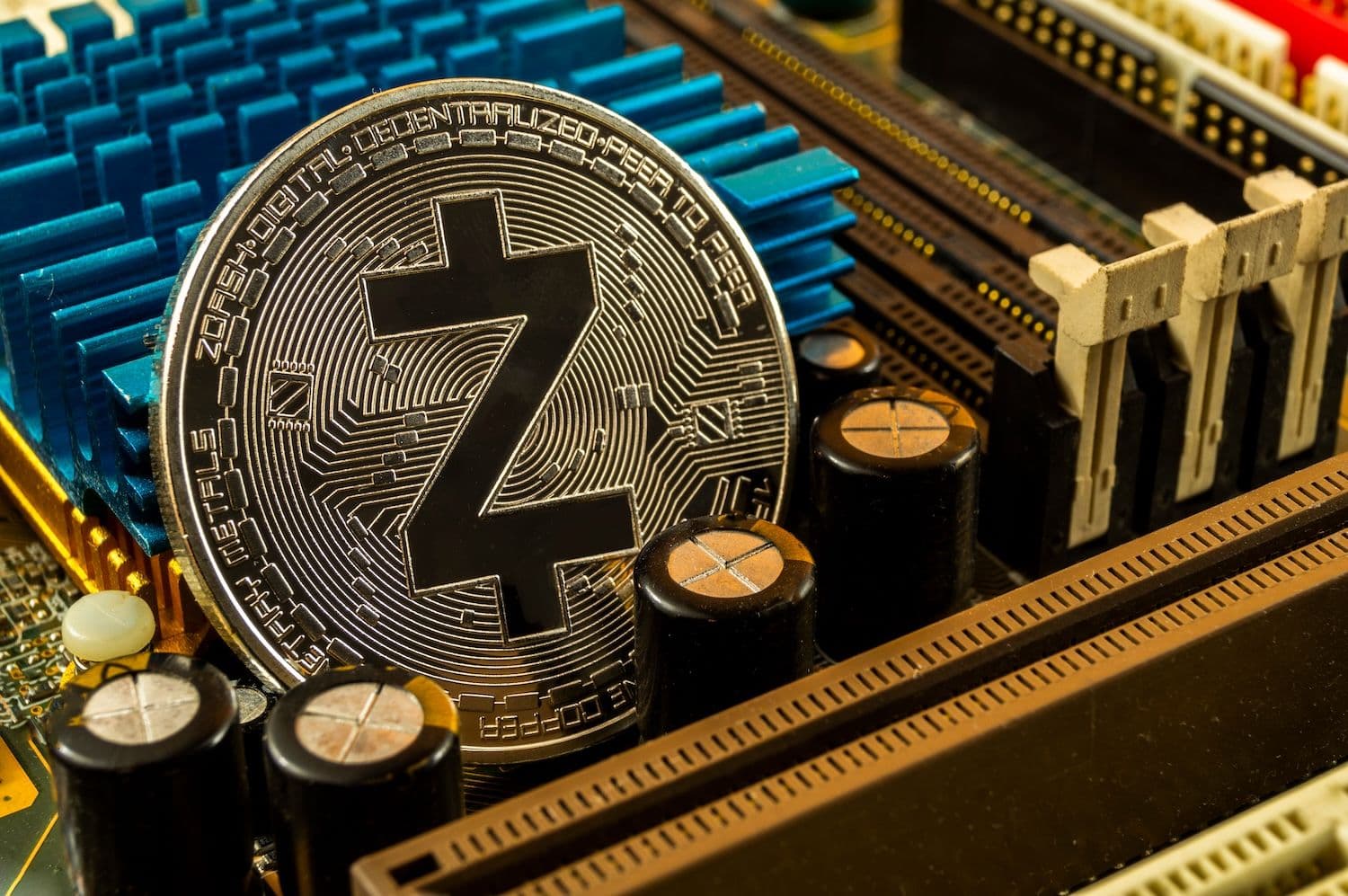
Zcash (ZEC) and Zano are both surging right now, and as they climb, so does search interest in crypto privacy.
But most people buying these assets only grasp the surface of what they do.
"It hides your transactions" isn't an explanation. The cryptography behind privacy coins is some of the most sophisticated in the entire blockchain industry. Understanding it changes how you think about every other asset you hold.
TL;DR
- Privacy coins use cryptographic techniques including zero-knowledge proofs, ring signatures, and stealth addresses to hide sender identity, recipient identity, and transaction amounts from public view.
- Different coins achieve privacy differently, and those differences matter enormously for how traceable your transactions actually are.
- Knowing how these mechanisms work helps you evaluate the real privacy guarantees, not just the marketing claims, before you buy or use any privacy-focused asset.
What "Privacy" Actually Means On A Blockchain
Most blockchains are transparent by design.
Every transaction on Bitcoin (BTC) is recorded permanently in a public ledger. Anyone can see the sending address, the receiving address, and the exact amount transferred. That isn't a bug. It's a feature, one that allows trustless verification without a central authority.
But transparency comes with an obvious trade-off.
Once a real-world identity gets linked to a Bitcoin address, the entire transaction history tied to that address becomes readable. That link can come from an exchange KYC process, a merchant payment, or even a social media post.
Blockchain analytics firms like Chainalysis and Elliptic have built substantial businesses on exactly this fact.
Privacy coins do not eliminate the blockchain ledger. They cryptographically obscure what gets written into it, so that even with the full ledger in front of you, an observer cannot determine who sent what to whom, or how much changed hands.
This distinction matters. Privacy is not about deleting information. It is about ensuring that the information recorded is mathematically useless to anyone who does not hold the relevant private keys.
Also Read: Zcash Turns Privacy Back Into A Market Story Near $519
Zero-Knowledge Proofs, The Math Behind Zcash
The most powerful privacy tool in the current cryptographic toolkit is the zero-knowledge proof, commonly abbreviated as ZKP. The concept was first formally described by researchers Shafi Goldwasser, Silvio Micali, and Charles Rackoff in a 1985 paper, but it has found its most commercially significant application in cryptocurrency.
A zero-knowledge proof allows one party (the prover) to convince another party (the verifier) that a statement is true, without revealing any information beyond the truth of that statement itself. The classic thought experiment involves proving you know the solution to a maze without showing the actual path. In a financial context, a ZKP allows a user to prove that a transaction is valid, that they have sufficient funds, and that no new coins are being created from nothing, without revealing the sender, the recipient, or the balance.
Zcash implements a specific variant called zk-SNARKs (Zero-Knowledge Succinct Non-Interactive Arguments of Knowledge). The "succinct" part is critical for blockchain use. The proof is small enough to fit in a transaction and fast enough to verify that the network can process blocks at a normal cadence. Zcash's zk-SNARKs are constructed using a "trusted setup," a multi-party ceremony that generates the cryptographic parameters the system relies on. The 2016 Zcash ceremony involved six participants in separate geographic locations, each holding a shard of the parameter-generating process. If even one participant destroyed their shard, the system is secure.
More recent Zcash upgrades have moved toward zk-STARKs and related constructions that eliminate the trusted setup requirement entirely, replacing it with publicly verifiable randomness. This is considered a meaningful security improvement.
zk-SNARKs let Zcash prove a transaction is valid while revealing nothing about the sender, receiver, or amount. The math guarantees this even if someone captures the entire blockchain.
Also Read: Wall Street Giant Charles Schwab Taps Paxos To Run Spot Bitcoin Trades For Retail

Shielded Vs. Transparent Addresses In Zcash
Understanding Zcash requires understanding that it actually operates two distinct transaction pools simultaneously. Transparent addresses, which begin with "t," work exactly like Bitcoin. Every transaction is fully public. Shielded addresses, which begin with "z," use zk-SNARKs to encrypt the sender, recipient, and value fields of every transaction.
This dual-mode design was originally a compromise to ease adoption and reduce computational demands on early hardware. But it created a real-world privacy problem that analysts have documented extensively. If most users transact in the transparent pool, the shielded pool represents a small anonymity set. Moving funds from a transparent address to a shielded one (called "shielding") and then back out ("deshielding") can in some cases be reverse-engineered through timing analysis, even if the shielded portion itself is cryptographically opaque.
The Zcash community has been aware of this tension for years. The Zcash Foundation and the Electric Coin Company have both pushed for greater shielded pool adoption, and the Sapling upgrade in 2018 reduced the computational cost of shielded transactions by roughly two orders of magnitude, making them practical on mobile devices for the first time.
The current NU5 upgrade introduced Orchard, a new shielded pool built on the Halo 2 proving system, which eliminates the original trusted setup entirely. Orchard transactions are the most private option Zcash offers today, requiring no trust assumptions in the underlying cryptography.
Also Read: Can Fasset Turn Stablecoins Into Banking Rails For Emerging Markets?
How Ring Signatures And Stealth Addresses Work In Monero
Zcash is not the only approach to cryptographic privacy. Monero (XMR) uses a fundamentally different architecture, combining three separate mechanisms that together make every transaction private by default, with no opt-in required.
Ring signatures obscure the sender. When you send Monero, your transaction is cryptographically combined with a set of other past outputs from the blockchain, called "decoys." Anyone looking at the transaction sees a ring of possible senders, but cannot determine which one is the real source. As of 2022, Monero requires a minimum ring size of 16, meaning every transaction has at least 15 decoys. Research has explored whether statistical methods can narrow the probability distribution of real senders, particularly when the ring includes recently created outputs, but no reliable deanonymization technique has been demonstrated at scale.
Stealth addresses obscure the recipient. When you publish a Monero address, senders do not actually use that address directly. Instead, they generate a unique one-time address for each transaction, derived from your public key using a shared secret. Only you, with your private key, can identify which on-chain outputs belong to you. An outside observer sees a stream of outputs but cannot link any of them to your published address.
RingCT (Ring Confidential Transactions), introduced in 2017, obscures the amount. It uses a cryptographic commitment scheme called a Pedersen commitment, which allows the network to verify that inputs equal outputs (no coins created or destroyed) without revealing the actual values involved.
Monero's privacy is mandatory and uniform. Every transaction looks identical from the outside, which means the anonymity set is the entire chain, not just the users who chose to opt in.
Also Read: Can Venice Token Keep Its Privacy AI Premium After 11% Drop?
What Makes Zano Different From Both
Zano takes a distinct position in the privacy landscape, and its recent CoinGecko trending status reflects growing interest in its approach. Zano launched in 2019 as a fork of the Bytecoin codebase, which is the same lineage that produced Monero. But Zano has implemented a number of technical changes that differentiate it meaningfully.
Zano uses ring signatures and stealth addresses in the same structural way as Monero, giving it mandatory privacy at the base layer for all standard transactions. What sets it apart is its Ionic Swap protocol, which enables trustless atomic swaps between Zano and other assets without requiring a centralized exchange or a cross-chain bridge. The privacy of the swap is preserved through the underlying ring signature architecture, meaning you can exchange assets without creating an identifiable on-chain linkage between your pre-swap and post-swap holdings.
Zano also supports confidential assets, a feature that allows tokens built on top of the Zano chain to inherit its privacy properties automatically. A token issued on Zano benefits from stealth addresses and ring signatures without any additional implementation work from the token developer. This is a meaningful design choice that distinguishes it from most EVM-compatible chains, where privacy must be bolted on separately for each application.
The project's market cap of approximately $173 million as of mid-May 2026 places it firmly in the mid-tier of the privacy coin segment, but its technical differentiation makes it a meaningful case study in how privacy architecture choices create different tradeoff profiles.
Also Read: BNB Chain Pulls Ahead In 2026 RWA Race With 567% Holder Jump
The Regulatory Pressure On Privacy Coins, And What It Actually Means
Privacy coins have faced persistent regulatory headwinds. Bittrex delisted Monero, Zcash, and Dash in 2019. Kraken removed Monero for UK customers in 2021, citing regulatory pressure from the Financial Conduct Authority. Several Japanese exchanges removed privacy coins following guidance from the Financial Services Agency. South Korean exchanges followed similar rules under local anti-money-laundering requirements.
These delistings do not reflect a judgment that the technology is illegal. They reflect the compliance challenge that privacy features create for exchanges operating under KYC and AML obligations. An exchange that cannot demonstrate transaction monitoring capability faces regulatory exposure. Most jurisdictions have not passed laws specifically banning privacy coin ownership, though the regulatory environment continues to evolve.
The more nuanced regulatory concern is not retail ownership but institutional use. The Financial Action Task Force (FATF) Travel Rule, which requires virtual asset service providers to collect and transmit sender and recipient information above certain thresholds, creates structural friction for privacy-preserving assets because the on-chain data the rule requires simply does not exist in a shielded Zcash transaction or a Monero transfer.
This has led to a bifurcated ecosystem. Privacy coins trade actively on decentralized exchanges, peer-to-peer platforms, and exchanges operating in less restrictive jurisdictions. The regulatory pressure has arguably increased demand among the users who value privacy most, while reducing casual adoption among users who do not have a strong preference.
Also Read: Coinbase Takes On $5B USDC Treasury Role As Hyperliquid's USDH Winds Down
Who Actually Needs Privacy Coins And For What
The public perception of privacy coins as tools exclusively for illicit activity does not match the documented user base. Privacy is a legitimate financial interest across a wide range of legal contexts.
Businesses have strong reasons to keep transaction details private. A company that pays suppliers in cryptocurrency does not want competitors to infer their supply chain relationships from public blockchain data. Salary payments in crypto reveal nothing about compensation if made through a shielded address. Mergers and acquisition activity, investment positions, and treasury management all benefit from the same confidentiality that traditional banking provides automatically.
Individuals in jurisdictions with weak property rights, high crime rates, or authoritarian governments have serious personal safety reasons to obscure their financial holdings. The argument that "if you have nothing to hide, you have nothing to fear" fails when applied to a person whose wealth could make them a kidnapping target, or a journalist whose funding sources could expose sources.
Developers building privacy-preserving applications need infrastructure that matches their privacy model. A decentralized medical records system or a confidential voting mechanism needs a base layer that does not leak metadata about every interaction.
The ordinary retail investor trading privacy coins during a trending cycle is a fourth category entirely. Most are not making privacy-motivated purchases. They are making directional bets on a sector they believe is undervalued relative to the underlying technical sophistication. Understanding the actual cryptography helps them evaluate whether that bet is based on real differentiation or superficial branding.
Also Read: Ethereum Holds Near $2,244 While Search Interest Starts To Climb
Conclusion
Privacy coins are not a monolithic category.
Zcash, Monero, and Zano each represent genuinely different engineering decisions: how to achieve transaction confidentiality, what trade-offs to accept between privacy and usability, and how to structure the anonymity set that gives privacy its real-world meaning.
Zcash bets on zk-SNARKs and the mathematical elegance of zero-knowledge proofs. The trade-off is that privacy has to be actively chosen.
Monero bets on ring signatures and uniform, mandatory privacy. The trade-off is larger transaction sizes and ongoing questions about whether the ring size is adequate.
Zano bets on mandatory privacy combined with confidential assets and atomic swap infrastructure, building toward a self-contained private financial system.
What all three share is that their privacy guarantees are cryptographic, not policy-based.
The protection doesn't depend on a company's privacy pledge or a regulator's good intentions. It depends on mathematics, reviewed by academic cryptographers and tested against years of adversarial analysis. That's a qualitatively different kind of guarantee than anything a centralized service can offer.
Whether the current price momentum in the sector reflects a durable revaluation of that guarantee or just a shorter-term rotation into a trending narrative is a separate question entirely.
But answering it well requires understanding what you're actually buying.
The cryptography isn't a detail. It's the product.
Read Next: Crypto Leaders Say Washington Finally Realizes Regulatory Uncertainty Is Costing America Billions