
With roughly three out of four retail crypto investors having lost money, the question of how to cope with crypto losses has become one of the most urgent in digital asset investing. The 2025–2026 market cycle served as a fresh reminder that Bitcoin (BTC) can shed more than half its value in a matter of weeks. Both the mental and financial dimensions of these losses now demand serious attention.
Your Brain Is Treating That Loss Like a Physical Threat
Losing money in crypto is not merely a financial setback. It is a neurological event that reshapes how the brain processes risk for weeks afterward.
Nobel laureates Daniel Kahneman and Amos Tversky demonstrated through their Prospect Theory that the psychological pain of losing is roughly twice as powerful as the pleasure of an equivalent gain. This asymmetry, known as loss aversion, explains why crypto traders hold losing positions far longer than reason would allow, hoping for recovery rather than accepting defeat.
Charles Schwab's trading education division explains the mechanism in physiological terms. A significant financial loss floods the brain with the stress hormone cortisol, which can remain elevated for weeks.
That sustained cortisol impairs decision-making and self-control, making traders more prone to reckless moves at exactly the moment when caution matters most. The brain interprets the loss as a survival threat, and fight-or-flight reflexes override analytical thinking.
Academic evidence supports this picture. A 2022 study by Paul Delfabbro and Daniel L. King published in the Journal of Behavioral Addictions found that crypto trading combines the financially speculative elements of gambling with the social reinforcement loops of social media. Only about 7% of day traders, they noted, survive in the business beyond five years. A separate 2025 scoping review of 13 studies involving 11,177 participants found that cryptocurrency traders reported higher scores in psychological distress, depression, and perceived loneliness compared with non-traders.
Fear of missing out compounds these dynamics. The UK Financial Conduct Authority found that 58% of people investing in crypto did so because of FOMO rather than informed analysis. When the emotional motivation for entering a position is fear-driven, the emotional fallout from losing it is proportionally severe.
Also Read: Boris Johnson Calls Bitcoin A 'Giant Ponzi Scheme' - Saylor, Ardoino And Back Hit Back

The Numbers Show How Common Crypto Losses Really Are
The scale of retail crypto losses is not a niche problem. It is the default outcome for the majority of participants.
The BIS Bulletin No. 69, the most comprehensive analysis available, examined data from 95 countries and found that nearly three-quarters of retail users downloaded exchange apps when Bitcoin was trading above $20,000 — effectively buying near the top.
The median retail investor lost roughly $431 by December 2022, representing about half of their total $900 investment.
More troubling still, the study found that larger, more sophisticated investors consistently sold before steep price declines while smaller retail participants were still buying.
European regulators have painted a similarly grim picture. ESMA found that between 74% and 89% of retail CFD accounts lose money, with average per-client losses ranging from €1,600 to €29,000. The FCA warned investors to be prepared to lose all their money and banned crypto derivatives for UK retail customers in January 2021.
A LendingTree survey found that 38% of Americans who held crypto sold at a loss, compared with just 28% who profited. An NFTEvening survey of 1,005 traders found that 84% lost money in their first year, with 58% losing what they described as almost all of their capital.
The collective scale of recent crashes reinforces the point. The 2022 crypto winter saw total market value fall from $3 trillion to roughly $1.2 trillion.
The Terra/Luna collapse of May 2022 wiped out roughly $45 billion to $50 billion in direct market capitalization within three days. The FTX bankruptcy that November generated $8.7 billion in credit claims and triggered another $200 billion in broader market losses. And in October 2025, Trump tariff threats triggered $19 billion in leveraged liquidations in 24 hours, the largest single-day liquidation event in crypto history.
Also Read: Suspected Venus Protocol Exploit Drains $3.7M As THE-Backed Position Faces Liquidation
Financial Grief Follows the Same Stages as Any Other Loss
The Kübler-Ross grief model — denial, anger, bargaining, depression, acceptance — maps directly onto the emotional arc of a devastating crypto loss. Psychologist Regina Josell, PsyD, at the Cleveland Clinic confirmed that these grief stages apply beyond death to financial hardship.
Research psychologist Dr. Galen Buckwalter coined the term Financial PTSD, defining it as the physical, emotional, and cognitive deficits people experience when they cannot cope with either abrupt financial loss or the chronic stress of inadequate financial resources.
These responses are not metaphorical. They are clinical.
In practice, the stages manifest predictably among crypto traders. Denial arrives first, when traders refuse to check their portfolio or dismiss a 30% drop as temporary noise.
Anger follows and tends to aim at exchanges, influencers, regulators, or at themselves. Bargaining drives mid-crisis strategy changes — averaging down desperately, switching to new tokens, or setting arbitrary recovery targets. Depression often becomes the longest stage, with some investors taking years to re-engage with markets. Acceptance, when it finally arrives, enables rational reassessment.
Psychology Today noted that financial loss destroys what the magazine's contributors call "our future story," and that society typically fails to acknowledge this form of grief.
The article referenced grief researcher Kenneth Doka's concept of disenfranchised grief — losses that society doesn't validate or take seriously. Financial psychologist Dr. Brad Klontz, Psy.D., CFP®, at Kansas State University, has studied how unconscious beliefs about money formed in childhood amplify these grief responses, establishing financial therapy as a recognized discipline that bridges clinical psychology with financial planning.
Also Read: 11-Year Study Finds Bitcoin Network Highly Resilient To Submarine Cable Failures
Revenge Trading and Panic Selling Destroy More Capital Than the Original Loss
The most dangerous period for any trader is the days and weeks immediately following a significant loss. What happens next is well-documented and devastatingly consistent.
Revenge trading — placing impulsive, oversized trades to win back losses — is the single most common destructive response. Schwab explains that cortisol from the initial loss drives higher risk-taking, creating a feedback loop that fuels what clinicians call the downward spiral of catastrophic trading blowups. Bybit's educational platform illustrates the spiral with a practical example: losing 3% of an account on a short, then immediately opening a larger trade hoping to recover.
If that second move also fails, a small loss can snowball into a 15% drawdown.
Over-leveraging amplifies these mistakes into total wipeouts. Crypto exchanges routinely offer 50x to 100x leverage, where even a 1% to 2% price swing can trigger complete liquidation.
During the October 2025 crash, $19 billion in leveraged positions evaporated in hours — many belonging to traders who had increased leverage after earlier losses to accelerate their recovery.
The disposition effect, identified by UC Berkeley's Terrance Odean, shows that traders sell winning positions at a 50% higher rate than losing ones. This means traders systematically lock in gains too early while allowing losses to compound. Research by Brad Barber and Odean found that the average active trader underperforms market indices by 6.5% annually, and that traders with up to a decade of negative track records continue trading. That persistence in the face of repeated failure is textbook sunk cost fallacy.
Panic selling completes the destructive cycle. During the February 2026 crash, Bitcoin ETFs recorded a $3.8 billion outflow streak as retail investors capitulated near the bottom.
This buy-high, sell-low pattern plagues retail investors across every crash, and it is driven not by stupidity but by cortisol, by grief, and by the brain's misguided attempt to stop the pain.
Also Read: Nvidia's NemoClaw AI Platform Triggers A 40% Rally In Bittensor - Is the AI Crypto Cycle Back?
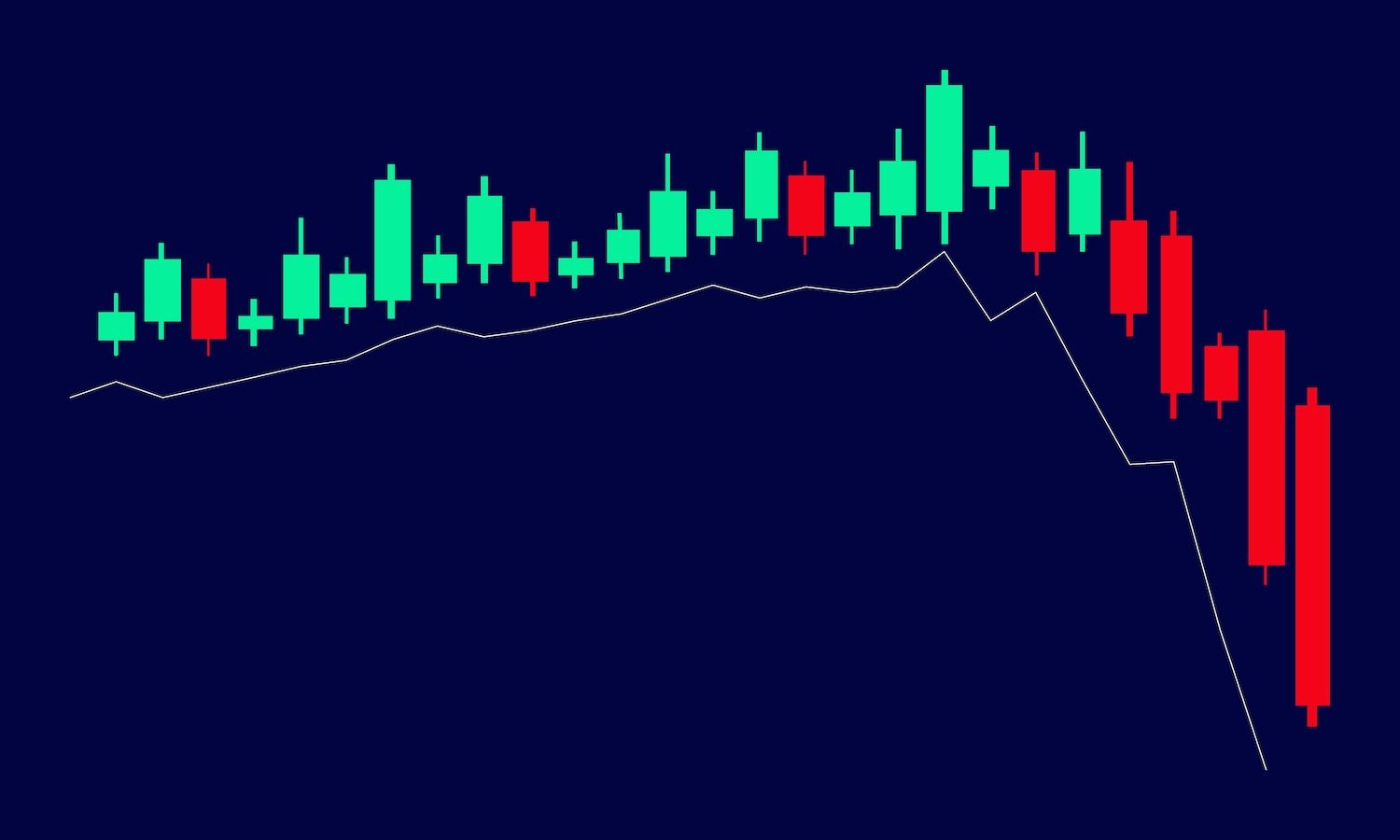
When to Cut Losses Versus When to Hold Through the Storm
The decision to sell or hold is the most consequential choice a crypto trader faces after a loss. Expert opinion splits along clear lines, but a coherent framework does emerge from the best available advice.
Yuri Berg, MBA, of FinchTrade, states that stop-losses are survival tools, not suggestions, and recommends exits at 5% to 10% below entry for active trades. A ScienceDirect study analyzing 147 cryptocurrencies from 2015 to 2022 confirmed that a stop-loss momentum strategy at the 10% to 20% level delivered meaningfully higher returns and Sharpe ratios than strategies with wider thresholds.
The evidence supports the principle that realizing losses sooner outperforms waiting.
Professor Robert R. Johnson, PhD, CFA, of Creighton University, takes the strongest position, arguing that crypto lacks fundamental financial valuation tools. More moderate voices like Mitchell DiRaimondo of SteelWave advise that if you understand what you own, believe in the underlying thesis, and measure your time horizon in cycles rather than quarters, holding may be justified. The key distinction is between conviction-based holding and hope-based denial, and the line between them is thinner than most traders admit.
The sunk cost fallacy is the central psychological trap. Schwab warns that the desire to recover sunk costs may keep a trader from cutting a losing position or, worse, cause doubling down. Richard Thaler, the behavioral economist who first formalized the sunk cost effect, demonstrated that humans irrationally factor past expenditures into future decisions even when those expenditures are irretrievable.
The antidote is a simple question: if this asset were not already in the portfolio, would it be worth buying today at this price? If the answer is no, the rational choice is to exit.
Practical risk management provides structure for these decisions.
The 1% rule — never risking more than 1% of total portfolio value on a single trade — prevents catastrophic single-trade losses. Morgan Stanley's Global Investment Committee recommends limiting crypto to 2% to 4% of total portfolio for aggressive investors and zero for conservative ones. Maintaining a minimum 2:1 risk-reward ratio on every trade ensures that winners meaningfully outpace losers over time.
Also Read: Buterin Says Running An Ethereum Node Is Too Hard - And That Needs to Change
Trading Journals Turn Emotional Chaos Into Systematic Improvement
Journaling is one of the most evidence-backed tools for improving both trading performance and psychological resilience after losses. Dr. Brett Steenbarger, a clinical psychologist and author of The Psychology of Trading, considers the journal essential to deliberate practice but warns that keeping one has minimal value unless it is part of a cumulative process of assessment and improvement.
The psychological research behind journaling is compelling. A systematic review of 20 randomized controlled trials published in PubMed Central found that journaling interventions produced statistically significant improvements in mental health measures compared with controls.
Neuroscientist Dr. Matthew Lieberman at UCLA demonstrated that regular self-reflective writing increases connectivity between the prefrontal cortex and the limbic system, literally strengthening the bridge between rational thought and emotional processing. A study by Klein and Boals showed that expressive writing about stressful events improved working memory by freeing mental resources previously consumed by intrusive thoughts.
Steenbarger identifies five common journaling mistakes: inconsistency, isolating entries from each other, focusing on reporting rather than analysis, venting without constructive planning, and covering either psychology or trades but not both. His recommended approach requires each entry to look backward — what happened and why — and forward, establishing concrete goals and specific plans. Each subsequent entry should review whether the previous goal was met.
A complete trading journal entry should capture the date and trading pair, entry and exit prices, position size, stop-loss and take-profit levels, the strategy used, the rationale for the trade, the emotional state before, during, and after the trade, and lessons learned.
The emotional dimension is especially critical. CBT applied to trading, as described in a Psychology Today interview with Steenbarger and Dr. Seth Gillihan, focuses on changing self-talk to change emotional responses to profits and losses. The mental pause technique — a mandatory 30-second delay before any trade, asking whether the decision is based on a plan or an emotion — activates the prefrontal cortex and disengages impulsive thinking.
Also Read: Bitcoin Whale Wallets Resume Buying At $71K As ETFs Log First 2026 Inflow Streak
Rebuilding a Portfolio Demands Discipline Over Speed
After significant losses, the instinct to recover quickly leads to the same aggressive behavior that caused the losses in the first place. The research unanimously supports a slow, systematic rebuild.
Dollar-cost averaging is the foundation strategy. A Kraken survey found that 59% of crypto investors identified DCA as their top investment approach. Fidelity's research shows that DCA into Bitcoin from the December 2017 peak would have dramatically outperformed a lump-sum purchase, since spreading buys across the 2018–2019 bear market lowered the average cost basis substantially.
The underlying logic is simple: no one can time the bottom, so removing timing from the equation eliminates the most common source of error.
Diversification frameworks from institutional sources provide clear guidelines. VanEck's research from May 2024 found that the optimal crypto-only allocation was roughly 71% Bitcoin and 29% Ethereum (ETH) for the highest risk-adjusted returns. Within a traditional 60/40 portfolio, adding just 3% BTC and 3% ETH achieved the best Sharpe ratio.
Fidelity's research demonstrated that even a 1% Bitcoin allocation contributed 2.7% of overall portfolio volatility, while 5% contributed 17.8%, underscoring how quickly crypto risk compounds. CNBC and Grayscale recommend capping crypto at no more than 5% of a well-balanced portfolio.
Rebalancing enforces the discipline that emotions undermine.
Threshold-based rebalancing — selling when any position drifts more than 5% from a target allocation — mechanically implements a buy-low, sell-high approach by trimming outperformers and adding to underperformers.
The four-stage risk management framework recommended by financial crime analysts involves risk identification, risk analysis through scenario modeling, risk assessment using likelihood-impact matrices, and treatment planning that includes avoidance, reduction, or acceptance strategies. In practical terms, that means sizing each trade to 1% to 3% of total capital, maintaining stop-losses on every position, and holding 20% to 30% in stablecoins during periods of extreme uncertainty.
Crypto Communities Bear Collective Psychological Scars From Major Crashes
The human cost of crypto crashes extends far beyond balance sheets. When the Terra/Luna collapse struck in May 2022, the r/TerraLuna subreddit — with over 44,000 members — pinned suicide hotline numbers at the top of the page after users expressed suicidal thoughts. One user wrote publicly about losing over $450,000 and being unable to pay the bank. CNN reported that multiple traders had more than 90% of their net worth concentrated in Luna. Taiwan News documented a suicide in Taichung connected to nearly $2 million in Luna-related losses.
On Fortune, investors shared regret, with one stating plainly that greed prevented them from exiting in time.
The FTX collapse in November 2022 compounded this collective trauma. A Nasdaq analysis of crypto catastrophe psychology noted that financial devastation leads to social isolation, as victims perceive judgment from their surroundings.
Trauma psychologist Peter Levine explained that certain financial shocks can alter a person's biological, psychological, and social equilibrium to such a degree that the memory of a single event dominates all subsequent experience.
The most recent major correction — the February 2026 crash triggered by Trump's 15% global tariff announcement — drove Bitcoin from $93,000 to approximately $60,000. Record liquidations of $2.56 billion to $3.2 billion over a single weekend affected an estimated 1.6 million traders.
As exchanges increasingly offer 100x leverage, industry observers have called for platforms to implement mental health resources, risk warnings, and mechanisms like order delay toggles during extreme volatility. Critical mental health resources include the 988 Suicide & Crisis Lifeline, the Crisis Text Line (text HOME to 741741), and NAMI, which provides one-on-one support through its HelpLine.
Also Read: Brazil's Crypto Industry Unites Against Proposed Stablecoin Tax, Threatens Lawsuit
Tax-Loss Harvesting Turns Crypto Losses Into a Financial Advantage
Crypto losses can provide significant tax benefits that partially offset the financial damage. The IRS classifies cryptocurrency as property under Notice 2014-21, which means capital losses can offset capital gains dollar-for-dollar, with excess losses deducting up to $3,000 per year from ordinary income. Unused losses carry forward indefinitely.
The single most important tax distinction for crypto investors is that the wash sale rule does not currently apply to cryptocurrency. Section 1091 of the Internal Revenue Code applies only to stocks or securities, and since the IRS classifies crypto as property, traders can sell at a loss, immediately repurchase the same asset, and still claim the full capital loss deduction.
This is an arbitrage impossible with stocks, which require a 30-day waiting period. Multiple legislative proposals to close this loophole have been introduced since 2021, including in the Biden Administration's proposed FY2025 budget, but none have been enacted as of Mar. 2026.
Practical tax-loss harvesting works in a straightforward sequence.
The trader identifies positions trading below cost basis, sells to realize the loss, uses the losses to offset capital gains from any investment, deducts up to $3,000 from ordinary income, and carries forward the remainder. Harvesting short-term losses first provides greater savings because short-term gains are taxed at ordinary income rates of up to 37%, compared with the 20% maximum on long-term capital gains.
CPA Marianela Collado of Tobias Financial Advisors told CNBC that the strategy amounts to taking advantage of an opportunity that exists only in that specific moment.
New reporting requirements are changing the compliance landscape. Starting Jan. 1, 2025, crypto brokers began reporting gross proceeds from digital asset transactions to the IRS on the new Form 1099-DA.
Cost basis reporting begins for assets acquired on or after Jan. 1, 2026. The DeFi Broker Rule — which would have required decentralized platforms to report as brokers — was repealed in Mar. 2025 when the Senate voted 70–28 and President Trump signed the measure.
Also Read: AI Agents Can't Use Credit Cards At Scale - Stablecoin Builders Say That's Their Opportunity
The 2025–2026 Cycle Shows Why This Knowledge Matters Now
The current market provides a vivid case study in every dynamic discussed throughout this guide. Bitcoin surged from roughly $74,000 in Apr. 2025 to an all-time high above $126,000 on Oct. 6, 2025, driven by spot Bitcoin ETF inflows, the GENIUS Act establishing stablecoin regulation, and Trump's Strategic Bitcoin Reserve executive order.
Then the cycle turned. The Oct. 10, 2025 crash — triggered by tariff threats against China — produced $19 billion in liquidations. By late December, Bitcoin had fallen below $90,000, with BlackRock's IBIT fund posting $25.4 billion in 2025 inflows even as returns turned negative.
The February 2026 crash drove prices to approximately $60,000, representing a drawdown exceeding 50% from the all-time high.
Six overlapping factors converged: Trump's 15% global tariff shock, a tech stock selloff, record leveraged liquidations, institutional ETF outflows of $3.8 billion, Bitcoin breaking below its 365-day moving average for the first time since Mar. 2022, and escalating geopolitical tensions.
As of mid-Mar. 2026, Bitcoin has stabilized between $65,000 and $70,000, with the Fear & Greed Index recovering from extreme lows of 11 to around 25. The cycle debate remains active — the October 2025 peak came exactly 1,064 days after the November 2022 cycle low, the same duration as both the 2017 and 2021 cycle peaks.
Whether that signals a structural top or a temporary correction within a longer bull market is the central question. Coinbase Institutional describes the current setup as resembling 1996 more than 1999. Meanwhile, security threats continue to escalate. The Bybit hack of February 2025 — $1.5 billion stolen by North Korea's Lazarus Group — was the largest crypto heist in history, a reminder that losses in this market are not limited to bad trades.
Also Read: IRS's New Crypto Tax Forms Leave Cost Basis Gap That Could Trigger Automated Letters For Millions
Conclusion
Handling crypto losses is fundamentally a psychological challenge with financial mechanics attached. The research consistently shows that what traders do after a loss — not the loss itself — determines long-term outcomes. The 73% to 81% of retail investors who lose money in crypto markets are not doomed by conditions alone; they are undermined by loss aversion driving irrational holding, cortisol-fueled revenge trading, leverage-amplified recovery attempts, and panic selling at bottoms. Each of these behaviors is well-documented, neurologically predictable, and preventable.
The practical toolkit that emerges from the evidence is clear: automated stop-losses at 5% to 10% prevent catastrophic single-trade losses; the 1% position-sizing rule ensures no single bet can destroy a portfolio; trading journals with emotional tracking build the self-awareness that interrupts destructive patterns; dollar-cost averaging into a diversified portfolio capped at 3% to 5% of total wealth provides the discipline that emotions alone cannot.
Tax-loss harvesting, exploiting the wash sale rule exemption while it lasts, turns losses into genuine savings that accelerate recovery.
Traders who treat losses as data rather than identity, who journal rather than ruminate, and who rebuild systematically rather than impulsively, position themselves among the 7% who survive beyond five years. In a market where the majority loses, that disciplined minority advantage may be the most valuable edge of all.
Read Next: Bitcoin Shows Mixed Signals With Rising ETF Demand But Persistent Capital Outflows