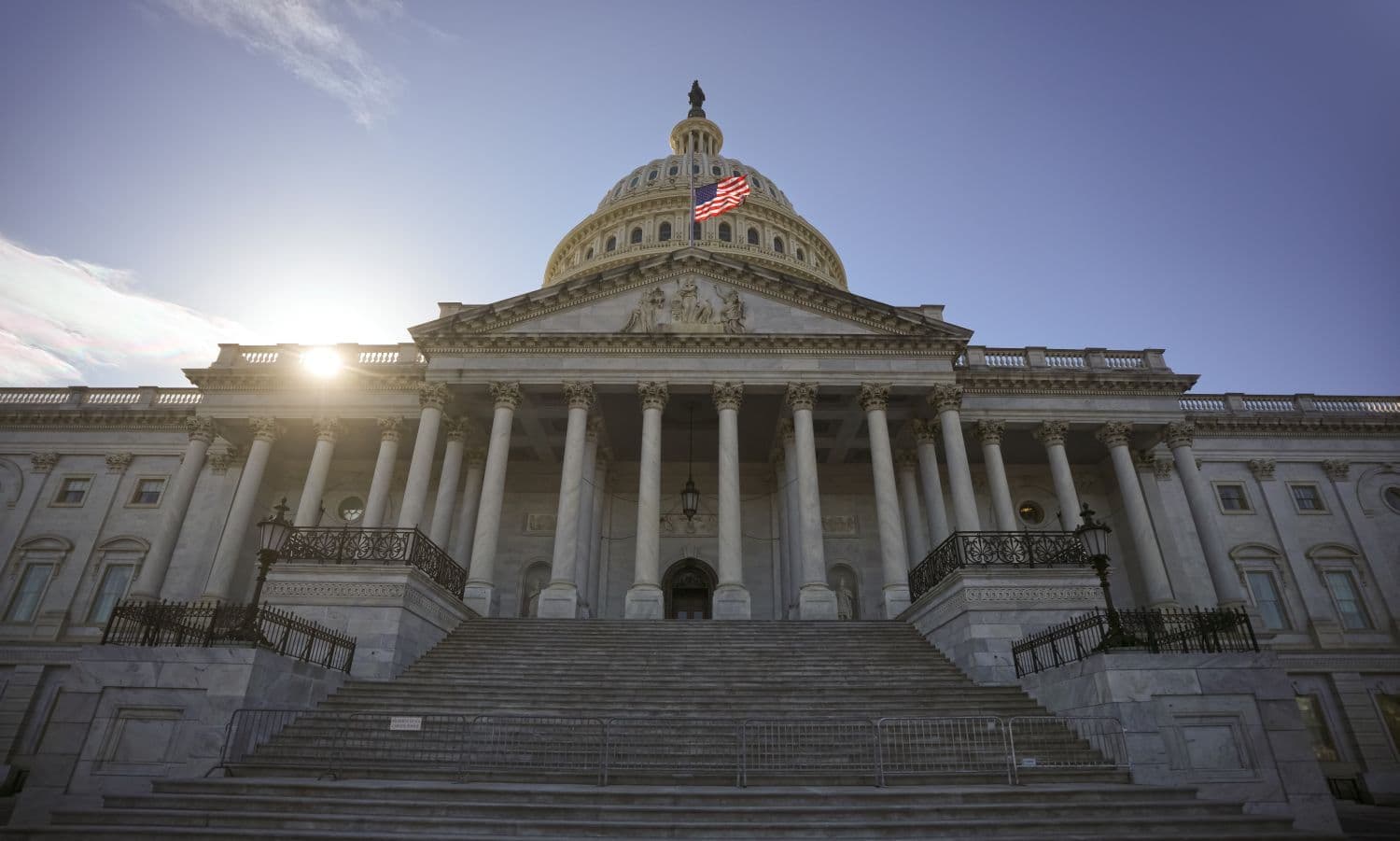
U.S. senators this week unveiled a draft bill aimed at defining how cryptocurrencies are regulated in the United States, a move that industry participants say could begin to resolve years of legal ambiguity that have constrained investment, product development and institutional participation.
The proposal seeks to establish clearer definitions for digital assets and formally divide oversight responsibilities between the Securities and Exchange Commission (SEC) and the Commodity Futures Trading Commission (CFTC).
Under the draft, the CFTC would gain authority over spot markets for digital commodities, while the SEC would retain jurisdiction over securities and fundraising activity, a regulatory split that has been central to policy debate for years.
Industry executives broadly describe the draft as a meaningful shift away from enforcement-led regulation toward statutory clarity, even as questions remain over how far the legislation will go once amendments and political negotiations begin.
A Long-Awaited Attempt To Define Regulatory Boundaries
Executives across the crypto industry say the draft bill addresses one of the sector’s most persistent challenges: uncertainty over which regulator has authority over which assets and activities.
That ambiguity, they argue, has discouraged institutional capital and slowed product development, particularly in the U.S.
Speaking with Yellow.com. Hedy Wang, CEO and co-founder of Block Street, said the draft resembles a long-overdue rulebook for the industry.
In her view, clearer definitions of digital assets and a more explicit allocation of regulatory authority could reduce hesitation among institutional investors that have remained on the sidelines due to legal risk.
Others stressed that the value of the bill lies in its effort to deliver clarity through statute rather than future regulatory interpretation.
Rachel Lin, CEO of SynFutures, said drawing clear lines between securities and commodities and defining the CFTC’s role in spot markets, would provide builders and investors with the certainty they have repeatedly called for.
Also Read: Will The Supreme Court Spark Bitcoin's Breakout? $150B Tariff Case Has Traders On Edge
She added that unresolved details, particularly around stablecoins, will be critical in determining whether the framework promotes competition or reinforces existing financial incumbents.
Stablecoins Emerge As A Key Fault Line
The draft legislation also tackles stablecoin regulation, an area that has generated sustained friction between crypto firms and the banking sector.
Under the proposal, crypto companies would be prohibited from paying interest solely for holding stablecoins, but could still offer rewards tied to activities such as payments or loyalty programs.
The SEC and CFTC would be directed to issue joint disclosure rules governing such incentives.
Banking groups have argued that interest-bearing stablecoins could draw deposits away from insured banks and threaten financial stability, while crypto advocates counter that banning rewards would stifle innovation and limit consumer choice.
David Carvalho, CEO of Naoris Protocol, said the bill reflects a shift from years of abstract discussion to concrete rulemaking.
He noted that uncertainty over which regulator might assert authority has previously caused teams to delay or abandon projects.
While cautioning that legislative compromises could dilute the bill, Carvalho said even partial clarity could materially reduce risk for companies operating in the U.S.
Legislative Momentum Builds, Outcome Still Uncertain
The release of the draft coincides with procedural movement in the Senate.
The Senate Agriculture Committee, which oversees the CFTC, has set a timetable to release legislative text by January 21 and hold a markup on January 27, marking the first fixed schedule for advancing crypto market structure legislation.
Lawmakers have been working to reconcile competing proposals, including the House-passed Digital Asset Market Clarity Act, which similarly seeks to divide oversight between the SEC and CFTC.
Whether the Senate bill ultimately becomes law remains uncertain as Congress balances competing interests ahead of the 2026 midterm elections.
Still, industry participants say the combination of a detailed draft and a defined legislative process marks the clearest signal yet that Congress is attempting to replace years of regulatory uncertainty with a structured framework for U.S. crypto markets.
Read Next: Wintermute Warns Altcoin Era Over As Institutions Take Over Bitcoin & Ether