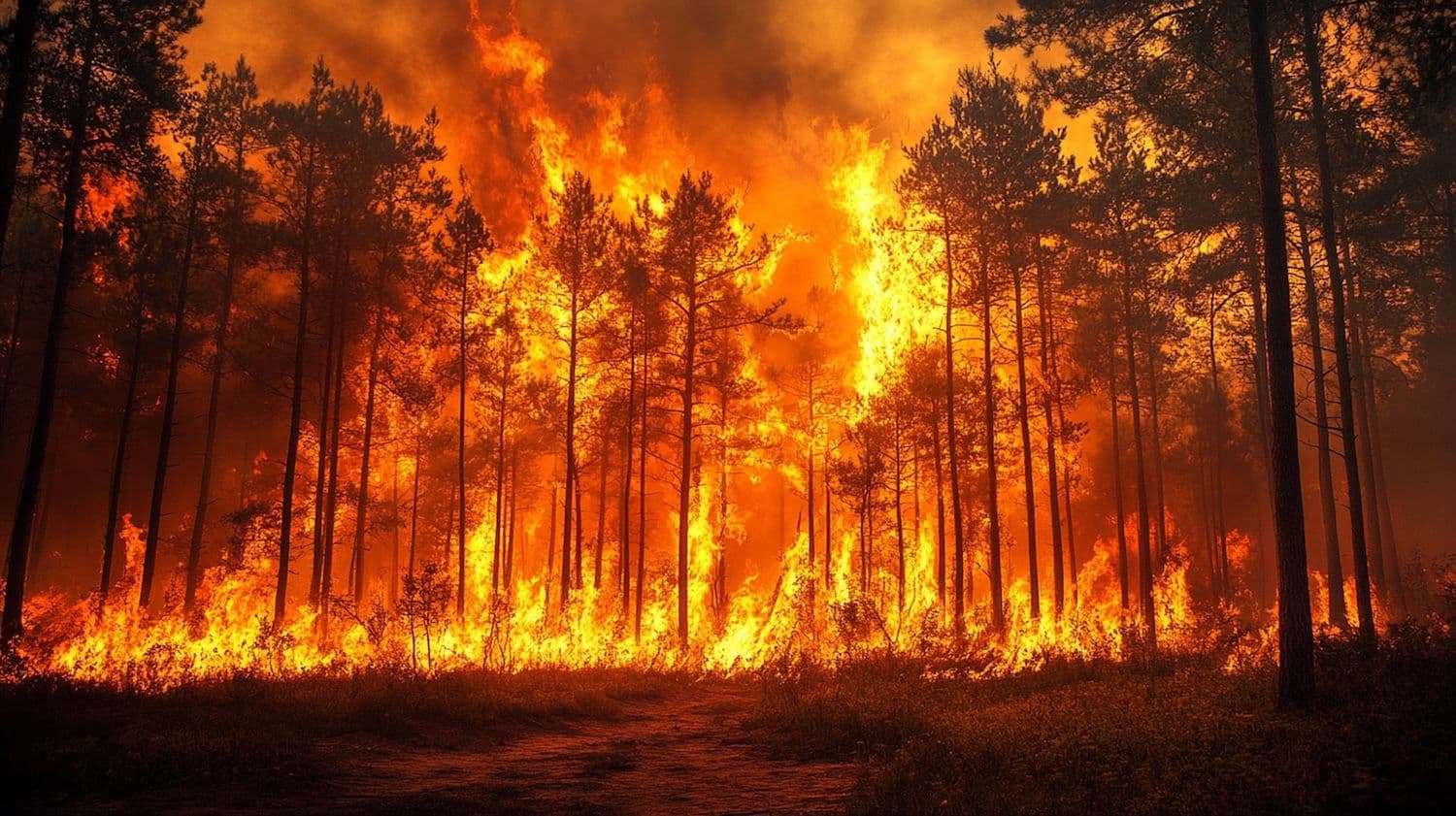
A very strong El Nino carries 81% odds by December, yet forecasters say Western wildfire risk stays elevated through 2026, another season for prediction market traders.
Key Points:
- NOAA forecasters now put 81% odds on a very strong El Nino between October and December 2026.
- Agency research found El Nino lowers wildfire risk only the summer after a wet fall and winter, pushing Western relief to 2027.
- Polymarket and Kalshi continue to list weather and wildfire contracts, drawing objections from fire scientists, investigators and ethicists.
El Nino Odds Reach 81% As Fire Relief Waits
The National Oceanic and Atmospheric Administration confirmed in June that El Nino had formed across the tropical Pacific. Its Climate Prediction Center has since put the odds of a very strong event at 81% for October through December.
Models now rank the developing pattern among the strongest since record keeping began in 1950.
Agency researchers who studied nearly four decades of ocean cycles and burn areas found that El Nino trims fire risk only after it delivers a wet fall, winter and spring.
Andrew Hoell, a NOAA research meteorologist and study co-author, said that helping effect will not reach most of the country until next year, and the work stressed that El Nino shifts the odds without erasing them.
Also Read: ChatGPT Allegedly Nearly Killed A Pastor, And Now A Court Will Hear It
Polymarket And Kalshi Wildfire Contracts Draw Warnings
Polymarket runs a wildfire category alongside daily temperature contracts settled in USDC (usdc), and Kalshi lists weather markets covering more than a dozen American cities. A newer site called Wyldfyre prices California county fire risk and currently runs on simulated trading only. Combined monthly volume across the two largest platforms climbed from under $5 billion in September 2025 to roughly $24 billion in April 2026, though weather remains a thin slice of that figure.
Fire scientists and ethicists say trading on burn totals could reward arson or tempt insiders to let a fire run longer than it should.
Kaitlyn Trudeau, a climate scientist at Climate Central, said the format pushes people to treat real disasters as video games, while retired Los Angeles County arson investigator Ed Nordskog pointed to a connection between compulsive gambling and fire setting.
Polymarket says its contracts supply information rather than commentary, and that pulling them would only make accurate data harder for affected residents to reach during a fast moving emergency.
Fire Agencies Reject Prediction Market Data
CAL FIRE and the U.S. Forest Service both say their fire modeling relies on validated science and ignores wagering systems, crowd predictions and similar mechanisms entirely.
Lawmakers from Utah and California have introduced federal legislation to bar contracts tied to terrorism, war and illegal activity, though none of the proposals names wildfire.
Wildfire betting is not new to these venues. Traders spent about $1.2 million on roughly 20 markets covering the Palisades and Eaton fires in January 2025. Sensors at a Paris airport later logged unexplained temperature spikes during Polymarket weather trades, prompting a police complaint from France's national weather service.
Read Next: Tesla Promises To Spend More Than $25B, And Investors Flinch