
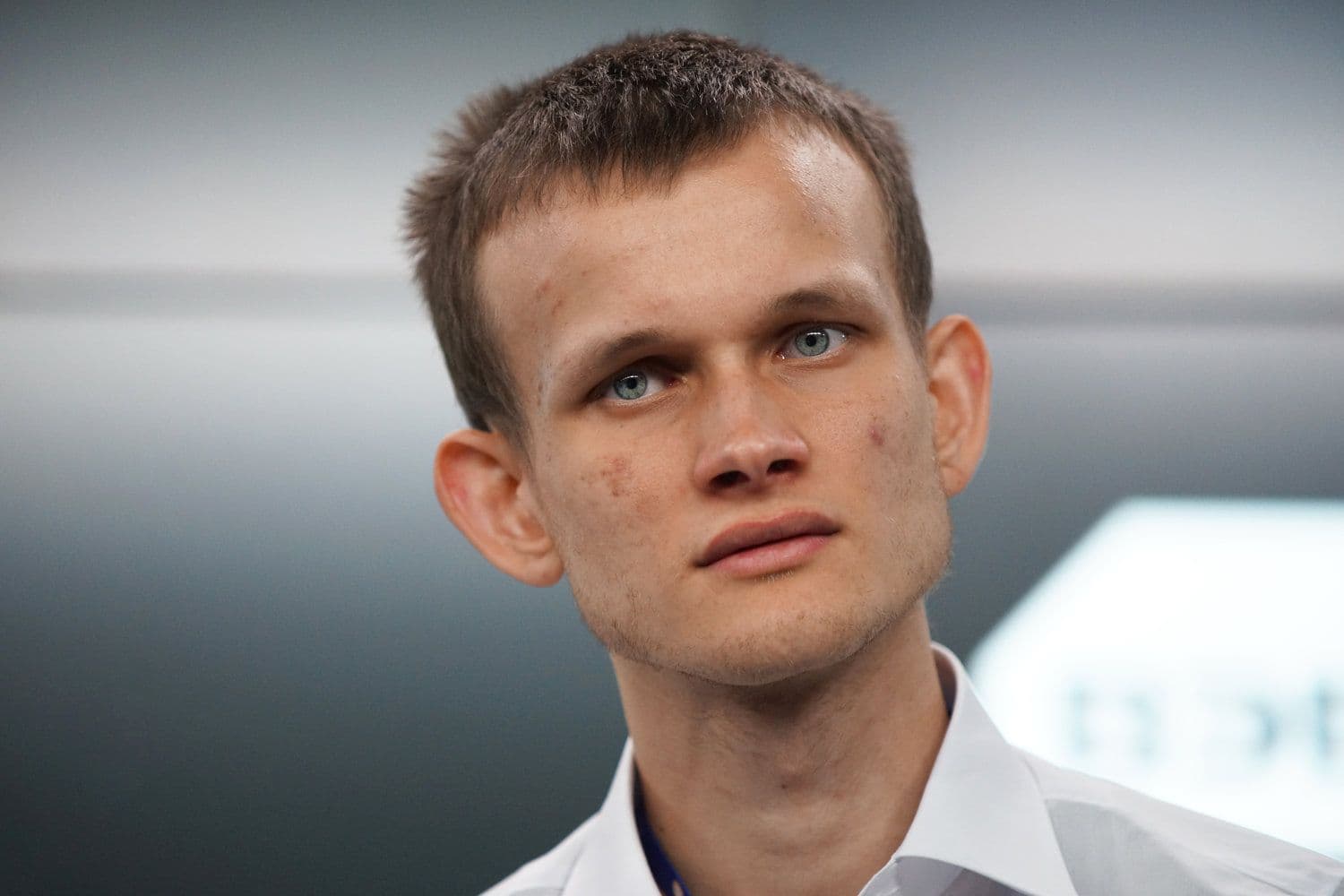
Ethereum (ETH) co-founder Vitalik Buterin, who was born in Russia and raised in Canada, published a lengthy post on X ahead of the fourth anniversary of Russia's full-scale invasion of Ukraine, declaring unequivocal support for Kyiv and calling the war "criminal aggression" — while also outlining his vision for Russia's future and urging the country's opposition to develop new strategies rather than rely on what he described as a stagnant status quo.
What Happened: Buterin Breaks Silence
Buterin posted his statement on Feb. 13, days before the Feb. 24 anniversary. He said he had been watching the political situation in Russia and Ukraine throughout his life but had not been deeply involved, noting that he once sent Alexei Navalny (Russian opposition leader who died in prison in Feb. 2024) one Bitcoin (BTC) in 2017.
In the post, Buterin rejected the two most common justifications for the invasion — Russia's claimed right to prevent NATO expansion near its borders, and the argument that Russian-speaking populations in Crimea and Donbas had a democratic right to join Russia. He acknowledged that Western nations had made mistakes in the 1990s and 2000s, and that some grievances had merit. But none of that, he wrote, could justify what happened in 2022.
He pointed to specific events as evidence that the war's aims went far beyond protecting Donbas: the attack on the Mariupol theater, the killings in Bucha, strikes on hospitals, and what he called "human safari" in Kherson over the past three years.
He also cited an article published by state news agency RIA Novosti in Feb. 2022, which he said revealed Russia's true intentions when it believed it had already won.
Buterin credited U.S. President Donald Trump and Vice President JD Vance with inadvertently exposing Russian President Vladimir Putin's unwillingness to negotiate, saying they gave Putin such a favorable opportunity for peace that his refusal made clear who bears responsibility for the war's continuation.
The Ethereum co-founder wrote that having the courage to "call evil by its name" is essential — a lesson he said he learned not just in politics but also in the crypto industry.
Also Read: Analysts Split On Whether Aster Mainnet Rally Can Outlast Unlock
Why It Matters: Opposition Stalemate
In the second part of his post, Buterin turned to what he sees as a dead end for Russia's political opposition. He compared the situation to what he perceives as a stalemate in the cryptocurrency industry, where last year's expectations around meme coins and favorable legislation under Trump failed to materialize.
He described a class of opposition figures who left Russia after 2021-22 and settled into comfortable roles as professional dissidents, collecting donations while producing few tangible results.
He argued that new voices and new ideas are needed, and that the opposition's current leadership structure prevents them from emerging.
Buterin also challenged three common Western views of Russia — that Putin is not so bad and should be engaged, that ordinary Russians are innocent victims of an evil leader, and that all Russians are inherently imperialistic.
He rejected all three, describing Putin as evil while characterizing the Russian public as neither angels nor devils.
Many Russians who spoke of freedom and decentralization disappointed him, he wrote, by failing to apply those principles to the most obvious case.
Looking ahead, Buterin said Ukraine needs continued support to degrade Russia's military capacity to the point where Putin faces a choice between full mobilization and a ceasefire. He expressed hope the war could end this year.
He also argued that Russia's greatest cultural contributions lie not in Dostoevsky or Tchaikovsky but in mathematics, computer science, biology and the tradition of cosmism — and that the country's future should be built around scientific collaboration rather than geopolitics.
Short-term, he wrote, the priority remains helping Ukraine. Long-term, the question is what comes after Putin — and having a concrete plan capable of building a broad coalition, both inside Russia and internationally, is a critical first step.
