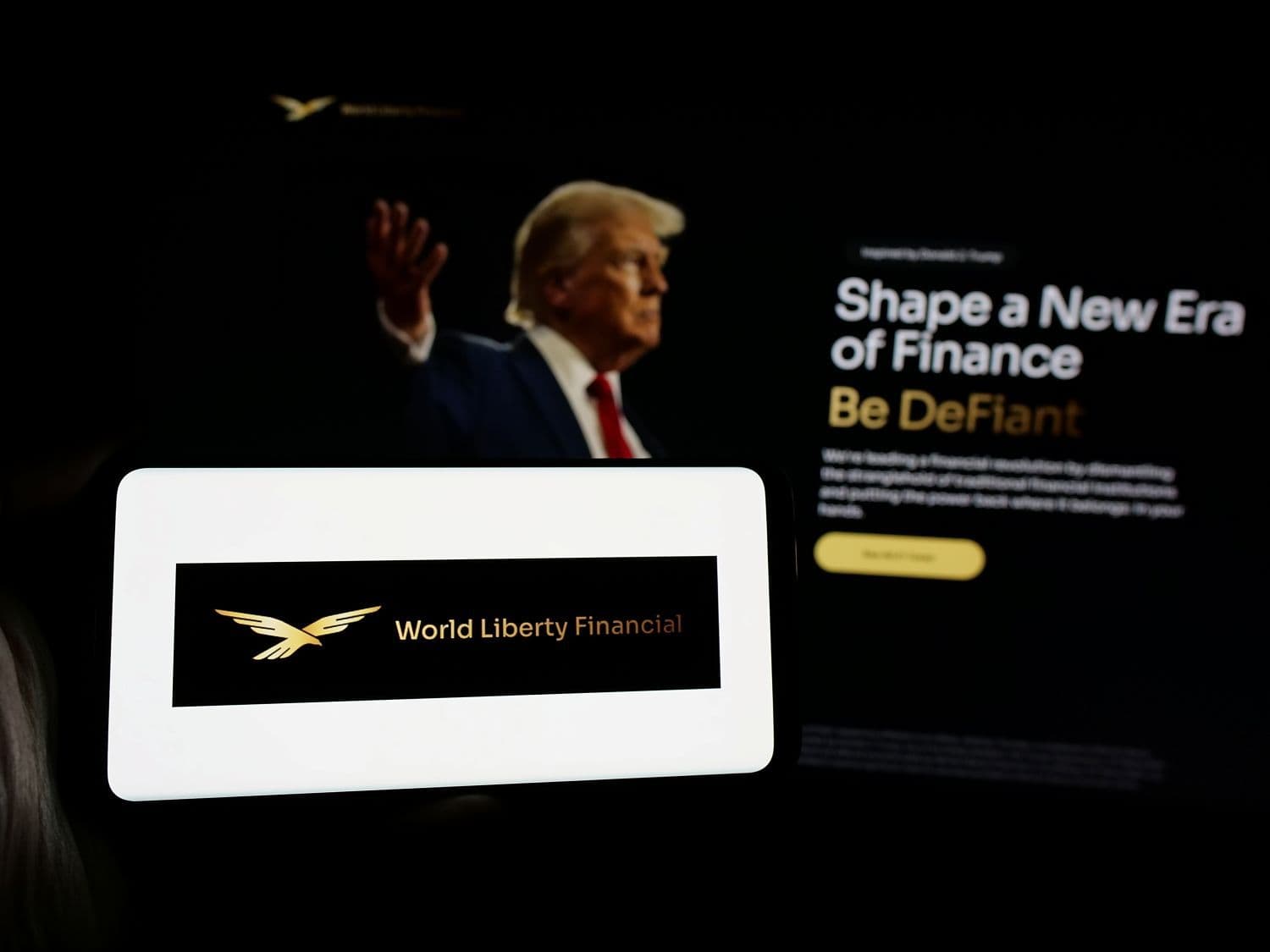
Trump-backed World Liberty Financial has moved to place its stablecoin business squarely within the U.S. banking system, announcing that its subsidiary, WLTC Holdings LLC, has applied for a national trust bank charter to issue and custody its dollar-backed USD1 stablecoin under federal supervision.
The application, filed with the Office of the Comptroller of the Currency, seeks approval to establish World Liberty Trust Company, National Association, a proposed trust bank designed specifically to handle stablecoin issuance, custody, and conversion.
If approved, the charter would allow World Liberty Financial to consolidate core USD1 operations within a single regulated entity, effectively bringing the stablecoin fully onshore.
World Liberty Financial said the move is aimed at meeting rising institutional demand for regulated stablecoin infrastructure, as USD1 has already gained traction in cross-border payments, settlement, and treasury operations.
A Push To Regulated, Full-Stack Stablecoin Banking
According to the company, USD1 has surpassed $3.3 billion in circulation within its first year, making it one of the fastest-growing dollar-pegged stablecoins to date.
The proposed trust bank would serve institutional clients such as cryptocurrency exchanges, market makers, and investment firms, while also providing custody for digital assets and conversion services for other stablecoins.
Under the planned structure, World Liberty Trust Company would offer three core services: issuance and redemption of USD1, on- and off-ramp services between U.S. dollars and USD1, and custody and conversion for USD1 and other approved stablecoins.
The company said it intends to launch these services without fees initially, subject to regulatory approval.
The trust bank would operate under the framework of the GENIUS Act and be subject to federal oversight, including anti-money laundering and sanctions compliance, segregated customer assets, and regular examinations.
Positioning USD1 As An Institutional Settlement Asset
World Liberty Financial said USD1 is fully backed by U.S. dollar deposits at regulated depository institutions and by funds holding short-duration U.S. Treasury obligations.
Also Read: Bitcoin Just Lost Billions In Stealth Demand — The MSCI Rule Nobody Saw Coming
The stablecoin is currently live across ten blockchain networks, including Ethereum (ETH), Solana (SOL), BNB Smart Chain (BNB), TRON (TRX), Aptos (APT), among others, allowing for near-instant settlement and programmable payments across jurisdictions.
The company argues that a national trust charter would provide the regulatory clarity banks, asset managers, and corporations require to expand stablecoin usage at scale, particularly for tokenized settlement and treasury management.
BitGo, which has supported USD1’s infrastructure, said it expects to remain a strategic partner as the trust bank becomes operational and USD1 enters its next phase of growth.
What Is World Liberty Financial
World Liberty Financial has emerged over the past year as a politically aligned entrant in the stablecoin sector, positioning itself as a U.S.-centric alternative to offshore dollar tokens.
The project has publicly aligned itself with President Donald Trump’s broader push to bring digital asset activity under U.S. jurisdiction and strengthen the country’s role in global financial infrastructure.
Unlike earlier stablecoin issuers that operated primarily through state-level licenses or offshore entities, World Liberty Financial has emphasized federal oversight and institutional-grade compliance from the outset.
Its decision to pursue a national trust bank charter places it among a small but growing group of crypto-native firms seeking direct integration with the U.S. banking system rather than parallel financial rails.
The application comes amid intensifying regulatory scrutiny of stablecoins and ongoing debate in Washington over how dollar-backed digital assets should be supervised.
By seeking an OCC-chartered trust bank, World Liberty Financial is signaling that it intends to compete in the stablecoin market not only on scale, but on regulatory posture.
Approval of the charter would mark a significant step toward embedding USD1 within the U.S. financial system, potentially reshaping how institutions access and deploy stablecoins for payments and settlement.
Read Next: They Built Banks The SEC Can't Touch — Inside Crypto's $365M Self-Custody Empire