

The late March and early April 2026 airdrop window is shaping up as one of the densest token launch periods in recent crypto history, with Backpack staging the only confirmed blockbuster token generation event on Mar. 23 while several other anticipated drops from Jupiter, OpenSea, and Chainlink have been delayed, canceled, or exposed as outright scams amid a broader market downturn that has sent Bitcoin (BTC) down more than 27 percent since the start of the year.
The Airdrop Frenzy on X
Crypto Twitter has spent the past two weeks in a state of collective hysteria over token claims. Every few hours, a new thread goes viral with screenshots of wallet balances, eligibility checkers, and countdown timers urging followers to act before a window closes.
Much of the urgency is manufactured. Accounts with large followings have been posting referral links alongside claims that users can receive anywhere from $500 to $15,000 in retroactive rewards from protocols that never announced such programs.
The pattern is familiar to anyone who watched the 2024 airdrop cycle.
Engagement farming thrives on artificial scarcity — a ticking clock, a claim page that might disappear, a wallet screenshot showing five-figure payouts that may or may not be real.
What makes March 2026 different is the collision of a genuinely packed TGE calendar with suppressed token valuations. Projects that might have launched into a bull market six months ago are now navigating a climate where early sellers dominate and initial liquidity is thin.
The result is a landscape where legitimate opportunities sit alongside wallet-draining phishing sites, and telling the two apart requires more diligence than most retail participants seem willing to invest.
The Opinion token, which launched on Mar. 5, dropped 17.8 percent within its first 24 hours as airdrop recipients dumped their allocations immediately — a pattern that has become standard rather than exceptional.
Also Read: FTX Sends $2.2B To Creditors March 31 - Here's Who Gets Paid First
Backpack Leads the March TGE Calendar
Backpack (BP) is the clear headline event of late March. The Solana (SOL)-based ecosystem — which comprises a regulated centralized exchange, a multichain wallet, and the Mad Lads NFT collection — will launch its BP token on Mar. 23, as confirmed by CEO Armani Ferrante via livestream.
The tokenomics are structurally unusual. Of the one billion total supply, 250 million tokens unlock at TGE, with 24 percent going to points program participants and one percent reserved for Mad Lads NFT holders.
The distinguishing feature is that zero tokens go to founders, employees, or investors at launch. Every token in the initial unlock is community-allocated, a structure that is rare among exchange tokens.
The remaining 75 percent of supply splits between growth-milestone-triggered unlocks and a post-IPO corporate treasury.
Backpack has never conducted a token sale of any kind. The company raised capital exclusively through equity rounds, most recently exploring a $50 million raise at a $1 billion valuation.
Perhaps the most novel element is equity staking. Users who stake BP tokens for a minimum of one year can convert them into actual company equity at a fixed ratio, with 20 percent of Backpack available through this mechanism. Long-term stakers also receive priority allocation for IPO shares.
Users needed to complete TGE verification, including KYC, by approximately Mar. 15. Pre-market trading launched on MEXC on Mar. 12. Polymarket assigns a 97 percent probability to the Mar. 23 launch, though fully diluted valuation expectations have cooled considerably — the odds of a $1 billion-plus FDV dropped from 61 percent in January to roughly nine percent by mid-March.
One important warning: a fake site called bp-event.fun was identified as a cryptocurrency drainer masquerading as a "Barking Puppy" BP airdrop.
Users should only interact with verified Backpack channels at backpack.exchange.
Also Read: Why Bitcoin Is Up 15% Since The War Started While Nasdaq Drops
Jupiter's Jupuary Was Killed by Its Own DAO
Jupiter (JUP) had planned to distribute 700 million tokens through its Jupuary 2026 airdrop, targeting fee-paying users and stakers on the Solana-based DEX aggregator. That plan is now dead, at least for the foreseeable future.
Roughly 75 percent of voters supported a "Net-Zero Emissions" proposal that concluded around Feb. 22. The vote shelved the airdrop, paused team reserve vesting, and returned all 700 million tokens to a community cold multisig wallet.
The original allocation had broken down as 170 million JUP for fee-paying users across swaps, perpetuals, DCA, and lending, 30 million for stakers, 200 million as a bonus pool for holders who staked through all of 2026, and 300 million reserved for JupNet omnichain incentives. The eligibility snapshot was taken on Jan. 30, so eligibility data exists even though distribution has not occurred.
Some community members have referenced a possible May redistribution, but nothing official supports that timeline.
A community member posted a formal proposal on Mar. 3 calling for a revote, arguing the postponement was a dangerous precedent that effectively overwrote a previously approved DAO vote from January 2025.
Community sentiment is deeply polarized. JUP trades around $0.12 to $0.20, down more than 90 percent from its all-time high of $2.04. A $35 million institutional investment from ParaFi briefly lifted spirits in early March, but the airdrop cancellation remains a sore point for users who spent months farming eligibility.
The eligibility checker at jup.ag still exists but has limited practical utility with no active claim window.
Also Read: Vitalik Backs New Ethereum Rule That Confirms Blocks In 12 Seconds
The Chainlink "Silent Rewards" Narrative Is a Documented Scam
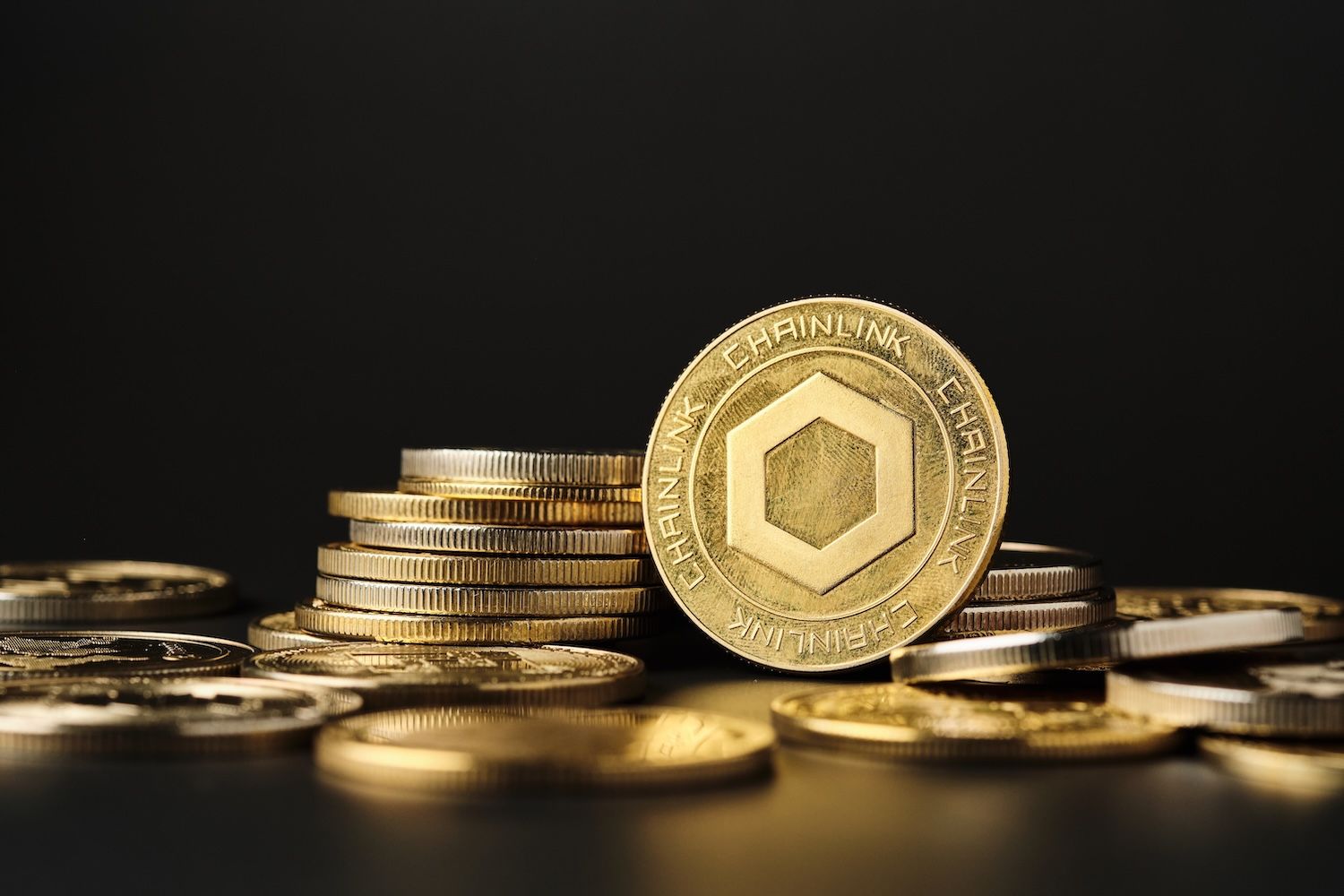
Claims circulating on crypto Twitter about Chainlink (LINK) offering "silent rewards" of $500 to $15,000 to past oracle users, stakers, or DeFi participants are not supported by any official Chainlink announcement.
The only source for the narrative is a single crypto analyst known as "Eagle Crypto" on X, whose post was picked up by Brave New Coin as social media commentary rather than verified news.
MEXC News explicitly described the claims as unverified social media rumors that sparked a speculative rush. These are not real rewards from Chainlink.
Security researchers at PCRisk have documented at least four separate Chainlink airdrop scam websites, including register-chain.link, rewarding-chainlink.com, and chnlink.xyz. All function as cryptocurrency drainers that steal funds when users connect wallets. MalwareTips separately documented a "Chainlink Treasury Airdrop" scam spreading via Facebook, Instagram, and TikTok.
Chainlink does have a legitimate rewards program at rewards.chain.link.
Season Genesis launched in mid-2025, and Season 1 ran from November 2025 through approximately Mar. 16, 2026, distributing tokens from nine Chainlink Build projects to eligible LINK stakers via a "Cubes" mechanism.
That program is not available in the United States. No Season 2 has been announced. The official Chainlink blog's most recent posts cover Data Streams and institutional tokenization — no airdrop announcements whatsoever.
Also Read: Why The Fed Keeps Rates At 3.75%?
Goldfish Raises More Red Flags Than Confidence
Goldfish is a Miami-based project building a gold-reserve-backed stablecoin where each GGBR token represents one-thousandth of a troy ounce of physical gold. The project runs a two-season social and on-chain leaderboard for airdrop eligibility, and GGBR is listed on MEXC.
Significant red flags exist. MEXC shows zero in 24-hour trading volume for GGBR. All media coverage comes exclusively from paid press releases via GlobeNewswire — not independent journalism. The claimed 650,000 USDT prize pool could not be verified from any independent source.
The governance token GFIN has no confirmed launch date.
A press release distributed on Mar. 16 described preparations for the GFIN launch and ecosystem airdrop, but the language remained vague on timelines.
Cointelegraph and ZyCrypto both published the release, though both did so in their press release sections rather than as editorial content.
Without independent trading volume, third-party audits, or editorial coverage that goes beyond paid placements, this project warrants extreme caution.
Also Read: Citi Slashes Gemini Stock To Sell - And Cuts Bitcoin Forecast Too
The $GWEI "Proof of Pain" Airdrop
ETHGas (GWEI) is one of the more creative airdrop concepts to emerge in 2026. The idea was simple: reward Ethereum (ETH) users based on how much they had historically spent on gas fees. The project called this mechanism "proof of pain."
The problem for anyone hearing about it now is that it already happened.
The Genesis Harvest snapshot was taken on Jan. 19, 2026, and the airdrop checker went live on Jan. 21. GWEI is now trading on Binance, KuCoin, Bitget, and MEXC with a market cap of roughly $73.6 million.
The project is backed by $12 million from Polychain Capital and is building a blockspace futures marketplace. It is a credible project with real backing. But anyone who missed the January snapshot has no claim, and the urgency posts still circulating on X about GWEI eligibility are either outdated or deliberately misleading.
Also Read: Bitmine Adds 61K ETH In Single-Week Run, Now Holds 3.81% Of All Ethereum Supply
Ink Is Legitimate but Months Away
Ink is a Layer 2 blockchain incubated by Kraken and built on Optimism's OP Stack. An airdrop to early users is confirmed, with the Ink Foundation announcing plans to issue an INK token starting with an Aave-powered liquidity protocol called Tydro.
Eligibility is tied to mainnet interaction. That means bridging ETH or USDC to Ink, trading on DEXs like SquidSwap, providing liquidity, and maintaining an InkScore. Season 1's snapshot is complete, and Season 2 runs until TGE.
The catch is timing. The TGE is expected in Q2 to Q3 2026, likely around July to September. Airdrop trackers confirmed the Tydro drop specifically for liquidity providers on the Ink chain.
For anyone looking to position for the INK airdrop, the farming window is still open. But expecting a claim in the next few weeks would be premature.
Also Read: Solana Flashes Buy Signal For The First Time Since January
OpenSea Delays Its Token as Market Conditions Worsen
OpenSea had been scheduled for a Mar. 30 TGE with a 50 percent community allocation for its SEA token — the largest ever proposed by an NFT marketplace. CEO Devin Finzer postponed the launch on approximately Mar. 17.
The delay followed what Finzer described as challenging market conditions. The NFT market has contracted sharply since its 2021 peak, and launching a governance token into a weak environment risked permanent reputational damage if the price collapsed on day one.
For airdrop farmers who spent months trading NFTs on OpenSea specifically to qualify, the postponement represents months of lost opportunity cost. No new date has been announced.
Also Read: Buy Bitcoin At $70K, Get 10x In A Decade, Rick Edelman Says
Based, EdgeX, and the Rest of the March Pipeline
Beyond the marquee names, several smaller TGEs are scheduled for late March and early April.
Based has a confirmed Mar. 30 TGE after raising $11.5 million from Pantera Capital. Total supply is one billion tokens with 59.64 percent allocated to community and ecosystem. Its Season 3 "Diamonds" incentive program runs through May 4.
EdgeX, a DeFi derivatives DEX, targets a Mar. 31 TGE. Polymarket is widely regarded as potentially the single largest airdrop of 2026, with estimates around $750 million in value based on a $9 billion valuation. A trademark was filed on Feb. 4, and the CMO confirmed plans, but no snapshot date has been announced.
MetaMask has been confirmed by ConsenSys CEO Joseph Lubin as coming for its 30 million-plus monthly users, though no date is set.
Hyperliquid Season 2 continues with 38.9 percent of HYPE supply allocated for community distribution, following Season 1's $2.6 billion airdrop. Strata is expected in April with a confirmed 10 percent airdrop to POL holders, backed by $25 million from a16z, 1kx, and Hack VC.
Also Read: Phantom Wallet Just Got A Major CFTC Pass On Broker Rules
The Farming Meta Has Fundamentally Shifted
The consensus among airdrop strategists has moved away from Sybil-style multi-wallet approaches. The new framework is that deep farming beats wide farming — fewer wallets with richer, more consistent activity histories produce better results than dozens of thin wallets with minimal transactions.
Roughly 85 percent of new airdrops now include anti-Sybil mechanisms, as demonstrated by Backpack's confiscation and redistribution of approximately 50 million points from inauthentic accounts during its Epilogue phase.
Projects are rewarding what strategists call "wallet narratives," where six months of consistent usage outweighs six days of intensive farming.
Dominant farming strategies include perpetual DEX trading on Hyperliquid, prediction market activity on Polymarket, consistent trading volume on exchange-native points systems, and testnet participation across privacy-focused L2s like Aztec and MegaETH. Points-based systems have become the universal eligibility mechanism, replacing the older model of simple transaction-count thresholds.
Also Read: Mastercard Buys BVNK To Bridge Stablecoins And Fiat Payments Infrastructure
Scams Are Scaling Faster Than Legitimate Drops
The scam landscape has intensified alongside the legitimate activity. AI-generated deepfake videos of crypto founders promoting fake airdrops have surged, and Chainalysis reported that impersonation scams grew 1,400 percent in 2025 alone.
Retroactive airdrop phishing is among the most common attack vectors. Messages claim users qualify for rewards based on past DeFi activity, then direct them to claim pages that drain wallets upon connection. This tactic directly exploits the "silent rewards" narrative that has surrounded projects like Chainlink.
Cointelegraph published a guide identifying ten signs that an airdrop is a scam, with the top indicators being urgency language, requests for upfront payments, and websites that closely mimic legitimate project domains but use slightly altered URLs.
Crypto.com warned users specifically about the rise of cloned wallet interfaces designed to harvest seed phrases.
The broader statistic is sobering. According to multiple analyses, 88 percent of airdropped tokens lose value within three months, and 64 percent of recipients sell immediately at TGE.
Also Read: Why Bitcoin, Ethereum & APT Named As Commodities Changes Everything For Bank Crypto Access
Conclusion
The real story is not any single airdrop but the structural shift in how farming works. Wallet narrative depth has replaced wallet count breadth. Anti-Sybil systems have matured. And as AI-powered scams multiply alongside legitimate opportunities, the gap between informed participants and those who lose funds continues to widen.
For anyone navigating this landscape, the operating principle remains straightforward: verify everything through official project domains, never connect wallets to unverified claim sites, and treat any unsolicited "you've been selected" message as hostile until proven otherwise.
Read Next: Strategy Buys $1.57B In Bitcoin - Its 12th Straight Weekly Purchase
