
Crypto narratives shape where liquidity, attention, and builder energy flow next, and in 2026 those flows have split decisively between sectors absorbing real capital and sectors running on borrowed hype.
This is not a "best coins" list but a map of the themes that CoinGecko, Messari, and major institutional research firms identified as defining the year, from stablecoins crossing $318 billion in market cap to memecoins losing 78% of their value.
TL;DR
- Stablecoins, RWA tokenization, and perp DEXs are the three sectors with the strongest capital inflows and institutional support in 2026
- Memecoins, AI tokens, and GameFi have contracted sharply, with memecoins down 78% from their December 2024 peak and AI tokens shedding roughly $35 billion
- CoinGecko lists nine key narratives for 2026; Messari's 275-page annual thesis frames the year as a shift from speculation to infrastructure
What Makes a Crypto Narrative Matter in 2026
A narrative matters only when capital stays. Attention spikes are easy to manufacture. Sustained inflows are not.
The filters that separate durable themes from temporary noise include several measurable criteria:
- Consistent capital inflows across multiple quarters, not just one catalyst event
- Growing user activity and onchain transaction volume beyond speculative trading
- Infrastructure support from major platforms, exchanges, and wallet providers
- Regulatory tailwinds or at least regulatory clarity that reduces institutional risk
- Repeatability across news cycles, meaning the theme generates sustained builder energy rather than a single price pump
CoinGecko's market-shifts report, published Jan. 2, 2026, made the case bluntly. Roughly 85% of new tokens drop after their token generation event. Hype-based projects are being replaced at accelerating rates. The report's conclusion is that profitless projects face market washout, and 2026 rewards protocols with sustainable yield and real-world utility.
Messari's annual thesis, spanning approximately 275 pages and 100,000 words, reached a similar conclusion. The report framed 2026 as the year crypto shifts from speculation to system-level integration. It introduced a "Disruption Factor" framework for evaluating protocol sustainability, scoring individual L2s on their ability to generate lasting revenue rather than token-incentivized activity.
Also Read: XRP Trading Volume Hits 2025 Low On Binance As Buyers Vanish

Prediction Markets and the Financialization of Uncertainty
Prediction markets evolved from a 2024 election novelty into a permanent financial category. Combined monthly volume grew from approximately $1.2 billion in early 2025 to more than $21 billion in Feb. 2026, according to TRM Labs.
Monthly unique wallets tripled to 840,000 in six months. Messari called prediction markets the first real breakout product for consumer crypto.
Polymarket crossed $10.57 billion in monthly volume in Mar. 2026, its first time above $10 billion and roughly 2.5 times its Oct. 2024 U.S. election peak. The platform received a CFTC no-action letter in Jan. 2026 and launched Polymarket US for sports-only trading. Its valuation reached approximately $8 billion after ICE/NYSE invested up to $2 billion.
Kalshi moved even faster. The platform posted $22.88 billion in 2025 annual volume, a 1,108% year-over-year increase. Sports betting drove 89% of Kalshi's revenue, with $871 million wagered on Super Bowl Sunday alone. Kalshi raised $1 billion at an $11 billion valuation in Dec. 2025.
Beyond politics and sports, prediction markets expanded into weather patterns, corporate earnings, and onchain metrics. Messari flagged AI agents as a growth vector for providing continuous liquidity and better pricing calibration. However, regulatory friction emerged at the state level. Nevada sued Kalshi in Feb. 2026, and Arizona's attorney general filed separate lawsuits.
Also Read: Binance Launches Prediction Markets To Rival Polymarket In $20B Sector
Privacy and ZK Move From Ideology to Infrastructure
Privacy coin total market capitalization surpassed $24 billion in early 2026. Monero (XMR) reached a new all-time high of $790.91. Zcash (ZEC) posted a 1,000%-plus rally from cycle lows. Privacy coins were the top-performing crypto sector of 2025, with ZEC gaining 861% and XMR rising 123%.
CoinGecko's institutional roundup analyzed six major research firms and found that privacy was a recurring theme across every single one. Tiger Research called it a structural requirement.
Coinbase described it as foundational to safeguarding institutional capital. a16z Crypto labeled it essential for protecting institutional transaction data.
The shift from ideology to infrastructure showed up in concrete deployments:
- Deutsche Bank is developing an Ethereum (ETH) L2 using ZKsync technology under its Project Dama 2 initiative, with 24 financial institutions testing asset tokenization
- Five major U.S. regional banks announced the Cari Network, a tokenized deposit network built on ZKsync's Prividium platform
- UBS conducted a proof-of-concept for tokenized gold on ZKsync
- Buenos Aires deployed ZKsync for digital identity covering 3.6 million residents
Ethereum researcher Justin Drake stated that validators will begin validating ZK proofs of each block instead of re-executing transactions, targeting 10,000 TPS on Layer 1. The regulatory picture remains mixed, though. At least 10 countries restrict or ban privacy coins, and the EU's anti-money laundering regulation will restrict privacy coins at licensed exchanges by July 2027.
Also Read: Europe Wants One Crypto Regulator Instead Of 27 — ECB Agrees
Meme Launchpads 2.0 and the Return of Retail Speculation
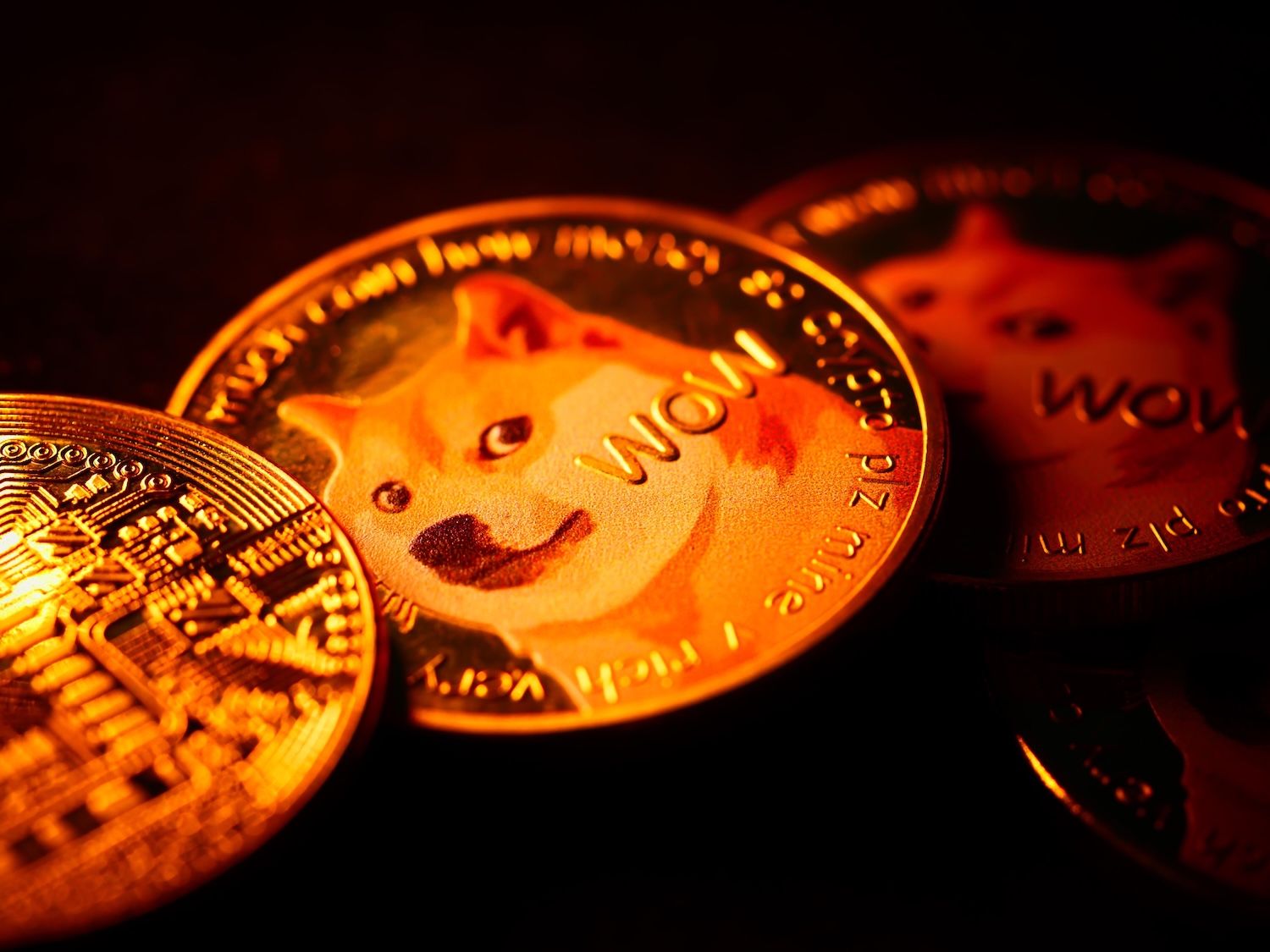
The memecoin market contracted from a $150.6 billion peak in Dec. 2024 to just $33.7 billion by Apr. 2026. That is a 78% decline. Yet the platforms built to serve meme speculation generated enormous revenue during that same period.
Pump.fun accumulated more than $908 million in cumulative revenue since its Jan. 2024 launch.
The platform created over 11.9 million tokens, though only about 1.54% ever graduated from the bonding curve. Its native DEX, PumpSwap, became the second-largest decentralized exchange on Solana (SOL) after accumulating $69.3 billion in trading volume.
CoinGecko frames the 2026 narrative shift as "Meme Launchpads 2.0." The emphasis moved toward fairer launches with anti-sniper protection, bonding curve maturity gates, and reputation systems. The Believe App pioneered "tweet-to-launch" functionality, where users reply with a ticker to auto-deploy a Solana token. Its LAUNCHCOIN token surged roughly 5,000% in a single week.
But Pump.fun's own data reveals the brutal economics underneath. Between 49% and 51% of wallets trading its tokens ended at a net loss. Only about 4% earned more than $500. Of the 25.2 million cryptocurrencies tracked on GeckoTerminal, 13.4 million have stopped trading entirely.
Also Read: Bitcoin Could Face "One Final Dump" Before Bottom, Alphractal CEO Warns
Perp DEXs and the Onchain Market Structure Race
Perpetual decentralized exchanges underwent an explosive transformation during the past two years. DEX perpetual futures volume surged eightfold, from $81.74 billion in Jan. 2024 to $739.48 billion in Jan. 2026. DEX market share of the total perpetual futures market grew from 2.0% to 10.2% over the same period, according to CoinGecko.
Hyperliquid (HYPE) dominates with 44% of all perp DEX volume as of Mar. 2026. It generated weekly derivatives volume exceeding $50 billion and accumulated $2.74 trillion in 2025 trading volume, matching Coinbase in scale. Messari called Hyperliquid potentially one of the most profitable companies in history on a per-capita basis. Grayscale filed an S-1 for a spot HYPE ETF in Mar. 2026.
Messari's boldest perp thesis is that equity perpetuals may be the breakout narrative of 2026. The value proposition is straightforward. Someone in South Korea without a brokerage account can trade leveraged Nvidia exposure at 8 p.m. on a Saturday on Hyperliquid. The platform's oil perpetual hit $1.7 billion in daily volume during a CME weekend closure.
Competitors include Aster with $2.5 billion daily volume, Lighter at $2.87 billion daily, and edgeX at 26.6% market share. Meanwhile, dYdX saw its market share drop to single digits and GMX lost $42 million to an exploit. Three DEXs now rank in the top 10 exchanges globally, and JPMorgan noted in Mar. 2026 that DEXs are taking share from mid-tier centralized exchanges.
Also Read: Bitwise Updates Hyperliquid ETF Filing With 67-Basis-Point Sponsor Fee

Stablecoins as Crypto's Most Durable Growth Engine
Total stablecoin market cap reached an all-time high of $318.6 billion on Apr. 11, 2026, up roughly 50% from about $205 billion at the start of 2025. CoinGecko's Asia Stablecoin Overview placed the figure at approximately $300 billion as of Feb. 2026. The Federal Reserve published a FEDS Note on Apr. 8, 2026, analyzing financial stability implications of this growth.
Tether (USDT) dominates at $184.3 billion, roughly 57.85% market share. Circle (USDC) follows at $78.8 billion, approximately 24.7%. Combined, they represent 82.5% of the total market.
Transaction volumes in 2025 reached $33 trillion, exceeding Visa and Mastercard combined.
The regulatory picture crystallized with the GENIUS Act, signed into law July 18, 2025. It mandates 100% reserve backing in U.S. dollars or Treasuries, monthly public reserve disclosures, and anti-money laundering compliance. Stablecoin issuers collectively rank as the 17th-largest holder of U.S. government debt worldwide.
A new phenomenon has emerged: "stablechains," blockchains optimized specifically for stablecoin transactions. Stable launched in Dec. 2025, and Plasma is live. Circle's Arc, Stripe and Paradigm's Tempo, and a nine-bank European consortium chain are in development. In Asia, Japan's three megabanks are building a joint yen stablecoin via Progmat Coin. Hong Kong granted its first stablecoin licenses to HSBC and Standard Chartered in Apr. 2026.
Also Read: Ethereum Foundation Finishes Planned $11M Sale — But Whales Keep Buying
RWAs and Tokenization: Narrative, Product, or Distribution Channel?
Tokenized real-world assets onchain reached $29.21 billion in distributed asset value as of Apr. 12, 2026, according to RWA.xyz.
That represents a roughly fourfold increase from about $5.5 billion at the start of 2025. The broader "represented asset value" tracked by RWA.xyz stands at $371 billion, with 721,635 total asset holders.
Six asset categories now each exceed $1 billion:
- Private credit, led by Figure's $14.1 billion in active home equity loans
- Tokenized U.S. Treasuries at approximately $12.88 billion, with BlackRock's BUIDL fund at roughly $2.4 billion in assets under management
- Commodities tokenization exceeding $3.5 billion
- Corporate bonds, non-U.S. government debt, and institutional alternative funds each above the $1 billion mark
CoinGecko noted that RWA was the most profitable crypto narrative in 2025, with average token price returns of 185.8%. Ondo Finance crossed $2.5 billion in total value locked by Jan. 2026 and launched tokenized versions of more than 100 U.S. stocks via Ondo Global Markets. The platform secured a $200 million partnership with State Street and Galaxy.
McKinsey forecasts approximately $2 trillion in tokenized assets by 2030 in its base case. BCG and Ripple project $18.9 trillion by 2033. BlackRock CEO Larry Fink compared tokenization's current stage to where the internet stood in 1996. Ethereum hosts approximately 64% of all tokenized RWAs.
Also Read: Over 20,000 Bitcoin Millionaire Addresses Vanished In Just Three Months
Crypto Cards and the Consumerization of Crypto Rails
Crypto card payment volume reached $1.5 billion per month by late 2025, compounding at 106% annually since Jan. 2023 to an $18 billion annualized volume, per Artemis Analytics.
This growth rate dwarfed peer-to-peer stablecoin transfers, which grew only 5% over the same period. Visa dominates roughly 90% of onchain crypto card volume.
The market bifurcated between custodial cards from exchanges and a new wave of self-custodial cards connecting directly to DeFi wallets:
- Gnosis Pay offers a non-custodial Visa debit card linked to Safe wallets with up to 5% GNO cashback
- MetaMask's Mastercard partnership with Baanx enables spending from Linea, Base, or Solana wallets with 1% cashback
- Holyheld provides a non-custodial Mastercard with a personal IBAN account controlled from a self-custody wallet, available in 30 European countries
New entrants in 2026 include the Pudgy Penguins Pengu Card, a Visa-backed product launched in Mar. 2026 with up to 12% rewards. RedotPay processed more than $2.95 billion in 2025 card volume, more than four times its 13 closest competitors combined. Rain closed a $250 million round at roughly $2 billion valuation.
CoinGecko stated this sector has transformed crypto from a speculative instrument into functional currency for millions of users. The trend connects directly to the stablecoin story, as most crypto card transactions settle in USDT or USDC behind the scenes.
Also Read: TON Could Become 3.5x Cheaper Than Solana If Durov's Fee Cuts Go Through
Which 2026 Narratives Are Real, and Which Are Just Liquid Storytelling
The data supports a clear hierarchy. Here is how the narratives break down by maturity and market validation.
Structural narratives with proven capital inflows include stablecoins at $318.6 billion market cap, RWA tokenization at $29.2 billion onchain, and perp DEXs processing $22.6 billion in daily volume. These sectors have institutional backing, regulatory progress, and growing onchain usage. They are not trading on promises.
Breakout narratives with product-market fit include prediction markets, with Polymarket alone processing $10.57 billion monthly, and privacy/ZK technology, which every major institutional research firm independently flagged as a structural requirement.
Consumer narratives with early traction include crypto cards at $18 billion annualized volume. The sector has genuine usage but remains early in its adoption curve.
Speculative narratives running on diminishing returns include meme launchpads, which generate significant platform revenue but serve a contracting addressable market. The total memecoin market cap fell 78% from its peak.
Narratives that failed to deliver include several sectors that attracted enormous attention but lost capital:
- AI crypto tokens shed roughly $35 billion in 2025, with the sector losing about 75% of its value
- GameFi investment collapsed by more than 55% in 2025, per Delphi Digital
- The altcoin supercycle failed to materialize, with rallies averaging roughly 20 days in 2025 versus 60 days in the prior year, according to Wintermute
- Most L1 tokens are expected to underperform Bitcoin (BTC), with newly launched parallelized EVM chains trading at $5 billion to $10 billion valuations while producing less than $10,000 per day in gas fees
The CoinGecko and Tiger Research conclusion is direct. The narrative-driven phase is fading, and an execution-focused phase is taking shape. The 2026 crypto landscape does not reward storytelling. It rewards outcomes.
Protocols generating real revenue, serving institutional needs, and integrating with traditional finance are gaining ground. Everything else is losing it.
Read Next: Bittensor Crashes 20% After Key AI Research Group Exits Over Governance Dispute