
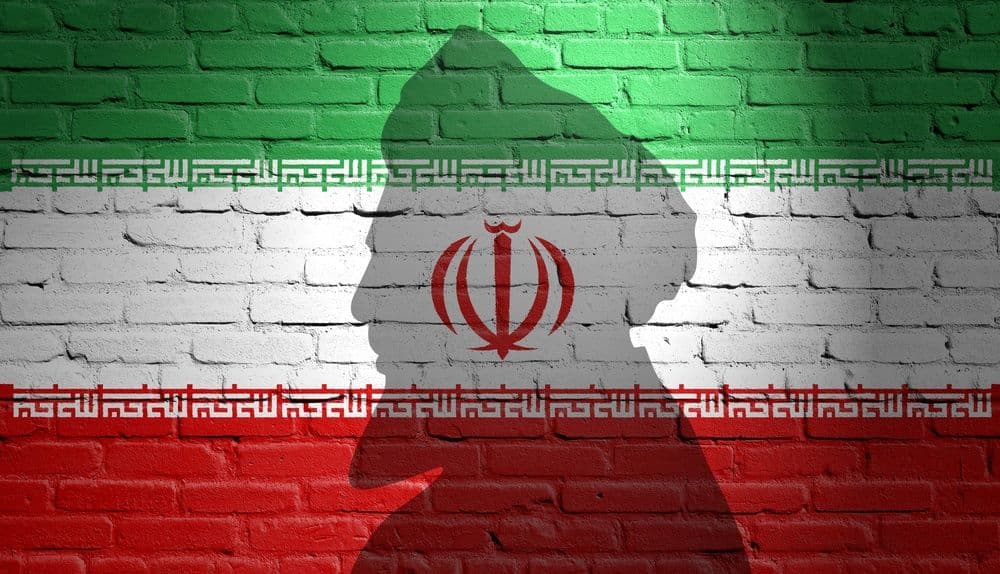
Iran's cryptocurrency ecosystem processed an estimated $7.8 billion in on-chain activity in 2025, according to Chainalysis, making the Islamic Republic one of the most active sanctioned-state participants in global digital asset markets.
That figure, which TRM Labs estimates may be closer to $8 billion to $10 billion when accounting for unattributed wallets, is not a curiosity at the margins of a troubled economy. It is a structural pillar of how a nation of 90 million people, cut off from the SWIFT banking network and battered by the most severe currency collapse in its modern history, continues to trade, transact, and survive.
At the center of this system sits Nobitex, a domestic exchange with more than 11 million users that handled $7.2 billion in transactions in 2025 alone, and that blockchain analysts have linked to financial activity aligned with the Islamic Revolutionary Guard Corps.
The numbers tell only part of the story. In the hours following coordinated U.S.-Israeli airstrikes on Tehran on February 28, 2026, which killed Supreme Leader Ayatollah Ali Khamenei, crypto outflows from Nobitex surged 700% within minutes, according to Elliptic.
Chainalysis recorded $10.3 million in net outflows from Iranian exchanges between the strikes and March 2. Funds moved to overseas exchanges and self-custody wallets as Iranians, both civilian and state-affiliated, rushed to convert rials into digital assets that could cross borders without passing through the traditional banking system.
The pattern was not new. Elliptic had observed similar spikes following the January 2026 protests, during government-imposed internet blackouts, and after each round of new U.S. sanctions announcements.
What is new is the scale, the stakes, and the context. Iran's economy has entered what multiple analysts describe as a state of systemic failure. The rial has lost more than 96% of its value against the dollar. Inflation exceeded 42% in December 2025, with food prices rising 72% year-over-year. One of the country's largest private banks, Ayandeh Bank, went bankrupt in October 2025 with over $5 billion in losses.
The new supreme leader, Mojtaba Khamenei, installed on March 8 by the Assembly of Experts under IRGC pressure, inherits a country at war, under comprehensive international sanctions, and facing the deepest economic crisis since the 1979 revolution. Cryptocurrency is no longer a peripheral feature of this landscape. It is woven into the fabric of Iranian economic life, from the household level to the highest echelons of the state.
The Architecture of Iran's Crypto Ecosystem
Iran's relationship with cryptocurrency began as a pragmatic response to exclusion from global financial infrastructure. The country has been subject to U.S. sanctions in various forms since 1979, and the reimposition of comprehensive sanctions under the Donald Trump administration's first "maximum pressure" campaign in 2018, followed by the withdrawal from the Joint Comprehensive Plan of Action, severed Iran's remaining connections to major international payment networks.
With SWIFT access restricted and correspondent banking relationships cut, Iranians, both individuals and institutions, turned to digital assets as an alternative rail for cross-border value transfer.
The ecosystem that emerged is centered on domestic exchanges, of which blockchain analysts have identified approximately 75, according to Chainalysis. Nobitex dominates this landscape, handling roughly 87% of Iranian crypto trading volume, according to BloomingBit. Its total historic inflows exceed $11 billion, compared to under $7.5 billion for the next ten largest Iranian exchanges combined, per Chainalysis data.
Nobitex allows users to convert rials into cryptocurrency, which can then be withdrawn to external wallets, effectively enabling capital to leave the country without passing through the banking system.
The platform serves a broad user base that includes retail traders seeking to preserve savings, businesses needing to settle international payments, and, according to multiple intelligence analyses, state-affiliated entities including the IRGC. Kaitlin Martin, senior intelligence analyst at Chainalysis, told The National that "Iranian users can't really access mainstream crypto exchanges because there are restrictions on Iranian users accessing them because of sanctions.
And so Iran has a very vibrant crypto community." The exchange's dual function, serving both ordinary civilians and the regime, creates what analysts describe as an attribution problem. Crypto wallet addresses are pseudonymous, making it difficult to distinguish law-abiding civilians from state actors without advanced blockchain forensics.
The IRGC's Digital Financial Network
The Islamic Revolutionary Guard Corps occupies a unique position in Iran's crypto ecosystem. The IRGC is not merely a military organization. It operates as a vast economic conglomerate controlling an estimated 40% to 50% of the Iranian economy, according to Tom Tugendhat, a Conservative member of the British Parliament and former UK security minister. Its business interests span construction, telecommunications, oil and gas, and financial services. Its illicit operations extend to weapons procurement, sanctions evasion, and the financing of proxy groups across the Middle East.
Chainalysis estimated that IRGC-linked addresses accounted for more than 50% of total Iranian crypto inflows in the fourth quarter of 2025, with over $3 billion in value received for the full year.
This figure reflects only wallets publicly tied to sanctions listings, suggesting the true footprint may be substantially larger. TRM Labs estimated that approximately half of Iran's total crypto volumes in 2025 were linked to the IRGC, a share that it said peaked at 87% for one UK-registered exchange, Zedcex, which the U.S. Treasury sanctioned in January 2026.
The Zedcex case illustrates the sophistication of the IRGC's crypto operations. The exchange, registered in the United Kingdom alongside a sister platform called Zedxion, processed over $94 billion in transactions since its registration in 2022, according to the Treasury's statement.
TRM Labs analysis found that approximately $1 billion of Zedcex's flows were directly linked to the IRGC, accounting for 56% of the exchange's total volume. The exchanges were connected to Babak Morteza Zanjani, an Iranian businessman previously sentenced to death for embezzling billions from Iran's National Oil Company, whose sentence was commuted in 2024, and who reemerged by 2025 as a financial backer of major IRGC-linked projects.
Ari Redbord, global head of policy at TRM Labs, told CoinDesk that the threshold for concern is crossed "when state-linked actors move beyond opportunistic use and begin relying on crypto-native infrastructure designed to sustain sanctioned finance at scale."
The Zedcex designation, the first time OFAC had blacklisted entire exchange entities under Iran-specific financial sanctions authorities, represented what TRM described as an "inflection point in the crypto sanctions landscape."
State-Sponsored Bitcoin Mining and the Energy Nexus
Iran's crypto strategy extends beyond exchange-based trading to include state-sponsored Bitcoin (BTC) mining, a practice that converts the country's abundant and heavily subsidized energy resources into digital assets that can move across borders. Iran legalized cryptocurrency mining in 2019, allowing licensed operators to use subsidized electricity in exchange for selling mined Bitcoin to the Central Bank.
CoinDesk reported that the state is believed to be mining BTC at a production cost of approximately $1,300 per coin, selling the output at prevailing market prices.
The mechanics are straightforward in concept but significant in practice. A licensed miner produces new Bitcoin, transfers it to the Central Bank of Iran, and the bank can then send it to an overseas counterparty to pay for goods, machinery, fuel, or consumer products without routing funds through U.S.-controlled financial channels. While transactions settle on a public blockchain, the counterparties can remain opaque. The same pattern extends to stablecoins. Tether (USDT), pegged to the U.S. dollar, has become a standard settlement tool in sanctioned economies because it offers price stability and faster transfers than Bitcoin.
Elliptic reported in January 2026 that Iran's Central Bank had accumulated at least $507 million in USDT, likely for the dual purpose of stabilizing the rial and financing international trade.
Separate analysis showed the Central Bank laundering acquired stablecoin funds through several blockchain bridges and decentralized finance protocols before cycling them back into the domestic crypto ecosystem and to IRGC-affiliated entities, according to TRM Labs. This finding demonstrates that the regime has developed sophisticated on-chain tradecraft, not merely using cryptocurrency as a blunt instrument but employing DeFi infrastructure to obfuscate the origin and destination of funds.
The mining operation faces a significant vulnerability: Iran's power grid. The country has suffered chronic energy shortages for years, with electricity and gas disruptions prompting public anger and contributing to protest movements.
CoinDesk noted that if the ongoing military conflict disrupts power infrastructure, mining output could decline in the short term. Whether the state has maintained Bitcoin reserves is unknown, as there is no treasury dashboard and no official disclosure of holdings.
The Rial's Collapse and Crypto as a Civilian Lifeline
For ordinary Iranians, cryptocurrency is not a speculative asset or a tool of statecraft. It is a survival mechanism in an economy that has, by multiple accounts, ceased to function in any conventional sense. Alan Eyre, the only U.S. career diplomat who served as a core member of the American nuclear negotiating team from 2010 through the 2015 JCPOA, told The National that "there is effectively no functioning economy." He said it "was already in terrible shape before the bombing began and now everything has come to a halt. The economy is essentially paralysed."
The depth of the crisis requires quantification. Iran's gross domestic product has contracted sharply, falling from approximately $600 billion in 2010 to an estimated $356 billion in 2025, according to Iran International, despite the country earning approximately $193.5 billion from crude oil exports over the past five years alone.
The divergence between export earnings and overall economic output has become a central puzzle for analysts, pointing to systemic corruption, capital flight, and the diversion of resources to military and security institutions. Iran's draft budget for the next fiscal year allocates at least 16% of total budgetary resources to military and security institutions, while funding for religious institutions is projected at close to half of the government's oil income.
The Iranian rial traded at approximately 600,000 to the dollar in early 2025. By January 2026, it had fallen to 1.5 million, according to Al Jazeera, and subsequently hit a record low of 1.75 million, per Iranian government data. The currency lost more than half its value in roughly twelve months, a collapse that U.S. Treasury Secretary Scott Bessent publicly claimed credit for engineering.
In testimony before the Senate Banking Committee, Bessent stated that the Treasury had "created a dollar shortage in the country" that reached "a grand culmination in December, when one of the largest banks in Iran went under, the Iranian currency went into freefall, inflation exploded." The bank he referenced was Ayandeh Bank, one of Iran's largest private banks, which went bankrupt in October 2025 with over $5 billion in losses and approximately $3 billion in debt.
For Iranian civilians, the consequences have been catastrophic. Food price inflation reached 72% year-over-year. Health and medical goods prices rose 50%. The ministry of social welfare announced in 2024 that 57% of Iranians were experiencing some level of malnourishment. Purchasing power has fallen by more than 90% over the past eight years. Meat has reportedly become a luxury food item, and seven million Iranians have gone hungry.
In December 2025, President Masoud Pezeshkian's administration decided to eliminate the preferential exchange rate for imports of essential goods, replacing it with a monthly electronic coupon worth 10 million rials, roughly $7, to approximately 80 million citizens. The consequences were immediate: prices of basic goods rose 20% to 30% within weeks.
The protests that erupted on December 28, 2025, initially led by shopkeepers in Tehran's Grand Bazaar protesting the tanking currency, spread to all 31 provinces and became the largest demonstrations since the 1979 revolution. Protesters chanted slogans including "Death to the Dictator" and "Warmongering is enough; our tables are empty." The government's subsequent crackdown resulted in a death toll that remains deeply contested, estimated between 3,117 by the Iranian government and upwards of 36,500 by Iran International, making it among the largest massacres in modern Iranian history.
In this context, cryptocurrency offers Iranians something the banking system cannot: access to dollar-denominated value. Research from the International Monetary Fund has confirmed that crypto assets have gained a more mainstream presence in economies with weaker currencies. By converting rials to Bitcoin or USDT on platforms like Nobitex, Iranians can hedge against inflation, store savings in assets that do not depreciate at the rate of the rial, and transfer funds internationally despite banking restrictions.
Chainalysis data showed that Iranian crypto activity correlates directly with political flashpoints, including missile exchanges, internal protests, and sanctions announcements. During periods of unrest, exchange outflows rise as users pull funds into private wallets. The tradeoff is exposure to the volatility of crypto markets and the pseudonymous company of state actors using the same infrastructure for very different purposes.
The Nobitex Hack and the Geopolitics of Cyber Warfare
The vulnerability of Iran's crypto infrastructure was demonstrated dramatically in June 2025, when a pro-Israel hacking group known as Predatory Sparrow claimed responsibility for an attack that destroyed nearly $90 million in crypto held on Nobitex. Chainalysis analysis indicated that the attackers transferred funds to addresses lacking private key access, effectively burning the assets to send a political message rather than stealing them for profit.
The attack was significant not only for its scale but for its implications. Nobitex's dominance of the Iranian crypto market, with total inflows exceeding $11 billion, makes it a single point of failure for a financial system that millions depend on.
Chainalysis documented that the platform had facilitated transactions with IRGC-affiliated ransomware operators, entities tied to Houthi and Hamas-affiliated networks, sanctioned Russian crypto exchanges, and pro-al-Qaeda propaganda channels. The hack exposed the tension between cryptocurrency's borderless architecture and the geopolitical realities of nation-state conflict.
In the aftermath, the Central Bank of Iran directed all domestic crypto exchanges to limit operating hours to between 10 AM and 8 PM, suggesting an attempt to exert greater control over a sector that the regime simultaneously depends on and struggles to regulate. Following the February 28 airstrikes, Chainalysis reported that several Iranian exchanges, including Nobitex and Ramzinex, went offline.
On-chain data flagged by Arkham Intelligence showed Nobitex had halted outgoing transactions on its Ethereum (ETH) address, though Toncoin (TON) transactions continued, with analysts suspecting bot activity. Dogecoin (DOGE) was reportedly the largest asset held on the platform at the time of the disruption.
Mojtaba Khamenei and the Crypto Question
The appointment of Mojtaba Khamenei as Iran's third supreme leader on March 8, 2026, introduces a new variable into the country's crypto trajectory. The 56-year-old, who has never held formal government office but has long been described as the "power behind the robes" in leaked U.S. diplomatic cables, is widely viewed as more hardline than his father and more deeply connected to the IRGC's military and economic networks.
He served in the IRGC during the Iran-Iraq war and has been accused of working to ensure favorable election outcomes and orchestrating the suppression of the 2009 Green Movement protests. CNBC reported that despite projecting an image of religious piety and simplicity, Mojtaba Khamenei owns a property empire spanning the Middle East to Europe worth hundreds of millions of dollars.
His appointment signals continuity rather than reform. The IRGC pressured the Assembly of Experts to select him over other candidates, according to Iran International, and his close ties to the Guard's command structure suggest that the military-economic complex will maintain or expand its control over Iranian state institutions, including the financial system.
For the crypto ecosystem, this likely means continued and possibly accelerated integration of digital assets into state operations. The IRGC's economic interests, which already account for the majority of Iranian crypto inflows according to multiple blockchain analytics firms, could deepen further under a leader whose personal and institutional loyalties are inseparable from the Guard's network.
The selection was immediately contested internationally. President Trump called Mojtaba Khamenei "unacceptable" and suggested he should be involved in choosing Iran's leader. Israeli Prime Minister Benjamin Netanyahu said Israel would pursue any successor to Ali Khamenei and target those participating in the selection process. The ongoing military conflict, combined with the leadership transition, creates conditions of maximum uncertainty for Iran's crypto sector.
The system depends on internet connectivity, power infrastructure, and some degree of operational stability that war actively undermines. Iran's government-imposed internet blackout following the January protests demonstrated how quickly crypto activity can be suppressed when the regime decides to shut down communications infrastructure. Yet even during those outages, Elliptic observed that some outflows continued from Nobitex, suggesting that certain actors retained access to the exchange's holdings even when its public-facing website was inaccessible.
Oil, Gold, and the Limits of Crypto as a Sanctions Tool
It is important to place cryptocurrency within the broader context of Iran's sanctions evasion strategies, which remain heavily reliant on traditional instruments. Tom Tugendhat told the House of Commons that "most of the store of value of Iran goes into gold. It's the only way they can get anything. And you've got to remember, the IRGC is massive criminal enterprise that also runs about 40 to 50 per cent of the Iranian economy.
So there are some things that are illegal, like weapon systems out of Venezuela. There are other things that would be legal." Despite extensive sanctions, China has continued to purchase most of Iran's oil exports, transported by a "shadow fleet" of tankers that switch off tracking devices or fly false flags to avoid detection. Iran International reported that the country's crude oil export revenues over the past five years totaled approximately $193.5 billion, with the Central Bank earning $65.8 billion from oil, petroleum products, and gas exports in the most recent fiscal year alone.
The loss of Venezuela as a strategic partner has added further pressure. Iran and Venezuela maintained long-established economic ties to offset sanctions, including the trade of oil and drones. The capture of Venezuelan President Nicolás Maduro by the United States in January 2026 severed this channel.
According to Heshmatollah Falahatpisheh, a former head of Iran's parliamentary national security commission, Venezuela's debts to Iran reflect only officially recorded investments and assistance accumulated over nearly two decades, estimated at around $2 billion.
Cryptocurrency, at $7.8 billion to $10 billion annually, represents a meaningful but still relatively small component of Iran's total cross-border financial activity compared to oil revenues. However, the two systems are increasingly intertwined. OFAC sanctioned Iranian nationals in September 2025 for coordinating the purchase of over $100 million in cryptocurrency related to Iranian oil sales between 2023 and 2025.
The crypto proceeds from oil sales to China represent a specific enforcement concern: oil is sold at discounted rates, payment is received in yuan or through intermediary accounts, and the proceeds are then converted to cryptocurrency for repatriation to Iran or onward transfer to IRGC affiliates, bypassing dollar-denominated channels entirely. In April 2025, OFAC designated eight wallets with transaction volumes nearing $1 billion used to support the Iran-based Houthis' weapons procurement and sanctions evasion efforts.
TRM Labs documented that in late 2024, more than $10 million in USDT was transferred from wallets attributable to both Zedcex infrastructure and IRGC-linked entities to addresses associated with Sa'id Ahmad Muhammad al-Jamal, a Treasury-designated financier who has provided material support to the Houthis, without passing through mixers or intermediary aggregation layers.
The U.S. Justice Department is now investigating whether Iran used Binance, the world's largest crypto platform, to circumvent sanctions and provide financial backing to IRGC-linked organizations, according to The Wall Street Journal, as reported by Euronews.
Nine U.S. Senate Democrats have separately asked the Treasury and DOJ to probe Binance's illicit finance controls after reports emerged that the exchange fired investigators who raised concerns about funds moving through the platform to sanctioned, Iran-linked entities.
The integration of crypto into oil-linked sanctions evasion represents a qualitative escalation. As TRM Labs described it, the concern is not merely that sanctioned individuals use cryptocurrency, but that state actors are building and operating crypto-native infrastructure, including exchanges, stablecoin corridors, and liquidity hubs, as repeatable access points for sanctioned finance at industrial scale.
The Enforcement Response and Its Limitations
The United States has responded to Iran's crypto activity with an escalating series of enforcement actions that reflect both growing capability and persistent limitations. The January 2026 sanctions on Zedcex and Zedxion marked the first time OFAC blacklisted entire exchange entities under Iran-specific authorities, a threshold that had been crossed for individual wallets and technology providers but never for full platforms. OFAC also designated six high-volume wallet addresses associated with the exchanges, targeting operational infrastructure rather than just individuals.
In December 2024, OFAC updated its designation of IRGC-connected Houthi financier Sa'id al-Jamal to include crypto wallets used for money laundering. In September 2025, OFAC sanctioned two Iranian financial facilitators and more than a dozen entities in Hong Kong and the UAE for coordinating money transfers, including crypto-linked oil sale proceeds, benefiting the IRGC-Quds Force and Iran's defense ministry.
The Treasury's statement accompanying the Zedcex sanctions described Iranian "shadow banking" networks as entities that "abuse the international financial system, and evade sanctions by laundering money through overseas front companies and cryptocurrency."
This framing is notable because it treats crypto not as a standalone concern but as one component of a broader financial evasion architecture that includes corporate shells, front companies, and traditional correspondent banking relationships. The enforcement approach, accordingly, has begun targeting the full stack of infrastructure rather than individual transactions.
These actions have produced measurable disruptions. Sanctioned wallet addresses are flagged by compliance systems at regulated exchanges worldwide, making it harder for designated entities to cash out through legitimate channels. Blockchain transparency means that the same on-chain data revealing outflow surges also enables authorities to trace where funds go next, often with greater precision than traditional banking surveillance.
The UN reimposed sanctions on Iran in September 2025 through the "snapback" mechanism, freezing Iranian assets abroad, halting arms transactions, and imposing penalties related to the country's ballistic missile program, adding additional international legal authority to the enforcement campaign.
But the limitations are significant and structural. Cryptocurrency wallets are pseudonymous and easy to create, limiting the effectiveness of address-level sanctions. Designated actors can simply generate new addresses and route funds through different intermediaries. Decentralized exchanges, which operate without centralized intermediaries, allow users to trade directly from self-custody wallets, making it harder for authorities to intervene.
As centralized platforms like Nobitex become more susceptible to state seizure, internet shutdowns, or international blacklisting, sophisticated users are migrating to permissionless protocols. This shift poses a formidable challenge for international financial enforcement and suggests that the cat-and-mouse dynamic between sanctions enforcers and evasion networks will continue to escalate as both sides deploy increasingly sophisticated tools.
The Road Ahead: Dollarization, Digital or Otherwise
The trajectory of Iran's crypto economy depends on several variables that are currently in motion simultaneously, making prediction difficult but pattern recognition possible. The most important variable is the outcome of the ongoing military conflict. Sustained strikes on energy infrastructure would directly threaten the power grid that supports both Bitcoin mining operations and the internet connectivity that crypto transactions require.
If Iran's domestic mining capacity is disrupted, the Central Bank loses one of its primary channels for generating blockchain-native assets that can move internationally. If internet shutdowns continue or become more comprehensive, the civilian use case for crypto as a savings hedge is undermined.
The second variable is the pace and scope of international enforcement. The U.S. Justice Department's investigation into Iranian activity on Binance, reported by The Wall Street Journal, suggests that Washington is escalating from targeting individual exchanges and wallets to examining whether major global platforms have served as conduits for Iranian sanctions evasion.
If this investigation produces charges or compliance requirements that further restrict Iranian access to international exchanges, the migration toward decentralized protocols will accelerate. The shift to DEXs creates a fundamentally different enforcement challenge because there is no centralized entity to sanction, no compliance department to compel action, and no server to shut down.
The third variable is the behavior of Iran's domestic crypto sector itself. Iran International reported that economists see the trajectory pointing toward dollarization, a process in which economic actors increasingly abandon the national currency in favor of the U.S. dollar or dollar-denominated assets.
Cryptocurrency, particularly stablecoins like USDT, represents a digital version of this dynamic. If the rial continues to depreciate and the banking system remains nonfunctional for cross-border transactions, the share of Iranian economic activity conducted in digital dollar equivalents will likely continue to grow, regardless of what either Tehran or Washington does to encourage or prevent it.
The question of whether crypto ultimately strengthens or weakens the Iranian regime has no single answer because it does both simultaneously. The IRGC uses crypto infrastructure to fund proxy operations, procure weapons, and evade the financial isolation that sanctions are designed to impose. Ordinary Iranians use the same infrastructure to preserve savings that would otherwise evaporate under hyperinflation, to transfer money to family members abroad, and to access goods that require dollar-denominated payment.
The technology is neutral. The policy challenge is that sanctioning it effectively means harming the civilians who depend on it, while tolerating it means enabling the state actors who exploit it. No enforcement framework currently in operation has resolved this tension, and the ongoing war makes resolution less likely, not more.
What the Evidence Supports
Iran's crypto economy exists at the intersection of civilian survival and state strategy, a dual-use system that defies simple characterization. The evidence supports several conclusions, none of which are comfortable.
First, cryptocurrency has become structurally embedded in Iran's financial system at a level that cannot be reversed through enforcement alone. With 11 million users on a single exchange, nearly 75 identified domestic platforms, and annual volumes approaching $10 billion, the ecosystem has reached a scale that makes it a significant component of how the country functions economically.
The World Bank projected in October 2025 that Iran's economy would shrink in both 2025 and 2026, with annual inflation rising toward 60%. Under these conditions, the demand for alternatives to the rial will only intensify.
Second, the IRGC has moved beyond opportunistic use of cryptocurrency to operating institutional-grade crypto infrastructure. The Zedcex case, the Central Bank's stablecoin acquisitions, and the sophisticated use of DeFi protocols for laundering demonstrate a state actor that has learned to use blockchain technology with increasing fluency.
Whether enforcement actions can disrupt this infrastructure faster than the IRGC can rebuild it remains an open question. The historical pattern suggests adaptation: when one channel closes, another opens, often incorporating lessons learned from the previous disruption.
Third, the cost of this system is borne disproportionately by ordinary Iranians, who depend on the same platforms and networks that the regime uses for sanctions evasion. When Nobitex was hacked, civilians lost access to their primary savings hedge. When internet shutdowns are imposed, crypto transactions halt alongside everything else.
When exchanges are sanctioned, legitimate users lose access alongside illicit ones. The pseudonymous nature of blockchain makes it structurally impossible to sanction state actors without affecting civilians, a tension that current policy has not resolved and that the human cost of Iran's economic collapse makes increasingly urgent.
Fourth, the appointment of Mojtaba Khamenei, with his deep IRGC ties and hardline orientation, suggests that Iran's integration of crypto into state operations will continue under the new leadership, even as military conflict threatens the physical infrastructure on which the entire system depends.
The trajectory points toward deeper dependence on digital assets as traditional financial channels close further, combined with increasing sophistication in how both the state and its citizens use the technology. Iran International's analysis that the trajectory points toward effective dollarization, whether through physical dollars, stablecoins, or some combination, suggests a future in which the rial serves primarily as a unit for domestic tax collection and government payments, while real economic activity increasingly transacts in dollar-denominated digital assets.
The global stablecoin market now exceeds $314 billion. Iran's Central Bank has acquired hundreds of millions in USDT. The IRGC has routed billions through crypto infrastructure. And millions of ordinary Iranians have no alternative for preserving what remains of their purchasing power in an economy where the national currency has lost virtually all its value.
The question is no longer whether cryptocurrency plays a significant role in Iran's economy. It is whether anyone, in Washington, in Tehran, or anywhere else, can meaningfully control what happens next in a financial system that was built precisely to resist such control. The answer, based on everything the evidence reveals, is almost certainly not.
Editor's Note: Corrections and Sourcing Disclosures
The reference text from The National describes Nobitex as having "either sent or received $7.2 billion in crypto transactions last year." This figure is sourced from Elliptic and refers to Nobitex alone. The broader Iranian crypto ecosystem is estimated at $7.78 billion by Chainalysis and $8 billion to $10 billion by TRM Labs for 2025. These figures are not interchangeable.
The reference text's headline figure of "$7.8 billion" matches Chainalysis data for total Iranian wallet activity in 2025, up from $7.4 billion in 2024 and $3.17 billion in 2023. However, TRM Labs' higher estimate of $8 billion to $10 billion was cited by Reuters and CoinDesk.
All claims about IRGC involvement, outflow surges, and Central Bank stablecoin purchases are attributed to the specific blockchain analytics firms (Chainalysis, Elliptic, TRM Labs) that made them, and have been cross-referenced against at least two independent reports.
The reference text does not mention that Ayatollah Ali Khamenei was killed on February 28, 2026, or that Mojtaba Khamenei was appointed successor on March 8. These events, verified through NPR, NBC News, CNBC, and Wikipedia's sourced entries, are critical context for understanding the current state of Iran's crypto ecosystem.
