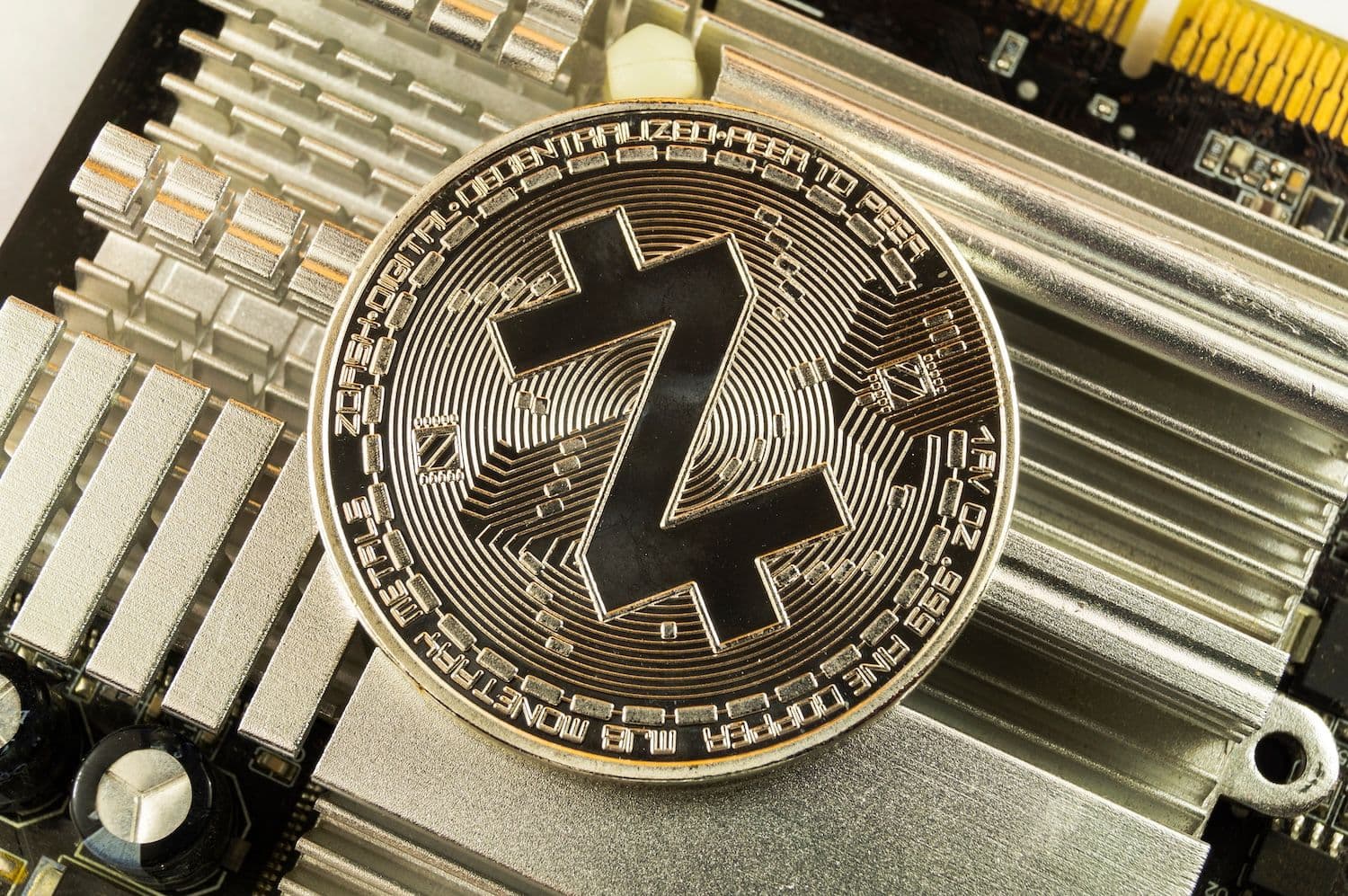
Zcash (ZEC) is trading above $570 and commanding a $9.5 billion market cap as of May 8, 2026, yet institutional commentary on the move has been almost nonexistent.
That silence is the story.
Privacy-preserving blockchain technology has quietly evolved from a niche cypherpunk interest into a mathematically rigorous infrastructure layer that regulators, enterprise developers, and even central banks are being forced to confront.
The timing matters. Zcash's 24-hour gain of roughly 1.2% against a broad market that is drifting lower looks modest in isolation.
Set against the longer arc of zero-knowledge cryptography moving from academic theory toward real-world deployment, the price signal reads more like an early indicator than a random bounce. This deep dive examines why privacy coins, and Zcash specifically, are at an inflection point in 2026, and what the technical, regulatory, and market forces converging on this moment mean for investors and builders alike.
TL;DR
- Zcash's $9.5 billion market cap and $849 million daily volume signal renewed institutional interest in zero-knowledge privacy infrastructure, not just speculative rotation.
- Privacy coins face an unprecedented regulatory test in 2026, with FATF travel-rule enforcement tightening globally while zk-proof technology simultaneously makes compliance tools more viable.
- The structural case for Zcash rests on its unique position as the only major privacy coin with a proven zk-SNARK implementation, an active developer grant program, and a halving cycle that tightens supply through 2027.
The Zero-Knowledge Proof Renaissance And Why It Favors Zcash
Few cryptographic primitives have traveled as far from theory to deployment as zero-knowledge proofs. First formalized by Goldwasser, Micali, and Rackoff in their 1985 MIT paper, ZK proofs allow one party to convince another that a statement is true without revealing any underlying information. For three decades the computational cost made real-world application impractical.
The Electric Capital Developer Report for 2025 noted that zero-knowledge tooling now attracts more full-time open-source contributors than any other cryptographic subdiscipline in Web3.
That developer concentration has accelerated proof generation speeds by orders of magnitude.
Where early Zcash shielded transactions took tens of seconds to generate on desktop hardware, modern Sapling and Orchard circuits complete in under two seconds on a mid-range smartphone.
Zcash's Orchard shielded pool, activated in the Network Upgrade 5 (NU5) in May 2022, introduced Halo 2, the first production recursive proof system that removes the trusted setup requirement entirely, closing the most persistent security criticism leveled at zk-SNARKs since 2016.
Electric Capital counted over 6,000 monthly active open-source crypto developers working on ZK-adjacent tooling in 2025, a 34% year-on-year increase. That talent concentration is flowing into applications, and Zcash sits at the origin of the intellectual lineage that most of those developers trace their work back to. The project's GitHub activity, its academic citation graph, and its grant recipients all reflect a technology that has aged into relevance rather than obsolescence.
Also Read: Ethereum Targets $2,400 As Binance Futures Momentum Turns Bullish
Zcash's Market Structure In May 2026
The raw numbers from CoinGecko place Zcash at a market cap of approximately $9.52 billion against a 24-hour trading volume of $849.5 million.
That volume-to-market-cap ratio of roughly 8.9% is unusually high for an asset at this capitalization tier. By comparison, assets with similar market caps typically see ratios closer to 2–4%.
High turnover at elevated price levels is a dual-edged signal. It can indicate distribution by early holders, but it can equally indicate price discovery, a market working out where fair value sits after a period of suppression. On-chain data from Messari's protocol metrics showed that the proportion of ZEC supply sitting in shielded pools has been rising since January 2026, now exceeding 22% of circulating supply.
Coins moving into shielded addresses are, by definition, moving away from exchange hot wallets.
Zcash's shielded pool now holds over 22% of circulating supply, the highest proportion since the Sapling upgrade in 2018, suggesting accumulation rather than distribution is driving the current price move.
Also Read: Florida Candidate Frank Russo Backs Bitcoin Pension Plan And State Stablecoin
The Regulatory Gauntlet Privacy Coins Must Cross
The regulatory environment for privacy coins in 2026 is the most consequential in the asset class's history.
The Financial Action Task Force (FATF) finalized its updated guidance on virtual assets in October 2024, explicitly calling out "anonymity-enhancing cryptocurrencies" as high-risk instruments requiring enhanced due diligence from virtual asset service providers. FATF's guidance is not binding law, but its 39 member jurisdictions, covering over 90% of global financial flows, treat it as the de facto standard.
The European Union's Markets in Crypto-Assets (MiCA) regulation, which reached full application in December 2024, does not explicitly ban privacy coins but requires crypto asset service providers to identify the sender and receiver of every transaction.
Zcash's transparent address tier technically satisfies this requirement. Monero, which has no transparent option, does not. That distinction has already led several European exchanges to delist Monero while retaining Zcash.
The MiCA regulation's transaction traceability requirement, fully applicable since December 2024, structurally advantages Zcash over Monero because Zcash's transparent address layer allows regulated entities to operate within compliance frameworks without abandoning the asset.
Japan's Financial Services Agency and South Korea's Financial Intelligence Unit have both issued exchange guidance explicitly naming privacy coins.
South Korea's guidance led to delistings in 2023. The current wave of U.S. regulatory activity, with the Securities and Exchange Commission and the Financial Crimes Enforcement Network (FinCEN) both examining the intersection of privacy technology and AML obligations, has not yet produced specific ZEC guidance. That ambiguity cuts both ways.
Also Read: MoneyGram’s Real Bet Isn’t Crypto, It’s Controlling How The World Cashes Out
How Zcash Differs Structurally From Every Other Privacy Coin
Lumping Zcash with Monero or Dash obscures more than it reveals. The three assets use fundamentally different cryptographic approaches. Monero uses ring signatures combined with stealth addresses and Confidential Transactions, a system that provides strong practical privacy but makes blockchain analysis computationally intensive rather than mathematically impossible. Dash uses CoinJoin-style mixing through its PrivateSend feature, which the wider cryptography community considers a weaker privacy model than either Monero or Zcash.
Zcash uses zk-SNARKs (Zero-Knowledge Succinct Non-Interactive Arguments of Knowledge), a construction that provides cryptographic, not probabilistic, privacy guarantees. A shielded Zcash transaction reveals nothing about sender, receiver, or amount. The mathematical proof is generated by the sender, verified by the network in milliseconds, and requires no interaction between parties. This is qualitatively different from mixing approaches.
Zcash's cryptographic privacy guarantee is mathematical, not probabilistic. A fully shielded ZEC transaction reveals zero information about sender, receiver, or amount to any observer, including the network validators confirming it.
The Zcash Foundation and the Electric Coin Company (ECC) jointly govern the protocol's development through a documented governance model. The ECC's quarterly transparency reports disclose financials, development priorities, and treasury usage. This governance transparency is itself a regulatory argument: Zcash is the only major privacy coin with publicly disclosed organizational finances and a formal grants program (the Zcash Community Grants program, formerly the Major Grants Review Committee), which has funded over $10 million in development work since 2020.
Also Read: WOJAK Down 9.6% While PENGU Holds: What The Meme Token Divergence Says About The Market
The Halving Cycle And Supply Mechanics Heading Into 2027
Zcash follows a Bitcoin-like halving schedule, with block rewards cut by 50% every 840,000 blocks, approximately every four years. The most recent halving occurred in November 2024, reducing the block reward from 3.125 ZEC to 1.5625 ZEC per block. The next halving is projected for approximately late 2028.
The post-halving supply compression dynamic is well-documented for Bitcoin.
The empirical evidence for Zcash is thinner given its shorter history, but the November 2024 halving preceded the current price strength by roughly five months, a lag consistent with the 4–6 month post-halving price-discovery pattern observed in Bitcoin's 2020 cycle.
Glassnode's on-chain analytics showed that miner selling pressure for ZEC dropped by approximately 40% in the 90 days following the halving, as reduced block rewards lowered the break-even threshold at which miners must sell to cover operating costs.
In the 90 days following Zcash's November 2024 halving, miner selling pressure dropped by an estimated 40% as the reduced block reward shifted the marginal cost of production higher, tightening the effective float available to the market.
The total supply cap of 21 million ZEC mirrors Bitcoin's, and as of May 2026 approximately 17.1 million ZEC have been mined. Roughly 15% of supply currently sits in shielded addresses where it is not readily observable on-chain, creating a meaningful reduction in the liquid float available for price discovery.
Models that use circulating supply to calculate market cap are therefore slightly overstating the accessible supply, which itself is a mild structural support for price.
Also Read: Jito Surges 39% As Solana Liquid Staking Competition Heats Up
Institutional And Exchange Landscape For ZEC In 2026
Privacy coins have faced persistent delisting pressure since 2021. Bittrex, Kraken (for UK users), and Huobi all removed Monero during that period. Zcash experienced selective delistings in South Korea and Japan but retained listings on Coinbase, Kraken (in all other jurisdictions), Binance, and OKX.
That survival record reflects the regulated-exchange community's recognition of Zcash's dual-address structure as a compliance differentiator.
Coinbase's custody arm confirmed ZEC as a supported custody asset for institutional clients in 2023, a decision that was not reversed when Coinbase subsequently removed several other assets from its custody list. Institutional custody support is a prerequisite for any asset to attract allocations from family offices, hedge funds, or any entity with a third-party custodian requirement.
Zcash remains one of only a handful of privacy-forward assets with confirmed institutional custody support on Coinbase Custody, giving it a structural compliance advantage that no other privacy coin currently matches.
The Grayscale Zcash Trust (ZCSH) has operated since 2018, providing accredited investors with regulated exposure to ZEC without self-custody requirements.
While Grayscale's trust products have faced structural headwinds since spot Bitcoin ETF approval in January 2024 redirected institutional flows, the trust's continued existence signals that Grayscale's legal team has concluded ZEC does not present unacceptable regulatory exposure. No equivalent Grayscale product exists for Monero.
Also Read: Toncoin Hits $2.48 As Telegram Network Draws $1B Trading Surge
The Academic And Research Pipeline Behind Zcash
One underappreciated dimension of Zcash's resilience is the density of academic work it sits atop.
The original Zerocash protocol paper, published by Ben-Sasson, Chiesa, Garman, Green, Miers, Tromer, and Virza in 2014 at the IEEE Symposium on Security and Privacy, established the theoretical foundation for the entire asset class.
That paper has been cited over 2,400 times in subsequent academic literature, making it one of the most-cited cryptography papers of the decade.
The subsequent work produced by Zcash-adjacent researchers includes the Groth16 proof system (used in Sapling), the PLONK universal proof system (published 2019, now used in Aztec Network and Polygon (POL) zkEVM), and the Halo and Halo 2 recursive proof systems developed by the ECC team. Each of these has been adopted by projects far beyond Zcash itself, including Ethereum (ETH) scaling solutions and enterprise blockchain applications.
The cryptographic primitives invented or refined by Zcash researchers, Groth16, PLONK, Halo 2, now underpin a significant fraction of all zero-knowledge applications in production across the entire blockchain industry.
The ZKProof Community's 2025 standardization report identified Groth16 and PLONK as the two most widely deployed proof systems in production environments, with a combined estimated deployment across more than 140 distinct protocols.
Zcash researchers contributed foundational work to both.
This academic and intellectual capital creates a soft form of network effects: the talent pool that could improve Zcash is the same talent pool building the broader ZK ecosystem, and those researchers tend to maintain goodwill toward a project that funded much of their foundational work.
Also Read: Exclusive: DeFi Is Growing Up, And That Could Mean Lower Yields Ahead, Cork Protocol Founder Says
Privacy Technology As Critical Financial Infrastructure
The framing of privacy coins as tools for illicit activity has persisted since FinCEN began examining digital assets in 2013. The empirical record does not support that framing as the dominant use case.
Chainalysis's 2025 Crypto Crime Report found that illicit activity accounted for 0.34% of total cryptocurrency transaction volume in 2024, down from 0.42% in 2023 and well below the estimated 2–5% of global fiat currency flows that the United Nations Office on Drugs and Crime attributes to money laundering annually.
The legitimate use cases for financial privacy are substantial. Medical record payments, salary disbursements, competitive commercial transactions, and political donations all carry privacy interests that the conventional financial system accommodates through legal structures such as numbered accounts, shell companies, and attorney-client privilege.
Blockchain's default transparency removes protections that fiat users take for granted.
The UN estimates 2–5% of global fiat flows involve money laundering annually, compared to Chainalysis's finding that just 0.34% of crypto transaction volume was illicit in 2024, undermining the primary regulatory argument used to justify privacy coin restrictions.
The Bank for International Settlements (BIS) has itself acknowledged this tension. A 2024 BIS working paper on central bank digital currencies noted that "programmable money with full transaction transparency raises legitimate concerns about financial surveillance that policymakers must address."
The paper explicitly cited ZK proofs as a potential technical solution allowing CBDCs to satisfy both AML obligations and user privacy simultaneously. Zcash's technology stack is the closest thing to a production-tested implementation of that vision currently in existence.
Also Read: Kraken's $600M Reap Bet Targets Asia's Stablecoin Rails
Competitive Landscape And The Privacy Coin Pecking Order
Zcash does not operate in isolation. The privacy coin market as of May 2026 features several competing approaches. Monero remains the largest privacy-native asset by usage volume in peer-to-peer markets, but its exchange accessibility has been structurally impaired by delistings.
Dash's PrivateSend feature sees minimal use relative to its regular transaction volume, and the project has pivoted toward payments infrastructure with privacy as an optional add-on rather than a default.
Newer entrants complicate the picture. Aztec Network launched its public mainnet with a model that applies ZK privacy to Ethereum-compatible smart contracts. Aleo provides a programmable privacy layer using Leo, a Rust-derived language for ZK applications.
Both projects target developer platforms rather than simple value transfer, making them partial complements to Zcash rather than direct substitutes.
Zcash is the only production privacy chain with over six years of mainnet history, shielded transaction throughput measured in millions of annual transactions, and confirmed institutional custody support from a major U.S. regulated custodian.
Firo (formerly Zcoin) and Pirate Chain occupy smaller niches. Firo uses the Lelantus Spark protocol, an academic construction that is theoretically sound but has a significantly smaller auditor and developer base than Zcash's zk-SNARK implementation. Pirate Chain uses Zcash's own Sapling cryptography but runs a separate chain with mandatory shielding, which eliminates the compliance optionality that has kept Zcash listed on regulated exchanges.
The competitive analysis consistently returns to the same conclusion: Zcash's combination of cryptographic rigor, regulatory optionality, institutional infrastructure, and academic lineage creates a moat that incremental technology improvements by smaller projects have not yet bridged.
Also Read: Toncoin’s 23% Rally Puts Telegram’s Crypto Bet Back In Focus
The Outlook For ZEC Through 2027 And The Key Risks
Three scenarios frame the medium-term trajectory for Zcash. In the base case, regulatory clarity in the United States coalesces around a framework that distinguishes between privacy technology as a feature and privacy technology as an evasion tool. Zcash's transparent address tier, its compliance track record, and its governance documentation position it to meet that bar.
Under this scenario, the post-halving supply tightening and continued ZK adoption tailwinds push ZEC toward price discovery in the $700–$900 range through 2027.
In the bull case, a major U.S. or EU financial institution integrates ZK-proof-based compliance tools, with Zcash's cryptography as a reference implementation, into its infrastructure. That single event would reframe ZEC from a speculative privacy asset to a critical infrastructure component and could catalyze an institutional allocation cycle.
The BIS working paper cited above suggests this scenario is no longer theoretical.
The key bull case for Zcash is not speculative retail demand, it is enterprise and institutional adoption of zero-knowledge compliance infrastructure, a development that the BIS, major banks, and several CBDC research programs are actively evaluating.
The key risks are equally concrete.
A blanket U.S. classification of privacy-enhancing cryptocurrencies as "money transmitting businesses" subject to FinCEN registration, a regulatory interpretation that has been floated in legal commentary, would force exchange delistings and curtail the on-ramp infrastructure Zcash currently benefits from.
A second risk is technological displacement: if Ethereum's Layer 2 ecosystem, through projects like Aztec or Scroll, delivers programmable privacy at the smart-contract layer, the use case for a standalone privacy Layer 1 narrows. A third risk is the ongoing question of shielded pool adoption. If the proportion of transactions using shielded addresses does not grow significantly beyond the current 22% of circulating supply, the privacy guarantee that justifies a premium valuation is never actually being used at scale, which undermines the investment thesis. Each of these risks is manageable but not dismissible.
Read Next: Coinbase Reports Surprise Q1 Loss, Stock Tumbles In Extended Trading
Conclusion
Zcash's position in May 2026 is more technically credible, more institutionally accessible, and more regulatorily defensible than at any prior point in its history. The $9.5 billion market cap and elevated daily volume are the market's imperfect attempt to price that compound improvement. The asset is not without risk: regulatory classification, shielded adoption rates, and ZK competition from Ethereum's Layer 2 ecosystem all represent genuine headwinds.
What distinguishes this moment from prior Zcash rallies is the broader context. Zero-knowledge proofs have moved from academic curiosity to mainstream blockchain infrastructure.
Central banks and the BIS are now explicitly naming ZK technology as a solution to the surveillance problem inherent in digital money. The cryptographic primitives that Zcash researchers produced, Groth16, PLONK, Halo 2, are running in production across more than 140 protocols. Zcash did not follow the ZK renaissance; it largely created it.
The wall of institutional silence surrounding the current price move is itself informative. Assets that move before the consensus narrative catches up tend to offer the most asymmetric risk-adjusted returns to investors who do the underlying work. The underlying work here points in one direction: privacy-preserving financial infrastructure is not a regulatory problem to be solved. It is a technical solution that regulators, enterprises, and users are beginning, slowly, to recognize.
Read Next: Dogecoin Bulls Hit Wall At $0.117 After 4.5% Weekly Rally