
What if you could use the cryptocurrency already sitting in your wallet to trade gold or major currency pairs? Traditionally, getting exposure to markets such as XAUUSD or EURUSD meant opening an account with a forex broker, depositing fiat currency, and managing your crypto holdings separately.
That separation is becoming less necessary. Several trading platforms now allow users to fund forex and gold CFD positions with cryptocurrencies or stablecoins such as Tether (USDT), Bitcoin (BTC), and Ethereum (ETH).
The appeal is easy to understand. Traders can access traditional financial markets without arranging a separate fiat deposit, although the way crypto is used as margin differs considerably between platforms. Some accept stablecoins, others support cryptocurrency-denominated accounts, and a few allow BTC or ETH to serve directly as collateral.
So, which platforms offer these services, and what should traders know before putting their crypto to work? Here are five options to consider in 2026.
Key Takeaways
The top 5 platforms for trading Forex and Gold CFDs using crypto as margin in 2026 are Bitget, PrimeXBT, XBTFX, SimpleFX, and Ouinex, each offering different crypto funding and collateral arrangements.
Crypto-funded CFD trading allows eligible users to access forex, gold, commodities, and other traditional markets without first making a conventional fiat deposit.
USDT margin differs from BTC and ETH collateral. Stablecoins generally provide a more predictable USD-linked account value, while volatile cryptocurrencies can introduce additional collateral risk.
Before trading, users should compare supported margin assets, conversion rules, leverage, fees, liquidation requirements, and regional restrictions. Crypto deposits alone do not necessarily mean a platform accepts crypto directly as collateral.
Bitget supports USDT-funded forex and gold CFD trading with automatic USDT/USD conversion, MT5 connectivity, hedging functionality, and tiered margin management, allowing users to access traditional markets within its broader crypto trading ecosystem.
Can You Really Trade Forex and Gold CFDs Using Crypto as Margin?
Yes. Platforms such as Bitget, PrimeXBT, XBTFX, SimpleFX, and Ouinex allow eligible traders to access forex and gold CFD markets through cryptocurrency-funded accounts or supported crypto collateral arrangements.
A Contract for Difference, or CFD, is a derivative that tracks the price movement of an underlying asset. When someone trades a gold CFD, they are speculating on changes in gold's price rather than purchasing physical gold. The same principle applies to forex CFDs, which provide exposure to currency pairs such as EURUSD or GBPUSD.
Margin is the capital required to open and maintain a leveraged position.
Traditionally, that capital is held in fiat currency. Crypto-funded platforms introduce alternatives, including USDT-funded accounts and trading balances denominated in BTC or other digital assets.
For example, a trader holding USDT on Bitget can transfer it into a CFD account and use it to trade XAUUSD. The system handles the necessary USDT/USD conversion for settlement, so the trader does not need to manually exchange funds into fiat beforehand.
But there is an important distinction. Funding a CFD account with USDT is not the same as using Bitcoin directly as collateral. The first uses a dollar-linked stablecoin and a platform-specific settlement process. The second can leave the account's collateral value exposed to Bitcoin's price movements.
Understanding that difference is essential when comparing platforms.
Also Read: Apple Will Reportedly Launch iPhone Air 2 Alongside iPhone 18 Next Spring
Top 5 Platforms to Trade Forex and Gold CFDs Using Crypto as Margin in 2026
Not all crypto-funded CFD platforms work the same way. The five options below cover stablecoin-funded trading, crypto-denominated accounts, and multi-asset margin arrangements.
Bitget, Best for USDT-Margined Forex and Gold CFDs: Allows users to fund CFD accounts with USDT and trade eligible forex, gold, commodities, and indices, with automatic USD settlement conversion and integrated risk-management tools.
PrimeXBT, Best for Multiple Crypto Collateral Options: Supports eligible accounts using USDT, USD Coin (USDC), BTC, or ETH as margin for forex, gold, and other traditional CFD markets.
XBTFX, Best for Bitcoin-Denominated Forex and Gold Trading: Provides crypto funding and a range of account currencies, including BTC, for trading forex, precious metals, and other CFDs.
SimpleFX, Best for Straightforward Crypto-Funded CFD Trading: Allows traders to access forex, precious metals, and other CFD instruments through supported cryptocurrency accounts.
Ouinex, Best for Shared Crypto and Traditional Market Margin: Supports USDT collateral for gold and other eligible derivatives, with crypto and traditional-market positions sharing an available margin pool.
Let's examine where the differences matter.
Also Read: Meta Creates A New Stock Class To Keep Zuckerberg Leading From California
1. Bitget: Best for USDT-Margined Forex and Gold CFD Trading
Founded: 2018
CFD Launch: December 2025
Supported CFD Funding Asset: USDT
Trading Markets: Forex, gold, silver, commodities, and stock indices
Trading Platforms: Bitget website, app, and MetaTrader 5
Key Features: Automatic USDT/USD conversion, hedging mode, tiered margin management, and stop-loss/take-profit tools
Best For: Crypto traders seeking exposure to forex and gold markets using USDT
Bitget entered the CFD market in December 2025 as part of its expansion from cryptocurrency trading into traditional financial instruments. Its approach is built around a practical idea: users who already hold USDT should be able to access markets such as forex and gold without opening and funding a separate fiat brokerage account.
Through Bitget CFD, eligible users can trade instruments including EURUSD, XAUUSD, precious metals, commodities, and major stock indices. These are derivatives, so traders gain exposure to price movements without owning the underlying currency or physical commodity.
The most relevant feature for crypto holders is the USDT-funded CFD account.
Users transfer USDT from their Bitget Spot account into their CFD account. The CFD system then handles conversion between USDT and USD, with trading positions settled in USD.
That removes the need for users to manually exchange their crypto holdings into fiat before accessing traditional markets.
How USDT Margin Works on Bitget
Consider someone holding 1,000 USDT who wants to trade gold.
Instead of sending money to a conventional forex broker, the user can allocate part of that USDT to the Bitget CFD account. Once the transfer is complete, the user can select XAUUSD and open a position, subject to the instrument's current margin requirements.
The required margin depends on the position's notional value, applicable leverage, and exposure tier.
The important point is that a trader can move from holding USDT to taking a gold or forex CFD position through Bitget's trading environment.
This may be convenient for users who already trade cryptocurrency and want to explore traditional financial markets without managing accounts across multiple providers.
Trading Tools, Hedging, and Margin Management
Bitget's CFD offering goes beyond basic order placement.
The platform supports MetaTrader 5, providing access to charting tools, technical indicators, and Expert Advisors for automated trading.
It also offers hedging mode. Rather than automatically offsetting opposing trades, traders can maintain separate long and short positions on the same instrument.
For example, someone holding a long gold CFD position could open a separate short position as part of a hedging strategy. This creates more flexibility, although opposing positions can still incur costs and do not eliminate trading risk.
Another feature is tiered margin management.
Bitget adjusts margin requirements according to position exposure and instrument-specific rules. Larger positions may require higher margin ratios, while special trading periods can trigger stricter leverage limits.
The system was expanded in July 2026, and subsequent updates adjusted leverage thresholds for certain products, including gold CFDs.
For traders, this means available leverage should never be treated as a fixed number applying to every market condition. Required margin can change according to exposure, market-opening periods, and platform rules.
Bitget's CFD environment also includes stop-loss and take-profit functionality, account risk monitoring, and different trading modes with varying fee structures.
One limitation is worth noting: Bitget's CFD funding arrangement uses USDT rather than allowing BTC or ETH to be posted directly as CFD collateral.
For users who prefer stablecoin-funded trading, this provides a USD-linked funding structure. Those who want to retain direct Bitcoin or Ethereum collateral exposure may need a different account arrangement.
Overall, Bitget is a relevant option for traders who want to move between crypto and traditional CFD markets, particularly when trading forex and gold using an existing USDT balance.
Official references: Bitget CFD Launch, How to Get Started with Bitget CFD, and Tiered Margin Management.
Also Read: Swiss Bitcoin ETF Clears FINMA For Retail Five Years After A Qualified-Only Fund
2. PrimeXBT: Best for Multiple Crypto Collateral Options
Founded: 2018
Supported Collateral Assets: USDT, USDC, BTC, and ETH on eligible accounts
Trading Markets: Forex, gold, oil, indices, shares, and cryptocurrencies
Trading Platforms: PXTrader and MetaTrader 5
Key Feature: Multiple cryptocurrency collateral options
Best For: Traders who want flexibility between stablecoins and volatile crypto assets
PrimeXBT is a multi-asset trading platform offering access to cryptocurrency and traditional financial markets.
Its crypto collateral arrangements are particularly relevant to traders who want to move beyond stablecoin-only funding.
According to its official TradFi trading page, eligible users can trade forex, gold, oil, indices, and other CFDs using USDT, USDC, BTC, or ETH as margin, depending on the supported account configuration.
This creates an important distinction from platforms that only accept USDT.
A trader holding Bitcoin, for example, may want to open a gold CFD position while maintaining exposure to BTC. On a supported PrimeXBT account, that can be possible without first selling the Bitcoin for fiat.
Why might someone choose this arrangement?
Perhaps they expect Bitcoin's value to appreciate over the longer term but want to trade short-term movements in gold or currency markets. Using BTC collateral can preserve some of that cryptocurrency exposure while supporting a separate CFD position.
There is a catch, however.
If Bitcoin declines, the USD value of the collateral may also fall. This can reduce available margin even when the underlying forex or gold trade has not moved significantly.
PrimeXBT also supports stablecoin collateral, which may be more suitable for traders who prefer a dollar-linked margin balance.
Its available collateral currencies, trading conditions, and margin rules depend on the platform and account type.
Official reference: PrimeXBT TradFi Trading.
Also Read: OpenAI Eyes A $1.4 Trillion Tag As Anthropic's Wall Street Debut Nears
3. XBTFX: Best for Bitcoin-Denominated Forex and Gold Trading
Founded: 2019
Platform Type: Multi-asset forex and CFD broker
Account Currencies: Multiple options, including BTC and fiat-denominated accounts
Trading Markets: Forex, gold, metals, indices, energies, and crypto CFDs
Trading Platforms: MetaTrader 5 and Mega1
Key Feature: Cryptocurrency funding and crypto-denominated account options
Best For: Traders interested in maintaining CFD account balances in cryptocurrency
XBTFX takes a different approach to combining digital assets with traditional trading.
Rather than focusing only on stablecoins, the broker provides several account-currency options, including Bitcoin-denominated trading accounts.
It also supports forex, gold, indices, and other CFD markets through MetaTrader 5 and its Mega1 platform.
For someone who holds BTC and wants to trade EURUSD or XAUUSD, the account currency can become an important consideration.
In a Bitcoin-denominated account, the balance is measured in BTC rather than USD. That allows users to monitor their trading account in cryptocurrency terms.
However, the relationship between trading profits and the account's fiat-equivalent value becomes more complicated.
Suppose a trader earns a profit from a gold CFD position. Even if the account balance increases in BTC terms, changes in Bitcoin's market price can affect what that balance is worth in dollars.
XBTFX also accepts cryptocurrency deposits into trading accounts, with conversion applied according to the account's denomination and funding rules.
That distinction matters. A crypto deposit may be credited directly to a matching crypto-denominated account, while another account setup may involve converting the deposited asset.
The platform offers different pricing models through its Standard and Pro accounts, along with charting and automated trading functionality.
For traders already comfortable working with BTC-denominated balances, XBTFX provides an alternative to traditional USD-based CFD accounts. Before funding, users should confirm the chosen account currency, conversion process, and how margin and profit or loss are calculated.
Official reference: XBTFX Trading Platforms and Account Funding.
Also Read: Bitget Advances Institutional RWA Strategy Super Match Liquidity Framework
4. SimpleFX: Best for Straightforward Crypto-Funded CFD Trading
Founded: 2014
Platform Type: Crypto-funded forex and CFD broker
Funding Options: Supported cryptocurrencies and fiat currencies, depending on jurisdiction
Trading Markets: Forex, gold, commodities, indices, and crypto CFDs
Trading Access: Web and mobile trading
Key Feature: Trading traditional CFD instruments through cryptocurrency accounts
Best For: Traders seeking a relatively simple crypto-funded CFD setup
SimpleFX offers forex, precious metals, commodities, indices, and cryptocurrency CFD trading through accounts that can be funded with supported digital assets.
One of its distinguishing features is the ability to trade available financial instruments through a cryptocurrency account.
According to the company's official FAQ, users can access its supported trading instruments using crypto accounts without exchanging their holdings into fiat through the platform's website.
For traders accustomed to funding and managing cryptocurrency accounts, this offers an alternative to a traditional fiat-only CFD arrangement.
Consider someone who wants to trade EURUSD but already holds Bitcoin in a supported SimpleFX account.
Rather than opening a separate USD-based brokerage account, they may be able to use the cryptocurrency-funded account to access the forex market, subject to its margin and account rules.
The platform also offers demo trading, allowing users to become familiar with the available instruments and interface before trading with real funds.
Still, account structure matters here as well.
A cryptocurrency-funded account is not necessarily equivalent to every form of direct crypto collateral. Traders should check the margin denomination, applicable conversion method, and how floating profit or loss affects the account.
SimpleFX's relatively straightforward interface may appeal to traders who prefer to focus on chart analysis and trade execution without a more complicated multi-account setup.
Official reference: SimpleFX Frequently Asked Questions.
Also Read: Touchscreen OLED MacBook Pro Could Debut Oct. 28 After Years Of Apple Saying No
5. Ouinex: Best for Shared Crypto and Traditional Market Margin
Platform Type: Multi-asset cryptocurrency and derivatives trading platform
Supported Collateral: USDT for gold CFDs and other eligible derivatives
Trading Markets: Crypto derivatives, forex, precious metals, commodities, and indices
Key Feature: Shared collateral across supported crypto and traditional-market positions
Trading Tools: Long and short positions, market and limit orders, and risk controls
Best For: Traders managing crypto and traditional financial market exposure together
Ouinex approaches crypto-funded CFD trading through a shared-margin structure.
Its platform combines cryptocurrency derivatives with traditional financial instruments, including gold and forex. Rather than keeping every product in a completely separate funding arrangement, supported positions can draw from a shared pool of collateral.
Ouinex's gold CFD guide specifically explains how users can trade gold CFDs with USDT margin without manually converting funds into fiat.
This can be useful for traders who regularly move between different markets.
Imagine someone holding an open cryptocurrency derivatives position who also wants to take a position in gold after an economic announcement.
A shared-margin system may reduce the need to transfer capital between separate trading accounts before opening the second position.
That convenience comes with an important trade-off.
When positions share collateral, losses in one market can reduce the margin available to support another. A sharp cryptocurrency move may therefore affect the account's ability to maintain a gold or forex position, even if that second trade is performing as expected.
Ouinex also provides order-management and risk-control tools for supported derivatives.
The shared-margin structure is most relevant to users who understand how different positions affect total account equity. Those who prefer to keep strategies financially separated may want to consider the additional risks of pooling collateral.
Official references: Ouinex Gold CFDs with USDT and Ouinex Derivatives Trading Guide.
Also Read: France Riots Rattle Markets, But Bitcoin Barely Flinches At $83,000
USDT vs. BTC vs. ETH: Which Crypto Is Better Suited for CFD Margin?
Choosing a platform is only part of the decision. The collateral asset itself can affect how much risk a trader takes.
USDT, BTC, and ETH may all be cryptocurrencies, but they behave very differently when used to support leveraged positions.
| Margin Asset | Main Advantage | Main Risk | |---|---|---| | USDT | USD-linked value can simplify margin calculations and position sizing | Stablecoin depegging, issuer, and platform risks | | BTC | May allow traders to retain Bitcoin price exposure while supporting CFD positions | BTC volatility can reduce collateral value | | ETH | May allow users to maintain Ethereum exposure while trading traditional markets | ETH price movements can affect available margin |
USDT: More Predictable Margin Value
USDT is designed to maintain a value close to one U.S. dollar.
For CFD traders, this can make account balances and margin calculations easier to follow, particularly when trading instruments quoted in USD.
If a trader allocates 500 USDT to a margin account, the intention is that the value remains close to $500, excluding any depegging or other risks.
This does not make USDT risk-free. Stablecoins can lose their peg, and holders remain exposed to issuer, custody, and platform risks.
BTC and ETH: An Extra Layer of Market Exposure
Bitcoin and Ethereum introduce another moving variable.
Suppose someone uses BTC as collateral for a gold CFD. They now need to monitor two price movements: the value of the gold position and the value of BTC supporting that position.
If gold moves against the trader while BTC also declines, the account can experience pressure from both directions.
Even a profitable gold trade may not fully offset a significant decline in the value of the collateral.
This is why direct BTC or ETH collateral may require more active margin monitoring than a USD-linked stablecoin account.
For traders mainly concerned with taking a position in forex or gold, stablecoin funding may simplify the process. Others may prefer retaining exposure to BTC or ETH, provided they understand the additional risks.
Also Read: Revolut Blackout Hits Card Payments In Several Countries, Google Cloud Linked
How Much Crypto Do You Need to Trade Forex or Gold CFDs?
One common misconception is that traders need to hold the full value of a forex or gold position before opening it.
With leveraged CFDs, the initial margin can be a fraction of the position's notional value.
The basic calculation is:
Initial Margin = Position Notional Value ÷ Leverage
Consider a hypothetical $1,000 gold CFD position.
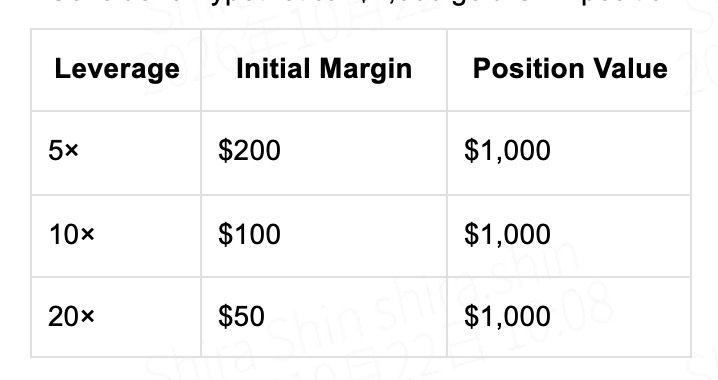
At 10× leverage, for example, a $1,000 position requires approximately $100 in initial margin, assuming a simple fixed-leverage model.
If the account uses USDT funding, the required crypto amount would depend on the platform's applicable USDT/USD conversion rate.
But lower margin does not mean lower risk.
Suppose gold moves 2% against the trader. On a $1,000 position, the approximate loss would be $20 before fees and other costs.
Against $100 of initial margin, that represents a 20% loss on the margin committed.
The same $20 loss would represent 40% of a $50 margin allocation.
This is why traders should pay attention to the dollar value of their exposure rather than focusing only on the amount of crypto required to open a position.
Actual margin rules are more complex. Platforms may apply maintenance margin, position tiers, financing costs, or changes to leverage during volatile periods.
Bitget, for example, operates a tiered margin system in which required margin can increase with account exposure. Special trading periods may also trigger different leverage limits.
The calculation above is illustrative and should not be treated as the current margin requirement for a specific instrument.
Also Read: Evernorth Wants More XRP, And 11.5M Warrant Shares Could Help Pay For It
What Are the Risks of Trading Forex and Gold CFDs with Crypto Margin?
Using cryptocurrency to fund CFD trading can make accessing different markets more convenient. It does not make leveraged trading safer.
There are four risks worth understanding before opening a position.
Leverage can amplify losses quickly.
A small movement in the underlying market can produce a much larger percentage loss relative to the margin committed. If account equity falls below the required level, positions may be liquidated automatically.
Crypto collateral can change in value.
For accounts that accept BTC or ETH directly as collateral, market declines can reduce available margin even without a loss on the CFD itself. Using volatile assets to support leveraged positions creates an additional source of risk.
Stablecoins are not risk-free.
USDT and other stablecoins aim to maintain relatively stable values, but depegging events, issuer risks, custody risks, and platform disruptions remain possible.
Trading costs and market conditions can change.
Spreads may widen during volatile periods. Overnight financing charges can accumulate when positions remain open, and execution prices may differ from the prices initially displayed.
Margin requirements can also change around market openings, economic announcements, or other periods of heightened volatility.
Before committing real funds, traders should understand the contract specifications, collateral rules, liquidation conditions, and total trading costs.
Also Read: OpenAI Bugging Suspect Stays Jailed After Prosecutors Cite Saudi Royal Chats
Frequently Asked Questions
Can I trade Forex and Gold CFDs using USDT as margin?
Yes. Platforms including Bitget, PrimeXBT, and Ouinex support USDT-funded or USDT-collateralized trading for eligible forex and gold CFD products. The exact margin arrangement differs by provider. On Bitget, users fund their CFD account with USDT, while the system handles USD settlement conversion.
Which platforms let me trade XAUUSD without depositing fiat?
Bitget, PrimeXBT, XBTFX, SimpleFX, and Ouinex offer crypto-funded access to eligible gold CFD markets. Users should confirm the supported cryptocurrency, account currency, and whether the platform converts deposits before trading.
Can I use Bitcoin or Ethereum directly as collateral for forex trading?
Some platforms support this arrangement. PrimeXBT advertises BTC and ETH as margin assets for eligible traditional-market CFD accounts. Other providers may instead offer BTC-denominated trading balances or accept cryptocurrency deposits that are converted into the account currency. These arrangements are not identical.
Does Bitget support gold and forex trading with USDT?
Yes. Bitget CFD allows eligible users to fund their CFD account with USDT and trade supported instruments such as EURUSD and XAUUSD. The platform handles USDT/USD conversion for settlement and provides trading functionality through its website, app, and MT5.
Is using crypto as margin different from making a crypto deposit?
Yes. A crypto deposit is a funding method. The deposited asset may remain in cryptocurrency form or be converted into another account currency.
Using crypto directly as margin means that the supported digital asset or its recognized collateral value contributes to the margin backing a trading position. Traders should check the platform's account and conversion rules to understand which arrangement applies.
Also Read: Bitget Eyes Thai Users With Planned GMO-Z.com Cryptonomics Takeover
Final Thoughts
Crypto-funded CFD trading is opening another route between digital assets and traditional financial markets. Bitget, PrimeXBT, XBTFX, SimpleFX, and Ouinex each approach that connection differently, from USDT-funded accounts to BTC-denominated balances and shared-margin systems. The right choice depends less on how many cryptocurrencies a platform accepts and more on what happens to those assets once a position is opened.
For traders already holding USDT, Bitget provides a way to access forex and gold CFDs without manually converting funds into fiat or moving to a separate traditional brokerage platform. Its integration of USDT funding, MT5 tools, hedging support, and tiered margin management makes it relevant to crypto users exploring traditional markets. Still, convenience should never be confused with lower trading risk. Whether the margin comes from stablecoins or volatile crypto assets, understanding leverage and protecting account equity remain essential.
Read Next: Ethereum Readies Glamsterdam And 200M Gas Limit For Hoodi, But Mainnet Date Stays Open