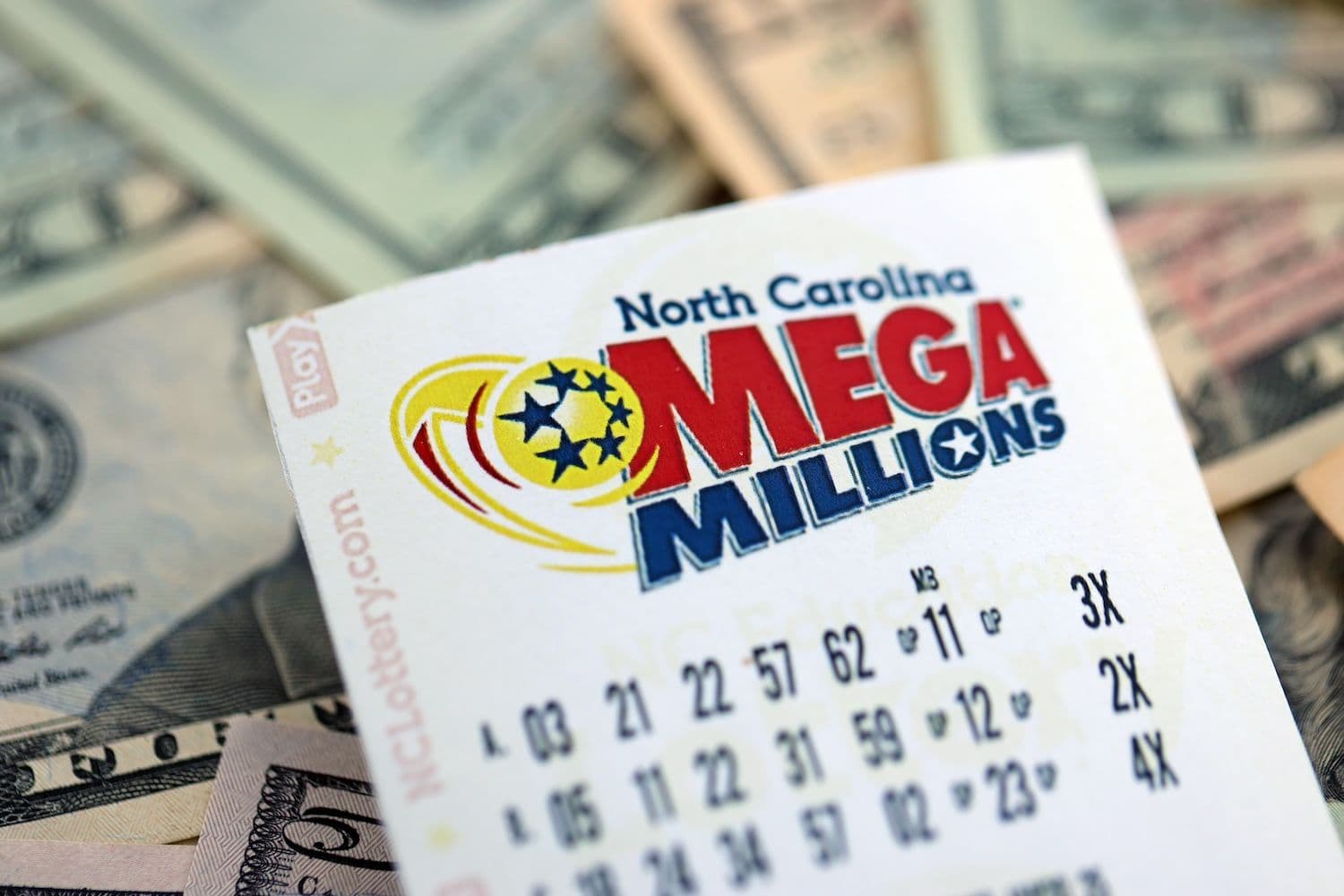
The Mega Millions jackpot crossed $600 million on July 8, 2026, making it the largest US lottery prize of the year. No winner has been confirmed since the July 7 drawing, pushing the prize further above its prior 2026 peak.
According to Forbes, this is the first 2026 lottery prize to cross the $600 million mark. The cash value option sits well below the advertised figure, coming in at roughly $253.9 million before federal and state taxes.
The most obvious winners here are prediction markets.
They let users bet on lottery outcomes — without ever buying a lottery ticket.
Key Points
- The Mega Millions jackpot crossed $600 million on July 8, 2026, the first US lottery prize to do so this year.
- Combined Mega Millions and Powerball jackpots now exceed $1 billion together.
- Prediction markets including Polymarket and Kalshi let users bet on lottery outcomes without buying tickets.
- Large lottery wins historically generate short bursts of Bitcoin and crypto purchase searches.
- On-chain platforms could see elevated activity as the drawing date approaches and public interest peaks.
What the $600 Million Number Means for Crypto Platforms
Lottery jackpots at this scale do something unusual to financial search behavior. Past cycles show spikes in queries like "should I buy Bitcoin with lottery winnings" and "best crypto to buy after windfall." Exchanges and wallet providers have historically noted search-driven signups during peak jackpot weeks.
The connection is not purely speculative. A $600 million cash-option payout, after taxes, leaves a winner with roughly $90 million to $130 million depending on their state. Financial planners routinely recommend diversification across asset classes. Bitcoin (BTC) has appeared on that checklist for several years now, especially as institutional acceptance has grown.
Beyond individual winners, the broader lottery moment creates a different kind of crypto opportunity. Prediction markets allow users to place wagers on whether a jackpot will be won in a given drawing, which state the winning ticket will come from, or whether the prize will roll over again. These are not hypothetical products.
Polymarket and Kalshi both operate active event-contract markets. Kalshi is a federally regulated prediction market exchange in the US. Polymarket operates as a decentralized platform built on Polygon (POL). Neither platform has publicly announced a Mega Millions-specific contract for this jackpot as of this writing, but both have hosted lottery-adjacent markets in prior cycles.
Polymarket logged over $5.6 billion in World Cup volume this month alone, as Yellow reported earlier this week. Lottery markets represent a smaller but recurring segment of that activity.
Background
The current jackpot run began building after the last Mega Millions winner claimed a $533 million prize in March 2026. No single ticket has matched all six numbers since that draw. Each rollover inflates the prize and lifts public attention, which tends to benefit platforms that sit at the intersection of gambling, finance, and speculation.
Prediction market volume has broadly expanded in 2026. The World Cup cycle demonstrated that real-money event contracts can draw retail participants who have never interacted with crypto before. Lottery jackpots serve a similar function. They are a familiar, mass-market event with a binary outcome and a hard deadline. Those features map cleanly onto how prediction market contracts are structured.
The combined Mega Millions and Powerball jackpot total crossed $1 billion on July 7, according to WITN. That figure adds to the media attention driving search volume. Platforms that have already built lottery contract infrastructure are better positioned to capture that traffic than those starting from scratch.
Also Read: Did Ronaldo Cry? Polymarket Traders Put $5.4M Behind The Footage Fight
What to Watch
The next Mega Millions drawing is the clearest short-term catalyst. If no winner emerges again, the jackpot could approach or exceed $700 million. At that level, media saturation typically accelerates and prediction market operators often launch or re-promote lottery contracts to capture the attention cycle.
For crypto holders, the more durable question is whether a winner of this scale would consider allocating a portion into digital assets.
Past winners who went public with crypto allocations generated brief but measurable price commentary. A $600 million jackpot winner converting even 5% into BTC would represent a nine-figure single transaction.
The lottery and crypto industries rarely intersect directly. But moments like the current Mega Millions run create a temporary bridge. Prediction market platforms, crypto exchanges, and financial advisors serving high-net-worth clients are all watching the next draw.
Read Next: Eng Vs Ind Is No Longer Just Cricket For Prediction Market Traders