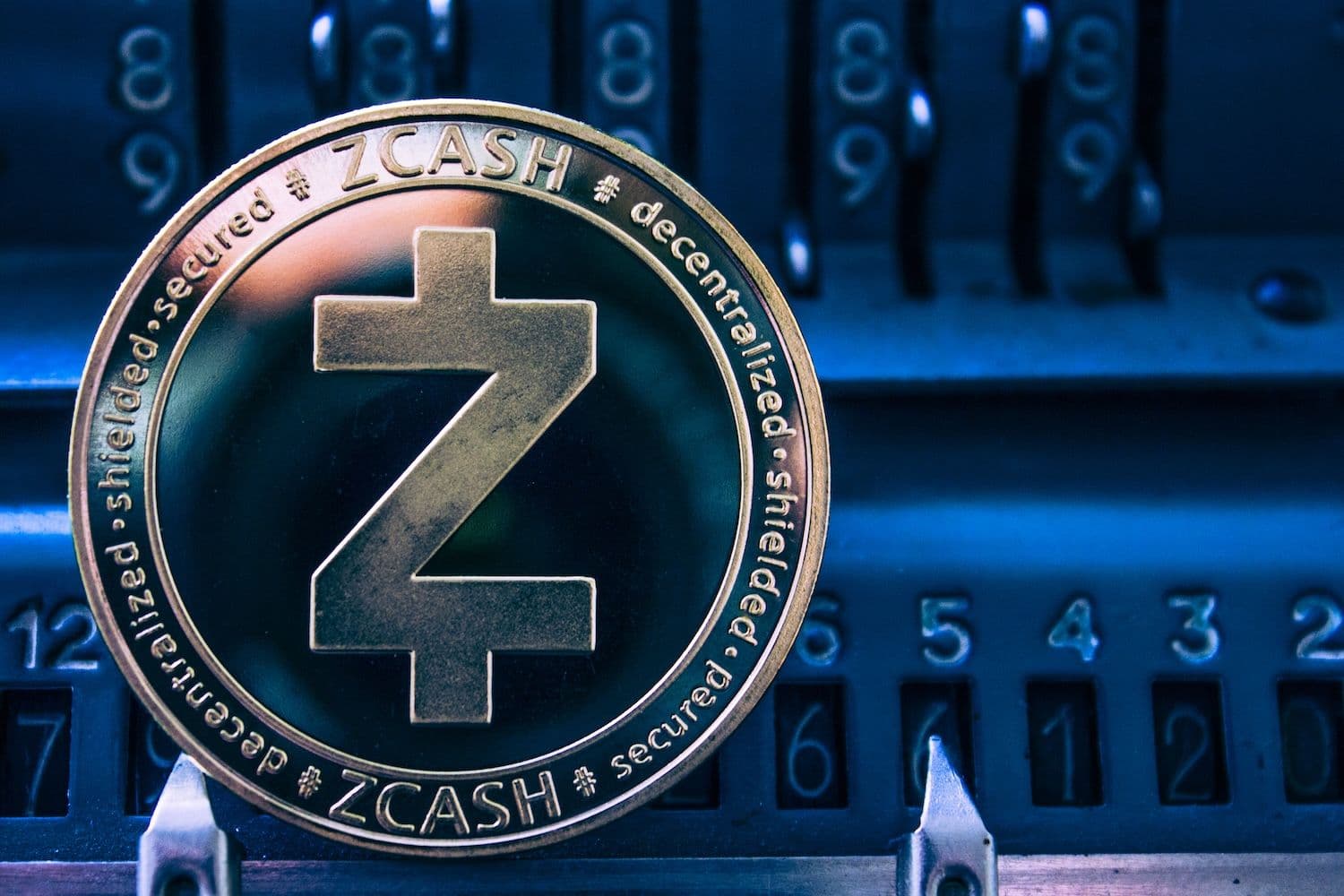
Zcash (ZEC) traded near $377 on May 2, 2026, after posting a 7.4% gain in the prior 24 hours. The move pushed ZEC toward its highest levels in recent weeks and placed it among the top performers on CoinGecko's trending list.
What Zcash Actually Does
Zcash is a privacy-focused cryptocurrency that launched in October 2016. It was developed by the Electric Coin Company, building on research from Johns Hopkins University cryptographers.
The protocol uses zero-knowledge proofs, specifically a construction called zk-SNARKs, to allow users to send fully encrypted transactions. In a standard shielded Zcash transaction, the sender, receiver, and amount are all hidden from the public blockchain record.
Users can choose between transparent addresses and shielded addresses. Transparent transactions on Zcash work similarly to Bitcoin (BTC), with all data visible on-chain. Shielded transactions use the protocol's cryptographic layer to conceal details.
This dual-mode structure has long been both a strength and a controversy. Regulators have cited it when pressing exchanges to delist ZEC. Several Japanese and South Korean exchanges removed the token under anti-money-laundering guidance in prior years.
The Zero-Knowledge Context
Zero-knowledge proofs have moved from a niche cryptographic concept into mainstream blockchain development. Ethereum (ETH) scaling networks now use zk-proof technology extensively. Projects like zkSync and StarkNet have built entire ecosystems around it.
That broader adoption has pulled the technology into more positive public framing. ZEC was an early production deployment of zk-SNARKs at scale. The narrative has shifted somewhat from "privacy coin used to hide funds" toward "pioneering zero-knowledge infrastructure."
That shift in framing may be one reason ZEC is drawing attention alongside the Google Trends data this hour, which shows rising searches for zero-knowledge wallet products and cold storage solutions.
Background
Zcash has had a turbulent few years. The token hit an all-time high above $4,000 during the 2021 bull cycle. It then fell sharply through 2022 and 2023 alongside the broader market.
The Electric Coin Company went through significant restructuring. In late 2023, ECC cut staff and refocused on core protocol development. The Zcash Foundation continued operating separately, maintaining the network's governance and grant programs.
A major milestone came in 2024 with the Zcash Shielded Labs initiative and continued work on the Zcash Improvement Proposal process. The team has been working toward making shielded transactions the default, rather than an opt-in feature.
At a market cap near $6.3 billion and a rank of 19 on CoinGecko, ZEC remains a significant asset by crypto standards. Its 24-hour trading volume reached $677 million during this window, a figure that outpaces many larger-cap tokens by activity-to-cap ratio.
Also Read: Pudgy Penguins Draws Fresh Trader Interest As PENGU Volume Tops $194M
Who Holds ZEC and Why
The ZEC holder base splits roughly into two groups. One group holds it for ideological reasons, valuing financial privacy as a right. The other uses it as a speculative asset, tracking its correlation to Bitcoin during risk-on periods.
Institutional interest in ZEC has been limited compared to BTC or ETH. Grayscale has operated a Zcash trust product, though it has attracted far less capital than its Bitcoin equivalent. That gap may narrow if privacy-preserving finance becomes more prominent in regulatory frameworks that permit selective disclosure.
The GENIUS Act and Clarity Act were both generating Google search volume this hour alongside Bitcoin queries. Legislative clarity on digital assets could affect how privacy coins are classified. A favorable ruling or safe-harbor provision for selective-disclosure protocols could be meaningful for ZEC's long-term positioning.
Price Structure and What Comes Next
ZEC's current price near $377 sits well below its 2021 peaks. The token has maintained a price in Bitcoin terms of roughly 0.0048 BTC, holding its relative value through recent market chop.
On-chain, the ratio of shielded to transparent transaction volume has been gradually rising. That internal metric suggests organic adoption of the privacy features, rather than just speculative trading.
The token's CoinGecko trending placement this hour reflects social and search interest, not necessarily sustained buying. Trending coins frequently see elevated volume for 24 to 48 hours before returning to baseline.
Read Next: Centrifuge CFG Token Sees $6.1M Volume During RWA Sector Momentum