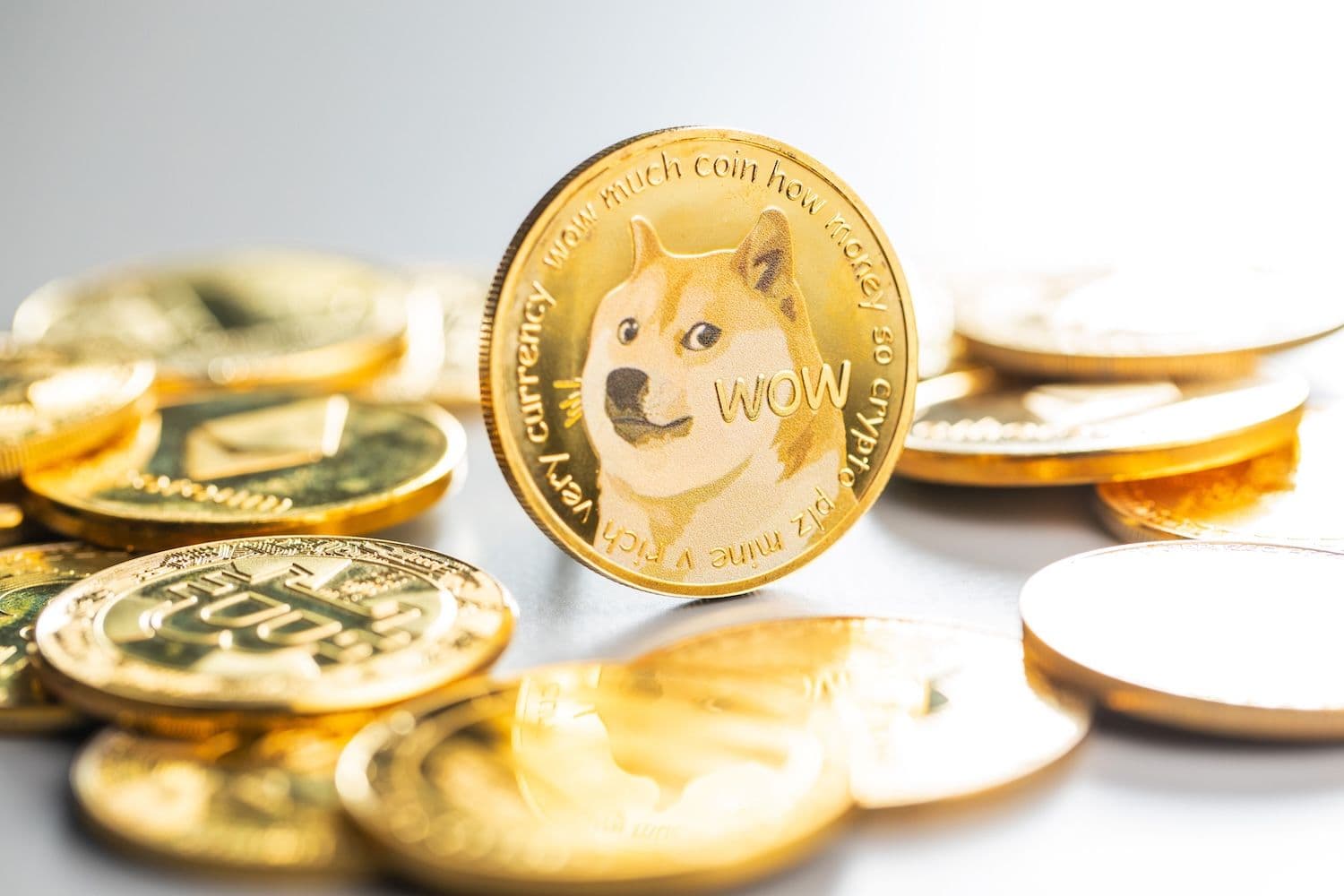
Dogecoin (DOGE) trades at roughly $0.095 in mid-Mar. 2026 — down 87% from its all-time high and more than 60% over the past year — raising a difficult question about whether the world's original meme coin still deserves a place in any serious crypto portfolio, especially as three spot ETFs have launched, a government department shared its name and Elon Musk's price influence has measurably faded.
The Dogefather's Grip Loosens
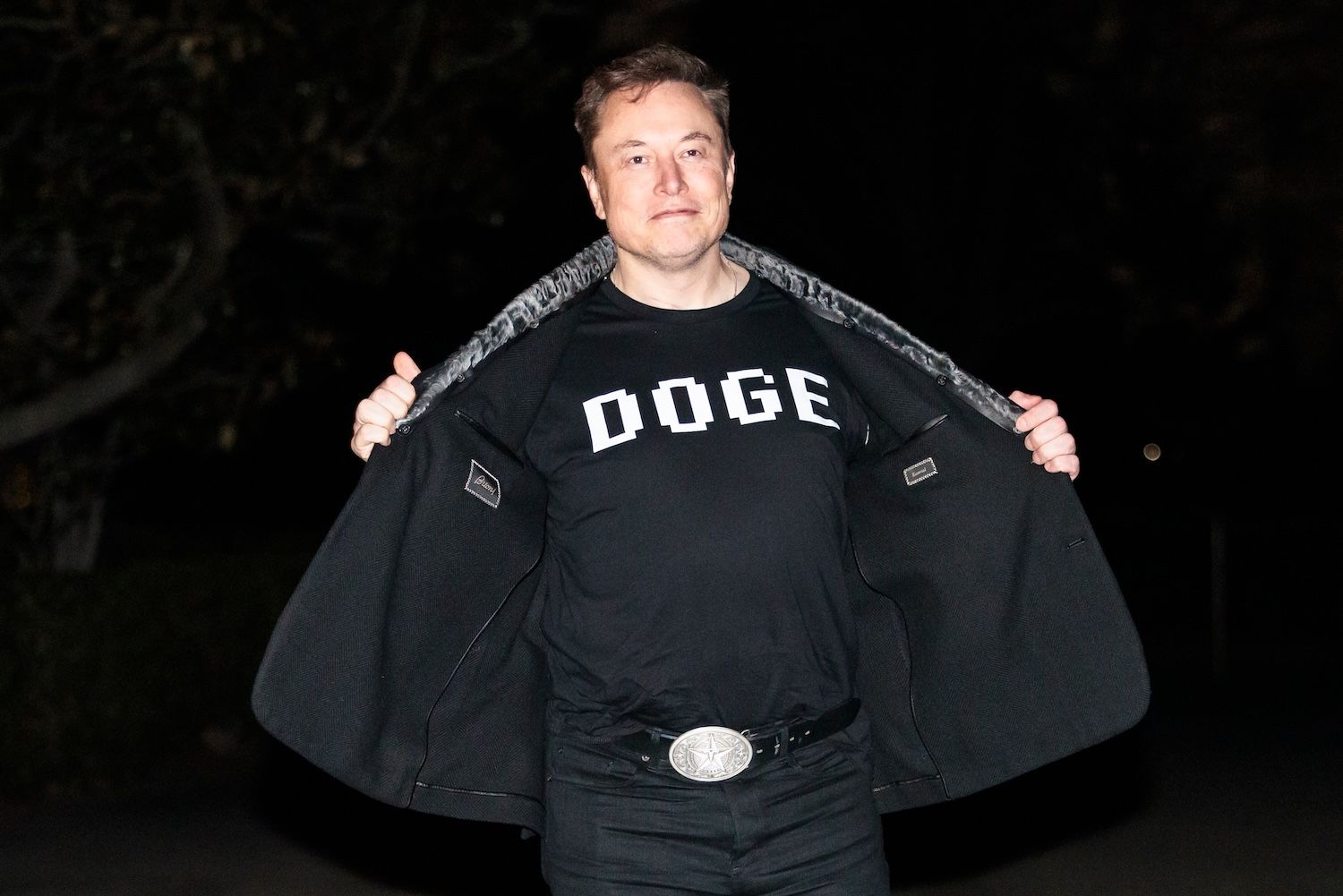
Few figures in finance have ever moved an asset's price with the casual power Musk once wielded over Dogecoin. His April 2019 tweet calling it his favorite cryptocurrency kicked off years of increasingly frenzied speculation that peaked on May 8, 2021, when DOGE hit $0.7376 during his Saturday Night Live appearance.
The moment he called it "a hustle" on air, the token crashed 29.5% during the broadcast.
In January 2025, the Department of Government Efficiency's website briefly displayed the Dogecoin Shiba Inu logo — complete with ASCII art of the meme dog in its HTML source code. DOGE surged 13% in 15 minutes, jumping from $0.33 to $0.40. The logo was removed shortly after, and the price collapsed back.
But the pattern has since broken. CoinGecko research from late 2025 confirmed that Musk's posts about DOGE no longer move the price the way they once did.
On Feb. 3, 2026, Musk replied "Maybe next year" to a question about sending a literal Dogecoin to the moon via SpaceX. The post drew hundreds of thousands of views. DOGE barely moved.
Musk departed his role as head of the government efficiency department on May 28, 2025, after his 130-day Special Government Employee term ended. The department's charter remains technically active until July 4, 2026, but the cultural connection between the agency's acronym and the cryptocurrency has faded substantially. On the legal front, the $258 billion manipulation lawsuit against Musk was dismissed with prejudice in August 2024, with the judge calling his statements "aspirational and puffery."
What remains is a $14.5 billion asset that has outgrown its celebrity benefactor but has not yet found a replacement catalyst.
That matters because Dogecoin was, is and may always be the most influential meme coin in existence — the one that spawned an entire sector now worth tens of billions of dollars, from Shiba Inu (SHIB) to BONK (BONK) to PEPE (PEPE). It holds roughly a 55% share of the total meme coin market capitalization, a position no competitor has meaningfully threatened.
Also Read: BlackRock Moves $100M In Crypto to Coinbase, Fueling Market Jitters

A Sobering 12-Month Picture
Dogecoin entered 2025 riding enormous momentum from 2024, where it returned 251% as the best-performing major cryptocurrency. It opened the year near $0.31, briefly touched $0.43, and then collapsed. By year-end, DOGE had shed over 60% of its value.
The decline has continued into 2026. Prices drifted from $0.11 in January to approximately $0.093–$0.102 in mid-March.
DOGE holds a market cap between $14.4 billion and $15.6 billion, ranking it ninth among cryptocurrencies.
Its 52-week high of $0.43–$0.48 came in late 2024 to early 2025, while the 52-week low of approximately $0.08 was set in recent weeks — a staggering 83% range. Year-to-date in 2026, DOGE is down about 9%, modestly underperforming Bitcoin (BTC)'s roughly 7% decline.
But over 12 months, the gap is devastating. DOGE returned negative 63% while Bitcoin, despite its own pullback from an all-time high above $126,000 in October 2025, has fared far better. The Fear & Greed Index sits at 28 — firmly in fear territory.
Also Read: Ethereum Drops Under Cost Basis For The First Time In Two Years: Can A Rally Follow?
Volatility Dwarfs Bitcoin and Ethereum
Dogecoin's 30-day realized volatility of approximately 68% dwarfs Bitcoin's 38–45% and even exceeds Ethereum (ETH)'s 61%. That makes DOGE roughly 1.5 times more volatile than BTC on a rolling basis — a feature that attracts speculative traders but punishes long-term holders during downtrends.
Risk-adjusted returns have deteriorated severely.
The trailing 12-month Sharpe ratio for DOGE sits at negative 0.65, compared to Bitcoin's negative 0.16. Both figures are negative, meaning returns fell below the risk-free rate, but DOGE delivers substantially worse returns per unit of risk taken.
On a four-year rolling basis through September 2024, DOGE's Sharpe ratio of 1.00 actually exceeded Bitcoin's 0.97 and Ethereum's 0.95 — a reflection of the massive 2024 rally. That advantage has evaporated entirely.
The drawdown data is stark. DOGE's all-time maximum drawdown reached 92% in June 2022. It currently sits approximately 87% below its May 2021 all-time high. During 2025 alone, DOGE experienced a 74% peak-to-trough drawdown from $0.43 to $0.11. The DOGE-BTC correlation stands at 0.66, meaning DOGE tracks Bitcoin directionally but amplifies moves — particularly to the downside.
Also Read: Bitcoin-Gold Correlation Hits Lowest Since 2022
Whale Wallets Are Mostly Exchange Custody
The headline statistic — that the top 100 wallets hold roughly 66–67% of all DOGE — sounds alarming but requires critical context.
The single largest wallet, holding 27.2 billion DOGE or 17.72% of supply, belongs to Robinhood's cold storage and represents millions of individual retail accounts. The next largest belong to Binance at 7.53% and Upbit at 7.38%. Of the top 10 wallets, the vast majority are exchange custodial addresses rather than individual whales.
That said, whale activity remains a meaningful market signal.
In Mar. 2026, whales accumulated 470 million DOGE in 72 hours amid a $0.10 breakout attempt.
Earlier, in late 2025, roughly 2 billion DOGE worth $480 million was absorbed within 48 hours. Addresses holding over $10 million in DOGE collectively surpass 109 billion units, showing what analysts describe as long-term conviction among institutional or high-net-worth participants. The broader trend shows whale concentration gradually decreasing as exchange withdrawals increase, with more DOGE moving to self-custody wallets.
Also Read: Kalshi Raises $1B At $22B Valuation
Retail Sentiment Still Drives the Price
Dogecoin remains fundamentally a retail-driven asset. Derivatives activity comprises only about 30% of total DOGE volume, compared to Bitcoin's roughly 60%, confirming spot and retail dominance. Short-term holder supply declined from 17.47% in January 2025 to 7.24% by late 2025, suggesting speculative retail interest is waning.
Google Trends data places Dogecoin in the 33rd percentile for search interest — far below 2021 peaks.
Social media correlation remains strong in theory but weaker in practice.
Analysis from XS.com confirms a strong link between X mentions and DOGE price, but individual catalysts now produce diminished reactions. The 90-day Bitcoin correlation dropped to 0.62 in early 2026 from a historical average above 0.75, suggesting DOGE is developing some independent — and currently bearish — market dynamics.
Also Read: MLB Signs Exclusive Polymarket Deal
ETFs Bring Institutional Rails but Modest Inflows
The ETF launches represent the most important structural development for institutional access to Dogecoin.
The 21Shares Dogecoin ETF, trading under the ticker TDOG, launched on Nasdaq on Jan. 22, 2026, as the first physically-backed spot DOGE ETF. The Dogecoin Foundation endorsed the product, which carries a 0.50% fee and multi-custodian backing from Coinbase, Anchorage Digital and BitGo.
Grayscale's GDOG trades on NYSE Arca with approximately $6 million in assets. The REX-Osprey DOJE fund launched in September 2025.
Early inflows remain modest across all three products. But the regulatory precedent is significant — these are the first meme coin ETFs to receive SEC approval, and their existence opens the door to retirement accounts, wealth management platforms and institutional allocations that could not previously touch DOGE.
Also Read: Hashi Protocol Wants To Unlock Bitcoin DeFi
Tokenomics Create a Permanent Headwind
Dogecoin's inflationary supply model remains its most debated fundamental characteristic.
The network's circulating supply stands at approximately 153.4 billion DOGE, growing by about 5.256 billion tokens per year through a fixed block reward of 10,000 DOGE per minute. That perpetual inflation — currently around 3–3.5% annually — represents the core structural tension in any Dogecoin investment thesis.
Unlike Bitcoin's hard cap of 21 million coins, DOGE supply grows forever.
Demand must continuously expand just to maintain price parity.
Supporters argue the declining percentage inflation rate, which is headed below 2% by 2035, and the low transaction fees of roughly $0.002 per transfer make DOGE better suited as a payment currency than a store of value. Critics counter that without a supply cap, sustained price appreciation requires perpetually growing demand — a tall order for an asset with no yield, no smart contracts and limited utility beyond payments and tipping.
Also Read: Bitcoin's First Quantum-Resistant Transaction Just Went Live
Network Activity and Real-World Adoption
Daily active addresses surged to 114,662 on Mar. 18, 2026 — a 176% week-over-week jump — but had plummeted 78% to just 19,000 in February during a bearish phase.
That kind of swing illustrates how tightly Dogecoin's on-chain activity tracks speculative interest rather than organic usage.
Over 3,000 businesses accept DOGE through processors like BitPay, including Tesla, Microsoft, AMC Theatres, Newegg, airBaltic and NordVPN. DOGE accounts for approximately 3–5% of cryptocurrency payment volume.
In December 2025, developer Paulo Vidal discovered new DOGE checkout code embedded in Tesla's redesigned website, hinting at potential vehicle payment integration. If Tesla were to enable DOGE payments for cars — not just merchandise — it would represent a genuine demand catalyst. But as of Mar. 2026, no official announcement has been made.
The most transformative proposed upgrade is OP_CHECKZKP, submitted by DogeOS in July 2025, which would introduce native zero-knowledge proof verification to Dogecoin's base layer. If adopted, this soft fork would enable zk-rollups, DeFi applications, gaming and trustless bridges — potentially the most significant technical upgrade in Dogecoin's history. The Dogecoin Foundation has endorsed the proposal, but miner adoption remains uncertain.
Also Read: UK Dissolves Crypto Exchange Linked To Iran's IRGC
Regulation Has Turned Favorable
The SEC's February 2025 staff statement declared that typical meme coins do not constitute securities under federal law, removing a major overhang that had clouded the entire sector for years.
DOGE falls under CFTC commodity jurisdiction. In Europe, the MiCA regulation treats DOGE under its "other crypto-assets" category, requiring exchanges to obtain CASP authorization but not restricting retail access.
The Trump administration's pro-crypto stance — dropping lawsuits against major exchanges, forming a Crypto Task Force and repealing DeFi broker reporting requirements — has created what amounts to the most permissive U.S. regulatory environment in crypto history.
For Dogecoin specifically, the regulatory picture is as clear as it has ever been. No enforcement action threatens the token, and ETF approval confirms its legitimacy in the eyes of federal regulators.
Also Read: CZ Speaks Out On Binance Terror Allegations After Two US Court Wins
Expert Predictions Span From Sub-Penny to $1
Analyst opinions on Dogecoin in 2026 diverge more widely than almost any other major cryptocurrency, reflecting the asset's inherently speculative nature.
On the bullish end, Galaxy Digital's Alex Thorn predicted DOGE would finally hit $1 with a $100 billion market cap — a forecast made in late 2024 that spectacularly missed as DOGE fell over 60% in 2025. Coinpedia projects $0.75–$1.25 in an optimistic scenario driven by ETF momentum and institutional demand.
In the middle, Changelly projects monthly averages of $0.095–$0.162 through 2026. CoinCodex algorithmically models a $0.098–$0.228 range. DigitalCoinPrice targets $0.28.
The Motley Fool's Alex Carchidi predicts DOGE will continue to anchor the meme coin category but expresses high confidence that there will not be a real investment thesis for buying Dogecoin before the end of 2026.
On the bearish end, the Motley Fool's Anthony Di Pizio predicts DOGE could plunge to $0.05, matching its 2022 crash low. His colleague Dominic Basulto argues that if DOGE were valued comparably to Shiba Inu's market cap, it would trade at $0.03, and valued like BONK, just $0.004. XS.com's bear scenario targets $0.05–$0.08 if meme enthusiasm fades during a broader crypto downturn.
At the current price of roughly $0.095, DOGE already sits below many late-2025 bear-case predictions, suggesting the pessimists have been more accurate than the optimists.
Also Read: SEC Lets Nasdaq Trade Stocks As Digital Tokens
From Joke to Top 10: The Milestones
Dogecoin launched on Dec. 6, 2013, created in roughly four hours by Billy Markus and Jackson Palmer as a deliberate parody of cryptocurrency speculation. Its first year was defined by community generosity — raising $30,000 for the Jamaican bobsled team's 2014 Olympics trip, funding clean water wells in Kenya and sponsoring NASCAR driver Josh Wise.
The community ethos of "Do Only Good Everyday" became the project's unofficial motto.
The technical foundation was secured in 2014 through merged mining with Litecoin (LTC), which gave DOGE access to substantial hashpower security. Palmer departed in 2015, citing what he called a toxic crypto ecosystem. Markus sold all his holdings for what he described as the equivalent of a used Honda Civic.
Everything changed when Musk tweeted "Dogecoin might be my fav cryptocurrency" in April 2019.
The Reddit-fueled frenzy of January 2021 — spillover from the GameStop short squeeze — sent DOGE up 339% in two days.
By May 8, 2021, with Musk hosting Saturday Night Live as the self-proclaimed Dogefather, DOGE hit its all-time high of $0.7376 with a market cap exceeding $90 billion. Robinhood experienced nationwide outages from the sheer volume of DOGE trading that night.
The 2024 Trump-era revival — powered by the Department of Government Efficiency's DOGE acronym — drove prices to $0.48 but proved equally unsustainable.
Now, with ETFs providing regulated access and the OP_CHECKZKP upgrade potentially bringing smart contract functionality, Dogecoin faces its most consequential year for determining whether it can evolve beyond speculation driven by memes and celebrity tweets.
Also Read: Crypto Firms Challenge Banking Sector On Stablecoin Reward Restrictions
Closing Thoughts
Dogecoin remains a high-volatility, sentiment-driven asset that amplifies crypto market cycles in both directions. The 2024 return of 251% and 2025 return of negative 63% illustrate this perfectly.
The risk-return profile — a Sharpe ratio of negative 0.65 versus Bitcoin's negative 0.16 — makes a strong case that investors seeking crypto exposure get better risk-adjusted returns from BTC or ETH.
The bull case rests on three pillars: ETF-driven institutional access creating a price floor, potential Tesla vehicle payment integration and the OP_CHECKZKP upgrade enabling genuine utility.
The bear case is equally clear: inflationary supply with no cap, dependence on speculative sentiment with no organic demand driver, Musk's diminishing influence and competition from newer meme coins that are building actual ecosystems such as Shiba Inu's Shibarium and BONK on Solana (SOL).
At $0.095, DOGE trades at an 87% discount to its all-time high and is priced below most analysts' bear-case scenarios from just months ago. Whether that represents capitulation or fair value depends entirely on whether the next cycle of retail enthusiasm arrives — and whether Dogecoin will have built anything of substance by the time it does.
Read Next: Bitcoin Shows Mixed Signals With Rising ETF Demand But Persistent Capital Outflows