
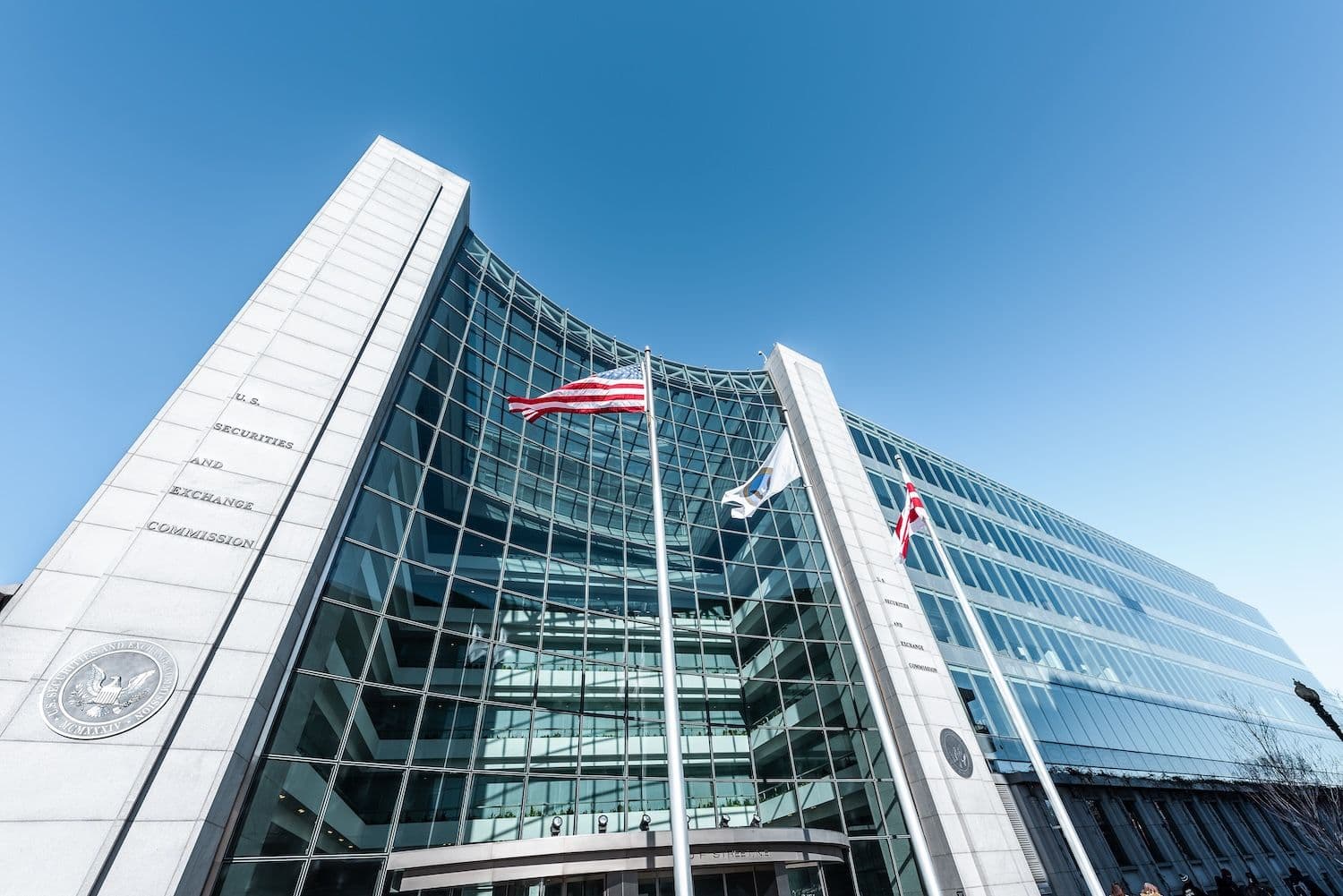
The U.S. Securities and Exchange Commission and the Commodity Futures Trading Commission on March 11 signed a memorandum of understanding establishing joint coordination on digital asset oversight, creating a formal structure to resolve jurisdictional conflicts that have frustrated the cryptocurrency industry for more than a decade.
The agreement, accompanied by a Joint Harmonization Initiative co-led by the SEC's Robert Teply and the CFTC's Meghan Tente, commits both agencies to aligning regulatory definitions, coordinating enforcement, and building a shared framework for crypto asset classification.
The same day, Bloomberg reported that Ripple (XRP) had launched a $750 million share buyback valuing the company at $50 billion, while federal prosecutors filed a 44-page opposition to Sam Bankman-Fried's request for a retrial in the FTX fraud case.
These three developments, arriving within hours of one another, illustrate the simultaneous forces reshaping cryptocurrency in the United States: institutional coordination where there was once jurisdictional warfare, corporate confidence where there was once existential legal risk, and legal reckoning where there was once impunity.
The convergence is not coincidental. It reflects a regulatory environment that has changed more rapidly in the past twelve months than at any point since the first Bitcoin (BTC) futures contract launched in 2017, driven by a new administration, new agency leadership, and a Congress that has already enacted the first federal digital asset legislation in U.S. history.
The stakes extend well beyond the crypto industry itself. The stablecoin market alone now exceeds $314 billion, according to DefiLlama data. Bitcoin, despite falling roughly 44% from its October all-time high of $126,000, still commands a market capitalization larger than most national stock exchanges.
The regulatory choices made in Washington over the coming months will determine how much of this activity remains within U.S. jurisdiction, how much migrates to competitors in Europe, the Middle East, and Asia, and whether the promises of financial innovation survive the collision with federal oversight machinery.
The Turf War That Built the Problem
To understand why a memorandum of understanding between two federal agencies attracted attention across the global financial press, it helps to understand the problem it was designed to address. For more than a decade, the central unresolved question in U.S. crypto regulation has been deceptively simple: is a given digital asset a security or a commodity?
The answer determines which agency has authority, which rules apply, and which enforcement tools are available. The SEC, relying on the framework established by the Supreme Court's 1946 Howey decision, has broadly argued that most tokens sold to raise funds constitute investment contracts.
The CFTC has classified Bitcoin and Ether as commodities and asserted jurisdiction over derivatives markets built on top of them.
The practical result was regulation by enforcement rather than regulation by rule. Rather than issuing clear guidance in advance, both agencies brought cases after the fact, using individual enforcement actions to establish precedent. The SEC under former Chair Gary Gensler pursued this approach with particular intensity, filing more than 100 enforcement actions related to digital assets between 2021 and early 2025. The CFTC, operating with a budget roughly one-fifth the SEC's size, focused primarily on derivatives fraud and manipulation while repeatedly calling for expanded authority over spot markets.
The cost was tangible and measurable. Multiple analyses estimated that compliance uncertainty drove significant trading volume, corporate headquarters, and developer talent to jurisdictions with clearer frameworks. The European Union implemented its Markets in Crypto-Assets regulation. Singapore, the United Arab Emirates, and Hong Kong all built licensing regimes that attracted firms fleeing U.S. ambiguity.
The companies that chose to remain in the United States spent millions on legal counsel attempting to interpret rules that were never written with digital assets in mind, while the system failed to prevent the catastrophic fraud at FTX.
What the Memorandum Actually Contains
The SEC-CFTC memorandum, announced simultaneously on both agencies' websites, establishes six priority areas for coordination: a shared crypto asset taxonomy, coordinated enforcement decisions, joint regulatory examinations, policymaking alignment, a new harmonization website for simultaneous agency input on firm applications, and confidential supervisory data sharing.
The accompanying Joint Harmonization Initiative targets product classification, clearing and margin frameworks, regulatory reporting, and cross-market surveillance.
SEC Chairman Paul S. Atkins framed the agreement as a corrective to decades of institutional conflict. According to the SEC's official statement, Atkins said that "regulatory turf wars, duplicative agency registrations, and different sets of regulations between the SEC and CFTC have stifled innovation and pushed market participants to other jurisdictions."
He described the memorandum as "a roadmap for a new era of harmonization" that would deliver "the clarity market participants deserve."
CFTC Chairman Michael S. Selig, in a post on X accompanying the announcement, said the agreement "solidifies the agencies' commitment to harmonize regulatory frameworks to provide comprehensive and seamless financial market oversight."
Selig added that by "working together, we'll eliminate duplicative, burdensome rules and close gaps in regulation for the benefit of all Americans."
The memorandum builds on prior coordination efforts. In January 2026, the two agencies jointly launched Project Crypto, expanding what had been an internal SEC initiative into an inter-agency collaboration on digital asset regulation.
In September 2025, a joint staff statement from the SEC's Division of Trading and Markets and the CFTC's Division of Market Oversight had already established that registered exchanges are not prohibited from facilitating trading of certain spot crypto asset products.
It is worth emphasizing what the memorandum does not do. It does not resolve the fundamental classification question. It does not create new rules or safe harbors. It does not bind either agency to specific outcomes. And it does not prevent either agency from pursuing independent enforcement.
The agreement advances independently of the CLARITY Act, the market structure bill that passed the House in July 2025 but remains stalled in the Senate over disputes about stablecoin yields and tokenized assets. If the CLARITY Act clears the Senate, it would codify the memorandum's framework into statute. If it stalls further, the memorandum provides operational coordination without statutory backing.
The New SEC Under Atkins
The shift at the SEC under Paul Atkins has been one of the most closely watched developments in financial regulation in 2025 and 2026. Atkins, who served as an SEC Commissioner from 2002 to 2008, was widely viewed as a crypto-friendly appointment when President Donald Trump nominated him.
Since taking office, Atkins has dropped or settled multiple pending enforcement actions against crypto firms, restructured the SEC's Crypto Assets and Cyber Unit, revised staff guidance on token classifications, and held public roundtables with industry participants to discuss potential rulemaking.
The approach has drawn both support and criticism. Industry groups, including the Blockchain Association and the Chamber of Digital Commerce, have welcomed the emphasis on regulatory clarity before enforcement. Consumer protection advocates, including Americans for Financial Reform, have warned that pulling back enforcement while new rules remain under development leaves retail investors exposed to fraud and market manipulation.
The CFTC's role in the memorandum reflects its own expanding ambitions. The agency has long sought primary authority over spot crypto commodity markets, an effort that has found bipartisan congressional support in proposals including the Financial Innovation and Technology for the 21st Century Act and the CLARITY Act. The CFTC's budget for fiscal year 2025 was approximately $400 million, compared to the SEC's roughly $2.2 billion, raising serious questions about institutional capacity.
Staffing the additional oversight required for spot crypto markets, which now trade billions of dollars daily across dozens of platforms, would require significant congressional appropriations that remain far from guaranteed.
Skeptics have also raised concerns about the regulatory posture of an agency that has historically been perceived as more accommodating to the industries it oversees. The CFTC's primary constituency has traditionally been agricultural commodity producers and derivatives traders, industries with different risk profiles and compliance cultures than the cryptocurrency sector.
Whether an agency designed to oversee corn futures and oil swaps can effectively regulate a technology-driven market characterized by rapid innovation, pseudonymous participation, and global capital flows is a question that the memorandum does not itself answer. Proponents argue that the CFTC's lighter-touch approach would better suit an industry that has chafed under what it describes as the SEC's heavy-handed tactics. Critics worry that it could create conditions for the next major failure.
The coordination timeline matters as well. The President's Working Group on Digital Asset Markets issued a report in July 2025 recommending that the SEC and CFTC use their existing authorities to promote "regulatory clarity that best keeps blockchain-based innovation within the United States."
The September 2025 joint staff statement on spot crypto asset products and the January 2026 launch of Project Crypto both preceded the March memorandum, suggesting a deliberate sequencing of increasingly concrete coordination steps. The memorandum, in this context, is not a sudden development but the latest and most formal step in a progression that has been building for months.
Ripple's $50 Billion Statement
While regulators negotiate frameworks, the corporate side of the cryptocurrency industry is making its own statement about confidence and maturity. Bloomberg reported on March 11 that Ripple had launched a share buyback of up to $750 million through a tender offer that values the company at approximately $50 billion.
The offer, which is expected to run through April, allows employees and investors to sell shares back to the company. Ripple declined to comment.
The $50 billion valuation represents a 25% increase from the $40 billion figure attached to Ripple's November 2025 funding round. That round raised $500 million from a group of investors that included affiliates of Fortress Investment Group, affiliates of Citadel Securities, Pantera Capital, Galaxy Digital, Brevan Howard, and Marshall Wace.
The higher valuation comes during a period of significant crypto market decline. Bitcoin has fallen more than 44% from its October all-time high, and XRP has dropped approximately 62% from its own peak to roughly $1.38, according to Binance data cited by Fortune.
The buyback follows a previous attempt in September 2025 to repurchase roughly $1 billion of shares at a $40 billion valuation that drew the lowest participation rate of any prior Ripple buyback round, with shareholders reportedly reluctant to sell in anticipation of further appreciation. The revised offer, with a lower dollar amount but a higher implied per-share price, appears designed to improve participation.
An even earlier buyback in January 2024 repurchased $285 million in shares at an $11.3 billion valuation, according to FXStreet, illustrating the speed at which Ripple's implied value has increased.
Ripple's confidence rests on a series of observable developments. The company deployed approximately $2.45 billion on three major acquisitions in 2025 alone: prime brokerage firm Hidden Road for $1.25 billion, treasury management provider GTreasury for $1 billion, and stablecoin payments platform Rail for $200 million. Hidden Road, which clears over $3 trillion annually and serves more than 300 institutional clients, has been rebranded as Ripple Prime.
The company also has a pending acquisition of BC Payments aimed at securing an Australian Financial Services License. In total, Ripple has said it has deployed around $4 billion into the crypto ecosystem through investments and acquisitions. The company's stablecoin, RLUSD, has grown to a market capitalization of $1.57 billion. Spot XRP exchange-traded funds, which launched in November 2025, have attracted $1.26 billion in cumulative inflows, according to CoinDesk.
Ripple President Monica Long confirmed earlier in 2026 that the company has no current plans to pursue an initial public offering, keeping it outside the disclosure requirements and public scrutiny that accompany a listing. CEO Brad Garlinghouse has been more expansive in his public commentary about the company's long-term ambitions, saying in February that he believes a trillion-dollar crypto company is an inevitability.
The $50 billion valuation, while striking, is based on a private tender offer rather than a public market price and carries the inherent opacity of private company valuations. It also depends heavily on the assumption that the regulatory tailwinds currently benefiting the company will persist, an assumption that the history of crypto regulation in the United States gives ample reason to question.
The Stablecoin Battleground
Perhaps no single issue illustrates the complexity of crypto regulation in 2026 better than the ongoing fight over stablecoins. The GENIUS Act, formally the Guiding and Establishing National Innovation for U.S. Stablecoins Act, was signed into law by President Trump on July 18, 2025, after passing the Senate 68-30 and the House 308-122 with bipartisan support.
It is the first federal digital asset legislation enacted in the United States, establishing a comprehensive regulatory framework for payment stablecoins that includes one-to-one reserve backing requirements, audit mandates, consumer protection standards, and a dual-track federal and state licensing system.
The law represents a substantial achievement, but it has not resolved the broader debate over stablecoin regulation. The central flashpoint is whether stablecoin issuers should be permitted to offer yield or interest-like incentives to token holders.
This question, which the GENIUS Act did not fully settle, has become the primary obstacle blocking passage of the CLARITY Act, the broader market structure bill that would grant the CFTC explicit authority over spot crypto commodity markets.
Patrick Witt, executive director of the President's Council of Advisors for Digital Assets, argued in a March 11 post on X that the yield debate overlooks a more important macroeconomic dynamic. According to Witt, stablecoins compliant with the GENIUS Act framework "will actually lead to deposit inflows" into the U.S. banking system.
His reasoning is that foreigners purchasing U.S.-issued stablecoins convert global demand for dollars into new capital entering the American financial system, because compliant issuers must hold reserves in U.S. Treasuries and bank deposits. "That is net new capital entering the American banking system," Witt wrote.
Banking groups reject this framing. The American Bankers Association, along with other industry trade groups, has warned that yield-bearing stablecoins could siphon deposits from traditional banks and create regulatory imbalances.
JPMorgan CEO Jamie Dimon argued earlier in March that platforms paying interest on stored balances effectively operate as banks and should face equivalent regulatory obligations. Standard Chartered estimated in a recent research note that growing stablecoin adoption could reduce U.S. bank deposits by an amount equal to one-third of the stablecoin market's total capitalization.
Witt responded directly to Dimon's argument, contending that the distinction lies in whether the underlying dollars are being lent out or rehypothecated. According to Witt, the GENIUS Act "explicitly forbids stablecoin issuers from doing the latter," making stablecoins fundamentally different from bank deposits.
The White House has convened closed-door meetings between crypto and banking executives to seek a compromise, but participants have described the positions as far apart.
The stablecoin market itself continues to grow despite the regulatory uncertainty, reaching more than $314 billion according to DefiLlama data. Tether's USDT USDT alone commands roughly $184 billion in circulation and approximately 60% market share, according to Senator Jack Reed's office.
Tether, which is headquartered in El Salvador and uses BDO Italia for attestation reports rather than full audits, remains the largest and most controversial participant. Senator Reed introduced legislation in February 2026 seeking to close what he described as a "loophole" in the GENIUS Act that allows foreign stablecoin issuers like Tether to operate without independent audit requirements.
Tether's Strategic Expansion
Tether's participation in a separate development this week further illustrates its expanding influence across the crypto ecosystem. The company backed Ark Labs in a $5.2 million seed round to build programmable finance infrastructure on Bitcoin.
The funding, which also included Ego Death Capital, Epoch VC, Anchorage Digital, and former PayPal VP of Finance Ralph Ho, coincides with the launch of stablecoin and digital asset support on Arkade, Ark Labs' Bitcoin-native Layer 2 platform. The round brings Ark Labs' total institutional funding to more than $7.7 million, following an earlier pre-seed round from Draper Associates and Fulgur Ventures.
Tether CEO Paolo Ardoino said in a statement that "stablecoins were born on Bitcoin, and expanding access on the Bitcoin network remains a priority for us." Tether ended support for USDT on Omni, the Bitcoin layer where the stablecoin originally launched in 2014, back in 2023. The Ark Labs investment suggests Tether is exploring a return to Bitcoin-native infrastructure through more advanced technical approaches.
The investment is small relative to Tether's scale but strategically significant. Tether has been one of the most active corporate investors in crypto, making investments across Bitcoin mining, artificial intelligence infrastructure, and payment networks.
The company reported approximately $13 billion in net profit for 2024, generated primarily from interest earned on the U.S. Treasury holdings that back USDT. That profitability, combined with the absence of public company disclosure requirements, has made Tether simultaneously one of the most financially powerful and least transparent entities in global finance.
Industry Consolidation and the Layer-2 Reckoning
The regulatory and market shifts are also producing a wave of operational restructuring across the crypto industry. OP Labs, the blockchain infrastructure firm behind the Optimism (OP) network, on March 12 laid off 20 employees, reducing a team of approximately 102 to roughly 82, according to a screenshot of an internal Slack message shared publicly by CEO and co-founder Jinglan Wang.
The reduction represents approximately 19.6% of the workforce.
Wang wrote in the message that the cuts were "not about finances" and that "OP Labs is well capitalized with years of runway." She characterized the decision as being about "doing fewer things well, making decisions faster, and reducing coordination overhead."
Affected staff received three to five months of base pay as severance and six months of healthcare benefits, according to reporting by CryptoTimes. Wang encouraged recruiters to reach out to the departing employees, describing them as "talented engineers, operators, and builders."
The layoffs arrive during what multiple outlets have described as the most turbulent period in Optimism's history. In February, Coinbase's Base network, the largest chain built on Optimism's OP Stack, announced it would transition to its own unified technology infrastructure for independent development.
Base was responsible for an estimated 97% of shared sequencer revenue flowing to the Optimism Collective, according to CryptoTimes. Its departure triggered a 28% crash in the OP token to an all-time low of approximately $0.12, and the token has fallen more than 55% year-to-date.
Base's total revenue sharing with Optimism over the course of the partnership topped $16 million, according to DL News, citing a spokesperson for Optimism. Wang acknowledged at the time that "this is a hit to near-term onchain revenues" but added that the project "needed to evolve our biz model." In January 2026, OP token holders voted to approve a 12-month buyback program directing 50% of Superchain revenue to monthly token purchases, and the team launched OP Enterprise, a product targeting fintechs and banks.
OP Labs is not alone in trimming headcount. Polygon Labs reportedly laid off approximately 60 employees in January 2026. Mantra, a layer-1 blockchain focused on real-world assets, and Berachain also announced significant staff reductions. Block, the payments company led by Jack Dorsey, said it would eliminate roughly 4,000 jobs.
New crypto job postings in January 2026 ran at approximately 6.5 per day across major boards, down roughly 80% from the same period in 2025, according to data cited by CryptoTimes. The pattern reflects a sector that is simultaneously growing in total addressable market and contracting in the number of viable participants, a dynamic characteristic of maturing technology industries.
The Legal Shadow of FTX
No account of the current regulatory landscape is complete without the ongoing legal aftermath of FTX's collapse. On March 11, federal prosecutors in Manhattan filed a 44-page opposition to Sam Bankman-Fried's request for a new trial, arguing that the former FTX CEO had failed to present any legitimate newly discovered evidence, according to The Block and Bloomberg.
Bankman-Fried, who is serving a 25-year prison sentence following his November 2023 conviction on seven counts of fraud and conspiracy, filed the retrial motion in February through his mother, as he is representing himself pro se from a federal prison in California. He argued that testimony from former FTX executives Daniel Chapsky and Ryan Salame could have challenged the prosecution's narrative about FTX's financial condition before its collapse.
Prosecutors rejected that argument on multiple grounds. They stated that both Chapsky and Salame were "fully known to the defense before trial" and that the defense's decision not to call them as witnesses at trial "forecloses any claim that their post-trial views are newly discovered."
The prosecutors also addressed Bankman-Fried's claim that Biden-era Department of Justice officials had "weaponized" the prosecution against him, calling the argument "incoherent" and "fanciful." They noted that Bankman-Fried was "one of the largest Democratic donors in 2020 and 2022" and that his campaign finance crimes were committed in furtherance of those contributions.
On the question of solvency, which has been central to Bankman-Fried's defense narrative, prosecutors said that FTX held only approximately 105 Bitcoin against customer claims approaching 100,000 Bitcoin, demonstrating the scale of the shortfall between obligations and holdings.
The prosecution's filing also revealed that Bankman-Fried had developed a pre-conviction "to-do" list that included appearing on Tucker Carlson's show, publicly "coming out as a Republican," and labeling bankruptcy lawyers a "cartel," according to CryptoTimes' reporting on the court documents.
Prosecutors characterized these plans as a deliberate effort to seek leniency by repositioning himself politically.
The FTX bankruptcy proceedings, managed by restructuring specialist John Ray III, have recovered significantly more assets than initially expected, with the estate reporting sufficient funds to repay creditors at or near the dollar value of their claims as of the petition date. This outcome, while better than many feared, does not account for the substantial opportunity cost borne by customers who were locked out of their accounts during a period that included one of the most significant crypto market rallies in history.
Bitcoin rose from approximately $16,000 at the time of FTX's collapse in November 2022 to its $126,000 all-time high in October 2025, meaning creditors recovered their nominal dollar amounts but missed gains that would have been worth multiples of their original deposits.
Judge Lewis A. Kaplan, who presided over the original trial, has not yet ruled on the motion. Bankman-Fried also has a separate appeal pending before the U.S. Court of Appeals for the Second Circuit. Trump said in January that he has no plans to pardon Bankman-Fried, and former FTX executive Caroline Ellison, the prosecution's key cooperating witness, has already been released after serving 440 days in custody.
The Geopolitical Overlay
The domestic developments in Washington are colliding with a macroeconomic and geopolitical environment that is adding a separate layer of volatility and uncertainty to crypto markets.
CoinShares Head of Research James Butterfill has argued that geopolitics, rather than traditional macroeconomic indicators, is now the dominant force shaping Bitcoin market behavior. Rising oil prices, which surged above $96 per barrel amid tensions surrounding the Strait of Hormuz, and broader global instability are increasingly shaping investor sentiment across risk assets, including cryptocurrency.
Bitcoin is currently trading near $70,000, down approximately 44% from its October 2025 all-time high of $126,000. The S&P 500 closed at 6,672 on March 12, down 1.52% on the day. The U.S. dollar index fell to a four-year low of 95.818 on January 28 before recovering to 99.468, according to TradingView data. Traders, notably, no longer fully price in even a single Federal Reserve rate cut in 2026, according to TechFlow.
The macro backdrop creates sustained headwinds for risk assets and introduces variables less predictable than the interest rate and inflation dynamics that previously dominated crypto market narratives.
This environment complicates the regulatory reform story. A rising market tends to build political support for crypto-friendly policies because it creates wealth, generates tax revenue, and produces constituents who lobby for favorable treatment. A declining market creates the opposite dynamic, increasing pressure from consumer protection groups, emboldening critics who view cryptocurrency as inherently speculative, and reducing the political capital available to industry advocates.
The timing of the regulatory reset, coinciding with a significant market downturn, means that the policy framework being built may face its first major stress test before it is fully operational.
Global competition for crypto capital and talent continues to intensify against this backdrop. The European Union's MiCA regulation is fully operational for crypto asset service providers. The United Arab Emirates continues to attract firms through clear licensing pathways and favorable tax treatment. Singapore maintains its position through the Monetary Authority of Singapore's payment services regime. Hong Kong reopened its crypto market to retail participants in 2023 and has continued building regulatory infrastructure.
The question for U.S. policymakers is whether the current window of regulatory reform, combined with the structural advantages of U.S. capital markets and the dollar's reserve currency status, can reverse the migration of crypto activity offshore before it becomes structurally entrenched.
Counterarguments and Open Questions
The optimism surrounding the current regulatory reset is not universally shared, and several significant risks deserve explicit consideration. The most fundamental concern is that reducing enforcement pressure before replacement rules are operational creates a regulatory gap.
The crypto industry's track record includes not only FTX but also the failures of Celsius, Voyager, BlockFi, and Three Arrows Capital during 2022, each involving substantial customer losses and, in several cases, alleged fraud.
A second concern relates to pace. The GENIUS Act, despite being signed into law in July 2025, requires regulators to promulgate implementing regulations by July 2026, a deadline that multiple agencies are still working to meet, according to Gibson Dunn.
The CLARITY Act remains stalled. Memorandum of understanding and joint initiatives are preliminary steps that can take years to translate into enforceable rules.
The Dodd-Frank Act required more than a decade of rulemaking before many provisions were fully implemented.
There is also the question of political durability. The SEC-CFTC memorandum is an executive-branch agreement that reflects the priorities of the current administration. A future administration with different views on crypto could revoke or disregard it. Comprehensive legislation, if passed, would provide more durable protections, but its timeline and final form remain uncertain.
The Ripple buyback, while a statement of corporate confidence, carries its own risks. The $50 billion valuation rests on a private tender offer, not a public market price. It depends on continued regulatory improvement, competitive positioning against an expanding field of payment tokens and stablecoins, and the translation of institutional partnerships into sustained revenue.
XRP's price has fallen sharply, and the broader crypto market downturn has reduced the paper value of Ripple's substantial XRP reserves.
What the Data Supports
The convergence of regulatory, corporate, and legal developments in March 2026 offers a moment of unusual clarity in an industry defined by ambiguity. The data supports several conclusions. First, the SEC and CFTC have formally committed to operational coordination for the first time, with named co-leaders, specific work streams, and a public timeline. Whether this commitment survives political transitions will determine its long-term significance.
Second, the corporate crypto sector, as represented by Ripple's acquisitions and buyback, is pricing in a sustained improvement in U.S. regulatory conditions, a bet that carries substantial risk if those conditions do not materialize. Third, the GENIUS Act has established that Congress can pass crypto-specific legislation with bipartisan support, but the stalled CLARITY Act demonstrates that the harder questions of market structure and agency jurisdiction remain unresolved.
Fourth, the FTX legal proceedings continue to function as both a cautionary example and a live laboratory for how the courts process the consequences of crypto industry failures.
The global crypto market capitalization, which has exceeded $3 trillion at various points in 2024 and 2025, represents a pool of capital large enough to affect financial stability, tax revenue, and economic competitiveness. The U.S. share of that market, measured by exchange volume, corporate headquarters, and developer activity, has been declining relative to competing jurisdictions.
The memorandum signed on March 11 is a meaningful first step toward reversing that trajectory. The GENIUS Act, now law, provides a foundation for stablecoin regulation. The CLARITY Act, if passed, could provide the market structure framework that the industry has sought for years.
But the distance remaining, measured in legislation still unpassed, rules still unwritten, and institutional capacity still unfunded, is considerable. And the industry's own structural problems, most vividly illustrated by the FTX case still grinding through the courts, serve as a persistent reminder that regulatory clarity, however necessary, is not sufficient for building a financial system that actually protects the people who depend on it.
The next twelve months will reveal whether the architecture under construction can bear the weight of the ambitions being placed upon it.
