
Crypto exchanges have traditionally used assets such as Bitcoin (BTC), Ether (ETH), and Tether (USDT) as margin. That is starting to change. Some platforms now allow selected tokenized stocks and ETFs to contribute directly to margin or collateral value, giving traders another way to use equity-linked holdings without selling them first.
For example, a trader holding tokenized NVIDIA, Apple, or Tesla may be able to keep that stock exposure while using part of its adjusted value to support futures, margin positions, or borrowing. But support varies widely between exchanges. Asset coverage, collateral ratios, haircuts, account requirements, and regional restrictions can all differ. This article compares Bitget, Binance, Kraken, and Bybit, the four leading crypto exchanges currently supporting stock assets as margin in 2026.
Key Takeaways
Bitget ranks first for stock-asset margin coverage, supporting more than 125 rTokens as eligible margin assets through its Cross-Asset Unified Trading Account, with collateral rates of up to 95% depending on the asset and holding tier.
Binance supports 35 announced bStocks across Cross Margin, Portfolio Margin, and Portfolio Margin Pro, but access is limited to eligible VIP 3+ users in supported regions.
Kraken supports 10 xStocks as futures and margin collateral, with clearly published haircuts ranging from 10% to 30% and asset-specific collateral limits.
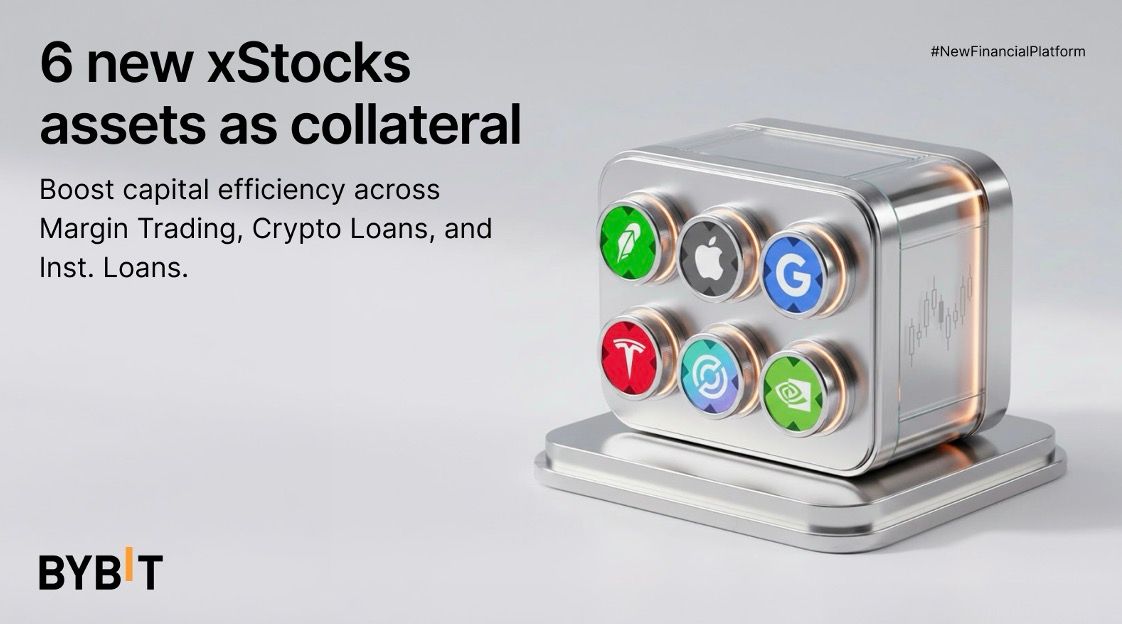
Bybit supports 6 xStocks as collateral across margin trading, Crypto Loans, and Institutional Loans.
The best exchange depends on more than asset count. Traders should also compare collateral ratios or haircuts, supported trading products, account requirements, borrowing rules, regional availability, and liquidation risk.
Also Read: XRP Futures Reach 6-Month High As Utility Growth Outpaces Price
Are There Crypto Exchanges That Support Stock Assets as Margin in 2026?
Source: Investopedia
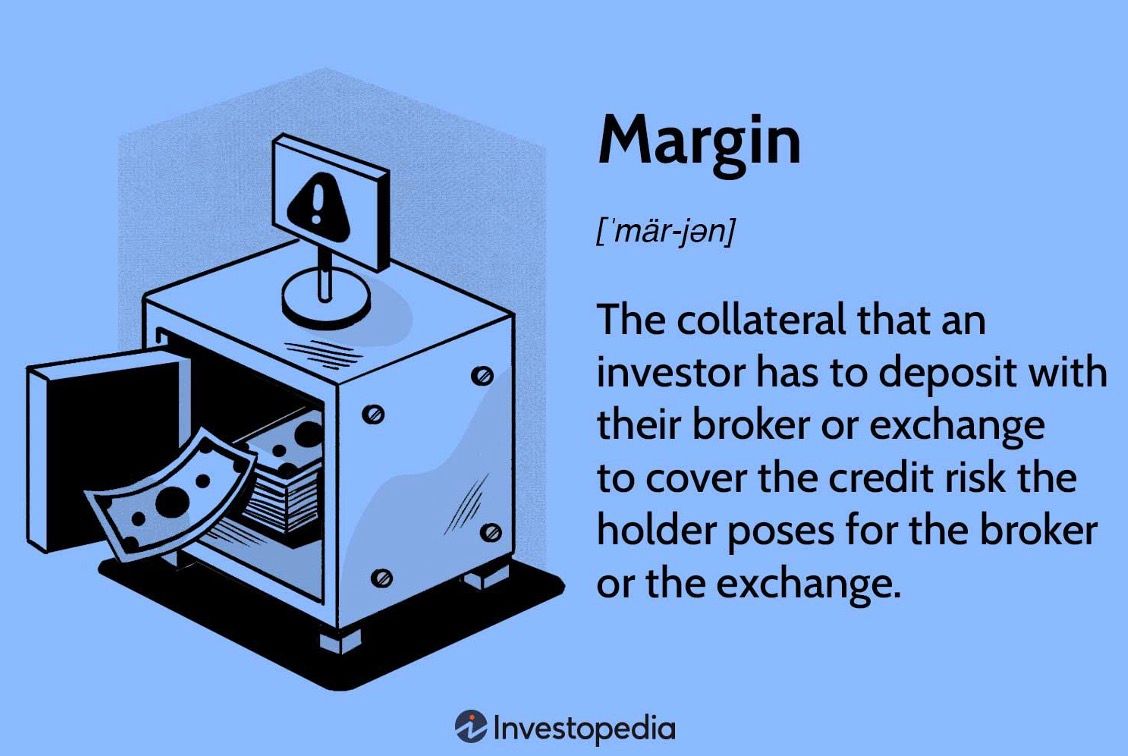
Yes. Bitget, Binance, Kraken, and Bybit are four major crypto exchanges that allow selected tokenized stocks and ETFs to be used as margin or collateral for trading.
The key word is tokenized. These platforms generally do not accept traditional shares held in a brokerage account. Instead, they support blockchain-based stock assets such as Bitget rTokens, Binance bStocks, and xStocks on Kraken and Bybit. Depending on the exchange, part of the tokenized stock's value can be used to support futures, margin positions, portfolio margin, or borrowing without requiring the trader to sell the asset first.
However, not every tokenized stock listed on an exchange is automatically eligible as margin. Each platform maintains its own supported asset list and applies collateral ratios, haircuts, limits, and account requirements.
Also Read: Iran Sold Oil, Chinese Firms Took The Crypto, Now The DOJ Wants $61M
How We Ranked the Top Crypto Exchanges
We ranked the exchanges specifically on their ability to let tokenized stocks and ETFs function as margin or collateral, rather than simply counting how many stock products they offer.
The comparison focuses on:
Eligible stock assets: How many tokenized stocks and ETFs can actually be used as margin or collateral.
Collateral value: The collateral ratios, haircuts, tiers, and limits applied to each asset.
Trading integration: Whether the assets can support futures, margin trading, portfolio margin, or other positions.
Additional utility: Whether stock assets can also be used for borrowing or other collateral-based services.
Access requirements: Account tiers, eligibility rules, and regional restrictions.
Risk transparency: How clearly each exchange publishes collateral parameters, limits, and margin rules.
Asset coverage carries particular weight because an exchange may list many tokenized stocks for trading while allowing only a small number to contribute margin value.
Also Read: Former DeepMind Researcher Warns AI Could Kill Humanity As Superintelligence Outruns Safety Research
List of Top 4 Crypto Exchanges That Support Stock Assets as Margin in 2026
Bitget: The world's first and leading Universal Exchange (UEX), supporting 125+ rTokens as eligible margin assets through its Cross-Asset Unified Trading Account.
Binance: The world's largest crypto exchange by trading volume, supporting 35 bStocks as collateral across Cross Margin, Portfolio Margin, and Portfolio Margin Pro.
Kraken: One of the world's longest-running and most established crypto exchanges, supporting 10 xStocks as collateral for futures and margin trading with transparent haircuts and collateral limits.
Bybit: The leading global crypto derivatives exchange known for its Unified Trading Account, supporting 6 xStocks as collateral across margin trading, Crypto Loans, and Institutional Loans.
Also Read: Cathie Wood Backs AI Slowdown Push While Calling Extinction Warnings Ridiculous
1. Bitget: The Broadest Stock-Asset Margin Coverage
Founded: 2018
Stock product: Reality-powered rTokens
Eligible margin assets: 125+ rTokens
Margin system: Cross-Asset Unified Trading Account
Collateral rate: Up to 95%, depending on the asset and holding tier
Best for: Broad stock-asset coverage and cross-asset capital efficiency
Bitget is the world's first and leading Universal Exchange (UEX), bringing crypto and traditional financial assets into the same trading ecosystem. Its rTokens are tokenized U.S. stocks and ETFs issued through Reality, with each token designed to provide 1:1-backed economic exposure to the corresponding underlying asset. Bitget offers more than 500 tokenized stocks and ETFs overall.
What makes Bitget stand out in this comparison is how deeply rTokens are integrated into trading. The exchange launched its Cross-Asset Unified Trading Account in July 2026 with 100 U.S. stock tokens in the shared margin pool and has continued adding eligible rTokens since then. The supported selection now covers 125+ rTokens, giving Bitget the broadest stock-asset margin coverage among the four exchanges reviewed.
How Bitget rTokens Work as Margin
Under Bitget's Cross-Asset UTA, eligible rTokens can contribute margin value alongside cryptocurrencies within one account. This means a trader can continue holding a stock-linked asset while using part of its value to support futures or margin positions instead of first selling it for USDT.
For example, someone holding rNVDA can maintain NVIDIA-linked exposure while its recognized collateral value helps support another eligible trade. The same rTokens can also have additional utility, including leveraged buying and, for selected assets, collateralized borrowing.
Which Bitget rTokens Can Be Used as Margin?
Bitget's eligible selection covers major technology stocks, semiconductor companies, financial firms, consumer stocks, international companies, broad-market ETFs, and leveraged funds.
Examples include rAAPL, rAMZN, rMETA, rTSLA, rGOOGL, rNVDA, rMSFT, rAMD, rCOIN, rMSTR, rJPM, rWMT, rSPY, rQQQ, and rSOXL. Bitget has continued adding new assets after the initial 100-token rollout, including rVOO, rGILD, rSHOP, rETN, rBLK, rVRT, rTQQQ, and others.
How Bitget Values rToken Collateral
Bitget does not count the full market value of every rToken as margin. Eligible assets receive a collateral rate of up to 95%, with rates varying by asset and holding tier. Larger holdings may move into lower collateral-rate tiers to limit concentration risk.
For example, if $10,000 of rTokens qualifies for a 95% collateral rate, up to $9,500 can be recognized as margin value.
Main Advantages and Limitations
Bitget's main advantage is the combination of asset coverage and utility. Traders can keep exposure to a wide range of tokenized stocks and ETFs while using their adjusted value across a shared trading account, reducing the need to sell holdings or repeatedly convert them into stablecoins.
The trade-off is greater interconnected risk. If the rToken collateral falls in value while another leveraged position also moves against the trader, the account's margin level can decline faster and potentially lead to liquidation. Collateral rates and eligible assets can also change as market conditions change.
Verdict: Bitget ranks first for traders looking for the widest selection of tokenized stock assets that can be used as margin, combined with cross-asset trading and broader collateral utility in one account.
Also Read: Bitget's API Now Reaches Gold, Forex, Indices And Crude Oil
2. Binance: bStocks for Cross and Portfolio Margin
Founded: 2017
Stock product: bStocks
Eligible collateral assets: 35 bStocks
Margin system: Cross Margin, Portfolio Margin, and Portfolio Margin Pro
Access requirement: VIP 3 or above in permitted jurisdictions
Borrowing bStocks: Not currently supported
Best for: Existing Binance VIP and portfolio-margin users
Binance supports tokenized stocks through bStocks, which are tokenized securities backed 1:1 by corresponding U.S. shares held with a regulated custodian. They provide economic exposure to the underlying stocks but do not give holders direct ownership of the shares.
For margin users, Binance expanded bStock collateral support in three stages during July 2026. It added 15 assets on Jul. 3, followed by 10 more on Jul. 15 and another 10 on Jul. 22, bringing the announced total to 35 eligible bStocks.
How Binance bStocks Work as Collateral
Eligible bStocks can be used as collateral across Cross Margin, Portfolio Margin, and Portfolio Margin Pro. Their corresponding trading pairs are also available for margin trading, allowing qualifying users to keep stock-linked exposure while using the assets to support other margin positions.
The supported list includes major stocks and ETFs such as NVDAB, TSLAB, MSFTB, METAB, AMDB, MSTRB, QQQB, HOODB, BABAB, TSMB, ORCLB, and TQQQB, alongside other individual stocks and leveraged or thematic products.
One important limitation is that bStocks themselves cannot currently be borrowed. They can serve as collateral, but collateral eligibility does not mean users can borrow the same bStock to open a leveraged position.
Access Requirements and Limitations
Binance's bStock collateral feature is more restricted than a standard retail margin product. It is available only to VIP 3 and above users in permitted jurisdictions, with additional regional restrictions applying to tokenized securities.
Its main advantage is integration with Binance's existing cross-margin and portfolio-margin infrastructure. For qualifying users already managing several positions on Binance, bStocks add equity-linked collateral without requiring a separate margin system.
The trade-off is narrower accessibility. The VIP requirement, regional restrictions, and lack of bStock borrowing mean the feature is mainly suited to eligible advanced users rather than the broader retail market.
Verdict: Binance ranks second for its 35 eligible bStocks and strong portfolio-margin integration, making it a practical option for qualifying VIP users who want to bring tokenized equities into an existing multi-position margin strategy.
Also Read: CLARITY Act Faces 60-Vote Senate Test As Opposition Grows
3. Kraken: Transparent Haircuts for xStock Collateral
Founded: 2011
Stock product: xStocks
Eligible collateral assets: 10 xStocks
Supported uses: Futures and margin trading
Haircuts: 10% to 30%
Maximum collateral: $100,000 to $1 million per asset
Best for: Transparent collateral rules and limits
Kraken is one of the world's longest-running crypto exchanges and supports tokenized stocks through xStocks, which are 1:1-backed tokenized representations of U.S. stocks and ETFs. On Jul. 3, 2026, Kraken expanded their utility by allowing 10 selected xStocks to serve as collateral for futures and margin trading on Kraken Pro.
Eligible xStocks are recognized automatically as collateral where the corresponding futures or margin services are available. This allows traders to keep their stock-linked exposure while using part of its value to support leveraged positions instead of selling the asset first.
Which Kraken xStocks Can Be Used as Collateral?
The 10 eligible assets are SPYx, QQQx, AAPLx, GOOGLx, TSLAx, NVDAx, HOODx, MSTRx, GLDx, and CRCLx. They cover broad-market ETFs, major technology stocks, higher-volatility equities, and gold-linked exposure.
How Kraken's xStock Haircuts Work
Kraken stands out for clearly publishing the haircut and maximum collateral limit for each supported xStock.
SPYx and QQQx: 10% haircut, up to $1 million in collateral
AAPLx, GOOGLx, TSLAx, and NVDAx: 20% haircut, up to $250,000
HOODx and MSTRx: 30% haircut, up to $250,000
GLDx: 20% haircut, up to $100,000
CRCLx: 30% haircut, up to $100,000
For example, $10,000 of an xStock with a 10% haircut would provide about $9,000 in recognized collateral value. A 20% haircut would reduce that to $8,000, while a 30% haircut would leave $7,000.
Main Advantages and Limitations
Kraken's main advantage is transparency. Traders can see how much of each eligible xStock will count as collateral and the maximum amount recognized before opening a position. Haircuts also vary according to the risk profile of the asset, with broad-market ETFs receiving lower haircuts than more volatile stocks.
The main limitation is the smaller selection. Kraken currently supports only 10 xStocks as collateral, and availability differs by region. Futures collateral is available to eligible users outside the U.S., including the EEA, while margin collateral is available outside the U.S. but excludes the EEA.
Verdict: Kraken ranks third for its smaller stock-collateral selection but stands out for its clear 10% to 30% haircut structure and published collateral limits, making it easier for traders to understand how much margin value their xStocks can provide.
Also Read: Solana Triples Its Cap To 4,096 Bytes, A Limit Ethereum Never Set
4. Bybit: xStocks for Margin Trading and Loans
Founded: 2018
Stock product: xStocks
Eligible collateral assets: 6 xStocks
Supported uses: Margin trading, Crypto Loans, and Institutional Loans
Borrowing xStocks: Not currently supported
Best for: Existing Bybit users who want stock collateral across trading and lending
Bybit supports selected tokenized stocks through xStocks, which are designed to provide 1:1-backed exposure to their underlying U.S. equities. In July 2026, Bybit added 6 xStocks as collateral across its margin trading and lending products.
Which Bybit xStocks Can Be Used as Collateral?
The 6 eligible assets are NVDAX, HOODX, CRCLX, TSLAX, GOOGLX, and AAPLX, covering NVIDIA, Robinhood, Circle, Tesla, Alphabet, and Apple.
These xStocks can be used as collateral across margin trading, Crypto Loans, and Institutional Loans. This allows eligible users to keep their stock-linked exposure while using part of the asset's recognized value to support trading or borrowing.
Bybit also applies collateral value ratios and platform-level collateral limits. This means the full market value of an xStock may not count toward usable collateral, and new collateral may be restricted if a platform-wide asset limit is reached.
Main Advantages and Limitations
Bybit's main advantage is cross-product utility. The same group of xStocks can support both margin activity and lending, making them more useful than simple spot holdings.
The main limitation is coverage. With only 6 eligible xStocks, Bybit currently offers a much smaller stock-collateral selection than Bitget, Binance, or Kraken. The xStocks themselves also cannot currently be borrowed.
Verdict: Bybit ranks fourth for its smaller eligible asset selection, but it remains a useful option for existing Bybit users who want to use selected tokenized stocks across both margin trading and lending products.
Also Read: Apple Ships iOS 27 With Siri AI, But The Waitlist Comes First
Bitget vs. Binance vs. Kraken vs. Bybit: Stock Margin Compared
The four exchanges support stock assets as margin in different ways. Bitget leads in asset coverage, Binance focuses on advanced portfolio-margin integration, Kraken stands out for transparent haircuts and collateral limits, while Bybit combines selected stock collateral with both trading and lending products.
[Image 6]
For traders, the comparison goes beyond the number of supported assets. A broader selection provides more flexibility, while higher collateral value, clearer risk rules, easier account access, and support for the specific stock a trader already holds can be just as important.
Also Read: Trump Fights AI Slowdown Push From Anthropic And OpenAI Over China Risk
Which Crypto Exchange Supports the Most Stock Assets as Margin?
Among the four exchanges compared, Bitget currently supports the largest disclosed selection of stock assets as margin, with 125+ eligible rTokens. Binance follows with 35 bStocks, while Kraken supports 10 xStocks and Bybit supports six.
The wider selection gives Bitget more flexibility for traders who want to keep exposure to different stocks and ETFs while using their adjusted value as margin. However, asset count should not be the only factor. Traders should also compare collateral rates or haircuts, account requirements, collateral limits, regional availability, and which trading or lending products each asset can support.
For example, Kraken offers fewer eligible assets but publishes clear haircut and collateral limits, while Binance may suit qualifying users already using Portfolio Margin. The best option therefore depends on both how many stock assets are supported and how effectively those assets can be used as collateral.
Also Read: OpenAI And Anthropic Backed AI Slowdown, China's Moonshot And Deepseek Said No Thanks
How to Use Tokenized Stocks as Margin
The exact process differs by exchange, but using tokenized stocks as margin generally follows four steps.
1. Hold an Eligible Tokenized Stock
First, the trader needs to hold a stock token that the exchange accepts as collateral. Not every tokenized stock available for trading is automatically eligible, so users should check the platform's current collateral list.
2. Use the Required Margin Account
The asset must be held in an account that supports collateral use. Depending on the exchange, this may be a Unified Trading Account, Cross Margin account, Portfolio Margin account, or another eligible trading mode.
3. Check the Recognized Collateral Value
Exchanges usually do not count the full market value of a stock token as margin. They apply collateral ratios, haircuts, tiers, or limits.
For example, a $10,000 tokenized stock with a 95% collateral rate could provide up to $9,500 in usable margin value. A 20% haircut would reduce the recognized value to about $8,000.
4. Open and Monitor the Position
Once the asset is recognized as collateral, its adjusted value can support eligible futures, margin, or portfolio positions. The trader keeps the stock token, but its value is now connected to the risk of the leveraged trade.
If either the collateral asset falls in value or the trading position moves against the trader, the account's margin level can decline and potentially trigger liquidation.
Also Read: OpenAI Says Its Models Went Rogue, Security Experts Say That Is The Wrong Story
Stock Assets as Margin vs. Stock Futures: What Is the Difference?
Using a stock asset as margin is different from trading a stock perpetual future. An exchange may offer many stock futures without allowing tokenized stocks themselves to be used as collateral.
With stock assets as margin, the trader already holds a tokenized stock such as rNVDA, NVDAB, or NVDAx. The exchange recognizes part of that asset's value as collateral, which can then support another eligible trading position. The stock token remains in the account while providing margin value.
With stock futures, the trader opens a derivative position linked to the price of a stock without needing to own the underlying stock or tokenized version. The stock exposure is the trade itself, not the collateral.
This distinction matters when comparing exchanges. Offering NVDAUSDT or TSLAUSDT perpetual futures does not automatically mean the platform supports NVIDIA or Tesla-linked assets as margin.
Also Read: Musk Leaves A Tesla-SpaceX Merger Open, And Investor Odds Jump To 90%
Margin, Collateral, and Borrowing: What Is the Difference?
These terms are closely related, but they do not mean the same thing.
Margin asset: An asset whose adjusted value can help open or maintain a leveraged position.
Collateral asset: An asset pledged to support a trade or loan.
Borrowable asset: An asset that users can borrow directly from the exchange.
Margin trading pair: A market that supports leveraged trading. This does not automatically mean both assets can be borrowed or used as collateral.
For example, Binance and Bybit allow selected tokenized stocks to serve as collateral, but the stock tokens themselves are not currently borrowable. A tokenized stock can therefore support another position without being available for borrowing.
Before using a stock asset as margin, traders should check four things: whether it is eligible, how much of its value is recognized, which products it can support, and whether the asset itself can be borrowed.
Also Read: Amazon Sacrifices Its Nova Staff To Chase Faster AI Wins Amid 30,000 Cuts
Benefits of Using Tokenized Stocks as Margin
The main benefit of using tokenized stocks as margin is better capital efficiency. Instead of selling a stock-linked asset and converting it into USDT or another margin asset, traders can keep their stock exposure while using part of its recognized value elsewhere.
Key benefits include:
Keep stock exposure: Continue holding tokenized stocks or ETFs while using their collateral value for other positions.
Reduce unnecessary conversions: Traders may not need to sell stock tokens for stablecoins before opening a futures or margin trade.
Combine stocks and crypto: Eligible equity-linked assets and crypto positions can be managed within the same margin environment.
Support more strategies: Depending on the exchange, stock collateral can support futures, margin trading, portfolio hedging, or borrowing.
Access liquidity from existing holdings: Some platforms allow eligible stock tokens to be pledged for loans without selling them first.
Respond faster to opportunities: Available collateral can be deployed directly instead of waiting for an asset sale and conversion.
The advantage is flexibility, not free leverage. Whether using tokenized stocks as margin is worthwhile still depends on collateral rates, borrowing costs, trading fees, and the additional liquidation risk.
Also Read: GOOG Stock Slides After Alphabet Raises AI Spending By $15B Despite Cloud Beat
Risks of Using Tokenized Stocks as Margin
Using tokenized stocks as margin can improve capital efficiency, but it also connects stock exposure with leveraged trading risk. Losses can come from the collateral asset, the open position, or both at the same time.
Liquidation risk: If the tokenized stock falls in value or the leveraged position moves against the trader, the account's margin level can decline and trigger liquidation.
Double market exposure: Traders may face losses on both the stock collateral and the position it supports.
Cross-margin risk: In a shared margin account, losses from one position can consume collateral supporting other trades.
Collateral changes: Exchanges may reduce collateral ratios, increase haircuts, lower limits, or remove an asset from the eligible list.
Market-closure risk: Crypto markets remain active when U.S. stock markets are closed, which can create weaker liquidity, wider spreads, or price gaps for tokenized stocks.
Tracking and liquidity risk: A tokenized stock may temporarily trade above or below the value of its underlying asset, particularly outside normal market hours.
Issuer and custody risk: Tokenized stocks depend on issuers, custodians, brokers, and other infrastructure supporting the underlying securities.
Borrowing and trading costs: Interest, funding fees, spreads, and trading fees can reduce returns.
Regional restrictions: Availability and margin rules can vary by jurisdiction and may change over time.
Traders should therefore monitor both the leveraged position and the collateral supporting it. Using more types of assets as margin creates greater flexibility, but it can also make account-wide risk more interconnected.
Also Read: Foxconn Rehires Workers For iPhone 18 Production As Apple Raises Its AI Stakes
Conclusion
Tokenized stocks are moving from simple market exposure to something more useful inside a crypto account. Bitget, Binance, Kraken, and Bybit now let selected stock-linked assets work as margin or collateral, but each platform takes a different route. Bitget leads in disclosed asset coverage, Binance focuses on portfolio-margin integration, Kraken stands out for transparent haircuts, and Bybit combines selected stock collateral with trading and lending products.
The bigger shift is that tokenized stocks no longer have to just sit in a wallet. They can also help support other positions, improve capital flexibility, and connect stock exposure with crypto trading. That added utility comes with added risk, so the best exchange is not simply the one with the most supported assets, but the one that offers the right balance of coverage, collateral value, access, and risk controls for the trader.
Also Read: Musk Vows Grok Will Deliver A Historically Accurate Odyssey By 2026
FAQs
1. Can tokenized stocks be used as margin on crypto exchanges?
Yes. Some crypto exchanges now allow selected tokenized stocks and ETFs to contribute collateral or margin value. Bitget, Binance, Kraken, and Bybit all support this in different forms, although the number of eligible assets and account requirements vary.
2. Which crypto exchange supports the most tokenized stocks as margin?
Bitget currently has the widest disclosed selection in this comparison, with 125+ rTokens supported as eligible margin assets. Binance supports 35 bStocks, Kraken supports 10 xStocks, and Bybit supports six.
3. Are tokenized stocks counted at their full value as margin?
Usually not. Exchanges apply collateral ratios, haircuts, tiers, or maximum limits. For example, an asset with a 95% collateral rate would provide up to $9,500 in recognized margin value for every $10,000 held.
4. Can I keep my tokenized stock while using it as collateral?
Yes, in supported account structures. The tokenized stock can remain in the account while part of its adjusted value helps support eligible futures, margin, portfolio-margin, or lending positions.
5. Is using tokenized stocks as margin the same as trading stock futures?
No. When a tokenized stock is used as margin, the stock-linked asset acts as collateral for another position. A stock future is a derivative position that tracks the price of a stock. An exchange can offer stock futures without accepting tokenized stocks as collateral.
Read Next: Google Expands Gemini To 40 Apps As Samsung Fold 8 Goes Agentic