
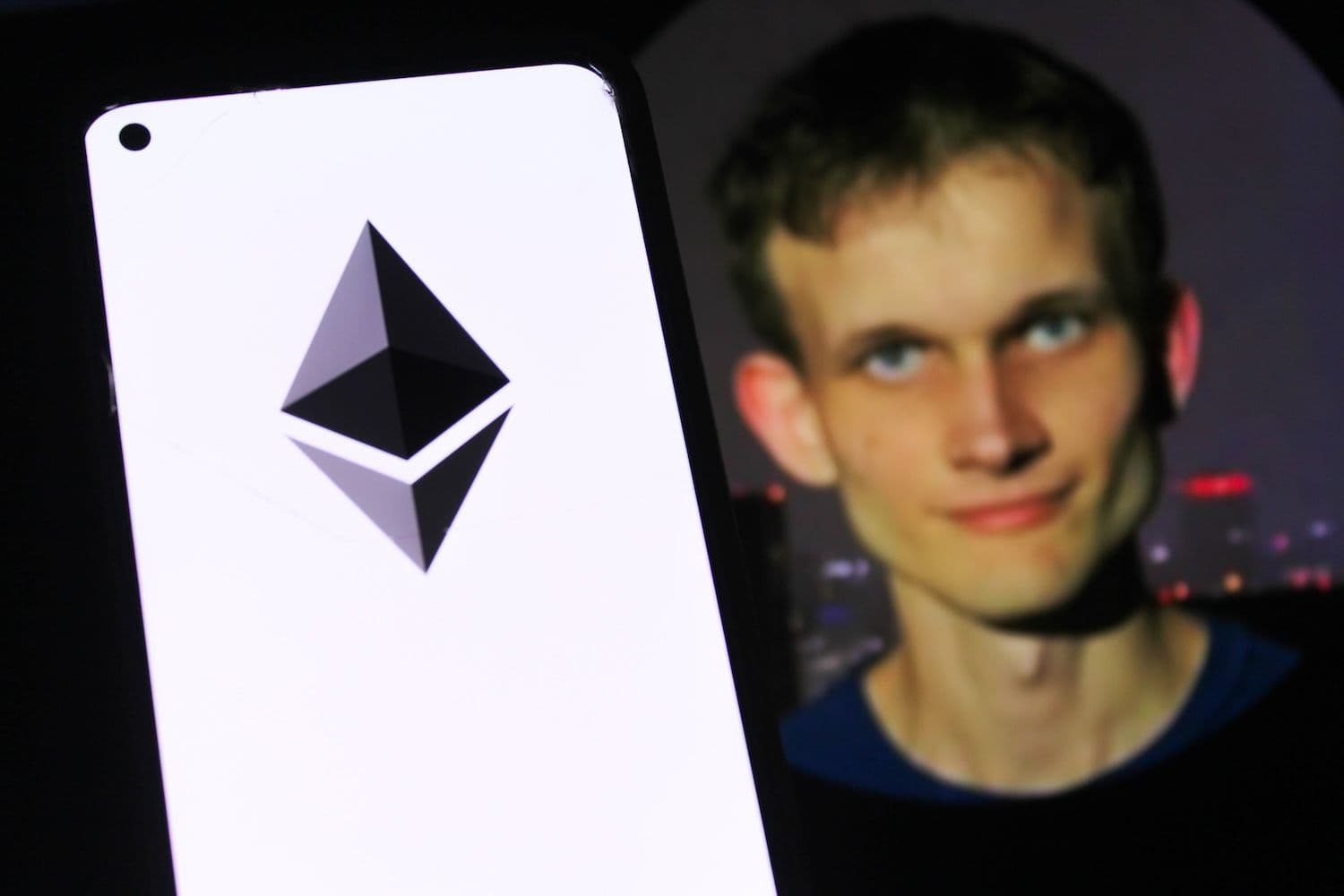
Ethereum (ETH) co-founder Vitalik Buterin has proposed a new creator token model that combines decentralized autonomous organization mechanics with prediction markets to reward quality content over volume, arguing that AI-generated material is worsening an already flawed system.
What Happened: DAO-Based Token Reform
Buterin outlined the concept in a post on X on Sunday, criticizing existing creator token platforms for prioritizing mass content production rather than quality.
"A major difference between doing 'creator incentives' in the 00s vs doing them today, is that in the 00s, a primary problem was having not enough content at all," Buterin wrote. "In the 20s, there's plenty of content, AI can generate an entire metaverse full of it for like $10. The problem is quality."
He argued the goal should shift from incentivizing content creation to surfacing good content.
Buterin pointed to Substack as the most successful example of creator incentives, noting its top creators "are on the whole high quality, and contribute positively to the discussion" and "are mostly people who would not have been elevated without Substack's presence."
By contrast, he said top creator coins on platforms like BitClout and Zora "are people who already have very high social status, and who are often impressive but primarily for reasons other than the content they create."
His proposed solution involves creating DAOs that are "not token-based," drawing inspiration from Protocol Guild. Members would anonymously vote new members in and out, with the DAO auto-splitting if membership exceeds roughly 200.
"Importantly, do not try to make the DAO universal or even industry-wide," Buterin wrote. "Instead, embrace the opinionatedness. Be okay with having a dominant type of content (long-form writing, music, short-form video, long-form video, fiction, educational...), and be okay with having a dominant style."
Anyone could create a creator coin and apply to join a DAO. When admitted, a portion of their DAO proceeds would burn their tokens, reducing supply and increasing scarcity.
"This way, the token speculators are NOT participating in a recursive-speculation attention game backed only by itself," Buterin explained. "Instead, they are specifically being predictors of what new creators the high-value creator DAOs will be willing to accept."
Friend.tech, a SocialFi app on Ethereum layer-2 Base that allowed creators to share content via tradable keys, shuttered in Sept. 2024 after its native token fell 95% from its high.
Also Read: Russia-Linked Activity Fuels Five-Year High In Illicit Crypto
Why It Matters: Quality Over Speculation
Buterin said the model would make high-value content creators the ultimate arbiters of quality rather than speculators.
"The goal is to have a group that is larger than one creator and can accumulate a public brand and collectively bargain to seek revenue opportunities, but at the same time small enough that internal governance is tractable," he wrote.
Speculators would still serve a purpose by helping surface promising creators for DAOs to evaluate.
"Individual speculators can stay in the game and thrive to the extent that they do a good job of predicting the creator DAOs' actions," Buterin added.
He acknowledged the speculative nature of proposing new models. "Coming up with new ideas is inherently a more speculative project than criticizing existing ones, and more prone to error," he wrote.
