
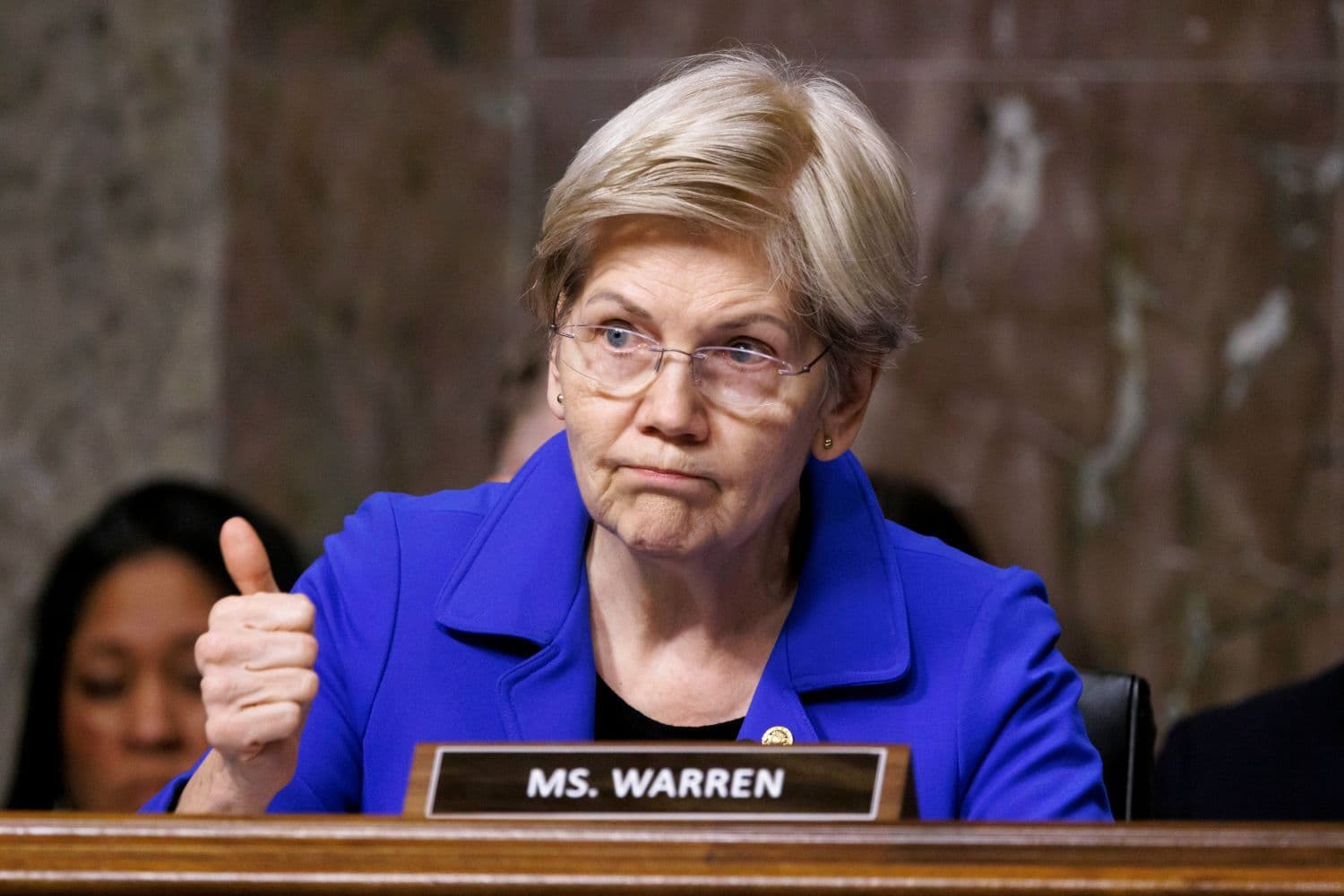
Sen. Elizabeth Warren sent a letter Wednesday to Treasury Secretary Scott Bessent and Federal Reserve Chair Jerome Powell, demanding both agencies publicly rule out any government intervention to prop up cryptocurrency markets.
The letter came as Bitcoin (BTC) has fallen roughly 50% from its October high, briefly touching $60,000 on Feb. 6.
Warren, the ranking Democrat on the Senate Banking Committee, argued that emergency cryptocurrency support - through direct purchases, guarantees, or liquidity facilities - would constitute a wealth transfer from ordinary taxpayers to a narrow group of wealthy investors.
What Happened
The letter centered on Bessent's Feb. 6 testimony before the House Financial Services Committee. Asked directly whether taxpayer money could be used to support cryptocurrency markets, Bessent responded that the government was "retaining seized Bitcoin" - a reference to law enforcement seizures - without issuing a categorical denial.
"Rather than giving a simple 'no,' he deflected," Warren wrote. "It's deeply unclear what, if any, plans the U.S. government currently has to intervene in the current Bitcoin selloff."
The Fed confirmed it received the letter but declined to comment. The Treasury Department did not immediately respond to requests for comment.
Read also: Georgian Fund Manager Walks Free After Embezzling $40M In Bitcoin From Ex-PM
Why It Matters
Warren's letter also added a conflict-of-interest dimension. She argued that government intervention could indirectly benefit World Liberty Financial (WLFI), a cryptocurrency company co-founded by President Donald Trump and his family.
The letter arrived on the same day World Liberty hosted its first "World Liberty Forum" at Trump's Mar-a-Lago club in Palm Beach.
That concern is not purely theoretical. Benzinga reported that World Liberty sold 173 wrapped Bitcoin to repay $11.75 million in stablecoin debt and avoid forced liquidation as Bitcoin dropped below $63,000 - an episode Warren cited as evidence that leveraged positions are amplifying the current selloff.
Warren separately noted that $17 billion was lost to cryptocurrency fraud and theft in 2025, a record figure, and called on federal agencies to strengthen retail investor protections alongside any crisis-response decisions.
Read next: Bloomberg Analyst McGlone Walks Back $10,000 Bitcoin Call, Settles On $28,000 After Public Backlash
