
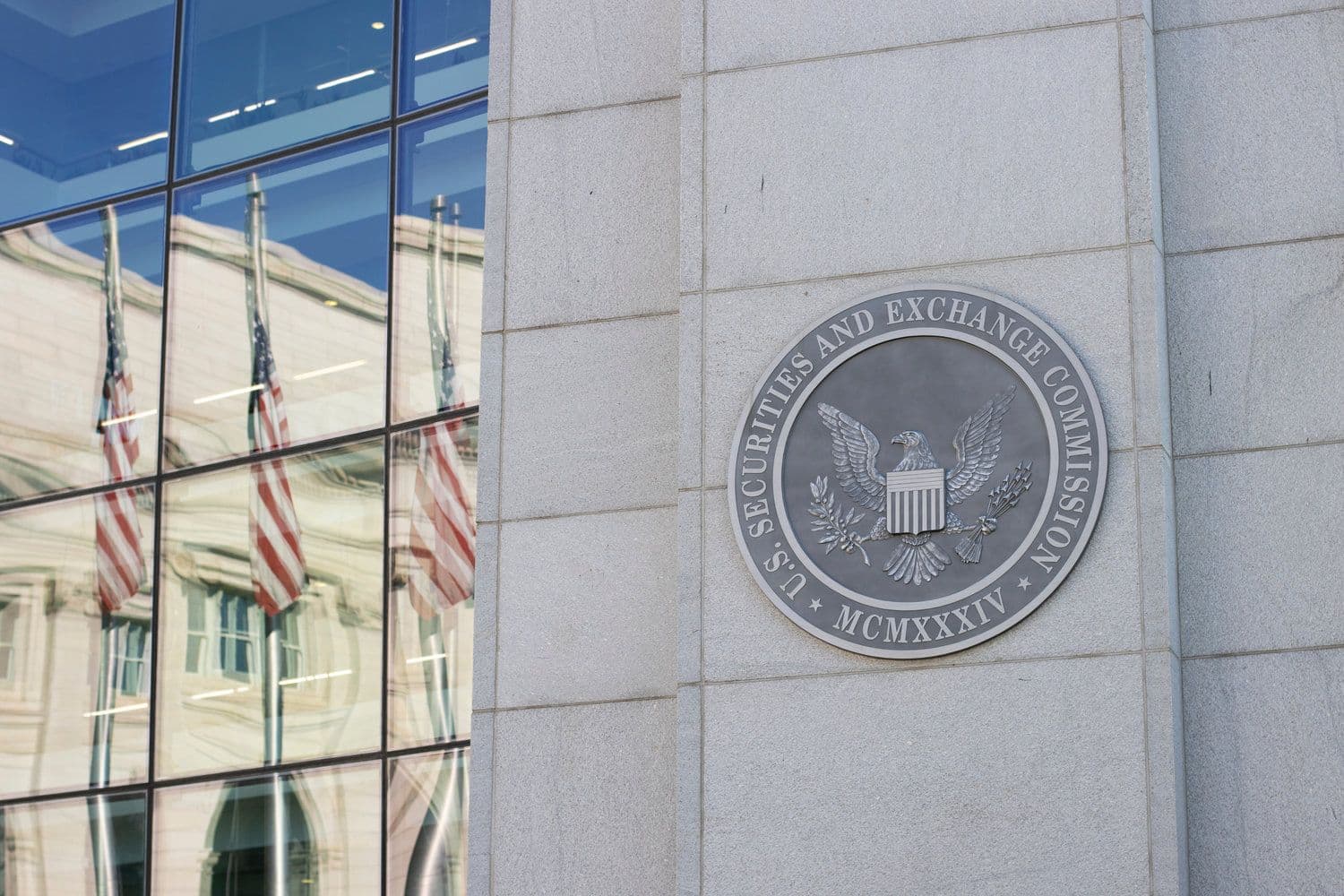
SEC Chairman Paul Atkins announced Tuesday that the Commission has implemented a token taxonomy establishing that four categories of cryptocurrency - digital commodities, digital collectibles, digital tools, and payment stablecoins under the GENIUS Act - are not securities under federal law.
The joint SEC-CFTC interpretive guidance, spanning 68 pages and released simultaneously, states that most cryptocurrencies trading today are not securities, leaving only tokenized traditional financial instruments within the SEC's jurisdiction.
Speaking at the DC Blockchain Summit in Washington, D.C., Atkins said: "We're not the 'securities and everything commission' anymore."
The guidance also clarifies that investment contracts have a defined end - a token sold as part of one does not remain a security indefinitely once the issuer has fulfilled, abandoned, or permanently ceased all material managerial obligations.
What the Taxonomy Covers
Under the new interpretation, the SEC will treat only "digital securities" - conventional instruments such as stocks or bonds represented on a blockchain - as subject to federal securities laws.
The four exempt categories cover decentralized network tokens, NFTs and similar collectibles, access-credential tools, and GENIUS Act-compliant stablecoins.
Tokens may still temporarily fall under securities laws if offered as part of an investment contract, but that status terminates once the issuer's explicitly disclosed obligations are met.
Read also: Tether's BitNet Framework Runs 13B AI Models On An iPhone 16
Three Proposed Safe Harbors
Atkins outlined three capital-formation mechanisms for a forthcoming rulemaking he is calling Regulation Crypto Assets.
The first, a "startup exemption," would provide a four-year registration exemption for projects raising up to $5 million.
The second, a "fundraising exemption," would permit raises of up to $75 million per 12-month period with disclosure filings to the Commission.
The third, an "investment contract safe harbor," would establish a rule-based standard for when a token is no longer subject to federal securities law. Atkins said he expects the Commission to release the proposed rule for public comment "in the coming weeks."
Limits and Context
Tuesday's guidance is an interpretive release, not a binding rule, and can be revised by future Commission leadership.
Atkins explicitly acknowledged that only Congress can ensure permanent, durable regulation through comprehensive market structure legislation.
He said the proposed rulemaking is designed to complement - not replace - pending bipartisan legislation, specifically the CLARITY Act. The framework's lineage traces directly to Commissioner Hester Peirce's Token Safe Harbor proposal, first introduced in February 2020.
Read next: Why Bitcoin, Not Gold, Is Winning The 2026 War Trade
