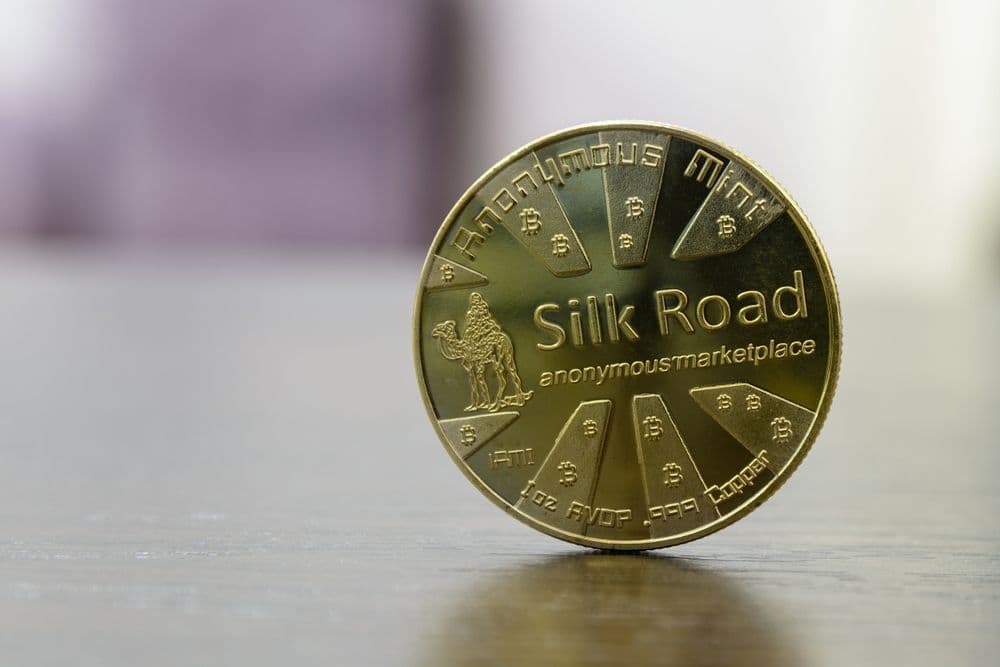
More than 300 cryptocurrency wallets linked to the defunct Silk Road darknet marketplace transferred $3.14 million in Bitcoin on Tuesday after remaining dormant for over a decade.
The sudden activity has drawn renewed attention to digital assets potentially connected to Ross Ulbricht, the marketplace's creator who received a presidential pardon in January.
Blockchain intelligence firm Arkham detected approximately 312 wallets collectively moving the funds to a single unidentified address "bc1q...ga54" over a 12-hour period.
The wallets still hold roughly $40 million in Bitcoin following the transfers.
What Happened
The transfers marked the wallets' most significant activity in five years.
Individual transactions ranged from micro-amounts of 0.00006 BTC (approximately $5.58) to larger sums exceeding 3.6 BTC (valued at $338,640).
The transactions followed a consolidation pattern, with funds from multiple legacy addresses flowing into the single destination wallet over several hours.
Coinbase Director Conor Grogan had identified these holdings in January, estimating they were worth around $47 million across dozens of addresses potentially linked to Ulbricht.
Grogan resurfaced that analysis Tuesday after pseudonymous blockchain developer "0xG00gly" flagged the latest movements.
The reason behind the wallets' reactivation remains unclear.
Ulbricht has not publicly commented on the transfers.
Several wallets showed connections to mining activity from 2011, when Bitcoin mining remained accessible to individual participants using standard computer equipment.
President Donald Trump granted Ulbricht a full and unconditional pardon on Jan. 21, 2025, after he served more than a decade of a double life sentence.
Ulbricht delivered his first public speech following his release in May, emphasizing freedom and decentralization as guiding principles for future technological advancement.
Why It Matters
The wallet activity emerges amid ongoing debates over how authorities should handle seized digital assets.
The Department of Justice received approval on Dec. 30, 2024, to sell 69,370 Bitcoin worth $6.5 billion confiscated from Silk Road.
The decision followed a federal judge's ruling that ended a contentious ownership battle with Battle Born Investments.
That company claimed ownership through a bankruptcy estate tied to Raymond Ngan, allegedly the mysterious "Individual X" accused of stealing cryptocurrency from Silk Road.
Battle Born lost at every judicial level, including the Supreme Court's refusal to hear the case.
The approved sale represents one of the largest government cryptocurrency liquidations in history.
Officials justified the decision citing Bitcoin's price volatility, though they typically conduct such sales in smaller batches to minimize market disruption.
The decision came despite Trump's campaign promise to establish a "Strategic Bitcoin Reserve" rather than liquidating government-held cryptocurrency.
While Silk Road facilitated illegal narcotics sales and other prohibited transactions, the platform played a pivotal role in Bitcoin's early adoption.
The marketplace processed over 1.5 million transactions worth an estimated $213 million between 2011 and its 2013 shutdown, all conducted using cryptocurrency.
Ulbricht, a physics graduate and early Bitcoin advocate, envisioned the platform as a libertarian experiment in anonymous commerce free of government interference.
Bitcoin traded near $92,500 on Wednesday, up roughly 2.5% as traders awaited the Federal Reserve's final rate decision of 2025.