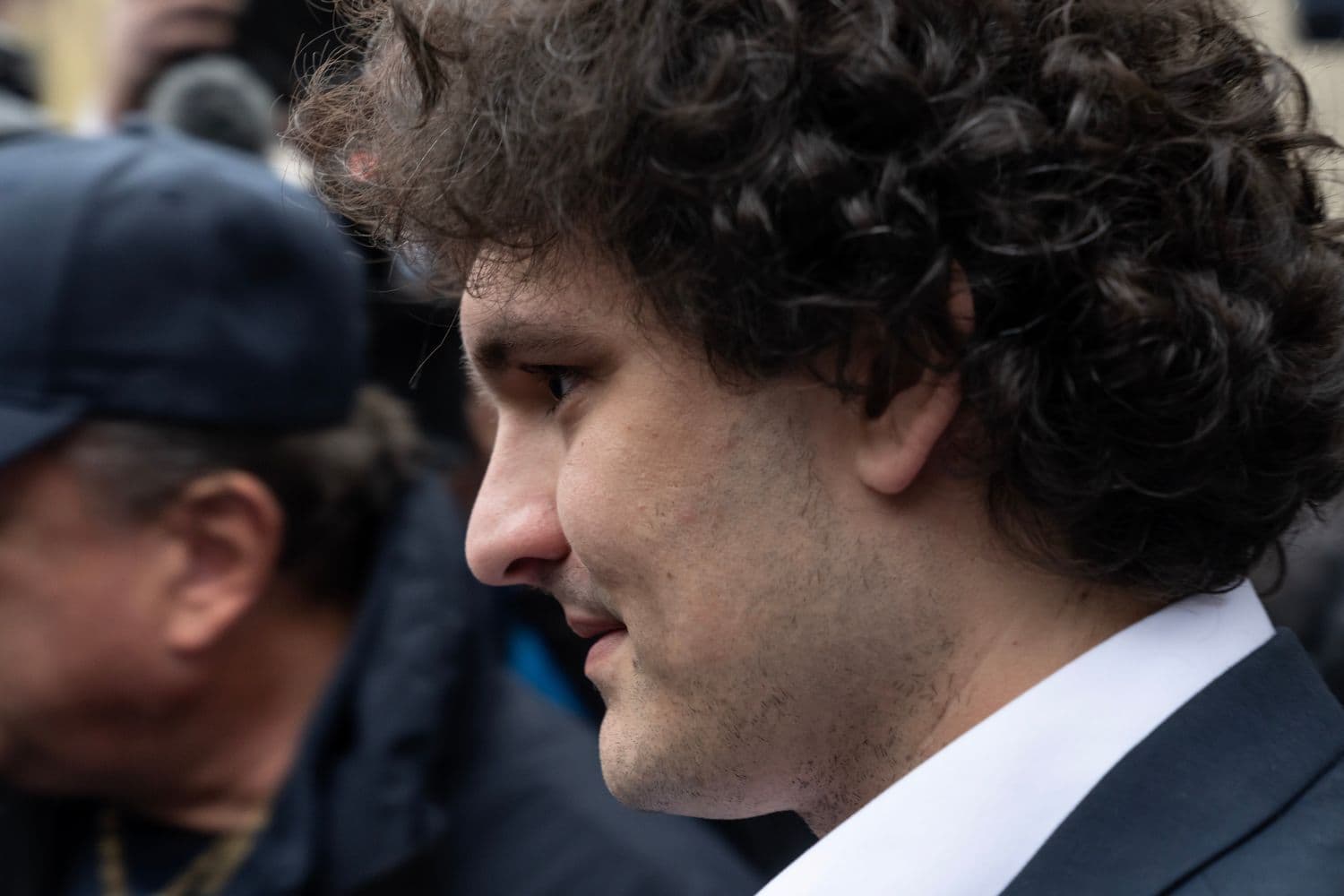
President Donald Trump on Thursday said that he has decided not to grant clemency to Sam Bankman-Fried, the former chief executive of bankrupt cryptocurrency exchange FTX who is serving a 25-year federal sentence for fraud and conspiracy.
The denial of pardon closes speculation that political intervention could override judicial penalties for one of the most high-profile collapses in crypto history.
In an interview with The New York Times, Trump also stated he would not pardon other notable figures including music producer Sean “Diddy” Combs and former New Jersey Senator Robert Menendez, reinforcing a broader stance against retroactive clemency in these cases.
Bankman-Fried Conviction And Pardon Speculation
Bankman-Fried was convicted in March 2024 on multiple charges related to the misuse of billions of dollars of customer funds at FTX, a collapse that sent shockwaves through cryptocurrency markets and triggered heightened oversight of exchange governance practices.
Following his conviction, there was occasional market and political speculation about a possible pardon.
Social media pricing markets such as Polymarket had at times assigned low probabilities to such an outcome, but the formal statement from the president now eliminates pardon as a near-term factor for investors considering political tail-risk.
Contrast With Prior Crypto-Linked Pardons
Although Trump has ruled out clemency for Bankman-Fried, his administration has granted pardons to other crypto-linked figures.
The president issued a full, unconditional pardon in January 2025 to Ross Ulbricht, the founder of the Silk Road darknet marketplace whose operations were tied to Bitcoin (BTC)-based transactions before his original life sentence.
In October 2025, Trump also pardoned Changpeng “CZ” Zhao, the former CEO of the world’s largest cryptocurrency exchange, Binance, who had served a four-month sentence following a guilty plea to anti-money-laundering violations.
Reports show that some policy watchers criticized the pardon as politically charged given Binance’s business relationships with projects linked to the Trump family.
Separate from those, former BitMEX CEO Arthur Hayes and co-founders were also granted clemency by Trump in 2025 after facing penalties for Bank Secrecy Act violations, albeit through a distinct docket of clemency actions.
Also Read: When Moody's Calls Blockchain 'Core Infra,' The Experiment Is Over
Trump’s Stated Stance On Crypto And Enforcement
In the New York Times interview, Trump reiterated his support for the broader cryptocurrency industry, noting that backing digital assets contributed to voter support in his electoral campaigns.
“I got a lot of votes because I backed crypto, and I got to like it,” the president said, reflecting a political embrace of the sector even as he declines to intervene in specific criminal cases.
The president’s personal and family connections to crypto initiatives, including stakes in entities such as the Bitcoin mining firm American Bitcoin and the decentralized finance and stablecoin venture World Liberty Financial, have been a source of public debate and legislative friction.
Implications For Crypto Markets And Political Risk
Trump’s refusal to pardon Bankman-Fried removes a politically driven outcome from the list of variables that could meaningfully affect crypto markets in the short term.
Analysts had previously noted that political tail risks, including the possibility of executive clemency, can amplify volatility in digital assets already sensitive to regulatory developments.
With the clemency pathway closed, markets may instead focus more squarely on legal appeals and judicial processes as determinative of Bankman-Fried’s fate.
At the same time, the broader policy environment, including debates about enforcement consistency, industry regulation, and perceived conflicts of interest, remains a central backdrop for institutional and retail investors calibrating their exposure to regulatory news flow.
Read Next: Trump Has His Fed Chair Pick But Won't Tell Anyone—Here's What We Know