Tether (USDT) launched a four-asset self-custodial wallet on Apr. 14, stripping away gas-token friction and replacing hex addresses with human-readable usernames.
MetaMask now spans 850-plus networks and offers perpetual futures, tokenized stocks, and its own stablecoin.
The split reflects a deeper question: whether the next billion crypto users want a payments app or a financial operating system?
TL;DR
- Tether's new tether.wallet supports only USDT, XAUT, USAT, and Bitcoin, but lets users pay fees in the asset they send and use @tether.me usernames instead of 42-character addresses.
- MetaMask connects to more than 850 networks and offers Hyperliquid perpetual futures at up to 50x leverage, Ondo Finance tokenized stocks, and its own mUSD stablecoin with Mastercard spending.
- The payments-first addressable market is roughly 18 times larger than the active DeFi user base, suggesting simplicity may win the volume race even if MetaMask wins on features.
Why Tether built a wallet in the first place
USDT commands roughly 58% of the stablecoin market, with about $185 billion in circulation and 534 million on-chain users. In 2024, on-chain USDT transfers reached $13.3 trillion, a figure that dwarfs most traditional payment networks. The total stablecoin market now sits at $317.9 billion.
Paolo Ardoino, Tether's CEO, framed the launch as "the People's Wallet," calling it the natural evolution of Tether's role from infrastructure provider to consumer-facing platform. USD Coin (USDC) grew 73% in 2025, pressuring Tether to defend its distribution advantage. The stablecoin race has shifted from issuance dominance to wallet-level user capture.
That competitive pressure explains the timing.
Until now, Tether operated exclusively as background infrastructure, enabling liquidity and settlement for exchanges, protocols, and payment businesses across 160-plus countries.
A direct wallet converts those 570 million-plus passive infrastructure users into active Tether customers and creates a moat that third-party distribution alone cannot replicate.
Also Read: From Stablecoins To AI: How Crypto Leaders See 2026 Taking Shape
What tether.wallet actually is
The wallet supports a deliberately narrow asset set across specific networks:
- USDT on Ethereum (ETH), Polygon, Plasma, and Arbitrum, providing multichain stablecoin access with fee abstraction on each network.
- Tether Gold (XAUT) on the same four networks, representing tokenized ownership of physical gold stored in professional vaults.
- USAT on Ethereum only, a U.S.-focused stablecoin released in Jan. 2026 through Anchorage Digital Bank and backed by cash and short-term Treasuries.
- Bitcoin (BTC) on both the mainnet and Lightning Network, enabling low-fee microtransactions alongside on-chain settlement.
That is the entire asset list. No altcoins, no governance tokens, no NFTs.
The wallet builds on Tether's open-source Wallet Development Kit, released in Oct. 2025, and the narrowness is the point: every excluded feature is one fewer concept a first-time user must learn before sending money.
Rumble Wallet was the first WDK deployment, serving Rumble's 80 million-plus monthly active users with creator payments and peer-to-peer transfers in Jan. 2026. Tether.wallet is the second deployment and the first under Tether's own brand.
Also Read: Tether Launches "People's Wallet" For 570M Users, Faces Self-Custody Questions
Paying fees in the asset you send changes everything
Fee abstraction is the wallet's most disruptive feature. Users pay USDT transaction fees in USDT itself, eliminating the need to hold a separate gas token like ETH. More than 65% of new Web3 users abandon transactions when confronted with gas-token friction, making this a genuine adoption bottleneck rather than a convenience upgrade.
Dan Finlay, MetaMask's co-founder, acknowledged in a Feb. 2025 roadmap update that 25% of Ethereum mainnet transactions fail because senders lack sufficient ETH for gas.
Tether's approach uses account abstraction and paymasters to push fees as low as $0.00001 per transaction. The result makes stablecoin transfers feel effectively free.
MetaMask responded with gas-included swaps in early 2025, now available on six chains. That solution remains partial, applying only to token swaps, not general transfers or payments. For the billions of people worldwide who use mobile money but have never held ETH, Tether's approach could determine whether blockchain-based payments ever reach them.
Also Read: Ethereum Beats Bitcoin For First Time In 2026 As $325M Flows Out Of BTC ETFs
Human-readable names replace 42-character addresses
Tether.wallet replaces standard hex addresses with @tether.me usernames, making sending funds as intuitive as sending an email.
Users can still fall back on QR codes and standard wallet addresses for compatibility.
Each username must contain at least one number, a minor constraint that prevents confusion with standard email addresses.
The Ethereum Name Service offers similar human-readable functionality but requires an on-chain purchase and periodic renewals, adding both cost and complexity. Tether's usernames come free with the wallet and require no blockchain interaction to set up.
For users who have never touched a block explorer, that difference is the gap between adoption and abandonment.
The username system also positions Tether for machine-to-machine payments.
Ardoino has framed the wallet as ready for a future where tens of billions of humans and AI agents transact seamlessly. Simple identifiers are a prerequisite for that scale, and long hex strings are not compatible with automated commerce.
Also Read: Solana Waits For Breakout As 25.3B Transactions Fail To Lift Price
MetaMask represents the opposite product philosophy
MetaMask, built by ConsenSys and co-founded by Joseph Lubin, connects to more than 850 networks and natively supports Solana (SOL) and Bitcoin alongside all EVM-compatible chains. In Oct. 2025, the wallet added Hyperliquid perpetual futures with up to 50x leverage across 150-plus tokens. Polymarket integration followed shortly after, bringing prediction markets into the same interface.
In Feb. 2026, MetaMask integrated Ondo Finance tokenized U.S. stocks and ETFs, covering 260-plus securities including Tesla and S&P 500 funds for non-U.S. jurisdictions.
The wallet also launched MetaMask USD (mUSD), its own stablecoin built with Stripe's Bridge subsidiary and backed by short-term U.S. Treasuries.
The breadth is intentional: MetaMask's strategy treats the wallet as an operating system for decentralized finance, where each new integration adds network effects.
A Mastercard debit card lets MetaMask users spend crypto at 150 million-plus merchants in eight countries. Gal Eldar, MetaMask's product lead, described the vision as spanning global markets, online and in the real world. Finlay has said MetaMask should be better than a bank.
MetaMask reports 30 million monthly active users and 143 million-plus cumulative installs. ConsenSys has engaged JPMorgan and Goldman Sachs for a potential IPO, signaling that the company sees its wallet as a full financial services platform rather than a simple key manager.
Also Read: Larry Fink Hails "Strongest Start" As BlackRock Pulls In $130B In One Quarter
Who each wallet is really for
The user-segmentation data tells a clear story. About 70% of new wallet users abandon setup before completing it. Only 5-10% of those who finish become repeat dApp users within 30 days.
- Tether.wallet targets the hundreds of millions of people who already use USDT without knowing they interact with a blockchain, converting passive stablecoin holders into active wallet users who send remittances, pay merchants, and store value.
- MetaMask targets users who already understand the crypto stack and want maximum flexibility across networks, protocols, and financial instruments, from perpetual futures to tokenized equities.
- The payments-first addressable market is roughly 18 times larger than the DeFi-active user base, giving Tether a wider funnel even with a fraction of MetaMask's feature set.
That disparity explains why Tether chose radical simplicity over feature density. The wallet is not designed to compete with MetaMask on capability.
It is designed to reach the users MetaMask never will, and the statistics suggest that most crypto wallet growth in the coming years will come from payments users, not traders or yield farmers.
Also Read: Coinbase Identifies Three Forces Reshaping Crypto Markets In 2026
What the first reviews actually say
Only two days of data exist at the time of research, and App Store and Play Store ratings remain insufficient for meaningful analysis. The Block characterized tether.wallet as part of a broader push to move Tether up the stack from infrastructure provider to consumer product.
Bloomberg, Reuters, the Financial Times, Forbes, and TechCrunch had no dedicated coverage by the research date, suggesting the launch registered primarily within the crypto-native press.
The Spanish-language outlet CriptoNoticias found several technical issues worth watching.
Bitcoin addresses are reused rather than generating a new address per transaction, which breaks standard privacy practices.
Email is required at setup, creating an identity link that conflicts with the anonymity many Bitcoin users expect.
The wallet also lacks Taproot support and manual UTXO selection, both considered standard in purpose-built Bitcoin wallets.
Tron (TRX), which hosts more than 60% of all USDT supply, is absent at launch, a conspicuous gap that means the wallet cannot yet serve the majority of existing USDT holders.
No fiat on-ramp or off-ramp exists, meaning users still need an exchange or peer-to-peer channel to fund the wallet.
Also Read: Bitcoin Beats Gold And Stocks During Iran Crisis, Bitwise CIO Explains Why
Self-custody, recovery, and the convenience trade-off
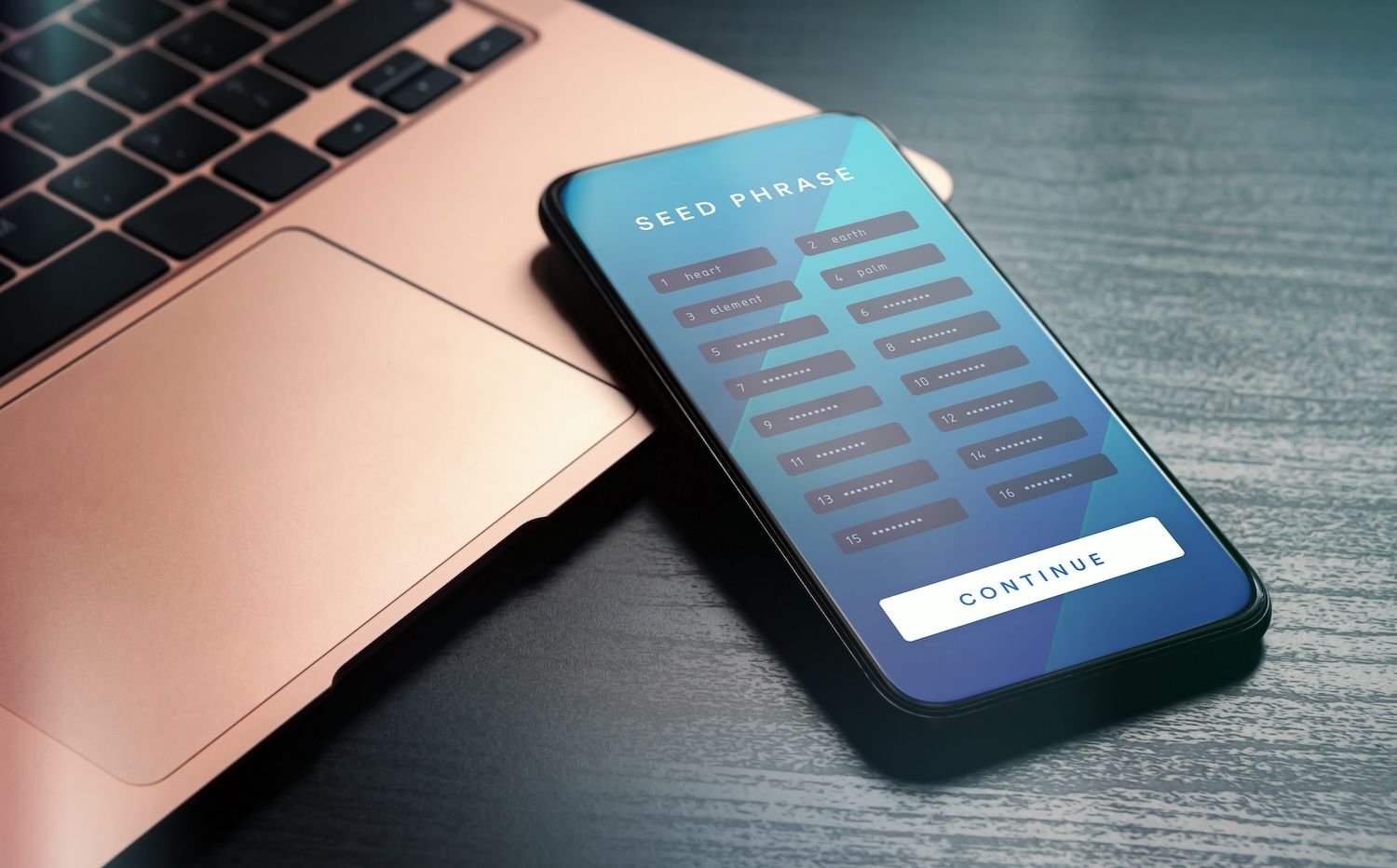
Both wallets are self-custodial and use 12-word recovery phrases. The difference lies in backup options. Tether.wallet offers encrypted cloud backup with a split-key architecture, placing an encryption key on-device, the encrypted payload on Tether servers, and a copy of the key in the user's iCloud or Google Drive.
Neither Tether nor the cloud provider alone can reconstruct the wallet, making the scheme more resistant to single points of failure than raw cloud storage.
A manual backup option is also available. The approach has drawn comparisons to Ledger Recover's controversial 2023 launch, and it remains unclear whether cloud backup can be fully disabled at the user's discretion.
MetaMask uses a traditional seed recovery phrase with no cloud option, supporting Trezor and Ledger hardware wallet integration for cold storage.
MetaMask's Smart Transactions feature reports a 99.995% success rate with built-in MEV protection, routing transactions through private mempools to prevent front-running. The trade-off is clear: cloud backup dramatically reduces the risk of permanent fund loss for mainstream users while introducing a trust assumption that advanced users may find unacceptable.
Also Read: Bitcoin Recovered Faster Than Expected After Hormuz Shock — Here's Why
Wallets as distribution strategy for a $13.7 billion profit machine
Tether reported $13.7 billion in net profit in 2024, generated primarily from interest on $122 billion in U.S. Treasuries backing USDT.
The company's technology reaches more than 570 million people across 160-plus countries through third parties. The open-source WDK turns every integration into a distribution channel that feeds the Tether ecosystem.
Rumble Wallet was WDK deployment number one, and tether.wallet is number two. On Apr. 15, Tether participated in $134 million in financing for the Stablecoin Development Corporation, the latest in a series of strategic investments. The company launched its QVAC SDK five days before the wallet, expanding its developer toolkit for machine-to-machine transactions.
Tether engaged KPMG in March for its first full audit, a move that prompted Circle's stock to drop 20% on the implied competitive threat.
The company is now the 17th-largest U.S. Treasury holder, ahead of both Germany and South Korea, illustrating how a stablecoin issuer has quietly become a significant player in sovereign debt markets. The wallet strategy also hedges against regulatory risk: if intermediaries are forced to restrict USDT access, Tether's own wallet provides a direct channel to end users that bypasses third-party compliance decisions.
Also Read: The Invisible Market: Where Institutional Crypto Trading Is Really Happening Now
Is the mainstream wallet moving away from DeFi maximalism?
The data suggests payments simplicity is winning user preference across the industry, not just inside Tether's ecosystem. In 2025 research, 54.69% of crypto wallet users named everyday payments as their top feature.
Mobile USDT wallet adoption rose 40% year over year, and 65% of users prefer multichain wallets that abstract away network complexity entirely.
- Phantom, the Solana-native wallet valued at $3 billion after a Sequoia-led Series C, expanded to six chains while preserving its minimalist design, proving that simplicity and multichain reach are not mutually exclusive.
- Coinbase Smart Wallet eliminated seed phrases entirely with passkey authentication, removing the single biggest onboarding barrier that has plagued crypto wallets for a decade.
- Apps with embedded gasless wallets see 40% higher onboarding completion and 25-30% stronger first-week engagement, according to 2025 industry research, reinforcing that friction removal drives retention.
MetaMask's planned MASK token and ConsenSys's potential IPO point in the opposite direction, toward greater financial complexity and deeper user monetization.
The question is whether the market follows that path. Finlay's own admission about transaction failures suggests even MetaMask knows simplicity has been undersold for years, and the trajectory across major wallets points in one direction: payments simplicity is becoming the minimum viable feature set while DeFi complexity becomes an optional layer.
Also Read: Why 2026 Could Be When AI Needs Blockchain More Than Investors Do
Conclusion
Tether.wallet and MetaMask are not competing for the same users.
Tether is betting that the next 500 million crypto wallets will be opened by people who want to send money, not trade perpetual futures or buy tokenized Tesla shares. MetaMask is betting that the wallet doing everything will capture more value per user, even with a smaller total base.
The early evidence favors simplicity for user acquisition and DeFi depth for retention. Both products can succeed if they resist the temptation to become the other.
The real test arrives when Tether adds Tron support and a fiat on-ramp, and when MetaMask extends gas abstraction beyond swaps to cover everyday transfers.
Read Next: Crypto Market Structure Bill Faces July Deadline As Trump Pressures Banks And Senate Stalls