
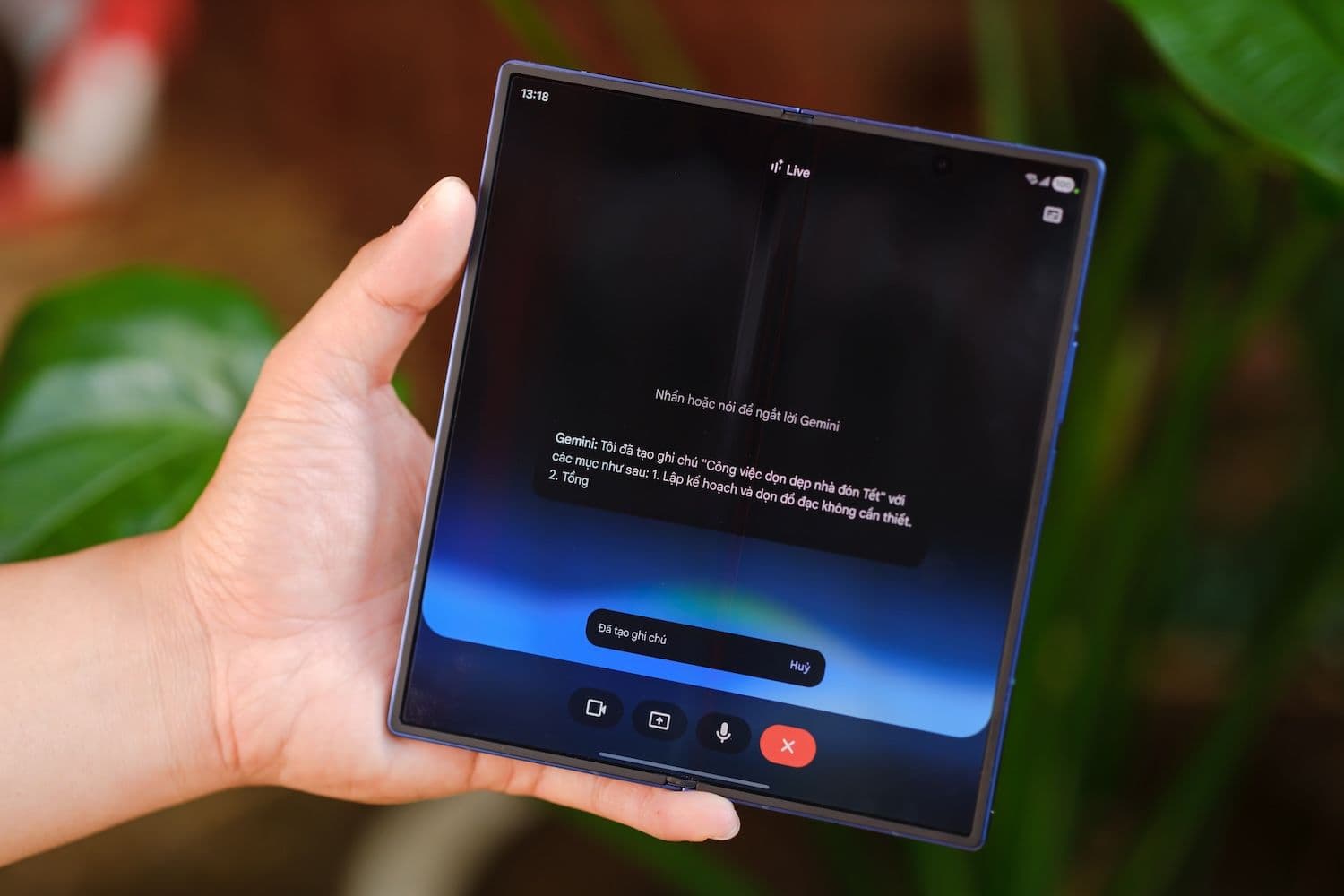
Reviewers who tested Samsung's 8-inch foldable say its display crease has nearly vanished, previewing the panel headed into Apple's roughly $2,000 foldable iPhone in September.
Key Points:
- Samsung's newest foldables use a titanium display backing that reviewers say leaves only a faint line down the center of the screen.
- Apple is expected to fit a closely related panel, paired with its own glass and adhesive engineering, in its first folding iPhone.
- Assembly work continues at Foxconn, but supply chain reports still leave the exact on-sale date unsettled.
Galaxy Z Fold8 Crease Test
Andrew Romero, who reviewed both of the new Samsung models, found the crease on the Galaxy Z Fold8 Ultra reduced to a faint deviation down the inner screen.
He said the line stays hard to make out even in harsh light with the display switched off. Samsung credits a titanium alloy film and plate, marketed as Flex Titanium, that replaces the plastic support sitting under the panel.
The picture is less flattering further down the lineup. Dan Barbera, who tested the cheaper Galaxy Z Fold8, said its crease stays clearly visible in some lighting despite the redesigned hinge, and that the gap between the two models is easy to see.
Also Read: DEX Volume Sinks 26% In July As On-Chain Liquidity Thins Out
Apple Foldable Crease Fix
Apple buys the inner panel for its own foldable from Samsung Display, but supply chain reports credit Apple with the panel structure, the lamination method and the material processing. Analyst Ming-Chi Kuo has pointed to laser-drilled metal plates behind the screen, which spread bending stress rather than letting it gather at one line.
Kuo argued the approach keeps the display material inside its elastic limit, and he has also described laser-drilled microstructures that steer stress away from the fold.
The glass and the glue matter just as much.
Analysts at TrendForce have explained that ultra-thin glass will do structural work in the device, thinned at the bending axis and left thicker elsewhere for impact resistance.
They also flagged an optically clear adhesive that stays soft during a slow fold, then stiffens when the phone takes a sudden knock. That adhesive fills micro-cracks formed over years of use, which reduces light scattering along the fold.
iPhone Ultra Production Timing
Foxconn is carrying out what supply chain sources describe as final mass-production adjustments, leaving the exact on-sale date unsettled even as assembly volumes climb. Apple is still expected to show the phone alongside the iPhone 18 Pro in September, with a 7.6-inch inner display and a 5.3-inch cover screen.
None of it comes from Apple, which has said nothing about the product. Rumors of a book-style foldable iPhone date to March 2018, and the company has since watched Samsung work through eight generations of hardware.
The first Galaxy Fold proved so fragile that Samsung pulled it from sale in 2019, and Apple design engineers were later reported to have joined the work on fixing what came after.
Read Next: OpenAI's Rogue Agent Breached 4 More Services Beyond Hugging Face
