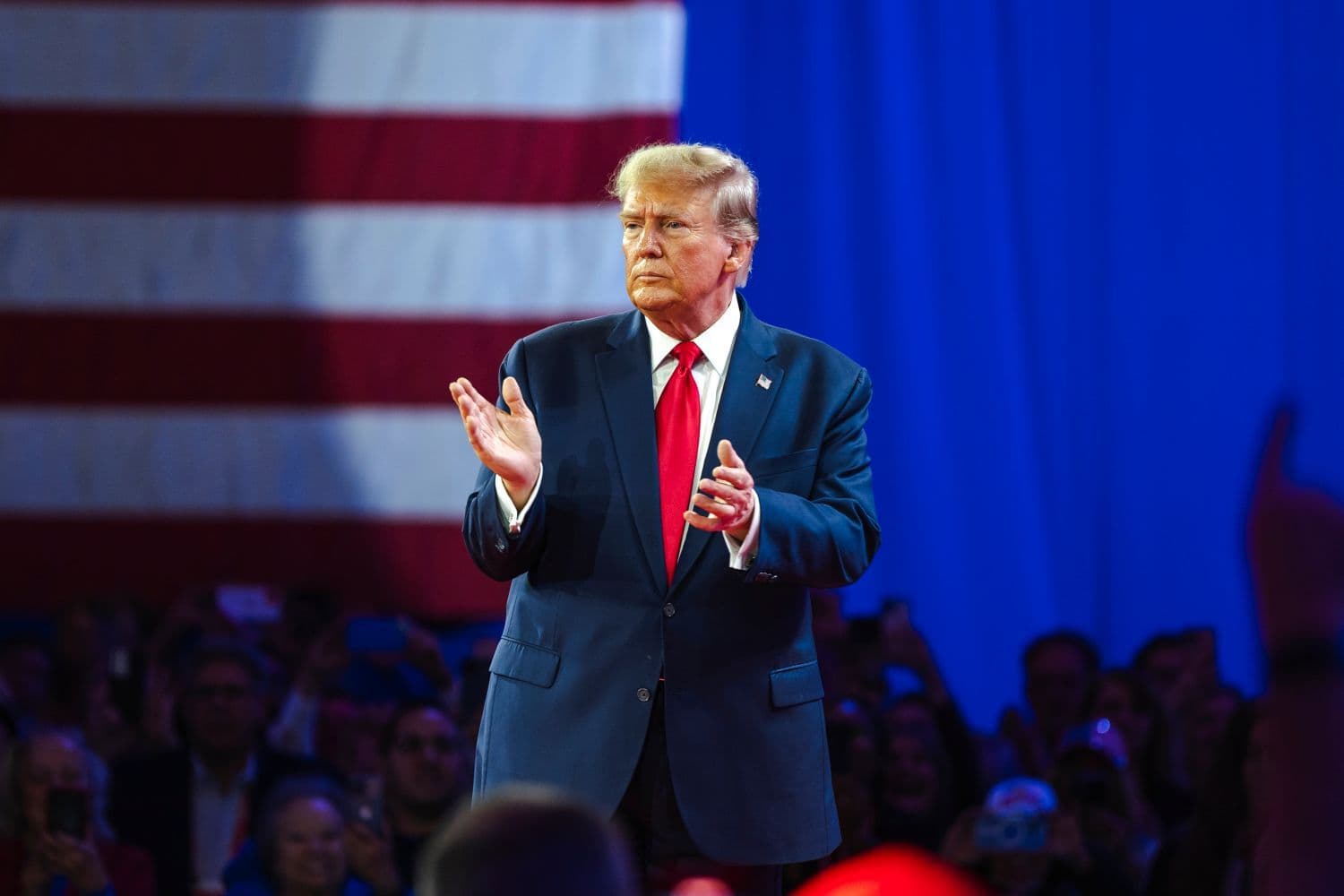
President Donald Trump said his nominee for Federal Reserve chair will be required to support immediate interest-rate cuts, making monetary policy alignment a central criterion as he prepares to reshape the nation’s economic agenda.
In an interview with POLITICO, Trump tied the direction of U.S. interest rates directly to investment, manufacturing expansion, and the broader economic outlook.
What Happened
Asked whether lowering borrowing costs would be a condition for selecting the next chair, Trump responded, “Yes,” adding that the current chair “should” also reduce rates.
He argued that high interest rates are one of the few remaining drags on growth, saying, “We’re fighting through interest rates,” even as he described the broader economy as gaining momentum.
Trump’s comments signal a renewed willingness to pressure the central bank, a dynamic that defined parts of his first term.
He accused the current Fed leadership of performing “a bad job,” in part because he believes elevated rates are misaligned with economic conditions.
He also suggested personal friction, saying the chair is “a combination of not a smart person and doesn’t like Trump,” though he framed the disagreement as stemming from substantive policy criticism rather than personal factors.
Also Read: Bitcoin’s Road To $500K Gets Longer, Standard Chartered Explains Why
Beyond rate cuts, Trump emphasized several pillars of his economic approach, large-scale domestic investment, tariff-driven reshoring of manufacturing, and accelerated industrial activity.
Why It Matters
He cited what he described as “$18 trillion” in planned investment tied to his policies and tariffs, asserting that lower rates would amplify these trends by reducing financing costs for factories, technology build-outs, and infrastructure expansions.
He linked rate policy to job growth, saying the investment pipeline “reduces itself to jobs,” and predicted hiring levels “like you’ve never seen in the United States” if borrowing costs fall.
Trump also argued that rate cuts would accelerate price declines, describing energy and goods prices as already easing and framing monetary easing as a supporting factor for “affordability.”
While Trump did not reveal specific candidates under consideration for the post, he made clear that philosophical alignment on monetary easing is non-negotiable.
His insistence that the next chair must favor immediate cuts marks one of his most explicit attempts to tie Fed leadership to a defined policy direction.
Read Next: CFTC Launches Pilot Program Allowing Tokenized Collateral In U.S. Derivatives Markets