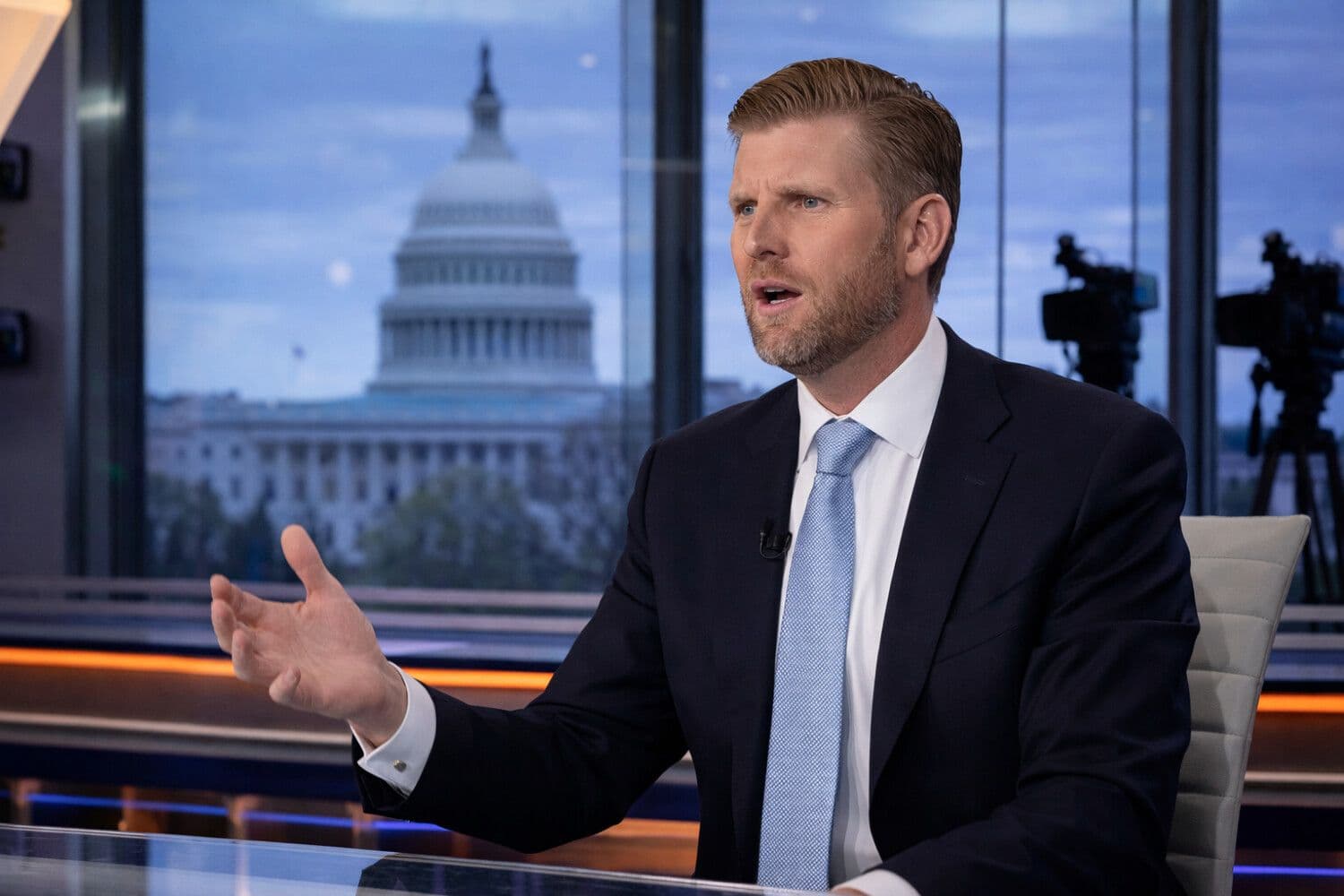
Eric Trump said large U.S. banks are actively trying to stop crypto legislation advancing in Congress, as President Donald Trump separately said he expects to sign crypto market structure legislation “very soon.”
He made the comments in an interview with FOX Business, accusing major financial institutions of opposing digital asset reforms that threaten their control over payments, settlement delays, and the use of customer funds.
Big Banks Accused Of Protecting Legacy Advantages
Eric Trump said traditional banks have maintained what he described as a monopoly over the U.S. financial system by relying on outdated infrastructure that slows money movement.
He cited wire transfers that cannot be processed after business hours or over weekends, arguing that banks benefit financially by holding customer funds and earning interest during those delays.
He said blockchain-based systems challenge that model by enabling near-instant settlement and allowing users to move money directly into separate wallets.
According to Trump, crypto legislation threatens banks’ ability to arbitrage capital and profit from settlement inefficiencies.
He said banks are therefore using their influence to oppose crypto bills moving through Congress, framing the resistance as driven by financial self-interest rather than consumer protection.
Trump Administration Signals Momentum On Crypto Bills
President Trump, speaking earlier at the World Economic Forum, said Congress is working “very hard” on crypto market structure legislation and that he hopes to sign the bill soon.
He linked the effort to maintaining U.S. leadership in digital assets, Bitcoin (BTC), and financial innovation.
Also Read: France Central Bank Sounds Alarm On Existential Threat From Private Stablecoin Dominance
Trump said the legislation is intended to unlock new financial opportunities for Americans while preventing China from gaining dominance in emerging digital asset markets.
He framed crypto policy as both an economic and geopolitical priority, arguing that once rival nations secure control over new financial infrastructure, it becomes difficult to reclaim leadership.
Legislation Follows GENIUS Act, Targets Market Structure
The push for market structure legislation follows the passage of the GENIUS Act last year, which established a federal framework for payment stablecoins, including reserve backing and disclosure requirements.
Lawmakers are now negotiating broader rules to clarify oversight of crypto assets, exchanges, custodians, and trading platforms.
The proposed legislation aims to define the respective roles of U.S. regulators, including the Securities and Exchange Commission and the Commodity Futures Trading Commission, while setting standards for how crypto firms operate in spot markets.
Bank Lobbying Intensifies As Votes Approach
Major U.S. banks and their trade groups have warned that poorly designed crypto legislation could introduce financial stability risks or weaken consumer protections.
They have urged lawmakers to ensure crypto firms face regulatory standards comparable to those applied to traditional banks.
Eric Trump said opposition from banks is expected to intensify as legislation advances, arguing that faster settlement and self-custody directly undermine banks’ ability to control capital flows.
Read Next: Vitalik Buterin Says Crypto Social Failed By Financializing Attention